Cubist Art

1,825 Results
CUBIST STYLE

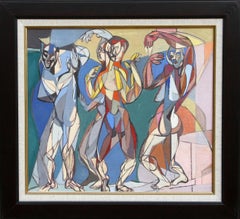
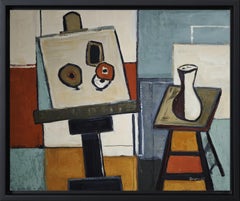
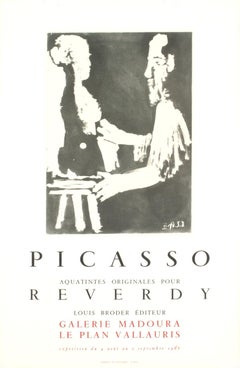
Inspired by the nontraditional ways Postimpressionists like Paul Cézanne and Georges Seurat depicted the world, Pablo Picasso and Georges Braque pioneered an even more abstract style in which reality was fragmented into flat, geometric forms. Cubism majorly influenced 20th-century Western art as it radically broke with the adherence to composition and linear perspectives that dated back to the Renaissance. Its watershed moments are considered Picasso’s 1907 Les Demoiselles d’Avignon, in which nude figures are fractured into angular shapes, and Georges Braque’s 1908 painting show, which prompted a critic to describe his visual reductions as “cubes.”

Although Cubism was a revolutionary art movement for European culture, it was informed by African masks and other tribal art. Its artists, which included Fernand Léger, Alexander Archipenko, Marcel Duchamp, Juan Gris and Jean Metzinger, experimented with compressing space and playing with the tension between solid and void forms in their work. While their subjects were often conventional, such as still lifes, nudes and landscapes, they were distorted without any illusion of realism.

Cubist art evolved through different distinct phases. In Analytic Cubism, from 1908 to 1912, figures or objects were “analyzed” into pieces that were reassembled in paintings and sculptures, as if presenting the same subject matter from many perspectives at once. The palette was usually monochromatic and muted, giving attention to the overlapping planes. Synthetic Cubism, dating from 1912 to 1914, moved to brighter colors and a further flattening of images. This unmooring from formal ideas of art would shape numerous styles that followed, from Dada to Surrealism.

Find a collection of authentic Cubist paintings, prints and multiples, sculptures and more art on 1stDibs.

to
641
765
340
470
208
164
Overall Width
to
Overall Height
to
3
1,495
473
5
38
55
119
130
257
226
128
64
43
119,992
64,137
57,152
29,218
14,511
9,687
6,983
6,249
4,262
3,201
2,530
2,322
2,126
590
1,172
634
79
722
514
407
264
240
237
143
121
68
52
51
37
28
28
26
26
26
25
25
22
906
556
520
323
319
152
93
37
35
29
464
239
1,171
766
Style: Cubist
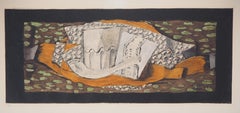
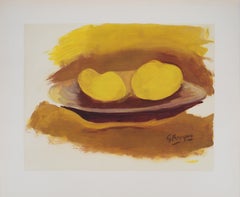
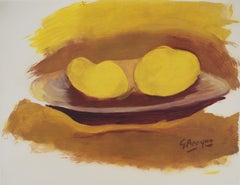
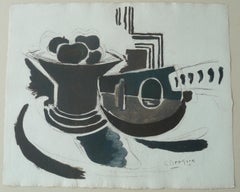
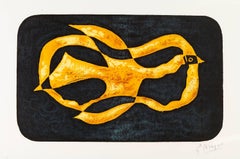
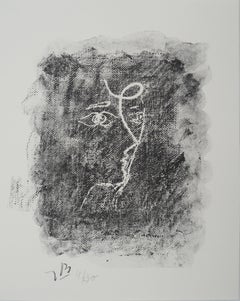
After Georges Braque - Antiborée - Lithograph

After Georges Braque - Antiborée - Lithograph

Located in Collonge Bellerive, Geneve, CH

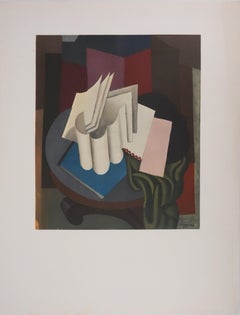
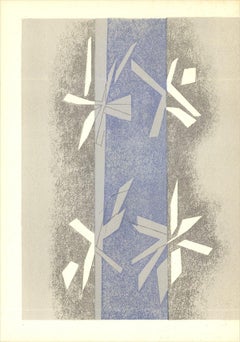
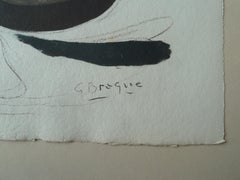
Lithograph after Georges Braque. Signed in the plate Edition of 150 Dimensions: 76 x 117 cm Bibliography: « Les Métamorphoses de Braque» of Heger de Loewenfeld and Raphaël de Cuttoli , Editions FAC, Paris, 1989. In 1961 Georges Braque decided with his laidary friend Heger de Loewenfeld to pick up certain of his works to in order to create artworks, this beautiful litograph is one of them. Héméra in the Mythology: In Greek mythology Hemera was the personification of day and one of the Greek primordial deities. She is the goddess of the daytime and, according to Hesiod, the daughter of Erebus and Nyx (the goddess of night). Hemera is remarked upon in Cicero's De Natura Deorum, where it is logically determined that Dies (Hemera) must be a god, if Uranus is a god. The poet Bacchylides states that Nyx and Chronos are the parents, but Hyginus in his preface to the Fabulae mentions Chaos as the mother/father and Nyx as her sister. She was the female counterpart of her brother and consort, Aether (Light), but neither of them figured actively in myth or cult. Hyginus lists their children as Uranus, Gaia, and Thalassa (the primordial sea goddess), while Hesiod only lists Thalassa as their child. The father of Cubism Three Cubist that distinguishes art historian periods were initiated and developed by Georges Braque: The Cubist Cézanne (1907-1909), Executive (1909-1912) and synthetic (1912-1922). Post-Impressionist and fawn, Braque no longer adheres to the contingency of a decorative way or the other. Cézanne’s paintings exhibited at the Grand Palais during the retrospective of 1907 are a revelation: Cézanne sought and invented a pictorial language. In his footsteps, Braque went to the South with the reasons of the Master. He returned with Estaque landscapes and surprising Ciotat it keeps Cezanne geometric model and retains the “passages” continuity from one surface to another to create the sensation of “turning around” of the object represented. But he wants to go after the consequences of the vision of Cezanne. In his paintings Houses in L’Estaque (1908) it simplifies the volumes of houses, neglects detail by removing doors and windows: the plastic rhythm that builds the table. Large Nude , a masterpiece of the period, can be considered the first work of Cézanne cubism . Systematizing and deepening Braque discoveries open the door analytical cubism. In 1909, his painting became more cerebral than sensual. The pattern is recreated in the two-dimensionality of the canvas, leaving aside any illusionistic perspective. In Still Life with Violin, objects are analyzed facets according to their characteristic elements, each facet referring to a particular view of the object. There are so many facets of points selected view: Table reflects the knowledge of the object and the ubiquity of the eye. Moreover, Braque is looking for the essence of the objects in the world rather than their contingency, which explains the absence of light source and use of muted colors (gray, ocher), contingent aspects of the object . But formal logic has stepped facets, erased any anecdote to the object and ultimately led to his painting a hermetic more marked on the edge of abstraction (see the series of Castle Roche-Guyon ). Braque, anxious to keep the concrete and refusing at all costs that the logic of Cubism takes the paintings to abstract, reintroduced signs of reality in his paintings in 1912 marks the beginning of Synthetic Cubism. Historians speak of “signs of real” rather than reality because what interests Braque, this is not to put reality into a table, but to create a painting which, by its language, refers to the real. To do this, he invented two major techniques XX th century inclusions and contributions. The inclusions consist of painting objects that have no real depth, materials (wallpaper in Nature morte aux playing cards faux wood is a pictorial inclusion) or letters (calligraphic inclusion in Portuguese ), made first brush and a few months later stencil. Contributions are defined in contrast with the collage on canvas of foreign materials: glued or sand paper, sawdust, etc.. Regarding the collages, Braque used for the first time in September 1912 a piece of adhesive paper imitating faux wood Compote...

Category

1950s Cubist Art

Materials

Lithograph

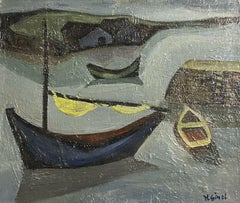
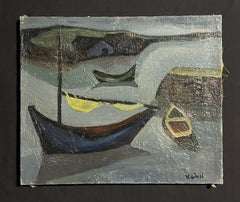
1950's French Mid 20th Century Signed Modernist Oil Boats in a Harbour

1950's French Mid 20th Century Signed Modernist Oil Boats in a Harbour

Located in Cirencester, Gloucestershire

Artist/ School: Ginet-Lasnier (French 20th century), signed, circa 1950's Title: Mid 20th century modernist oil of boats in a harbour. Medium: signed oil painting on canvas, unfr...

Category

Mid-20th Century Cubist Art

Materials

Oil

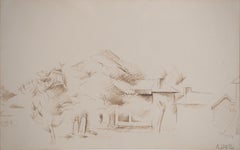
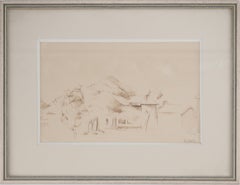
Cubist Line Drawing of a Figure by Mystery Artist

Cubist Line Drawing of a Figure by Mystery Artist

Located in New York, NY

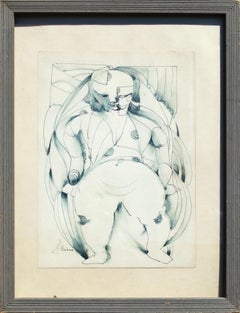
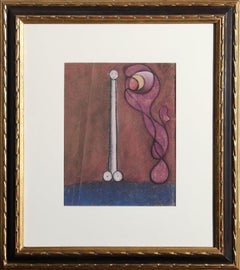
Mystery Artist Untitled, 20th century Ink on paper Sight: 12 x 8 5/8 in. Framed: 17 1/8 x 13 1/8 x 1 1/2 in. Signed lower left

Category

20th Century Cubist Art

Materials

Paper, Ink

Mermet. Mid-Century Design for a Sculpture. Acrylic and Crayon on Paper.

Mermet. Mid-Century Design for a Sculpture. Acrylic and Crayon on Paper.

Located in Cotignac, FR

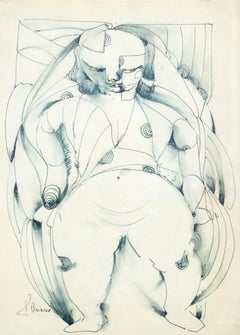
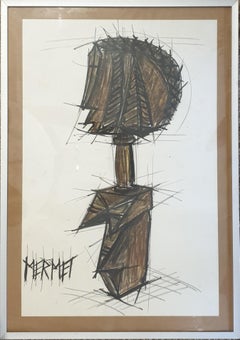
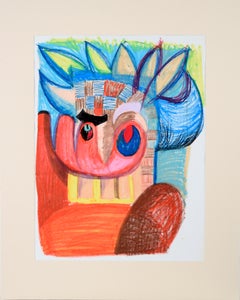
A mid-century design for a sculpture, signed or titled Mermet bottom left corner. Presented in period metal frame. A very strong image which is almost certainly a design for a sculpture due to the three dimensional nature of the piece accentuated by the lines of the image extending beyond the subject itself showing the different planes to be worked. This extremely energetic and forceful application of the crayon and the extension of the lines is highly reminiscent of the work of the expressionist Bernard Buffet who lived and worked in Tourtour in the South of France. The angular features of the figure and the dark intense lines are particularly in line with the style of his work. Expressionism was a form of art less interested in the correct anatomical representation of the subject but more in portraying the feelings and emotions that the subject evoked. The model appears to be for a sculpture quite possibly inspired by African art as the image is reminiscent of African fetish...

Category

Mid-20th Century Cubist Art

Materials

Paper, Crayon, Acrylic

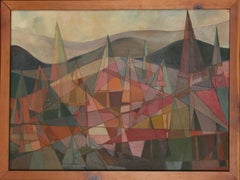
French Cubist Abstract Oil Painting, Bold Geometric Composition, 1970

French Cubist Abstract Oil Painting, Bold Geometric Composition, 1970

Located in Cirencester, Gloucestershire

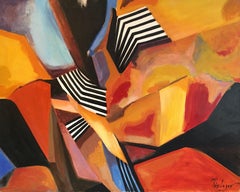
Title: French Cubist Abstract Oil Painting, Bold Geometric Composition, 1970 Key Details Artist: Iris Leger (French, Mid 20th Century) Medium: Oil on canvas Size (canvas): 26 x 32 i...

Category

Mid-20th Century Cubist Art

Materials

Oil

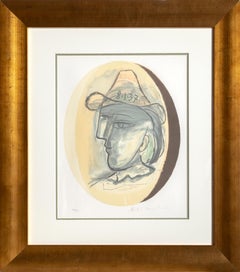
Tete, Framed Cubist Lithograph after Pablo Picasso
Tete, Framed Cubist Lithograph after Pablo Picasso
By Pablo Picasso

Located in Long Island City, NY

A lithograph from the Marina Picasso Estate Collection after the Pablo Picasso painting "Tete". The original painting was completed in 1937. In the 1970's after Picasso's death, Mar...
Category

1980s Cubist Art

Materials

Lithograph
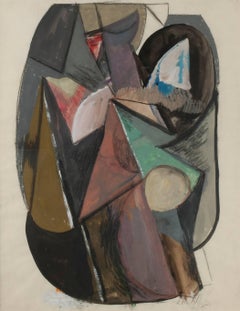
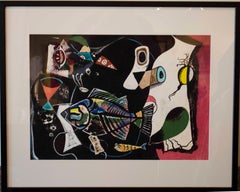
Table de Miro
Table de Miro

Table de Miro

By Robert McIntosh

Located in West Hollywood, CA

Just discovered within the archives of American artist Robert McIntosh(1916-2010), we present for the first time, a magnificent mixed media painting, Table de Miro. Table de Miro, i...

Category

1940s Cubist Art

Materials

Mixed Media

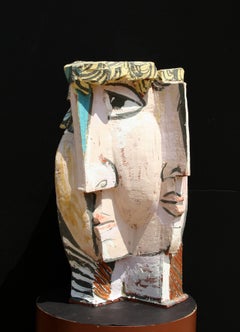
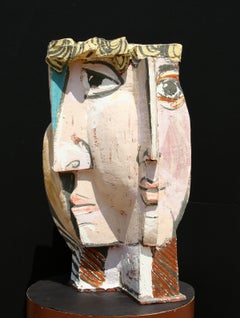
Unique Ceramic Cubist Bust

Unique Ceramic Cubist Bust

Located in Long Island City, NY

Artist: Unknown, in the style of Pablo Picasso Medium: Painted Terracotta Sculpture Size: 27 tall x 15 x 12 inches

Category

20th Century Cubist Art

Materials

Ceramic

Untitled

Untitled

By Edmund Daniel Kinzinger

Located in Dallas, TX

Edmund D. Kinzinger was born in 1888, in Pforzhein, Germany. In Munich he studied at the Kirr Schule and the Staatliche Akademie, and pursued graduate studies at the Academie Modern, Paris. Before serving in the German Army, Kinzinger was a master student of Adolph Holzel at the Staatcliche Akademie, Stuttgart; he returned to study under Henrich Waldschmidt after nearly five years of artillery service. Several of Kinzinger’s fellow students in Germany, such as Johannes Itten, would go on to be associated with the Bauhaus school. Coming into contact with all manner of artistic influences in Europe after World War One, Kinzinger’s work may be viewed as a “synthesis” of modernist styles. The influences of Abstract Expressionist, Cubist, and Futurist styles in Kinzinger’s work at this time are symptomatic of his contact with the likes of Hans Hofmann, Pablo Picasso, and Alexander Archipenko. About this period of Kinzinger's work, Philip Van Keuren...

Category

1930s Cubist Art

Materials

Crayon, Paper, Pencil

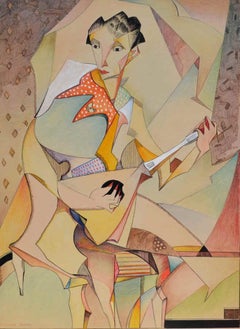
Blue Pacific Mandolin

Blue Pacific Mandolin

By Maurice Green

Located in West Hollywood, CA

Premiering for the first time in three decades, the original paintings of American artist Maurice Green. Born in 1908 in Latvia, Maurice Green studied with prominent artists of the day before settling in Los Angeles in the 1930’s. The artist continued his art education and began exhibiting throughout galleries in Southern California. As with many artists, his earliest style was more realist imagery, transitioning through his intense fascination with the cubist avant-garde movement, into specific cubist imagery which became the trademark style of painting for the remainder of his life. This is the first presentation of the paintings of Maurice Green since his death in 1993. "Blue Pacific...

Category

1970s Cubist Art

Materials

Oil

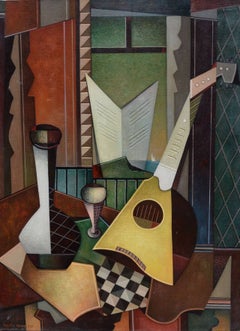
The Yellow Mandolin

The Yellow Mandolin

By Maurice Green

Located in West Hollywood, CA

Premiering for the first time in three decades, the original paintings of American artist Maurice Green. Born in 1908 in Latvia, Maurice Green studied with prominent artists of the day before settling in Los Angeles in the 1930’s. The artist continued his art education and began exhibiting throughout galleries in Southern California. As with many artists, his earliest style was more realist imagery, transitioning through his intense fascination with the cubist avant-garde movement, into specific cubist imagery which became the trademark style of painting for the remainder of his life. This is the first presentation of the paintings of Maurice Green since his death in 1993. “The Yellow Mandolin”, is an exceptional early work, an original oil on canvas, signed, dated 1974, with an image dimension of 40 x 30 inches; a painting which clearly defines his talent as a fine cubist artist...

Category

1970s Cubist Art

Materials

Oil

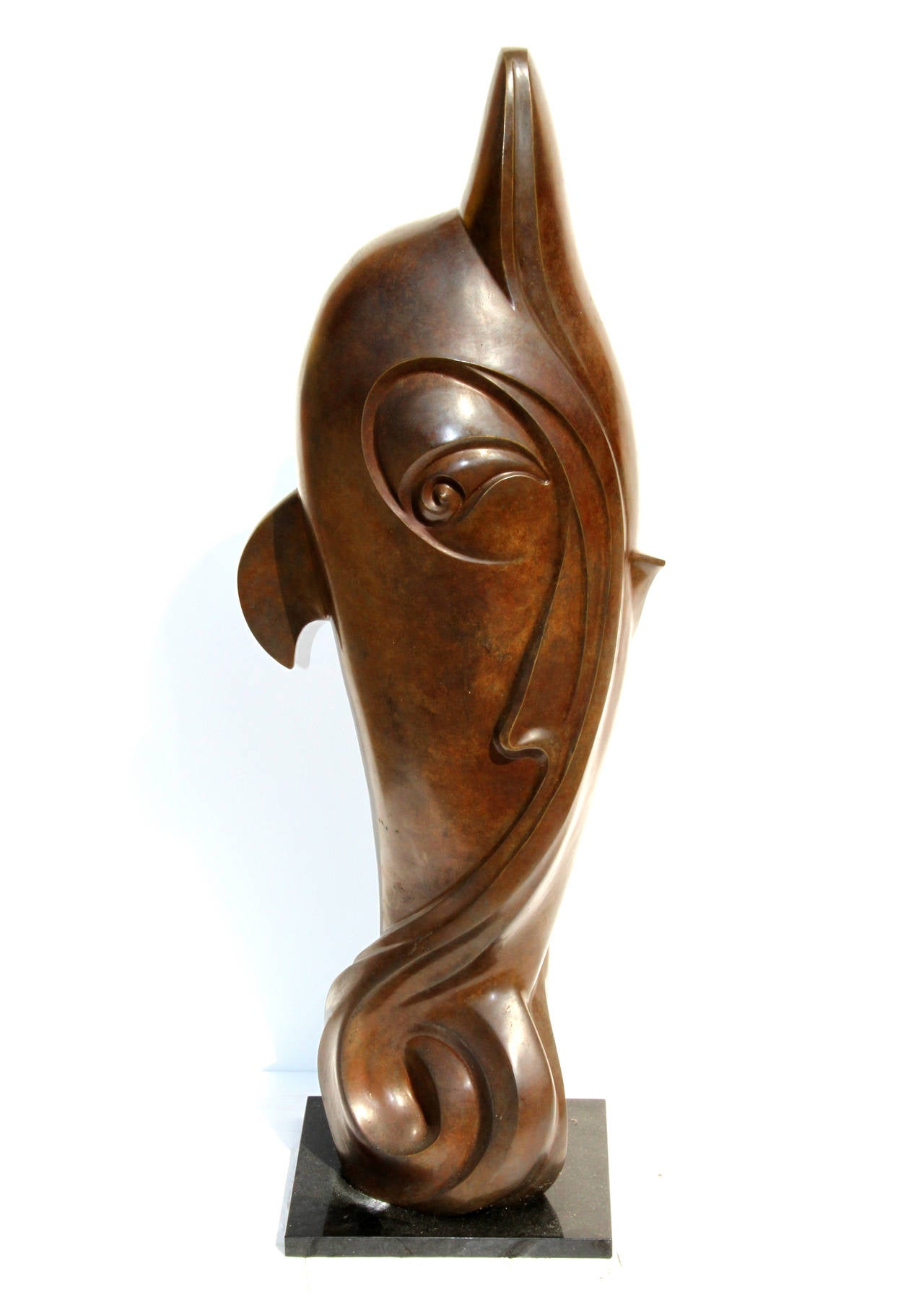
Dolphin, Tall Cubist Bronze Sculpture with Patina

Dolphin, Tall Cubist Bronze Sculpture with Patina

Located in Long Island City, NY

Artist: Unknown, Russian Title: Dolphin Medium: Bronze Sculpture with Patina Size: 35 in. x 13 in. x 8 in. (88.9 cm x 33.02 cm x 20.32 cm)

Category

20th Century Cubist Art

Materials

Bronze

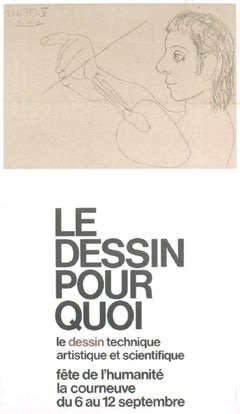
1973 After Pablo Picasso 'Le Dessin Pour Quoi'  Vintage

1973 After Pablo Picasso 'Le Dessin Pour Quoi' Vintage

By Pablo Picasso

Located in Brooklyn, NY

This striking poster, titled The Painter, was published by La Fête de l’Humanité in 1970, based on an original drawing by Pablo Picasso. The poster is an offset lithograph in color, ...
Category

1970s Cubist Art

Materials

Offset

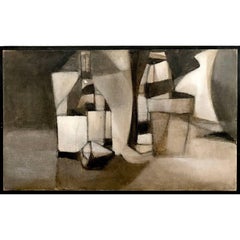
"Still Life Gray" Cubist Oil Painting

"Still Life Gray" Cubist Oil Painting

By Lowell Daunt Collins

Located in Houston, TX

Great early Lowell Collins cubist neutral toned still life on canvas. Placed in a thin, black frame. Signed and titled by artist. Artist Biography: Born in San Antonio but raised i...

Category

1950s Cubist Art

Materials

Oil

L’Instant de l’Esquisse Oil Painting, Post-Cubist Studio Scene by Sophie Dumont

L’Instant de l’Esquisse Oil Painting, Post-Cubist Studio Scene by Sophie Dumont

By SOPHIE DUMONT

Located in LANGRUNE-SUR-MER, FR

L’Instant de l’Esquisse is an original oil painting by French contemporary artist Sophie Dumont. Known for her stylized libraries, abstract landscapes, and contemplative studio inter...

Category

21st Century and Contemporary Cubist Art

Materials

Oil

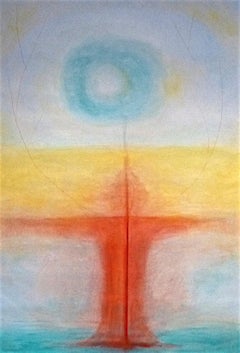
Suzanne Benton, Hope,  2023, oil on linen, Spiritualism

Suzanne Benton, Hope, 2023, oil on linen, Spiritualism

By Suzanne Benton

Located in Darien, CT

In this ninth decade of life, and as a working artist for nearly70 years, Suzanne Benton has become interested in the concept of Late Style as described by the literary theorist Edward Said. “Each of us can supply evidence of late works, which crown a lifetime of aesthetic endeavor,” Matisse had it with his renowned paper cuts. While nearly blind, Monet created the water lily paintings as his final legacy to the history of art.  Benton's Late Style arrived as a surprise during the Covid pandemic. The resultant aloneness from sheltering in place brought her to an uncanny level of solitude that only painting could voice. She reached for the purest of colors, and entered a celebratory world to create the Neo-Transcendental paintings titled All About Color. The disappeared narrative came as a surprise. It had been the mainstay of the masks and mask tale performances, monoprints and paintings. This time though, the artist needed to bring a vibrancy to canvas, and to make tangible this sense of sheer essence that had pressed into her inner self in that time of stillness. Well educated in color by John Ferren, the abstract expressionist painter who’d taught the year’s color study at Queen College. The sensitivity developed further through four lengthy art-working journeys to India, starting in 1976-77, continuing with a 1992-1993 Fulbright, and additional South Asia residencies in 1995, and 2011. Those and others in Africa brought an ever more attuned palette to decades of monoprints with Chine collé that featured imagery from world culture, as well as her Americana of 19th and 20th century women writers, educators, suffragists, and feminists. These Late Style artworks explore the cosmic realm. Its deceptive simplicity reminds Benton of Buffie Johnson’s late work. She, an early celebrator of Great Goddess imagery turned to circles in her latter years. similarly, Benton had drawn on rich Goddess imagery since the 1970’s...

Category

2010s Cubist Art

Materials

Gesso, Birch, Oil, Board

"A Song"

"A Song"

By Maurice Green

Located in West Hollywood, CA

Premiering for the first time in three decades, the original paintings of American artist Maurice Green. Born in 1908 in Latvia, Maurice Green studied with prominent artists of the day before settling in Los Angeles in the 1930’s. The artist continued his art education and began exhibiting throughout galleries in Southern California. As with many artists, his earliest style was more academic realistic imagery, transitioning due to his intense fascination with the cubist avant garde movement, into cubist imagery which became the trademark style of painting for the remainder of his life. This is the first presentation of the paintings of Maurice Green since his death in 1993. “The Serenade”, is original mixed media watercolor on artist board, signed, e very early work c.1945, this is a painting which clearly defines his talent as a fine cubist artist.

Category

1940s Cubist Art

Materials

Oil

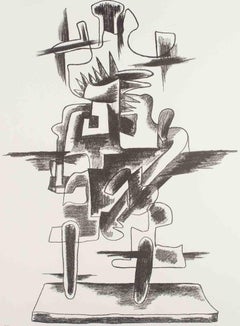
Composition - Lithograph by Ossip Zadkine - 20th Century
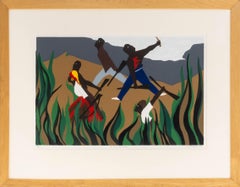
Composition - Lithograph by Ossip Zadkine - 20th Century
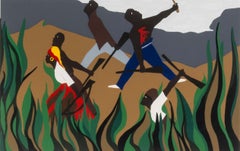
By Ossip Zadkine

Located in Roma, IT

Composition is a lithograph, realized by Ossip Zadkine Stamped on the lower right. Numbered, edition 43/65 prints. Not signed. Good conditions. The artwork represents an abstract composition through strong strokes in a well-balanced composition. Ossip Zadkine (Vitebsk, 1890 – Neuilly-sur-Seine 1967) , was a Russian-born French naturalized artist. He is primarily known as a sculptor, but also produced paintings and lithographs. He was born in present-day Belarus, to a Jewish father and mother of Scottish descent. After attending the London art school, Zadkine settled in Paris around 1910. There he joined the Cubist movement (1914-1925), later he developed his own style, strongly influenced by African art. His best-known work is The Destroyed City (1951-1953), a statue commemorating the destruction of the Dutch city...

Category

20th Century Cubist Art

Materials

Lithograph
Cubist Portrait of Gabriele Varese (in Italian uniform), 1919

Cubist Portrait of Gabriele Varese (in Italian uniform), 1919

By Dick Beer

Located in Stockholm, SE

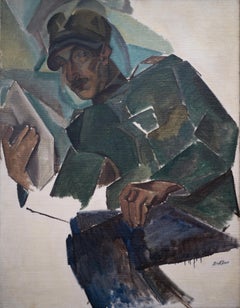
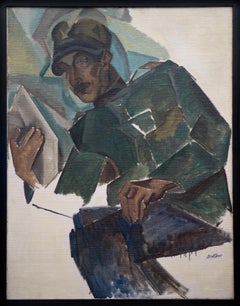
Dick Beer (b. London 1893 - d. Stockholm 1938) Portrait of Gabriele Varese (in Italian uniform), 1919 oil on canvas mounted on panel 116 x 90 cm stamp signature Exhibited: Solo exhibition, Stockholm, Nov-Dec 1917; The Royal Academy Stockholm 1973; Åmells Konsthandel – En internationell kubist, Stockholm & London 2008 Hälsinglands Museum 2011 Millesgården – Dick Beer – Impressionist & Kubist, 2012 Provenance: Within the family Beer until today Dick Beer was born in 1893 in London as Richard Beer, the youngest of five brothers. His father, John Beer (1853-1906), was a watercolourist who was born in Stockholm and had left Sweden at the age of 17. John Beer instructed his sons in drawing and painting, among other things. A number of sketchbooks bear testimony to the boys’ talent. Dick Beer’s parents died in 1906 and 1907. Barely 15 years old, Beer arrived in Sweden as an orphan. First he lived with relatives and finally he ended up at Reverend Laurell in Västergötland. Dick Beer began his artistic studies at the Althin School of Painting in Stockholm in 1908 and continued at the Royal Academy of Arts in the autumn of 1910, but in September 1912 he broke off his studies and travelled to Paris. He rented a studio and enrolled at the Colarossi and Grande Chaumière academies. In the summer of 1913, Dick Beer travelled to Pont-Aven in Bretagne in order to paint. In September the same year, he held his first solo exhibition in Stockholm which he gave the French title Exposition des tableaux de Bretagne et autour de Paris. The exhibition proved a success. Many of the paintings were executed in a light palette in a style inspired by the impressionists. In 1914, Dick Beer undertook an extensive study trip to Italy, Tunis, Morocco and Spain, which resulted in canvases overflowing with colours and light. When the French army mobilised, he volunteered and was enlisted in the French Foreign Legion. In 1915 Dick Beer sustained severe head injuries in a grenade attack, which resulted in deafness and a nervous condition that would plague him for the rest of his life. Two of his brothers died the following year, fighting for the English army. Dick Beer was hospitalised and convalesced at Château de Rochefort. Here he started painting again, in an impressionist style, a painting dominated by blue and green hues. In 1918, Dick Beer married Ruth Öhrling, a dentist, and their son John was born later in the year. During this time, Beer began experimenting with cubist painting and created several large compositions, including the painting “The Arab Café”. In the years that followed, Dick Beer was based in Paris, where he often moved house. He was instructed by André Lhote, who encouraged his students to work freely in the studio and provided them with individual critique. Beer often travelled to Bretagne or Provence. His artist friends came from all over Europe and included Amedeo Modigliani. Dick Beer exhibited fairly regularly in Paris between 1919 and 1934 and made a name for himself in French artist circles. In the summers, Ruth regularly rented a house in the countryside, often at Lake Mälaren. She kept a large house with many models and friends and there was a lot of painting and discussions. In 1933, the couple divorced but Ruth still loved Dick and continued to support him financially for the rest of his life. Dick Beer also exhibited in Sweden, albeit irregularly due to his failing health. In the 1920s and 1930s, Beer continued to pursue an expressionist painting with intense colours and unexpected perspectives, but eventually he veered towards more naturalistic forms, including a large number of nudes. He also painted several portraits of artists, politicians and writers. In 1938, Dick Beer sojourned in Arles. The budding photographer Christer Strömholm...

Category

1910s Cubist Art

Materials

Canvas, Oil, Panel

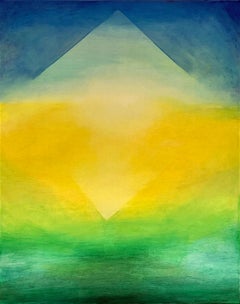
Suzanne Benton, Before We Knew,  2024, oil on gessoed birch panel, Spiritualism

Suzanne Benton, Before We Knew, 2024, oil on gessoed birch panel, Spiritualism

By Suzanne Benton

Located in Darien, CT

In this ninth decade of life, and as a working artist for nearly70 years, Suzanne Benton has become interested in the concept of Late Style as described by the literary theorist Edward Said. “Each of us can supply evidence of late works, which crown a lifetime of aesthetic endeavor,” Matisse had it with his renowned paper cuts. While nearly blind, Monet created the water lily paintings as his final legacy to the history of art.  Benton's Late Style arrived as a surprise during the Covid pandemic. The resultant aloneness from sheltering in place brought her to an uncanny level of solitude that only painting could voice. She reached for the purest of colors, and entered a celebratory world to create the Neo-Transcendental paintings titled All About Color. The disappeared narrative came as a surprise. It had been the mainstay of the masks and mask tale performances, monoprints and paintings. This time though, the artist needed to bring a vibrancy to canvas, and to make tangible this sense of sheer essence that had pressed into her inner self in that time of stillness. Well educated in color by John Ferren, the abstract expressionist painter who’d taught the year’s color study at Queen College. The sensitivity developed further through four lengthy art-working journeys to India, starting in 1976-77, continuing with a 1992-1993 Fulbright, and additional South Asia residencies in 1995, and 2011. Those and others in Africa brought an ever more attuned palette to decades of monoprints with Chine collé that featured imagery from world culture, as well as her Americana of 19th and 20th century women writers, educators, suffragists, and feminists. These Late Style artworks explore the cosmic realm. Its deceptive simplicity reminds Benton of Buffie Johnson’s late work. She, an early celebrator of Great Goddess imagery turned to circles in her latter years. similarly, Benton had drawn on rich Goddess imagery since the 1970’s...

Category

2010s Cubist Art

Materials

Gesso, Birch, Oil, Board

Suzanne Benton, Soft Thunder, 2021, oil on canvas, Spiritualism

Suzanne Benton, Soft Thunder, 2021, oil on canvas, Spiritualism

By Suzanne Benton

Located in Darien, CT

In this ninth decade of life, and as a working artist for nearly70 years, Suzanne Benton has become interested in the concept of Late Style as described by the literary theorist Edward Said. “Each of us can supply evidence of late works, which crown a lifetime of aesthetic endeavor,” Matisse had it with his renowned paper cuts. While nearly blind, Monet created the water lily paintings as his final legacy to the history of art.  Benton's Late Style arrived as a surprise during the Covid pandemic. The resultant aloneness from sheltering in place brought her to an uncanny level of solitude that only painting could voice. She reached for the purest of colors, and entered a celebratory world to create the Neo-Transcendental paintings titled All About Color. The disappeared narrative came as a surprise. It had been the mainstay of the masks and mask tale performances, monoprints and paintings. This time though, the artist needed to bring a vibrancy to canvas, and to make tangible this sense of sheer essence that had pressed into her inner self in that time of stillness. Well educated in color by John Ferren, the abstract expressionist painter who’d taught the year’s color study at Queen College. The sensitivity developed further through four lengthy art-working journeys to India, starting in 1976-77, continuing with a 1992-1993 Fulbright, and additional South Asia residencies in 1995, and 2011. Those and others in Africa brought an ever more attuned palette to decades of monoprints with Chine collé that featured imagery from world culture, as well as her Americana of 19th and 20th century women writers, educators, suffragists, and feminists. These Late Style artworks explore the cosmic realm. Its deceptive simplicity reminds Benton of Buffie Johnson’s late work. She, an early celebrator of Great Goddess imagery turned to circles in her latter years. similarly, Benton had drawn on rich Goddess imagery since the 1970’s...

Category

2010s Cubist Art

Materials

Oil

Cubist art for sale on 1stDibs.

Find a wide variety of authentic Cubist art available for sale on 1stDibs. Works in this style were very popular during the 21st Century and Contemporary, but contemporary artists have continued to produce works inspired by this movement. If you’re looking to add art created in this style to introduce contrast in an otherwise neutral space in your home, the works available on 1stDibs include elements of blue, orange, purple, yellow and other colors. Many Pop art paintings were created by popular artists on 1stDibs, including Pablo Picasso, (after) Pablo Picasso, Borja Guijarro, and Corne Akkers. Frequently made by artists working with Paint, and Lithograph and other materials, all of these pieces for sale are unique and have attracted attention over the years. Not every interior allows for large Cubist art, so small editions measuring 1.5 inches across are also available. Prices for art made by famous or emerging artists can differ depending on medium, time period and other attributes. On 1stDibs, the price for these items starts at $1 and tops out at $265,000, while the average work sells for $2,400.