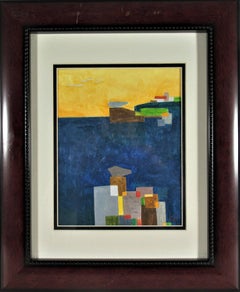
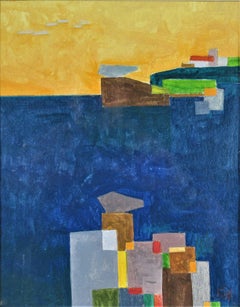
Cubist Art

CUBIST STYLE

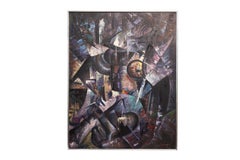
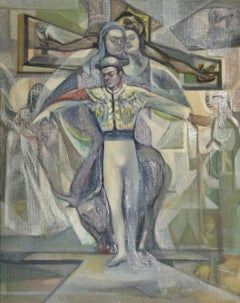
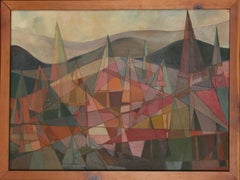
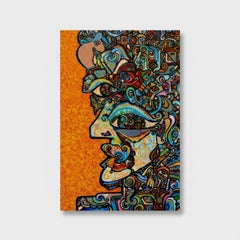
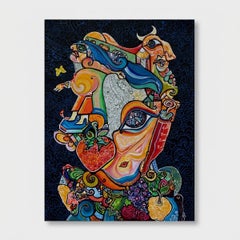
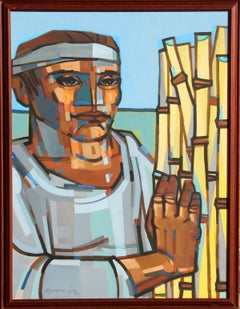
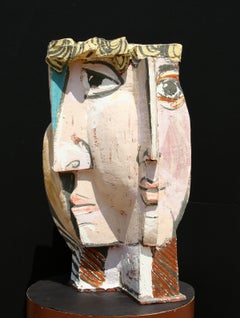
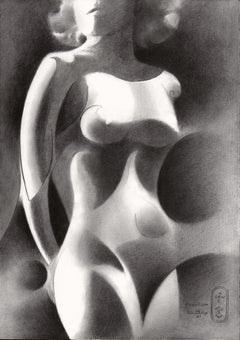
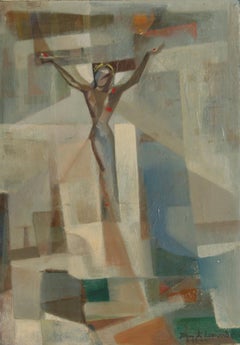
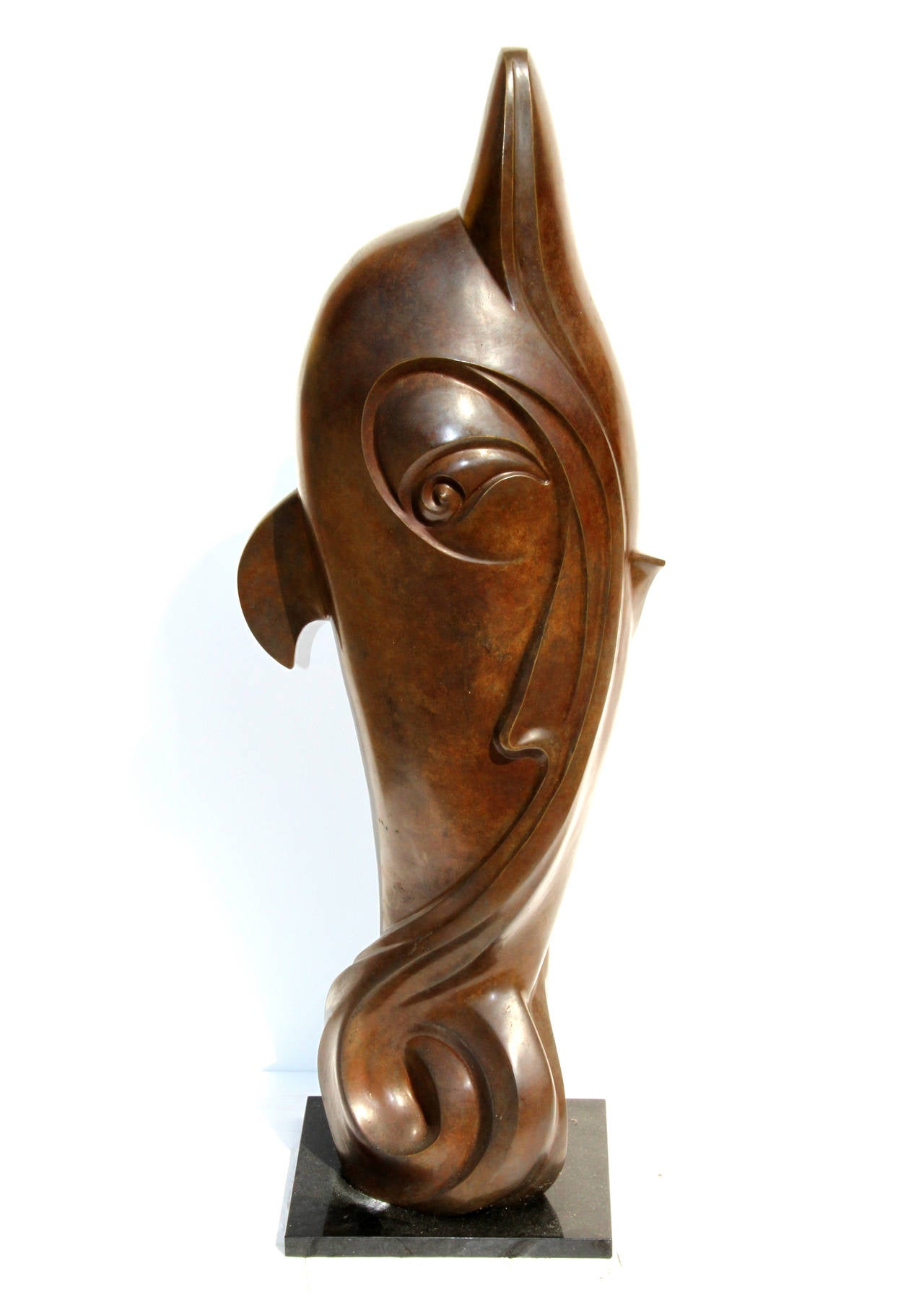
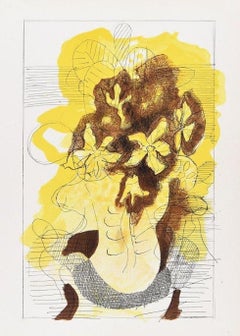
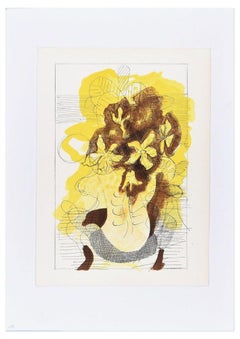
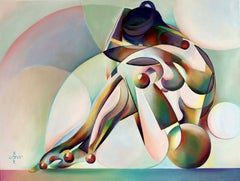
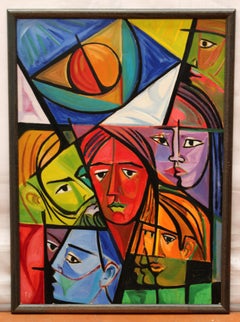
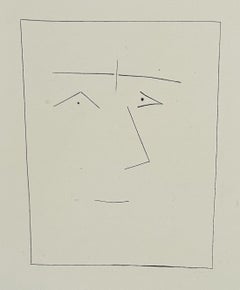
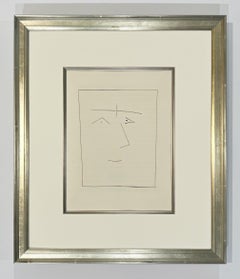
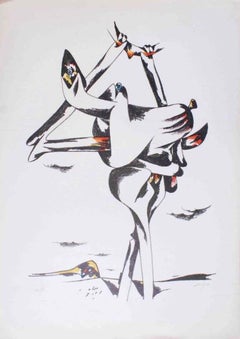
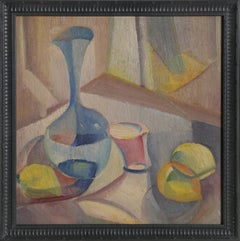
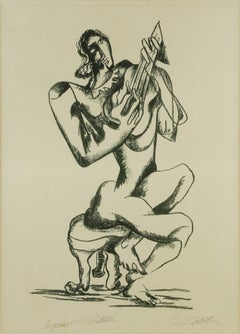
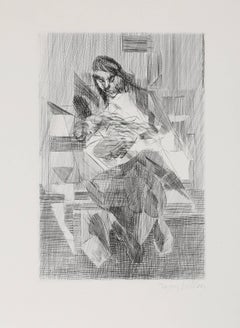
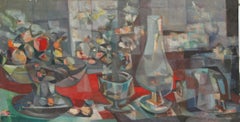
Inspired by the nontraditional ways Postimpressionists like Paul Cézanne and Georges Seurat depicted the world, Pablo Picasso and Georges Braque pioneered an even more abstract style in which reality was fragmented into flat, geometric forms. Cubism majorly influenced 20th-century Western art as it radically broke with the adherence to composition and linear perspectives that dated back to the Renaissance. Its watershed moments are considered Picasso’s 1907 Les Demoiselles d’Avignon, in which nude figures are fractured into angular shapes, and Georges Braque’s 1908 painting show, which prompted a critic to describe his visual reductions as “cubes.”

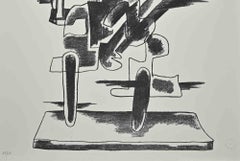
Although Cubism was a revolutionary art movement for European culture, it was informed by African masks and other tribal art. Its artists, which included Fernand Léger, Alexander Archipenko, Marcel Duchamp, Juan Gris and Jean Metzinger, experimented with compressing space and playing with the tension between solid and void forms in their work. While their subjects were often conventional, such as still lifes, nudes and landscapes, they were distorted without any illusion of realism.

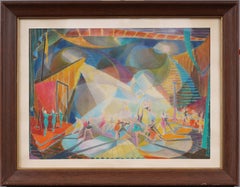
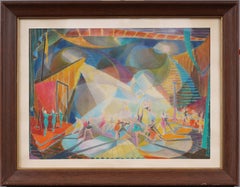
Cubist art evolved through different distinct phases. In Analytic Cubism, from 1908 to 1912, figures or objects were “analyzed” into pieces that were reassembled in paintings and sculptures, as if presenting the same subject matter from many perspectives at once. The palette was usually monochromatic and muted, giving attention to the overlapping planes. Synthetic Cubism, dating from 1912 to 1914, moved to brighter colors and a further flattening of images. This unmooring from formal ideas of art would shape numerous styles that followed, from Dada to Surrealism.

Find a collection of authentic Cubist paintings, prints and multiples, sculptures and more art on 1stDibs.

to
682
731
372
465
232
163
Overall Width
to
Overall Height
to
2
1,514
473
4
40
60
121
146
281
238
132
74
40
114,742
62,521
57,433
27,532
14,592
9,409
6,644
5,740
4,335
3,097
2,447
2,345
2,140
608
1,207
614
73
704
535
399
247
246
232
134
123
61
50
42
35
30
27
27
26
25
25
24
23
899
585
562
345
341
170
61
39
34
29
503
256
1,257
670
Style: Cubist
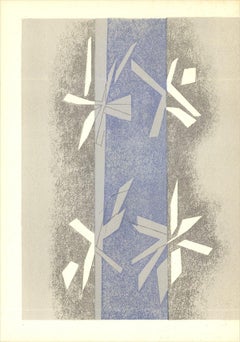
Fernand Leger, Water, from Verve, Revue Artistique, 1937

Fernand Leger, Water, from Verve, Revue Artistique, 1937

By Fernand Léger

Located in Southampton, NY

This exquisite lithograph by Fernand Leger (1881–1955), titled L’Eau (Water), from Verve, Revue Artistique et Litteraire, Vol. I, No. 1, originates from the 1937 issue published by Editions de la revue Verve, Paris, under the direction of Teriade, Editeur, Paris, and printed by Mourlot Freres, Paris, 1937. This vibrant composition embodies Leger’s fascination with the elemental forces of nature reinterpreted through the lens of modernity. L’Eau reflects his ongoing exploration of the harmony between mechanical precision and organic movement, transforming the natural motif of flowing water into an abstract symphony of curves, color, and rhythm. Through its interplay of form and line, the work reveals Leger’s mastery of balance and visual dynamism—an artistic celebration of motion and modern life. Executed as a lithograph on velin du Marais paper, this work measures 14 x 10.5 inches (35.56 x 26.67 cm). Signed in the plate and unnumbered as issued. The edition reflects the superior craftsmanship of the Mourlot Freres atelier, celebrated for its collaborations with the leading modern artists of the 20th century. Artwork Details: Artist: Fernand Leger (1881–1955) Title: L’Eau (Water), from Verve, Revue Artistique et Litteraire, Vol. I, No. 1, 1937 Medium: Lithograph on velin du Marais paper Dimensions: 14 x 10.5 inches (35.56 x 26.67 cm) Inscription: Signed in the plate and unnumbered as issued Date: 1937 Publisher: Editions de la revue Verve, Paris, under the direction of Teriade, Editeur, Paris Printer: Mourlot Freres, Paris Condition: Well preserved, consistent with age and medium Provenance: From Verve, Revue Artistique et Litteraire, Vol. I, No. 1, published by Editions de la revue Verve, Paris, 1937 About the Publication: Verve, Revue Artistique et Litteraire was one of the most influential art periodicals of the 20th century, founded in Paris in 1937 by the visionary Greek-born publisher Teriade (Stratis Eleftheriades). Designed as a meeting point of art, poetry, and philosophy, Verve united the era’s greatest modern artists—including Henri Matisse, Pablo Picasso, Marc Chagall, Georges Braque, Joan Miro, and Fernand Leger—with leading intellectuals such as Paul Eluard and Albert Camus. Printed by the master lithographers Mourlot Freres, each issue was a masterpiece of craftsmanship, presenting original lithographs alongside literary works in a richly designed format. The inaugural issue, Vol. I, No. 1, published in 1937, marked a defining moment in the history of modern art publishing—introducing the vision of Verve as a beacon of artistic collaboration and aesthetic excellence that would shape the visual culture of the 20th century. About the Artist: Fernand Leger (1881–1955) was a visionary French painter, sculptor, designer, and filmmaker whose groundbreaking fusion of modern industry, vivid color, and geometric form transformed the course of 20th-century art. Born in Argentan, Normandy, Leger began as an architectural draftsman before studying at the Academie Julian and the Ecole des Beaux-Arts in Paris, where he absorbed the lessons of Paul Cezanne’s structural rigor and the revolutionary ideas of Cubism. Alongside Pablo Picasso and Georges Braque, he became one of the leading innovators of the avant-garde, yet his work stood apart through its embrace of mechanical rhythm, bold contrasts, and industrial modernity—earning him the title “the painter of the machine age.” His art celebrated the beauty of technology, urban life, and the human form rendered in dynamic, interlocking cylinders and planes, evoking the pulse of the modern world. Immersed in the vibrant Parisian art scene, Leger worked in dialogue with peers and contemporaries such as Alexander Calder, Alberto Giacometti, Salvador Dali, Joan Miro, Wassily Kandinsky, Marcel Duchamp, and Man Ray, all of whom shared his commitment to innovation and the reimagining of artistic expression. Beyond painting, Leger’s creative reach extended into film, design, and monumental public art—his 1924 collaboration on Ballet Mecanique with Dudley Murphy and Man Ray remains a landmark of avant-garde cinema. His later works evolved toward greater clarity and monumentality, celebrating the unity of form, color, and humanity through large-scale murals and mosaics that bridged fine art and architecture. Leger’s synthesis of Cubism, Futurism, and abstraction paved the way for movements such as Pop Art and influenced generations of artists including Roy Lichtenstein, Ellsworth Kelly, Robert Indiana, and Alexander Calder, who admired his fusion of structure, energy, and optimism. Today, his works are prized by major museums and collectors worldwide for their bold visual power and enduring modernity. His highest auction record was achieved by La femme en rouge et vert (1914), which sold for $39,241,000 at Sotheby’s, New York, on May 7, 2008. Fernand Leger L’Eau, Leger Verve, Leger Mourlot...

Category

1930s Cubist Art

Materials

Lithograph

20th Century French Cubist Abstract Still Life Objects Painting

20th Century French Cubist Abstract Still Life Objects Painting

Located in Cirencester, Gloucestershire

Raymond Guidot (1934–2021) oil painting on board, unframed board: 13.75 x 10.5 inches stamped verso condition: very good provenance: from a large private collection of this artists w...

Category

Late 20th Century Cubist Art

Materials

Oil

1950's French Cubist/ Modernist Oil Painting One of the Stations of the Cross

1950's French Cubist/ Modernist Oil Painting One of the Stations of the Cross

Located in Cirencester, Gloucestershire

One of the Stations of the Cross by Jean La Forgue (French 1901-1975) *see notes below oil painting on canvas, housed in original metal frame overall dimensions: 17 x 17 inches prov...

Category

Mid-20th Century Cubist Art

Materials

Canvas, Oil

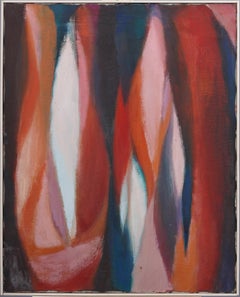
Untitled

Untitled

By Edmund Daniel Kinzinger

Located in Dallas, TX

Edmund D. Kinzinger was born in 1888, in Pforzhein, Germany. In Munich he studied at the Kirr Schule and the Staatliche Akademie, and pursued graduate studies at the Academie Modern, Paris. Before serving in the German Army, Kinzinger was a master student of Adolph Holzel at the Staatcliche Akademie, Stuttgart; he returned to study under Henrich Waldschmidt after nearly five years of artillery service. Several of Kinzinger’s fellow students in Germany, such as Johannes Itten, would go on to be associated with the Bauhaus school. Coming into contact with all manner of artistic influences in Europe after World War One, Kinzinger’s work may be viewed as a “synthesis” of modernist styles. The influences of Abstract Expressionist, Cubist, and Futurist styles in Kinzinger’s work at this time are symptomatic of his contact with the likes of Hans Hofmann, Pablo Picasso, and Alexander Archipenko. About this period of Kinzinger's work, Philip Van Keuren...

Category

1930s Cubist Art

Materials

Crayon, Paper, Pencil

Cubist Female Nude Woman

Cubist Female Nude Woman

Located in Wilton Manors, FL

Joseph Kardonne (1911-1985). Nude Woman, 1946. Watercolor on paper, sheet measures 9 x 6; 13 x 10 inches in matting. Signed, dated and titled lower right. Excellent condition. Born...

Category

Mid-20th Century Cubist Art

Materials

Watercolor

12 Mai 1970 - Etching by Pablo Picasso - 1970

12 Mai 1970 - Etching by Pablo Picasso - 1970

By Pablo Picasso

Located in Roma, IT

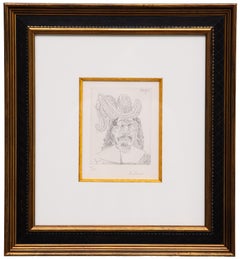
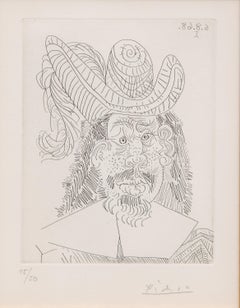
12 Mai 1970 (The King and The Queen) is an artwork realized by Pablo Picasso in 1970. Etching on paper. Date printed on plate. Artist's stamp of signature in the lower right. Hand...

Category

1970s Cubist Art

Materials

Etching

Cubist French Oil Painting Still Life Abstract Composition

Cubist French Oil Painting Still Life Abstract Composition

Located in Cirencester, Gloucestershire

Artist/ School: Pierre Vincent, French contemporary Title: Cubist composition Medium: oil painting on canvas, unframed, signed and inscribed verso canvas: 18 x 22 inches Provenan...

Category

21st Century and Contemporary Cubist Art

Materials

Oil, Canvas

Sonia Delaunay, Portrait of a Young Girl, from Faces of Children, 1968 (after)

Sonia Delaunay, Portrait of a Young Girl, from Faces of Children, 1968 (after)

By Sonia Delaunay

Located in Southampton, NY

This exquisite lithograph and pochoir after Sonia Delaunay (1885–1979), titled Portrait de petite fille (Portrait of a Young Girl), originates from the 1968 folio Visages d Enfants. Quinze Dessins de Durer a Dufy Appartenant aux Collections des Musees Nationaux (Faces of Children. Fifteen Drawings from Durer to Dufy from the Collections of the National Museums), published by Editions Artistiques et Documentaires, Paris, and Daniel Jacomet, Editeur, Paris, and rendered and printed by Daniel Jacomet et Cie, Paris, 1968. The composition reflects Delaunay’s modern sensitivity to rhythm, structure, and expressive clarity, translating the original drawing into a refined synthesis of color and form through meticulous printmaking. Executed as a lithograph and pochoir on velin paper, archivally hinged on a velin support sheet as issued, this work measures 18.5 x 14 inches overall, with the image measuring approximately 13.39 x 10.83 inches. Signed in the plate and unnumbered as issued. Rendered and printed by Daniel Jacomet et Cie, Paris. Artwork Details: Artist: After Sonia Delaunay (1885–1979) Title: Portrait de petite fille (Portrait of a Young Girl), from Visages d Enfants. Quinze Dessins de Durer a Dufy Appartenant aux Collections des Musees Nationaux (Faces of Children. Fifteen Drawings from Durer to Dufy from the Collections of the National Museums), 1968 Medium: Lithograph and pochoir on velin paper, archivally hinged on velin support sheet, as issued Dimensions: 18.5 x 14 inches overall; image size 13.39 x 10.83 inches Inscription: Signed in the plate and unnumbered as issued Date: 1968 Publisher: Editions Artistiques et Documentaires, Paris; Daniel Jacomet, Editeur, Paris Printer: Daniel Jacomet et Cie, Paris Condition: Well preserved, consistent with age and medium Provenance: From the 1968 folio Visages d Enfants. Quinze Dessins de Durer a Dufy Appartenant aux Collections des Musees Nationaux, published by Editions Artistiques et Documentaires and Daniel Jacomet, Paris Notes: Excerpted from the folio (translated from French), This album, first of the series of pochoirs similar to masters drawings, published by Daniel Jacomet, publisher, was completed printing on March XXXI, MCMLXVIII. The fifteen drawings have been rendered in similar pochoirs in Les Ateliers Daniel Jacomet. Composition and typographic printing are from the Union Printing. It was drawn in LXX numbered examples and L examples, out of the trade. About the Publication: Visages d Enfants. Quinze Dessins de Durer a Dufy Appartenant aux Collections des Musees Nationaux, issued in 1968, represents a landmark achievement in Parisian printmaking devoted to the faithful translation of historic master drawings into modern pochoir and lithographic form. Conceived and published by Daniel Jacomet in collaboration with Editions Artistiques et Documentaires, the project inaugurated a series dedicated to rendering canonical drawings with exceptional fidelity to line, tone, and original intent. Jacomets atelier was internationally respected for its rigorous technical standards and scholarly approach, bridging museum collections and contemporary print culture through meticulous craftsmanship. By uniting works spanning centuries and artistic traditions, the publication reflects a curatorial vision rooted in preservation, education, and aesthetic continuity. Produced in strictly limited examples, including a small number outside the trade, it exemplifies the highest standards of mid twentieth century Parisian printmaking and remains valued for its role in transmitting the legacy of master draftsmanship to collectors, institutions, and scholars. About the Artist: Sonia Delaunay (1885–1979) was a Ukrainian born French painter, designer, and avant garde visionary whose revolutionary use of color, geometry, and abstraction transformed twentieth century art and design. Born Sarah Stern in Odessa, she moved to Paris, where she became a leading figure of modernism and a pioneer of Orphism, a lyrical offshoot of Cubism founded with her husband Robert Delaunay that fused structure, rhythm, and pure chromatic energy. Deeply influenced by the innovations of Pablo Picasso, Alexander Calder, Alberto Giacometti, Salvador Dali, Joan Miro, Wassily Kandinsky, Marcel Duchamp, and Man Ray, Delaunay absorbed the experimental spirit of the European avant garde while extending abstraction beyond the canvas into fashion, textiles, interiors, and stage design. Her theory of simultaneity celebrated the dynamic interaction of colors, creating visual rhythms that paralleled music and movement, and her designs for the Ballets Russes and Atelier Simultane introduced geometric modernism into everyday life. Like Picasso, she sought to unify art and existence; like Kandinsky, she viewed color as a spiritual force; and like Duchamp and Man Ray, she embraced modern technology and materials as tools for innovation. Her works from the nineteen thirties through the nineteen sixties captured the rhythm of modern life through radiant compositions of interlocking forms and shifting hues. The first living woman honored with a retrospective at the Louvre in nineteen sixty four, Delaunay remains a cornerstone of modernism, with works held in the Museum of Modern Art, the Tate Modern, and the Centre Pompidou. Her highest auction record was achieved by Rythme couleur (1964), which sold for approximately 4.3 million US dollars at Sothebys Paris on November twenty four, two thousand twenty one, confirming her enduring influence and global stature. Sonia Delaunay lithograph...

Category

1960s Cubist Art

Materials

Lithograph, Stencil

In Between Shadows: 'Vintage Bottle', 20th Century, Signed Framed Photograph

In Between Shadows: 'Vintage Bottle', 20th Century, Signed Framed Photograph

By Sander Vos

Located in London, GB

Intertwined silhouettes reveal the rhythmic dance of light and shadow in abstract form... The series ‘In Between the Shadows’ consists of structural and geometric photographs that ta...

Category

2010s Cubist Art

Materials

Photographic Paper, Black and White, Color, Giclée, Archival Pigment

Portrait of a woman in front of a seascape

Portrait of a woman in front of a seascape

Located in Genève, GE

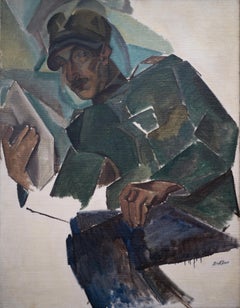
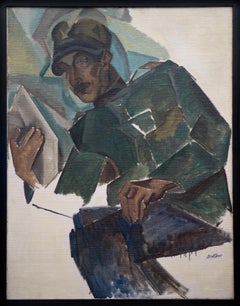
Work on canvas Dimensions with frame : 98 x 82 x 3.7 cm This work features an intense-looking figure in a stylistically simplified gray coat, providing a striking contrast to the br...

Category

Early 20th Century Cubist Art

Materials

Oil

Fernand Leger, Composition with Three Keys, Derriere le miroir, 1955 (after)

Fernand Leger, Composition with Three Keys, Derriere le miroir, 1955 (after)

By Fernand Léger

Located in Southampton, NY

This exquisite lithograph after Fernand Leger (1881–1955), titled Composition aux trois cles (Composition with Three Keys), from the folio Derriere le miroir, No. 79-81, originates from the 1955 edition published by Maeght Editeur, Paris, and printed by Mourlot Freres, Paris, 1955. This composition exemplifies Leger’s rhythmic balance of color, form, and movement, translating the mechanical vitality of modern life into a harmonious, humanized geometry. Executed as a lithograph on velin paper, this work measures 15 x 22 inches, with centerfold as issued. Signed in the plate and unnumbered as issued. The edition exemplifies the superb craftsmanship of Mourlot Freres, Paris. Artwork Details: Artist: After Fernand Leger (1881–1955) Title: Composition aux trois cles (Composition with Three Keys), from the folio Derriere le miroir, No. 79-81 Medium: Lithograph on velin paper Dimensions: 15 x 22 inches (38.1 x 55.88 cm), with centerfold as issued Inscription: Signed in the plate and unnumbered as issued Date: 1955 Publisher: Maeght Editeur, Paris Printer: Mourlot Freres, Paris Condition: Well preserved, consistent with age and medium Provenance: From the folio Derriere le miroir, No. 79-81, published by Maeght Editeur, Paris; printed by Mourlot Freres, Paris, 1955 About the Publication: Derriere le miroir (Behind the Mirror) was one of the most important art publications of the 20th century, created and published by Maeght Editeur in Paris from 1946 to 1982. Founded by the visionary art dealer and publisher Aime Maeght, the series served as both an exhibition catalogue and a work of art in its own right, uniting original lithographs by leading modern and contemporary artists with critical essays, poetry, and design of the highest quality. Printed by master lithographers such as Mourlot Freres and Arte, Derriere le miroir became synonymous with the artistic vanguard of postwar Europe. Each issue was devoted to a single artist or theme and published to accompany exhibitions at the Galerie Maeght in Paris, featuring works by Pablo Picasso, Henri Matisse, Georges Braque, Joan Miro, Marc Chagall, Alexander Calder, Fernand Leger, and Alberto Giacometti, among others. The publication reflected Maeght's belief that art should be both accessible and elevated—an ideal realized through its luxurious production values, meticulous printing, and collaboration with the greatest creative minds of its time. About the Artist: Fernand Leger (1881–1955) was a visionary French painter, sculptor, designer, and filmmaker whose groundbreaking fusion of modern industry, vivid color, and geometric form transformed the course of 20th-century art. Born in Argentan, Normandy, Leger began as an architectural draftsman before studying at the Academie Julian and the Ecole des Beaux-Arts in Paris, where he absorbed the lessons of Paul Cezanne’s structural rigor and the revolutionary ideas of Cubism. Alongside Pablo Picasso and Georges Braque, he became one of the leading innovators of the avant-garde, yet his work stood apart through its embrace of mechanical rhythm, bold contrasts, and industrial modernity—earning him the title “the painter of the machine age.” His art celebrated the beauty of technology, urban life, and the human form rendered in dynamic, interlocking cylinders and planes, evoking the pulse of the modern world. Immersed in the vibrant Parisian art scene, Leger worked in dialogue with peers and contemporaries such as Alexander Calder, Alberto Giacometti, Salvador Dali, Joan Miro, Wassily Kandinsky, Marcel Duchamp, and Man Ray, all of whom shared his commitment to innovation and the reimagining of artistic expression. Beyond painting, Leger’s creative reach extended into film, design, and monumental public art—his 1924 collaboration on Ballet Mecanique with Dudley Murphy and Man Ray remains a landmark of avant-garde cinema. His later works evolved toward greater clarity and monumentality, celebrating the unity of form, color, and humanity through large-scale murals and mosaics that bridged fine art and architecture. Leger’s synthesis of Cubism, Futurism, and abstraction paved the way for movements such as Pop Art and influenced generations of artists including Roy Lichtenstein, Ellsworth Kelly, Robert Indiana, and Alexander Calder, who admired his fusion of structure, energy, and optimism. Today, his works are prized by major museums and collectors worldwide for their bold visual power and enduring modernity. His highest auction record was achieved by La femme en rouge et vert (1914), which sold for 39,241,000 USD at Sotheby’s, New York, on May 7, 2008. After Fernand Leger Composition aux trois cles 1955, Leger Derriere le miroir No. 79-81, Leger Mourlot...

Category

1950s Cubist Art

Materials

Lithograph

Fernand Leger, The Two Figures, from Derriere le miroir, 1955 (after)

Fernand Leger, The Two Figures, from Derriere le miroir, 1955 (after)

By Fernand Léger

Located in Southampton, NY

This exquisite lithograph after Fernand Leger (1881–1955), titled Le deux figures (The Two Figures), from the folio Derriere le miroir, No. 79-81, originates from the 1955 edition published by Maeght Editeur, Paris, and printed by Mourlot Freres, Paris, 1955. This composition exemplifies Leger’s rhythmic balance of color, form, and movement, translating the mechanical vitality of modern life into a harmonious, humanized geometry. Executed as a lithograph on velin paper, this work measures 15 x 11 inches. Signed in the plate and unnumbered as issued. The edition exemplifies the superb craftsmanship of Mourlot Freres, Paris. Artwork Details: Artist: After Fernand Leger (1881–1955) Title: Le deux figures (The Two Figures), from the folio Derriere le miroir, No. 79-81 Medium: Lithograph on velin paper Dimensions: 15 x 11 inches (38.1 x 27.94 cm) Inscription: Signed in the plate and unnumbered as issued Date: 1955 Publisher: Maeght Editeur, Paris Printer: Mourlot Freres, Paris Condition: Well preserved, consistent with age and medium Provenance: From the folio Derriere le miroir, No. 79-81, published by Maeght Editeur, Paris; printed by Mourlot Freres, Paris, 1955 About the Publication: Derriere le miroir (Behind the Mirror) was one of the most important art publications of the 20th century, created and published by Maeght Editeur in Paris from 1946 to 1982. Founded by the visionary art dealer and publisher Aime Maeght, the series served as both an exhibition catalogue and a work of art in its own right, uniting original lithographs by leading modern and contemporary artists with critical essays, poetry, and design of the highest quality. Printed by master lithographers such as Mourlot Freres and Arte, Derriere le miroir became synonymous with the artistic vanguard of postwar Europe. Each issue was devoted to a single artist or theme and published to accompany exhibitions at the Galerie Maeght in Paris, featuring works by Pablo Picasso, Henri Matisse, Georges Braque, Joan Miro, Marc Chagall, Alexander Calder, Fernand Leger, and Alberto Giacometti, among others. The publication reflected Maeght's belief that art should be both accessible and elevated—an ideal realized through its luxurious production values, meticulous printing, and collaboration with the greatest creative minds of its time. About the Artist: Fernand Leger (1881–1955) was a visionary French painter, sculptor, designer, and filmmaker whose groundbreaking fusion of modern industry, vivid color, and geometric form transformed the course of 20th-century art. Born in Argentan, Normandy, Leger began as an architectural draftsman before studying at the Academie Julian and the Ecole des Beaux-Arts in Paris, where he absorbed the lessons of Paul Cezanne’s structural rigor and the revolutionary ideas of Cubism. Alongside Pablo Picasso and Georges Braque, he became one of the leading innovators of the avant-garde, yet his work stood apart through its embrace of mechanical rhythm, bold contrasts, and industrial modernity—earning him the title “the painter of the machine age.” His art celebrated the beauty of technology, urban life, and the human form rendered in dynamic, interlocking cylinders and planes, evoking the pulse of the modern world. Immersed in the vibrant Parisian art scene, Leger worked in dialogue with peers and contemporaries such as Alexander Calder, Alberto Giacometti, Salvador Dali, Joan Miro, Wassily Kandinsky, Marcel Duchamp, and Man Ray, all of whom shared his commitment to innovation and the reimagining of artistic expression. Beyond painting, Leger’s creative reach extended into film, design, and monumental public art—his 1924 collaboration on Ballet Mecanique with Dudley Murphy and Man Ray remains a landmark of avant-garde cinema. His later works evolved toward greater clarity and monumentality, celebrating the unity of form, color, and humanity through large-scale murals and mosaics that bridged fine art and architecture. Leger’s synthesis of Cubism, Futurism, and abstraction paved the way for movements such as Pop Art and influenced generations of artists including Roy Lichtenstein, Ellsworth Kelly, Robert Indiana, and Alexander Calder, who admired his fusion of structure, energy, and optimism. Today, his works are prized by major museums and collectors worldwide for their bold visual power and enduring modernity. His highest auction record was achieved by La femme en rouge et vert (1914), which sold for 39,241,000 USD at Sotheby’s, New York, on May 7, 2008. After Fernand Leger Le deux figures 1955, Leger Derriere le miroir No. 79-81, Leger Mourlot...

Category

1950s Cubist Art

Materials

Lithograph

In Between The Shadows - Large framed photographic collage fine art print

In Between The Shadows - Large framed photographic collage fine art print

By Sander Vos

Located in London, GB

The series ‘In Between the Shadows’ consists of structural and geometric photographs that take their inspiration from the cubist movement. The works aim to challenge the conventiona...

Category

2010s Cubist Art

Materials

Photographic Paper, Black and White, Color, Monoprint, Archival Pigment

Bowl of Fruit

Bowl of Fruit

Located in Los Angeles, CA

Pascal Jarrion was born in 1961 in Perpignan, France, a region known for its Catalan culture as well as its influence on artists before him, including Picasso, Van Gogh, and Maillol....

Category

21st Century and Contemporary Cubist Art

Materials

Oil, Wood Panel

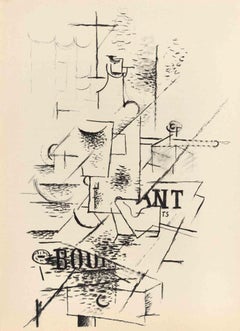
La Bouteille - Georges Braque - 1963

La Bouteille - Georges Braque - 1963

By Georges Braque

Located in Roma, IT

La Bouteille is a lithograph after a graphic work first realized by Georges Braque in 1911. Good conditions. This print is from the portfolio Derrière Le Miroir No. 138 p.7. Edited...

Category

1960s Cubist Art

Materials

Lithograph

L’Instant de l’Esquisse Oil Painting, Post-Cubist Studio Scene by Sophie Dumont

L’Instant de l’Esquisse Oil Painting, Post-Cubist Studio Scene by Sophie Dumont

By SOPHIE DUMONT

Located in LANGRUNE-SUR-MER, FR

L’Instant de l’Esquisse is an original oil painting by French contemporary artist Sophie Dumont. Known for her stylized libraries, abstract landscapes, and contemplative studio inter...

Category

21st Century and Contemporary Cubist Art

Materials

Oil

American Ballet, Cubist Aquatint Etching by Max Papart

American Ballet, Cubist Aquatint Etching by Max Papart

By Max Papart

Located in Long Island City, NY

Artist: Max Papart Title: Five Dancers Year: Circa 1980 Medium: Aquatint Etching with Carborundum, signed and numbered in pencil Edition: 3/25 Image Size: 34 x 34 inches Paper Size: ...

Category

1980s Cubist Art

Materials

Etching, Aquatint

La Scoperta Della Sicilia - Original Figurative Cubist Painting on Canvas

La Scoperta Della Sicilia - Original Figurative Cubist Painting on Canvas

By Alessandro Siviglia

Located in Los Angeles, CA

In his abstract figurative work, internationally collected artist Alessandro Siviglia deconstructs everyday objects, landscapes, and human subjects into colorful geometric shapes in ...

Category

21st Century and Contemporary Cubist Art

Materials

Canvas, Mixed Media, Acrylic

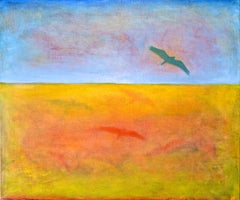
Bird on Sea Rocks
Bird on Sea Rocks

Bird on Sea Rocks

Located in Wilton Manors, FL

Chris Ritter (1906-1976). Red Bird on Sea Rocks, ca. 1960. Watercolor on rag paper, sheet measures 15 x 22 inches. Sheet is loose and unmounted. Unframed. Estate stamps500 on v...

Category

Mid-20th Century Cubist Art

Materials

Watercolor, Rag Paper

Rendez-Vous

Rendez-Vous

By Miette Braive

Located in West Hollywood, CA

Belgian artist Miette Braive(1916-2000), was classically trained in Belgium, before moving to Paris to pursue her art career as first a student and then a contemporary of the French ...

Category

1940s Cubist Art

Materials

Oil

Pablo Picasso, Untitled, from Carmen, 1949

Pablo Picasso, Untitled, from Carmen, 1949

By Pablo Picasso

Located in Southampton, NY

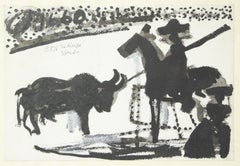
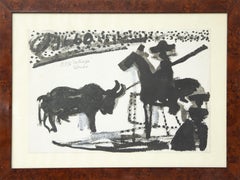
This exquisite engraving by Pablo Picasso (1881–1973), titled Sans titre (Untitled), from the folio Picasso, Carmen (Picasso, Carmen), originates from the 1949 edition published by L...

Category

1940s Cubist Art

Materials

Engraving

Pablo Picasso, Untitled, from Carmen, 1949

Pablo Picasso, Untitled, from Carmen, 1949

By Pablo Picasso

Located in Southampton, NY

This exquisite engraving by Pablo Picasso (1881–1973), titled Sans titre (Untitled), from the folio Picasso, Carmen (Picasso, Carmen), originates from the 1949 edition published by L...

Category

1940s Cubist Art

Materials

Engraving

Pablo Picasso, Untitled, from Carmen, 1949

Pablo Picasso, Untitled, from Carmen, 1949

By Pablo Picasso

Located in Southampton, NY

This exquisite engraving by Pablo Picasso (1881–1973), titled Sans titre (Untitled), from the folio Picasso, Carmen (Picasso, Carmen), originates from the 1949 edition published by L...

Category

1940s Cubist Art

Materials

Engraving

Pablo Picasso, Untitled, from Carmen, 1949

Pablo Picasso, Untitled, from Carmen, 1949

By Pablo Picasso

Located in Southampton, NY

This exquisite engraving by Pablo Picasso (1881–1973), titled Sans titre (Untitled), from the folio Picasso, Carmen (Picasso, Carmen), originates from the 1949 edition published by L...

Category

1940s Cubist Art

Materials

Engraving

Pablo Picasso, Untitled, from Carmen, 1949

Pablo Picasso, Untitled, from Carmen, 1949

By Pablo Picasso

Located in Southampton, NY

This exquisite engraving by Pablo Picasso (1881–1973), titled Sans titre (Untitled), from the folio Picasso, Carmen (Picasso, Carmen), originates from the 1949 edition published by L...

Category

1940s Cubist Art

Materials

Engraving

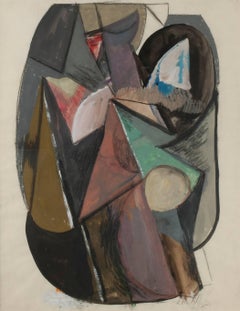
Mid 20th-Century French Oil Painting Cubist Portrait of Nude Lady signed

Mid 20th-Century French Oil Painting Cubist Portrait of Nude Lady signed

Located in Cirencester, Gloucestershire

Nude Model by Therese Hummel (French, 1911-1999) signed & dated 1954 oil on canvas, unframed canvas : 11 x 14 inches Provenance: private collection of this artists work, Paris Condit...
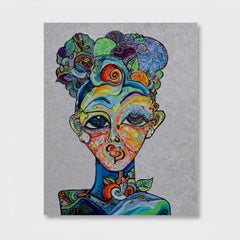
Category

Mid-20th Century Cubist Art

Materials

Oil

Modern British Cubist Oil Painting Still Life Composition Large Original Signed

Modern British Cubist Oil Painting Still Life Composition Large Original Signed

Located in Cirencester, Gloucestershire

Artist/ School: Kathleen Crow, British contemporary Title: Cubist composition Medium: oil on board, unframed Board: 20 x 24 inches Provenance: private collection, England Condi...

Category

20th Century Cubist Art

Materials

Oil

Contemporary Large-Scale Cubist Earthtone Abstract

Contemporary Large-Scale Cubist Earthtone Abstract

By Michael Pauker
Located in Soquel, CA

Contemporary cubist abstract composition in warm neutral earth-tones including white, grey, black, and an earthy orange/tan by Michael Pauker (American, b. 1957), c.2000s. This versa...
Category

21st Century and Contemporary Cubist Art

Materials

Oil, Canvas

Cubist art for sale on 1stDibs.

Find a wide variety of authentic Cubist art available for sale on 1stDibs. Works in this style were very popular during the 21st Century and Contemporary, but contemporary artists have continued to produce works inspired by this movement. If you’re looking to add art created in this style to introduce contrast in an otherwise neutral space in your home, the works available on 1stDibs include elements of blue, orange, purple, yellow and other colors. Many Pop art paintings were created by popular artists on 1stDibs, including Pablo Picasso, (after) Pablo Picasso, Borja Guijarro, and Corne Akkers. Frequently made by artists working with Paint, and Lithograph and other materials, all of these pieces for sale are unique and have attracted attention over the years. Not every interior allows for large Cubist art, so small editions measuring 1.5 inches across are also available. Prices for art made by famous or emerging artists can differ depending on medium, time period and other attributes. On 1stDibs, the price for these items starts at $1 and tops out at $265,000, while the average work sells for $2,400.