Romantic Art

969 Results
ROMANTIC STYLE

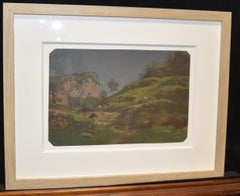
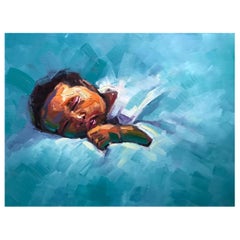
In emphasizing emotion and imagination, romantic art shifted away from the restraint of classicism and neoclassicism that had dominated art in Europe since the Renaissance. Romanticism achieved its greatest popularity in art, literature, music and philosophy between 1780 and 1830, although its expression of individual experiences ranging from awe to passion informed culture in the decades after.

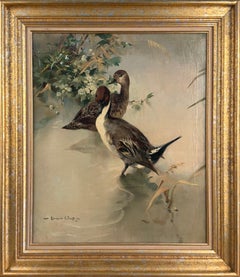
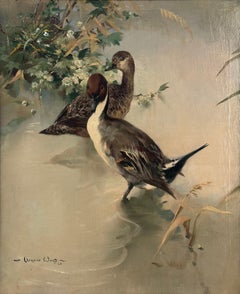
Landscape painting was especially popular during the romantic period, as were nature studies of wild animals and fantasies of exotic lands. Romanticism varied across Europe as it reacted to the rise of industrialization, a more personal relationship with faith that was distanced from the church and the rationalist thinking of the Enlightenment.

British painters such as John Constable and J.M.W. Turner responded dramatically to the light and atmosphere of the natural world, while William Blake conveyed humanity’s connection to the divine in his visionary art. In Germany, the late-18th-century Sturm und Drang, or Storm and Drive, movement, with its probing of the unconscious, inspired a sense of mystery in work by romantic artists such as Caspar David Friedrich and Philipp Otto Runge. In France, where the French Revolution had turned tradition upside down, Théodore Géricault and Eugène Delacroix used lush brushwork to paint monumental canvases with tumultuous scenes of nature and history.

The romantic movement and its subject matter were a significant influence on the Pre-Raphaelites, Symbolists and the American painters of the Hudson River School, as well as on other cultural movements in the 19th and 20th centuries that saw artists build on this perspective in which art was guided by emotion rather than reason.

Find a collection of romantic paintings, sculptures, prints and multiples and more art on 1stDibs.

to
206
424
189
162
109
106
Overall Width
to
Overall Height
to
27
470
265
228
26
10
17
9
13
9
12
6
15
29
26
119,505
63,988
57,347
29,389
14,477
9,724
6,969
6,325
4,268
3,185
2,511
2,321
2,116
588
513
394
31
619
350
164
162
158
112
98
91
68
66
56
48
47
43
40
40
33
33
31
29
630
446
284
264
211
33
14
10
10
9
501
128
548
423
Style: Romantic
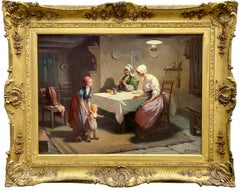
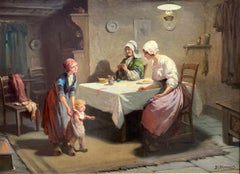
'First Steps' by Bernard J. Blommers (1845 – 1914), signed 'B/Blommers'

'First Steps' by Bernard J. Blommers (1845 – 1914), signed 'B/Blommers'

Bernard Blommers 1845 – The Hague – 1914 Dutch Painter 'First Steps' Signature: signed lower right 'B/Blommers' Medium: oil on canvas, ca. 1865 Dimensions: image size 56,5 x 76,5 c...

Category

19th Century Romantic Art

Materials

Canvas, Oil

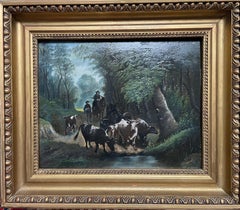
“Forest landscape with herd of cattle”

“Forest landscape with herd of cattle”

Located in Edinburgh, GB

Attributed to Friedrich Voltz (1817–1886) – Bucolic Cattle Scene Artist: Attributed to Friedrich Voltz Period: 19th Century Medium: Oil on Canvas Dimensions: Framed: 35 x 40 cm Artw...

Category

19th Century Romantic Art

Materials

Canvas, Oil

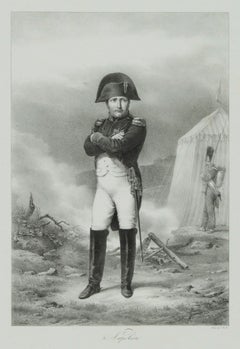
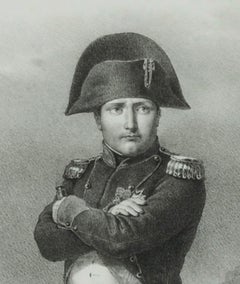
Napoleon Standing
Napoleon Standing

Napoleon Standing

Located in Fairlawn, OH

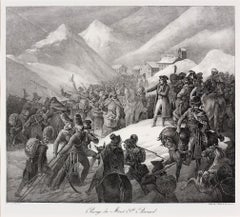
Napoleon Standing Lithograph, 1822 Signed in the stone lower left corner of image (see photo) From: Arnault, A. V. Vie Politique et Militaire de Napoleon (120 plates) Published, Paris, Librairie Historiquem 1822 Printed by C. Motte, Paris Considered to be the major pictorial treatise on Napoleon and his military conquests. Image size: 14 x 9 3/4 inches Sheet size: 23 5/8 x 17 3/4 inches Condition: Very good Horizontal prints...

Category

1820s Romantic Art

Materials

Lithograph

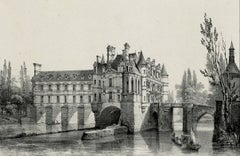
Vue du châteaux de Chenonceaux

Vue du châteaux de Chenonceaux

Located in Fairlawn, OH

Vue du châteaux de Chenonceaux Lithograph, 1843 Letterpress signature lower left corner Signature of the printer lower right corner After Pierre Justin Ouvrié (1806-1879) Published b...

Category

1840s Romantic Art

Materials

Lithograph

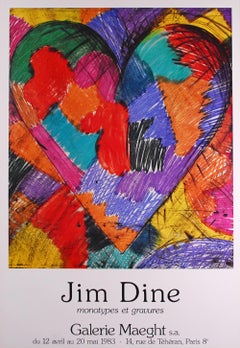
Heart

Jim DineHeart, 1983

$183Sale Price|20% Off

Heart

By Jim Dine

Located in Winterswijk, NL

Color offset lithograph Made for an exhibition at the Galerie Maeght Paris, 12 April - 20 May 1983. Image in great condition, marginal defects

Category

1980s Romantic Art

Materials

Lithograph

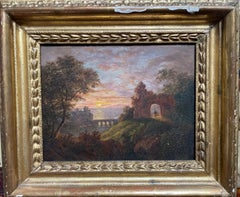
"Italian Landshaft"
"Italian Landshaft"

"Italian Landshaft"

Located in Edinburgh, GB

"Italian Landscape at Sunset" Materials & Technique Medium: Oil on canvas Framed Dimensions: 35 x 27 cm Painting Dimensions: 20 x 15 cm Frame: Giltwood with intricate decorative ...

Category

19th Century Romantic Art

Materials

Canvas, Oil

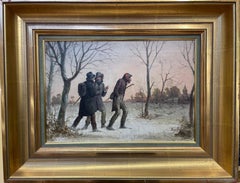
"Winter Wonderland"
"Winter Wonderland"

"Winter Wonderland"

Located in Edinburgh, GB

Unidentified Artist (19th Century) "Winter Wonderland" (1885) This charming 19th-century oil painting captures a winter landscape, depicting three figures trudging through the snow, engaged in animated conversation. The scene is set against a serene rural backdrop, where bare trees and a distant village silhouette convey the stark beauty of winter. The soft glow of the sky, transitioning from warm hues to cool whites, enhances the tranquil yet brisk atmosphere of a cold winter’s day. Plot & Interpretation The three travelers appear to be peasants or laborers, possibly returning home or embarking on a journey. Their layered winter clothing, fur hats, and backpacks suggest they are seasoned wanderers or workers, braving the elements. The gesturing figure in the middle seems to be engaged in storytelling or giving directions, adding a sense of movement and interaction. The snow-covered ground and delicate shadows create depth, emphasizing the hardship and resilience of rural life in the 19th century. Materials & Condition Medium: Oil on canvas Framed Dimensions: 47 x 46 cm Canvas Dimensions: 24 x 34 cm Frame: Ornate giltwood frame, enhancing the painting’s classical aesthetic Condition: Well-preserved with minor age-related patina, in line with its 1885 dating Historical Context & Artistic Style Likely influenced by Northern European realism, particularly Russian, German, or Scandinavian schools that depicted harsh winters and rural peasant life. Comparable to the works of Adolf von Meckel, Vasily Perov, or Carl...

Category

19th Century Romantic Art

Materials

Canvas, Oil

Jesus and  Ponce Pilate

Jesus and Ponce Pilate

Located in Pasadena, CA

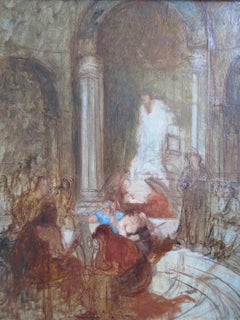
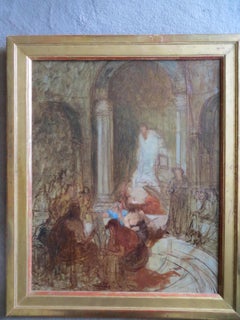
Oil on canvas mounted on panel depicting a study from JP Laurens painting. According to the Gospels, Pilate ordered the execution and crucifixion of this Jewish preacher at the end o...

Category

Mid-19th Century Romantic Art

Materials

Oil

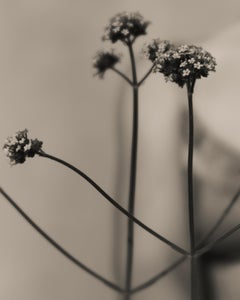
Grace

Grace

By Sal Taylor Kydd

Located in Los Angeles, CA

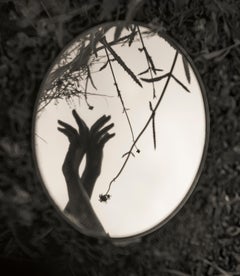
Archival pigment print Signed and dated by the artist 16 x 20 - edition of 10 20 x 30 - edition of 5 Flickering in the Midday Silver Beyond the pane a glimmer, barely perceived...

Category

2010s Romantic Art

Materials

Photogravure

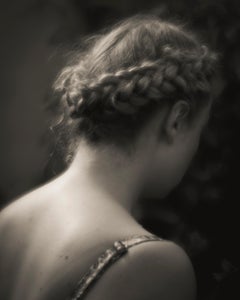
Braided

Braided

By Sal Taylor Kydd

Located in Los Angeles, CA

Archival pigment print Signed and dated by the artist 16 x 20 - edition of 10 20 x 30 - edition of 5 Flickering in the Midday Silver Beyond the pane a glimmer, barely perceived...

Category

2010s Romantic Art

Materials

Photogravure

By Two

By Two

By Sal Taylor Kydd

Located in Los Angeles, CA

Archival pigment print Signed and dated by the artist 16 x 20 - edition of 10 20 x 30 - edition of 5 Flickering in the Midday Silver Beyond the pane a glimmer, barely perceived...

Category

2010s Romantic Art

Materials

Photogravure

'Maple River' original color lithograph by John Mix Stanley

'Maple River' original color lithograph by John Mix Stanley

By John Mix Stanley

Located in Milwaukee, WI

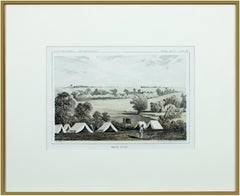
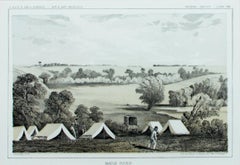
In the mid-nineteenth century, the United States government set out to survey and document its newly acquired lands and territories west of the Mississippi. The goals of these surveys were manifold: to produce topographical maps, to document flora and fauna, and to document natural resources to build the emerging US economy. These surveys, and the images from them, also functioned to build the new sense of American identity with the landscape, condensing vistas into the 'picturesque' tradition of European image making. Thus, the entire span of US territory could be seen as a single, cohesive whole. This lithograph comes from one of six surveys commissioned by the Army's Topographic Bureau in 1853, which sought to find the best route to construct a transcontinental railroad. The result was a thirteen-volume report including maps, lithographs, and technical data entitled 'Explorations and Surveys to ascertain the most practicable and economical route for a Railroad from the Mississippi river to the Pacific Ocean.' Along with the image, Stanley also noted in the report of the Maple River: "It would be an excellent plan for an emigrant travelling through the country, before reaching one of these rivers on which he expects to camp, to catch a few frogs, for the purpose of fishing in these streams, which abound pike, picarel, and large catfish. Frogs are by far the best bait that can be used." This note from the artist perhaps describes some of the actions of the figures in the camp in the foreground of the image. 5.75 x 8.75 inches, image 6.5 x 9.25 inches, stone 13.25 x 16.25 inches, frame Artist 'Stanley Del.' lower left Entitled 'Maple River' lower center margin Publisher 'Sarony, Major & Knapp. Lith.s 449 Broadway N.Y.' lower right Inscribed 'U.S.P.R.R. EXP. & SURVEYS — 47th & 49th PARALLELS' upper left Inscribed 'GENERAL REPORT — PLATE VIII' upper right Framed to conservation standards using 100 percent rag matting and Museum Glass to inhibit fading; housed in a brass-surface aluminium moulding. John Mix...

Category

1850s Romantic Art

Materials

Lithograph

Lady Stanhope - Original Etching

Lady Stanhope - Original Etching

Located in Paris, IDF

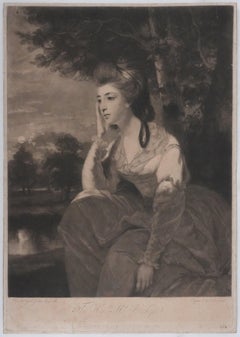
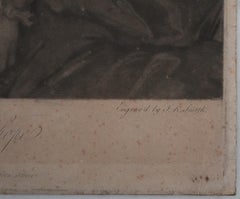
John Raphael SMITH (1752-1812) Lady Stanhope Original etching after a painting of Joshua Reynolds Unsigned On vellum 51.5 x 37 cm (c. 20,27 x 14.56 in) Very good condition, little...

Category

Late 18th Century Romantic Art

Materials

Etching

"Untitled (Red Flower)" Watercolor on Paper, Abstract Flower, Signed & Dated

"Untitled (Red Flower)" Watercolor on Paper, Abstract Flower, Signed & Dated

By Charles Culver

Located in Detroit, MI

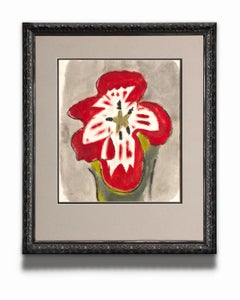
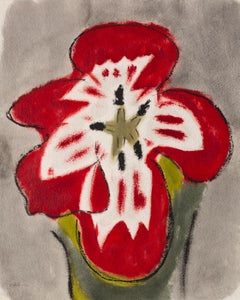
Flowers were one of Culver's favorite subject. This stunning portrait of a red flower draws the viewer into its very center as powerfully as any flower portrait by Georgia O'Keeffe. It is the idyllic flower that can be described as in the romantic style wherein the subject depicted is a more desired or dramatic version of what actually is. It is signed and dated by the artist on the lower left. This piece has been professionally reframed with acid-free matting and museum glass. In a 1952 Detroit Free Press article, entitled “Artist Explains His Work,” Culver was asked why he painted the way he did. He stated: “I try to ‘see’ though not too exactly; I try to think though not too ponderously; I feel emotion yet I try not to become overwrought. I interpret rather than describe, and design rather than depict. I work with values, not light and shade; hence, when I am successful, I achieve substance rather than three-dimensional form, and this satisfies me as being wholly sufficient. In my work I wish to be serious without becoming a bore, exuberant without being frivolous, humorous without being silly. I believe that good paintings are conceived, not contrived; and I am interested in art much more than in pictures.” Charles Culver...

Category

1950s Romantic Art

Materials

Paper, Watercolor

Waiting for Tomorrow

Waiting for Tomorrow

By Sal Taylor Kydd

Located in Los Angeles, CA

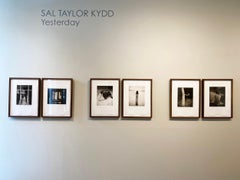
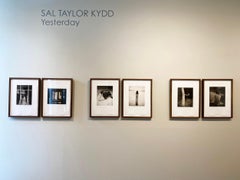
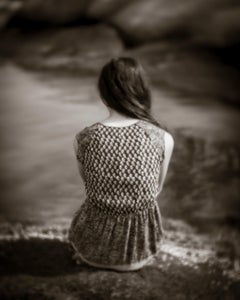
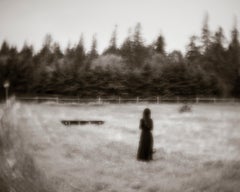
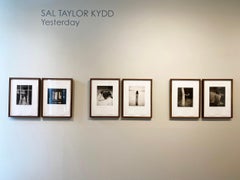
These images are available as hand-pulled polymer photogravures, made with bone black and warm sepia inks on Hahnemühle Copperplate paper. Edition of 109 7 x 9 photopolymer gravure Signed numbered and dated by the artist Framing options available The photographs and poem that evolved into this series of photographs and the accompanying book “Yesterday” were made during the summer of 2020. Although much of the country was in the midst of the Covid 19 pandemic, on this remote island off the coast of Maine, we still felt free from much of the toll that Covid was taking. Able to spend time outside, in nature, we had the illusion of safety, of normalcy almost, whilst at the same time being painfully aware of how the virus was increasingly touching everyone's lives. By then we all knew of people who had died, or become ill and we were managing the stress of futures shifting and plans that had been derailed, fearing what would come with the change of the seasons. That summer represented a pause in time, a moment where life could feel normal, when we were still holding on to a world of yesterdays. Maine-based photographic artist and writer Sal Taylor Kydd uses various photographic media in a personal narrative that explores themes around memory and belonging; combining her poetry with alternative processes of photography and object-making. Taylor Kydd’s fine art photographs have been exhibited throughout the country and internationally, including Barcelona, San Miguel De Allende, Portland, Boston and Los Angeles; and she has been featured in numerous publications, including Shots Magazine, Don’t Take Pictures Magazine, Lenscratch, Diffusion Annual and The Hand magazine. She has self-published a number of books combining her poetry with her photographs. Her books are in private and museum collections throughout the country including The Getty Museum, Bowdoin College, The Peabody Essex Museum and the Maine Women Writer’s Collection at the University of New England. Taylor Kydd’s latest book “Yesterday”, produced by Datz Press, is a limited edition book of poems and photographs that explores our sense of loss around the pandemic of 2020. Taylor Kydd is also a veteran workshop leader and educator and has led workshops and conducted portfolio reviews throughout the country and internationally with Maine Media, Santa Fe Workshops, Palm Beach Photography...

Category

2010s Romantic Art

Materials

Photogravure

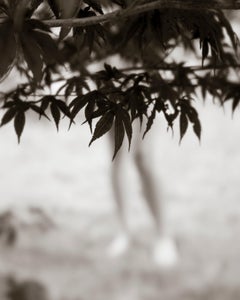
Through Leaves
Through Leaves

Through Leaves

By Sal Taylor Kydd

Located in Los Angeles, CA

These images are available as hand-pulled polymer photogravures, made with bone black and warm sepia inks on Hahnemühle Copperplate paper. Edition of 109 7 x 9 photopolymer gravure Signed numbered and dated by the artist Framing options available The photographs and poem that evolved into this series of photographs and the accompanying book “Yesterday” were made during the summer of 2020. Although much of the country was in the midst of the Covid 19 pandemic, on this remote island off the coast of Maine, we still felt free from much of the toll that Covid was taking. Able to spend time outside, in nature, we had the illusion of safety, of normalcy almost, whilst at the same time being painfully aware of how the virus was increasingly touching everyone's lives. By then we all knew of people who had died, or become ill and we were managing the stress of futures shifting and plans that had been derailed, fearing what would come with the change of the seasons. That summer represented a pause in time, a moment where life could feel normal, when we were still holding on to a world of yesterdays. Maine-based photographic artist and writer Sal Taylor Kydd uses various photographic media in a personal narrative that explores themes around memory and belonging; combining her poetry with alternative processes of photography and object-making. Taylor Kydd’s fine art photographs have been exhibited throughout the country and internationally, including Barcelona, San Miguel De Allende, Portland, Boston and Los Angeles; and she has been featured in numerous publications, including Shots Magazine, Don’t Take Pictures Magazine, Lenscratch, Diffusion Annual and The Hand magazine. She has self-published a number of books combining her poetry with her photographs. Her books are in private and museum collections throughout the country including The Getty Museum, Bowdoin College, The Peabody Essex Museum and the Maine Women Writer’s Collection at the University of New England. Taylor Kydd’s latest book “Yesterday”, produced by Datz Press, is a limited edition book of poems and photographs that explores our sense of loss around the pandemic of 2020. Taylor Kydd is also a veteran workshop leader and educator and has led workshops and conducted portfolio reviews throughout the country and internationally with Maine Media, Santa Fe Workshops, Palm Beach Photography...

Category

2010s Romantic Art

Materials

Photogravure

Twilight
Twilight

Twilight

By Sal Taylor Kydd

Located in Los Angeles, CA

These images are available as hand-pulled polymer photogravures, made with bone black and warm sepia inks on Hahnemühle Copperplate paper. Edition of 109 7 x 9 photopolymer gravure Signed numbered and dated by the artist Framing options available The photographs and poem that evolved into this series of photographs and the accompanying book “Yesterday” were made during the summer of 2020. Although much of the country was in the midst of the Covid 19 pandemic, on this remote island off the coast of Maine, we still felt free from much of the toll that Covid was taking. Able to spend time outside, in nature, we had the illusion of safety, of normalcy almost, whilst at the same time being painfully aware of how the virus was increasingly touching everyone's lives. By then we all knew of people who had died, or become ill and we were managing the stress of futures shifting and plans that had been derailed, fearing what would come with the change of the seasons. That summer represented a pause in time, a moment where life could feel normal, when we were still holding on to a world of yesterdays. Maine-based photographic artist and writer Sal Taylor Kydd uses various photographic media in a personal narrative that explores themes around memory and belonging; combining her poetry with alternative processes of photography and object-making. Taylor Kydd’s fine art photographs have been exhibited throughout the country and internationally, including Barcelona, San Miguel De Allende, Portland, Boston and Los Angeles; and she has been featured in numerous publications, including Shots Magazine, Don’t Take Pictures Magazine, Lenscratch, Diffusion Annual and The Hand magazine. She has self-published a number of books combining her poetry with her photographs. Her books are in private and museum collections throughout the country including The Getty Museum, Bowdoin College, The Peabody Essex Museum and the Maine Women Writer’s Collection at the University of New England. Taylor Kydd’s latest book “Yesterday”, produced by Datz Press, is a limited edition book of poems and photographs that explores our sense of loss around the pandemic of 2020. Taylor Kydd is also a veteran workshop leader and educator and has led workshops and conducted portfolio reviews throughout the country and internationally with Maine Media, Santa Fe Workshops, Palm Beach Photography...

Category

2010s Romantic Art

Materials

Photogravure

Mannequin
Mannequin

Mannequin

By Sal Taylor Kydd

Located in Los Angeles, CA

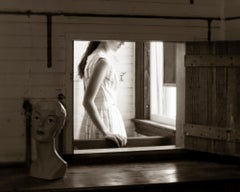
These images are available as hand-pulled polymer photogravures, made with bone black and warm sepia inks on Hahnemühle Copperplate paper. Edition of 109 7 x 9 photopolymer gravure Signed numbered and dated by the artist Framing options available The photographs and poem that evolved into this series of photographs and the accompanying book “Yesterday” were made during the summer of 2020. Although much of the country was in the midst of the Covid 19 pandemic, on this remote island off the coast of Maine, we still felt free from much of the toll that Covid was taking. Able to spend time outside, in nature, we had the illusion of safety, of normalcy almost, whilst at the same time being painfully aware of how the virus was increasingly touching everyone's lives. By then we all knew of people who had died, or become ill and we were managing the stress of futures shifting and plans that had been derailed, fearing what would come with the change of the seasons. That summer represented a pause in time, a moment where life could feel normal, when we were still holding on to a world of yesterdays. Maine-based photographic artist and writer Sal Taylor Kydd uses various photographic media in a personal narrative that explores themes around memory and belonging; combining her poetry with alternative processes of photography and object-making. Taylor Kydd’s fine art photographs have been exhibited throughout the country and internationally, including Barcelona, San Miguel De Allende, Portland, Boston and Los Angeles; and she has been featured in numerous publications, including Shots Magazine, Don’t Take Pictures Magazine, Lenscratch, Diffusion Annual and The Hand magazine. She has self-published a number of books combining her poetry with her photographs. Her books are in private and museum collections throughout the country including The Getty Museum, Bowdoin College, The Peabody Essex Museum and the Maine Women Writer’s Collection at the University of New England. Taylor Kydd’s latest book “Yesterday”, produced by Datz Press, is a limited edition book of poems and photographs that explores our sense of loss around the pandemic of 2020. Taylor Kydd is also a veteran workshop leader and educator and has led workshops and conducted portfolio reviews throughout the country and internationally with Maine Media, Santa Fe Workshops, Palm Beach Photography...

Category

2010s Romantic Art

Materials

Photogravure

Maiden
Maiden

Maiden

By Sal Taylor Kydd

Located in Los Angeles, CA

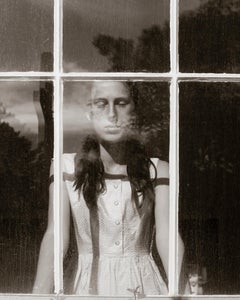
These images are available as hand-pulled polymer photogravures, made with bone black and warm sepia inks on Hahnemühle Copperplate paper. Edition of 109 7 x 9 photopolymer gravure Signed numbered and dated by the artist Framing options available The photographs and poem that evolved into this series of photographs and the accompanying book “Yesterday” were made during the summer of 2020. Although much of the country was in the midst of the Covid 19 pandemic, on this remote island off the coast of Maine, we still felt free from much of the toll that Covid was taking. Able to spend time outside, in nature, we had the illusion of safety, of normalcy almost, whilst at the same time being painfully aware of how the virus was increasingly touching everyone's lives. By then we all knew of people who had died, or become ill and we were managing the stress of futures shifting and plans that had been derailed, fearing what would come with the change of the seasons. That summer represented a pause in time, a moment where life could feel normal, when we were still holding on to a world of yesterdays. Maine-based photographic artist and writer Sal Taylor Kydd uses various photographic media in a personal narrative that explores themes around memory and belonging; combining her poetry with alternative processes of photography and object-making. Taylor Kydd’s fine art photographs have been exhibited throughout the country and internationally, including Barcelona, San Miguel De Allende, Portland, Boston and Los Angeles; and she has been featured in numerous publications, including Shots Magazine, Don’t Take Pictures Magazine, Lenscratch, Diffusion Annual and The Hand magazine. She has self-published a number of books combining her poetry with her photographs. Her books are in private and museum collections throughout the country including The Getty Museum, Bowdoin College, The Peabody Essex Museum and the Maine Women Writer’s Collection at the University of New England. Taylor Kydd’s latest book “Yesterday”, produced by Datz Press, is a limited edition book of poems and photographs that explores our sense of loss around the pandemic of 2020. Taylor Kydd is also a veteran workshop leader and educator and has led workshops and conducted portfolio reviews throughout the country and internationally with Maine Media, Santa Fe Workshops, Palm Beach Photography...

Category

2010s Romantic Art

Materials

Photogravure

Lola's World

Lola's World

By Sal Taylor Kydd

Located in Los Angeles, CA

These images are available as hand-pulled polymer photogravures, made with bone black and warm sepia inks on Hahnemühle Copperplate paper. Edition of 109 7 x 9 photopolymer gravure Signed numbered and dated by the artist. The photographs and poem that evolved into this series of photographs and the accompanying book “Yesterday” were made during the summer of 2020. Although much of the country was in the midst of the Covid 19 pandemic, on this remote island off the coast of Maine, we still felt free from much of the toll that Covid was taking. Able to spend time outside, in nature, we had the illusion of safety, of normalcy almost, whilst at the same time being painfully aware of how the virus was increasingly touching everyone's lives. By then we all knew of people who had died, or become ill and we were managing the stress of futures shifting and plans that had been derailed, fearing what would come with the change of the seasons. That summer represented a pause in time, a moment where life could feel normal, when we were still holding on to a world of yesterdays. Maine-based photographic artist and writer Sal Taylor Kydd uses various photographic media in a personal narrative that explores themes around memory and belonging; combining her poetry with alternative processes of photography and object-making. Taylor Kydd’s fine art photographs have been exhibited throughout the country and internationally, including Barcelona, San Miguel De Allende, Portland, Boston and Los Angeles; and she has been featured in numerous publications, including Shots Magazine, Don’t Take Pictures Magazine, Lenscratch, Diffusion Annual and The Hand magazine. She has self-published a number of books combining her poetry with her photographs. Her books are in private and museum collections throughout the country including The Getty Museum, Bowdoin College, The Peabody Essex Museum and the Maine Women Writer’s Collection at the University of New England. Taylor Kydd’s latest book “Yesterday”, produced by Datz Press, is a limited edition book of poems and photographs that explores our sense of loss around the pandemic of 2020. Taylor Kydd is also a veteran workshop leader and educator and has led workshops and conducted portfolio reviews throughout the country and internationally with Maine Media, Santa Fe Workshops, Palm Beach Photography...

Category

2010s Romantic Art

Materials

Photogravure

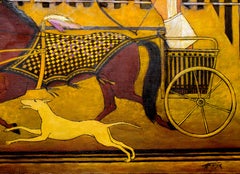
A Cart Race
A Cart Race

A Cart Race

By Thomas Rowlandson

Located in Fairlawn, OH

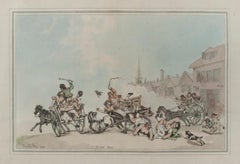
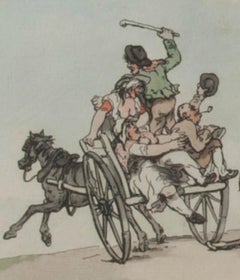
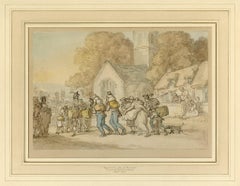
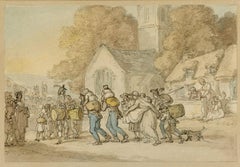
A Cart Race Hand colored etching & aquatint, 1788 Signed in the plate (see photo) Published by William Hollande, London Inscribed in the plate with title, artist's name and publication line 'Rowlandson. 1788./ London. Pubd 1789 by Wm Holland No 50. Oxford Street.' Reference: M.Dorothy George, 'Catalogue of Political and Personal Satires in the British Museum', VI, 1938) British Museum Satires 7607 Grego, 'Rowlandson', i. 260, Grego II.392 Provenance: Chris Beetles Ltd., London (label), 2003 Jeffrey M. Kaplan, Washington, D.C. (label) Fursten zu Oettingen-Wallerstein, Lugt 2715a, verso (see photo) Condition: Excellent Printed on 18th century laid paper Archival framing by Chris Beetles Ltd., London Note: The British Museum has two impressions, one trimmed the other full sheet as this example. Accession Number: 1868,0711.35 The Metropolitan Museum has an impression: Accession number 59.533.314 Fitzwilliam Museum: Accession number: 34.14-286 Cleveland Museum of Art accession number: 1958.10 Image description per BM: Three ramshackle two-wheeled carts drawn by wretched horses race (right to left) against a background formed by the church... Note: The British Museum has two impressions, one trimmed the other full sheet as this example. Accession Number: 1868,0711.35 The Metropolitan Museum has an impression: Accession number 59.533.314 Fitzwilliam Museum: Accession number: 34.14-286 Cleveland Museum of Art accession number: 1958.10 Image description per BM: Three ramshackle two-wheeled carts drawn by wretched horses race (right to left) against a background formed by the clouds of dust which they have raised, with a row of gabled houses (right) inscribed 'St Giles', terminating in a church spire (left), and probably representing Broad St. Giles. The occupants of the carts are Irish costermongers typical of St. Giles. The foremost horse gallops, urged on by the shouts of a standing man brandishing a club. The other occupants, two women and a man, cheer derisively the next cart, whose horse has fallen, one woman falling from it head-first, another lies on the ground. The driver lashes the horse furiously. The third cart, of heavier construction, is starting. The horses are partly obscured by the clouds of dust, but denizens watch from casement windows and a door. Two ragged urchins (right) cheer the race; a dog barks. "It was said that the amount of copper Thomas Rowlandson etched would sheathe the British Navy. An inveterate gambler, for much of his life Rowlandson had to produce a flood of his comic prints to stay ahead of financial losses.A wealthy uncle and aunt raised Rowlandson after his textile-merchant father went bankrupt. His career developed quickly. He entered London's Royal Academy Schools in 1772, visited Paris in 1774, exhibited at the Royal Academy in 1775, and won a silver medal in 1777. He left school in 1778 to set up in business. Rowlandson's depictions of life in Georgian England exposed human foibles and vanity with sympathy and rollicking humor. During the 1780s he consolidated the delicate style he used for his coarse subjects. He worked mainly in ink and watercolor, his rhythmic compositions, flowing line, and relaxed elegance inspired by French Rococo art...

Category

1780s Romantic Art

Materials

Aquatint

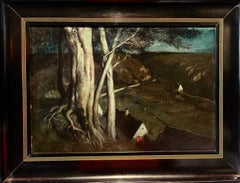
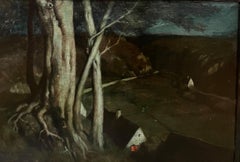
Notte. Vicino al Bosco Oil Painting, Romantic, Framed, Circa 1899

Notte. Vicino al Bosco Oil Painting, Romantic, Framed, Circa 1899

Located in Torino, IT

Opera molto suggestiva Firmato in basso a sinistra Notturno Magico Atmosfera magica Ernst Liebermann (1869 – 1960) è stato un pittore, grafico e illustratore tedesco. Nel 1893 vi...

Category

1890s Romantic Art

Materials

Canvas, Oil

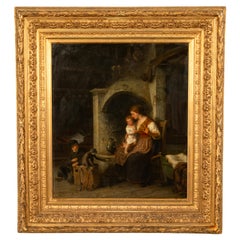
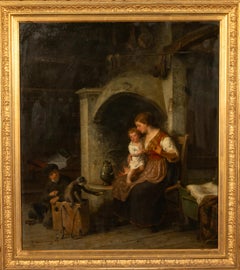
Antique Swedish Oil Canvas Painting Romantic Interior Family Scene Monkey 1883

Antique Swedish Oil Canvas Painting Romantic Interior Family Scene Monkey 1883

Located in Portland, OR

A fine & large antique oil on canvas painting by Bengt Nordenberg (1822-1902), Sweden, dated 1883. Nordenberg is recognized as one of Sweden's most celebrated 19th century artists, his work epitomizes Swedish Romanticism and this painting is a wonderful representation of that style. The painting depicts an interior scene of a mother holding an infant in front of an open heath, with a fire burning in the grate, above the fire there are racks of meat hanging and above that are hams hanging. The infant has evidently just woken from a nap and his cradle sits next to his mother's chair, his brother sitting on the floor with his monkey & the carrying case he transports the animal to beg for money, the monkey humorously sits with his begging plate outstretched to the boy's mother, much to her consternation! The painting is signed and dated lower left, it is in very good condition and is housed in the original gilded composition and limewood frame, Nordenberg's record for a painting at auction is over $91,500, this is a fine example of the artist's work and is ready to hang on your wall. Bloomsbury Fine Art & Antiques ship globally, very well packed & insured to ensure safe delivery. Bengt Nordenberg (1822-1902) was a master of Swedish Romanticism. He belonged to the Düsseldorf school of painting & is best known for his genre paintings with everyday life scenes from the Dalarna, Skåne and Blekinge areas of Sweden. He moved to Düsseldorf in the 1850s. Nordenberg was born at Jämshög in Blekinge County, Sweden, he was one of nine siblings born to Per Jönsson Nord (1785-1854) and his wife Sissa Bengtsdotter (b. 1792). He grew up in poverty and became an apprentice to a painter in Sölvesborg. In 1843 he studied at the Royal Swedish Academy of Arts in Stockholm, In the autumn of 1851 he went to the Düsseldorf Academy, where first Theodor Hildebrandt and then later, Adolph Tidemand...

Category

1880s Romantic Art

Materials

Canvas, Oil

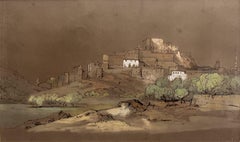
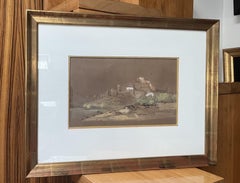
French Romantic school, View of a citadel, pen and watercolor

French Romantic school, View of a citadel, pen and watercolor

Located in Paris, FR

French Romantic school, 19th century View of a citadel Pen and ink, watercolor and heightenings of white gouache on brown paper 18 x 29.5 cm In good condition, some stains and traces...

Category

1850s Romantic Art

Materials

Ink, Watercolor

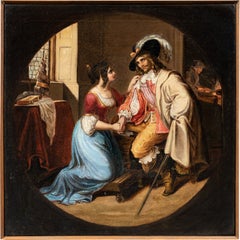
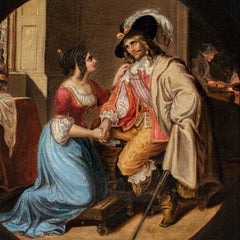
Italian Romantic painter - 19th century Lady and Musketeer interior

Italian Romantic painter - 19th century Lady and Musketeer interior

Located in Varmo, IT

Italian Romantic painter (19th century) - Lady and Musketeer. 40.5 x 40.5 cm (without frame) - 42 x 42 cm (with frame). Oil on canvas, in a thin wooden frame (not signed). The sce...

Category

Mid-19th Century Romantic Art

Materials

Canvas, Oil

Mountain landscape, Painting, Oil on Canvas

Mountain landscape, Painting, Oil on Canvas

By Attila Vencel

Located in Yardley, PA

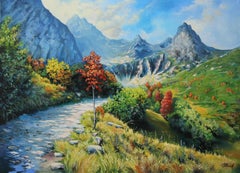
Mountain ranges are among my favourite sights. Their majesty rises across the horizon and reminds me of how magnificent powerful nature is. Rocks literally thrusted from the ground ...

Category

2010s Romantic Art

Materials

Oil

Lying in the Past

Lying in the Past

By Sarah Hadley

Located in Los Angeles, CA

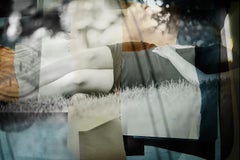
Archival pigment print Hand printed by Sarah Hadley on Canson Baryta Photo paper From the series In Between Days Sarah Hadley is a Los Angeles based artist whose narrative work focuses on issues of female identity and memory. Hadley's photographs have been exhibited at the Milan Photo...

Category

2010s Romantic Art

Materials

Archival Ink, Archival Paper, Photographic Paper

Italia 2 - Signed limited edition pigment print, Sculpture, Greek god, Mythology

Italia 2 - Signed limited edition pigment print, Sculpture, Greek god, Mythology

By Michael Banks

Located in Sant Cugat del Vallès, Barcelona

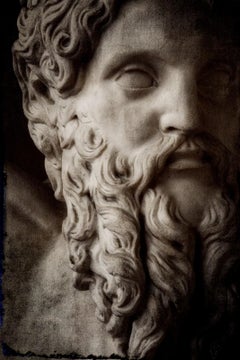
Italia 2- Large scale photograph by Michael Banks Archival Pigment print on fiber based paper ( Hahnemühle Photo RAG Baryta 315 gsm ) Limited Editions of 5 , signed + numbered by ...

Category

2010s Romantic Art

Materials

Archival Paper, Color, Pigment, Archival Pigment, Digital Pigment, Photo...

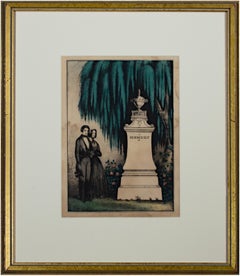
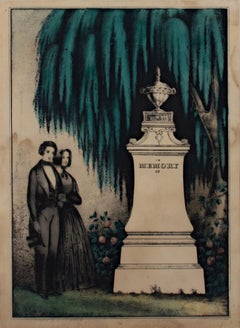
'In Memory of (66)' original Kellogg & Comstock hand-colored mourning lithograph

'In Memory of (66)' original Kellogg & Comstock hand-colored mourning lithograph

Located in Milwaukee, WI

The present hand-colored lithograph was produced as part of the funeral and mourning culture in the United States during the 19th century. Before the printmaking boom of the 1830s, however, such inexpensive memorial images were not widely available. These prints became popular as ways of remembering loved ones, an alternative to portraiture of the deceased or to meticulous hand-embroidered memorials often made by female academy students. In the image, the urn-topped monument contains a space where a family could inscribe the name and death dates of a deceased loved one, though this example was never used. In the variations of this image type produced by the Kellogg...

Category

Mid-19th Century Romantic Art

Materials

Watercolor, Lithograph

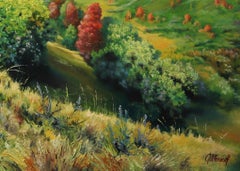
Ravine. 2005. Oil on canvas. 60x80cm. Signed.

Ravine. 2005. Oil on canvas. 60x80cm. Signed.

By Igor Maikov

Located in Riga, LV

Igor Maikov (1966) Education: 1981 - 1984 The Academy of Art 1973 - 1983 Salaspils Primary and Secondary School Exhibitions: 1994 - Group Exhibition «Rol-Art», Latvia 1995 - ...

Category

Early 2000s Romantic Art

Materials

Canvas, Oil

On the Lagoon
On the Lagoon

On the Lagoon

By Sarah Hadley

Located in Los Angeles, CA

Lost Venice highlights the Renaissance past of a city that Hadley visited often as a child and where she later lived and worked. Her ethereal, sepia-toned photographs capture the all...

Category

2010s Romantic Art

Materials

Archival Ink, Archival Paper

The River Barge
The River Barge

The River Barge

By David Cox

Located in Fairlawn, OH

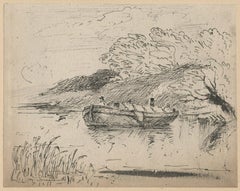
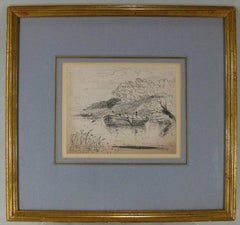
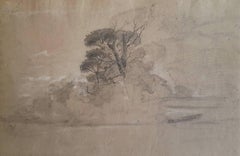
The River Barge Pen and ink on paper on laid paper, mounted in English drum mount , c. 1810 Unsigned Condition: Slight sun staining to sheet and mount in the window (see photo) Image/sheet size: 5 1/4 x 6 11/16 inches Sight: : 5-3/4 x 7-1/4" Frame: 13-3/8 x 14-3/8" Provenance: Colnaghi, London (see photo of label) David Cox (29 April 1783 – 7 June 1859) was an English landscape painter, one of the most important members of the Birmingham School of landscape artists and an early precursor of Impressionism. He is considered one of the greatest English landscape painters, and a major figure of the Golden age of English watercolour. Although most popularly known for his works in watercolour, he also painted over 300 works in oil towards the end of his career, now considered "one of the greatest, but least recognised, achievements of any British painter. His son, known as David Cox the Younger (1809-1885), was also a successful artist. Early life in Birmingham, 1783–1804 Cox's birthplace in Deritend, Birmingham, illustrated by Samuel Lines Cox was born on 29 April 1783 on Heath Mill Lane in Deritend, then an industrial suburb of Birmingham. His father was a blacksmith and whitesmith about whom little is known, except that he supplied components such as bayonets and barrels to the Birmingham gun trade. Cox's mother was the daughter of a farmer and miller from Small Heath to the east of Birmingham. Early biographers record that "she had had a better education than his father, and was a woman of superior intelligence and force of character." Cox was initially expected to follow his father into the metal trade and take over his forge, but his lack of physical strength led his family to seek opportunities for him to develop his interest in art, which is said to have first become apparent when the young Cox started painting paper kites while recovering from a broken leg. By the late 18th century Birmingham had developed a network of private academies teaching drawing and painting, established to support the needs of the town's manufacturers of luxury metal goods, but also encouraging education in fine art, and nurturing the distinctive tradition of landscape art of the Birmingham School. Cox initially enrolled in the academy of Joseph Barber in Great Charles Street, where fellow students included the artist Charles Barber and the engraver William Radclyffe, both of whom would become important lifelong friends. At the age of about 15 Cox was apprenticed to the Birmingham painter Albert Fielder, who produced portrait miniatures and paintings for the tops of snuffboxes from his workshop at 10 Parade in the northwest of the town. Early biographers of Cox record that he left his apprenticeship after Fielder's suicide, with one reporting that Cox himself discovered his master's hanging body, but this is probably a myth as Fielder is recorded at his address in Parade as late as 1825. At some time during mid-1800 Cox was given work by William Macready the elder at the Birmingham Theatre, initially as an assistant grinding colours and preparing canvases for the scene painters, but from 1801 painting scenery himself and by 1802 leading his own team of assistants and being credited in plays' publicity. London, 1804–1814 In 1804 Cox was promised work by the theatre impresario Philip Astley and moved to London, taking lodgings in 16 Bridge Row, Lambeth. Although he was unable to get employment at Astley's Amphitheatre it is likely that he had already decided to try to establish himself as a professional artist, and apart from a few private commissions for painting scenery his focus over the next few years was to be on painting and exhibiting watercolours. While living in London, Cox married his landlord's daughter, Mary Agg and the couple moved to Dulwich in 1808. David Cox Travellers on a Path, pencil and brown wash. In 1805 he made his first of many trips to Wales, with Charles Barber, his earliest dated watercolours are from this year. Throughout his lifetime he made numerous sketching tours to the Home Counties, North Wales, Yorkshire, Derbyshire and Devon. Cox exhibited regularly at the Royal Academy from 1805. His paintings never reached high prices, so he earned his living mainly as a drawing master. His first pupil, Colonel the Hon.H. Windsor (the future Earl of Plymouth) engaged him in 1808, Cox went on to acquire several other aristocratic and titled pupils. He also went on to write several books, including: Ackermanns' New Drawing Book (1809); A Series of Progressive Lessons (1811); Treatise on Landscape Painting (1813); and Progressive Lessons on Landscape (1816). The ninth and last edition of his series Progressive Lessons, was published in 1845. By 1810 he was elected President of the Associated Artists in Water Colour. In 1812, following the demise of the Associated Artists, he was elected as associate of the Society of Painters in Water Colour (the old Water Colour Society). He was elected a Member of the Society in 1813, and exhibited there every year (except 1815 and 1817) until his death. Hereford, 1814–1827 In the summer of 1813 Cox was appointed as the drawing master of the Royal Military College in Farnham, Surrey, but he resigned shortly afterwards, finding little sympathy with the atmosphere of a military institution. Soon after that he applied to a newspaper advertisement for a position as drawing master for Miss Crouchers' School for Young Ladies in Hereford and in Autumn 1814 moved to the town with his family. Cox taught at the school in Widemarsh Street until 1819, his substantial salary of £100 per year requiring only two-day's work per week, allowing time for painting and the taking of private pupils. Cox's reputation as both a painter and a teacher had been building over previous years, as indicated by his election as a member of the Society of Painters in Water Colours and his inclusion in John Hassell's 1813 book Aqua Pictura, which claimed to present works by "all of the most approved water coloured draftsmen". The depression that accompanied the end of the Napoleonic Wars had caused a contraction in the art market, however, and by 1814 Cox had been very short of money, requiring a loan from one of his pupils to pay even for the move to Hereford. Despite its financial advantages and its proximity to the scenery of North Wales and the Wye Valley, the move to Hereford marked a retreat in terms of his career as a painter: he sent few works to the annual exhibition of the Society of Painters in Water Colours during his first years away from London and not until 1823 would he again contribute more than 20 pictures. Between 1823 and 1826 he had Joseph Murray Ince as a pupil. London, 1827–1841 He made his first trip to the Continent, to Belgium and the Netherlands in 1826 and subsequently moved to London the following year. He exhibited for the first time with the Birmingham Society of Artists in 1829, and with the Liverpool Academy in 1831. In 1839, two of Cox's watercolours were bought from the Old Water Colour Society exhibition by the Marquis of Conynha for Queen Victoria. Birmingham, 1841–1859 Greenfield House in Harborne, Birmingham – where Cox lived from 1841 until his death in 1859 . In May 1840 Cox wrote to one of his Birmingham friends: "I am making preparations to sketch in oil, and also to paint, and it is my intention to spend most of my time in Birmingham for the purpose of practice". Cox had been considering a return to painting in oils since 1836 and in 1839 had taken lessons in oil painting from William James Müller, to whom he had been introduced by mutual friend George Arthur Fripp. Hostility between the Society of Painters in Water Colours and the Royal Academy made it difficult for an artist to be recognised for work in both watercolour and oil in London, however, and it is likely that Cox would have preferred to explore this new medium in the more supportive environment of his home town. By the early 1840s his income from sales of his watercolours was sufficient to allow him to abandon his work as a drawing master, and in June 1841 he moved with his wife to Greenfield House in Harborne, then a village on Birmingham's south western outskirts. It was this move that would enable the higher levels of freedom and experimentation that were to characterise his later work. The elderly Cox pictured by Samuel Bellin in 1855. In Harborne, Cox established a steady routine – working in watercolour in the morning and oils in the afternoon. He would visit London every spring to attend the major exhibitions, followed by one or more sketching excursions, continuing the pattern that he had established in the 1830s. From 1844 these tours evolved into a yearly trip to Betws-y-Coed in North Wales to work outdoors in both oil and watercolour, gradually becoming the focus for an annual summer artists colony that continued until 1856 with Cox as its "presiding genius". Cox's experience of trying to exhibit his oils in London was short and unsuccessful: in 1842 he made his only submission to the Society of British Artists; one oil painting was exhibited at each of the British Institution and the Royal Academy in 1843; and two oil paintings were exhibited at the Royal Academy in 1844 – the last that would be exhibited in London during his lifetime. Cox showed regularly at the Birmingham Society of Arts and its successor, the Birmingham Society of Artists, becoming a member in 1842. Cox suffered a stroke on 12 June 1853 that temporarily paralysed him, and permanently affected his eyesight, memory and coordination. By 1857 however, his eyesight had deteriorated. An exhibition of his work was arranged in 1858 by the Conversazione Society Hampstead, and in 1859 a retrospective exhibition was held at the German Gallery Bond Street, London. Cox died several months later. He was buried in the churchyard of St Peters, Harborne, Birmingham, under a chestnut tree, alongside his wife Mary. Work Early work In the spring of 1811 Cox made a small number of notable works in oils during a visit to Hastings with his family. It is not known why he didn't continue working in this medium at the time, but the five known surviving examples were described in 1969 as "surely some of the most brilliant examples of the genre in England". Mature work Cox reached artistic maturity after his move to Hereford in 1814. Although only two major watercolours can confidently be traced to the period between Cox's arrival in the town and the end of the decade, both of these – Butcher's Row, Hereford of 1815 and Lugg Meadows, near Hereford of 1817 – mark advances on his earlier work. Later work Cox's later work produced after his move to Birmingham in 1841 was marked by simplification, abstraction and a stripping down of detail. His art of the period combined the breadth and weight characteristic of the earlier English watercolour school, together with a boldness and freedom of expression comparable to later impressionism. His concern with capturing the fleeting nature of weather, atmosphere and light was similar to that of John Constable, but Cox stood apart from the older painter's focus on capturing material detail, instead employing a high degree of generalisation and a focus on overall effect. The quest for character over precision in representing nature was an established characteristic of the Birmingham School of landscape artists with which Cox had been associated early in his life, and as early as 1810 Cox's work had been criticised for its "sketchiness of finish" and "cloudy confusion of objects", which were held to betray "the coarseness of scene-painting". During the 1840s and 1850s Cox took this "peculiar manner" to new extremes, incorporating the techniques of the sketch into his finished works to a far greater degree. Cox's watercolour technique of the 1840s was sufficiently different from his earlier methods to need explanation to his son in 1842, despite the fact that his son had been helping him teach and paint since 1827. The materials used for his later works in watercolour also differed from his earlier periods: he used black chalk instead of graphite pencil as his primary drawing medium, and the rough and absorbent "Scotch" wrapping paper for which he became well-known – both of these were related to his development of a rougher and freer style. Influence and legacy By the 1840s Cox, alongside Peter De Wint and Copley Fielding, had become recognised as one of the leading figures of the English landscape watercolour style of the first half of the 19th century. This judgement was complicated by reaction to the rougher and bolder style of Cox's later Birmingham work, which was widely ignored or condemned. While by this time De Wint and Fielding were essentially continuing in a long-established tradition, Cox was creating a new one. A group of young artists working in Cox's watercolour style emerged well before his death, including William Bennett, David Hall McKewan and Cox's son David Cox Jr. By 1850 Bennett in particular had become recognised as "perhaps the most distinguished among the landscape painters" for his Cox-like vigorous and decisive style. Such early followers concentrated on the example of Cox's more moderate earlier work and steered clear of what were then seen as the excesses of Cox's later years. During a period dominated by sleek and detailed picturesque landscape, however, they were still condemned by publications such as The Spectator as "the 'blottesque' school", and failed to establish themselves as a cohesive movement. John Ruskin in 1857 condemned the work of the Society of Painters in Water-colours as "a kind of potted art, of an agreeable flavour, suppliable and taxable as a patented commodity", excluding only the late work of Cox, about which he wrote "there is not any other landscape which comes near these works of David Cox in simplicity or seriousness". An 1881 book, A Biography of David Cox: With Remarks on His Works and Genius, was based on a manuscript by Cox's friend William Hall, edited and expanded by John Thackray Bunce, editor of the Birmingham Daily Post. There are two Blue Plaque memorials commemorating him at 116 Greenfield Road, Harborne, Birmingham, and at 34 Foxley Road, Kennington, London, SW9, where he lived from 1827. It can also be seen at the David Cox exhibition in Birmingham. His pupils included Birmingham architectural artist, Allen Edward...

Category

1810s Romantic Art
Materials

Ink

Recruits on a March
Recruits on a March

Recruits on a March

By Thomas Rowlandson

Located in Fairlawn, OH

Recruits on a March Ink and watercolor on paper, mounted on support Unsigned Condition: watercolor sheet laid down on paper, moderately faded Original Ackermann frame and matting Ima...

Category

Early 1800s Romantic Art
Materials

Watercolor

19th century color lithograph still life vase flowers

19th century color lithograph still life vase flowers

By Nathaniel Currier

Located in Milwaukee, WI

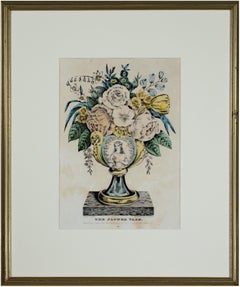
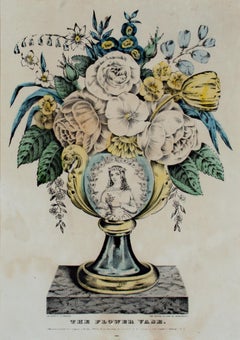
The present hand-colored lithograph is one of several decorative images of flower-filled vases published by Nathaniel Currier. This example contains roses, tulips, forget-me-nots, and others all within a vase with gold eagle head handles and an image of a beautiful young woman the belly. 16 x 11 inches, artwork 22.5 x 18.25 inches, frame Entitled bottom center Signed in the stone, lower left "Lith. and Pub. by N. Currier" Inscribed lower right "152 Nassau St. Cor. of Spruce N.Y." Copyrighted bottom center "Entered according to Act of Congress in the year 1848 by N. Currier in the Clerk's office of the Southern District of N.Y." with the number 249 Framed to conservation standards using 100 percent rag matting, housed in a lemon gold moulding. Nathaniel Currier was a tall introspective man with a melancholy nature. He could captivate people with his piercing stare or charm them with his sparkling blue eyes. Nathaniel was born in Roxbury, Massachusetts on March 27th, 1813, the second of four children. His parents, Nathaniel and Hannah Currier, were distant cousins who lived a humble yet spartan life. When Nathaniel was eight years old, tragedy struck. Nathaniel’s father unexpectedly passed away leaving Nathaniel and his eleven-year-old brother Lorenzo to provide for the family. In addition to their mother, Nathaniel and Lorenzo had to care for six-year-old sister Elizabeth and two-year-old brother Charles. Nathaniel worked a series of odd jobs to support the family, and at fifteen, he started what would become a life-long career when he apprenticed in the Boston lithography shop of William and John Pendleton. A Bavarian gentleman named Alois Senefelder invented lithography just 30 years prior to young Nat Currier’s apprenticeship. While under the employ of the brothers Pendleton, Nat was taught the art of lithography by the firm’s chief printer, a French national named Dubois, who brought the lithography trade to America. Lithography involves grinding a piece of limestone flat and smooth then drawing in mirror image on the stone with a special grease pencil. After the image is completed, the stone is etched with a solution of aqua fortis leaving the greased areas in slight relief. Water is then used to wet the stone and greased-ink is rolled onto the raised areas. Since grease and water do not mix, the greased-ink is repelled by the moisture on the stone and clings to the original grease pencil lines. The stone is then placed in a press and used as a printing block to impart black on white images to paper. In 1833, now twenty-years old and an accomplished lithographer, Nat Currier left Boston and moved to Philadelphia to do contract work for M.E.D. Brown, a noted engraver and printer. With the promise of good money, Currier hired on to help Brown prepare lithographic stones of scientific images for the American Journal of Sciences and Arts. When Nat completed the contract work in 1834, he traveled to New York City to work once again for his mentor John Pendleton, who was now operating his own shop located at 137 Broadway. Soon after the reunion, Pendleton expressed an interest in returning to Boston and offered to sell his print shop to Currier. Young Nat did not have the financial resources to buy the shop, but being the resourceful type he found another local printer by the name of Stodart. Together they bought Pendleton’s business. The firm ‘Currier & Stodart’ specialized in "job" printing. They produced many different types of printed items, most notably music manuscripts for local publishers. By 1835, Stodart was frustrated that the business was not making enough money and he ended the partnership, taking his investment with him. With little more than some lithographic stones, and a talent for his trade, twenty-two year old Nat Currier set up shop in a temporary office at 1 Wall Street in New York City. He named his new enterprise ‘N. Currier, Lithographer’ Nathaniel continued as a job printer and duplicated everything from music sheets to architectural plans. He experimented with portraits, disaster scenes and memorial prints, and any thing that he could sell to the public from tables in front of his shop. During 1835 he produced a disaster print Ruins of the Planter's Hotel, New Orleans, which fell at two O’clock on the Morning of the 15th of May 1835, burying 50 persons, 40 of whom Escaped with their Lives. The public had a thirst for newsworthy events, and newspapers of the day did not include pictures. By producing this print, Nat gave the public a new way to “see” the news. The print sold reasonably well, an important fact that was not lost on Currier. Nat met and married Eliza Farnsworth in 1840. He also produced a print that same year titled Awful Conflagration of the Steamboat Lexington in Long Island Sound on Monday Evening, January 18, 1840, by which melancholy occurrence over One Hundred Persons Perished. This print sold out very quickly, and Currier was approached by an enterprising publication who contracted him to print a single sheet addition of their paper, the New York Sun. This single page paper is presumed to be the first illustrated newspaper ever published. The success of the Lexington print launched his career nationally and put him in a position to finally lift his family up. In 1841, Nat and Eliza had their first child, a son they named Edward West Currier. That same year Nat hired his twenty-one year old brother Charles and taught him the lithography trade, he also hired his artistically inclined brother Lorenzo to travel out west and make sketches of the new frontier as material for future prints. Charles worked for the firm on and off over the years, and invented a new type of lithographic crayon which he patented and named the Crayola. Lorenzo continued selling sketches to Nat for the next few years. In 1843, Nat and Eliza had a daughter, Eliza West Currier, but tragedy struck in early 1847 when their young daughter died from a prolonged illness. Nat and Eliza were grief stricken, and Eliza, driven by despair, gave up on life and passed away just four months after her daughter’s death. The subject of Nat Currier’s artwork changed following the death of his wife and daughter, and he produced many memorial prints and sentimental prints during the late 1840s. The memorial prints generally depicted grief stricken families posed by gravestones (the stones were left blank so the purchasers could fill in the names of the dearly departed). The sentimental prints usually depicted idealized portraits of women and children, titled with popular Christian names of the day. Late in 1847, Nat Currier married Lura Ormsbee, a friend of the family. Lura was a self-sufficient woman, and she immediately set out to help Nat raise six-year-old Edward and get their house in order. In 1849, Lura delivered a son, Walter Black Currier, but fate dealt them a blow when young Walter died one year later. While Nat and Lura were grieving the loss of their new son, word came from San Francisco that Nat’s brother Lorenzo had also passed away from a brief illness. Nat sank deeper into his natural quiet melancholy. Friends stopped by to console the couple, and Lura began to set an extra place at their table for these unexpected guests. She continued this tradition throughout their lives. In 1852, Charles introduced a friend, James Merritt Ives, to Nat and suggested he hire him as a bookkeeper. Jim Ives was a native New Yorker born in 1824 and raised on the grounds of Bellevue Hospital where his father was employed as superintendent. Jim was a self-trained artist and professional bookkeeper. He was also a plump and jovial man, presenting the exact opposite image of his new boss. Jim Ives met Charles Currier through Caroline Clark, the object of Jim’s affection. Caroline’s sister Elizabeth was married to Charles, and Caroline was a close friend of the Currier family. Jim eventually proposed marriage to Caroline and solicited an introduction to Nat Currier, through Charles, in hopes of securing a more stable income to support his future wife. Ives quickly set out to improve and modernize his new employer’s bookkeeping methods. He reorganized the firm’s sizable inventory, and used his artistic skills to streamline the firm’s production methods. By 1857, Nathaniel had become so dependent on Jims’ skills and initiative that he offered him a full partnership in the firm and appointed him general manager. The two men chose the name ‘Currier & Ives’ for the new partnership, and became close friends. Currier & Ives produced their prints in a building at 33 Spruce Street where they occupied the third, fourth and fifth floors. The third floor was devoted to the hand operated printing presses that were built by Nat's cousin, Cyrus Currier, at his shop Cyrus Currier & Sons in Newark, NJ. The fourth floor found the artists, lithographers and the stone grinders at work. The fifth floor housed the coloring department, and was one of the earliest production lines in the country. The colorists were generally immigrant girls, mostly German, who came to America with some formal artistic training. Each colorist was responsible for adding a single color to a print. As a colorist finished applying their color, the print was passed down the line to the next colorist to add their color. The colorists worked from a master print displayed above their table, which showed where the proper colors were to be placed. At the end of the table was a touch up artist who checked the prints for quality, touching-in areas that may have been missed as it passed down the line. During the Civil War, demand for prints became so great that coloring stencils were developed to speed up production. Although most Currier & Ives prints were colored in house, some were sent out to contract artists. The rate Currier & Ives paid these artists for coloring work was one dollar per one hundred small folios (a penny a print) and one dollar per one dozen large folios. Currier & Ives also offered uncolored prints to dealers, with instructions (included on the price list) on how to 'prepare the prints for coloring.' In addition, schools could order uncolored prints from the firm’s catalogue to use in their painting classes. Nathaniel Currier and James Merritt Ives attracted a wide circle of friends during their years in business. Some of their more famous acquaintances included Horace Greeley, Phineas T. Barnum, and the outspoken abolitionists Rev. Henry Ward, and John Greenleaf Whittier (the latter being a cousin of Mr. Currier). Nat Currier and Jim Ives described their business as "Publishers of Cheap and Popular Pictures" and produced many categories of prints. These included Disaster Scenes, Sentimental Images, Sports, Humor, Hunting Scenes, Politics, Religion, City and Rural Scenes, Trains, Ships, Fire Fighters, Famous Race Horses, Historical Portraits, and just about any other topic that satisfied the general public's taste. In all, the firm produced in excess of 7500 different titles, totaling over one million prints produced from 1835 to 1907. Nat Currier retired in 1880, and signed over his share of the firm to his son Edward. Nat died eight years later at his summer home 'Lion’s Gate' in Amesbury, Massachusetts. Jim Ives remained active in the firm until his death in 1895, when his share of the firm passed to his eldest son, Chauncey. In 1902, faced will failing health from the ravages of Tuberculosis, Edward Currier sold his share of the firm to Chauncey Ives...

Category

1840s Romantic Art
Materials

Watercolor, Lithograph

Jean Philippe George-Julliard (1818 – 1888) Landscape with a traveler, oil

Jean Philippe George-Julliard (1818 – 1888) Landscape with a traveler, oil

Located in Paris, FR

Jean Philippe George-Julliard (1818 – 1888) A landscape with a traveler Oil on paper Signed HG lower right 19.5 x 29 cm The four corners are cut Framed under glass 27 x 47 cm Jean Philippe George-Julliard (1818–1888) or Henri Philippe Julliard was born on 1 january 1818 in Geneva (Switzerland) from french parents. He first studied art in Nantes in France, but later he came back to Geneva where he became pupil of Alexandre Calame...

Category

1860s Romantic Art
Materials

Oil

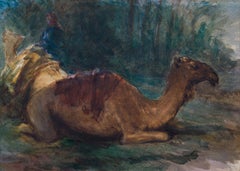
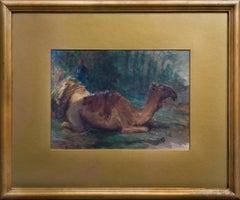
Resting Dromedar, 1861

Resting Dromedar, 1861

By Egron Sellif Lundgren

Located in Stockholm, SE

Egron Sellif Lundgren (1815–1875) Sweden Resting Dromedar, 1861 watercolour heightened with white unframed 21 x 29.2 cm (8 ¼ x 11 ½ in.) framed 40 x 48 cm (15 ¾ x 18 ⅞ in.) Provenance: Sale, Stockholm, Bukowskis, 12 December 1894, lot 42; Signe and Ernst Trygger (1857–1943), Villa Trygger, Stockholm. Ernst Trygger was Swedish Prime Minister (1923–24), Minister of Foreign Affairs (1928–30) and University Chancellor (1926–37); A Swedish private collection. Literature: Förteckning på oljemålningar, aquareller och handteckningar m.m. av Egron Lundgren utställda i Akademien för de fria konsterna, 1876, no. 259. Karl Asplund, Egron Lundgren, Vol. II, 1940, p. 40, note 1, p. 166. Exhibited: The Royal Academy, Egron Lundgren, 10 April 1876, no. 259. Sveriges Allmänna Konstförening, Memorial Exhibition, February 1915, no. 70, Hvilande kameler (owner Ernst Trygger). The Royal Academy, Svenska Akvareller (Swedish Watercolor Exhibition), 1925, no. 224, Vilande kameler (owner Signe Trygger). Essay: This delicate watercolour, executed during Lundgren’s first journey to Egypt in the winter of 1861–62, depicts a resting dromedary in the shade at Giza. Painted in transparent washes with touches of white gouache, the work captures the intense desert light and atmosphere with a remarkable immediacy. The reclining animal dominates the composition, rendered in warm ochres and browns against a cool, shadowy background, while highlights on its saddle and coat give the scene a subtle radiance. The quiet stillness of the subject reflects Lundgren’s sensitivity to the everyday motifs of the Orient, which he observed and painted directly on site. Lundgren travelled to Egypt in the company of two British artists, Frank Dillon (1823-1909) and George Price Boyce...

Category

1860s Romantic Art
Materials

Paper, Watercolor

#4423
#4423

#4423

By Hiro Yokose

Located in Phoenix, AZ

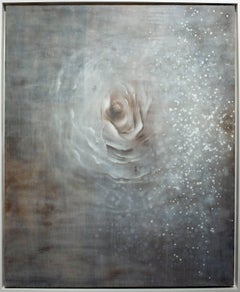
oil and wax on canvas 62 x 50 inches framed Neo-romantic painter Hiro Yokose fuses multiple layers of wax and oil paint to create mysterious, veiled landscapes illuminated with fl...

Category

Early 2000s Romantic Art
Materials

Canvas, Cotton Canvas, Wax, Oil

French Troubadour Religious Painting Monks Relics 19th

French Troubadour Religious Painting Monks Relics 19th

Located in PARIS, FR

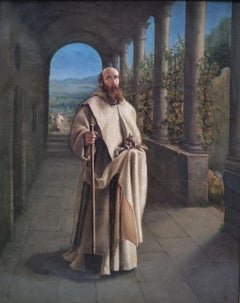
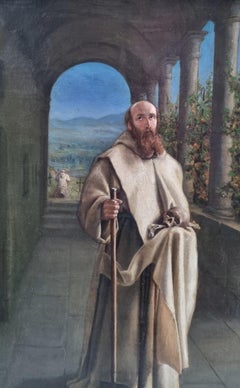
French school of the 19th century Monks excavate and find ancient relics Oil on canvas Not signed 56 x 46.5 cm (68 x 57.5 cm with the frame) Beautiful period frame in gilded wood Goo...

Category

Mid-19th Century Romantic Art
Materials

Oil

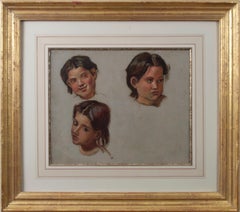
Three Head Portraits of a Young Girl

Three Head Portraits of a Young Girl

Located in Fairlawn, OH

Hippolyte Roques (active 1838-1864) Three Head Portraits of a Young Girl Oil on grey wove paper, c. 1850 Unsigned Provenance: Estate of the artist Shepherd Galle...

Category

1850s Romantic Art

Materials

Oil

Romantic art for sale on 1stDibs.
Find a wide variety of authentic Romantic art available for sale on 1stDibs. Works in this style were very popular during the 21st Century and Contemporary, but contemporary artists have continued to produce works inspired by this movement. If you’re looking to add art created in this style to introduce contrast in an otherwise neutral space in your home, the works available on 1stDibs include elements of blue, purple, orange, pink and other colors. Many Pop art paintings were created by popular artists on 1stDibs, including Hiro Yokose, Francisco Goya, Leo Primavesi, and Dipen Bose. Frequently made by artists working with Paint, and Oil Paint and other materials, all of these pieces for sale are unique and have attracted attention over the years. Not every interior allows for large Romantic art, so small editions measuring 3 inches across are also available. Prices for art made by famous or emerging artists can differ depending on medium, time period and other attributes. On 1stDibs, the price for these items starts at $119 and tops out at $1,300,000, while the average work sells for $2,213.