Romantic Art

ROMANTIC STYLE

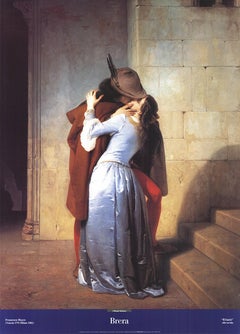
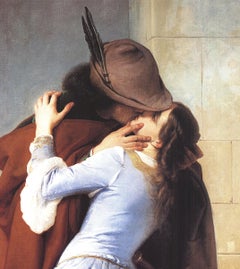
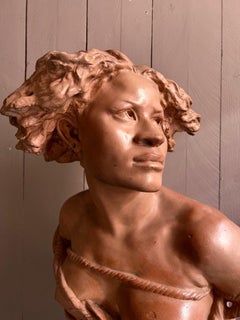
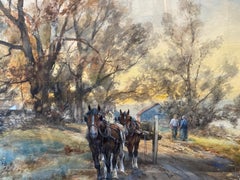
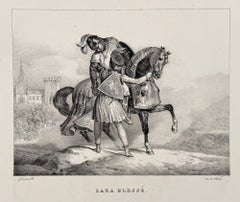
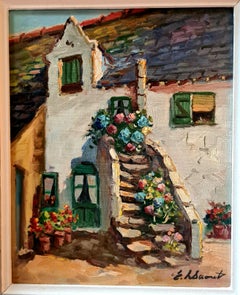
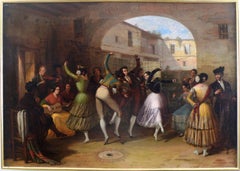
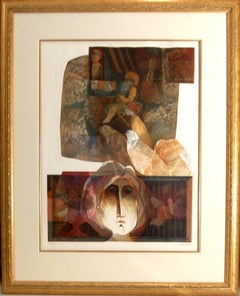
In emphasizing emotion and imagination, romantic art shifted away from the restraint of classicism and neoclassicism that had dominated art in Europe since the Renaissance. Romanticism achieved its greatest popularity in art, literature, music and philosophy between 1780 and 1830, although its expression of individual experiences ranging from awe to passion informed culture in the decades after.

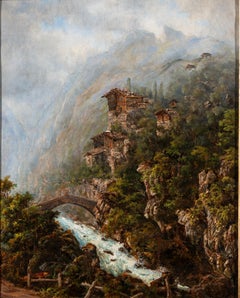
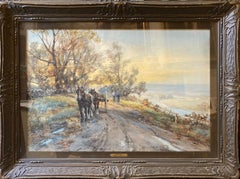
Landscape painting was especially popular during the romantic period, as were nature studies of wild animals and fantasies of exotic lands. Romanticism varied across Europe as it reacted to the rise of industrialization, a more personal relationship with faith that was distanced from the church and the rationalist thinking of the Enlightenment.

British painters such as John Constable and J.M.W. Turner responded dramatically to the light and atmosphere of the natural world, while William Blake conveyed humanity’s connection to the divine in his visionary art. In Germany, the late-18th-century Sturm und Drang, or Storm and Drive, movement, with its probing of the unconscious, inspired a sense of mystery in work by romantic artists such as Caspar David Friedrich and Philipp Otto Runge. In France, where the French Revolution had turned tradition upside down, Théodore Géricault and Eugène Delacroix used lush brushwork to paint monumental canvases with tumultuous scenes of nature and history.

The romantic movement and its subject matter were a significant influence on the Pre-Raphaelites, Symbolists and the American painters of the Hudson River School, as well as on other cultural movements in the 19th and 20th centuries that saw artists build on this perspective in which art was guided by emotion rather than reason.

Find a collection of romantic paintings, sculptures, prints and multiples and more art on 1stDibs.

to
232
450
219
168
109
108
Overall Width
to
Overall Height
to
27
488
300
239
24
10
47
9
19
8
11
5
18
30
26
116,990
64,272
56,454
28,407
14,632
9,615
6,695
6,032
4,191
3,163
2,486
2,385
2,151
603
561
402
35
657
379
186
167
165
112
102
90
88
72
55
48
47
46
44
42
35
35
30
29
656
472
303
279
205
35
14
10
10
9
511
138
570
466
Style: Romantic
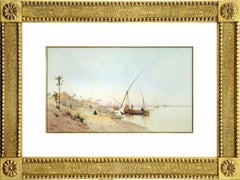
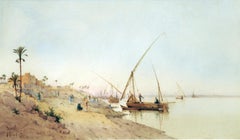
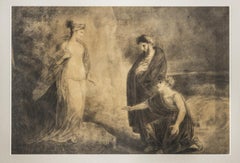
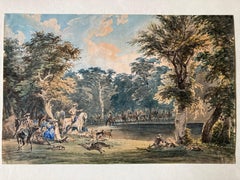
The River Barge
The River Barge

The River Barge

By David Cox

Located in Fairlawn, OH

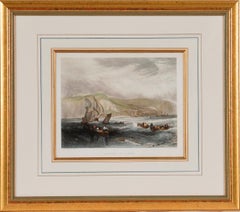
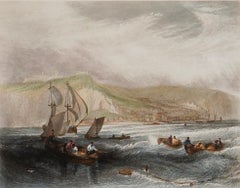
The River Barge Pen and ink on paper on laid paper, mounted in English drum mount , c. 1810 Unsigned Condition: Slight sun staining to sheet and mount in the window (see photo) Image/sheet size: 5 1/4 x 6 11/16 inches Sight: : 5-3/4 x 7-1/4" Frame: 13-3/8 x 14-3/8" Provenance: Colnaghi, London (see photo of label) David Cox (29 April 1783 – 7 June 1859) was an English landscape painter, one of the most important members of the Birmingham School of landscape artists and an early precursor of Impressionism. He is considered one of the greatest English landscape painters, and a major figure of the Golden age of English watercolour. Although most popularly known for his works in watercolour, he also painted over 300 works in oil towards the end of his career, now considered "one of the greatest, but least recognised, achievements of any British painter. His son, known as David Cox the Younger (1809-1885), was also a successful artist. Early life in Birmingham, 1783–1804 Cox's birthplace in Deritend, Birmingham, illustrated by Samuel Lines Cox was born on 29 April 1783 on Heath Mill Lane in Deritend, then an industrial suburb of Birmingham. His father was a blacksmith and whitesmith about whom little is known, except that he supplied components such as bayonets and barrels to the Birmingham gun trade. Cox's mother was the daughter of a farmer and miller from Small Heath to the east of Birmingham. Early biographers record that "she had had a better education than his father, and was a woman of superior intelligence and force of character." Cox was initially expected to follow his father into the metal trade and take over his forge, but his lack of physical strength led his family to seek opportunities for him to develop his interest in art, which is said to have first become apparent when the young Cox started painting paper kites while recovering from a broken leg. By the late 18th century Birmingham had developed a network of private academies teaching drawing and painting, established to support the needs of the town's manufacturers of luxury metal goods, but also encouraging education in fine art, and nurturing the distinctive tradition of landscape art of the Birmingham School. Cox initially enrolled in the academy of Joseph Barber in Great Charles Street, where fellow students included the artist Charles Barber and the engraver William Radclyffe, both of whom would become important lifelong friends. At the age of about 15 Cox was apprenticed to the Birmingham painter Albert Fielder, who produced portrait miniatures and paintings for the tops of snuffboxes from his workshop at 10 Parade in the northwest of the town. Early biographers of Cox record that he left his apprenticeship after Fielder's suicide, with one reporting that Cox himself discovered his master's hanging body, but this is probably a myth as Fielder is recorded at his address in Parade as late as 1825. At some time during mid-1800 Cox was given work by William Macready the elder at the Birmingham Theatre, initially as an assistant grinding colours and preparing canvases for the scene painters, but from 1801 painting scenery himself and by 1802 leading his own team of assistants and being credited in plays' publicity. London, 1804–1814 In 1804 Cox was promised work by the theatre impresario Philip Astley and moved to London, taking lodgings in 16 Bridge Row, Lambeth. Although he was unable to get employment at Astley's Amphitheatre it is likely that he had already decided to try to establish himself as a professional artist, and apart from a few private commissions for painting scenery his focus over the next few years was to be on painting and exhibiting watercolours. While living in London, Cox married his landlord's daughter, Mary Agg and the couple moved to Dulwich in 1808. David Cox Travellers on a Path, pencil and brown wash. In 1805 he made his first of many trips to Wales, with Charles Barber, his earliest dated watercolours are from this year. Throughout his lifetime he made numerous sketching tours to the Home Counties, North Wales, Yorkshire, Derbyshire and Devon. Cox exhibited regularly at the Royal Academy from 1805. His paintings never reached high prices, so he earned his living mainly as a drawing master. His first pupil, Colonel the Hon.H. Windsor (the future Earl of Plymouth) engaged him in 1808, Cox went on to acquire several other aristocratic and titled pupils. He also went on to write several books, including: Ackermanns' New Drawing Book (1809); A Series of Progressive Lessons (1811); Treatise on Landscape Painting (1813); and Progressive Lessons on Landscape (1816). The ninth and last edition of his series Progressive Lessons, was published in 1845. By 1810 he was elected President of the Associated Artists in Water Colour. In 1812, following the demise of the Associated Artists, he was elected as associate of the Society of Painters in Water Colour (the old Water Colour Society). He was elected a Member of the Society in 1813, and exhibited there every year (except 1815 and 1817) until his death. Hereford, 1814–1827 In the summer of 1813 Cox was appointed as the drawing master of the Royal Military College in Farnham, Surrey, but he resigned shortly afterwards, finding little sympathy with the atmosphere of a military institution. Soon after that he applied to a newspaper advertisement for a position as drawing master for Miss Crouchers' School for Young Ladies in Hereford and in Autumn 1814 moved to the town with his family. Cox taught at the school in Widemarsh Street until 1819, his substantial salary of £100 per year requiring only two-day's work per week, allowing time for painting and the taking of private pupils. Cox's reputation as both a painter and a teacher had been building over previous years, as indicated by his election as a member of the Society of Painters in Water Colours and his inclusion in John Hassell's 1813 book Aqua Pictura, which claimed to present works by "all of the most approved water coloured draftsmen". The depression that accompanied the end of the Napoleonic Wars had caused a contraction in the art market, however, and by 1814 Cox had been very short of money, requiring a loan from one of his pupils to pay even for the move to Hereford. Despite its financial advantages and its proximity to the scenery of North Wales and the Wye Valley, the move to Hereford marked a retreat in terms of his career as a painter: he sent few works to the annual exhibition of the Society of Painters in Water Colours during his first years away from London and not until 1823 would he again contribute more than 20 pictures. Between 1823 and 1826 he had Joseph Murray Ince as a pupil. London, 1827–1841 He made his first trip to the Continent, to Belgium and the Netherlands in 1826 and subsequently moved to London the following year. He exhibited for the first time with the Birmingham Society of Artists in 1829, and with the Liverpool Academy in 1831. In 1839, two of Cox's watercolours were bought from the Old Water Colour Society exhibition by the Marquis of Conynha for Queen Victoria. Birmingham, 1841–1859 Greenfield House in Harborne, Birmingham – where Cox lived from 1841 until his death in 1859 . In May 1840 Cox wrote to one of his Birmingham friends: "I am making preparations to sketch in oil, and also to paint, and it is my intention to spend most of my time in Birmingham for the purpose of practice". Cox had been considering a return to painting in oils since 1836 and in 1839 had taken lessons in oil painting from William James Müller, to whom he had been introduced by mutual friend George Arthur Fripp. Hostility between the Society of Painters in Water Colours and the Royal Academy made it difficult for an artist to be recognised for work in both watercolour and oil in London, however, and it is likely that Cox would have preferred to explore this new medium in the more supportive environment of his home town. By the early 1840s his income from sales of his watercolours was sufficient to allow him to abandon his work as a drawing master, and in June 1841 he moved with his wife to Greenfield House in Harborne, then a village on Birmingham's south western outskirts. It was this move that would enable the higher levels of freedom and experimentation that were to characterise his later work. The elderly Cox pictured by Samuel Bellin in 1855. In Harborne, Cox established a steady routine – working in watercolour in the morning and oils in the afternoon. He would visit London every spring to attend the major exhibitions, followed by one or more sketching excursions, continuing the pattern that he had established in the 1830s. From 1844 these tours evolved into a yearly trip to Betws-y-Coed in North Wales to work outdoors in both oil and watercolour, gradually becoming the focus for an annual summer artists colony that continued until 1856 with Cox as its "presiding genius". Cox's experience of trying to exhibit his oils in London was short and unsuccessful: in 1842 he made his only submission to the Society of British Artists; one oil painting was exhibited at each of the British Institution and the Royal Academy in 1843; and two oil paintings were exhibited at the Royal Academy in 1844 – the last that would be exhibited in London during his lifetime. Cox showed regularly at the Birmingham Society of Arts and its successor, the Birmingham Society of Artists, becoming a member in 1842. Cox suffered a stroke on 12 June 1853 that temporarily paralysed him, and permanently affected his eyesight, memory and coordination. By 1857 however, his eyesight had deteriorated. An exhibition of his work was arranged in 1858 by the Conversazione Society Hampstead, and in 1859 a retrospective exhibition was held at the German Gallery Bond Street, London. Cox died several months later. He was buried in the churchyard of St Peters, Harborne, Birmingham, under a chestnut tree, alongside his wife Mary. Work Early work In the spring of 1811 Cox made a small number of notable works in oils during a visit to Hastings with his family. It is not known why he didn't continue working in this medium at the time, but the five known surviving examples were described in 1969 as "surely some of the most brilliant examples of the genre in England". Mature work Cox reached artistic maturity after his move to Hereford in 1814. Although only two major watercolours can confidently be traced to the period between Cox's arrival in the town and the end of the decade, both of these – Butcher's Row, Hereford of 1815 and Lugg Meadows, near Hereford of 1817 – mark advances on his earlier work. Later work Cox's later work produced after his move to Birmingham in 1841 was marked by simplification, abstraction and a stripping down of detail. His art of the period combined the breadth and weight characteristic of the earlier English watercolour school, together with a boldness and freedom of expression comparable to later impressionism. His concern with capturing the fleeting nature of weather, atmosphere and light was similar to that of John Constable, but Cox stood apart from the older painter's focus on capturing material detail, instead employing a high degree of generalisation and a focus on overall effect. The quest for character over precision in representing nature was an established characteristic of the Birmingham School of landscape artists with which Cox had been associated early in his life, and as early as 1810 Cox's work had been criticised for its "sketchiness of finish" and "cloudy confusion of objects", which were held to betray "the coarseness of scene-painting". During the 1840s and 1850s Cox took this "peculiar manner" to new extremes, incorporating the techniques of the sketch into his finished works to a far greater degree. Cox's watercolour technique of the 1840s was sufficiently different from his earlier methods to need explanation to his son in 1842, despite the fact that his son had been helping him teach and paint since 1827. The materials used for his later works in watercolour also differed from his earlier periods: he used black chalk instead of graphite pencil as his primary drawing medium, and the rough and absorbent "Scotch" wrapping paper for which he became well-known – both of these were related to his development of a rougher and freer style. Influence and legacy By the 1840s Cox, alongside Peter De Wint and Copley Fielding, had become recognised as one of the leading figures of the English landscape watercolour style of the first half of the 19th century. This judgement was complicated by reaction to the rougher and bolder style of Cox's later Birmingham work, which was widely ignored or condemned. While by this time De Wint and Fielding were essentially continuing in a long-established tradition, Cox was creating a new one. A group of young artists working in Cox's watercolour style emerged well before his death, including William Bennett, David Hall McKewan and Cox's son David Cox Jr. By 1850 Bennett in particular had become recognised as "perhaps the most distinguished among the landscape painters" for his Cox-like vigorous and decisive style. Such early followers concentrated on the example of Cox's more moderate earlier work and steered clear of what were then seen as the excesses of Cox's later years. During a period dominated by sleek and detailed picturesque landscape, however, they were still condemned by publications such as The Spectator as "the 'blottesque' school", and failed to establish themselves as a cohesive movement. John Ruskin in 1857 condemned the work of the Society of Painters in Water-colours as "a kind of potted art, of an agreeable flavour, suppliable and taxable as a patented commodity", excluding only the late work of Cox, about which he wrote "there is not any other landscape which comes near these works of David Cox in simplicity or seriousness". An 1881 book, A Biography of David Cox: With Remarks on His Works and Genius, was based on a manuscript by Cox's friend William Hall, edited and expanded by John Thackray Bunce, editor of the Birmingham Daily Post. There are two Blue Plaque memorials commemorating him at 116 Greenfield Road, Harborne, Birmingham, and at 34 Foxley Road, Kennington, London, SW9, where he lived from 1827. It can also be seen at the David Cox exhibition in Birmingham. His pupils included Birmingham architectural artist, Allen Edward...

Category

1810s Romantic Art

Materials

Ink

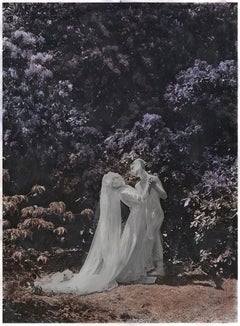
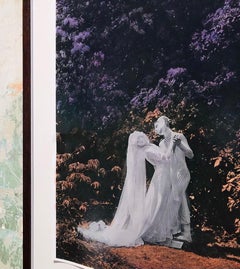
Otherworldly lovers, immobilised in marble, Dancing in blooming Garden

Otherworldly lovers, immobilised in marble, Dancing in blooming Garden

By Katie Eleanor

Located in London, GB

Handcoloured portrait of otherworldly lovers, immobilised in marble, dancing in blooming meadows. A whimsical tale of adoration, Ursa and her spiritual partner take visual cues from Titania and Bottom in Dieterle and Reinhartd’s 1936 interpretation of A Midsummer Nights Dream. Taken from The Sialia Marbles, a series of portraits containing ephemeral human sculptures taken between 2016-19. Together these works act as tales contained in a fictional sculpture hall, in direct reaction to Andre Malraux’s 1947 Le Musee Imaginaire (Museum Without Walls). Original title: URSA LOVES YOU, 2017 Hand-coloured Archival Pigment Print on Hahnemuhle Photorag 40.5 x 30.5 cm Unique Series: The Sialia Marbles Signed and dated on verso "I’m not a sculptor, but I wanted to construct my own stories. Photographers have often used sculpture in order to challenge our idea of a “sculptural” body or object, by casting them in a two-dimensional light. I love playing with perception. A lot of my work is influenced by the nineteenth century—the pictorialist movement for instance. When photography was a new experiment, people would play around with perception tricks—Victorian paper theaters...

Category

2010s Romantic Art

Materials

Photographic Film, Watercolor, Photographic Paper, Archival Pigment

Boys Playing Dice - Mid Century Figurative in Oil on Masonite

Boys Playing Dice - Mid Century Figurative in Oil on Masonite

By R. Hauslar

Located in Soquel, CA

Exceptional detail in this painting of boys playing dice by R. Hauslar (German, 20th Century). A Hausler interpretation of a work by the famous Bartolome Esteban Murillo (1617-1650) ...

Category

1950s Romantic Art

Materials

Masonite, Oil

German painter - 18th century trompe l'oeil with engravings and still life

German painter - 18th century trompe l'oeil with engravings and still life

Located in Varmo, IT

German painter (18th–19th century) - Trompe l'oeil with documents, engravings and still life. 38 x 53 cm (without frame) - 41.5 x 56.5 cm (with frame). Tempera on paper, in a gilt ...

Category

Late 18th Century Romantic Art

Materials

Paper, Tempera

WOP 2 - 00617
WOP 2 - 00617

WOP 2 - 00617

By Hiro Yokose

Located in Phoenix, AZ

mixed media on paper; unframed paper size 22.25 x 30 inches Neoromantic painter Hiro Yokose fuses multiple layers of wax and oil paint to create mysterious, veiled landscapes illumi...

Category

Early 2000s Romantic Art

Materials

Paint, Paper, Mixed Media, Archival Paper

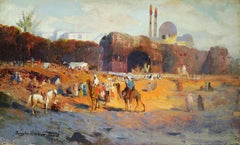
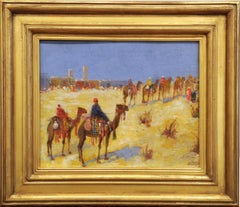
Georg Macco "Oriental Landscape With Arabs"  Oil on Canvas, Signed

Georg Macco "Oriental Landscape With Arabs" Oil on Canvas, Signed

By Georg Macco

Located in Eltville am Rhein, DE

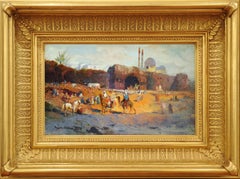
Georg Macco Aachen 1863 - 1933 Genoa Oriental Landscape Oil on canvas Signed lower right Size: 28 x 46 cm Frame: 37 x 55 cm Original condition (see photos) Viewing and collection ...

Category

Early 1900s Romantic Art

Materials

Oil

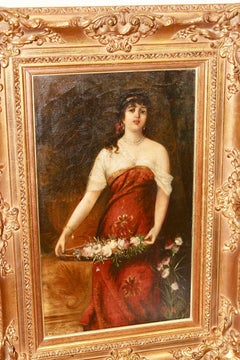
Still Life Italian School 19th Century Paint Oil on canvas Italy Art Quality
Still Life Italian School 19th Century Paint Oil on canvas Italy Art Quality
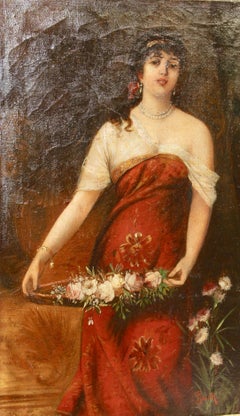
Located in Riva del Garda, IT

Still life with vase of flowers Italian School of the nineteenth century Oil on canvas cm. 74 x 92,5 frame 97 x 112 Beautiful painting representing a rich still life, of great deco...
Category

Mid-19th Century Romantic Art

Materials

Oil

Napoleon III Child Portrait Boy with Dog French School Paul Martin Workshop

Napoleon III Child Portrait Boy with Dog French School Paul Martin Workshop

By Paul Martin

Located in Valladolid, ES

Outstanding painting depicts a small boy with a serene face and mischievous gaze, holding a ball in one hand while, with the other, he strokes or holds a large dog, probably a Saint ...

Category

1880s Romantic Art

Materials

Canvas

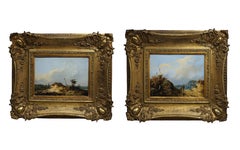
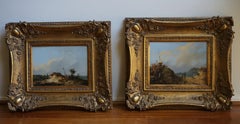
A pair of Indonesian Landscapes, by Charles Legrain (19th century)

A pair of Indonesian Landscapes, by Charles Legrain (19th century)

Located in Amsterdam, NL

Charles Legrain, (19th century) Two Javanese landscapes Both signed Legrain Ch. and one dated 1857 Both oil on canvas, size: 95 x 114 cm In rich gilt-gesso frame. (2x).

Category

Mid-19th Century Romantic Art

Materials

Canvas, Oil

19th century color lithograph figures cemetery willow tree memorial headstone

19th century color lithograph figures cemetery willow tree memorial headstone

By Nathaniel Currier

Located in Milwaukee, WI

The present hand-colored lithograph was produced as part of the funeral and mourning culture in the United States during the 19th century. Images like this were popular as ways of remembering loved ones, an alternative to portraiture of the deceased. This lithograph shows a man, woman and child in morning clothes next to an urn-topped stone monument. Behind are additional putto-topped headstones beneath weeping willows, with a steepled church beyond. The monument contains a space where a family could inscribe the name and death dates of a deceased loved one. In this case, it has been inscribed to a young Civil War soldier: William W. Peabody Died at Fairfax Seminary, VA December 18th, 1864 Aged 18 years The young Mr. Peabody probably died in service for the Union during the American Civil War. Farifax Seminary was a Union hospital and military headquarters in Alexandria, Virginia. The hospital served nearly two thousand soldiers during the war time. Five hundred were also buried on the Seminary's grounds. 13.75 x 9.5 inches, artwork 23 x 19 inches, frame Published before 1864 Inscribed bottom center "Lith. & Pub. by N. Currier. 2 Spruce St. N.Y." Framed to conservation standards using 100 percent rag matting and TruVue Conservation Clear glass, housed in a gold gilded moulding. Nathaniel Currier was a tall introspective man with a melancholy nature. He could captivate people with his piercing stare or charm them with his sparkling blue eyes. Nathaniel was born in Roxbury, Massachusetts on March 27th, 1813, the second of four children. His parents, Nathaniel and Hannah Currier, were distant cousins who lived a humble yet spartan life. When Nathaniel was eight years old, tragedy struck. Nathaniel’s father unexpectedly passed away leaving Nathaniel and his eleven-year-old brother Lorenzo to provide for the family. In addition to their mother, Nathaniel and Lorenzo had to care for six-year-old sister Elizabeth and two-year-old brother Charles. Nathaniel worked a series of odd jobs to support the family, and at fifteen, he started what would become a life-long career when he apprenticed in the Boston lithography shop of William and John Pendleton. A Bavarian gentleman named Alois Senefelder invented lithography just 30 years prior to young Nat Currier’s apprenticeship. While under the employ of the brothers Pendleton, Nat was taught the art of lithography by the firm’s chief printer, a French national named Dubois, who brought the lithography trade to America. Lithography involves grinding a piece of limestone flat and smooth then drawing in mirror image on the stone with a special grease pencil. After the image is completed, the stone is etched with a solution of aqua fortis leaving the greased areas in slight relief. Water is then used to wet the stone and greased-ink is rolled onto the raised areas. Since grease and water do not mix, the greased-ink is repelled by the moisture on the stone and clings to the original grease pencil lines. The stone is then placed in a press and used as a printing block to impart black on white images to paper. In 1833, now twenty-years old and an accomplished lithographer, Nat Currier left Boston and moved to Philadelphia to do contract work for M.E.D. Brown, a noted engraver and printer. With the promise of good money, Currier hired on to help Brown prepare lithographic stones of scientific images for the American Journal of Sciences and Arts. When Nat completed the contract work in 1834, he traveled to New York City to work once again for his mentor John Pendleton, who was now operating his own shop located at 137 Broadway. Soon after the reunion, Pendleton expressed an interest in returning to Boston and offered to sell his print shop to Currier. Young Nat did not have the financial resources to buy the shop, but being the resourceful type he found another local printer by the name of Stodart. Together they bought Pendleton’s business. The firm ‘Currier & Stodart’ specialized in "job" printing. They produced many different types of printed items, most notably music manuscripts for local publishers. By 1835, Stodart was frustrated that the business was not making enough money and he ended the partnership, taking his investment with him. With little more than some lithographic stones, and a talent for his trade, twenty-two year old Nat Currier set up shop in a temporary office at 1 Wall Street in New York City. He named his new enterprise ‘N. Currier, Lithographer’ Nathaniel continued as a job printer and duplicated everything from music sheets to architectural plans. He experimented with portraits, disaster scenes and memorial prints, and any thing that he could sell to the public from tables in front of his shop. During 1835 he produced a disaster print Ruins of the Planter's Hotel, New Orleans, which fell at two O’clock on the Morning of the 15th of May 1835, burying 50 persons, 40 of whom Escaped with their Lives. The public had a thirst for newsworthy events, and newspapers of the day did not include pictures. By producing this print, Nat gave the public a new way to “see” the news. The print sold reasonably well, an important fact that was not lost on Currier. Nat met and married Eliza Farnsworth in 1840. He also produced a print that same year titled Awful Conflagration of the Steamboat Lexington in Long Island Sound on Monday Evening, January 18, 1840, by which melancholy occurrence over One Hundred Persons Perished. This print sold out very quickly, and Currier was approached by an enterprising publication who contracted him to print a single sheet addition of their paper, the New York Sun. This single page paper is presumed to be the first illustrated newspaper ever published. The success of the Lexington print launched his career nationally and put him in a position to finally lift his family up. In 1841, Nat and Eliza had their first child, a son they named Edward West Currier. That same year Nat hired his twenty-one year old brother Charles and taught him the lithography trade, he also hired his artistically inclined brother Lorenzo to travel out west and make sketches of the new frontier as material for future prints. Charles worked for the firm on and off over the years, and invented a new type of lithographic crayon which he patented and named the Crayola. Lorenzo continued selling sketches to Nat for the next few years. In 1843, Nat and Eliza had a daughter, Eliza West Currier, but tragedy struck in early 1847 when their young daughter died from a prolonged illness. Nat and Eliza were grief stricken, and Eliza, driven by despair, gave up on life and passed away just four months after her daughter’s death. The subject of Nat Currier’s artwork changed following the death of his wife and daughter, and he produced many memorial prints and sentimental prints during the late 1840s. The memorial prints generally depicted grief stricken families posed by gravestones (the stones were left blank so the purchasers could fill in the names of the dearly departed). The sentimental prints usually depicted idealized portraits of women and children, titled with popular Christian names of the day. Late in 1847, Nat Currier married Lura Ormsbee, a friend of the family. Lura was a self-sufficient woman, and she immediately set out to help Nat raise six-year-old Edward and get their house in order. In 1849, Lura delivered a son, Walter Black Currier, but fate dealt them a blow when young Walter died one year later. While Nat and Lura were grieving the loss of their new son, word came from San Francisco that Nat’s brother Lorenzo had also passed away from a brief illness. Nat sank deeper into his natural quiet melancholy. Friends stopped by to console the couple, and Lura began to set an extra place at their table for these unexpected guests. She continued this tradition throughout their lives. In 1852, Charles introduced a friend, James Merritt Ives, to Nat and suggested he hire him as a bookkeeper. Jim Ives was a native New Yorker born in 1824 and raised on the grounds of Bellevue Hospital where his father was employed as superintendent. Jim was a self-trained artist and professional bookkeeper. He was also a plump and jovial man, presenting the exact opposite image of his new boss. Jim Ives met Charles Currier through Caroline Clark, the object of Jim’s affection. Caroline’s sister Elizabeth was married to Charles, and Caroline was a close friend of the Currier family. Jim eventually proposed marriage to Caroline and solicited an introduction to Nat Currier, through Charles, in hopes of securing a more stable income to support his future wife. Ives quickly set out to improve and modernize his new employer’s bookkeeping methods. He reorganized the firm’s sizable inventory, and used his artistic skills to streamline the firm’s production methods. By 1857, Nathaniel had become so dependent on Jims’ skills and initiative that he offered him a full partnership in the firm and appointed him general manager. The two men chose the name ‘Currier & Ives’ for the new partnership, and became close friends. Currier & Ives produced their prints in a building at 33 Spruce Street where they occupied the third, fourth and fifth floors. The third floor was devoted to the hand operated printing presses that were built by Nat's cousin, Cyrus Currier, at his shop Cyrus Currier & Sons in Newark, NJ. The fourth floor found the artists, lithographers and the stone grinders at work. The fifth floor housed the coloring department, and was one of the earliest production lines in the country. The colorists were generally immigrant girls, mostly German, who came to America with some formal artistic training. Each colorist was responsible for adding a single color to a print. As a colorist finished applying their color, the print was passed down the line to the next colorist to add their color. The colorists worked from a master print displayed above their table, which showed where the proper colors were to be placed. At the end of the table was a touch up artist who checked the prints for quality, touching-in areas that may have been missed as it passed down the line. During the Civil War, demand for prints became so great that coloring stencils were developed to speed up production. Although most Currier & Ives prints were colored in house, some were sent out to contract artists. The rate Currier & Ives paid these artists for coloring work was one dollar per one hundred small folios (a penny a print) and one dollar per one dozen large folios. Currier & Ives also offered uncolored prints to dealers, with instructions (included on the price list) on how to 'prepare the prints for coloring.' In addition, schools could order uncolored prints from the firm’s catalogue to use in their painting classes. Nathaniel Currier and James Merritt Ives attracted a wide circle of friends during their years in business. Some of their more famous acquaintances included Horace Greeley, Phineas T. Barnum, and the outspoken abolitionists Rev. Henry Ward, and John Greenleaf Whittier (the latter being a cousin of Mr. Currier). Nat Currier and Jim Ives described their business as "Publishers of Cheap and Popular Pictures" and produced many categories of prints. These included Disaster Scenes, Sentimental Images, Sports, Humor, Hunting Scenes, Politics, Religion, City and Rural Scenes, Trains, Ships, Fire Fighters, Famous Race Horses, Historical Portraits, and just about any other topic that satisfied the general public's taste. In all, the firm produced in excess of 7500 different titles, totaling over one million prints produced from 1835 to 1907. Nat Currier retired in 1880, and signed over his share of the firm to his son Edward. Nat died eight years later at his summer home 'Lion’s Gate' in Amesbury, Massachusetts. Jim Ives remained active in the firm until his death in 1895, when his share of the firm passed to his eldest son, Chauncey. In 1902, faced will failing health from the ravages of Tuberculosis, Edward Currier sold his share of the firm to Chauncey Ives...

Category

Mid-19th Century Romantic Art

Materials

Watercolor, Lithograph

Petite Marchande de Banane - Orientalist, North African Girl Selling Bananas

Petite Marchande de Banane - Orientalist, North African Girl Selling Bananas

By Charles Zacharie Landelle

Located in Miami, FL

Beautiful Orientalist painting - The Framed size: 47 inches x 34.5 inches. Magnificent ornate Frame The paint surface looks like the style of William-Adolphe Bouguereau Signed lower right. Provenance: Gallery Label with inventory number: Size on label is in centimeters, which indicates the painting came from a United Kingdom art gallery. Subsequently, Robert Funk Fine Art...

Category

1880s Romantic Art

Materials

Oil

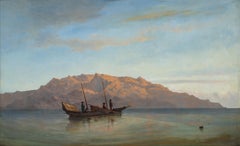
Antique oil Painting, atmospheric Seascape. 19th Century. Oil on canvas.

Antique oil Painting, atmospheric Seascape. 19th Century. Oil on canvas.

Located in Berlin, DE

Antique oil painting, atmospheric seascape. 19th century. Oil on canvas. Unsigned. Dimensions without frame 80 cm x 122 cm. The painting and the frame are in an age-appropriate co...

Category

19th Century Romantic Art

Materials

Canvas, Oil

Mid 20th Century Portrait of a Young Woman oil

Mid 20th Century Portrait of a Young Woman oil

Located in Frome, Somerset

A fine shoulder length portrait of a young woman circa 1940's-1950's Continental School. A fine shoulder length portrait of a young woman circa 1940's-1950's Continental School. oil ...

Category

Mid-20th Century Romantic Art

Materials

Oil

French School 19th C, A Renaissance scene with a Lady and a boy, oil on panel

French School 19th C, A Renaissance scene with a Lady and a boy, oil on panel

Located in Paris, FR

French School of the 19th century, Attributed to Achille Deveria (1800-1857) A Lady and a boy with a dog, a Renaissance style scene Oil on wood panel 22 x 13 cm A label on the revers...

Category

1840s Romantic Art

Materials

Oil

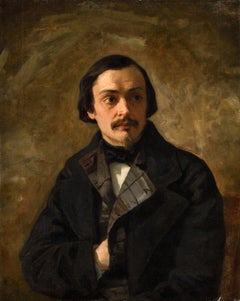
Gentleman with Mustache (by leader of "Southern Art Renaissance") - Antique

Gentleman with Mustache (by leader of "Southern Art Renaissance") - Antique

By Ellsworth Woodward

Located in New Orleans, LA

Many of you clicking on this are probably doing so because you know of Ellsworth Woodward, who with his brother William Woodward around the turn of the 20th century sparked an arts renaissance in the South, the arts and culture in general having been mostly moribund since the dispiriting defeat experienced in the Civil War. I won't bog you down with lots of detail here since all you have to do is Google his name to bring up a wealth of information about him. He is most famous for his leadership of the arts program at Newcomb College in New Orleans, and its famous Newcomb Pottery...

Category

1890s Romantic Art

Materials

Ink

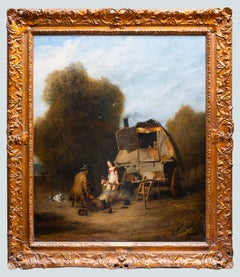
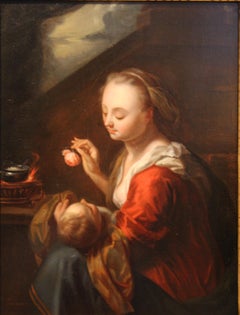
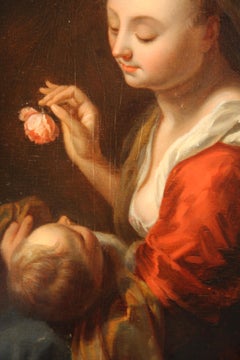
Mother with Child, Rose, Old Master, Figurative Painting, Love, Christmas Scene

Mother with Child, Rose, Old Master, Figurative Painting, Love, Christmas Scene

Located in Greven, DE

L. Franssen Mother and child with a rose Oil on wood, 44,5 x 33,5 cm signed The artist of this outstanding painting is completely unknown so far. There is no entry under "L. Franssen" in any encyclopaedia or reference work. There was a Dutch artist, Jan Fransen (1604/5 - ca. 1646), who was mainly based in Amsterdam. According to Thieme/Becker, he created numerous paintings with biblical depictions, study heads and still lifes. However, it could also have been Jan Franssen or Frantzen, who was not born until 1644 but was also active in Amsterdam. However, no confirmed works by either artist are known. Just as interesting as the attribution is the depiction: a young woman holds her child on her lap while she prepares a meal on a hob. At the same time she holds a rose in her hand. Most likely, Mary is depicted here with the young Jesus...

Category

18th Century Romantic Art

Materials

Oil

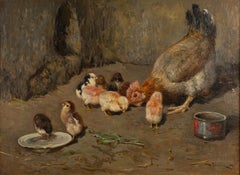
Mother Hen
Mother Hen

Mother Hen

Located in Sheffield, MA

Antonio Barone American, 1889-1971 Mother Hen Oil on canvas 22 ½ by 30 in, w/ frame 29 ⅞ by 37 ⅝ in Inventory Number: 01880

Category

Early 20th Century Romantic Art

Materials

Canvas, Oil

Étude Pour Une Chasse au Lion, Romantic Drawing, Mid-19th Century

Étude Pour Une Chasse au Lion, Romantic Drawing, Mid-19th Century

By Eugène Delacroix

Located in New York, NY

Étude pour une chasse au lion by Eugene Delacroix (1789-1863) Catalogue raisonne reference: Alfred Robalt 733. Description: Eugene Delacroix was a famous French Romantic painter whose career is seen to this day as imperative in the shaping of the French Romantic school. He studied at the Lycee Louis-le-Grand and Lycee Pierre Corneille. He was inspired by Baroque painters like Peter Paul Rubens, incorporating the extravagance of early Flemish painting into his work. He was often seen as in direct opposition to the established French Neoclassical school which included artists like Ingres and David. Nevertheless, Delacroix maintained his career as an artist through history paintings and later political paintings such as "Liberty Leading the People...

Category

Mid-19th Century Romantic Art

Materials

Paper, Pencil

Early Winter in Dalarna Sweden, 1923

Early Winter in Dalarna Sweden, 1923

Located in Stockholm, SE

Carl Axel Elvegård (1883–1962) Sweden Early Winter in Dalarna, 1923 signed and dated lower right Ax. Elvegård 1923 pastel and pencil on paper paper 48.5 × 61.5 cm (19.1 × 24.2 in) ...

Category

1920s Romantic Art

Materials

Paper, Pastel, Pencil

"Bathing Ogunquit" oil painting, beach scene - sunbathers beach umbrellas, Maine

"Bathing Ogunquit" oil painting, beach scene - sunbathers beach umbrellas, Maine

By Angel Ramiro Sanchez

Located in Sag Harbor, NY

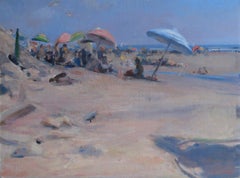
Painted from life in Ogunquit, Maine. A sandy beach crowded with figures sitting beneath umbrellas. Shadows are cast and depicted with rich purples and blues. This work is currently unframed. Signed: Angel Ramiro Sanchez Angel Ramiro Sanchez was born in 1974 in Maracaibo, Venezuela. At age six was accepted with full scholarship into the Instituto the Niños Cantores del Zulia, school for musically gifted children. At age fourteen he began five years of apprenticeship with the realist painter, Abdon J. Romero, an eminent specialist in murals for churches and public buildings. In 1993, a study grant from Mgr. Gustavo Ocando Yamarte, Founder the Niños Cantores, enabled him to travel to Florence, Italy, where he studied at the renowned Accademia di Belle Arti, graduating Magna Cum Laude in 1997. At the same time, he was enrolled at The Florence Academy of Art,founded by painter Daniel Graves, where he received a diploma in Painting. Ramiro was appointed senior painting instructor at The Florence Academy of Art in 1997, and is currently Director of the Advanced Painting Program. Ramiro paints only from life, searching for accuracy beyond physical appearance to reach the psychological state of his subject. He believes the painter must draw his information from "all five senses" to tell the complete human story. Ramiros work is predominantly represented by th e Grenning Gallery in Sag Harbor, New York, but also Scriba Gallery, venice, Italy, Jack Meier Gallery, Houston, Tx. Ramiros works can be found in numerous private collections in Europe, The United States and South America. Public collections include: The Fondazione Stelline, Milan, Italy. The Fremantle Foundation for Foreing Artist in Tuscany at Villa Peyron, Florence, Italy and The Muscarelle Museum of Art at the College of William and Mary, Williamsburg, VA. USA. He shares his life and passion for art with his wife, the artist Melissa Franklin-Sanchez. Education 1993-1997 Florence Academy of Art, directed by Daniel Graves, Florence, Italy. 1993-1997 Accademia di Belle Arti di Firenze Graduated Magna Cum Laude, Thesis: Historic and Technical Notes of Academic Realism Today. 1995 Florence, Italy: Michael John Angel...

Category

21st Century and Contemporary Romantic Art

Materials

Oil

19th century color lithograph watercolor landscape figurative animal print

19th century color lithograph watercolor landscape figurative animal print

By Nathaniel Currier

Located in Milwaukee, WI

The present hand-colored lithograph presents the viewer with a hunting scene in a picturesque landscape. In the foreground, a man approaches two partridges as his two pointers prepare to flush them out. Beyond, a white fence draws our eyes to the homestead in the distance. Images like this one show how people in the United States were trying to identify themselves as a new nation in the North American landscape - as separate from their European counterparts but with similar similar and specific wildlife and magesties of nature. It also identifies hunting in this landscape as an American pastime. 9.25 x 12.5 inches, artwork 18.38 x 22 inches, frame Entitled bottom center "Partridge Shooting...

Category

Mid-19th Century Romantic Art

Materials

Watercolor, Lithograph

WOP 2 - 00629
WOP 2 - 00629

WOP 2 - 00629

By Hiro Yokose

Located in Phoenix, AZ

mixed media on paper; unframed Neoromantic painter Hiro Yokose fuses multiple layers of wax and oil paint to create mysterious, veiled landscapes illuminated with flashes of light i...

Category

Early 2000s Romantic Art

Materials

Paint, Paper, Mixed Media, Archival Paper

The Colonnade, Island of Philae

The Colonnade, Island of Philae

By Francis Frith

Located in Fairlawn, OH

The Colonnade, Island of Philae Original gold toned albumin photograph, c. 1862 Unsigned as is usual From: Upper Egypt and Ethiopia, c. 1862, Vol 1, (36 plates) Published by William ...

Category

1860s Romantic Art

Materials

Photographic Paper

Pair of Hand-colored Romantic French Engravings after Francois Boucher

Pair of Hand-colored Romantic French Engravings after Francois Boucher

By (After) Francois Boucher

Located in Alamo, CA

A pair of French classical romantic prints original created in the 18th century by Jacques-Firmin Beauvarlet (1731-1797) after paintings by Francois Boucher (1703-1770), utilizing ...

Category

18th Century Romantic Art

Materials

Engraving, Etching

Setters at the Pond

Setters at the Pond

By Wouterus Verschuur l

Located in New York, NY

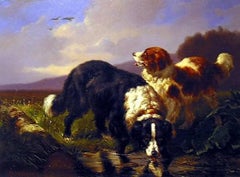
Wouterus Verschuur l Setters at the Pond Oil on Panel 7.63 x 10.16 inches Signed lower left This signed painting is in tune with Verschuur's typical animal genre scenes, with a pre...

Category

19th Century Romantic Art

Materials

Oil, Wood Panel

Cupid in Flight Oil Painting Surreal Romantic Fantasy Cherub Angel Artwork
Cupid in Flight Oil Painting Surreal Romantic Fantasy Cherub Angel Artwork
Located in Sitges, Barcelona

Cupid in Flight Oil Painting Surreal Romantic Fantasy Cherub Angel Artwork Artist: Chacón Title: Cupid in Flight Date: 1995 Medium: Oil on canvas Dimensions: 46 × 55 cm / 18.11 × 21.65 in Framing: Unframed Signature: Signed lower right and signed again verso “Chacón, Barna 95” Condition: Very good overall condition with vivid colors and stable pictorial surface. Minor signs of age consistent with time. Description Striking surreal-romantic oil painting depicting Cupid in full flight across a dreamlike celestial atmosphere, executed with remarkable technical precision and theatrical visual impact. The composition captures the mythological figure mid-air, bow drawn and ready to fire, suspended within a luminous cloudscape rendered in soft blues, mauves and iridescent tonal transitions. The artist combines classical iconography with a distinctly late-20th-century fantasy aesthetic, creating a work that feels simultaneously Baroque, cinematic and decorative. The painting possesses strong wall presence thanks to the dramatic movement of the figure, the polished modeling of the anatomy and the glowing atmospheric background. The wings, treated with warm reds and deep emerald tones, introduce a vibrant chromatic contrast that enhances the sensation of movement and fantasy. Executed in Barcelona in 1995, as confirmed on the reverse inscription (“Barna, 95”), the work reflects the revival of romantic and mythological imagery that became increasingly collectible in decorative art and figurative interiors during the late 20th century. Its refined execution and instantly recognizable subject make it especially appealing for collectors seeking: Mythological and allegorical paintings Romantic interior decoration Surreal and fantasy-inspired artworks Cherub and angel iconography Decorative Mediterranean figurative painting Hollywood Regency and eclectic interiors Statement pieces for luxury interiors The painting works particularly well in classic, maximalist or eclectic spaces, where its theatrical atmosphere creates the effect of a small airborne opera performed by a dangerously confident baby with a weapon. Renaissance mythology meets perfume-advertisement drama. 🪽🎯 Artistic Context / inspiración pictórica This work evokes elements associated with Romantic academic painting, Italian Baroque illusionism and late 20th-century fantasy realism. Its visual language recalls decorative mythological compositions inspired by artists such as François Boucher, Guido Reni and certain contemporary European fantasy painters focused on celestial allegory and idealized figurative imagery. The soft sfumato background and floating composition also connect with surreal dream imagery and decorative neo-baroque aesthetics popular in refined European interiors during the 1980s and 1990s. mythological painting, cupid painting...
Category

1990s Romantic Art

Materials

Canvas, Oil

Figurative painting of noble male portrait on 19th century Florence

Figurative painting of noble male portrait on 19th century Florence

Located in Florence, IT

The small but detailed oval painting in watercolor tempera on paper is signed at lower left "E. Niccheri," or Egisto Niccheri, a Tuscan painter active mainly in the late 19th century...

Category

Late 19th Century Romantic Art

Materials

Paper, Tempera

After "Capriccio Lagunare" Imagined Venetian Village Scene with Ruins and Lagoon

After "Capriccio Lagunare" Imagined Venetian Village Scene with Ruins and Lagoon

By Francesco Guardi

Located in Soquel, CA

After "Capriccio Lagunare" Imagined Venetian Village Scene with Ruins and Lagoon Study of the mid-18th century painting "Capriccio Lagunare" by Francesco Guardi, completed by an unk...

Category

Mid-20th Century Romantic Art

Materials

Canvas, Oil, Stretcher Bars

French Romantic school, Portrait of a young man, drawing

French Romantic school, Portrait of a young man, drawing

Located in Paris, FR

French Romantic school, circa 1840 Portrait of a young man, charcoal on paper 22.5 x 17 cm In good condition, however, there is a restoration of the paper in the upper right-hand qu...

Category

1840s Romantic Art

Materials

Charcoal

"Long Beach" oil painting, sunbathers at the bay, beach umbrella, summertime

"Long Beach" oil painting, sunbathers at the bay, beach umbrella, summertime

By Angel Ramiro Sanchez

Located in Sag Harbor, NY

Painted from life, a subtle and colorful seascape. A popular Hamptons beach along the Peconic Bay, in Sag Harbor. A humble spot in New York's famous Hamptons. A backlit figure sits beneath an umbrella along the shoreline. Other figures can be found in the distance, on the shore or swimming in the bay. This work is currently unframed. Signed: Angel Ramiro Sanchez Angel Ramiro Sanchez was born in 1974 in Maracaibo, Venezuela. At age six was accepted with full scholarship into the Instituto the Niños Cantores del Zulia, school for musically gifted children. At age fourteen he began five years of apprenticeship with the realist painter, Abdon J. Romero, an eminent specialist in murals for churches and public buildings. In 1993, a study grant from Mgr. Gustavo Ocando Yamarte, Founder the Niños Cantores, enabled him to travel to Florence, Italy, where he studied at the renowned Accademia di Belle Arti, graduating Magna Cum Laude in 1997. At the same time, he was enrolled at The Florence Academy of Art,founded by painter Daniel Graves, where he received a diploma in Painting. Ramiro was appointed senior painting instructor at The Florence Academy of Art in 1997, and is currently Director of the Advanced Painting Program. Ramiro paints only from life, searching for accuracy beyond physical appearance to reach the psychological state of his subject. He believes the painter must draw his information from "all five senses" to tell the complete human story. Ramiros work is predominantly represented by th e Grenning Gallery in Sag Harbor, New York, but also Scriba Gallery, venice, Italy, Jack Meier Gallery, Houston, Tx. Ramiros works can be found in numerous private collections in Europe, The United States and South America. Public collections include: The Fondazione Stelline, Milan, Italy. The Fremantle Foundation for Foreing Artist in Tuscany at Villa Peyron, Florence, Italy and The Muscarelle Museum of Art at the College of William and Mary, Williamsburg, VA. USA. He shares his life and passion for art with his wife, the artist Melissa Franklin-Sanchez. Education 1993-1997 Florence Academy of Art, directed by Daniel Graves, Florence, Italy. 1993-1997 Accademia di Belle Arti di Firenze Graduated Magna Cum Laude, Thesis: Historic and Technical Notes of Academic Realism Today. 1995 Florence, Italy: Michael John Angel...

Category

21st Century and Contemporary Romantic Art

Materials

Oil, Panel

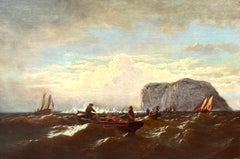
Antique painting, fisherman on the coast, oil on canvas.

Antique painting, fisherman on the coast, oil on canvas.

Located in Berlin, DE

Antique painting, fisherman on the coast, oil on canvas. Frame damaged in places. Dimensions with frame.

Category

19th Century Romantic Art

Materials

Canvas, Oil

A splendid patinated bronze statue by Mathurin Moreau

A splendid patinated bronze statue by Mathurin Moreau

Located in New York, NY

Patinated bronze figural statue depicting Zephyrus, god of the west wind, as he embraces his bride Flora. The couple are seen draped in flowers as if they have just married. Flore et...

Category

19th Century Romantic Art

Materials

Bronze

Romantic art for sale on 1stDibs.

Find a wide variety of authentic Romantic art available for sale on 1stDibs. Works in this style were very popular during the 21st Century and Contemporary, but contemporary artists have continued to produce works inspired by this movement. If you’re looking to add art created in this style to introduce contrast in an otherwise neutral space in your home, the works available on 1stDibs include elements of blue, purple, orange, pink and other colors. Many Pop art paintings were created by popular artists on 1stDibs, including Hiro Yokose, Francisco Goya, Leo Primavesi, and Dipen Bose. Frequently made by artists working with Paint, and Oil Paint and other materials, all of these pieces for sale are unique and have attracted attention over the years. Not every interior allows for large Romantic art, so small editions measuring 3 inches across are also available. Prices for art made by famous or emerging artists can differ depending on medium, time period and other attributes. On 1stDibs, the price for these items starts at $119 and tops out at $1,300,000, while the average work sells for $2,213.