Surrealist Art

SURREALIST STYLE

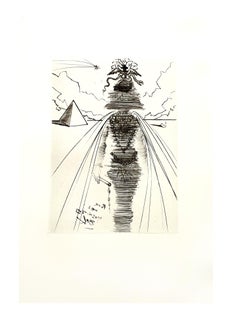
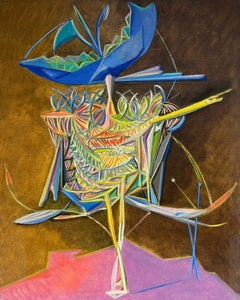
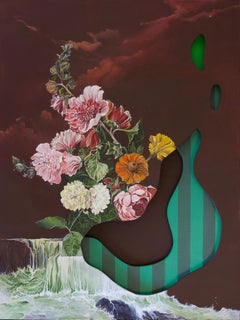
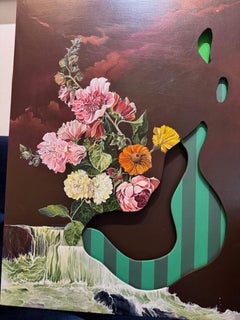
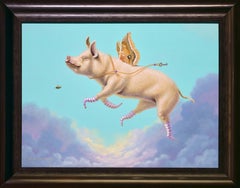
In the wake of World War I’s ravaging of Europe, artists delved into the unconscious mind to confront and grapple with this reality. Poet and critic André Breton, a leader of the Surrealist movement who authored the 1924 Surrealist Manifesto, called this approach “a violent reaction against the impoverishment and sterility of thought processes that resulted from centuries of rationalism.” Surrealist art emerged in the 1920s with dreamlike and uncanny imagery guided by a variety of techniques such as automatic drawing, which can be likened to a stream of consciousness, to channel psychological experiences.

Although Surrealism was a groundbreaking approach for European art, its practitioners were inspired by Indigenous art and ancient mysticism for reenvisioning how sculptures, paintings, prints, performance art and more could respond to the unsettled world around them.

Surrealist artists were also informed by the Dada movement, which originated in 1916 Zurich and embraced absurdity over the logic that had propelled modernity into violence. Some of the Surrealists had witnessed this firsthand, such as Max Ernst, who served in the trenches during World War I, and Salvador Dalí, whose otherworldly paintings and other work responded to the dawning civil war in Spain.

Other key artists associated with the revolutionary art and literary movement included Man Ray, Joan Miró, René Magritte, Yves Tanguy, Frida Kahlo and Meret Oppenheim, all of whom had a distinct perspective on reimagining reality and freeing the unconscious mind from the conventions and restrictions of rational thought. Pablo Picasso showed some of his works in “La Peinture Surréaliste” — the first collective exhibition of Surrealist painting — which opened at Paris’s Galerie Pierre in November of 1925. (Although Magritte is best known as one of the visual Surrealist movement’s most talented practitioners, his famous 1943 painting, The Fifth Season, can be interpreted as a formal break from Surrealism.)

The outbreak of World War II led many in the movement to flee Europe for the Americas, further spreading Surrealism abroad. Generations of modern and contemporary artists were subsequently influenced by the richly symbolic and unearthly imagery of Surrealism, from Joseph Cornell to Arshile Gorky.

Find a collection of original Surrealist paintings, sculptures, prints and multiples and more art on 1stDibs.

to
1,742
3,729
1,694
2,162
987
1,052
Overall Width
to
Overall Height
to
20
29
6,165
3,413
4
19
124
112
153
523
1,546
1,989
520
294
18
117,907
64,549
56,621
28,640
14,581
6,898
6,035
4,181
3,158
2,548
2,315
2,144
604
5,897
2,621
932
4,012
2,543
1,488
1,265
1,220
1,062
1,030
538
333
328
316
315
279
259
248
239
169
137
132
112
2,829
2,518
1,737
1,629
1,618
845
419
338
258
200
1,698
2,640
5,666
3,599
Style: Surrealist
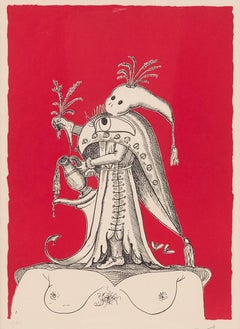
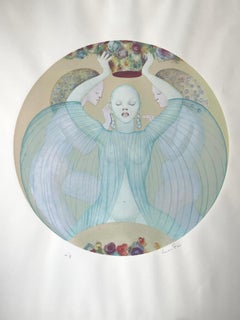
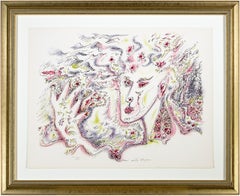
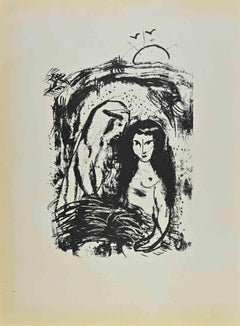
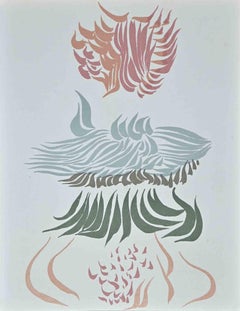
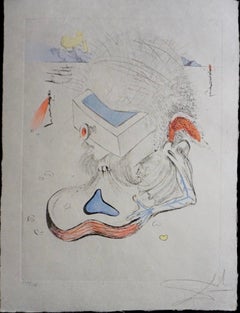
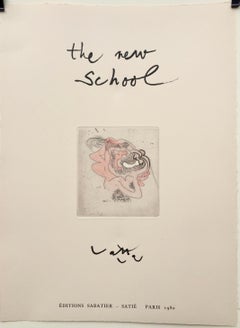
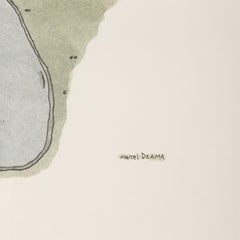
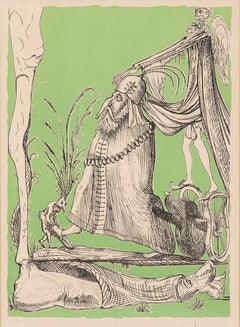
Leonor Fini, Untitled, from Fruits of Passion, 1980 (after)

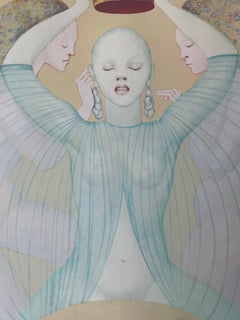
Leonor Fini, Untitled, from Fruits of Passion, 1980 (after)

By Leonor Fini

Located in Southampton, NY

This exquisite heliogravure, titled Sans titre (Untitled), after Leonor Fini, from the album Fruits de la passion, trente-deux variations sur un theme de Leonor Fini (Fruits of Passi...

Category

1980s Surrealist Art

Materials

Lithograph

Leonor Fini, Untitled, from Fruits of Passion, 1980 (after)

Leonor Fini, Untitled, from Fruits of Passion, 1980 (after)

By Leonor Fini

Located in Southampton, NY

This exquisite heliogravure, titled Sans titre (Untitled), after Leonor Fini, from the album Fruits de la passion, trente-deux variations sur un theme de Leonor Fini (Fruits of Passi...

Category

1980s Surrealist Art

Materials

Lithograph

Diggity Dog, Original Painting

Diggity Dog, Original Painting

By Dwight Smith

Located in San Francisco, CA

Artist Comments
Painted in a realist tradition, a hotdog in a bun takes center stage in this modern still life. Artist Dwight Smith enjoys exaggerating the scale of objects t...

Category

21st Century and Contemporary Surrealist Art

Materials

Watercolor

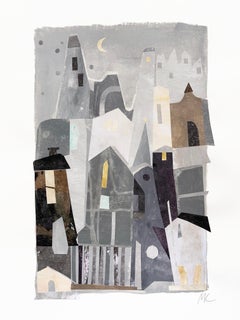
Femme avec Parapluie from Derriere Le Miroir

Femme avec Parapluie from Derriere Le Miroir

By Marc Chagall

Located in Naples, Florida

Lithograph in colors on Arches paper Signed and numbered, edition 22/75 Printed by Mourlot Frères, Paris Published by Maeght Éditeur, Paris (Mourlot 412) ...

Category

1960s Surrealist Art
Materials

Lithograph

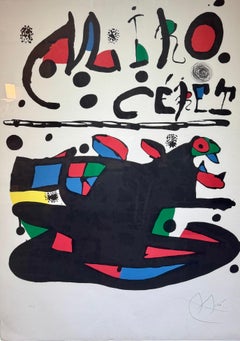
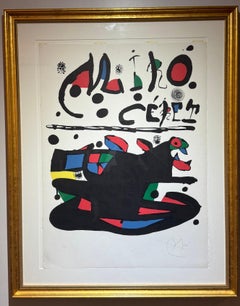
Obra Inèdita Recent IX

Obra Inèdita Recent IX

By Joan Miró

Located in Toronto, Ontario

Joan Miró (1893-1983) is one of the greatest artists of the 20th century. He is renowned internationally as a painter, sculptor, printmaker, and ceramicist. Miró’s works, which wer...

Category

1960s Surrealist Art
Materials

Lithograph

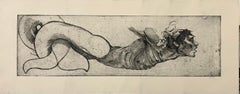
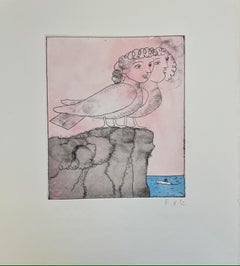
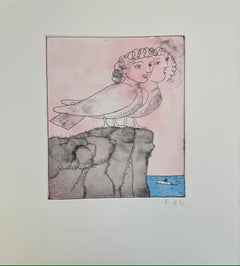
"Duality" by Leonor Fini

"Duality" by Leonor Fini

By Leonor Fini

Located in Hinsdale, IL

Leonor Fini Duality Edited for Volume I of “The Three Wise Men” Zinc engraving on Arches, c. 1960 Edition 27 of 100 Published by Pierre and Genevieve Argillet in1960 Sheet siz...

Category

1960s Surrealist Art
Materials

Etching

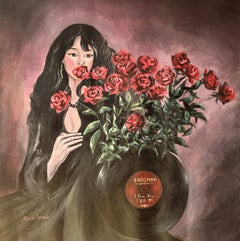
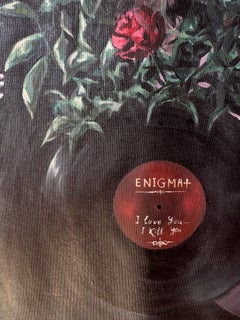
Doberman & Gramophone. Oil on canvas, 90X90 cm

Doberman & Gramophone. Oil on canvas, 90X90 cm

By Vadim Kovalev

Located in Riga, LV

Doberman & Gramophone. Oil on canvas, 90X90 cm The artist Vadim Kovalev was born in 1968 in the capital of Latvia, Riga, where he is also presently living and creating his works. W...

Category

2010s Surrealist Art

Materials

Oil, Canvas

Chapeau fort
Chapeau fort

Chapeau fort

By Pierre Alechinsky

Located in OPOLE, PL

Pierre Alechinsky (1927) - Chapeau fort Etching with lithograph from 1976. The edition of 3/90. Dimensions of work: 63.5 x 91 cm. Hand signed. Another example of this etching wi...

Category

1970s Surrealist Art

Materials

Etching, Lithograph

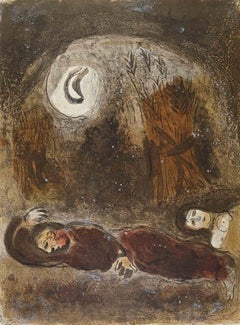
Marc Chagall - The Red Rider - Original Lithograph

Marc Chagall - The Red Rider - Original Lithograph

By Marc Chagall

Located in Collonge Bellerive, Geneve, CH

Marc Chagall - Original Lithograph The Red Rider From the unsigned, unnumbered lithograph printed in the literary review XXe Siecle 1957 See Mourlot 191 Dimensions: 32 x 24 cm Publisher: G. di San Lazzaro. Marc Chagall (born in 1887) Marc Chagall was born in Belarus in 1887 and developed an early interest in art. After studying painting, in 1907 he left Russia for Paris, where he lived in an artist colony on the city’s outskirts. Fusing his own personal, dreamlike imagery with hints of the fauvism and cubism popular in France at the time, Chagall created his most lasting work—including I and the Village (1911)—some of which would be featured in the Salon des Indépendants exhibitions. After returning to Vitebsk for a visit in 1914, the outbreak of WWI trapped Chagall in Russia. He returned to France in 1923 but was forced to flee the country and Nazi persecution during WWII. Finding asylum in the U.S., Chagall became involved in set and costume design before returning to France in 1948. In his later years, he experimented with new art forms and was commissioned to produce numerous large-scale works. Chagall died in St.-Paul-de-Vence in 1985. The Village Marc Chagall was born in a small Hassidic community on the outskirts of Vitebsk, Belarus, on July 7, 1887. His father was a fishmonger, and his mother ran a small sundries shop in the village. As a child, Chagall attended the Jewish elementary school, where he studied Hebrew and the Bible, before later attending the Russian public school. He began to learn the fundamentals of drawing during this time, but perhaps more importantly, he absorbed the world around him, storing away the imagery and themes that would feature largely in most of his later work. At age 19 Chagall enrolled at a private, all-Jewish art school and began his formal education in painting, studying briefly with portrait artist Yehuda Pen. However, he left the school after several months, moving to St. Petersburg in 1907 to study at the Imperial Society for the Protection of Fine Arts. The following year, he enrolled at the Svanseva School, studying with set designer Léon Bakst, whose work had been featured in Sergei Diaghilev's Ballets Russes. This early experience would prove important to Chagall’s later career as well. Despite this formal instruction, and the widespread popularity of realism in Russia at the time, Chagall was already establishing his own personal style, which featured a more dreamlike unreality and the people, places and imagery that were close to his heart. Some examples from this period are his Window Vitebsk (1908) and My Fianceé with Black Gloves (1909), which pictured Bella Rosenfeld, to whom he had recently become engaged. The Beehive Despite his romance with Bella, in 1911 an allowance from Russian parliament member and art patron Maxim Binaver enabled Chagall to move to Paris, France. After settling briefly in the Montparnasse neighborhood, Chagall moved further afield to an artist colony known as La Ruche (“The Beehive”), where he began to work side by side with abstract painters such as Amedeo Modigliani and Fernand Léger as well as the avant-garde poet Guillaume Apollinaire. At their urging, and under the influence of the wildly popular fauvism and cubism, Chagall lightened his palette and pushed his style ever further from reality. I and the Village (1911) and Homage to Apollinaire (1912) are among his early Parisian works, widely considered to be his most successful and representative period. Though his work stood stylistically apart from his cubist contemporaries, from 1912 to 1914 Chagall exhibited several paintings at the annual Salon des Indépendants exhibition, where works by the likes of Juan Gris, Marcel Duchamp and Robert Delaunay were causing a stir in the Paris art world. Chagall’s popularity began to spread beyond La Ruche, and in May 1914 he traveled to Berlin to help organize his first solo exhibition, at Der Sturm Gallery. Chagall remained in the city until the highly acclaimed show opened that June. He then returned to Vitebsk, unaware of the fateful events to come. War, Peace and Revolution In August 1914 the outbreak of World War I precluded Chagall’s plans to return to Paris. The conflict did little to stem the flow of his creative output, however, instead merely giving him direct access to the childhood scenes so essential to his work, as seen in paintings such as Jew in Green (1914) and Over Vitebsk (1914). His paintings from this period also occasionally featured images of the war’s impact on the region, as with Wounded Soldier (1914) and Marching (1915). But despite the hardships of life during wartime, this would also prove to be a joyful period for Chagall. In July 1915 he married Bella, and she gave birth to a daughter, Ida, the following year. Their appearance in works such as Birthday (1915), Bella and Ida by the Window (1917) and several of his “Lovers” paintings give a glimpse of the island of domestic bliss that was Chagall’s amidst the chaos. To avoid military service and stay with his new family, Chagall took a position as a clerk in the Ministry of War Economy in St. Petersburg. While there he began work on his autobiography and also immersed himself in the local art scene, befriending novelist Boris Pasternak, among others. He also exhibited his work in the city and soon gained considerable recognition. That notoriety would prove important in the aftermath of the 1917 Russian Revolution when he was appointed as the Commissar of Fine Arts in Vitebsk. In his new post, Chagall undertook various projects in the region, including the 1919 founding of the Academy of the Arts. Despite these endeavors, differences among his colleagues eventually disillusioned Chagall. In 1920 he relinquished his position and moved his family to Moscow, the post-revolution capital of Russia. In Moscow, Chagall was soon commissioned to create sets and costumes for various productions at the Moscow State Yiddish Theater, where he would paint a series of murals titled Introduction to the Jewish Theater as well. In 1921, Chagall also found work as a teacher at a school for war orphans. By 1922, however, Chagall found that his art had fallen out of favor, and seeking new horizons he left Russia for good. Flight After a brief stay in Berlin, where he unsuccessfully sought to recover the work exhibited at Der Sturm before the war, Chagall moved his family to Paris in September 1923. Shortly after their arrival, he was commissioned by art dealer and publisher Ambroise Vollard to produce a series of etchings for a new edition of Nikolai Gogol's 1842 novel Dead Souls. Two years later Chagall began work on an illustrated edition of Jean de la Fontaine’s Fables, and in 1930 he created etchings for an illustrated edition of the Old Testament, for which he traveled to Palestine to conduct research. Chagall’s work during this period brought him new success as an artist and enabled him to travel throughout Europe in the 1930s. He also published his autobiography, My Life (1931), and in 1933 received a retrospective at the Kunsthalle in Basel, Switzerland. But at the same time that Chagall’s popularity was spreading, so, too, was the threat of Fascism and Nazism. Singled out during the cultural "cleansing" undertaken by the Nazis in Germany, Chagall’s work was ordered removed from museums throughout the country. Several pieces were subsequently burned, and others were featured in a 1937 exhibition of “degenerate art” held in Munich. Chagall’s angst regarding these troubling events and the persecution of Jews in general can be seen in his 1938 painting White Crucifixion. With the eruption of World War II, Chagall and his family moved to the Loire region before moving farther south to Marseilles following the invasion of France. They found a more certain refuge when, in 1941, Chagall’s name was added by the director of the Museum of Modern Art (MOMA) in New York City to a list of artists and intellectuals deemed most at risk from the Nazis’ anti-Jewish campaign. Chagall and his family would be among the more than 2,000 who received visas and escaped this way. Haunted Harbors Arriving in New York City in June 1941, Chagall discovered that he was already a well-known artist there and, despite a language barrier, soon became a part of the exiled European artist community. The following year he was commissioned by choreographer Léonide Massine to design sets and costumes for the ballet Aleko, based on Alexander Pushkin’s “The Gypsies” and set to the music of Pyotr Ilyich Tchaikovsky. But even as he settled into the safety of his temporary home, Chagall’s thoughts were frequently consumed by the fate befalling the Jews of Europe and the destruction of Russia, as paintings such as The Yellow Crucifixion...

Category

1950s Surrealist Art

Materials

Lithograph

Day Room
Day Room

Day Room

By Fanny Brennan

Located in Greenwich, CT

Day Room is a lithograph on paper with an image size of 2.25 x 3.5 inches, initialed 'FMB' lower right and annotated lower left, framed in a contemporary silver and dark gray frame. ...

Category

20th Century Surrealist Art

Materials

Paper, Lithograph

4580  Transformaciones 2, Painting, Oil on Canvas

4580 Transformaciones 2, Painting, Oil on Canvas

By Andres Vivo

Located in Yardley, PA

Its about human behaviour that has never changed, but today things are visible and politically accepted. Inspired by Goya´s dramatic art works. :: Painting :: Surrealism :: This ...

Category

2010s Surrealist Art

Materials

Oil

Silence
Silence

Silence

By Joan Miró

Located in OPOLE, PL

Joan Miro (1893-1983) - Silence Lithograph from 1967. The edition of 99/100 on Arches paper with full margins. Dimensions of sheet: 31.1 x 23.2 cm Dimensions in frame: 52 x 42 cm...

Category

1960s Surrealist Art
Materials

Lithograph

Merartist, fantasy figure on rock by sea mermaid merman theme

Merartist, fantasy figure on rock by sea mermaid merman theme

By Jenny Toth

Located in Brooklyn, NY

A graduate of Yale, artist and professor Jenny Toth says, "My work revolves around certain themes, but always is based on direct observation of the material world. I think about the...

Category

2010s Surrealist Art

Materials

Canvas, Oil

Untitled, Madrid (Sandals w/ Grass)

Untitled, Madrid (Sandals w/ Grass)

By Chema Madoz

Located in Denton, TX

Edition of 15 Signed, dated and numbered. Chema Madoz is one of the most important contemporary Spanish photographers, who is greatly known for his monochromatic, surreal still-life...

Category

1980s Surrealist Art

Materials

Silver Gelatin

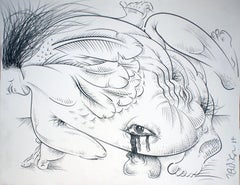
Surrealist drawing by California artist Daniel 'Zev' Harris

Surrealist drawing by California artist Daniel 'Zev' Harris

By Zev Daniel Harris

Located in Colfax, CA

Surrealist composition by Daniel 'Zev' Harris. Zev, meaning 'wolf' in Hungarian, was the name the artist chose for himself in 1953. He was born Daniel Harris. He studied at the Mas...

Category

1950s Surrealist Art

Materials

Paper, Mixed Media

Stardust
Stardust

Stardust

By Fanny Brennan

Located in Greenwich, CT

Stardust is a lithograph on paper with an image size of 2.5 x 3.25 inches, initialed 'FMB' lower right and annotated lower left, framed in a contemporary silver and dark gray frame. ...

Category

20th Century Surrealist Art

Materials

Paper, Lithograph

François-Xavier Lalanne (1927-2008) and Claude Lalanne (1925-1919), Sphinx -2005

François-Xavier Lalanne (1927-2008) and Claude Lalanne (1925-1919), Sphinx -2005

By François-Xavier Lalanne

Located in Saint-Didier, Provence-Alpes-Côte d'Azur

François-Xavier Lalanne (1927-2008) and Claude Lalanne (1925-1919), Sphinx, 2005 Techniques : aquatint and soft varnish on paper, hand signed in pencil by François Xavier Lalanne, i...

Category

Early 2000s Surrealist Art

Materials

Paper

French Contemporary Art By Helen Uter - Chiens N.1

French Contemporary Art By Helen Uter - Chiens N.1

By Helen Uter

Located in Paris, IDF

Oil on canvas Helen Uter is an established Franco-American painter born in 1955 who lives and works in Donnery, near Orléans, France. Heavily influenced by Edward Hopper, she creat...

Category

1990s Surrealist Art

Materials

Canvas, Oil

1970s Modernist Swiss Colorful Surrealism Signed Dada Lithograph Andre Thomkins

1970s Modernist Swiss Colorful Surrealism Signed Dada Lithograph Andre Thomkins

By André Thomkins

Located in Surfside, FL

This one is titled "Walk in a Broken Lake" and depicts a surreal figure of a robed woman walking in an abstract landscape in yellow, green, red and blue with a Salvador Dali esque quality about it. Published by Edition Hansjörg Mayer, Stuttgart They published concrete poetry and art books by Mark Boyle, Richard Hamilton, Dorothy Iannone, John Latham, Tom Phillips, Dieter Roth, André Thompkins and Emmett Williams, to name just a few. André Thomkins (1930 - 1985) was a Swiss painter, illustrator, and poet. He attended art-school, taught by Max von Moos, 1947 – 1949 and the Académie de la Grande Chaumière, Paris, France, 1950. From 1952, he lived in Germany and taught at the Kunstakademie Düsseldorf between 1971 and 1973. Thomkins painted and drew ironic and fantastic pictures influenced by surrealism and dadaism. Together with Dieter Roth and Daniel Spoerri he prepared works of Eat Art. He also was a writer of palindromes. His friends and collaborators included Daniel Spoerri, Dieter Roth, George Brecht, Richard Hamilton and Karl Gerstner, Thomkins gained a reputation as an ‘artist’s artist’, and is considered one of the most important Swiss artists of the second half of the twentieth century.He died in 1985. His work is currently represented by Hauser & Wirth Zurich, Switzerland. Select group exhibitions: 2018 Kunsthalle Krems, 'Pablo Picasso. Arshile Gorky, Andy Warhol. Sculptures and Works on Paper. Hubert Looser Collection', Krems, Austria 2017 Kunsthandel Wolfgang Werner, 'Martin Barré, Karl Otto Götz, Ernst Wilhelm Nay, André Thomkins', Berlin, Germany 2013 Fabian & Claude Walter Galerie, 'Schweizer Avantgarde Kunst nach 1940', Zurich, Switzerland 2009 The Modern Institute, 'Thomas Houseago, Dieter Roth, Andre Thomkins', Glasgow, England Museum of Modern Art, 'Compass in Hand: Selections from the Judith Rothschild Collection', NYC 2004 Kunsthandel Wolfgang Werner, 'Arman, Baumeister, Götz, Graubner, Tàpies, Thomkins', Berlin, Germany 1994 Kunstmuseum Solothurn, 'Eine Schenkung. Grafik von Eduardo Chillida, Antoni Tàpies, Alexander Calder, Jean Dubuffet, Ben Nicholson, Giacometti, Tinguely, Thomkins', Solothurn, Switzerland 1992 Galerie Littmann, Tinguely zu Ehren. A Tribute to Jean Tinguely. Hommage à Tinguely, Basel, 1988 Museum Ludwig, 'Uebrigens sterben immer die anderen. Marcel Duchamp und die Avantgarde seit 1950', Cologne, Germany 1987 Aargauer Kunsthaus, 'Otto Grimm. Marc-Antoine Fehr. Christoph Gredinger', Aarau, Switzerland Cercle Municipal, 'Art contemporain suisse. Collection de la Banque du Gothard', Luxembourg, 1985 Centre national d'art et de culture Georges Pompidou, 'Livres d'artistes', Paris, France Rathaus, 'Claude Sandoz – Hans Schärer...

Category

1970s Surrealist Art

Materials

Lithograph, Offset

Foot Musik

Foot Musik

By Roberto Matta

Located in Östermalm, Stockholms län

Artwork size: 56 x 58 cm. Frame size: 76 x 78 cm. Free shipment worldwide. Archive number (P90/36) Acquired directly from the artist. “The heart is an eye,” writes Nobel laureate Octavio Paz in an essay on Matta’s paintings. Matta creates a world coloured both by a sunny faith in the future and by visions of impending doom. Roberto Sebastian Echaurren Antonio Matta, who died aged 91 on 23 November 2002, was born in Santiago, Chile, on 11 November 1911 into a family with Spanish, French and Basque roots, and raised in an atmosphere of religiosity. By the age of 21 he had graduated and begun work as an architect, but his leisure time he devoted to sketching and painting. In 1933 he travelled to Europe for the first time, visiting Greece, Yugoslavia, Italy and other countries, and subsequently taking the initiative to collaborate with the architect, Le Corbusier. As time passed, however, Matta’s enthusiasm for a career in architecture waned, and he began to devote himself full-time to art, making early acquaintances with surrealists such as Max Ernst, Salvador Dalí, André Breton and others. Between 1939 and 1948 Matta, like many of his artistic contemporaries, lived in self-imposed exile in the USA, but, after almost 10 years’ absence from Europe, he returned to make first Rome and then, a few years later, Paris his home. Throughout most of the rest of his life Matta commuted between his studio in Paris and his creative refuge in the monastery outside Rome. And it is here, in Italy, that he produced his greatest paintings. Matta’s first retrospective in Sweden was organised in 1956 when his works were exhibited in what was then Galerie Colibri – run by, among others, the artist C O Hultén at number 36 Södra Förstadsgatan in Malmö, Sweden. This was also the time when Matta began to collaborate with poets and other artists in Sweden. He produced the illustrations for Lasse Söderberg’s first anthology of poems, Akrobaterna (“The Acrobats”), published in 1955, and was also responsible for the cover of the Swedish art and literary magazine Salamander. In 1959 the first museum exhibition of Matta’s work in Europe was arranged at the Museum of Modern Art (Moderna Museet) in Stockholm. Held under the aegis of Pontus Hultén, it was entitled “Fifteen Forms of Doubt” and included 15 or so gigantic paintings...

Category

1990s Surrealist Art

Materials

Mixed Media

The Unicorn Laser Disintegrates the Horns of Cosmic Rhinoceroses (The Conquest o

The Unicorn Laser Disintegrates the Horns of Cosmic Rhinoceroses (The Conquest o

By Salvador Dalí­

Located in Greenwich, CT

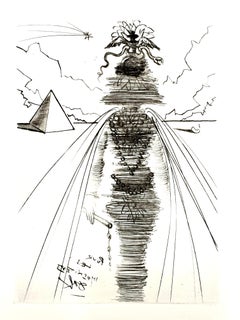
The Unicorn Laser Disintegrates the Horns of the Cosmic Rhinoceroses from the Conquest of Cosmos suite – 29.5 x 22" image size, signed ‘Dalí’ lower right and annotated lower left. Fr...

Category

20th Century Surrealist Art

Materials

Drypoint, Lithograph

Salvador Dali "Leda and the Swan"

Salvador Dali "Leda and the Swan"

By Salvador Dalí­

Located in Boston, MA

Artist: Dali, Salvador Title: Leda and the Swan Series: The Mythology Date: 1963 Medium: drypoint on Japon paper Unframed Dimensions: 30" x 18 1/8" Framed Dimensions: 42" x 34...

Category

1960s Surrealist Art
Materials

Drypoint

The Mythology Narcissus

The Mythology Narcissus

By Salvador Dalí­

Located in Hollywood, FL

ARTIST: Salvador Dali TITLE: The Mythology Narcissus MEDIUM: Etching SIGNED: Hand Signed PUBLISHER: Pierre Argillet, Paris EDITION NUMBER: XXXI/C MEASUREMENTS: 18" x 30" YEAR...

Category

1960s Surrealist Art
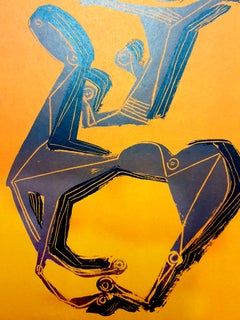
Materials

Etching

Psychedelic Cloud, Surrealist Poster Signed by Peter Max

Psychedelic Cloud, Surrealist Poster Signed by Peter Max

By Peter Max

Located in Long Island City, NY

Peter Max was born in Berlin in 1937 but his family moved to China when he was still very young. In fact, the young Max would move frequently with his family, learning about a variet...

Category

1960s Surrealist Art
Materials

Offset

Bird Lady  30x26" Framed

Bird Lady 30x26" Framed

By George Underwood

Located in Southampton, NY

In continuing with representing fine artists that are connected to the music industry we are please to announce that we are the only gallery in the United States representing the wor...

Category

2010s Surrealist Art

Materials

Archival Ink, Rag Paper, Pigment

Faust Chevalier a Genou

Faust Chevalier a Genou

By Salvador Dalí­

Located in Hollywood, FL

ARTIST: Salvador Dali TITLE: Faust Chevalier a Genou MEDIUM: Etching SIGNED: Hand Signed EDITION NUMBER: 9/95 MEASUREMENTS: 15.3" x 11.4" YEAR: 1969 FRAMED: No CONDITION: Ex...

Category

1960s Surrealist Art
Materials

Etching

Ernst, Composition, Judith, Tragödie in drei Akten (after)

Ernst, Composition, Judith, Tragödie in drei Akten (after)

By Max Ernst

Located in Southampton, NY

Lithograph on vélin d'Arches paper. Unsigned and unnumbered, as issued. Good condition. Notes: From the album, Judith, Tragödie in Drei Akten, Lithographien von Max Ernst und Dorothe...

Category

1970s Surrealist Art
Materials

Lithograph

Ernst, Composition, Judith, Tragödie in drei Akten (after)

Ernst, Composition, Judith, Tragödie in drei Akten (after)

By Max Ernst

Located in Southampton, NY

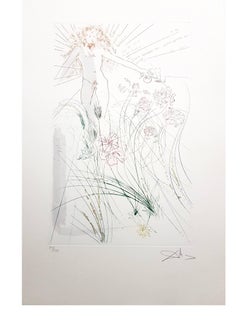
Lithograph on vélin d'Arches paper. Unsigned and unnumbered, as issued. Good condition. Notes: From the album, Judith, Tragödie in Drei Akten, Lithographien von Max Ernst und Dorothe...

Category

1970s Surrealist Art
Materials

Lithograph

Surrealist art for sale on 1stDibs.
Find a wide variety of authentic Surrealist art available for sale on 1stDibs. Works in this style were very popular during the 21st Century and Contemporary, but contemporary artists have continued to produce works inspired by this movement. If you’re looking to add art created in this style to introduce contrast in an otherwise neutral space in your home, the works available on 1stDibs include elements of blue, orange, purple, red and other colors. Many Pop art paintings were created by popular artists on 1stDibs, including Salvador Dalí, Marc Chagall, Joan Miró, and Leonor Fini. Frequently made by artists working with Paint, and Lithograph and other materials, all of these pieces for sale are unique and have attracted attention over the years. Not every interior allows for large Surrealist art, so small editions measuring 1 inches across are also available. Prices for art made by famous or emerging artists can differ depending on medium, time period and other attributes. On 1stDibs, the price for these items starts at $1 and tops out at $1,450,000, while the average work sells for $1,426.