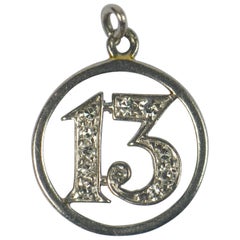
Lucky 13 Platinum Diamond Charm
Located in London, GB
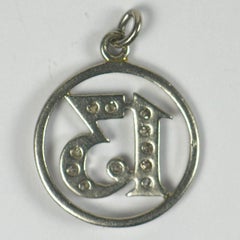
A platinum charm designed as a circle with a diamond set lucky 13 to the centre. 1/2" by 1/2".
Category
20th Century Unknown Art Deco Charm Bracelets
Materials
Diamond, Platinum
Lucky 13 Platinum Diamond Charm
Located in London, GB
A platinum charm designed as a circle with a diamond set lucky 13 to the centre. 1/2" by 1/2".
Diamond, Platinum
Lucky 13 Red Enamel Gold Charm
Located in London, GB
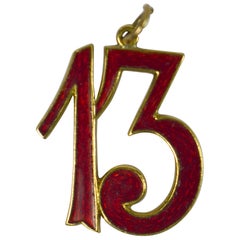
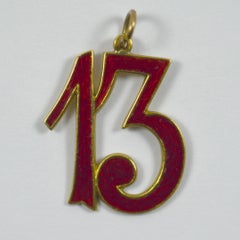
An 18 karat gold charm with red guilloche enamel designed as lucky 13. Despite it's unlucky
18k Gold
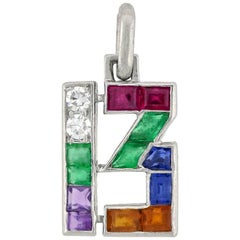
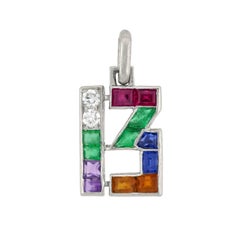
Cartier Art Deco Platinum Multi Gemstone Lucky 13 Charm/Pendant
By Cartier
Located in Narberth, PA
A wonderful multi-gemstone lucky number charm pendant from the Art Deco (ca1920s) era! By Cartier
Diamond, Multi-gemstone, Platinum
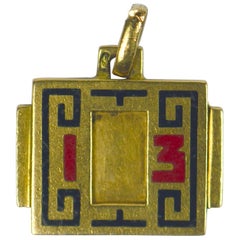
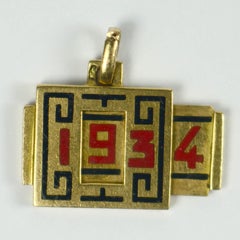
French Art Deco Lucky 13 Charm
Located in London, GB
An unusual lucky 13 charm designed to resemble a Cartier clock with Chinese motifs and a sliding
18k Gold
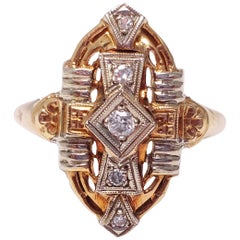
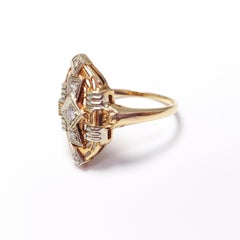
Art Deco .13 Carat Diamond Statement Ring in 14 Karat Gold and Platinum
Located in Milford, DE
luxury and Art Deco charm! Approximately .13 ct total, comprised of: 1 diamond - approx .048 ct 2
Diamond, 14k Gold, Platinum
Fascination with the Jazz Age is endless, and even today jewelry designers continue to be inspired by authentic Art Deco jewelry and watches.
The Art Deco period, encompassing the 1920s and ’30s, ushered in a very distinct look in the design of jewelry. There were many influences on the jewelry of the era that actually began to take shape prior to the 1920s. In 1909, Serge Diaghilev brought the Ballet Russes to Paris, and women went wild for the company’s exotic and vibrant costumes It’s no wonder, then, that jade, lapis lazuli, coral, turquoise and other bright gemstones became all the rage. There already existed a fascination with the East, particularly China and Japan, and motifs consisting of fans and masks started to show up in Art Deco jewelry.
However, the event that had the greatest influence on Deco was the excavation of the tomb of King Tut in 1922. When the world saw what was hidden in Tut’s burial chamber, it sent just about everyone into a frenzy. Pierre Cartier wrote in 1923 that “the discovery of the tomb will bring some sweeping changes in fashion jewelry.” And he couldn’t have been more right. “Egyptomania” left an indelible mark on all of the major jewelry houses, from Cartier to Van Cleef & Arpels, Boucheron and Georges Fouquet. (Cartier created some of the most iconic jewelry designs that defined this era.)
While a lot of Art Deco jewelry was black and white — the black coming from the use of onyx or black enamel and the white from rock crystal and diamonds — there is plenty of color in jewelry of the era. A perfect accent to diamonds in platinum settings were blue sapphires, emeralds and rubies, and these stones were also used in combination with each other.
Many designers employed coral, jade and lapis lazuli, too. In fact, some of the most important avant-garde jewelers of the period, like Jean Després and Jean Fouquet (son of Georges), would combine white gold with ebony and malachite for a jolt of color.
A lot of the jewelry produced during this time nodded to current fashion trends, and women often accessorized their accessories. The cloche hat was often accented with geometric diamond brooches or double-clip brooches. Backless evening dresses looked fabulous with sautoir necklaces, and long pearl necklaces that ended with tassels, popular during the Edwardian period, were favored by women everywhere, including Coco Chanel.
Find unique Art Deco necklaces, earrings, bracelets and other jewelry on 1stDibs.
The 1920s design is a thrilling combination of saturated colors, ancient motifs and modern aesthetics.
The exquisite French jewel feels as modern today as when it was created, nearly a century ago.
After years of diligent restoration, E-1027, the designer-cum-architect’s marriage of romance and modernism, is finally complete.
The cabochon gem centerpiece and diamond-set elliptical rings makes it a marvel of Gatsby-era glamour.
Cartier created some of the most iconic jewelry designs that defined this era.
Learn about these antique jewelry styles, then choose a design that speaks to you.
Men, women and the watchmakers themselves are falling for the old-fashioned charm of retro timepieces.
Bespoke lighting is a hallmark of upscale interiors, and contemporary makers are increasingly ambitious in their materials and forms.