Auction Dutch Painting
Mid-20th Century Realist Portrait Paintings
Canvas

People Also Browsed
Early 2000s Japanese Mid-Century Modern Floor Lamps
Steel

21st Century and Contemporary Swedish Mid-Century Modern Table Lamps
Textile

17th Century Old Masters Portrait Paintings
Canvas, Oil
1910s Impressionist Figurative Paintings
Oil, Canvas
Vintage 1960s Danish Mid-Century Modern Dining Room Tables
Wood

17th Century Baroque Portrait Paintings
Oil, Canvas
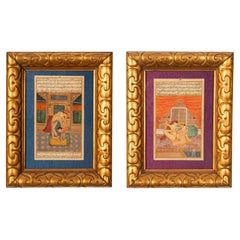
Antique Mid-18th Century Indian Anglo-Indian Paintings and Screens
Paint
Vintage 1940s French Mid-Century Modern Pedestals
Wood, Oak
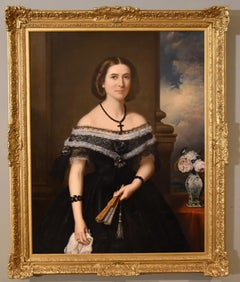
19th Century Portrait Paintings
Oil
Antique 17th Century Decorative Art
Wood
Vintage 1970s French Lounge Chairs
Oak

Vintage 1950s Belgian Brutalist Benches
Beech, Oak

Mid-19th Century Realist Figurative Paintings
Linen, Oil
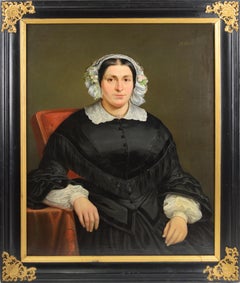
Late 19th Century Victorian Portrait Paintings
Oil, Canvas
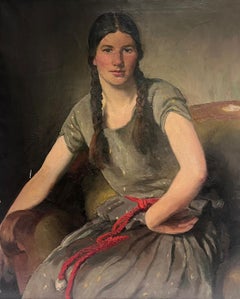
Mid-19th Century Portrait Paintings
Oil
Vintage 1940s Italian Art Deco Armchairs
Rope, Wood

Auction Dutch Painting For Sale on 1stDibs
How Much is a Auction Dutch Painting?
A Close Look at Realist Art
Realist art attempts to portray its subject matter without artifice. Similar to naturalism, authentic realist paintings and prints see an integration of true-to-life colors, meticulous detail and linear perspectives for accurate portrayals of the world.
Work that involves illusionistic techniques of realism dates back to the classical world, such as the deceptive trompe l’oeil used since ancient Greece. Art like this became especially popular in the 17th century when Dutch artists like Evert Collier painted objects that appeared real enough to touch. Realism as an artistic movement, however, usually refers to 19th-century French realist artists such as Honoré Daumier exploring social and political issues in biting lithographic prints, while the likes of Gustave Courbet and Jean-François Millet painting people — particularly the working class — with all their imperfections, navigating everyday urban life. This was a response to the dominant academic art tradition that favored grand paintings of myth and history.
By the turn of the 20th century, European artists, such as the Pre-Raphaelites, were experimenting with nearly photographic realism in their work, as seen in the attention to every botanical attribute of the flowers surrounding the drowned Ophelia painted by English artist John Everett Millais.
Although abstraction was the guiding style of 20th-century art, the realism trend in American modern art endured in Edward Hopper, Andrew Wyeth and other artists’ depictions of the complexities of the human experience. In the late 1960s, Photorealism emerged with artists like Chuck Close and Richard Estes giving their paintings the precision of a frame of film.
Contemporary artists such as Jordan Casteel, LaToya Ruby Frazier and Aliza Nisenbaum are now using the unvarnished realist approach for honest representations of people and their worlds. Alongside traditional mediums, technology such as virtual reality, artificial intelligence and immersive installations are helping artists create new sensations of realism in art.
Find authentic realist paintings, sculptures, prints and more art on 1stDibs.
Finding the Right Portrait-paintings for You
An elegant and sophisticated decorative touch in any living space, portrait paintings have remained popular throughout the years and are widely loved pieces of art for display in many homes today.
Portrait paintings are at least as old as ancient Egypt, where realistic, lifelike depictions of the recently deceased — commonly known as “mummy portraits” — were painted on wooden panels and affixed to mummies as part of the burial tradition.
For centuries, painters have used portraiture as a means of expressing a subject’s nobility, societal status and authority. Portraits were given as gifts in Renaissance Europe, and a portrait artist might have been commissioned to help mark a significant occasion such as a wedding or a promotion to high office. Prior to the advent of photography, which eventually replaced painted portraits as a quicker and more efficient way of capturing a person’s essence, the subject of a portrait had to sit for hours until the painter had finished. And during the 18th century in particular, if an artist commissioned for a portrait struggled with how to adequately memorialize and capture a subject’s likeness, sometimes a portrait painting wasn’t completed for up to a year.
Whether it’s part of the gallery-style approach to your living-room or dining-room walls or merely inspiration as you devise an eye-grabbing color scheme in your home, a portrait painting is a timeless decorative object for any interior. A landscape painting or sculpture might give you the kind of insight into a specific region of the world or a different culture that you can ascertain only through art. Similarly, when you take the time to learn about the subject of a portrait painting that you bring into your home — the sitter’s history, the relationship between the sitter and the artist should one exist, the story of how the portrait came to be — that work can become intensely personal in addition to its place as an object for an art-hungry corner of your apartment or house.
On 1stDibs, visit a vast collection of famous portrait paintings or works by emerging artists. Search by medium to find the right portrait paintings for your home in oil paint, synthetic resin paint and more. Find portrait paintings in a variety of styles, too, including contemporary, Impressionist and Pop art, or search by artist to find unique works created by painters such as Mark Beard, Steve Kaufman and Montse Valdés.
- What is Dutch flower painting?1 Answer1stDibs ExpertApril 5, 2022Dutch flower paintings are painted artworks that depict various species of flowers. Painters from the Netherlands produced many flower paintings between the late 16th and 18th centuries. On 1stDibs, shop a variety of Dutch flower paintings from some of the world’s top sellers.
- 1stDibs ExpertApril 5, 2022Baroque Dutch painting shares a lot in common with other Baroque painting traditions, including deep colors, dark shadows and intense lighting. While splendor and drama are common themes among Baroque paintings, many of the most famous Dutch Baroque works have a tendency toward detailed realism. On 1stDibs, shop a collection of Dutch Baroque paintings from some of the world’s top art dealers.
- 1stDibs ExpertApril 5, 2022Why there are so many insects in Dutch flower paintings is a matter of debate among art historians. Some feel that Dutch artists painted the insects in great detail simply to show their skill or to depict the flowers in the most natural way possible. Others believe the insects may have deeper symbolism. They could represent the interconnectedness of life or be reminders of death. On 1stDibs, shop a variety of Dutch paintings on 1stDibs.
- 1stDibs ExpertApril 5, 2022Dutch landscape paintings were important because of their rich associations with God, nature, agriculture and pride in one’s nation. The colors and textures used captured a snippet of the patrons' everyday lives and values. On 1stDibs, find a collection of landscape paintings from some of the world’s top sellers.