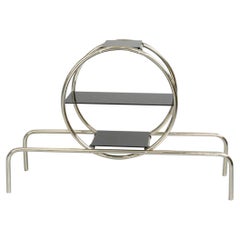
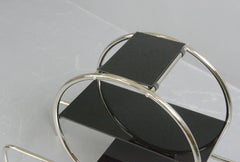
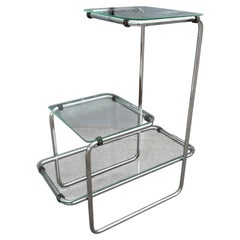
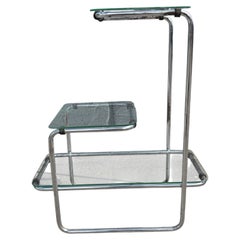
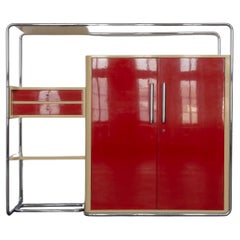
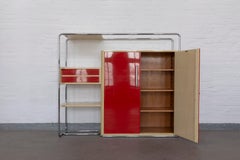
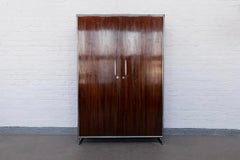
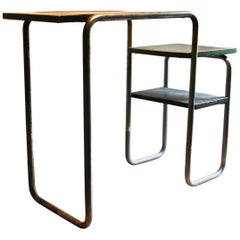
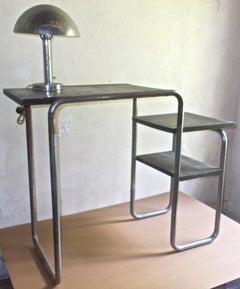
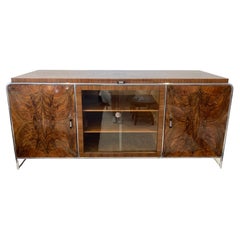
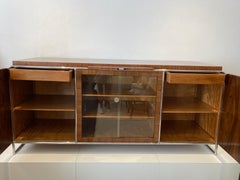
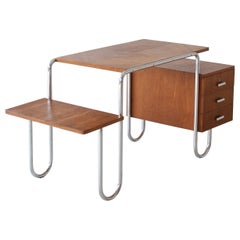
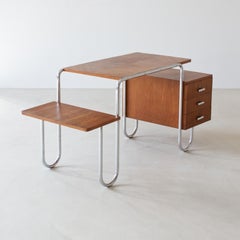
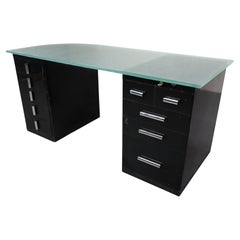
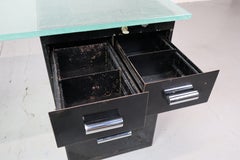
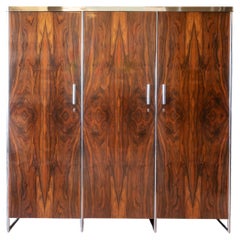
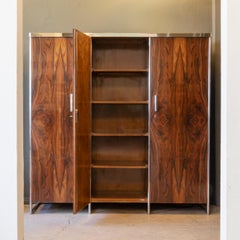
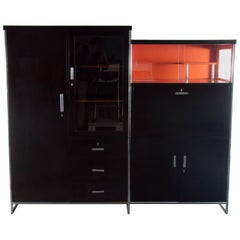
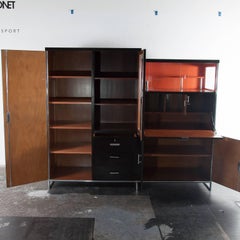
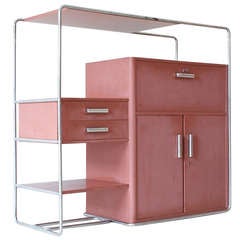
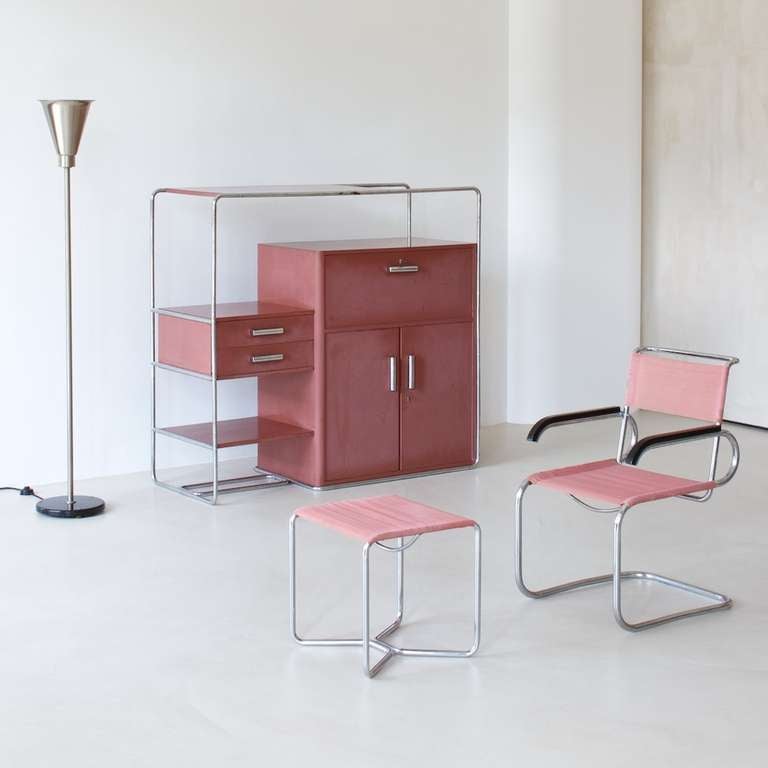
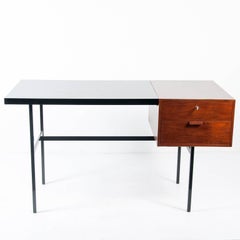
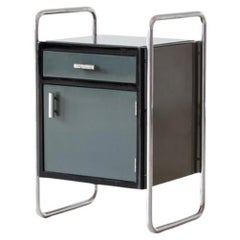
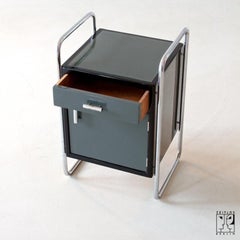
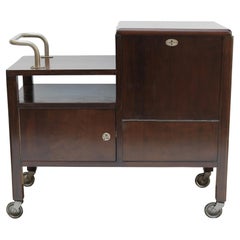
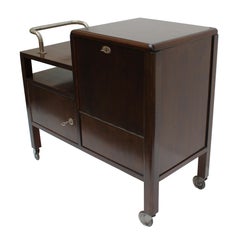
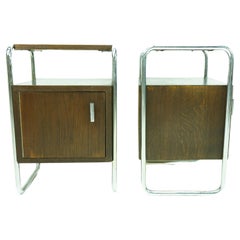
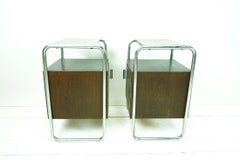
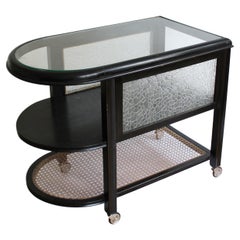
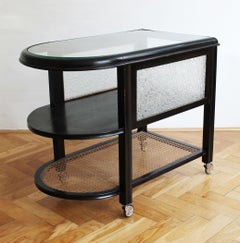
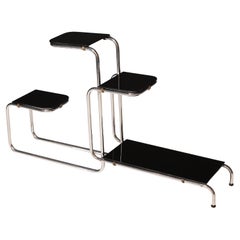
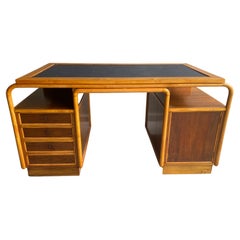
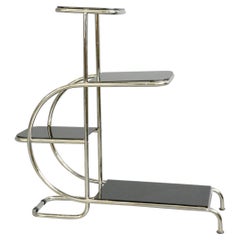
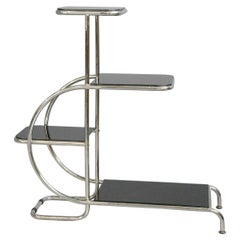
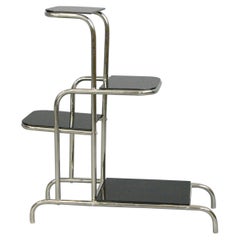
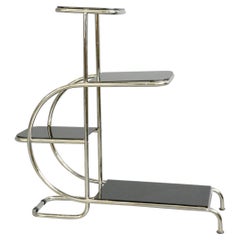
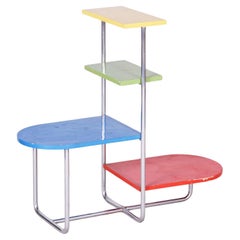
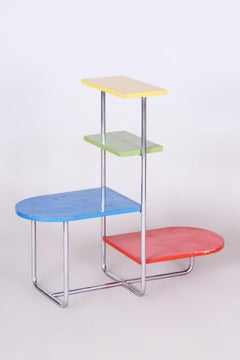
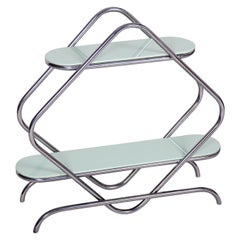
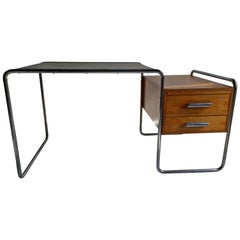
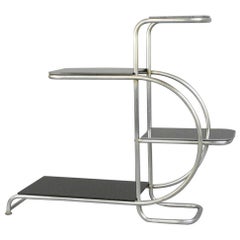
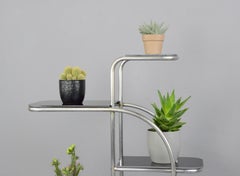
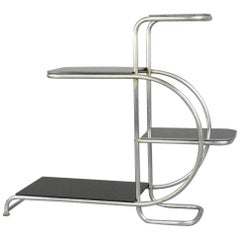
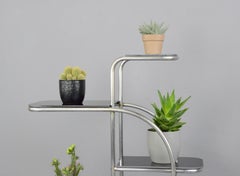
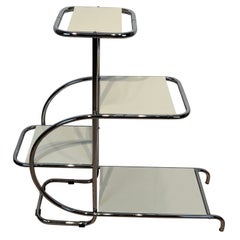
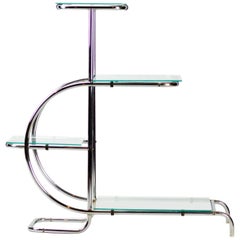
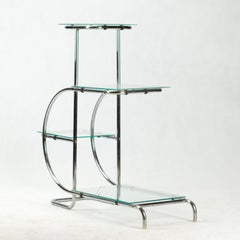
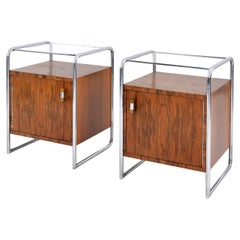
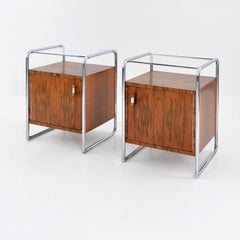
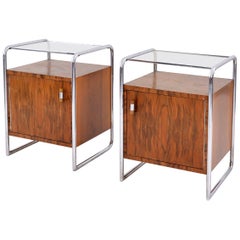
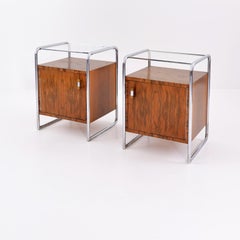
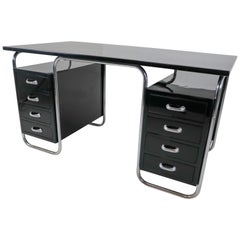
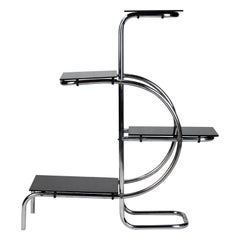
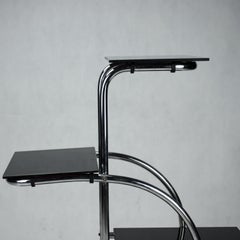
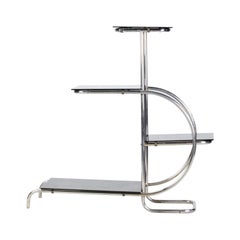
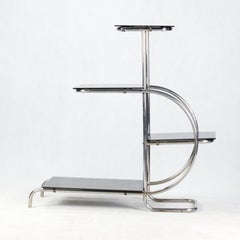
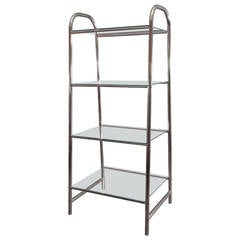
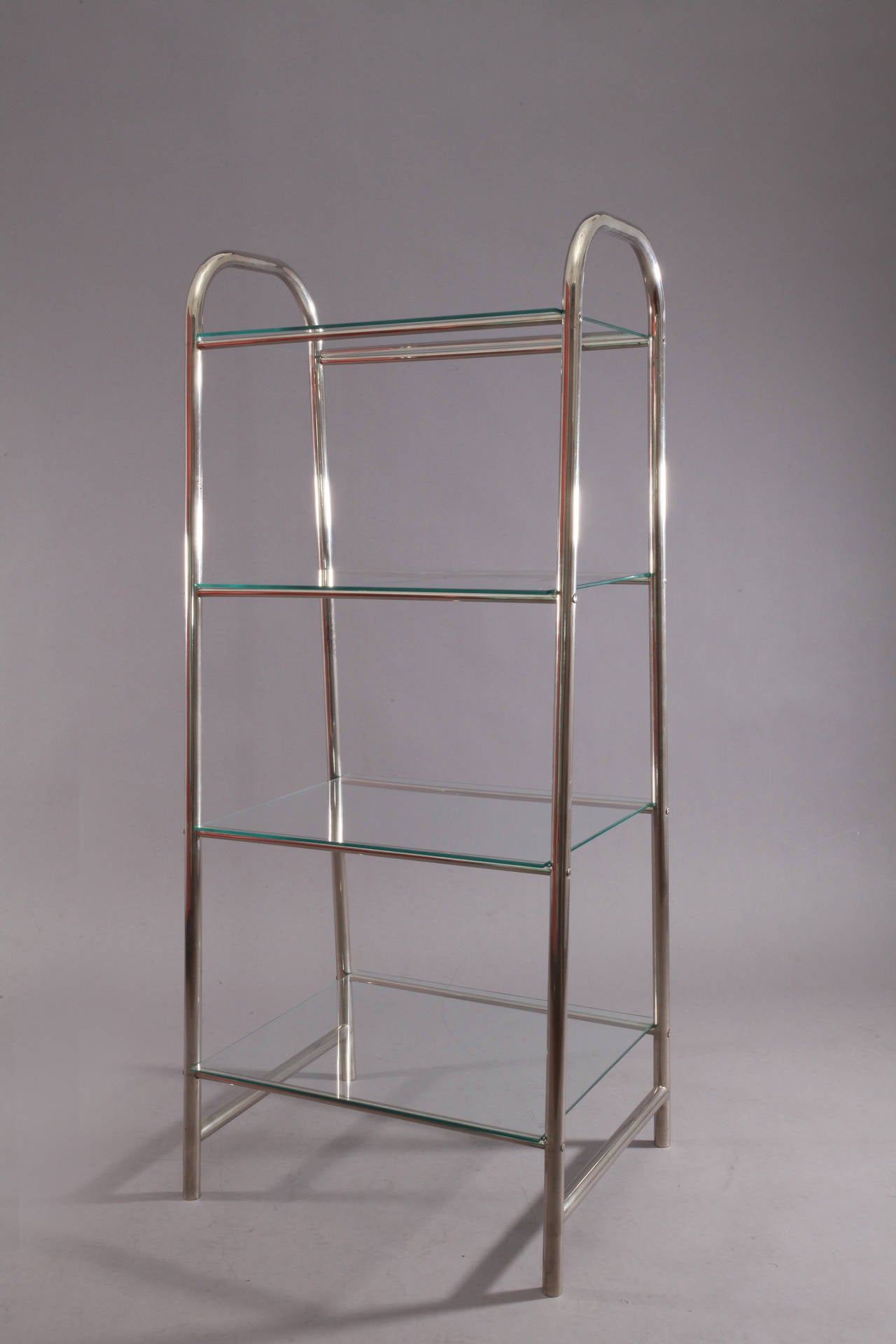
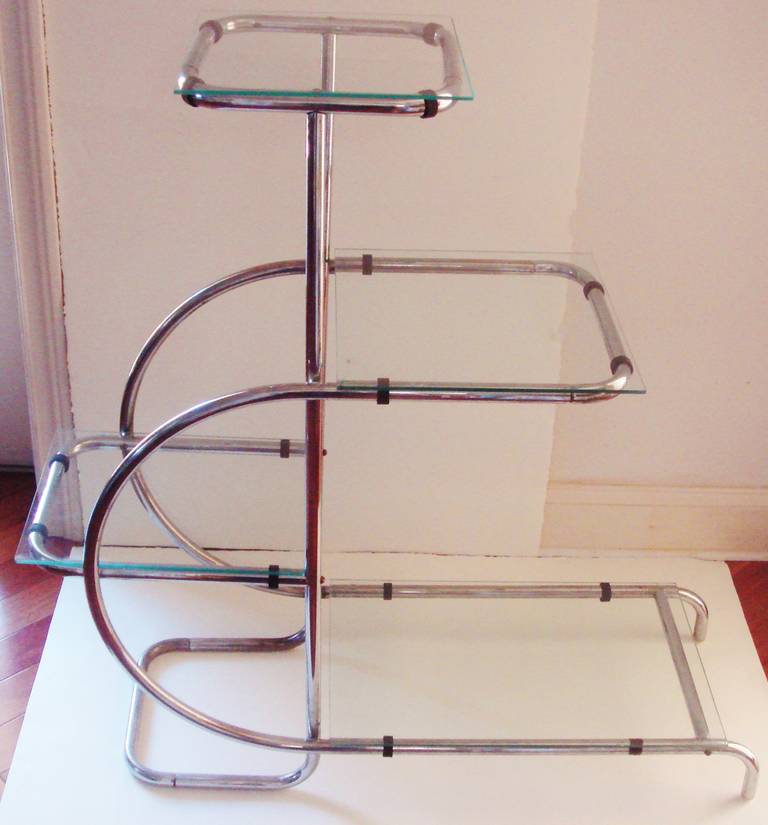
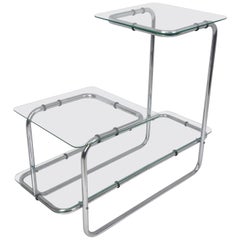
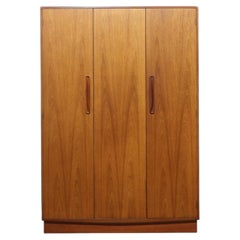
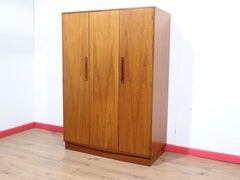
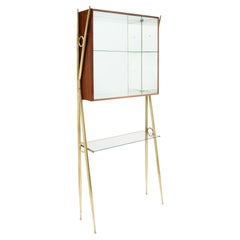
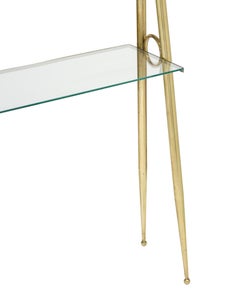
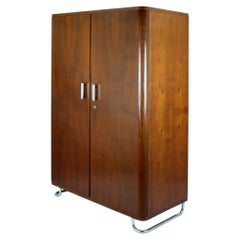
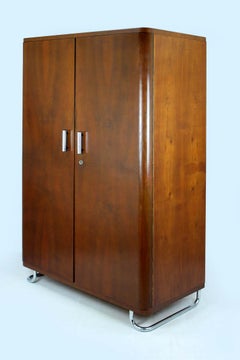
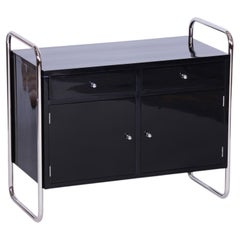
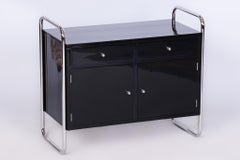
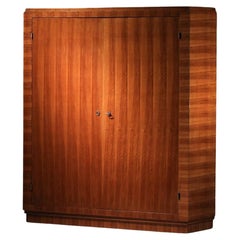
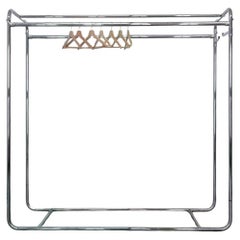
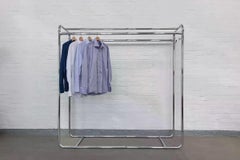
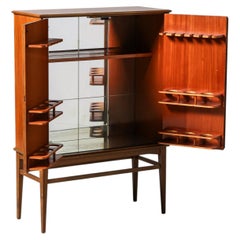
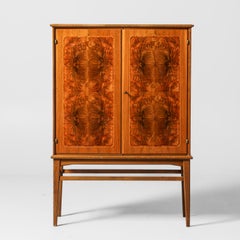
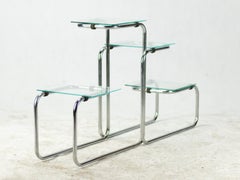
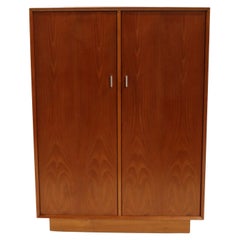
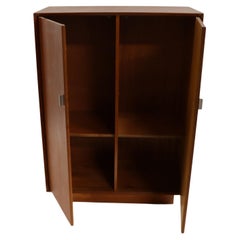
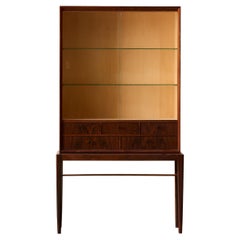
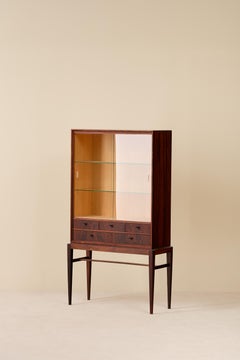
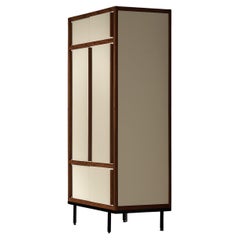
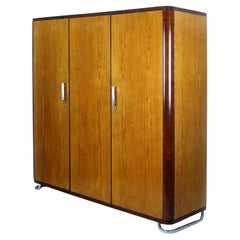
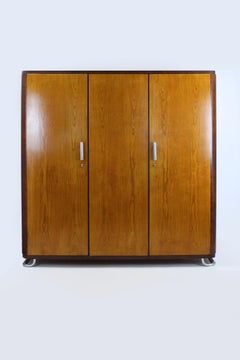
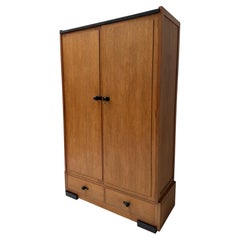
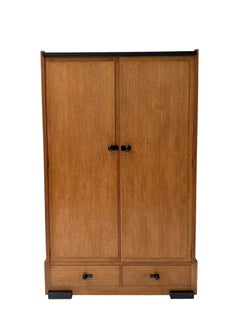
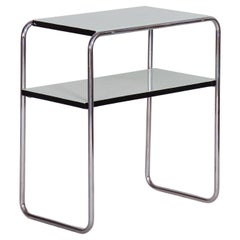
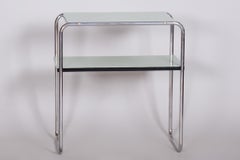
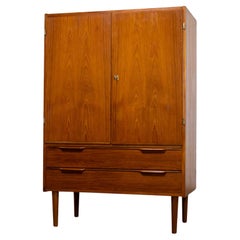
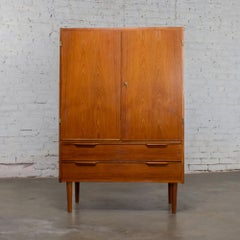
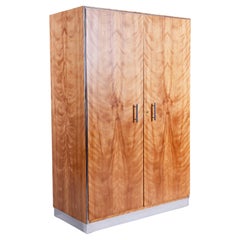
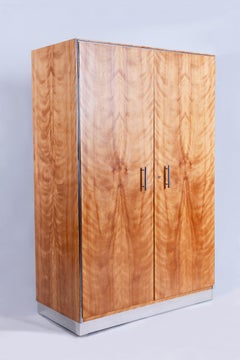
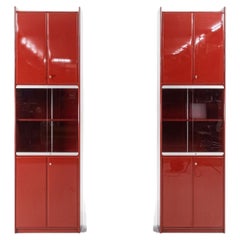
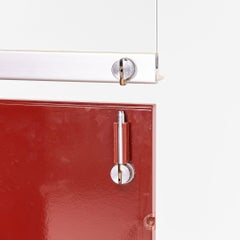
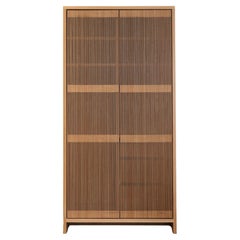
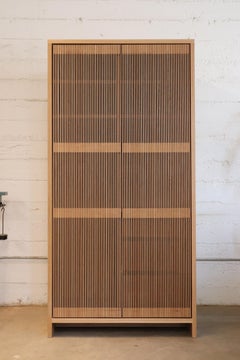
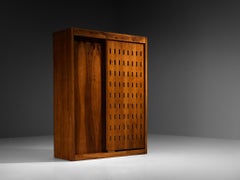
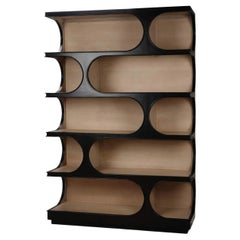
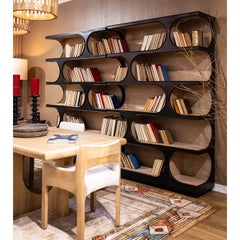
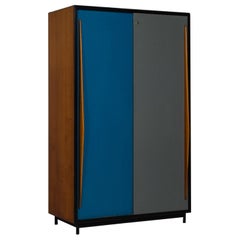
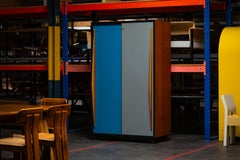
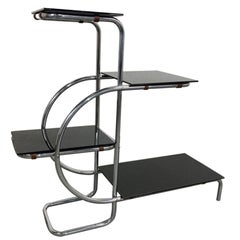
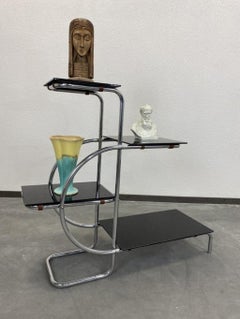
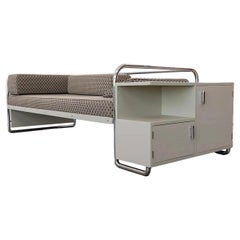
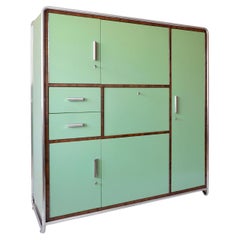
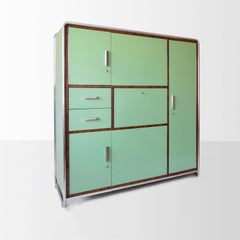
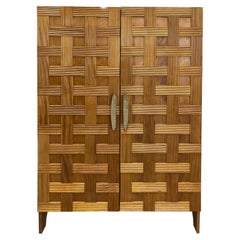
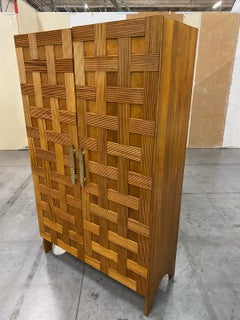
With a vast inventory of beautiful furniture at 1stDibs, we’ve got just the bauhaus cabinet thonet you’re looking for. Each bauhaus cabinet thonet for sale was constructed with extraordinary care, often using
metal,
chrome and
glass. You’ve searched high and low for the perfect bauhaus cabinet thonet — we have versions that date back to the 20th Century alongside those produced as recently as the 20th Century are available. When you’re browsing for the right bauhaus cabinet thonet, those designed in
Mid-Century Modern styles are of considerable interest.
Marcel Breuer,
Emile Guyot and
Thonet each produced at least one beautiful bauhaus cabinet thonet that is worth considering.
The Bauhaus was a progressive German art and design school founded by the architect Walter Gropius that operated from 1919 to 1933. Authentic Bauhaus furniture — sofas, dining chairs, tables and more — and the school’s followers married industrial and natural materials in simple, geometric forms. The goal of the Bauhaus was to erase the distinction between art and craft while embracing the use of new technologies and materials.
ORIGINS OF BAUHAUS FURNITURE DESIGN
CHARACTERISTICS OF BAUHAUS FURNITURE DESIGN
- Emphasis on craft
- Simplicity, order, clarity and a prioritization of functionalism
- Incorporation of geometric shapes
- Minimalist and refined, little to no ornamentation
- Use of industrial materials such as tubular chrome, steel and plastic as well as leather, cane and molded plywood in furniture and other products
BAUHAUS FURNITURE DESIGNERS YOU SHOULD KNOW
AUTHENTIC BAUHAUS FURNITURE ON 1STDIBS
The name Bauhaus is derived from the German verb bauen, “to build.” Under the school’s innovative curriculum, students were taught the fine arts, such as painting and sculpture, as well as practical skills like carpentry and metalworking.
The school moved from Weimar in 1925 to the city of Dessau, where it enjoyed its heyday under Gropius, then Hannes Meyer and Ludwig Mies van der Rohe. The period from 1932 to 1933 when it operated in Berlin under Mies was its final chapter. Despite its brief existence, the Bauhaus has had an enduring impact on art and design in the United States and elsewhere, and is regarded by many as the 20th century’s chief crucible of modernism.
The faculty roster at the Bauhaus reads like a who’s who of modernist creative genius — it included such artists as Paul Klee, Wassily Kandinsky and László Moholy-Nagy along with architects and designers like Mies and Marcel Breuer, who became known for his muscular brutalist-style concrete buildings in the postwar years. In 1925, while he was head of the Bauhaus carpentry workshop, Breuer gave form to his signature innovation: the use of lightweight tubular-steel frames for chairs, side tables and sofas — a technique soon adopted by Mies and others. Breuer’s Cesca chair was the first-ever tubular steel frame chair with a caned seat to be mass produced, while the inspiration for his legendary Wassily chair, a timeless design and part of the collection crafted to furnish the Dessau school, was the bike he rode around campus.
Bauhaus design style reflects the tenets by which these creators worked: simplicity, clarity and function. They disdained superfluous ornament in favor of precise construction. Seating pieces such as side chairs, armchairs or club chairs for example, were made with tubular metal or molded plywood frames, and upholstery was made from leather or cane. Above all, designs in the Bauhaus style offer aesthetic flexibility. They can be the elements of a wholly spare, minimalist space, the quiet foundation of an environment in which color and pattern come from one’s own collection of art and artifacts.
Today, from textiles to typefaces, architecture, furniture and decorative objects for the home, Bauhaus creations continue to have an outsize influence on modern design.
Find a collection of authentic Bauhaus furniture on 1stDibs.
Of all the vintage storage cabinets and antique case pieces that have become popular in modern interiors over the years, dressers, credenzas and cabinets have long been home staples, perfect for routine storage or protection of personal items.
In the mid-19th century, cabinetmakers would mimic styles originating in the Louis XIV, Louis XV and Louis XVI eras for their dressers, bookshelves and other structures, and, later, simpler, streamlined wood designs allowed these “case pieces” or “case goods” — any furnishing that is unupholstered and has some semblance of a storage component — to blend into the background of any interior.
Mid-century modern furniture enthusiasts will cite the tall modular wall units crafted in teak and other sought-after woods of the era by the likes of George Nelson, Poul Cadovius and Finn Juhl. For these highly customizable furnishings, designers of the day delivered an alternative to big, heavy bookcases by considering the use of space — and, in particular, walls — in new and innovative ways. Mid-century modern credenzas, which, long and low, evolved from tables that were built as early as the 14th century in Italy, typically have no legs or very short legs and have grown in popularity as an alluring storage option over time.
Although the name immediately invokes images of clothing, dressers were initially created in Europe for a much different purpose. This furnishing was initially a flat-surfaced, low-profile side table equipped with a few drawers — a common fixture used to dress and prepare meats in English kitchens throughout the Tudor period. The drawers served as perfect utensil storage. It wasn’t until the design made its way to North America that it became enlarged and equipped with enough space to hold clothing and cosmetics. The very history of case pieces is a testament to their versatility and well-earned place in any room.
In the spirit of positioning your case goods center stage, decluttering can now be design-minded.
A contemporary case piece with open shelving and painted wood details can prove functional as a storage unit as easily as it can a room divider. Alternatively, apothecary cabinets are charming case goods similar in size to early dressers or commodes but with uniquely sized shelving and (often numerous) drawers.
Whether you’re seeking a playful sideboard that features colored glass and metal details, an antique Italian hand-carved storage cabinet or a glass-door vitrine to store and show off your collectibles, there are options for you on 1stDibs.