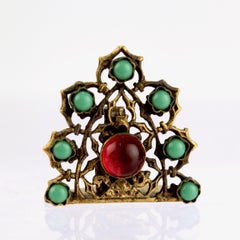
At 1stDibs, there are many versions of the ideal dinner place card holder for your home. Each dinner place card holder for sale was constructed with extraordinary care, often using
metal,
brass and
silver. There are many kinds of the dinner place card holder you’re looking for, from those produced as long ago as the 19th Century to those made as recently as the 20th Century. Each dinner place card holder bearing
Georgian or
modern hallmarks is very popular. You’ll likely find more than one dinner place card holder that is appealing in its simplicity, but
Gucci,
Charles & George Asprey and
Hermès produced versions that are worth a look.
Prices for a dinner place card holder can differ depending upon size, time period and other attributes — at 1stDibs, they begin at $150 and can go as high as $4,500, while the average can fetch as much as $1,950.
Defying design conventions and embracing all tastes, Bohemian style, or Boho style, is eclectic, bold and, above all, individual. Vintage Bohemian-style furniture and decor feature bright colors, natural materials and a global spirit, ranging from statement pieces such as peacock chairs constructed with wicker and handmade art-glass vases to jewel-toned plush seating like turquoise sofas.
Although Bohemian furniture is not rooted in a specific time and can include Victorian lamps alongside Space Age chairs, its name dates back to the 19th century. Its exact origins are unclear, with some sources linking it to a counterculture formed in the wake of the French Revolution and others to a pejorative for the Romani people in France who were erroneously believed to be from Bohemia, which was part of what is now the Czech Republic.
By the 1850s, “bohemian” was used to describe someone who led an itinerant life, usually an artist, actor or author. This helped shift the term from disparaging to something romantic and evoking creativity, culture and travel. In the 20th century, to be a bohemian was fashionable, and the celebration of free expression in the 1960s gave the Bohemian style a hippie flair. It has remained popular over the years, especially with younger generations seeking to express their personality and individual perspective through furniture, folk art, antiques and other collectibles.
A Bohemian interior exuberantly mixes textures and patterns, particularly through textiles from around the world in tapestries, rugs and upholstery. Bohemian decor can include Japanese shibori, Indonesian ikat and Kazakhstani suzani prints mingling with Moroccan lanterns, Turkish carpets and wall hangings from India. Saturated earthy colors like burnt orange and marigold yellow are common to bring together the mix of vintage, modern and global design.
Find a collection of vintage Bohemian tables, mirrors, rugs and carpets, decorative objects and more furniture on 1stDibs.
While it isn’t always top of mind for some, antique and vintage tableware can enhance even the most informal meal. It has been an intimate part of how we’ve interacted with our food for millennia.
Tableware has played a basic but important role in everyday life. Ancient Egyptians used spoons (which are classified as flatware) made of ivory and wood, while Greeks and Romans, who gathered for banquets involving big meals and entertainment, ate with forks and knives. At the beginning of the 17th century, however, forks were still uncommon in American homes. Over time, tableware has thankfully evolved and today includes increasingly valuable implements.
Tableware refers to the tools people use to set the table, including serving pieces, dinner plates and more. It encompasses everything from the intricate and elaborate to the austere and functional, yet are all what industrial product designer Jasper Morrison might call “Super Normal” — anonymous objects that are too useful to be considered banal.
There are four general categories of tableware — serveware, dinnerware, drinkware and, lastly, flatware, which is commonly referred to as silverware or cutlery. Serveware includes serving bowls, platters, gravy boats, casserole pans and ladles. Most tableware is practical, but it can also be decorative. And decorative objects count as tableware too. Even though they don’t fit squarely into one of the four categories, vases, statues and floral arrangements are traditional centerpieces.
Drinkware appropriately refers to the vessels we use for our beverages — mugs, cups and glasses. There is a good deal of variety that falls under this broad term. For example, your cheerful home bar or mid-century modern bar cart might be outfitted with a full range of vintage barware, which might include pilsner glasses and tumblers. Specialty cocktails are often served in these custom glasses, but they’re still a type of drinkware.
Every meal should be special — even if you’re using earthenware or stoneware for a casual lunch — but perhaps you’re hosting a dinner party to mark a specific event. The right high-quality tableware can bring a touch of luxury to your cuisine. Young couples, for example, traditionally add “fine china,” or porcelain, to their wedding registry as a commemoration of their union and likely wouldn’t turn down exquisite silver made by Tiffany & Co. or Georg Jensen.
It’s important to remember, however, that when you’re setting the dining room table to have fun with it. Just as you might mix and match your dining chairs, don’t be afraid to mix new and old or high and low with your tableware. On 1stDibs, find an extraordinary range of vintage and antique tableware to help elevate your meal as well as the mood and atmosphere of your entire dining room.