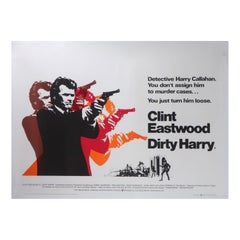
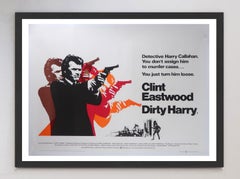
1971 Dirty Harry Original Vintage Poster
By Bill Gold
Located in Winchester, GB
Don Siegel's 1971 neo-noir "Dirty Harry" introduced Clint Eastwood's iconic Inspector "Dirty" Harry
Category
Vintage 1970s British Posters
Materials
Paper
1971 Dirty Harry Original Vintage Poster
By Bill Gold
Located in Winchester, GB
Don Siegel's 1971 neo-noir "Dirty Harry" introduced Clint Eastwood's iconic Inspector "Dirty" Harry
Paper

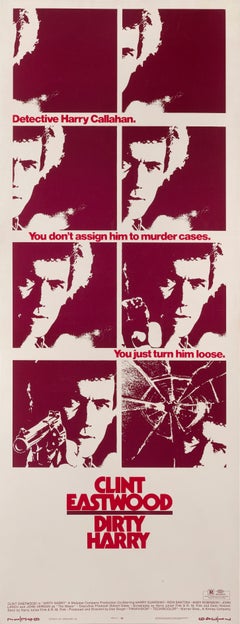
Dirty Harry
Located in London, GB
, in his first outing as San Francisco Police Department Inspector 'Dirty' Harry Callahan. This poster
Paper
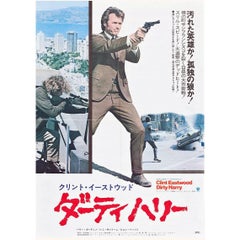
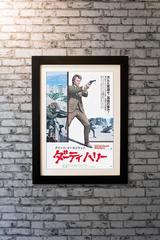
"Dirty Harry" Film Poster, 1971
Located in London, GB
Cop Harry Callahan (Clint Eastwood) attempts to track down a psychopathic rooftop killer before a
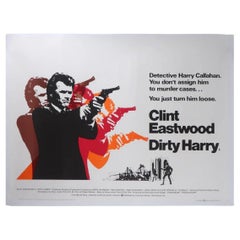
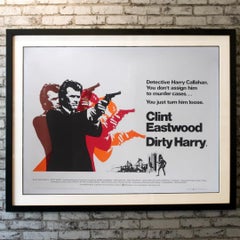
Dirty Harry (1971)
Located in London, GB
Dirty Harry (1971) Original British Quad (30 X 40 Inches) Original British Quad This a rare
Paper
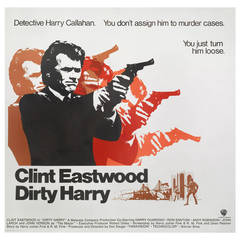
"Dirty Harry, " Film Poster
Located in London, GB
Original US Movie poster for the Dirty Harry (1971) the first film staring Clint Eastwood as
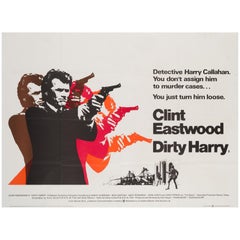
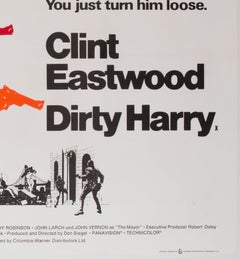
Dirty Harry Original UK Film Poster, 1971
Located in Bath, Somerset
movie Dirty Harry, starring Clint Eastwood in one of his most iconic roles. Wonderful graphics. Any
Paper

Sold
H 28 in W 20 in D 0.4 in
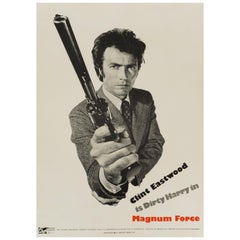
Dirty Harry 'Magnum Force' Original Vintage Movie Poster, American, 1973
By Bill Gold
Located in Devon, GB
In the first sequel to 1971's brutal crime drama 'Dirty Harry,' Clint Eastwood reprised his career
Paper

Sold
H 41 in W 27.5 in D 0.4 in
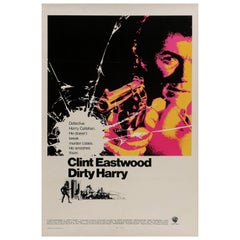
'Dirty Harry' Original Vintage Movie Poster by Bill Gold, American, 1971
By Bill Gold
Located in Devon, GB
approached legendary poster designer Bill Gold to work on the 'Dirty Harry' campaign. When Gold presented his
Paper
Add a welcome personal touch to your space and tie your distinctive interior scheme together by introducing antique and vintage posters to any and every room of your home.
In the late 19th century, following the advent of text-heavy posters printed from woodblocks for use in taverns and shop windows, hand-drawn poster art had become commonplace in regions such as France, England and the United States. Well-known illustrators were commissioned to produce decorative posters to advertise political campaigns, theatrical events, books, household goods and other items. Early poster artists used a printmaking technique called lithography, which sees drawings or paintings created on a stone (or metal) surface with an oil-based substance, such as a greasy crayon or tusche (an oily wash). The image is eventually affixed to the surface by means of a chemical reaction, and ink adheres to certain sections of the surface while non–image areas are made to repel the ink.
If you wanted a color lithograph in the early days, the number of stones prepared had to match the number of colors you commissioned for the poster. French painter Jules Chéret, widely known as the father of the modern poster, designed some of history's most popular lithographic posters that featured color. Today, Chéret’s art is highly collectible, along with original works by Czech painter and decorative artist Alphonse Mucha, whose posters advertising theatrical productions helped define Art Nouveau.
Over time, poster artists transitioned to more advanced techniques. Using silkscreens, woodblocks and photolithography, painters and illustrators printed larger quantities at a faster rate.
If you’ve finally tracked down that vintage movie poster, mid-century modern promotional travel poster or other work and you’re looking to find out if it is valuable, distinguishing between an original poster and a reproduction can be complicated. A professional appraiser can work with you on factors such as rarity, assessing the physical condition of your poster and authenticating your piece. For now, take care of your new acquisition because conserving posters is essential in helping them retain their value. A practical conservation method is to have the work mounted on archival, acid-free paper and thin artist’s canvas, then enclosing it in a sturdy frame. (And here is a primer on how to hang wall art, be it arranged gallery-style or otherwise.)
On 1stDibs, find all kinds of posters for your home today.
The exhibition includes his portraits of wide-eyed kids with mayhem on their minds, as well as some of the artist’s personal belongings.
The ancient practice of covering walls in artistic scenery is back.
Despite the obstacles, the piece’s protagonist navigates the chaos without losing his humanity.
Who needs a flower garden? Just use your imagination — and some beautifully patterned wallpaper or fabric — to bring the outdoors in.
A longtime admirer of Kahn’s work, 1stDibs editorial director Anthony Barzilay Freund explores why it’s relevant now more than ever.
The streets of fin-de-siècle Paris were set aglow with colorful poster ads, thanks to the printing techniques invented by Jules Chéret. Now, the Milwaukee Art Museum is celebrating this undersung talent in America's first solo show dedicated his exuberant works.
From her historic Manhattan townhouse, the talented creator and curator of 1stDibs' latest NFT exhibition tells us about the art in her home and how she got involved with cryptoart.
The former football player is as serious about becoming a great contemporary-art patron as he once was about making tackles. Here, Rivers tells us how he got the collecting bug and how his tastes have evolved over the years.