Fusuma Panels

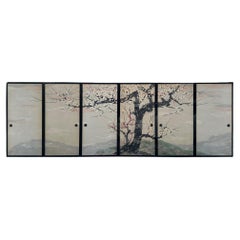
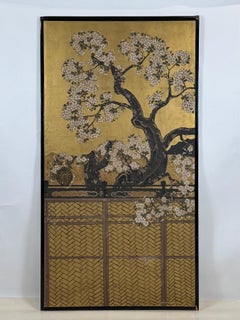
Showa Period Plum Blossoms Fusuma

Showa Period Plum Blossoms Fusuma

Located in Fukuoka, JP

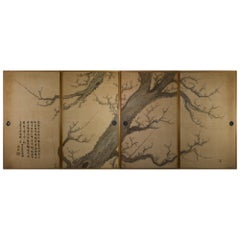
Size: The door size is 90 x 188 cm (35.4 x 74 inches) Number of doors: 6 pieces Period: Showa (1926-1989) This exquisite 6-panel fusuma screen, hailing from the Showa period, captur...

Category

20th Century Japanese Showa Paintings and Screens

Materials

Wood, Paper

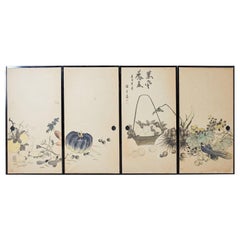
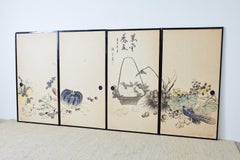
Set of Four Japanese Fusuma Painted Door Panels

Set of Four Japanese Fusuma Painted Door Panels

Located in Rio Vista, CA

Rare set of four Japanese Showa period door panels known as Fusuma in Japanese architecture. Similar to a Shoji room divider but made of an opaque material.

Category

20th Century Japanese Showa Paintings and Screens

Materials

Brass

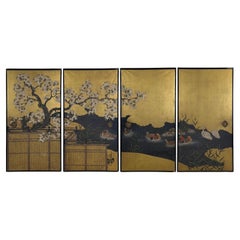
Stunning Set of Four 19th Century Edo Period Fusuma Door Decorative Panels

Stunning Set of Four 19th Century Edo Period Fusuma Door Decorative Panels

Located in Los Angeles, CA

A set of four fusuma (sliding door) panels from the 19th century, painted in ink and colors on gold leaf.

Category

Antique Late 19th Century Japanese Edo Paintings and Screens

Materials

Gold Leaf, Brass

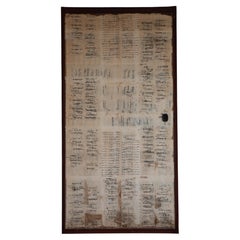
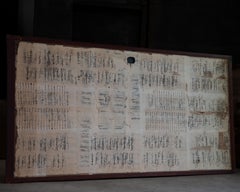
Japanese Antique Wabi-Sabi Panel with Layered Washi and Calligraphy, late 19th C

Japanese Antique Wabi-Sabi Panel with Layered Washi and Calligraphy, late 19th C

Located in 常陸大宮市, JP

This type of sliding door is known as an “Ita Fusuma,” literally meaning a combination of wooden panel and paper panel construction.

Category

Antique Late 19th Century Japanese Meiji Wall-mounted Sculptures

Materials

Wood, Hardwood, Paper

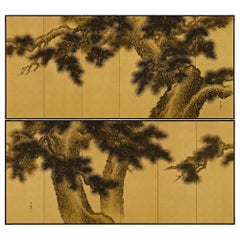
Early 20th Century Japanese Screen Pair - Ink Pine Trees on Gold

Early 20th Century Japanese Screen Pair - Ink Pine Trees on Gold

Located in Kyoto, JP

He was favored with many private commissions, including fusuma sliding door panels in major Kyoto temples.

Category

Early 20th Century Japanese Showa Paintings and Screens

Materials

Gold Leaf

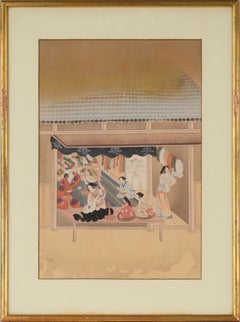
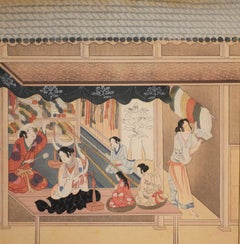
Japanese Artisans - Silk Dying -Japanese Woodblock Print

Japanese Artisans - Silk Dying -Japanese Woodblock Print

By Tosa Mitsuyoshi

Located in Soquel, CA

Popular formats for Mitsuoki's pictures were wall scrolls kakemono, or handscrolls that would be read from right to left with the accompanied story, sliding doors fusuma and folding ...

Category

1920s Edo Landscape Paintings

Materials

Paper, Ink, Woodcut

Recent Sales

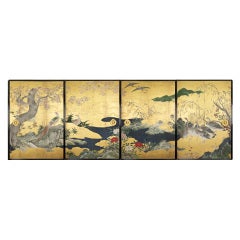
A set of four panels depicting birds and flowers

A set of four panels depicting birds and flowers

Located in Winter Park, FL

A set of four fusuma panels, ink, colors, and gold on paper; depicting geese beside a stream with a willow tree, dianthus, cockscomb, bellflower, peonies, and other plants at right, ...

Category

Antique 18th Century and Earlier Japanese Paintings and Screens

Materials

Ink

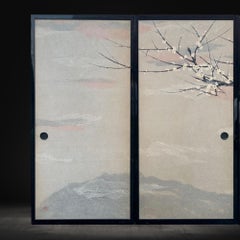
Japanese Screen, "Plum Tree in Snow"

Japanese Screen, "Plum Tree in Snow"

Located in Hudson, NY

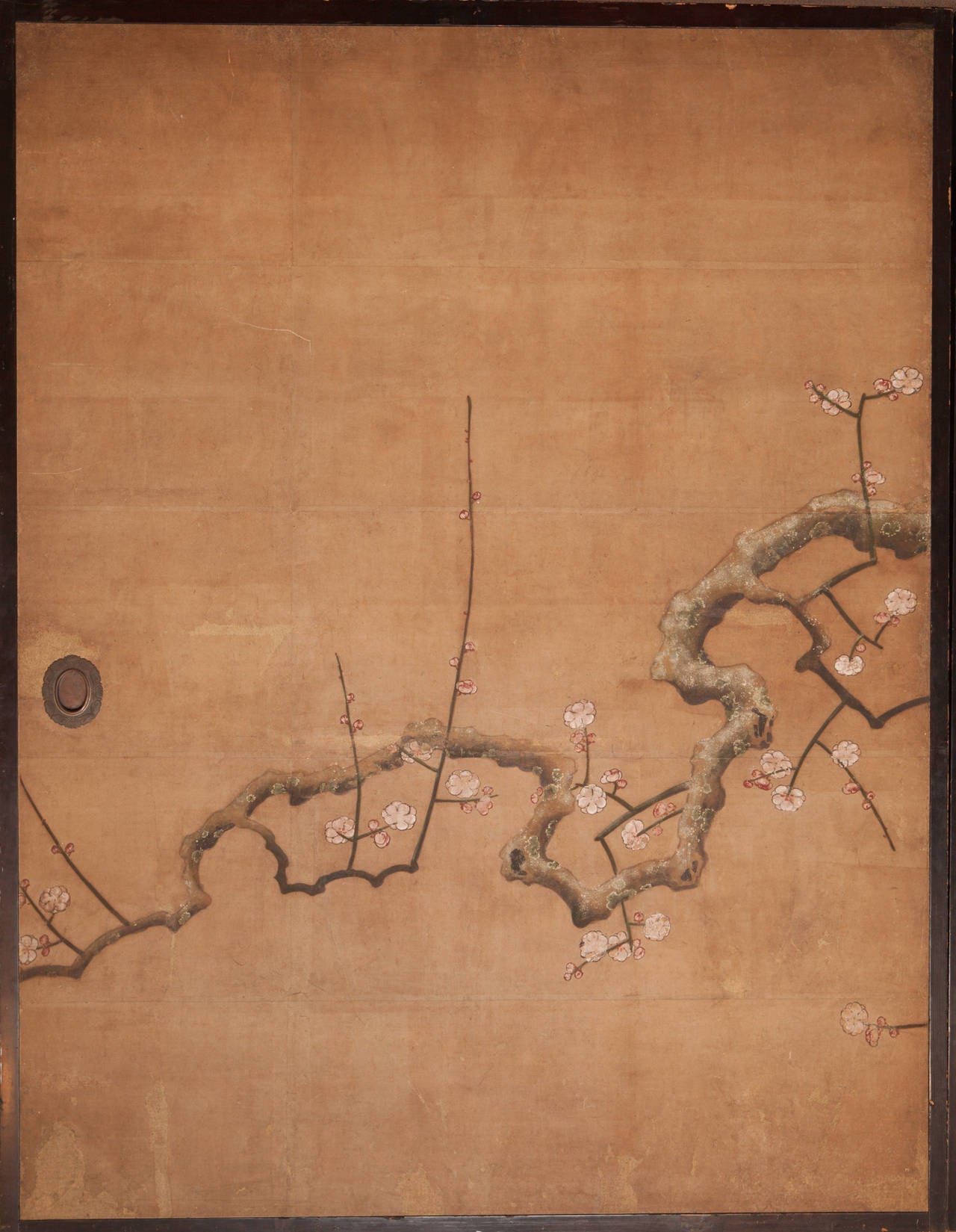
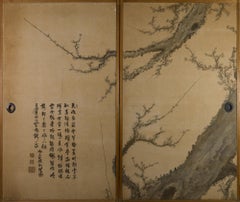
Japanese Screen – Plum Tree in Snow Pair of Fusuma panels (sliding doors) with plum tree in snow design.

Category

Antique Early 1800s Japanese Paintings and Screens

Japanese Watercolor Fusuma Door Panels, Two Panels

Japanese Watercolor Fusuma Door Panels, Two Panels

Located in Bradenton, FL

19th century Japanese watercolor on paper Fusuma door panels, from the Kona School of Painting.

Category

Antique 19th Century Japanese Anglo-Japanese Screens and Room Dividers

Materials

Paper

Pair of Fusuma ‘Sliding Door’ Panels, Blue Spruce

Pair of Fusuma ‘Sliding Door’ Panels, Blue Spruce

Located in Hudson, NY

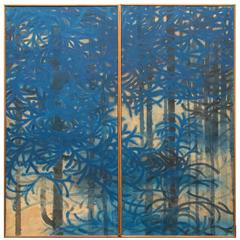
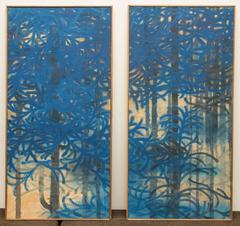
Probably hinoki trees with exaggerated color mineral pigments on mulberry paper signature on reverse side, by Susumu Tsushima (1923-2012) Each panel measures 33 inches high x 16 1...

Category

20th Century Japanese Paintings and Screens

Materials

Mulberry Paper

Set of Four Fusuma, Sliding Door Panels: Wild Lily Patch

Set of Four Fusuma, Sliding Door Panels: Wild Lily Patch

Located in Hudson, NY

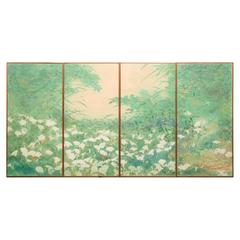
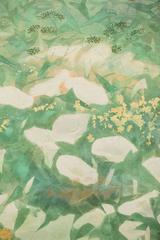
Remounted as single panels and displayed accordingly. Mineral pigments on mulberry paper. Seal on front (unreadable) and signature on reverse, by Susumu Tsushima (1923-2012.) Each...

Category

Vintage 1960s Japanese Paintings and Screens

Materials

Mulberry Paper

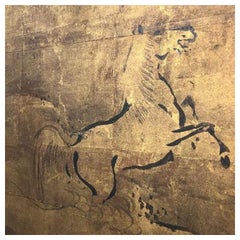
Japanese Antique Ancient Horses Two-Panel Gold Screen, Edo Period, 1800

Japanese Antique Ancient Horses Two-Panel Gold Screen, Edo Period, 1800

Located in South Burlington, VT

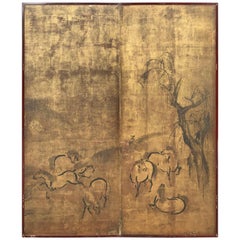
They typically have a black lacquer border and a round finger catch on each panel. Historically, fusuma were painted, often with scenes from nature such as mountains, forests or anim...

Category

Antique 19th Century Japanese Edo Paintings and Screens

Materials

Paper

Japanese Antique Ancient Horses Two-Panel Gold Screen, Edo Period, 1800

Japanese Antique Ancient Horses Two-Panel Gold Screen, Edo Period, 1800

Located in South Burlington, VT

They typically have a black lacquer border and a round finger catch on each panel. Historically, fusuma were painted, often with scenes from nature such as mountains, forests or ani...

Category

Antique 19th Century Japanese Edo Paintings and Screens

Materials

Paper

Japanese Painted Fusuma Door Panels

Japanese Painted Fusuma Door Panels

Located in Seattle, WA

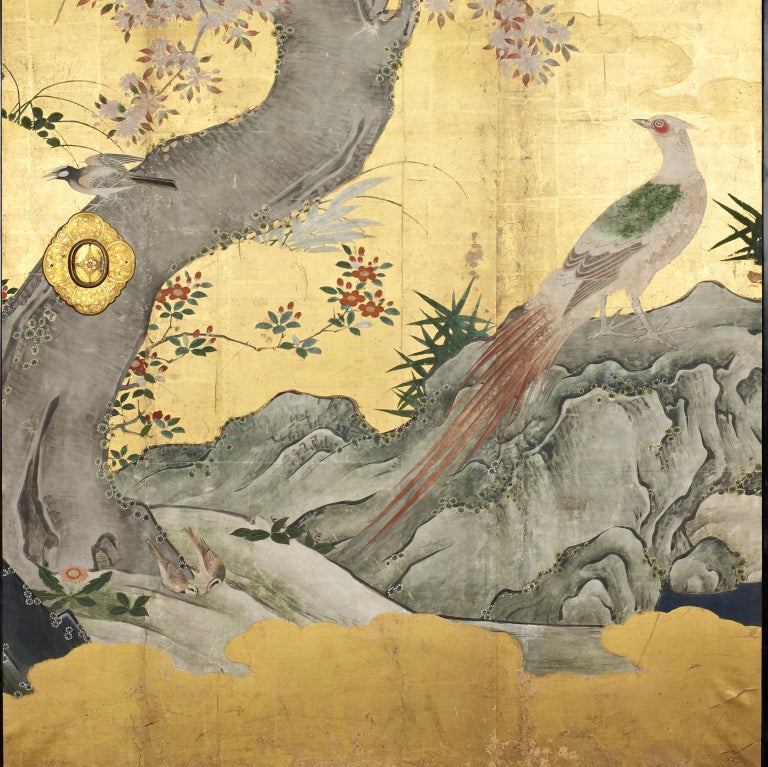
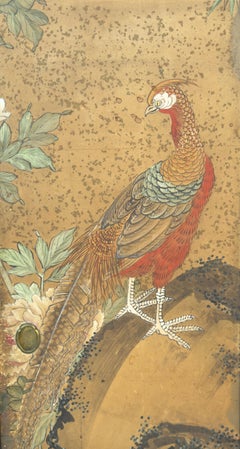
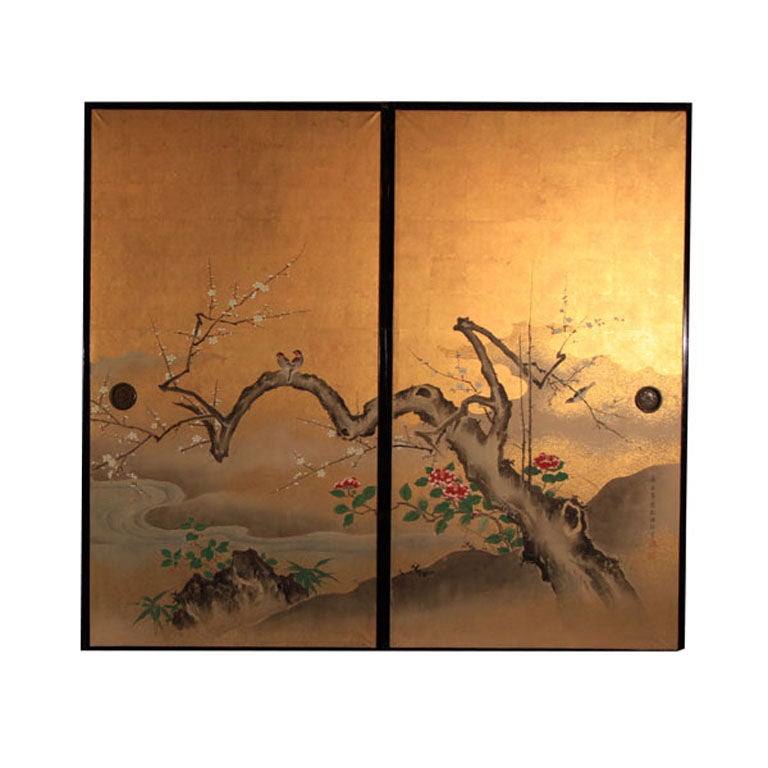
An exceptional pair of Japanese painted fusuma (opaque paper doors) with gold leaf (kinpaku) ground and polychrome painting of a misty landscape with bird and flower subjects (kacho)...

Category

Antique 19th Century Japanese Paintings and Screens

Get Updated with New Arrivals
Save "Fusuma Panels", and we’ll notify you when there are new listings in this category.

Fusuma Panels For Sale on 1stDibs

Find a variety of fusuma panels available on 1stDibs. Each of these unique fusuma panels was constructed with extraordinary care, often using paper, metal and wood. There are all kinds of fusuma panels available, from those produced as long ago as the 18th Century to those made as recently as the 20th Century.

How Much are Fusuma Panels?

The average selling price for at 1stDibs is $35,000, while they’re typically $1,250 on the low end and $74,750 highest priced.

Finding the Right Paintings-screens for You

Traditional Asian paintings were often created on scrolls and folding screens. Artisans made screens that could be folded up or spread out by connecting several panels using hinges. Today, antique Asian folding screens and paintings are sophisticated decorative accents that can serve as makeshift partitions to ensure privacy.

The original folding screens were created by Chinese artists. The earliest record of screens comes from the 2nd century B.C., and surviving examples date back to the Ming dynasty. Chinese painting utilizes many of the same tools as calligraphy — these screens were crafted from wood with painted panels featuring striking art or calligraphy that told cultural stories or represented nature and life in the area.

The practice was introduced to Japan, where paintings for screens were made on paper and silk, in the 8th century. These paintings frequently feature subjects such as landscapes, animals, flowers and Buddhist religious themes. Along with screens for tea ceremonies and dance backgrounds, there were screens for use in Shinto and Buddhist temples.

In the 17th century, screens began to be imported to Europe where their popularity grew. Coco Chanel famously collected Coromandel folding screens.

Traditional Asian paintings can make a tasteful addition to any wall, and screens can be used as decoration or, in the case of larger iterations, as an aesthetic way to divide a large room. Browse the selection of antique Asian paintings and screens from a variety of styles and eras on 1stDibs.