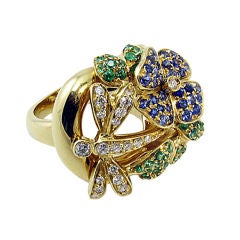
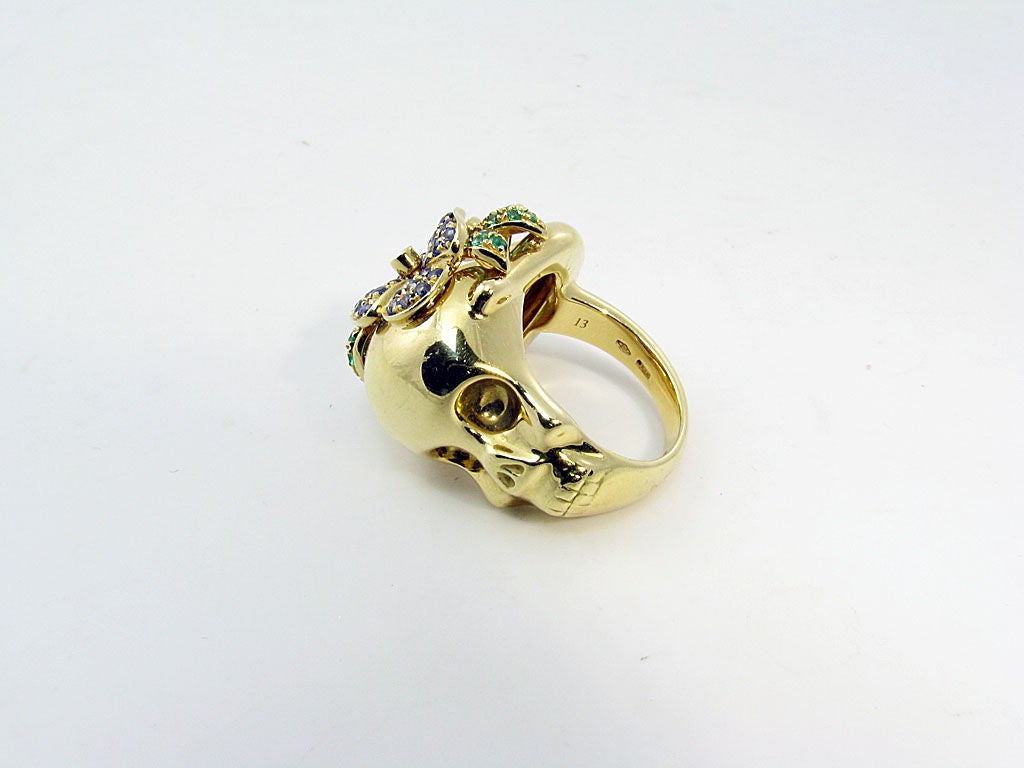
Gucci Dragonfly and Skull Ring
By Gucci
Located in New York, NY
with a skull on the side. Gucci
Category
Late 20th Century Italian Fashion Rings
Materials
Diamond, Emerald, Sapphire, 18k Gold
Gucci Dragonfly and Skull Ring
By Gucci
Located in New York, NY
with a skull on the side. Gucci
Diamond, Emerald, Sapphire, 18k Gold
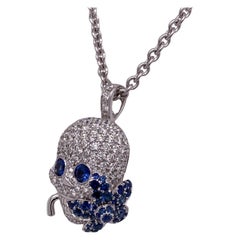
Gucci Flora Diamond Blue Sapphire Skull Pendant Necklace 18KWG Horsebit Clasp
By Gucci
Located in Boca Raton, FL
Gucci diamond blue sappphire skull pendant necklace fashioned in 18 karat white gold. The pendant
Diamond, Blue Sapphire, 18k Gold, White Gold
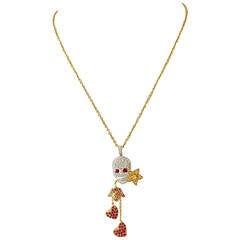
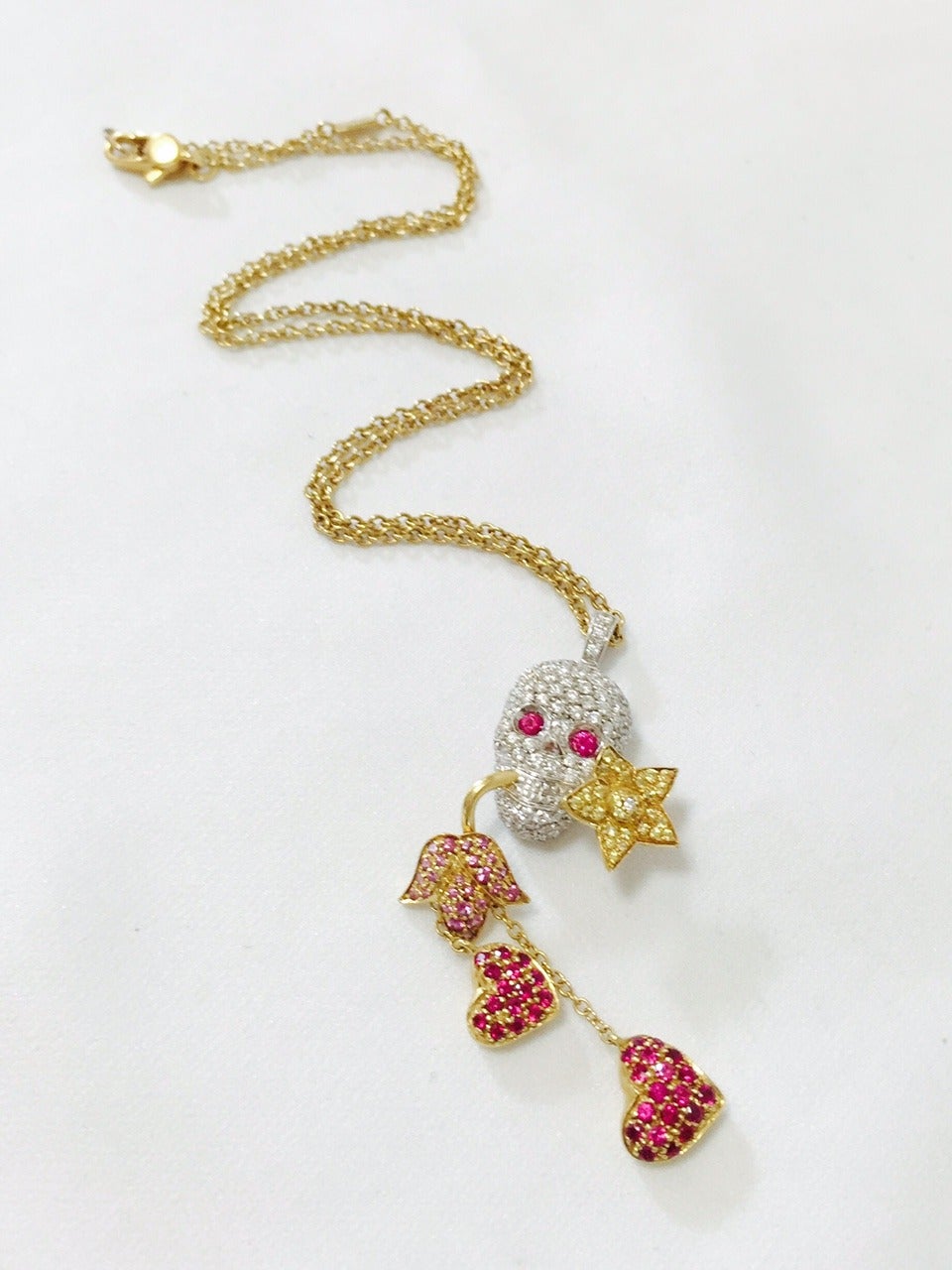
Gold Gucci Diamond Skull Necklace
By Gucci
Located in Palm Beach, FL
One of 5 made, this rare Gucci diamond pave Skull necklace is unique and very much in vogue! The
Ruby, White Diamond, 18k Gold, White Gold, Yellow Gold
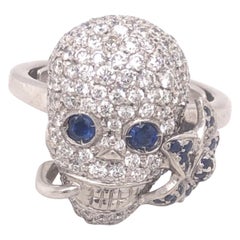
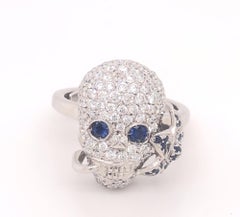
Gucci Diamonds Sapphires Flora Skull Ring 18k White Gold
By Gucci
Located in Woodland Hills, CA
Authentic Gucci Diamonds Sapphires Flora Skull Ring 18K White Gold. This is a stunning skull ring
Diamond, Blue Sapphire, 18k Gold
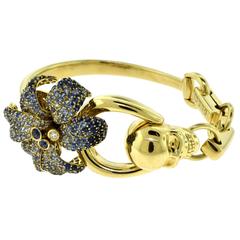

Gucci Flora Diamond and Sapphire Skull Bracelet in 18 Karat Yellow Gold
By Gucci
Located in Miami, FL
Diamonds weighing 0.05 ct Bracelet Size: 17 = 17 cm Flora Dimensions: 1.00 x 1.25 inches Skull Dimensions
Diamond, Sapphire, 18k Gold, Yellow Gold
Long before trend-bucking creative director Alessandro Michele brought his hallucinatory “Utopian Fantasy” campaign to Gucci, it was a modest Italian leather shop. Today, it’s an internationally renowned luxury house with an iconic logo, and vintage Gucci clothing, handbags and shoes are among high fashion's most covetable goods.
Guccio Gucci (1881–1953) admired the stylish suitcases he saw wealthy guests arrive with at the Savoy Hotel in London, where he worked as a bellhop. So, in 1921, after a stint at Franzi, a luggage company in his hometown of Florence, he opened a leather goods shop of his own.
At first, Gucci’s Florence business specialized in equestrian accessories. But as its reputation flourished, particularly among the English aristocracy, so too did its footprint. In 1938, he brought three of his sons — Aldo, Vasco and Rodolfo — into the business and expanded it to Rome and later Milan. In the mid-1930s, a League of Nations embargo against Italy pushed Gucci to experiment with alternatives to imported leather. Its woven hemp fabric from Naples, adorned with the brand’s signature diamond print, was a hit, especially among A-list celebrities. The material was first used on suitcases before finding enduring popularity on handbags. (No list of revered designer purses would be complete without Gucci.)
In the 1950s, Elizabeth Taylor carried one of Gucci’s bamboo-handled tote bags, another adaptation to material rationing. After Jackie Kennedy was seen sporting a slouchy Gucci tote in 1961, it was renamed for the First Lady. Then Grace Kelly, on a visit to the boutique in Milan, inspired Rodolfo Gucci to work with Italian illustrator and Gucci textile designer Vittorio Accornero on the Flora print in 1966. Taking cues from Sandro Botticelli’s Primavera, with its pattern of flora and insects, it was painted entirely by hand and featured no fewer than 37 colors.
In 1953, just 15 days after opening his first store on New York’s 5th Avenue, Guccio passed away at 72. The early 1970s saw store openings in Tokyo and Hong Kong, but by the late 1980s, Gucci was floundering. Rodolfo Gucci took charge in 1982, but family drama and lawsuits ensued. In 1993, Rodolfo’s son, Maurizio, transferred his shares in the company to Investcorp, ending the family’s involvement in Gucci. Dawn Mello, then-president of Bergdorf Goodman, joined as creative director in 1989. But it was Tom Ford, who took over as creative director in 1994, who ultimately revived the brand.
Ford’s racy ads, shot by photographers such as Mario Testino, stirred controversy. And his potent vision of sexed-up femininity — with “jewel-toned satin shirts unbuttoned to there,” as Vogue described his breakthrough 1995 runway show — was wildly successful. The new millennium brought new ownership — Pinault Printemps Redoute in 2004 — and a more toned-down vision from Frida Giannini, who became sole creative director in 2006. Alessandro Michele was named creative director in 2015, and the storied brand took a giant leap forward.
Find vintage Gucci clothing and accessories on 1stDibs.
Antique diamond rings, diamond tiaras and dazzling vintage diamond earrings are on the wish lists of every lover of fine jewelry. And diamonds and diamond jewelry are primarily associated with storybook engagements and red-carpet grand entrances — indeed, this ultra-cherished gemstone has a dramatic history on its hands.
From “A Diamond Is Forever” to “Diamonds Are a Girl’s Best Friend,” pop culture has ingrained in our minds that diamonds are the most desired, the most lasting and the most valuable gemstone. But what makes the diamond so special? Each stone — whether it’s rubies, sapphires or another stone — is unique and important in its own right. April babies might claim diamonds for themselves, but just about everyone wants this kind of sparkle in their lives!
There are several factors that set diamonds apart from other stones, and these points are important to our gem education.
Diamonds are minerals. They are made up of almost entirely of carbon (carbon comprises 99.95 percent; the remainder consists of various trace elements). Diamonds are the hardest gemstones, ranking number 10 on the Mohs Hardness Scale. Even its name, diamond, is rooted in the Greek adamas, or unconquerable. The only object that can scratch a diamond is another diamond. Diamonds are formed deep within the earth at very high temperatures (1,652–2,372 degrees Fahrenheit at depths between 90 and 120 miles beneath the earth’s surface) and are carried up by volcanic activity. Diamonds are quite rare, according to the Gemological Institute of America, and only 30 percent of all the diamonds mined in the world are gem quality.
In the 1950s, the Gemological Institute of America developed the 4Cs grading system to classify diamonds: clarity, color, cut and carat weight. Not all diamonds are created equal (there are diamonds, and then there are diamonds). The value of the diamond depends on the clarity (flawless diamonds are very rare but a diamond's value decreases if there are many blemishes or inclusions), color (the less color the higher the grade), cut (how the diamond’s facets catch the light, certain cuts of diamonds show off the stone better than others) and carat weight (the bigger, the better).
When you start shopping for a diamond engagement ring, always prioritize the cut, which plays the largest role in the diamond's beauty (taking the time to clean your diamond ring at least every six months or so plays a role in maintaining said beauty). And on 1stDibs, a range of buying guides can be found for those in the market for antique engagement rings, vintage engagement rings or Art Deco engagement rings.
Shop antique and vintage diamond rings, diamond necklaces and other extraordinary diamond jewelry on 1stDibs.
Created during Alessandro Michele's tenure at the brand, this sparkling, whimsical minaudière feels just right for a night out.
The iconic Italian label’s traveling exhibition has just arrived in London.
From Chanel to YSL, the logos of some legacy fashion houses spark instant brand recognition and have come to symbolize a kind of luxury that feels at once aspirational and attainable.
When the name of a bag is as well-known as its brand, you know it's a classic.
Makeup and astrology expert Linda Mason dispenses fashion advice for every zodiac sign. Does your wardrobe match your horoscope?