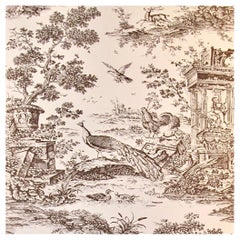
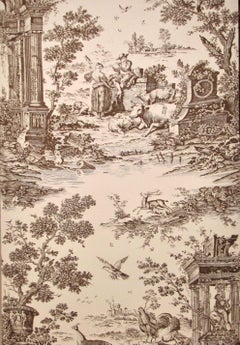
Schumacher is an esteemed American textile company known for its fine pillows, wallpaper and carpets. The family-owned business is still managed by its founder’s descendants. While committed to its history and traditions, the brand has evolved to maintain its vaulted status for more than 130 years.
Schumacher was established in 1889 in New York by Frederic Schumacher, who was born in France and moved to America that same year. By 1898, the Gilded Age elite were patrons of the company’s exquisite imported European fabrics. Schumacher became one of the first to produce luxury textiles in America and its fabrics began appearing in upscale properties like the Waldorf-Astoria hotel.
Schumacher grew in prestige in the early 20th century due to its partnerships with top designers such as Josef Frank and Dorothy Draper. Its textiles graced the White House and captured the attention of leading decorators, including Edith Wharton and Elsie de Wolfe.
In the 1920s, Schumacher was a favorite at Mar-a-Lago estates and Newport’s ritzy summer cottages. In the 1930s, French fashion designer Paul Poiret helped usher in the company’s Art Deco era. Schumacher textiles could be found on the sets of Hollywood films, most notably the Hydrangea Drape wallpaper in Gone with the Wind.
After World War II, Schumacher began a decades-long partnership with designer Vera Neumann, whose scarves were worn by the likes of Marilyn Monroe and Grace Kelly. In 1955, legendary architect Frank Lloyd Wright developed a textile line with Schumacher. Known as the Taliesin line, it was the first commercial venture of the architect’s career.
In 2011, Andrew and Stephen Puschel became the fifth generation of Schumacher’s descendants to join the family business. The company continues to exemplify a spirit of innovation by partnering with exciting modern designers like Miles Redd, Mary McDonald, David Kaihoi, Veere Grenney and David Oliver. Under the creative direction of Dara Caponigro, Schumacher has also partnered with the biannual luxury interiors magazine Cabana.
On 1stDibs, find Schumacher textiles, wall decorations, rugs and more.
Prints are works of art produced in multiple editions. Though several copies of a specific artwork can exist, collectors consider antique and vintage prints originals when they have been manually created by the artist or are “impressions” that are part of the artist’s intent for the work.
Modern artists use a range of printmaking techniques to produce different types of prints such as relief, intaglio and planographic. Relief prints are created by cutting away a printing surface to leave only a design. Ink or paint is applied to the raised parts of the surface, and it is used to stamp or press the design onto paper or another surface. Relief prints include woodcuts, linocuts and engravings.
Intaglio prints are the opposite of relief prints in that they are incised into the printing surface. The artist cuts the design into a block, plate or other material and then coats it with ink before wiping off the surface and transferring the design to paper through tremendous pressure. Intaglio prints have plate marks showing the impression of the original block or plate as it was pressed onto the paper.
Artists create planographic prints by drawing a design on a stone or metal plate using a grease crayon. The plate is washed with water, then ink is spread over the plate and it adheres to the grease markings. The image is then stamped on paper to make prints.
All of these printmaking methods have an intricate process, although each can usually transfer only one color of ink. Artists use separate plates or blocks for multiple colors, and together these create one finished work of art.
Find prints ranging from the 18th- and 19th-century bird illustrations by J.C. Sepp to mid-century modern prints, as well as numerous other antique and vintage prints at 1stDibs. Browse the collection today and read about how to arrange wall art in your space.