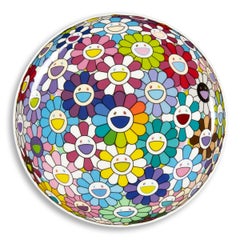
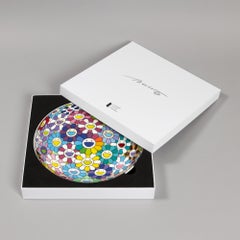
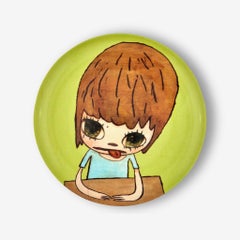
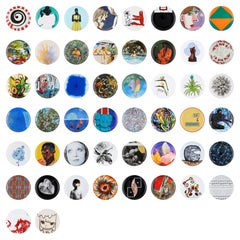
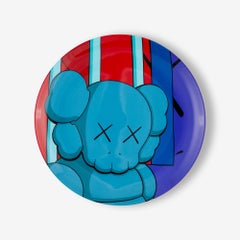
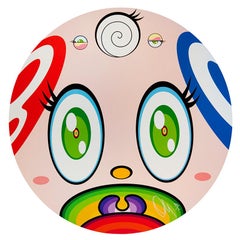
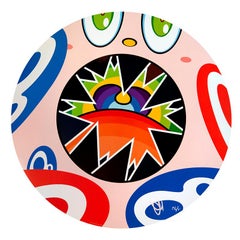
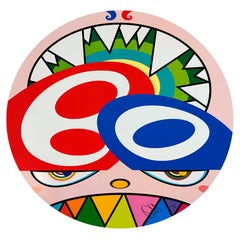
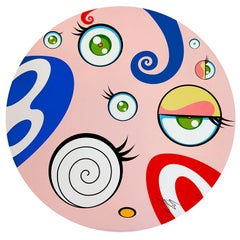
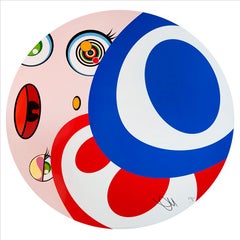
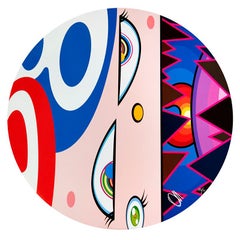
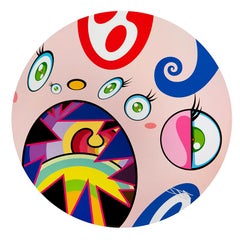
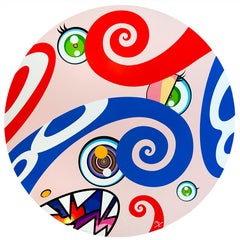
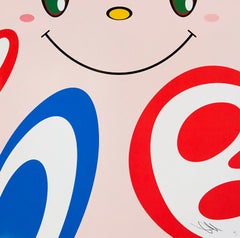
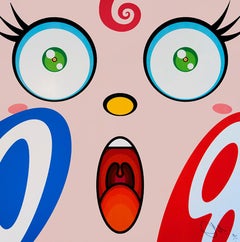
On 1stDibs, you can find the most appropriate murakami takashi plate for your needs in our varied inventory. There are many
abstract,
Pop Art and
street art versions of these works for sale. Adding a murakami takashi plate to a room that is mostly decorated in warm neutral tones can yield a welcome change — find a piece on 1stDibs that incorporates elements of
beige,
gray,
blue and more. Finding an appealing murakami takashi plate — no matter the origin — is easy, but
Takashi Murakami and
KAWS each produced popular versions that are worth a look. These artworks were handmade with extraordinary care, with artists most often working in
lithograph,
organic material and
paint.
A murakami takashi plate can differ in price owing to various characteristics — the average selling price for items in our inventory is $1,943, while the lowest priced sells for $240 and the highest can go for as much as $20,000.
Japanese contemporary artist Takashi Murakami may be famous among collectors for the psychedelic flowers and chaotic cartoons that populate his prints and paintings, but artists likely know him as the theorist behind the contemporary art movement he calls “Superflat.”
Partially inspired by the Pop art of Andy Warhol, in which celebrity culture and mundane mass-produced items became the focus of bright and colorful works that both celebrated and criticized consumerism, Murakami’s Superflat encompasses painting, sculpture, digital design and more to present a subversive look at consumerism but is also an effort to blend fine art and lowbrow culture.
A multifaceted and remarkably influential artist as well as a compulsive art collector, Murakami has collaborated with brands such as Louis Vuitton, while one of his most famous Superflat works is the teddy bear on the cover of the Graduation album by American rapper Kanye West.
In 1993 Murakami earned his Ph.D. from Tokyo University of the Arts, where he was trained in nihonga, a style of painting that originated in the late 19th century by artists who worked to preserve and promote the conventions and processes associated with traditional Japanese art. While practicing nihonga, Murakami began to realize that his beliefs didn’t align with the tradition, so his art subsequently took on a satirical feel that embodied a critique of the movement. Before long, his style took a drastic turn, embracing otaku, a rising postwar cultural phenomenon among Japan’s younger crowd who loved anime and manga. (Otaku is also integral to Superflat.)
This is when Murakami’s most well-known character, Mr. DOB, was born. This anime-inspired icon, which Americans might interpret as a cross between Walt Disney’s Mickey Mouse and Lewis Carroll’s Cheshire Cat given its pronounced ears and broad and menacing grin, was part of the artist’s endeavor to elevate the otaku subculture but also to target mass consumerism. While Murakami conceived of Mr. DOB years ahead of his 2000-era Superflat theory, there is much common ground between the two. Not unlike his other creations, Murakami’s Mr. DOB is equal parts erotic, disturbing and cartoonish — an incisive mockery of the mingling of commerce and fine art so prevalent in Japanese popular culture.
Find original Takashi Murakami prints, sculptures and other art on 1stDibs.
Explore a vast range of abstract prints on 1stDibs to find a piece to enhance your existing collection or transform a space.
Unlike figurative paintings and other figurative art, which focuses on realism and representational perspectives, abstract art concentrates on visual interpretation. An artist may use a single color or simple geometric forms to create a world of depth. Printmaking has a rich history of abstraction. Through materials like stone, metal, wood and wax, an image can be transferred from one surface to another.
During the 19th century, iconic artists, including Edvard Munch, Paul Cézanne, Georgiana Houghton and others, began exploring works based on shapes and colors. This was a departure from the academic conventions of European painting and would influence the rise of 20th-century abstraction and its pioneers, like Pablo Picasso and Piet Mondrian.
Some leaders of European abstraction, including Franz Kline, were influenced by the gestural shapes of East Asian calligraphy. Calligraphy interprets poetry, songs, symbols or other means of storytelling into art, from works on paper in Japan to elements of Islamic architecture.
Bold, daring and expressive, abstract art is constantly evolving and dazzling viewers. And entire genres have blossomed from it, such as Color Field painting and Minimalism.
The collection of abstract art prints on 1stDibs includes etchings, lithographs, screen-prints and other works, and you can find prints by artists such as Joan Miró, Alexander Calder and more.