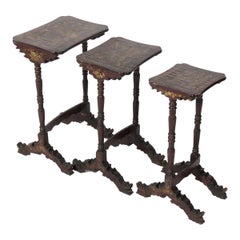
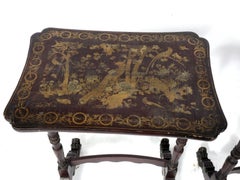
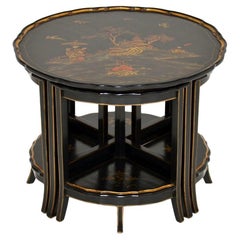
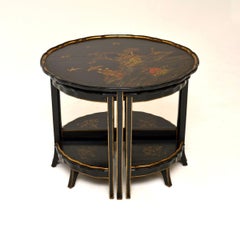
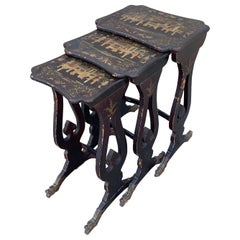
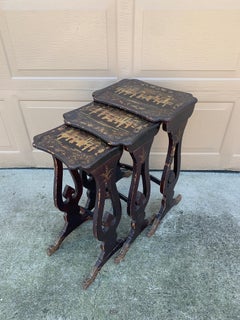
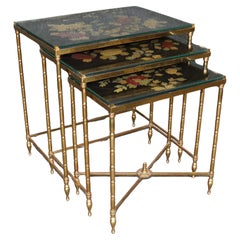
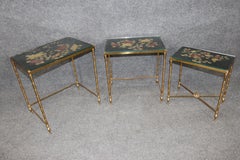
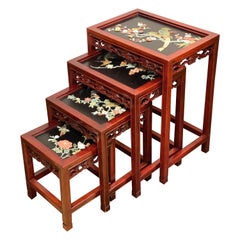
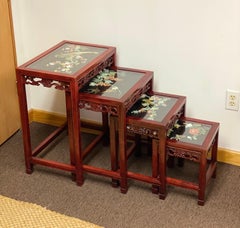
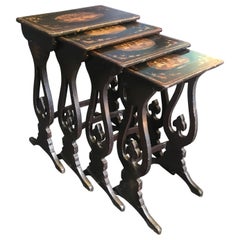
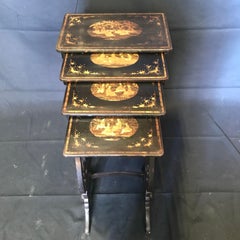
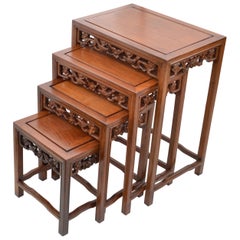
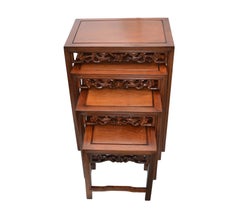
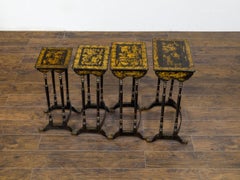
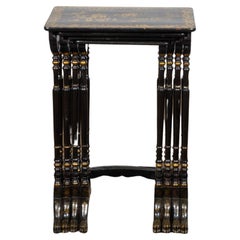
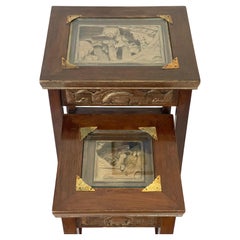
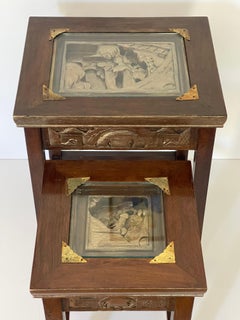
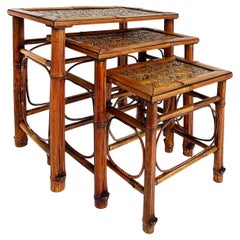
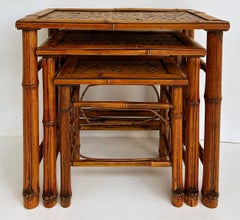
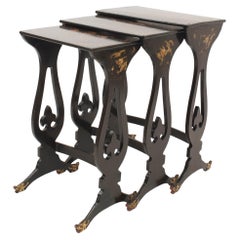
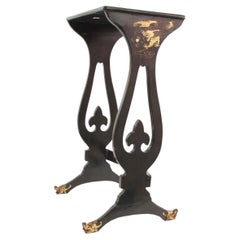
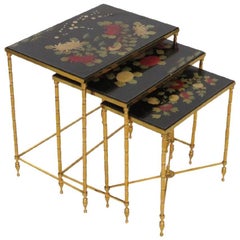
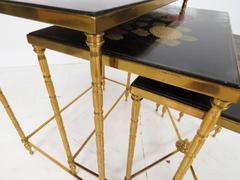
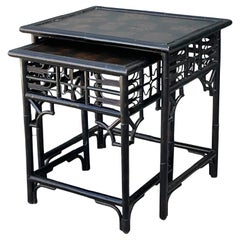
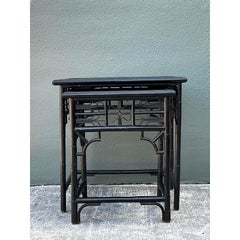
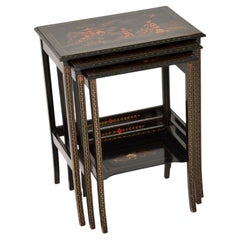
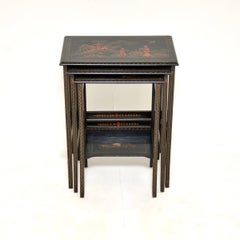
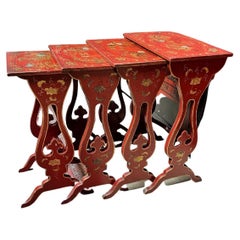
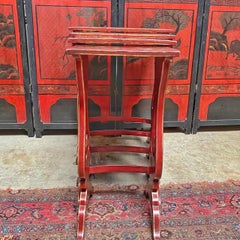
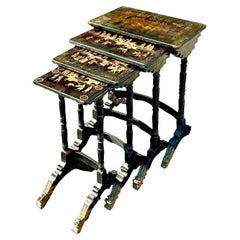
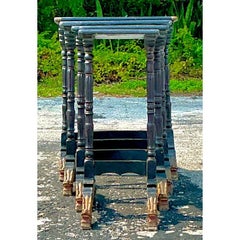
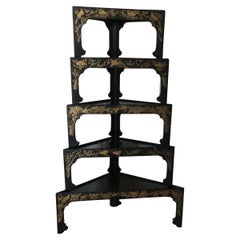
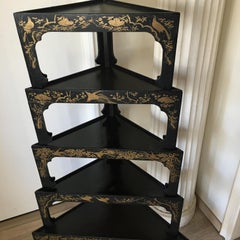
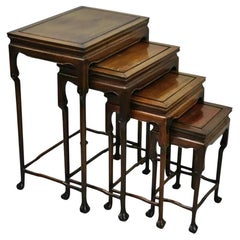
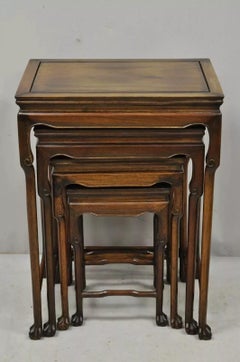
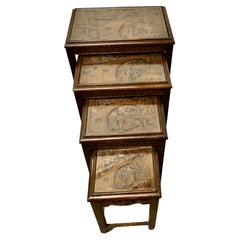
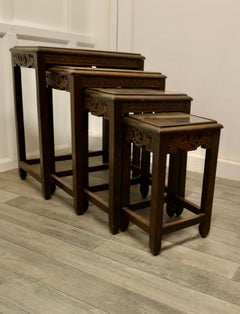
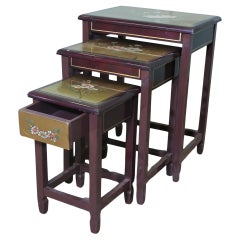
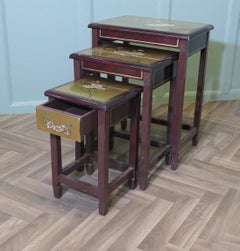
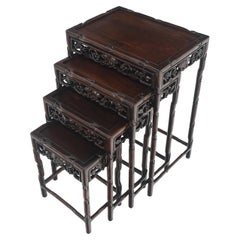
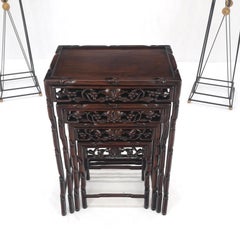
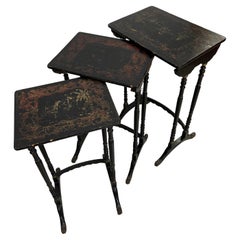
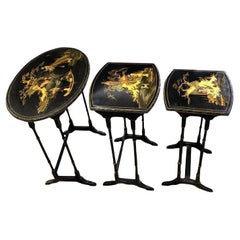
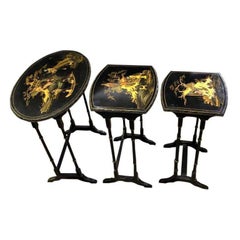
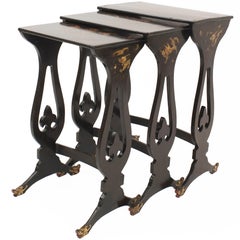
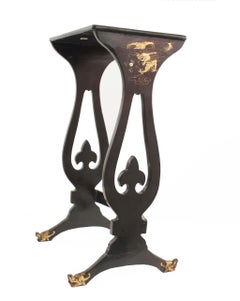
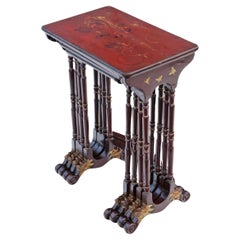
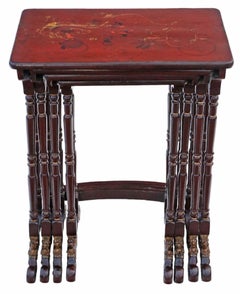
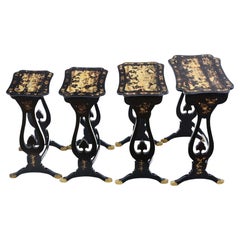
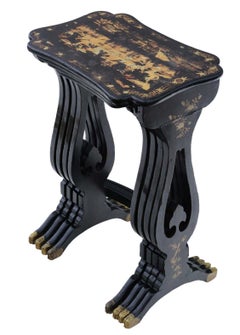
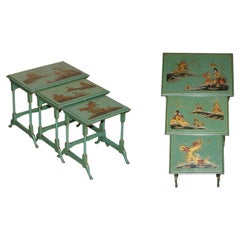
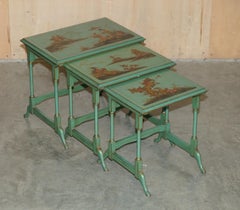
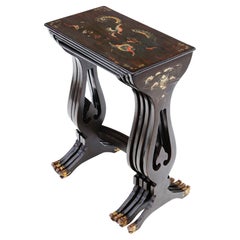
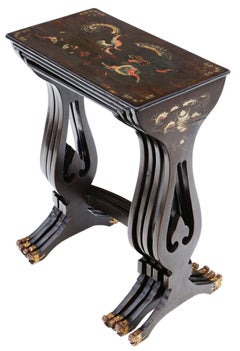
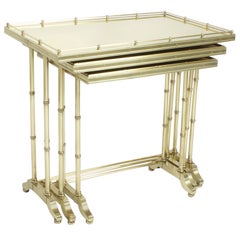
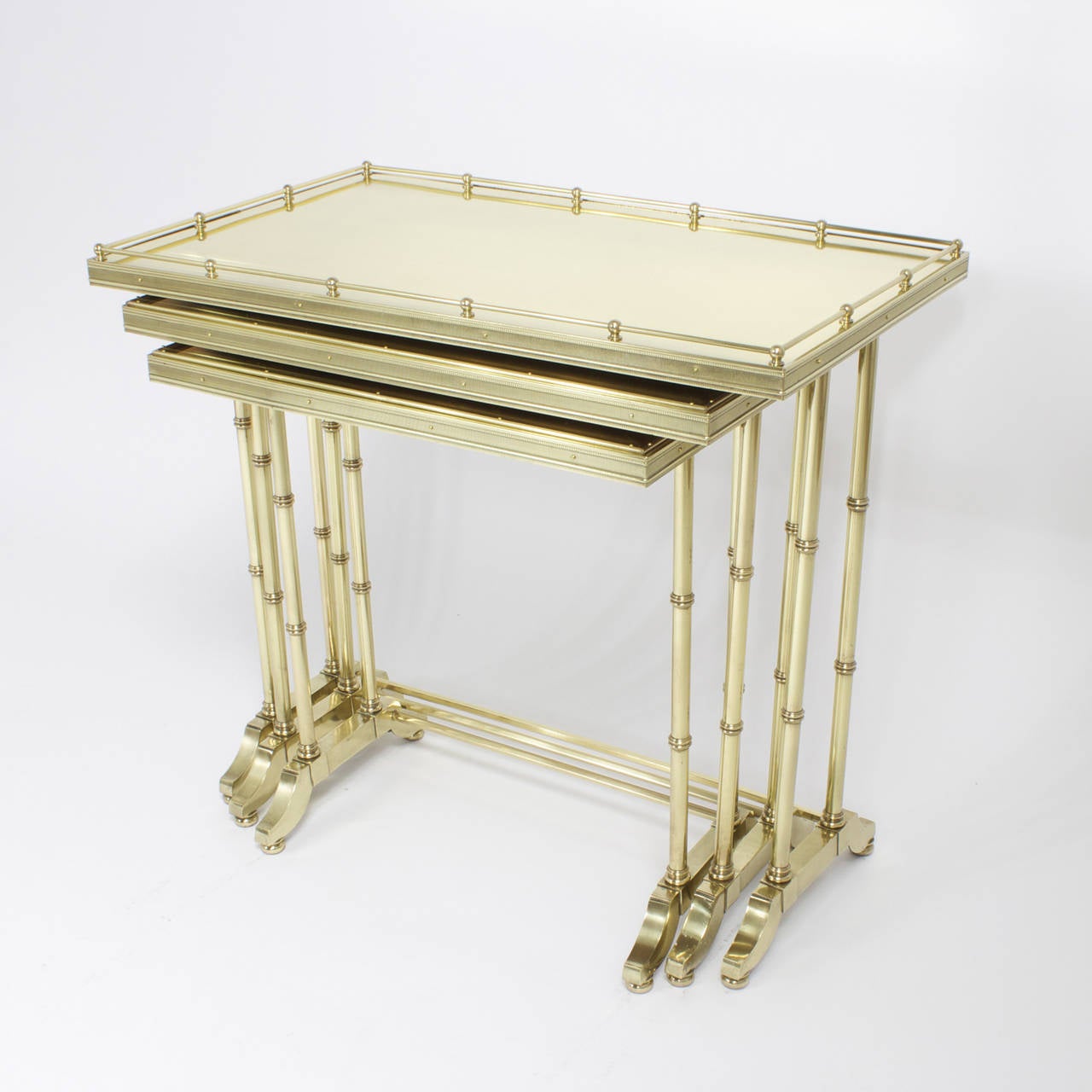
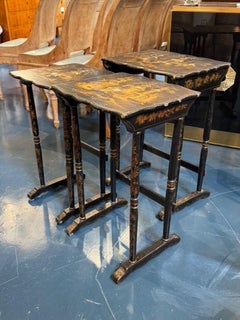
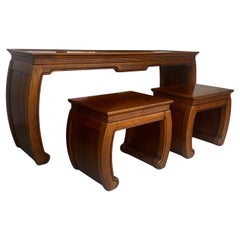
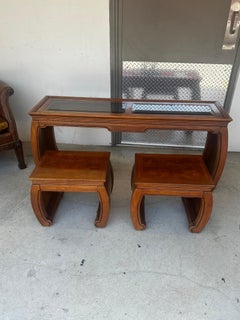
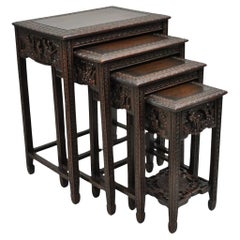
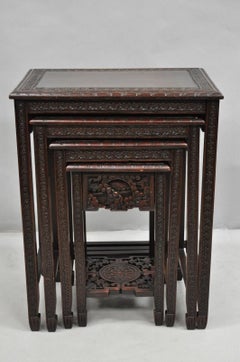
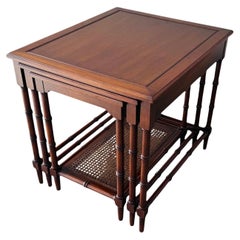
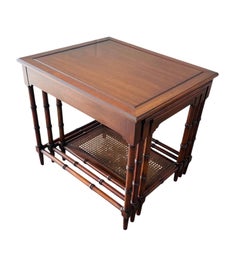
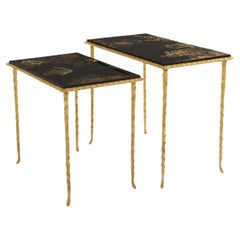
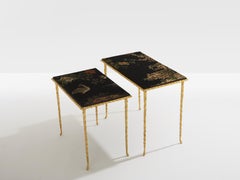
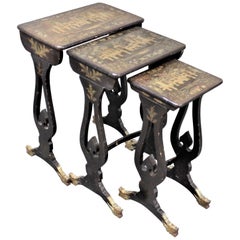
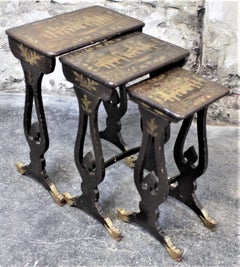
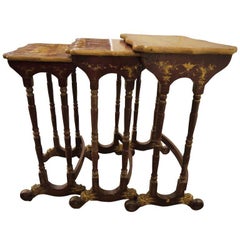
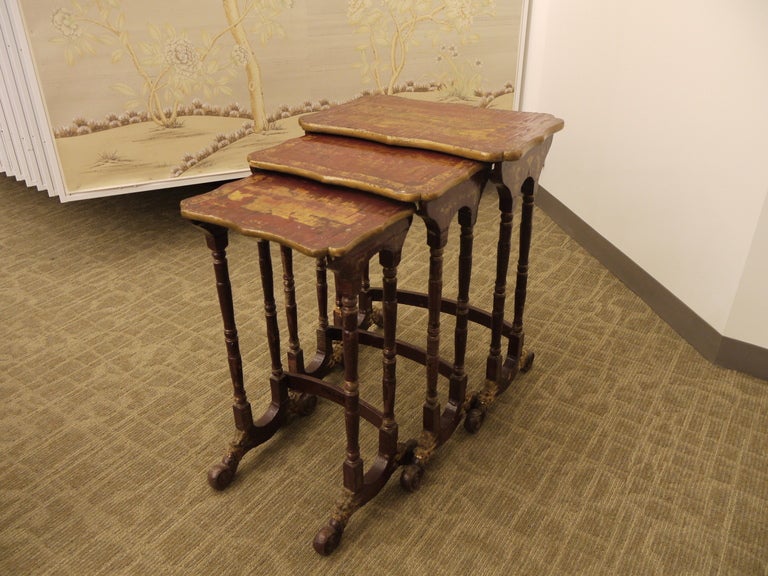
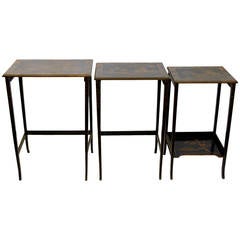
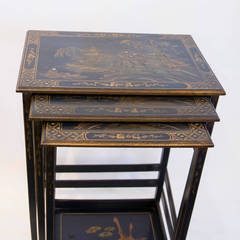
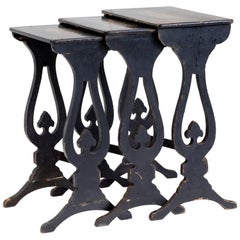
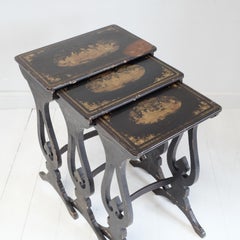
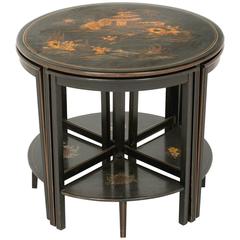
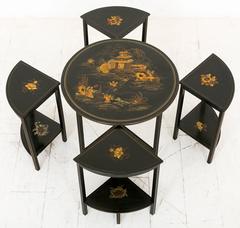
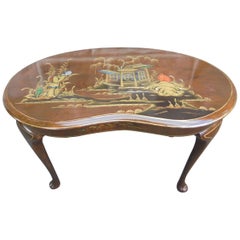
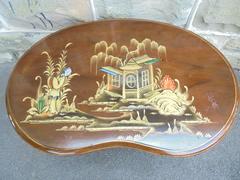
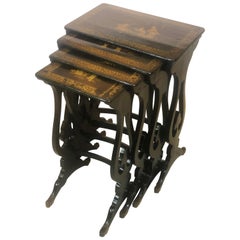
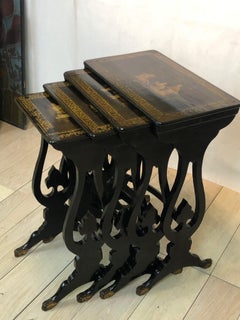
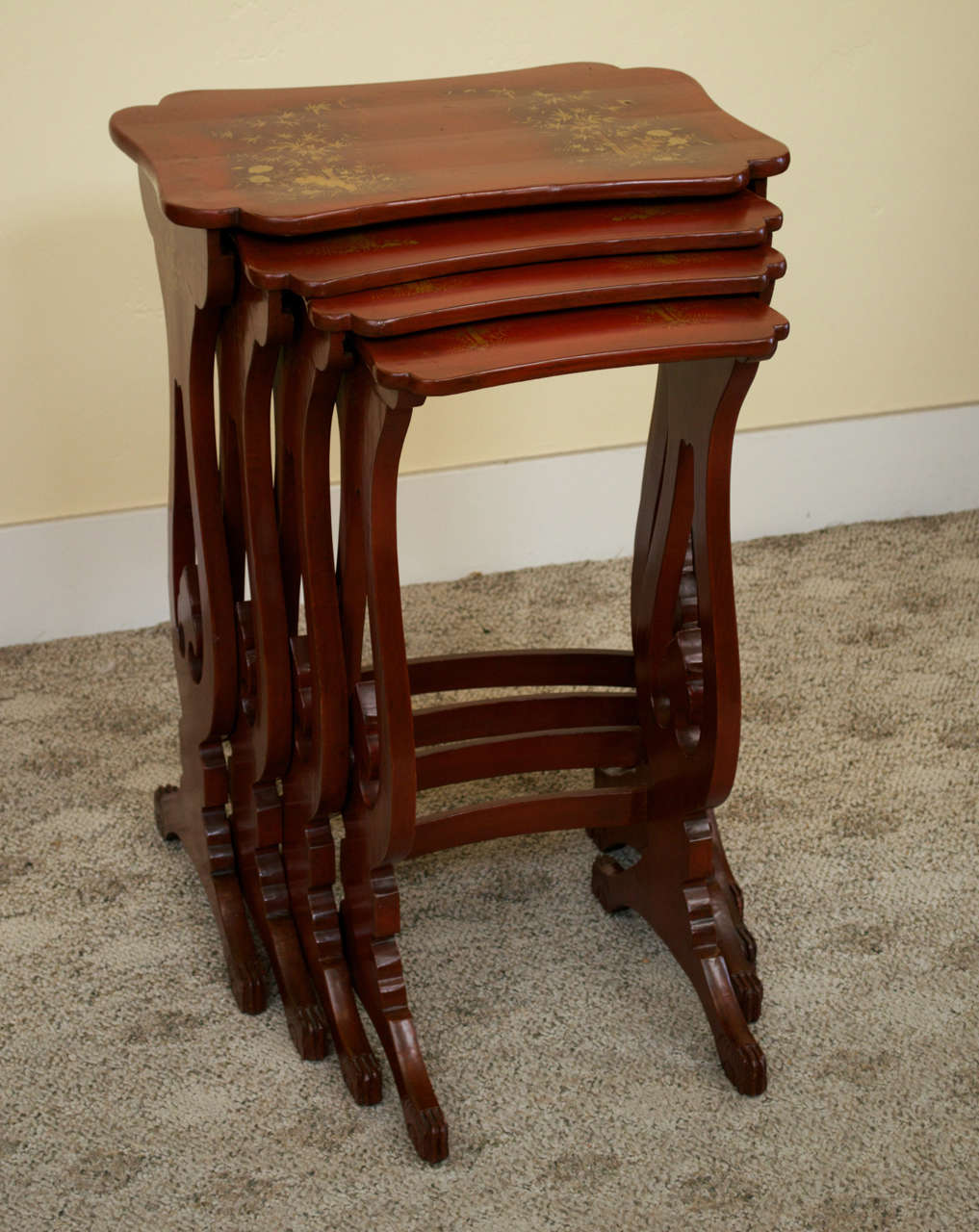
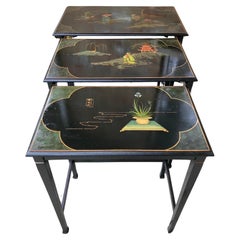
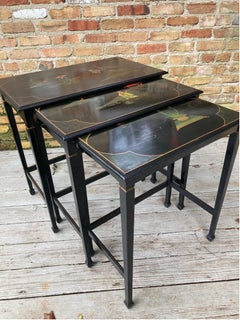
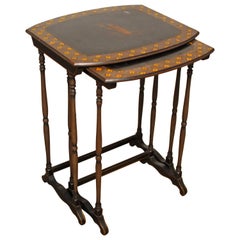
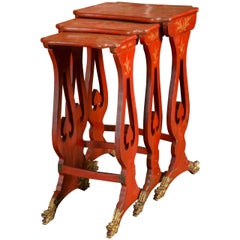
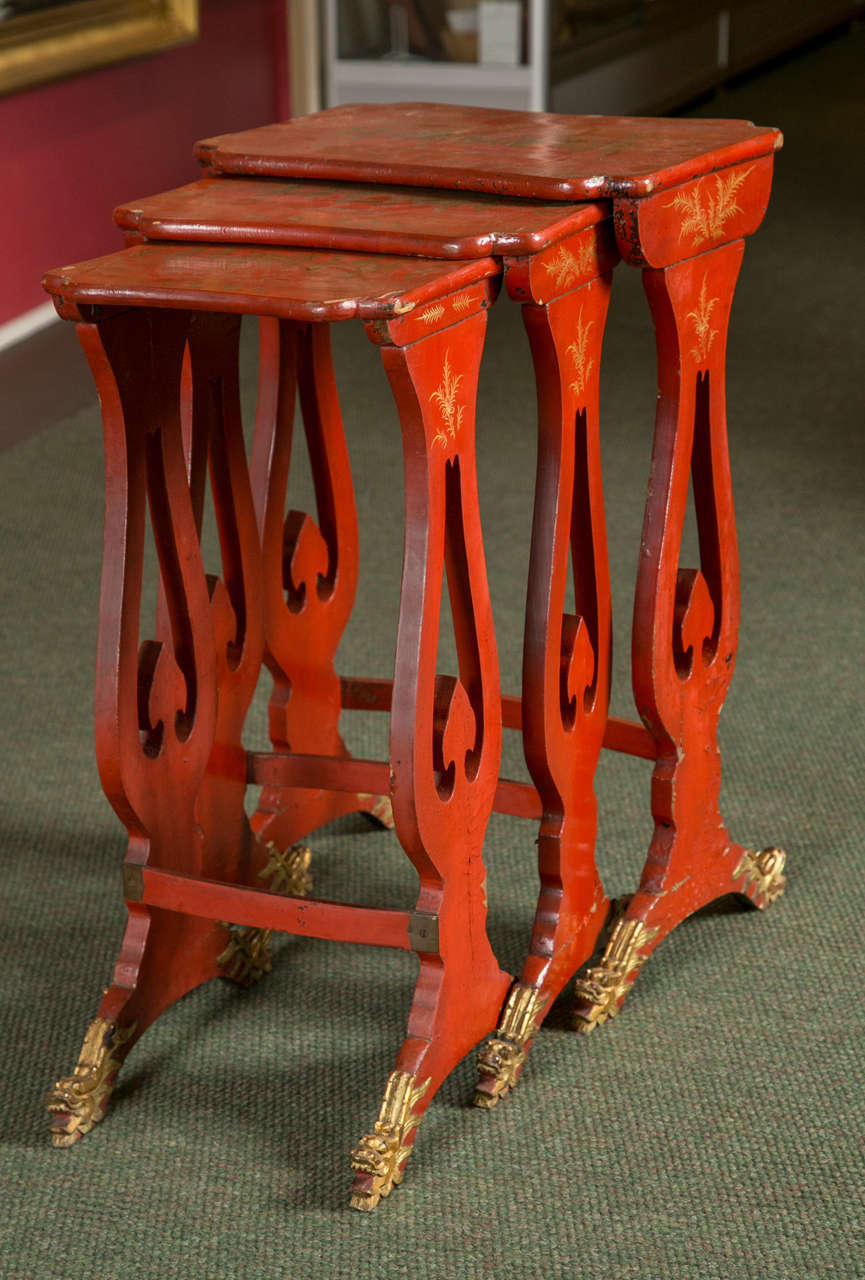
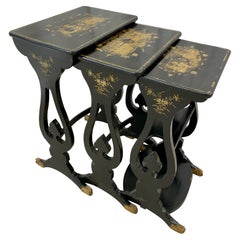
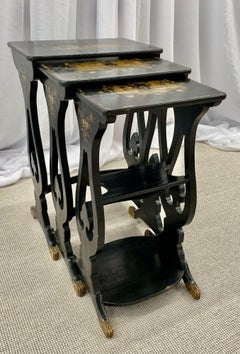
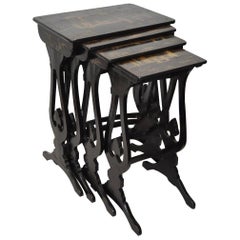
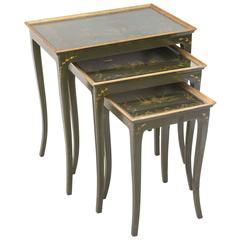
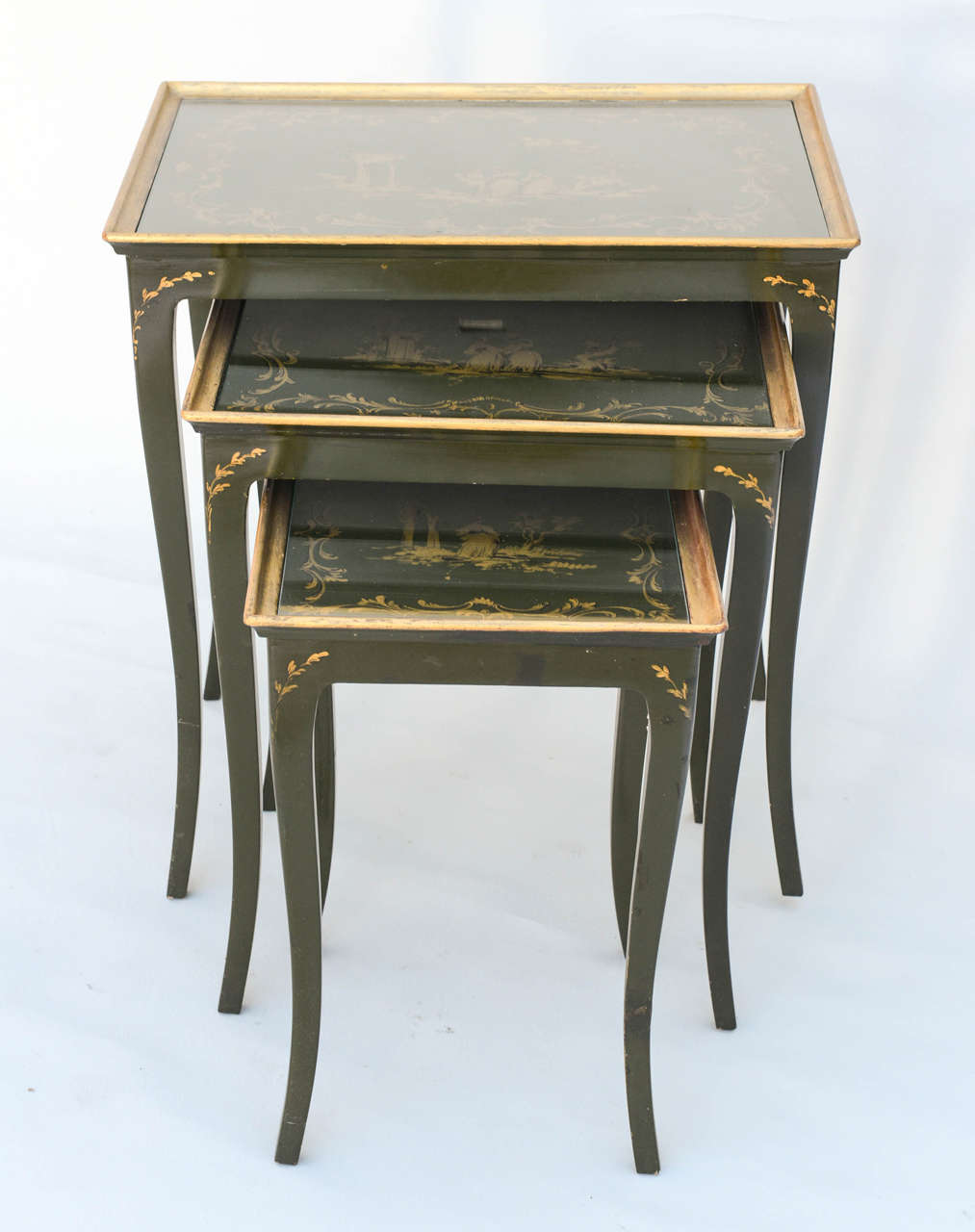
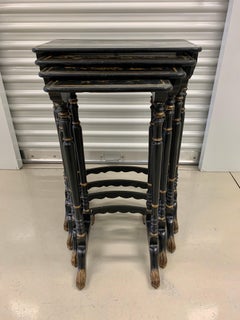
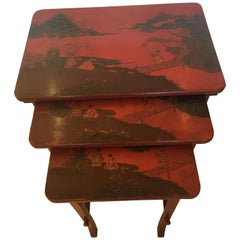
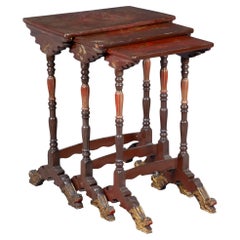
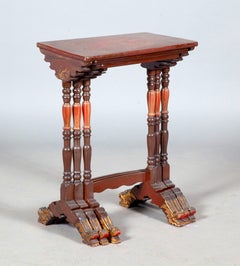
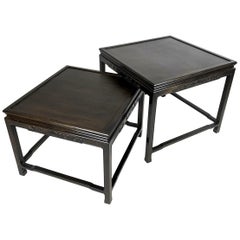
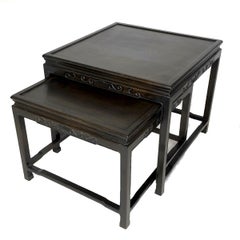
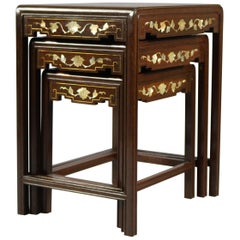
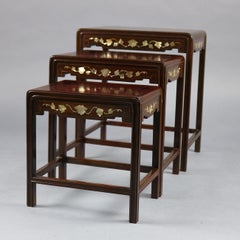
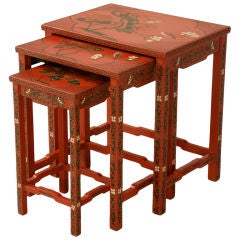
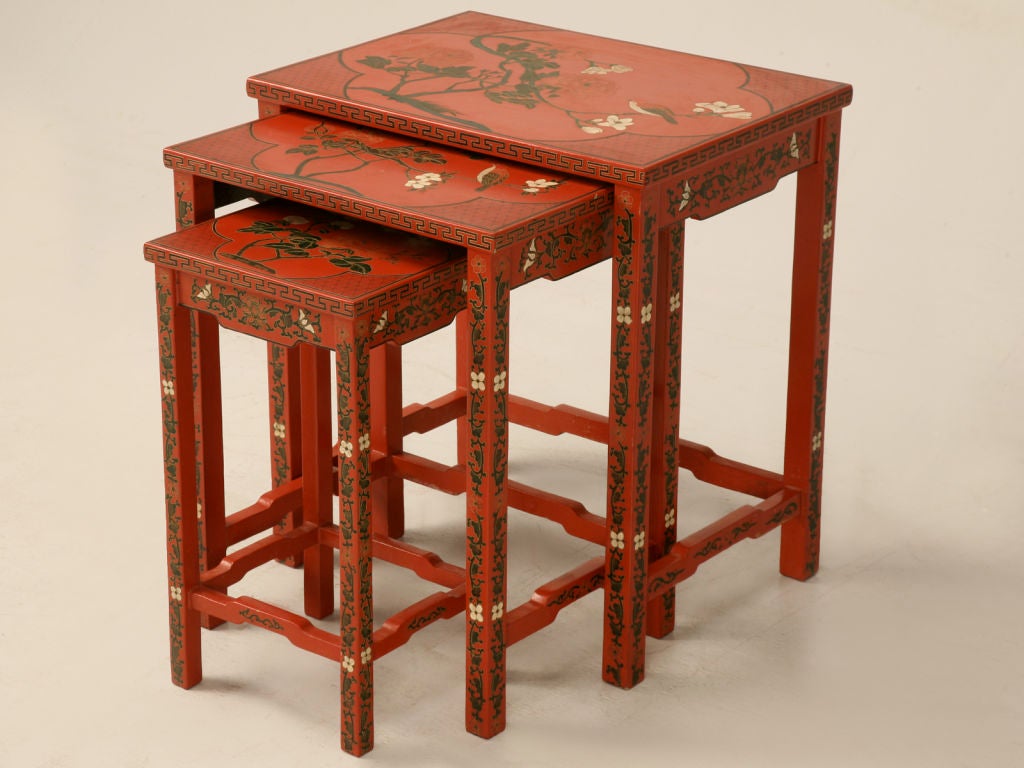
There is a range of nesting chinoiserie tables for sale on 1stDibs. The range of distinct nesting chinoiserie tables — often made from
wood,
lacquer and
metal — can elevate any home. There are all kinds of nesting chinoiserie tables available, from those produced as long ago as the 19th Century to those made as recently as the 20th Century. There are many kinds of nesting chinoiserie tables to choose from, but at 1stDibs,
Victorian and
Regency nesting chinoiserie tables are of considerable interest.
John Rosselli,
John Widdicomb and
Mario Buatta each produced beautiful nesting chinoiserie tables that are worth considering.
Antique and vintage nesting tables and stacking tables first became popular in the early 1800s. With individual tables being used for afternoon tea, needlework and other activities, nesting tables were a perfect solution to clear up clutter at the end of the day.
These tables remained a staple of interiors over the decades for their versatility. In the 1920s, German-born American artist Josef Albers designed a modern version with each table a different color. At the Bauhaus, the German art and design school and chief crucible of modernism founded by architect Walter Gropius, Albers wasn’t the only designer to reinterpret the nesting table. Hungarian-born architect Marcel Breuer also introduced a model with chrome-plated tubular steel legs and lacquered plywood surfaces.
One can now find a range of gorgeous, carefully crafted designs, such as a three-level set of solid oak nesting tables, naturally oiled and finished with Calacatta marble. A game-themed set of nesting tables is a must-have for a living room or lounge, while a small office can be accented with vintage Scandinavian nesting tables made of teakwood, a sought-after material among mid-century modern designers.
Browse the unique collection of antique and vintage stacking tables and nesting tables on 1stDibs to find hundreds of options to match your office or living space.