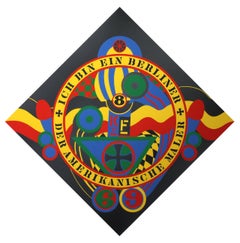
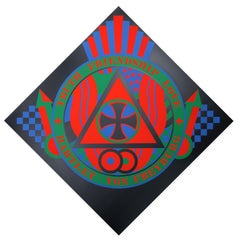
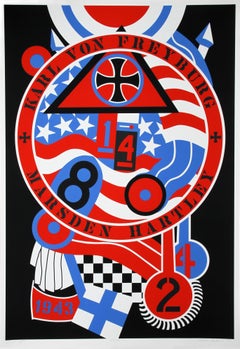
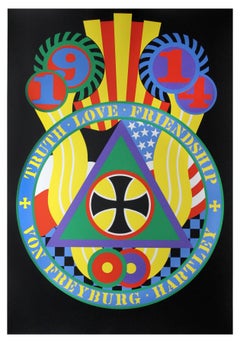
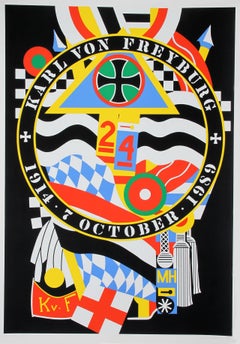
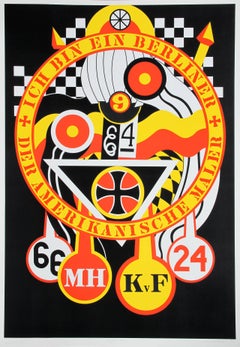
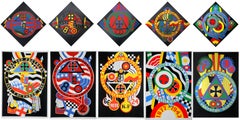
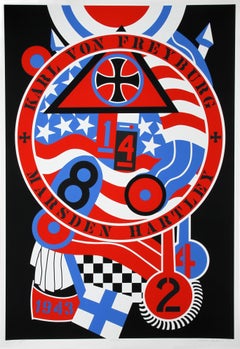
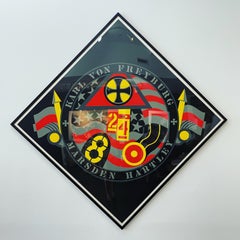
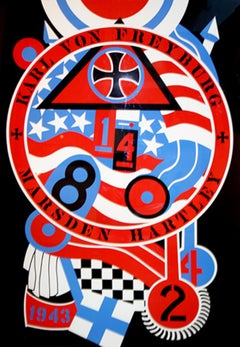
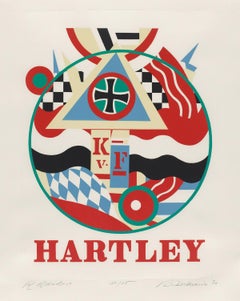
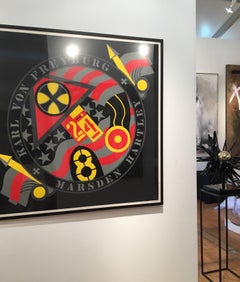
Robert Indiana Hartley For Sale on 1stDibs
You are likely to find exactly the robert indiana hartley you’re looking for on 1stDibs, as there is a broad range for sale. There are many
Pop Art and
Abstract versions of these works for sale. If you’re looking for a robert indiana hartley from a specific time period, our collection is diverse and broad-ranging, and you’ll find at least one that dates back to the 20th Century while another version may have been produced as recently as the 20th Century. On 1stDibs, the right robert indiana hartley is waiting for you and the choices span a range of colors that includes
black,
beige,
blue and
orange. Frequently made by artists working in
screen print,
paper and
vellum, these artworks are unique and have attracted attention over the years. If space is limited, you can find a small robert indiana hartley measuring 27.5 high and 24.25 wide, while our inventory also includes works up to 60 across to better suit those in the market for a large robert indiana hartley.
How Much is a Robert Indiana Hartley?
A robert indiana hartley can differ in price owing to various characteristics — the average selling price for items in our inventory is $9,000, while the lowest priced sells for $2,000 and the highest can go for as much as $52,000.
Robert Indiana for sale on 1stDibs
Robert Indiana's work evolved into hard-edged graphic images of words, logos and typographic forms, earning him a reputation as one of the country's leading contemporary artists.
Indiana is known for using public signs and symbols with altered lettering to make stark and challenging visual statements. In his prints, paintings and constructions, he gave new meaning to basic words like Eat, Die and Love. Using them in bold block letters in vivid colors, he enticed his viewers to look at the commonplace from a new perspective. One indication of his success was the appearance of his immensely popular multi-colored Love on a United States postage stamp in 1973.
Find a collection of original Robert Indiana art today on 1stDibs.
A Close Look at Pop Art Art
Perhaps one of the most influential contemporary art movements, Pop art emerged in the 1950s. In stark contrast to traditional artistic practice, its practitioners drew on imagery from popular culture — comic books, advertising, product packaging and other commercial media — to create original Pop art paintings, prints and sculptures that celebrated ordinary life in the most literal way.
ORIGINS OF POP ART
CHARACTERISTICS OF POP ART
- Bold imagery
- Bright, vivid colors
- Straightforward concepts
- Engagement with popular culture
- Incorporation of everyday objects from advertisements, cartoons, comic books and other popular mass media
POP ARTISTS TO KNOW
ORIGINAL POP ART ON 1STDIBS
The Pop art movement started in the United Kingdom as a reaction, both positive and critical, to the period’s consumerism. Its goal was to put popular culture on the same level as so-called high culture.
Richard Hamilton’s 1956 collage Just what is it that makes today’s homes so different, so appealing? is widely believed to have kickstarted this unconventional new style.
Pop art works are distinguished by their bold imagery, bright colors and seemingly commonplace subject matter. Practitioners sought to challenge the status quo, breaking with the perceived elitism of the previously dominant Abstract Expressionism and making statements about current events. Other key characteristics of Pop art include appropriation of imagery and techniques from popular and commercial culture; use of different media and formats; repetition in imagery and iconography; incorporation of mundane objects from advertisements, cartoons and other popular media; hard edges; and ironic and witty treatment of subject matter.
Although British artists launched the movement, they were soon overshadowed by their American counterparts. Pop art is perhaps most closely identified with American Pop artist Andy Warhol, whose clever appropriation of motifs and images helped to transform the artistic style into a lifestyle. Most of the best-known American artists associated with Pop art started in commercial art (Warhol made whimsical drawings as a hobby during his early years as a commercial illustrator), a background that helped them in merging high and popular culture.
Roy Lichtenstein was another prominent Pop artist that was active in the United States. Much like Warhol, Lichtenstein drew his subjects from print media, particularly comic strips, producing paintings and sculptures characterized by primary colors, bold outlines and halftone dots, elements appropriated from commercial printing. Recontextualizing a lowbrow image by importing it into a fine-art context was a trademark of his style. Neo-Pop artists like Jeff Koons and Takashi Murakami further blurred the line between art and popular culture.
Pop art rose to prominence largely through the work of a handful of men creating works that were unemotional and distanced — in other words, stereotypically masculine. However, there were many important female Pop artists, such as Rosalyn Drexler, whose significant contributions to the movement are recognized today. Best known for her work as a playwright and novelist, Drexler also created paintings and collages embodying Pop art themes and stylistic features.
Read more about the history of Pop art and the style’s famous artists, and browse the collection of original Pop art paintings, prints, photography and other works for sale on 1stDibs.
Finding the Right Prints And Multiples for You
Decorating with fine art prints — whether they’re figurative prints, abstract prints or another variety — has always been a practical way of bringing a space to life as well as bringing works by an artist you love into your home.
Pursued in the 1960s and ’70s, largely by Pop artists drawn to its associations with mass production, advertising, packaging and seriality, as well as those challenging the primacy of the Abstract Expressionist brushstroke, printmaking was embraced in the 1980s by painters and conceptual artists ranging from David Salle and Elizabeth Murray to Adrian Piper and Sherrie Levine.
Printmaking is the transfer of an image from one surface to another. An artist takes a material like stone, metal, wood or wax, carves, incises, draws or otherwise marks it with an image, inks or paints it and then transfers the image to a piece of paper or other material.
Fine art prints are frequently confused with their more commercial counterparts. After all, our closest connection to the printed image is through mass-produced newspapers, magazines and books, and many people don’t realize that even though prints are editions, they start with an original image created by an artist with the intent of reproducing it in a small batch. Fine art prints are created in strictly limited editions — 20 or 30 or maybe 50 — and are always based on an image created specifically to be made into an edition.
Many people think of revered Dutch artist Rembrandt as a painter but may not know that he was a printmaker as well. His prints have been preserved in time along with the work of other celebrated printmakers such as Pablo Picasso, Salvador Dalí and Andy Warhol. These fine art prints are still highly sought after by collectors.
“It’s another tool in the artist’s toolbox, just like painting or sculpture or anything else that an artist uses in the service of mark making or expressing him- or herself,” says International Fine Print Dealers Association (IFPDA) vice president Betsy Senior, of New York’s Betsy Senior Fine Art, Inc.
Because artist’s editions tend to be more affordable and available than his or her unique works, they’re more accessible and can be a great opportunity to bring a variety of colors, textures and shapes into a space.
For tight corners, select small fine art prints as opposed to the oversized bold piece you’ll hang as a focal point in the dining area. But be careful not to choose something that is too big for your space. And feel free to lean into it if need be — not every work needs picture-hanging hooks. Leaning a larger fine art print against the wall behind a bookcase can add a stylish installation-type dynamic to your living room. (Read more about how to arrange wall art here.)
Find fine art prints for sale on 1stDibs today.