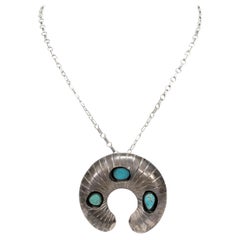
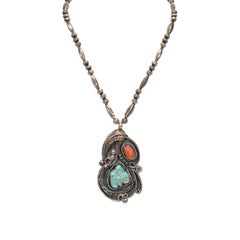
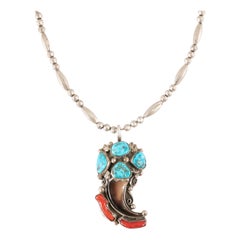
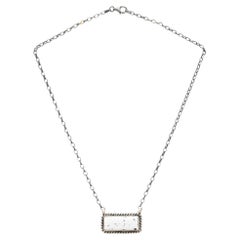
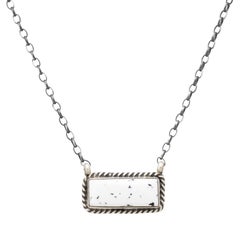
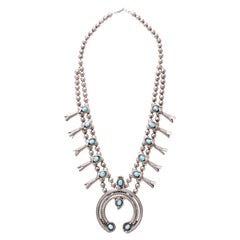
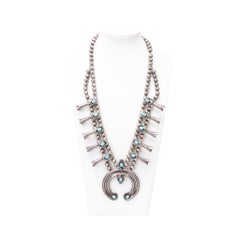
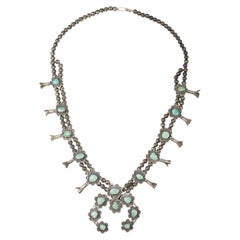
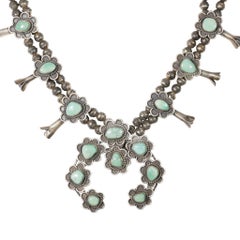
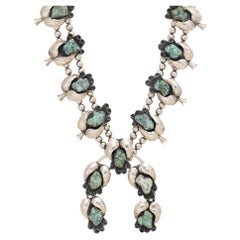
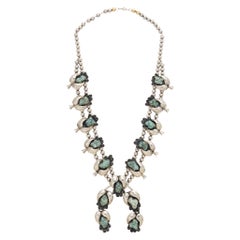
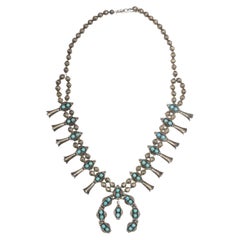
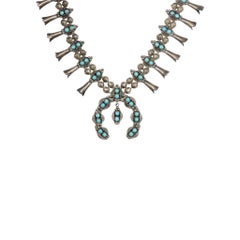
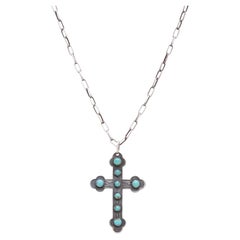
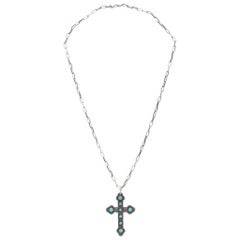
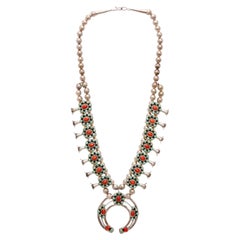
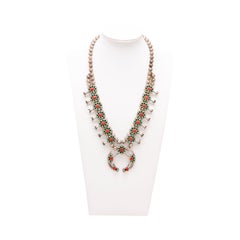
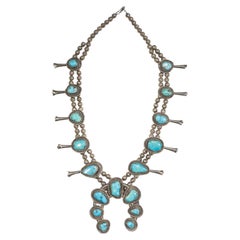
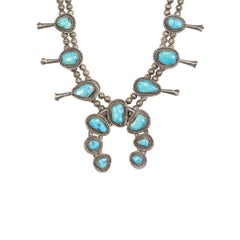
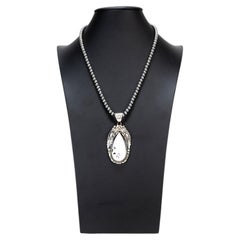
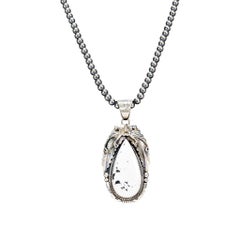
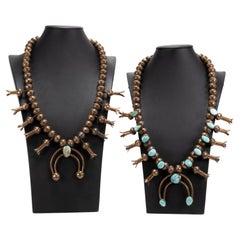
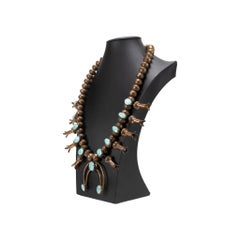
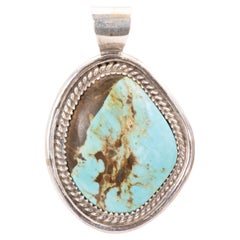
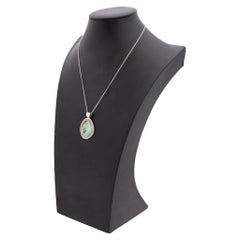
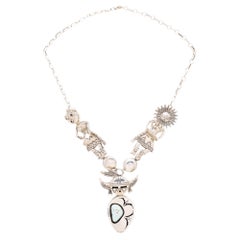
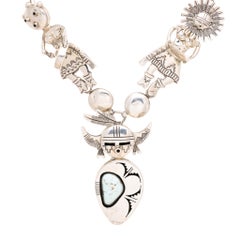
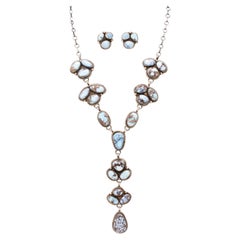
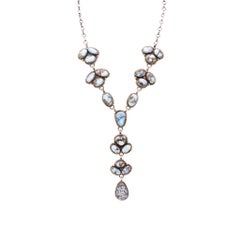
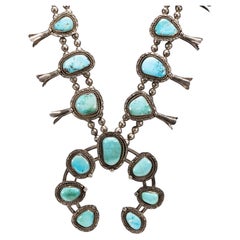
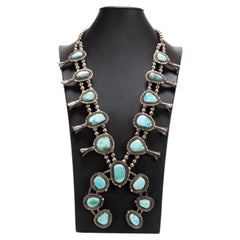
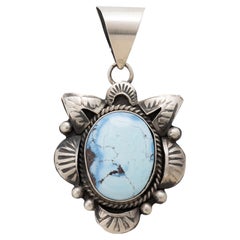
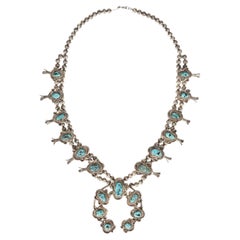
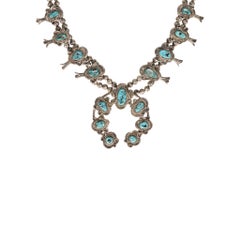
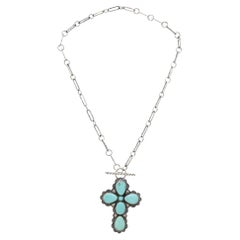
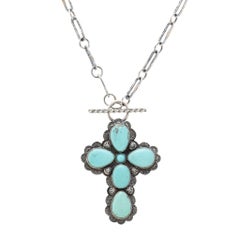
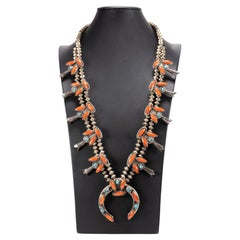
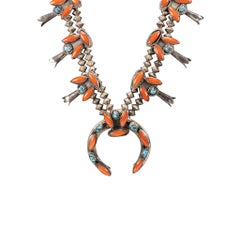
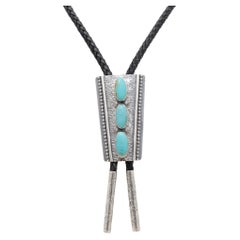
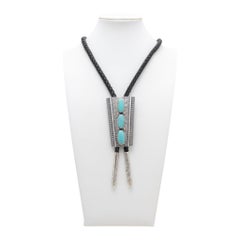
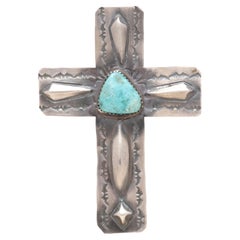
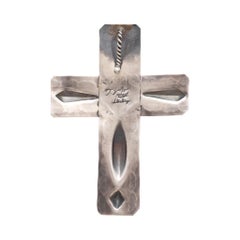
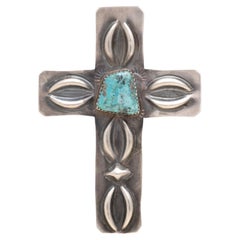
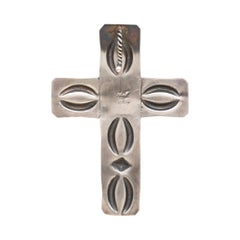
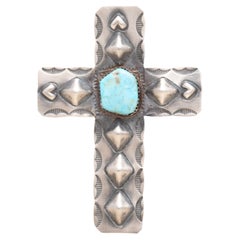
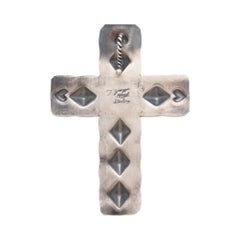
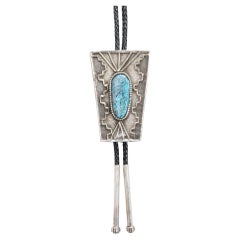
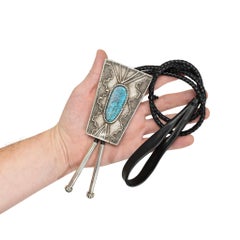
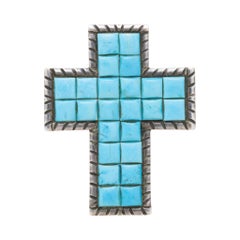
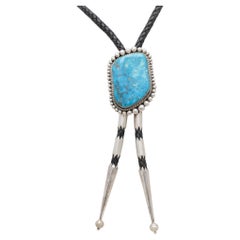
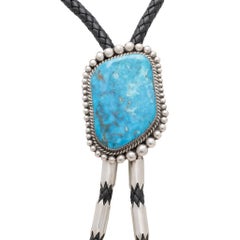
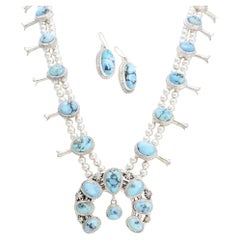
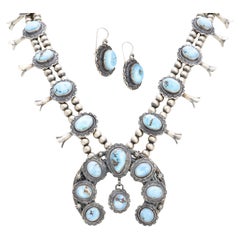
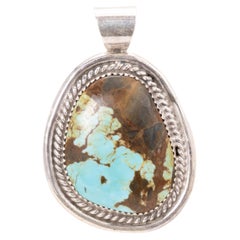
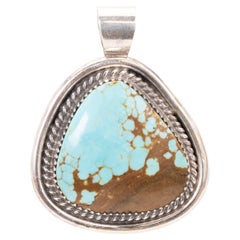
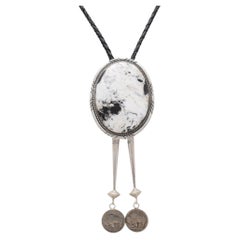
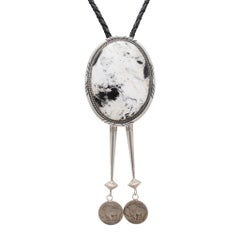
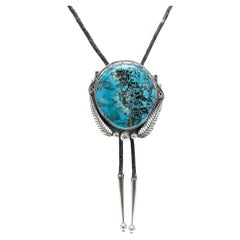
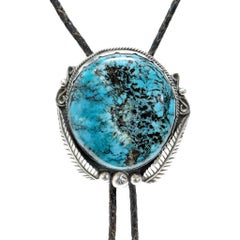
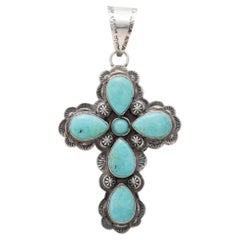
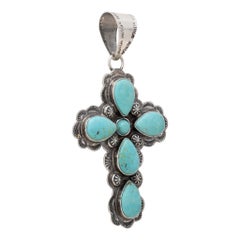
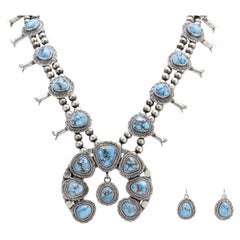
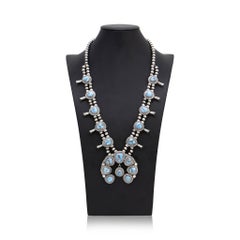
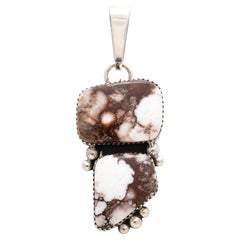
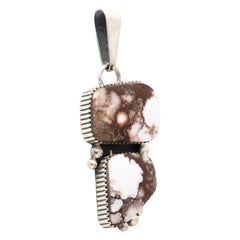
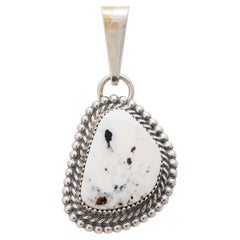
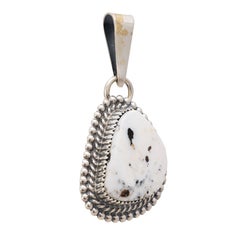
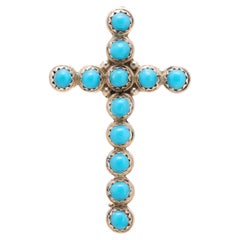
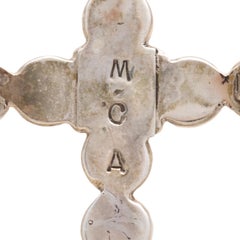
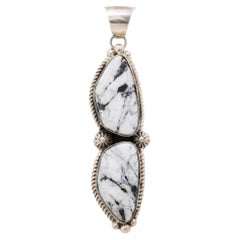
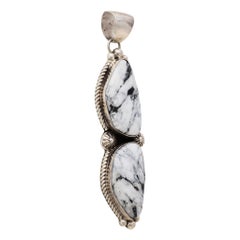
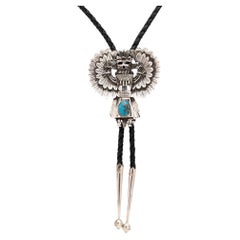
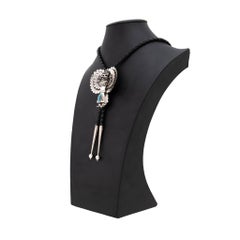
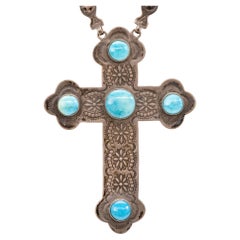
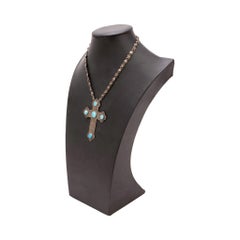
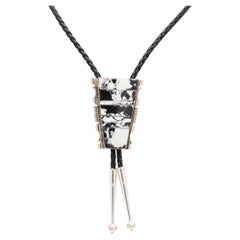
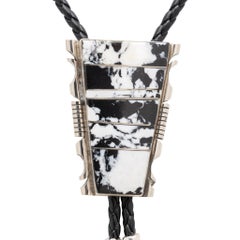
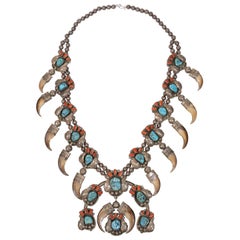
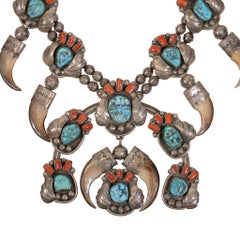
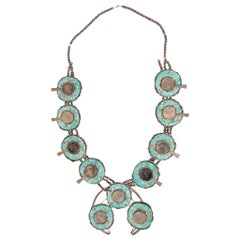
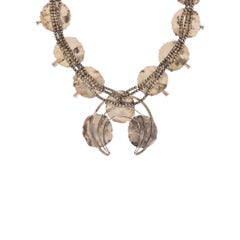
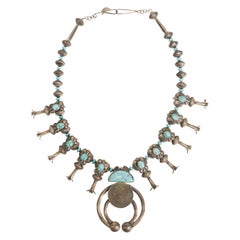
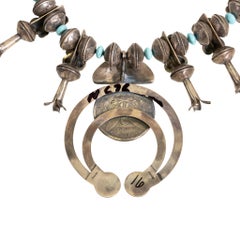
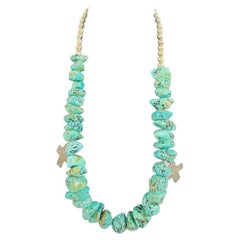
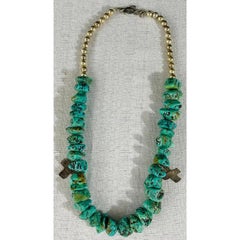
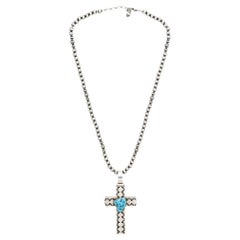
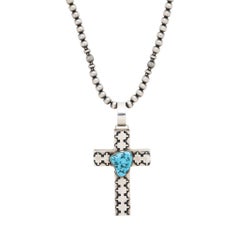
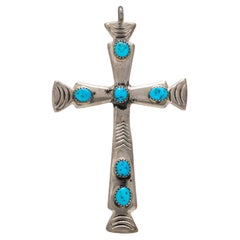
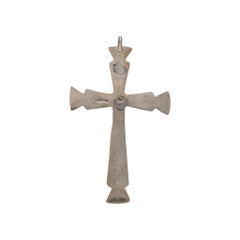
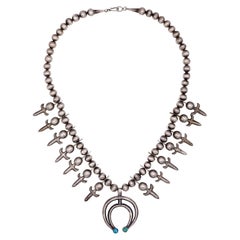
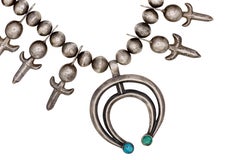
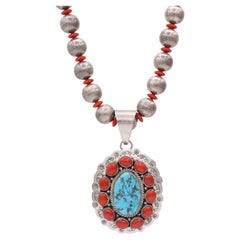
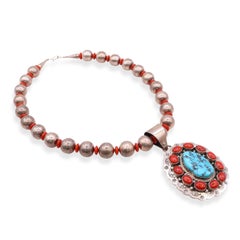
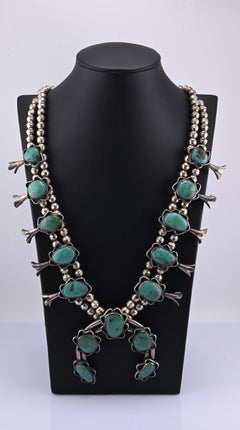
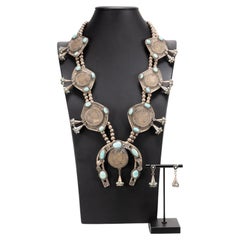
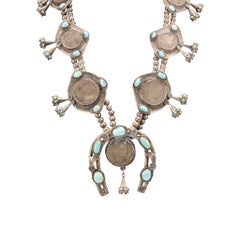
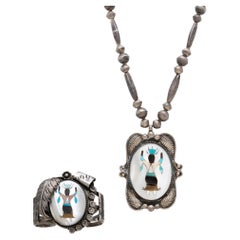
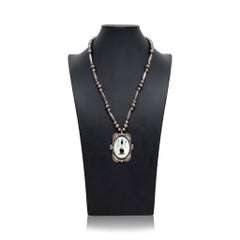
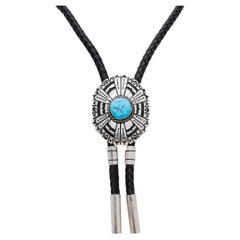
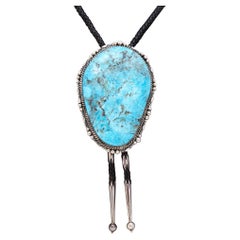
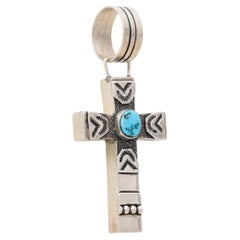
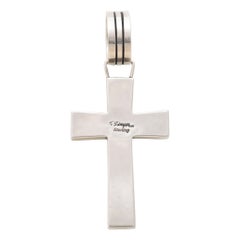
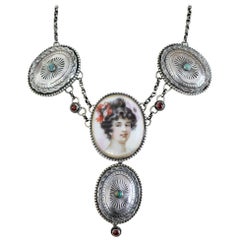
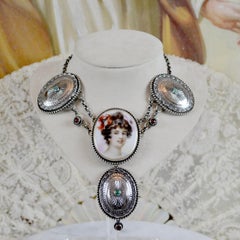
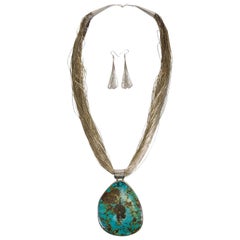
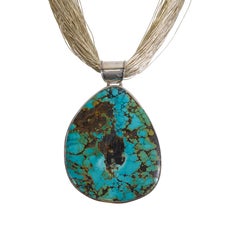
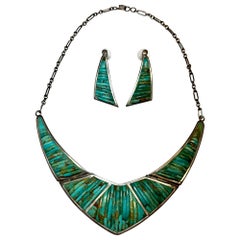
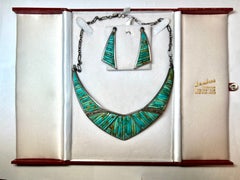
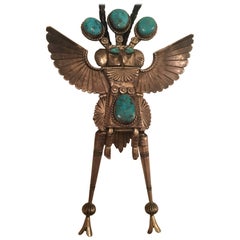
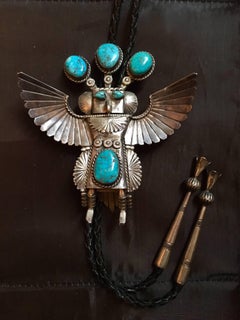
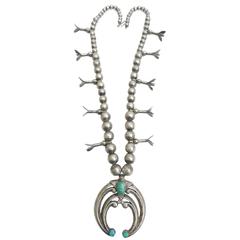
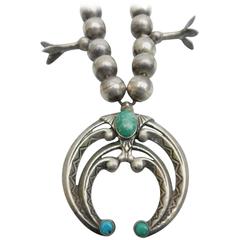
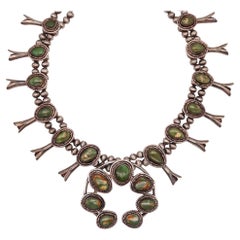
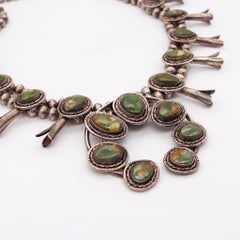
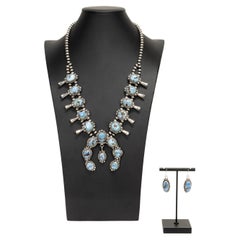
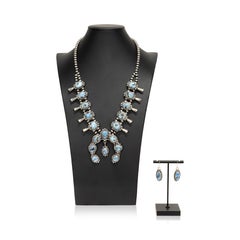
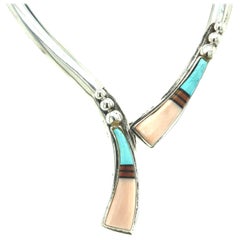
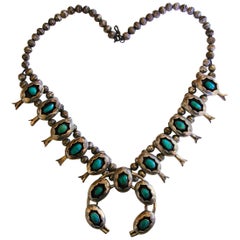
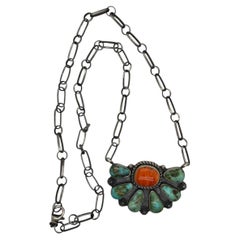
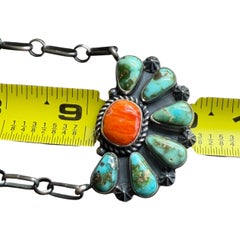
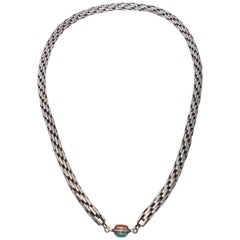
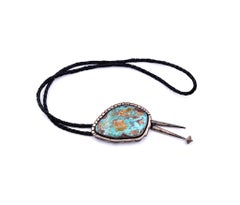
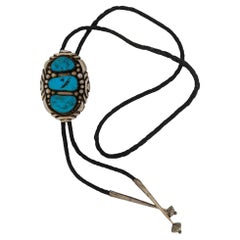
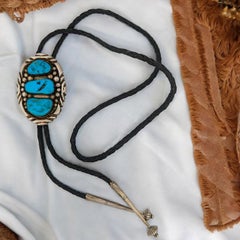
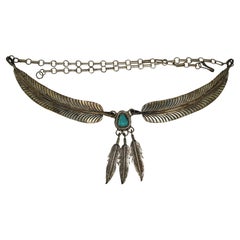
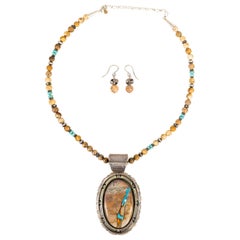
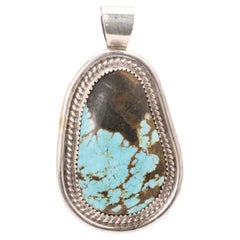
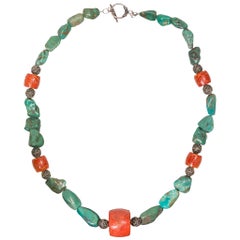
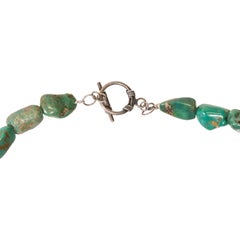
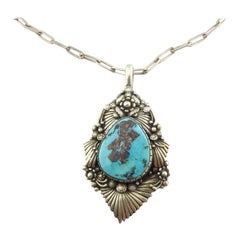
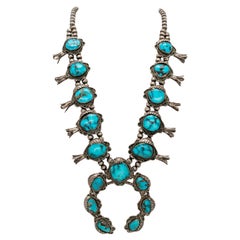
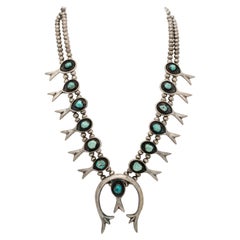
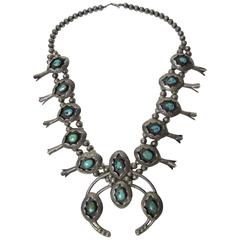
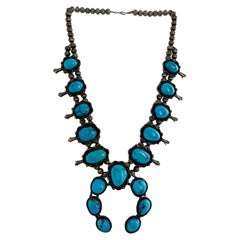
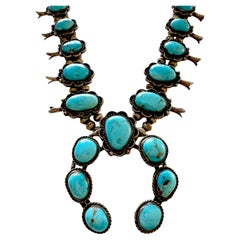
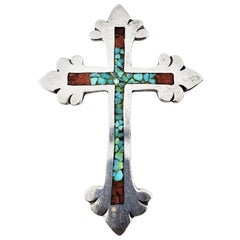
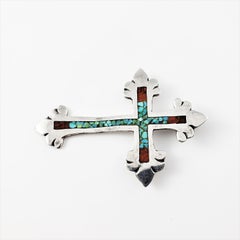
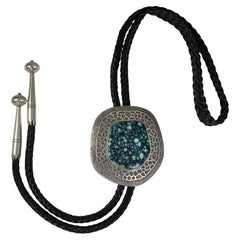
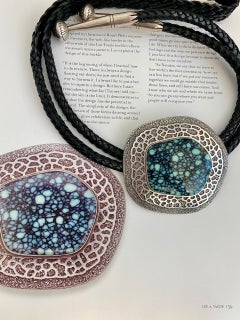
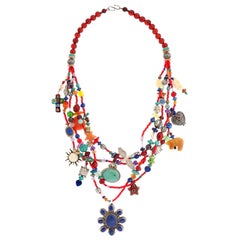
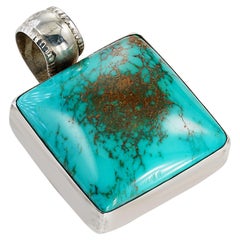
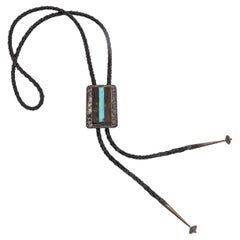
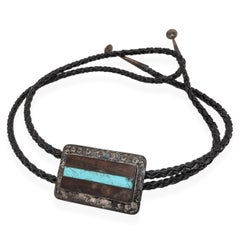
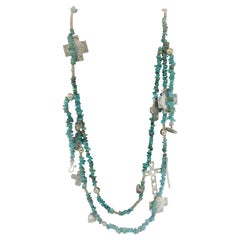
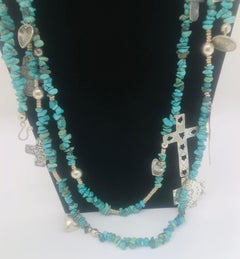
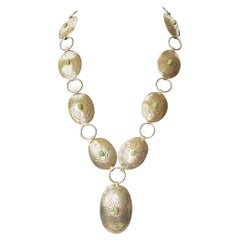
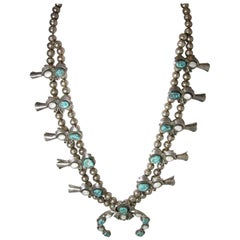
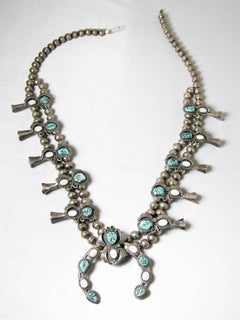
On 1stDibs, there are many options to choose from in our inventory of turquoise and navajo necklaces. All of the items for sale were constructed with extraordinary care, often using
Silver and
Sterling Silver. Our selection of items includes 26 vintage examples as well as 2 contemporary versions. Our collection is diverse and broad-ranging, and pieces in stock date back to the 20th Century while others were produced as recently as the 21st Century. There are many different pieces in our collection of turquoise and navajo necklaces to choose from, but
Native American and
Art Nouveau turquoise and navajo necklaces are of considerable interest. Versions of these items have been a part of the life’s work for many jewelers, but those produced by
Navajo and
Jill Garber are consistently popular. Lovers of these pieces agree that it’s a versatile accessory, but a selection from our variety of 17
Turquoise versions can add an especially stylish touch. A selection of
old mine cut,
cabochon and
oval cut can be found today on these pages. When shopping our range of turquoise and navajo necklaces, you’ll find that there are less available pieces for
men today than there are for
women.
Prices for turquoise and navajo necklaces can differ depending upon size, time period and other attributes — at 1stDibs, these accessories begin at $395 and can go as high as $45,000, while turquoise and navajo necklaces, on average, fetch $2,500.
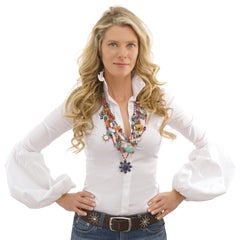
The thought of vintage and antique turquoise jewelry often conjures up images of striking Navajo bracelets and necklaces worn with a denim shirt and cowboy boots. This all-American look has been celebrated by fashion designers like Ralph Lauren and Tommy Hilfiger on their runways and in ad campaigns. In the October 2016 issue of Vogue magazine, Tom Ford said he only wears turquoise jewelry at his Santa Fe ranch. So what is it about this gorgeous blue-green stone that makes us wish that we were born in December?
It’s not surprising that turquoise is abundant in New Mexico and Arizona because, according to the Gemological Institute of America (GIA), it needs to be in “dry and barren regions where acidic, copper-rich groundwater seeps downward and reacts with minerals that contain phosphorus and aluminum.
Turquoise is not found in a single crystal but is a combination of microcrystals. Its appearance, waxy and opaque, is attributed to its structure and composition. “It’s an aggregate of microscopic crystals that form a solid mass. If the crystals are packed closely together, the material is less porous, so it has a finer texture. Fine-textured turquoise has an attractive, waxy luster when it’s polished. Turquoise with a less-dense crystal structure has higher porosity and coarser texture, resulting in a dull luster when it’s polished,” notes the GIA. Since no one wants to set a dull piece of turquoise, porous turquoise is often treated to make the stone more attractive.
In the United States, there have been discoveries of turquoise from 200 B.C. It is not just loose turquoise stones that have been found, but entire suites of jewelry from prehistoric times. In the late 19th-century, the Navajo Indians, who learned silversmithing from the Spanish, started to make beads out of turquoise and eventually combined it with silver around the 1880s. Initially this jewelry was for ceremonial purposes, but it became fashionable once the tourism in the Southwest picked up in the beginning of the 20th century.
Find antique and vintage turquoise rings, necklaces, bracelets and other accessories on 1stDibs.
We are fortunate to know much of the world’s long and dazzling history of necklaces, as this type of jewelry was so treasured that it was frequently buried with its owners. Today, Van Cleef necklaces, Tiffany necklaces and Cartier necklaces are some of the most popularly searched designer necklaces on 1stDibs.
Lapis lazuli beads adorned necklaces unearthed from the royal graves at the ancient Iraqi civilization of Sumer, while the excavation of King Tut’s burial chamber revealed a sense of style that led to a frenzy of Art Deco designs, with artisans of the 1920s seeking to emulate the elegant work crafted by Ancient Egypt’s goldsmiths and jewelry makers.
In ancient times, pendant necklaces worn by royalty and nobles conferred wealth and prestige. Today, wearing jewelry is about personal expression: Luxury diamond necklaces exude confidence and can symbolize the celebratory nature of a deep romantic relationship, while paper-clip chain-link necklaces designed by the likes of goldsmith Faye Kim are firmly planted in the past as well as the present. Kim works exclusively with eco-friendly gold, and these fashionable, fun accessories owe to the design of 19th-century watch fobs.
For some, necklaces are thought of as being a solely feminine piece, but this widely loved accessory has been gender-neutral for eons. In fact, just as women rarely took to wearing a single necklace during the Renaissance, men of the era layered chains and valuable pendants atop their bejeweled clothing. In modern times, the free-spirited hippie and counterculture movements of the 1960s saw costume-jewelry designers celebrating self-expression through colorful multistrand necklaces and no shortage of beads, which were worn by anyone and everyone.
Even after all of these years, the necklace remains an irrefutable staple of any complete outfit. Although new trends in jewelry are constantly emerging, the glamour and beauty of the past continue to inform modern styles and designs. In a way, the cyclical history of the necklace differs little from its familiar looped form: The celebrated French jewelry house Van Cleef & Arpels found much inspiration in King Tut, and, now, their Alhambra collection is a go-to for modern royals. Vintage David Webb necklaces — whose work landed him on the cover of Vogue in 1950, two years after opening his Manhattan shop — were likely inspired by the ornamental styles of ancient Greece, Mesopotamia and Egypt.
On 1stDibs, browse top designers like Dior, Chanel and Bulgari, or shop by your favorite style, from eye-catching choker necklaces to understated links to pearl necklaces and more.