The late 19th and early 20th centuries saw sweeping social change and major scientific advances — both of which contributed to a new aesthetic: modernism. Rejecting the rigidity of Victorian artistic conventions, modernists sought a new means of expression. References to the natural world and ornate classical embellishments gave way to the sleek simplicity of the Machine Age. Architect Philip Johnson characterized the hallmarks of modernism as “machine-like simplicity, smoothness or surface [and] avoidance of ornament.”
Early practitioners of modernist design include the De Stijl (“The Style”) group, founded in the Netherlands in 1917, and the Bauhaus School, founded two years later in Germany.
Followers of both groups produced sleek, spare designs — many of which became icons of daily life in the 20th century. The modernists rejected both natural and historical references and relied primarily on industrial materials such as metal, glass, plywood, and, later, plastics. While Bauhaus principals Marcel Breuer and Ludwig Mies van der Rohe created furniture from mass-produced, chrome-plated steel, American visionaries like Charles and Ray Eames worked in materials as novel as molded plywood and fiberglass. Today, Breuer’s Wassily chair, Mies van der Rohe’s Barcelona chair — crafted with his romantic partner, designer Lilly Reich — and the Eames lounge chair are emblems of progressive design and vintage originals are prized cornerstones of collections.
It’s difficult to overstate the influence that modernism continues to wield over designers and architects — and equally difficult to overstate how revolutionary it was when it first appeared a century ago. But because modernist furniture designs are so simple, they can blend in seamlessly with just about any type of décor. Don’t overlook them.
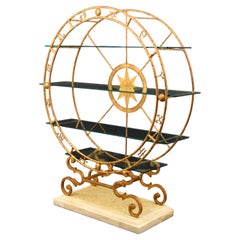
Why not give your precious collectibles the case pieces they deserve? Antique and vintage vitrines can be used to safely store and display your most treasured objects.
While they were initially used to display relics in churches or to preserve specimens for scientific observation, vitrines are best known for their place in retail spaces and museums. The name for these glass display cases comes from the Latin word “vitrum,” meaning glass, as well as the Old French word “vitre,” which also refers to glass. Instead of simply showcasing collector’s items on shelves, you can bestow extra importance on them by displaying them in a vitrine for passers-by to observe and admire.
Not all vitrines are created equal. Over time, furniture makers have explored different shapes and sizes for vitrines. A display case you’ll find in a retail store will likely look drastically different from what you’ll see in a museum or art gallery. A vitrine in a shop is likely there to best market specific wares to the general public, while in museums there is usually a range of different vitrines intended to house and protect single objects or to display a grouping of artifacts.
Most of us have an antique, new or vintage case piece in our home. Though the terms “case pieces” and “case goods” may cause even the most decor-obsessed to stumble, these furnishings have been a vital part of the home for centuries. Any furnishing that is unupholstered and has some semblance of a storage component — cabinets, dressers, buffets — may be properly termed a case piece.
Mirror-backed vitrines, which refer to cases that usually feature shelved and mirrored interiors, are a most appropriate home for your jewelry or decorative objects. Adding such items to a vitrine already suggests that there is an irreplaceable preciousness to the case’s contents, and the mirrors will emphasize as much as well as refract more light to render the display eye-catching.
On 1stDibs, find a wide variety of antique and vintage vitrines to protect and preserve your most prized items. The collection of mid-century modern vitrines and Art Deco vitrines is mostly inclusive of those built with a wooden frame, but there are many other types to choose from as well. It’s time to give your collectibles a good home!