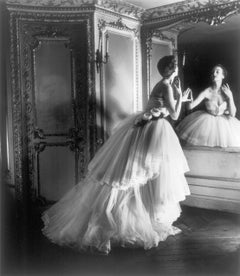
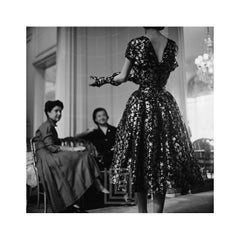
Louise Dahl-WolfeDior Ballgown, Paris, 1950
Price Upon Request
Dior Ballgown, Paris
By Louise Dahl-Wolfe
Located in New York, NY
Signed by the photographer.
Category
1950s Black and White Photography
Materials
Silver Gelatin
Price Upon Request
Dior Ballgown, Paris
By Louise Dahl-Wolfe
Located in New York, NY
Signed by the photographer.
Silver Gelatin
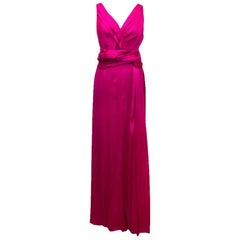
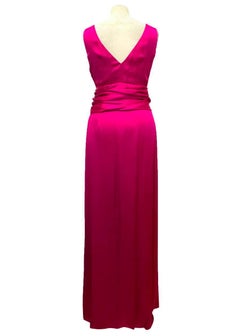
Christian Dior Fuschia Pink Ballgown US 6
By Christian Dior
Located in London, England
Christian Dior Fuschia Pink Ballgown - Sleeveless - V neckline - Features draping and ruching around the waist. - Silk Blend Please note, these items are pre-owned and may show s...
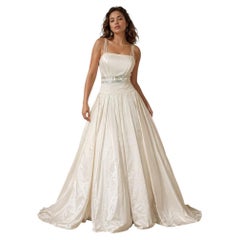
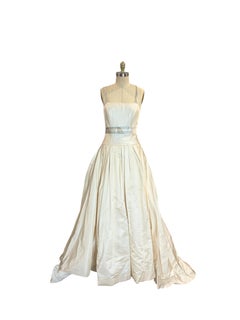
Christian Dior by Gianfranco Ferré Ivory Silk Ballgown Bridal Gown c 1992
By Christian Dior, John Galliano for Christian Dior
Located in Kingston, NY
This ivory silk ballgown is a commanding example of Christian Dior's American boutique line during the Gianfranco Ferré era — one of the most architecturally rigorous periods in the ...
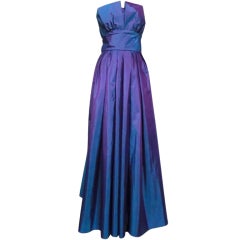
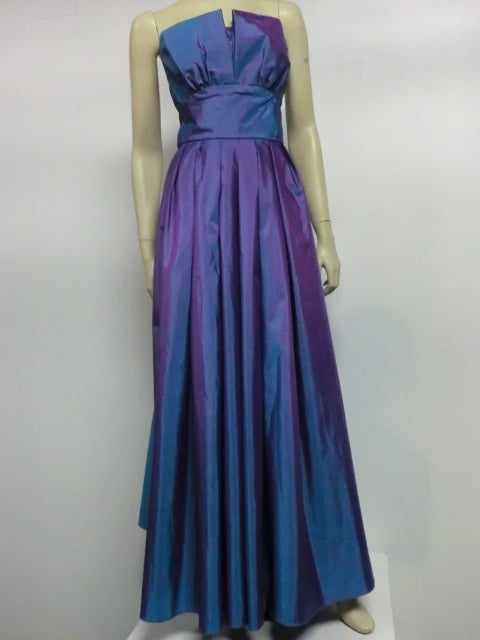
Christian Dior Blue/Purple Iridescent Strapless Silk Ball Gown
By Christian Dior
Located in Gresham, OR
A late 70s, early 80s Christian Dior strapless silk taffeta ballgown in purple/blue with "petal" pleated bust and cummerbund style waist.
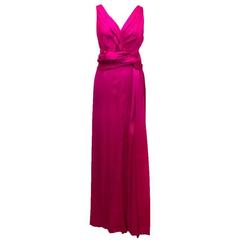
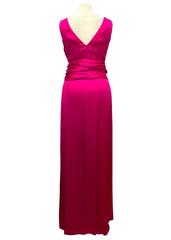
Christian Dior Fuschia Pink Ballgown
By Christian Dior
Located in London, England
Christian Dior slim fitting, fuschia, silk ballgown. It is sleeveless with a v neckline and features draping and ruching around the waist.
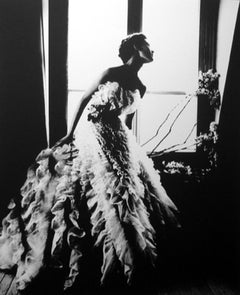
Fantasy on the Dance Floor, Barbara Mullen, Paris
By Lillian Bassman
Located in Santa Monica, CA
signed and numbered in pencil on verso
Silver Gelatin
$6,600
H 63 in W 44 in
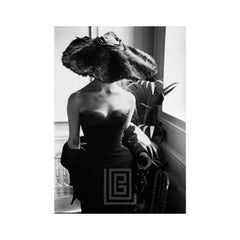
Dior Gown with Fur Hat, Paris, 1954 - Mark Shaw Editioned Giclée Print
By Mark Shaw
Located in New York, NY
Dior Gown with Fur Hat, Paris, 1954 -- One of Mark Shaw’s favorite photographs, this Christian Dior gown was published in 1954 in LIFE. Used as Cover image for Dior Book. Image size ...
Giclée
$8,000
H 14 in W 11 in
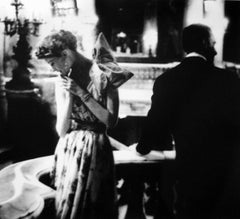
Paris Gala Night, Barbara Mullen in Dress by Patou, Paris, Harper's Bazaar
By Lillian Bassman
Located in Santa Monica, CA
signed and numbered in pencil on verso
Silver Gelatin
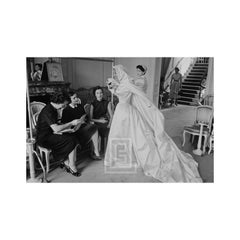
Dior, Felicite Gown, 1953 - Mark Shaw Editioned Giclée Print
By Mark Shaw
Located in New York, NY
Dior, Felicite Gown, 1953. Image size is 13.75" x 20" (for 17" x 22" paper size). All Mark Shaw prints are made to order in limited editions on Hahnemuhle photo rag paper. Each print...
Giclée
$2,000
H 17 in W 11 in
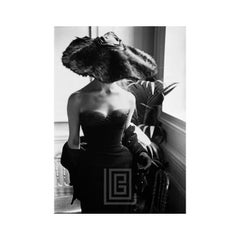
Dior Gown with Fur Hat, Paris, 1954 - Mark Shaw Editioned Giclée Print
By Mark Shaw
Located in New York, NY
Dior Gown with Fur Hat, Paris, 1954 -- One of Mark Shaw’s favorite photographs, this Christian Dior gown was published in 1954 in LIFE. Used as Cover image for Dior Book. Image size ...
Giclée
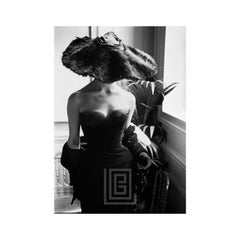
$2,500
H 22 in W 17 in
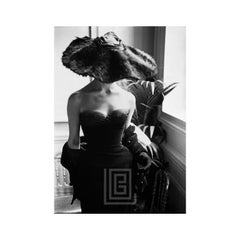
Dior Gown with Fur Hat, Paris, 1954 - Mark Shaw Editioned Giclée Print
By Mark Shaw
Located in New York, NY
Dior Gown with Fur Hat, Paris, 1954 -- One of Mark Shaw’s favorite photographs, this Christian Dior gown was published in 1954 in LIFE. Used as Cover image for Dior Book. Image size ...
Giclée
$4,800
H 52 in W 36 in
Dior Gown with Fur Hat, Paris, 1954 - Mark Shaw Editioned Giclée Print
By Mark Shaw
Located in New York, NY
Dior Gown with Fur Hat, Paris, 1954 -- One of Mark Shaw’s favorite photographs, this Christian Dior gown was published in 1954 in LIFE. Used as Cover image for Dior Book. Image size ...
Giclée
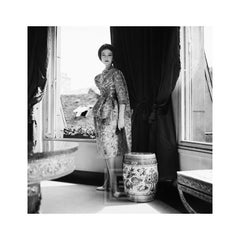
$1,500
H 22 in W 17 in
Dior, Florentine Dress, Courbe Line, 1958 - Mark Shaw Editioned Giclée Print
By Mark Shaw
Located in New York, NY
Photographed for Dior, florentine dress, Autumn-Winter 1958 Haute Couture collection, Courbe line. Image size is 13.75" x 20" (for 17" x 22" paper size). All Mark Shaw prints are mad...
Giclée
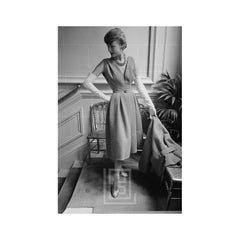
$1,100
H 17 in W 11 in
Dior, Model Wearing Gai Paris Ensemble, 1953 - Mark Shaw Editioned Giclée Print
By Mark Shaw
Located in New York, NY
A model wearing Dior photographed by Mark Shaw in the mid 1950s. Recently published in the book Dior, Glamour, Mark Shaw. Rizzoli, 2013. Image size is 10" x 15" (for 11" x 17" pap...
Giclée
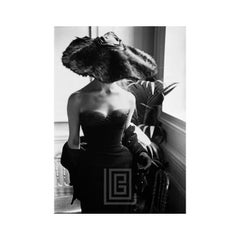
$3,900
H 36 in W 24 in
Dior Gown with Fur Hat, Paris, 1954 - Mark Shaw Editioned Giclée Print
By Mark Shaw
Located in New York, NY
Dior Gown with Fur Hat, Paris, 1954 -- One of Mark Shaw’s favorite photographs, this Christian Dior gown was published in 1954 in LIFE. Used as Cover image for Dior Book. Image size ...
Giclée
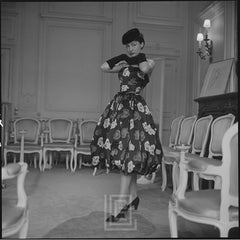
$1,100
H 17 in W 11 in
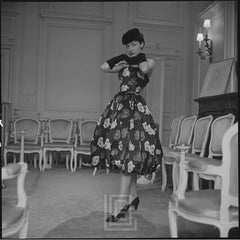
Dior model Mauviette wearing "shortest of the season" dress, LIFE Magazine, 1953
By Mark Shaw
Located in New York, NY
Dior model Mauviette wears a dress described as the "shortest of the season" in notes made for LIFE on August 12, 1953. A version of this image appeared in LIFE on August 31st, 1953....
Giclée
$1,500
H 22 in W 17 in
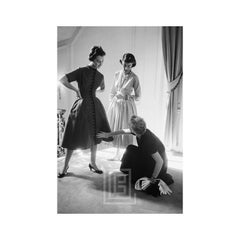
Dior model Mauviette wearing "shortest of the season" dress, LIFE Magazine, 1953
By Mark Shaw
Located in New York, NY
Dior model Mauviette wears a dress described as the "shortest of the season" in notes made for LIFE on August 12, 1953. A version of this image appeared in LIFE on August 31st, 1953....
Giclée
$1,100
H 17 in W 11 in
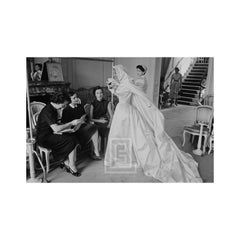
Dior, Victorine Mile Dress, 1953 - Mark Shaw Editioned Giclée Print
By Mark Shaw
Located in New York, NY
A model wearing Dior photographed by Mark Shaw in the mid 1950s. Recently published in the book Dior, Glamour, Mark Shaw. Rizzoli, 2013. Image size is 10" x 15" (for 11" x 17" pap...
Giclée
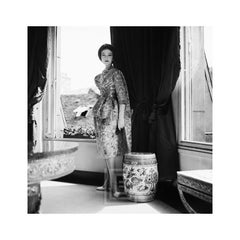
Dior, Felicite Gown, 1953 - Mark Shaw Editioned Giclée Print
By Mark Shaw
Located in New York, NY
Dior, Felicite Gown, 1953. Image size is 10" x 15" (for 11" x 17" paper size). All Mark Shaw prints are made to order in limited editions on Hahnemuhle photo rag paper. Each print is...
Giclée
$1,100
H 17 in W 11 in
Dior, Florentine Dress, Courbe Line, 1958 - Mark Shaw Editioned Giclée Print
By Mark Shaw
Located in New York, NY
Photographed for Dior, florentine dress, Autumn-Winter 1958 Haute Couture collection, Courbe line. Image size is 10" x 15" (for 11" x 17" paper size). All Mark Shaw prints are made t...
Giclée
$1,500
H 22 in W 17 in
Dior, Vivante Metallic Dress, 1953 - Mark Shaw Editioned Giclée Print
By Mark Shaw
Located in New York, NY
Dior, Vivante Metallic Dress, 1953. Image size is 13.75" x 20" (for 17" x 22" paper size). All Mark Shaw prints are made to order in limited editions on Hahnemuhle photo rag paper. E...
Giclée
When Christian Dior launched his couture house, in 1946, he wanted nothing less than to make “an elegant woman more beautiful and a beautiful woman more elegant.” He succeeded, and in doing so the visionary designer altered the landscape of 20th century fashion. Vintage Dior bags, shoes, evening dresses, shirts and other garments and accessories are known today for their feminine and sophisticated sensibility.
Dior was born in Granville, on the Normandy coast, in 1905. His prosperous haute bourgeois parents wanted him to become a diplomat despite his interest in art and architecture. However, they agreed to bankroll an art gallery, which Dior opened in 1928 in Paris with a friend.
This was the start of Dior’s rise in the city’s creative milieu, where he befriended Pablo Picasso and Jean Cocteau. After seven years as an art dealer, Dior retrained as a fashion illustrator, eventually landing a job as a fashion designer for Robert Piguet, and in 1941, following a year of military service, he joined the house of Lucien Lelong. Just five years later, with the backing of industrialist Marcel Boussac, the ascendant Dior established his own fashion house, at 30 avenue Montaigne in Paris.
Just two years after the end of World War II, the fashion crowd and the moribund haute couture industry were yearning, comme tout Paris, for security and prosperity, desperate to discard the drab, sexless, utilitarian garb imposed by wartime deprivation. They needed to dream anew.
And Dior delivered: He designed a collection for a bright, optimistic future. “It’s quite a revolution, dear Christian!” exclaimed Carmel Snow, the prescient American editor-in-chief of Harper’s Bazaar, famously proclaiming, “Your dresses have such a new look.” The press ran with the description, christening Dior’s debut Spring/Summer haute couture collection the New Look. “God help those who bought before they saw Dior,” said Snow. “This changes everything.”
Dior’s collection definitively declared that opulence, luxury and femininity were in. His skirts could have 40-meter-circumference hems, and outfits could weigh up to 60 pounds. They were cut and shaped like architecture, on strong foundations that molded women and “freed them from nature,” Dior said. Rather than rationing, his ladies wanted reams of fabric and 19-inch waists enforced by wire corsets, and the fashion world concurred. The debut got a standing ovation.
In the subsequent decade, Paris ruled as the undisputed fashion capital of the world, and Christian Dior reigned as its king. With the luxuriously full skirts of his New Look, suits and his drop-dead gorgeous couture dresses and ball gowns worthy of any princess, Dior gave women the gift of glamour they’d lost in the miserable years of war.
On 1stDibs, find an exquisite range of vintage Christian Dior clothing, jewelry, handbags and other items.
With entire museum exhibitions dedicated to examining fashion designers and their creations, we’re finally recognizing that costuming is art. Evening dresses over time have conveyed specific statements about social class, position and beliefs. Fashion is a powerful means of self-expression, and sophisticated vintage evening dresses and gowns by our favorite couturier play no small role in making us feel wonderful but, perhaps more importantly, making us feel like ourselves.
In the 16th century, dresses and gowns were so important that England's Queen Elizabeth I defined rules about what dresses women could wear — guidance included long skirts and fitted bodices. Forward-thinking designers have responded to this history.
Gabrielle “Coco” Chanel reimagined traditionally masculine garments for feminine shapes, and her elegant evening dresses and gowns promoted comfort and grace in women’s wear that had been dominated in the previous century by layers of fabric. Christian Dior's gowns celebrated luxury and femininity in the late 1940s — and gave to women the gift of glamour they’d lost in the miserable years of the war. French fashion designer Yves Saint Laurent introduced innovative and highly coveted dress designs in the 1960s while at the same time challenging sexist stereotypes about which members of society could wear tuxedos.
Works by unconventional British designer John Galliano — featured in houses like Givenchy and Dior — redefined limits that dressmakers faced in terms of material, construction and vision during the late 20th century. From his embroidered absinthe-green Oscars gown for actress Nicole Kidman to the iconic sleeveless Dior newspaper dress that Sex and the City’s Carrie Bradshaw made famous, Galliano’s intricate and multifaceted work is reliably collectible and newsworthy
Today’s designers target an increasingly broad audience with their boundary-crossing work, and their tendency to play off of each other’s ideas means that every walk down the runway is also a walk through an entire history of fashion design and dress craftsmanship.
Whether you gravitate toward backless maxi dresses or silk charmeuse gowns by Alexander McQueen or embellished, ruffled floral-print designs by Chloe or Versace, there is an extraordinary collection of vintage and designer evening dresses and gowns waiting for you on 1stDibs.