Yamamoto Shunkyo

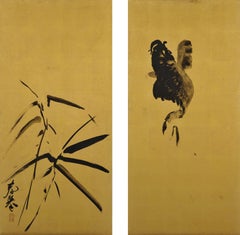
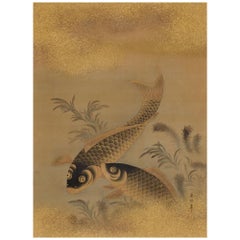
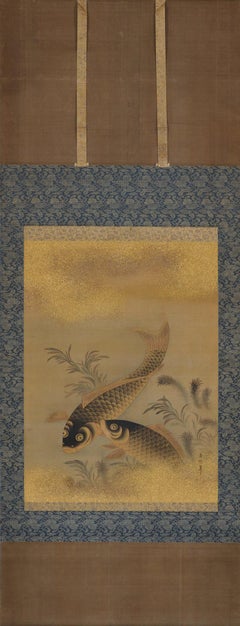
Yamamoto Shunkyo (1871-1933) Japanese Framed Painting Pair, Carp and Bamboo

Yamamoto Shunkyo (1871-1933) Japanese Framed Painting Pair, Carp and Bamboo

Located in Kyoto, JP

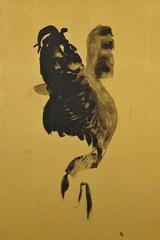
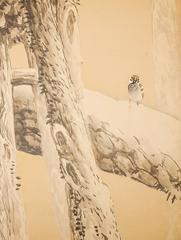
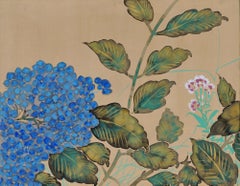
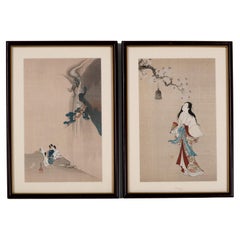
Two framed panels by Yamamoto Shunkyo depicting a carp (koi) leaping from a river.

Category

Early 20th Century Japanese Meiji Paintings and Screens

Materials

Gold Leaf

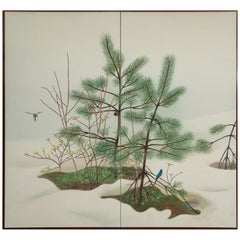
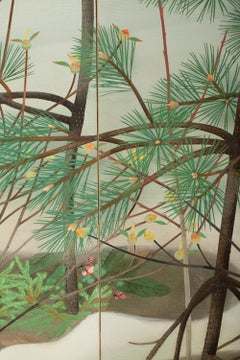
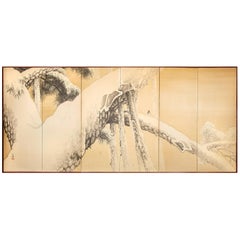
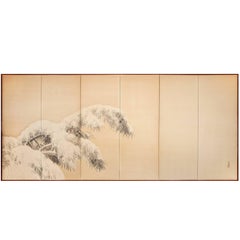
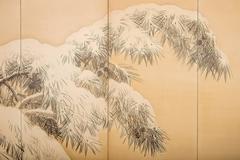
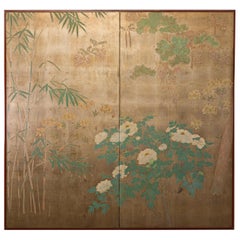
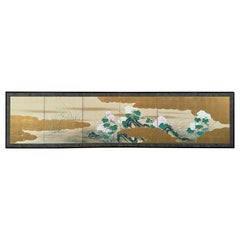
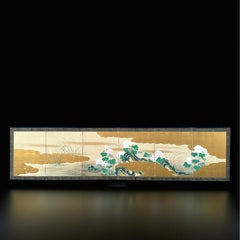
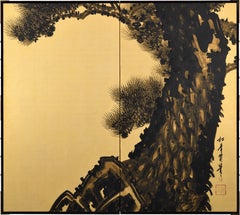
Japanese Two-Panel Screen, Young Pine in Snow

Japanese Two-Panel Screen, Young Pine in Snow

$27,000

H 70 in W 75 in D 0.75 in

Japanese Two-Panel Screen, Young Pine in Snow

Located in Hudson, NY

Born in Kyoto So studied painting at the Kyoto Municipal School of Painting under Yamamoto Shunkyo (1871 - 1933). So constantly exhibited at Teiten Imperial art exhibitions and Bunte...

Category

Vintage 1930s Japanese Paintings and Screens

Materials

Silk

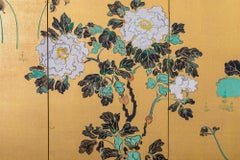
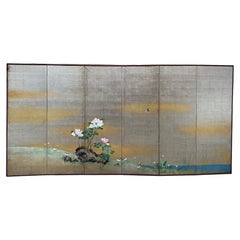
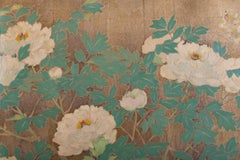
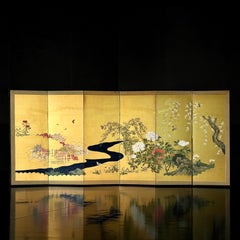
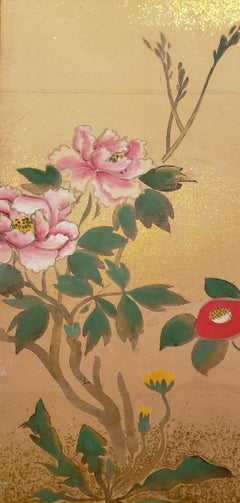
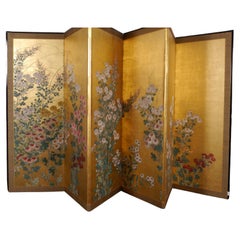
Japanese Six Panel Screen, Peonies and Young Growth on Gold Silk

Japanese Six Panel Screen, Peonies and Young Growth on Gold Silk

Located in Hudson, NY

Notes about artist: Hattori Shunyo (b. 1883) was an artist from Kyoto who graduated the (now) Kyoto Municipal University of Art and fell under the circle of Yamamoto Shunkyo. His wor...

Category

Early 20th Century Japanese Paintings and Screens

Materials

Brocade, Silk

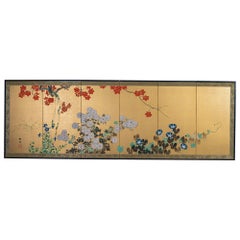
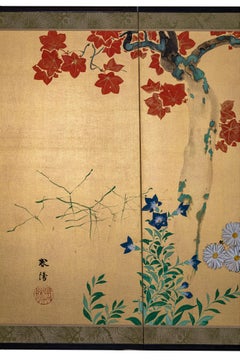
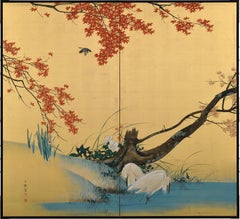
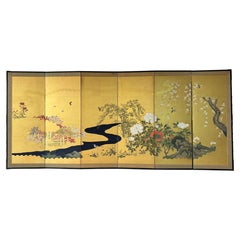
Japanese Six Panel Screen: Red Maple and Flowers on Gold Silk

Japanese Six Panel Screen: Red Maple and Flowers on Gold Silk

Located in Hudson, NY

Notes about artist: Hattori Shunyo (b. 1883) was an artist from Kyoto who graduated the (now) Kyoto Municipal University of Art and fell under the circle of Yamamoto Shunkyo. His wor...

Category

Early 20th Century Japanese Paintings and Screens

Materials

Brocade, Silk

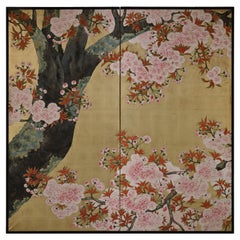
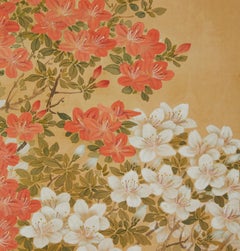
Early 20th Century Japanese Cherry Blossom Screen by Kano Sanrakuki

Early 20th Century Japanese Cherry Blossom Screen by Kano Sanrakuki

Located in Kyoto, JP

Kano Sanrakuki originally studied painting at the Kyoto City Arts and Crafts School under the tutelage of Yamamoto Shunkyo. In 1919 he moved to Tokyo and became a disciple of Yamamur...

Category

Early 20th Century Japanese Showa Paintings and Screens

Materials

Gold Leaf

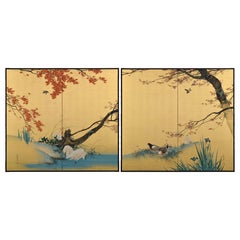
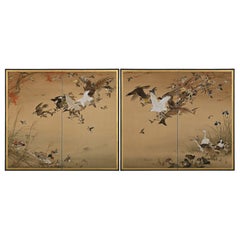
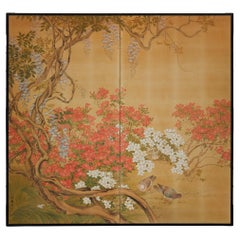
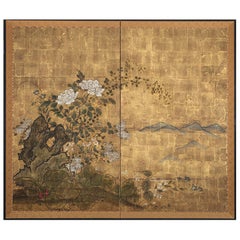
Meiji era Japanese Screen Pair, Two-panel. Spring & Autumn Birds & Flowers.
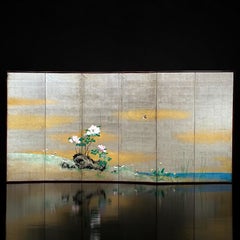
Meiji era Japanese Screen Pair, Two-panel. Spring & Autumn Birds & Flowers.

Located in Kyoto, JP

That same year, he was appointed as a judge for the Great Private Paintings Exhibition alongside Takeuchi Seihō, Yamamoto Shunkyō, and Kikuchi Hōbun, a testament to his standing in t...

Category

Early 20th Century Japanese Meiji Paintings and Screens

Materials

Gold Leaf

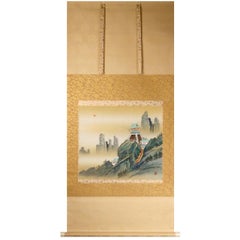
Mountain Scene Showa Period Scroll Japan 20c Artist Kazuhide Saiuchi Nihonga St

Mountain Scene Showa Period Scroll Japan 20c Artist Kazuhide Saiuchi Nihonga St

Located in Amsterdam, Noord Holland

«Kazuhide Saiuchi» Born in Tokyo in 1897, Shunkyo Yamamoto. ¦ Silk book / handwriting. ¦ There are discoloration and stains in the state era

Category

20th Century Japanese Showa Paintings and Screens

Materials

Silk

Recent Sales

Japanese Six-Panel Screen, Pine in Winter

Japanese Six-Panel Screen, Pine in Winter

Sold

H 67 in W 148 in D 0.75 in

Japanese Six-Panel Screen, Pine in Winter

By Bunto Hayashi

Located in Hudson, NY

Hayashi was born in Kyoto, and studied under Maekawa Bunrei and Yamamoto Shunkyo. He founded the Japan Independent Painting Group (Nihon Jiyu Gadan).

Category

Early 20th Century Japanese Taisho Paintings and Screens

Materials

Wood, Paper

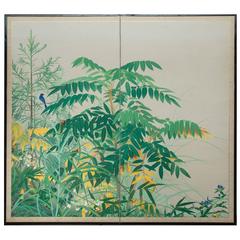
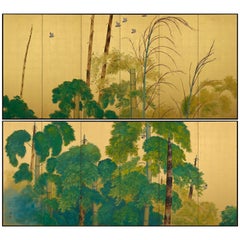
Japanese Two Panel Screen:  Edge of the Forest

Japanese Two Panel Screen: Edge of the Forest

Sold

H 67.5 in W 74 in D 1.5 in

Japanese Two Panel Screen: Edge of the Forest

Located in Hudson, NY

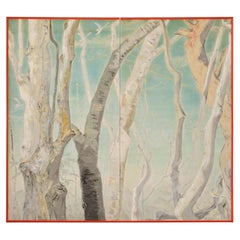
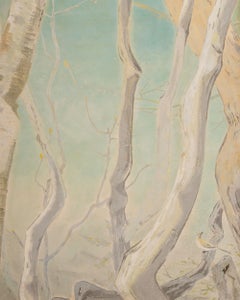
Originally studied under Suzuki Shonen, later under Yamamoto Shunkyo. He also graduated the Kyoto City Specialist School of Painting.

Category

Vintage 1950s Japanese Paintings and Screens

Japanese Six Panel Screen:  Pine in Winter

Japanese Six Panel Screen: Pine in Winter

By Bunto Hayashi

Located in Hudson, NY

Hayashi was born in Kyoto, and studied under Maekawa Bunrei and Yamamoto Shunkyo. He founded the Japan Independent Painting Group (Nihon Jiyu Gadan).

Category

Early 20th Century Japanese Taisho Paintings and Screens

Materials

Wood, Paper

1922 Japanese Screen Pair, Birds in Bamboo Forest by Yamamoto Shuntei

1922 Japanese Screen Pair, Birds in Bamboo Forest by Yamamoto Shuntei

Located in Kyoto, JP

The expansive composition is rhythmically balanced with open spaces leading to fullness and strong verticals anchoring the swaying leaves. From the age of 13 Yamamoto Shuntei (18...

Category

Early 20th Century Japanese Taisho Paintings and Screens

Materials

Gold Leaf

Japanese Screen Painting, Circa 1915 Spring & Fall Flowers, Rimpa School

Japanese Screen Painting, Circa 1915 Spring & Fall Flowers, Rimpa School

By Takahashi Shuka

Located in Kyoto, JP

He later moved to Kyoto, studying under Tsuji Kako and later joined Yamamoto Shunkyo’s Sanaekai studio. His received prizes for his paintings at the Naikoku Kangyo Hakurankai and the...

Category

Early 20th Century Japanese Taisho Paintings and Screens

Materials

Wood, Silk

Meiji Period Japanese Screen Pair, One Hundred Birds by Hasegawa Gyokujun

Meiji Period Japanese Screen Pair, One Hundred Birds by Hasegawa Gyokujun

Located in Kyoto, JP

Also in 1891 he was selected as a judge of the Great Private Paintings Exhibition along with Takeuchi Seiho, Yamamoto Shunkyo and Kikuchi Hobun. In addition he won prizes as several ...

Category

Antique Early 1900s Japanese Meiji Paintings and Screens

Materials

Silk, Wood

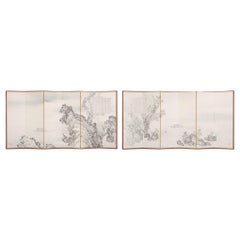
Pair of Large Japanese 6-Panel Nanga Sansui Folding Screens by Oka Buntô 岡文濤

Pair of Large Japanese 6-Panel Nanga Sansui Folding Screens by Oka Buntô 岡文濤

By Oka Buntô

Located in Amsterdam, NL

His most influential teacher was Yamamoto Shunkyo (1871–1933), where he learned to work in the Shijô style.

Category

Early 20th Century Japanese Paintings and Screens

Materials

Gold Leaf

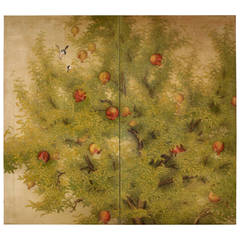
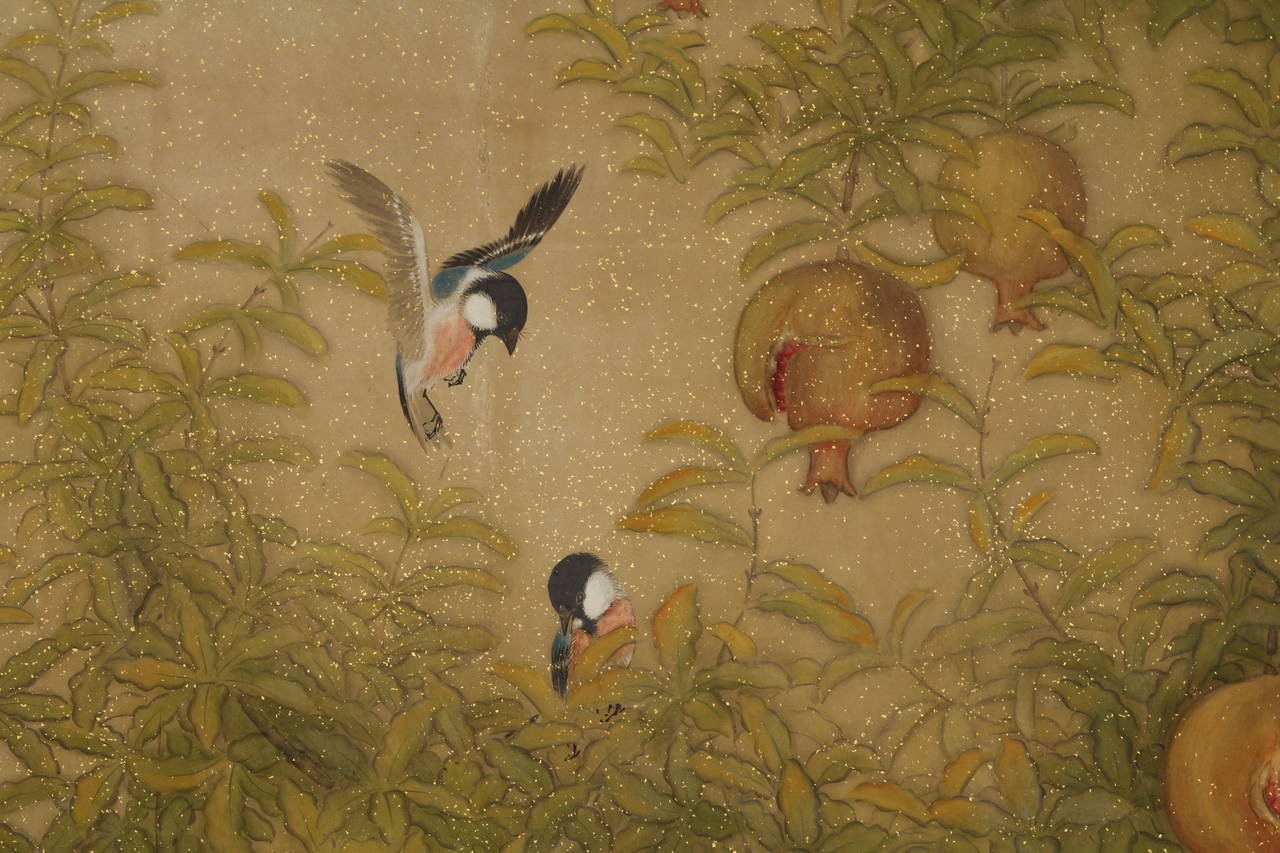
Birds in Pomegranate Tree Two-Panel Folding Screen

Birds in Pomegranate Tree Two-Panel Folding Screen

Located in New York, NY

Signed by the artist with two red seals: Nakaoka (Student of Yamamoto Shunkyo, ac. Taisho- early Showa eras).

Category

Vintage 1920s Japanese Showa Paintings and Screens

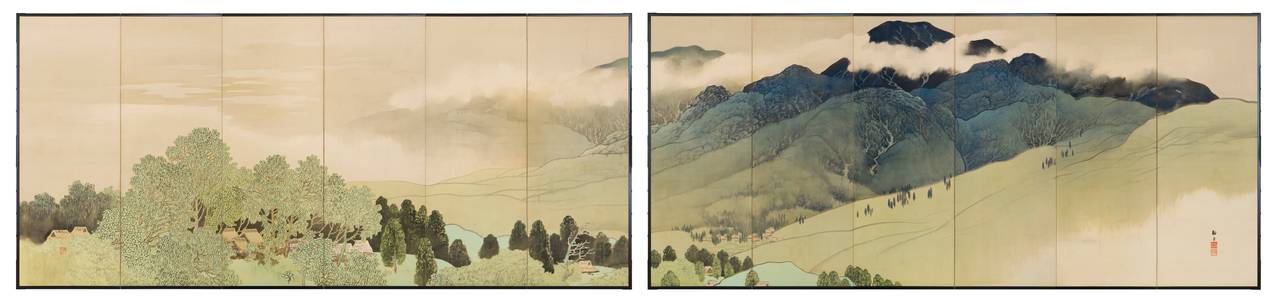
Mountain Landscape Six-Panel Folding Screens

Mountain Landscape Six-Panel Folding Screens

By Nishii Keigaku 1

Located in New York, NY

In 1902 went to Kyoto to study with Yamamoto Shunkyo 1871–1933) and began to win prizes.

Category

Vintage 1920s Japanese Taisho Paintings and Screens

Materials

Silk

People Also Browsed

1950's Style Curved Velvet Sofa in Custom Velvet Colors

1950's Style Curved Velvet Sofa in Custom Velvet Colors

$11,960Sale Price / item|20% Off

H 33.08 in W 115.36 in D 61.82 in

1950's Style Curved Velvet Sofa in Custom Velvet Colors

Located in New York, NY

The Sofa inspires itself nature where green is the predominant element and where valleys and hills prevail. The item’s details allow it to be the perfect statement piece for any cont...

Category

21st Century and Contemporary Portuguese Modern Sofas

Materials

Velvet, Walnut

Japanese Maki-e Lacquer Stacking Box, Jubako, Meiji Period, Japan

Japanese Maki-e Lacquer Stacking Box, Jubako, Meiji Period, Japan

Located in Austin, TX

A fine and impressive Japanese gold maki-e decorated black lacquer five-tier jubako with presentation tray, two lids, and the original tomobako storage box, Meiji period, late 19th c...

Category

Antique Late 19th Century Japanese Meiji Lacquer

Materials

Lacquer

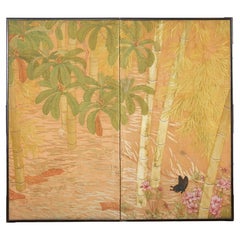
Japanese Taisho Two Panel Screen Bamboo Butterfly Landscape

Japanese Taisho Two Panel Screen Bamboo Butterfly Landscape

Located in Rio Vista, CA

Serene Japanese late Taisho period early Showa period two-panel byobu screen featuring a colorful bamboo loquat landscape with a butterfly. Beautifully crafted in the Nihonga school ...

Category

20th Century Japanese Taisho Paintings and Screens

Materials

Brass

Very Large Chinese Blue and White Fish Bowl

Very Large Chinese Blue and White Fish Bowl

Located in East Hampton, NY

A very large single Chinese blue and white fish bowl/planter depicting a dragon and palms ... very heavy.

Category

Mid-20th Century Asian Ceramics

Materials

Ceramic

Exceptional 19th Century English Chinoiserie Pagoda Display Cabinet

Exceptional 19th Century English Chinoiserie Pagoda Display Cabinet

Located in Houston, TX

Large-scale 19th century English display cabinet executed in the Chinoiserie tradition. Constructed in carved mahogany and conceived as a tripartite architectural façade, each glazed...

Category

Antique 19th Century English Chinese Chippendale Vitrines

Materials

Glass, Mahogany

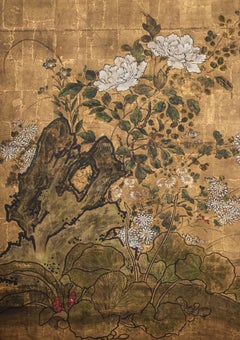
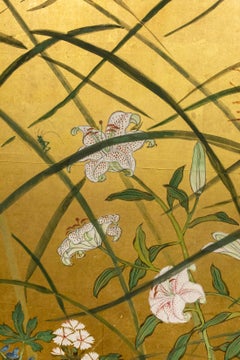
Showa Delicate Floral Screen

Showa Delicate Floral Screen

$2,904

H 66.93 in W 74.02 in D 1.19 in

Showa Delicate Floral Screen

Located in Fukuoka, JP

This graceful two-panel screen captures the essence of summer with its subtle depiction of slender grasses and fine lines, artfully arranged against a golden background. The screen e...

Category

20th Century Japanese Showa Paintings and Screens

Materials

Gold Leaf

Antique 19th Century Japanese Two-Panel Screen ‘Byobu’, Kano School, Edo Period

Antique 19th Century Japanese Two-Panel Screen ‘Byobu’, Kano School, Edo Period

Located in London, GB

Japanese Kano School Edo period two-panel screen depicting flowering prunus and bamboo on a rock formation, with colorful birds next to a body of water. Vivid mineral pigments on a g...

Category

Antique Mid-19th Century Japanese Edo Paintings and Screens

Materials

Gold Leaf

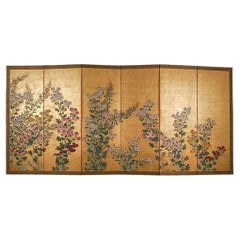
Kiku to Hagi Byobu, Rinpa School Style, Edo Period.

Kiku to Hagi Byobu, Rinpa School Style, Edo Period.

$20,000

H 67.25 in W 147 in D 0.75 in

Kiku to Hagi Byobu, Rinpa School Style, Edo Period.

Located in Point Richmond, CA

A Chrysanthemum and Bush Clover painting on gold leaf six-panel folding screen, painted with clusters of leafy green chrysanthemum plants with white blossoms having moriage relief p...

Category

Antique Early 1800s Japanese Edo Paintings and Screens

Materials

Gold Leaf

Early 20th Century Pair of Japanese Folding Screens, Deer Under Maple Trees

Early 20th Century Pair of Japanese Folding Screens, Deer Under Maple Trees

Located in Kyoto, JP

Deer under maples Late Taisho period, circa 1925-1930 Pair of two-panel screens. Ink and pigment on silk. Signature: Goho Seal: Goho A pair of two-fold Japanese silk s...

Category

Vintage 1920s Japanese Taisho Paintings and Screens

Materials

Wood, Paper, Silk

Early 20th Century Japanese Nihonga Screen. Bamboo Forest.

Early 20th Century Japanese Nihonga Screen. Bamboo Forest.

Located in Kyoto, JP

Anonymous Bamboo Forest Early Taisho era. Circa 1910-1915. Six-panel Japanese Screen. Mineral pigment, gofun and ink on silk. A six-panel Japanese folding screen, painted on silk in...

Category

Early 20th Century Japanese Taisho Paintings and Screens

Materials

Silk

Japanese Asian Large Edo Six-Panel Folding Byobu Screen Landscape Monkeys Trees

Japanese Asian Large Edo Six-Panel Folding Byobu Screen Landscape Monkeys Trees

Located in Studio City, CA

An absolutely gorgeous, wonderfully composed six-panel Japanese Byobu folding screen/room divider depicting a family of playful monkeys among the blooming trees and mountainous lands...

Category

Antique Early 19th Century Japanese Edo Paintings and Screens

Materials

Gold Leaf

Japanese Framed Silk Painting, Turtledoves and Peaches, Taisho Era, circa 1920

Japanese Framed Silk Painting, Turtledoves and Peaches, Taisho Era, circa 1920

Located in Kyoto, JP

Nakamura Daizaburo Turtledoves in a Peach Tree Taisho period, circa 1920 Framed painting. Mineral pigments, ink and gofun on silk Signed: Daizaburo Dimensions (framed)...

Category

Vintage 1910s Japanese Taisho Paintings and Screens

Materials

Wood, Silk

Late 17th Century Japanese Screen. Puppy and Kittens on Gold Leaf.

Late 17th Century Japanese Screen. Puppy and Kittens on Gold Leaf.

Located in Kyoto, JP

Anonymous Late 17th century Puppy & Kittens A six-panel Japanese screen. Ink, color, gofun, gold-leaf and gold-fleck on paper. A medium sized late 17th century Japanese screen fe...

Category

Antique Late 17th Century Japanese Edo Paintings and Screens

Materials

Gold Leaf

Korean Painting, Wall Panel, 17th Century Ink Grapevine

Korean Painting, Wall Panel, 17th Century Ink Grapevine

Located in Kyoto, JP

Grapevine Anonymous. Korean, 17th century. Wall panel, ink on paper. Upper seal: Kou Kinun in Lower seal: Kaigen Dimensions: Measures: 98.5 cm x 29.5 cm (39” ...

Category

Antique 17th Century Korean Other Paintings and Screens

Materials

Wood, Paper

Japanese Single Panel Painting Moon and Plum Design 'Winter Scene'

Japanese Single Panel Painting Moon and Plum Design 'Winter Scene'

Located in Hudson, NY

Meiji period (1868-1912) ink painting of plum branches in bloom against a full moon with calligraphy. The calligraphy is a poem about winter. Signature reads: Matsuura Ryosai, Dated:...

Category

Antique Late 19th Century Japanese Meiji Paintings and Screens

Materials

Paper

Japanese Two Panel Screen, Lotus Leaves and Blossoms

Japanese Two Panel Screen, Lotus Leaves and Blossoms

$40,250

H 65.25 in W 60 in D 0.75 in

Japanese Two Panel Screen, Lotus Leaves and Blossoms

Located in Hudson, NY

A lotus scene with flowers in bloom floating on the water's surface. As the lotus rise from below for an enlightening process that brings an abundance of purity and beauty. Mineral p...

Category

Early 20th Century Japanese Paintings and Screens

Materials

Wood, Lacquer, Paper

Get Updated with New Arrivals
Save "Yamamoto Shunkyo", and we’ll notify you when there are new listings in this category.

Finding the Right Paintings-screens for You

Traditional Asian paintings were often created on scrolls and folding screens. Artisans made screens that could be folded up or spread out by connecting several panels using hinges. Today, antique Asian folding screens and paintings are sophisticated decorative accents that can serve as makeshift partitions to ensure privacy.

The original folding screens were created by Chinese artists. The earliest record of screens comes from the 2nd century B.C., and surviving examples date back to the Ming dynasty. Chinese painting utilizes many of the same tools as calligraphy — these screens were crafted from wood with painted panels featuring striking art or calligraphy that told cultural stories or represented nature and life in the area.

The practice was introduced to Japan, where paintings for screens were made on paper and silk, in the 8th century. These paintings frequently feature subjects such as landscapes, animals, flowers and Buddhist religious themes. Along with screens for tea ceremonies and dance backgrounds, there were screens for use in Shinto and Buddhist temples.

In the 17th century, screens began to be imported to Europe where their popularity grew. Coco Chanel famously collected Coromandel folding screens.

Traditional Asian paintings can make a tasteful addition to any wall, and screens can be used as decoration or, in the case of larger iterations, as an aesthetic way to divide a large room. Browse the selection of antique Asian paintings and screens from a variety of styles and eras on 1stDibs.