Bartele Gallery

19,288 Results
to
7,734
10,975
6,709
5,040
4,323
2,949
1,752
1,603
1,536
1,300
1,206
1,012
756
548
470
466
376
373
356
351
326
316
277
199
197
192
187
156
152
151
149
147
135
133
130
118
110
86
73
62
61
61
59
57
48
42
33
31
19
19
16
15
12
12
10
9
7
4
3
1
102
88
79
74
58
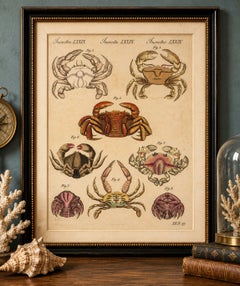
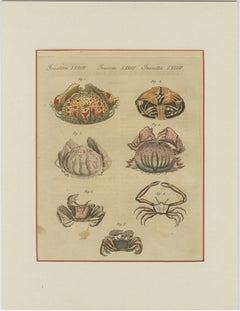
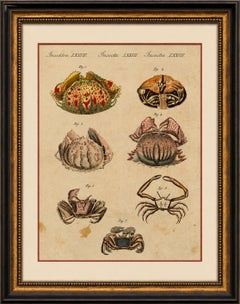
Antique Calappa Box Crabs & Exotic Crabs Engraving – Bertuch, 1813

Antique Calappa Box Crabs & Exotic Crabs Engraving – Bertuch, 1813

Located in Langweer, NL

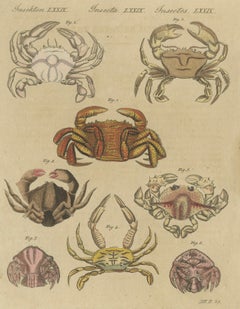
Title: Antique Calappa Box Crabs & Exotic Crabs Engraving – Bertuch, 1813 Original antique hand-colored copper engraving depicting a fascinating selection of exotic crabs, particularly Calappa or box crabs, published in Friedrich Justin Bertuch’s celebrated “Bilderbuch für Kinder” in Weimar in the early 19th century. The plate is headed “Insekten LXXVII / Insecta LXXVII / Insectes LXXVII” and is devoted to “Verschiedene Arten Calappen und Krabben” – Various Species of Calappas and Crabs. Although classified by Bertuch under the historical heading “Insects,” the animals shown are of course crustaceans according to modern zoological classification. Such broad classifications were common in natural-history publications of the period. The plate illustrates several remarkable crab forms, including: Calappa / Box Crab Several of the beautifully patterned animals belong to the genus Calappa, commonly known as box crabs, shame-faced crabs or bashful crabs. These unusual marine crabs are immediately recognizable by their broad, rounded shells and greatly enlarged flattened claws. When folded tightly against the front of the body, the claws partly conceal the crab’s face, giving rise to the charming English names “shame-faced crab” and “bashful crab.” Bertuch’s original accompanying contents identify the species represented on this plate under historical names including: Vaulted Calappa / Arched Box Crab – “Der gewölbte Calappe” Granulated Calappa – “Der körnige Calappe” Lophos Calappa – “Der Lophos-Calappe” Running Calappa – “Der laufende Calappe” Rhomboid Crab – “Die rhomboidische Krabbe” Whitish Crab – “Die weißliche Krabbe” The seven numbered illustrations show these remarkable crabs from different viewpoints, emphasizing the great variation in their shells, claws and body structures. Particularly striking are the large rounded Calappa specimens in the upper and middle part of the composition. Their shells are decorated with intricate red, pink, orange and green markings, demonstrating the elaborate original hand coloring characteristic of Bertuch’s finest natural-history plates. Box crabs are sometimes also called “shame-faced crabs” because their enormous claws can be held directly in front of the face. These powerful claws are specially adapted for breaking open mollusc shells. Friedrich Justin Bertuch (1747–1822) was a German publisher, writer and patron of the arts. His monumental “Bilderbuch für Kinder” (Picture Book for Children), first published in Weimar in 1790, became one of the great illustrated educational encyclopedias of the late 18th and early 19th centuries. Its hundreds of engraved and hand-colored plates introduced readers to animals, plants, geography, science, technology, antiquity and cultures from around the world. This is an especially decorative marine natural-history plate. The almost symmetrical arrangement of the crabs, combined with their extraordinary forms and delicate red, pink, green and ochre coloring, gives the engraving a highly appealing graphic quality. Technique: Original hand-colored copper engraving Publisher: Friedrich Justin Bertuch / Industrie-Comptoir Publication: Bilderbuch für Kinder Place: Weimar, Germany Date: early 19th century, circa 1813 Plate: Insekten LXXVII / Insecta LXXVII / Insectes LXXVII Subject: Calappa Box Crabs and Exotic Crabs Common names: Box Crab, Shame-Faced Crab, Bashful Crab, Calappa Crab Historical subjects listed by Bertuch: Vaulted Calappa Granulated Calappa Lophos Calappa Running Calappa Rhomboid Crab Whitish Crab Condition: Good antique condition with overall age-related toning, scattered foxing and spotting and some visible show-through or offsetting from printed text. A few more noticeable brown spots and stains are present in the lower half of the plate. The original hand coloring remains particularly attractive, with strong red, pink, green and ochre tones. Please study the photographs carefully as they form part of the condition description. The engraving is loosely inserted in an acid-free matting board. Please note: This is an original antique hand-colored copper engraving from the early 19th century, not a modern reproduction. The print is sold unframed. Framed images or interior views, if shown, are for presentation and inspiration only. Other companion marine-life, crustacean and natural-history plates from Bertuch’s “Bilderbuch für Kinder” are also available separately. Keywords: Friedrich Justin Bertuch, Bilderbuch für Kinder, Calappa crab, box crab, shame-faced crab, bashful crab, antique crab print...

Category

Antique Early 19th Century German Neoclassical Prints

Materials

Paper
Antique Lobster, Crab & Horseshoe Crab Engraving – Bertuch, 1792

Antique Lobster, Crab & Horseshoe Crab Engraving – Bertuch, 1792

Located in Langweer, NL

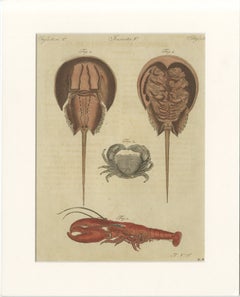
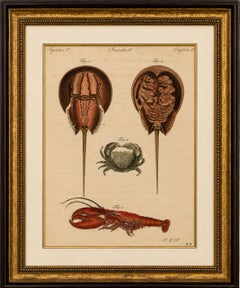
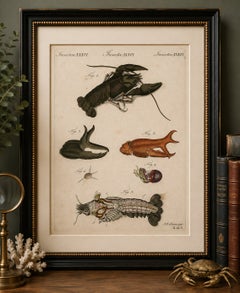
Antique Lobster, Crab & Horseshoe Crab Engraving – Bertuch, 1792 Original antique hand-colored copper engraving depicting a lobster, crab and the extraordinary Moluccan horseshoe crab, published in Friedrich Justin Bertuch’s celebrated “Bilderbuch für Kinder” in Weimar in 1792. The plate is headed “Insecten V / Insecta V” and illustrates four figures devoted to unusual marine crustaceans and the horseshoe crab. Although Bertuch placed these creatures under the historical heading “Insecten,” they are not insects according to modern zoological classification. Such broad groupings were common in 18th-century natural history, when the classification of invertebrate animals was still developing. Fig. 1 – Sea Lobster / European Lobster Historical German name: Der See-Hummer A large marine lobster shown in profile with its characteristic massive claws, long antennae and segmented body. The animal is recognizable as a lobster of the Homarus type, most closely associated with the European Lobster (Homarus gammarus), an important marine crustacean of European Atlantic waters. Fig. 2 – Crab Historical German name: Die Krabbe A compact true crab shown from above, with its broad carapace, prominent claws and multiple walking legs clearly represented. Fig. 3 & Fig. 4 – Moluccan Horseshoe Crab Historical German name: Der Molukkische Krebs These two remarkable figures show the animal now commonly known as a Horseshoe Crab. Fig. 3 presents the animal from above, displaying its extraordinary horseshoe-shaped shell and exceptionally long pointed tail spine. Fig. 4 shows the underside, revealing the complex arrangement of legs, mouthparts and other anatomical structures concealed beneath the protective shell. Despite its familiar name, the horseshoe crab is not a true crab. Horseshoe crabs belong to an ancient lineage of marine arthropods more closely related to arachnids than to lobsters and true crabs. The historical name “Moluccan Crab” or “Moluccan King Crab” reflects the association of these remarkable animals with the waters of Southeast Asia and the East Indies. The Asian horseshoe crab group includes species historically associated with the Moluccas and surrounding regions. Horseshoe crabs are among the most ancient-looking animals represented in early natural-history books. Their basic body form has an exceptionally long evolutionary history, giving them their popular reputation as “living fossils.” Friedrich Justin Bertuch (1747–1822) was a German publisher, writer and patron of the arts. His monumental “Bilderbuch für Kinder” (Picture Book for Children), first published in Weimar in 1790, became one of the great illustrated educational encyclopedias of the late 18th and early 19th centuries. Its hundreds of engraved and hand-colored plates introduced readers to animals, plants, geography, science, technology, antiquity and cultures from around the world. This particularly decorative plate combines the brilliant red-orange lobster with the almost anatomical studies of the horseshoe crab, making it an appealing example of late 18th-century marine natural-history illustration. Technique: Original hand-colored copper engraving Publisher: Friedrich Justin Bertuch / Industrie-Comptoir Publication: Bilderbuch für Kinder Place: Weimar, Germany Date: 1792 Plate: Insecten V / Insecta V Subjects: Sea Lobster, Crab and Moluccan Horseshoe Crab Historical names: Fig. 1 – Der See-Hummer Fig. 2 – Die Krabbe Fig. 3 & 4 – Der Molukkische Krebs Condition: Good antique condition with overall age-related toning and some scattered spotting and foxing. Some show-through or offsetting from text is visible in the background, together with minor marks and imperfections consistent with a print dating from 1792. The original hand coloring remains attractive, particularly the strong red-orange coloring of the lobster and warm reddish tones of the horseshoe crab. Please study the photographs carefully as they form part of the condition description. The engraving is loosely inserted in an acid-free matting board. Please note: This is an original antique hand-colored copper engraving from 1792, not a modern reproduction. The print is sold unframed. Framed images or interior views, if shown, are for presentation and inspiration only. Other companion marine-life, animal and natural-history plates from Bertuch’s “Bilderbuch für Kinder” are also available separately. Keywords: Friedrich Justin Bertuch, Bilderbuch für Kinder, lobster engraving, European lobster, Homarus gammarus, antique lobster print, crab engraving, antique crab print...

Category

Antique Late 18th Century German Neoclassical Prints

Materials

Paper
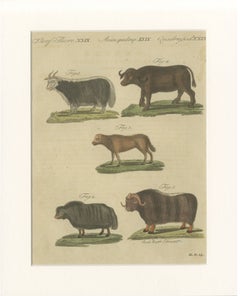
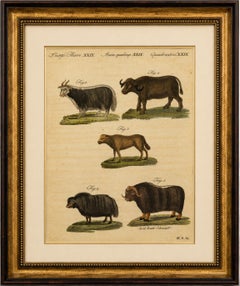
Antique Exotic Cattle, Yak & Buffalo Engraving – Bertuch, c. 1800

Antique Exotic Cattle, Yak & Buffalo Engraving – Bertuch, c. 1800

Located in Langweer, NL

Title: Antique Exotic Cattle, Yak & Buffalo Engraving – Bertuch, c.1800 Original antique hand-colored copper engraving depicting five unusual breeds and species of cattle and bovids from different parts of the world, published in Friedrich Justin Bertuch’s celebrated “Bilderbuch für Kinder” around 1800. The plate is headed “Vierfüßige Thiere XXIX / Anim. quadrup. XXIX / Quadrupèdes XXIX” and presents five striking horned and domesticated or semi-wild bovids. Fig. 1 – Yak / Grunting Ox A long-haired, horned bovine of Central Asia and the Himalayan regions, recognizable by its heavy shaggy coat, bushy tail and sweeping horns. Yaks were still highly exotic animals to European readers around 1800 and frequently appeared in early natural-history works under names such as the Grunting Ox or Tartarian Ox. Fig. 2 – Small Shaggy Cattle / Dwarf Ox Type A compact, heavily coated bovine represented with a low body and short legs. Such unusual regional cattle varieties were of considerable interest to 18th-century European naturalists, who attempted to classify both wild bovids and the many geographically distinct forms of domestic cattle. Fig. 3 – Small Wild or Dwarf Bovid A smaller brown bovine shown in profile. Its compact proportions distinguish it clearly from the larger cattle represented elsewhere on the plate. Fig. 4 – Buffalo A powerful dark buffalo distinguished by its massive body and heavy curved horns. Buffaloes were widely described in European natural-history literature as exotic relatives of domestic European cattle and were associated particularly with Asia and warmer regions of the Old World. Fig. 5 – Shaggy Yak or Musk-Ox Type An impressive long-haired horned animal with a dense dark coat, curved horns and contrasting lower legs. The image reflects the fascination of early European naturalists with heavily coated cattle and bovids from the colder regions of Asia and the far north. The plate provides an appealing glimpse into late 18th-century zoological classification. At the time, relationships between domestic cattle, buffaloes, yaks, wild oxen and other bovids were still being investigated, and historical names do not always correspond neatly with modern zoological classifications. Friedrich Justin Bertuch (1747–1822) was a German publisher, writer and patron of the arts. His monumental “Bilderbuch für Kinder” (Picture Book for Children), first published in Weimar in 1790, became one of the great illustrated educational encyclopedias of the late 18th and early 19th centuries. Its hundreds of engraved and hand-colored plates introduced readers to animals, plants, geography, science, technology, antiquity and cultures from around the world. The engraving is signed in the plate “Jacob Xaver Schmuzer.” The combination of five unusual cattle types, their contrasting horns and coats, and the restrained original hand coloring makes this an especially decorative natural-history plate for a country-house, farmhouse, library or natural-history interior. Technique: Original hand-colored copper engraving Publisher: Friedrich Justin Bertuch / Industrie-Comptoir Publication: Bilderbuch für Kinder Place: Weimar, Germany Date: circa 1800 Plate: Vierfüßige Thiere XXIX / Anim. quadrup. XXIX / Quadrupèdes XXIX Engraver: Jacob Xaver Schmuzer Subject: Exotic cattle, bovids, yak and buffalo Condition: Good antique condition with overall age-related toning, scattered foxing and spotting and some visible offsetting or show-through from printed text. Minor marks and imperfections are consistent with the age of the engraving. The original hand coloring remains attractive. Please study the photographs carefully as they form part of the condition description. The engraving is loosely inserted in an acid-free matting board. Please note: This is an original antique hand-colored copper engraving from around 1800, not a modern reproduction. The print is sold unframed. Framed images or interior views, if shown, are for presentation and inspiration only. Other companion animal and natural-history plates from Bertuch’s “Bilderbuch für Kinder” are also available separately. Keywords: Friedrich Justin Bertuch, Bilderbuch für Kinder, antique cattle print...

Category

Antique Early 19th Century German Neoclassical Prints

Materials

Paper
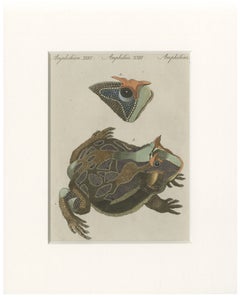
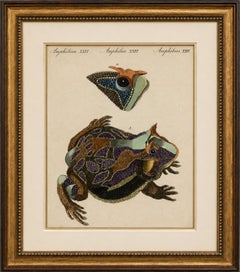
Antique South American Horned Frog Engraving – Bertuch, c. 1807

Antique South American Horned Frog Engraving – Bertuch, c. 1807

Located in Langweer, NL

Antique South American Horned Frog Engraving – Bertuch, c. 1807 Original antique hand-colored copper engraving depicting an extraordinary South American horned frog, published in Fr...

Category

Antique Late 18th Century German Neoclassical Prints

Materials

Paper
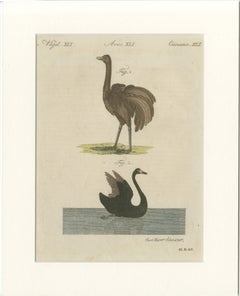
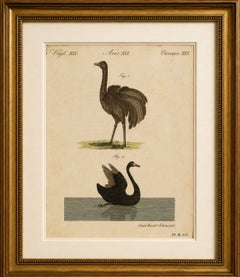
Antique Greater Rhea & Black Swan Engraving – Bertuch, 1798

Antique Greater Rhea & Black Swan Engraving – Bertuch, 1798

Located in Langweer, NL

Antique Greater Rhea & Black Swan Engraving – Bertuch, 1798 Original antique hand-colored copper engraving depicting the Greater Rhea of South America and the Black Swan of Aust...
Category

Antique Late 18th Century German Neoclassical Prints

Materials

Paper
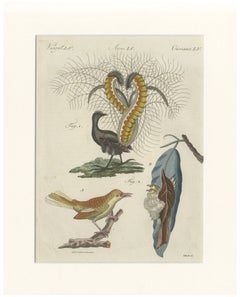
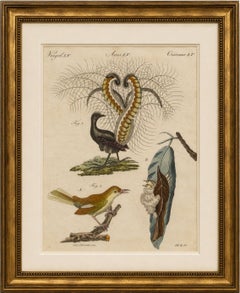
Antique Lyrebird & Tailorbird Engraving – Bertuch, 1796

Antique Lyrebird & Tailorbird Engraving – Bertuch, 1796

Located in Langweer, NL

Title: Antique Lyrebird & Tailorbird Engraving – Bertuch, 1796 Original antique hand-colored copper engraving depicting the Superb Lyrebird and the Common Tailorbird, published in F...

Category

Antique Late 18th Century German Neoclassical Prints

Materials

Paper
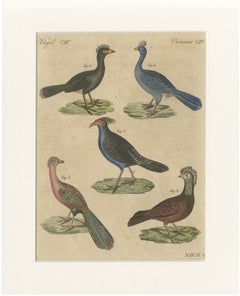
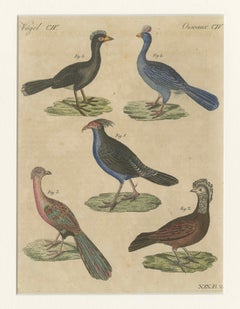
Antique Hand-Colored Crested Birds Engraving – Bertuch, c. 1800

Antique Hand-Colored Crested Birds Engraving – Bertuch, c. 1800

Located in Langweer, NL

Title: Antique Hand-Colored Crested Birds Engraving – Bertuch, c. 1800 Original antique hand-colored copper engraving depicting five remarkable crested and ornamental birds, publish...

Category

Antique Early 19th Century German Neoclassical Prints

Materials

Paper
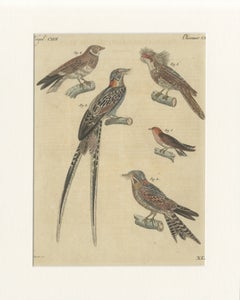
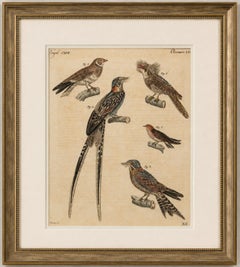
Antique Hand-Colored Bird Engraving – Swallow & Nightjars – Bertuch, c.1800

Antique Hand-Colored Bird Engraving – Swallow & Nightjars – Bertuch, c.1800

Located in Langweer, NL

Title: Antique Hand-Colored Bird Engraving – Swallow & Nightjars – Bertuch, c. 1800 Original antique hand-colored copper engraving depicting five swallow- and nightjar-type birds, p...

Category

Antique Early 19th Century German Neoclassical Prints

Materials

Paper
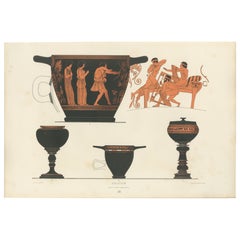
Antique Greek Lekythos with Classical Figures Color Lithograph, 1883

Antique Greek Lekythos with Classical Figures Color Lithograph, 1883

Located in Langweer, NL

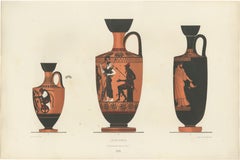
Antique Greek Lekythos with Classical Figures Color Lithograph, 1883 Original antique color lithograph depicting three ancient Greek lekythoi decorated...

Category

Antique Late 19th Century German Neoclassical Prints

Materials

Paper
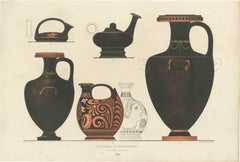
Antique Greek Bottles & Jugs with Classical Figures Lithograph, 1883

Antique Greek Bottles & Jugs with Classical Figures Lithograph, 1883

Located in Langweer, NL

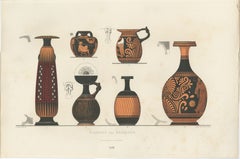
Antique Greek Bottles & Jugs with Classical Figures Lithograph, 1883 Original antique color lithograph depicting a varied collection of ancient Greek bottles and small jugs decorated with classical figures, geometric patterns and elaborate vegetal ornament, published in Berlin in 1883 as part of Albert Genick’s monumental work on Greek ceramics. This impressive landscape-format archaeological plate is titled “Flaschen und Kännchen” and presents six different examples of ancient Greek bottles, jugs and related vessels, accompanied by technical studies of their construction and decorative details. The tall, slender vessel at left has an especially elegant architectural form. Its elongated body is decorated with vertical fluting, geometric borders and a prominent Greek-key meander pattern in black, terracotta, cream and muted red. The large bottle at right is the most decorative vessel on the plate. Its broad body is covered with luxuriant scrolling palmette and vegetal ornament, while a standing draped classical figure occupies the right side of the composition. The restrained black-and-terracotta palette gives the vessel particularly strong graphic impact. Several smaller vessels occupy the center of the plate. These include a small figural vessel with a seated classical figure, a richly ornamented jug with scrolling decoration, a dark ribbed vessel and an elegant bottle decorated with a geometric lattice pattern. Genick supplements the vessels with precise archaeological line drawings documenting details of their rims, handles and construction. These technical studies emphasize the scholarly character of the publication while adding further visual interest to the composition. The combination of six contrasting vessel forms, classical figural imagery, Greek-key decoration and elaborate palmettes makes this an attractive survey of ancient Greek ceramic design. The print originates from the second edition of Albert Genick’s important publication on Greek ceramics, published by Ernst Wasmuth in Berlin in 1883. The complete work comprised 36 color lithographic plates, including four double-page plates, illustrating amphorae, kraters, hydriae, kantharoi, kylikes, jugs, bottles, bowls, rhyta and other examples of ancient Greek ceramic art. The lithographs were produced by the Berlin printing establishment Hein & Mosler. Albert Genick (1837–1906), a Berlin-trained architect, became particularly known for his precise graphic documentation of ancient ceramics. This publication is regarded as his principal work. Complete examples are rare, and individual plates from the series are increasingly difficult to find. Creator: Albert Genick (1837–1906) Publisher: Ernst Wasmuth, Berlin Printer: Hein & Mosler, Berlin Plate: XXXVII Title on plate: Flaschen und Kännchen Date: 1883 Edition: Second edition Technique: Color lithograph Origin: Germany Sheet size: Approximately 46 x 68 cm (18.1 x 26.8 inches) Orientation: Landscape Period: Late 19th Century Style: Neoclassical / Archaeological Revival Condition: Good antique condition. The black, terracotta, cream and muted-red coloring remains strong and well preserved. Age-related toning with scattered foxing and spotting, more noticeable in the lower and right portions of the sheet. Minor edge wear and slight irregularities consistent with age. Please study the photographs carefully as they form part of the condition description. An original antique lithograph printed in 1883, not a modern reproduction. The print is offered unframed. Any framed or interior images, if shown, are for presentation and inspiration only. Additional companion plates from Albert Genick’s series are available separately. Reference: Brand/Evers 597. Keywords: Albert Genick, Greek bottles, Greek jugs...

Category

Antique Late 19th Century German Neoclassical Prints

Materials

Paper
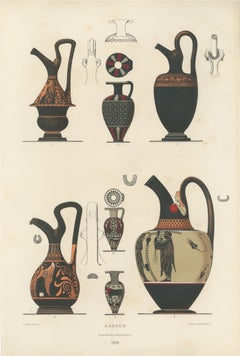
Antique Greek Jugs with Classical & Winged Figures Lithograph, 1883

Antique Greek Jugs with Classical & Winged Figures Lithograph, 1883

Located in Langweer, NL

Antique Greek Jugs with Classical & Winged Figures Lithograph, 1883 Original antique color lithograph depicting a remarkable collection of ancient Greek jugs and pouring vessels dec...

Category

Antique Late 19th Century German Neoclassical Prints

Materials

Paper
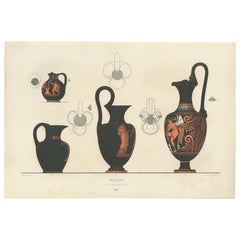
Antique Greek Jugs with Classical Figures Color Lithograph, 1883

Antique Greek Jugs with Classical Figures Color Lithograph, 1883

Located in Langweer, NL

Antique Greek Jugs with Classical Figures Color Lithograph, 1883 Original antique color lithograph depicting four ancient Greek jugs and pouring vessels decorated with classical fig...

Category

Antique Late 19th Century German Neoclassical Prints

Materials

Paper

Antique Greek Hydriae & Pouring Vessels Color Lithograph, 1883

Antique Greek Hydriae & Pouring Vessels Color Lithograph, 1883

Located in Langweer, NL

Antique Greek Hydriae & Pouring Vessels Color Lithograph, 1883 Original antique color lithograph depicting a varied collection of ancient Greek hydriae and pouring vessels, publishe...

Category

Antique Late 19th Century German Neoclassical Prints

Materials

Paper

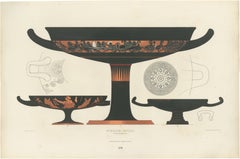
Antique Greek Kylix with Chariot & Warrior Procession Lithograph, 1883

Antique Greek Kylix with Chariot & Warrior Procession Lithograph, 1883

Located in Langweer, NL

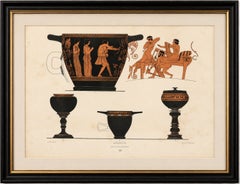
Antique Greek Kylix with Chariot & Warrior Procession Lithograph, 1883 Original antique color lithograph depicting three ancient Greek kylikes, including a monumental drinking cup decorated with an extensive chariot and warrior procession, published in Berlin in 1883 as part of Albert Genick’s important work on Greek ceramics. This impressive landscape-format archaeological plate is titled “Schalen (Kylix.) – Museum Berlin” and presents three examples of the kylix, the characteristic shallow, stemmed drinking cup of ancient Greece. Dominating the composition is a spectacular large kylix with an exceptionally broad, shallow bowl raised on a tall central stem. A continuous narrative frieze runs around the exterior, populated by numerous warriors, horses and chariots. The densely arranged figures create a dramatic procession across the terracotta-red field, contrasting strongly with the predominantly black body of the vessel. The tall stem is decorated with radiating terracotta ornament and terminates in a broad foot, emphasizing the monumental proportions of the cup. Below are two additional kylikes of contrasting form. The example at lower left carries a red-figure scene with several classical figures arranged around the shallow bowl, while the vessel at lower right is presented primarily for its elegant silhouette and construction. Genick supplements the vessels with precise archaeological studies, including detailed drawings of the handles and a circular ornamental design associated with the pottery. These technical drawings emphasize the scholarly archaeological purpose of the original publication. The combination of monumental scale, chariot imagery, warriors and elegant vessel forms makes this one of the particularly striking kylix plates from the series. The inscription “Museum Berlin” on the plate records the museum association of the illustrated material at the time of publication. The print originates from the second edition of Albert Genick’s important publication on Greek ceramics, published by Ernst Wasmuth in Berlin in 1883. The complete work comprised 36 color lithographic plates, including four double-page plates, illustrating amphorae, kraters, kantharoi, kylikes, bowls, rhyta and other examples of ancient Greek ceramic art. The lithographs were produced by the Berlin printing establishment Hein & Mosler. Albert Genick (1837–1906), a Berlin-trained architect, became particularly known for his precise graphic documentation of ancient ceramics. This publication is regarded as his principal work. Complete examples are rare, and individual plates from the series are increasingly difficult to find. Creator: Albert Genick (1837–1906) Publisher: Ernst Wasmuth, Berlin Printer: Hein & Mosler, Berlin Plate: XXVIII Title on plate: Schalen (Kylix.) – Museum Berlin Date: 1883 Edition: Second edition Technique: Color lithograph Origin: Germany Sheet size: Approximately 46 x 68 cm (18.1 x 26.8 inches) Orientation: Landscape Period: Late 19th Century Style: Neoclassical / Archaeological Revival Condition: Very good antique condition. Strong black and terracotta coloring with the detailed chariot, horse and warrior imagery remaining well preserved. Light age-related toning with scattered minor foxing and spotting, principally visible in the surrounding background and margins. Minor wear and slight irregularity along the sheet edges consistent with age. Please study the photographs carefully as they form part of the condition description. An original antique lithograph printed in 1883, not a modern reproduction. The print is offered unframed. Any framed or interior images, if shown, are for presentation and inspiration only. Additional companion plates from Albert Genick’s series are available separately. Keywords: Albert Genick, Greek kylix, ancient Greek kylix, Greek drinking cup...

Category

Antique Late 19th Century German Neoclassical Prints

Materials

Paper

Antique Greek Kylix, Bowls & Warriors Color Lithograph, 1883

Antique Greek Kylix, Bowls & Warriors Color Lithograph, 1883

Located in Langweer, NL

Antique Greek Kylix, Bowls & Warriors Color Lithograph, 1883 Original antique color lithograph depicting a collection of ancient Greek kylikes, bowls and covered vessels, published ...

Category

Antique Late 19th Century German Neoclassical Prints

Materials

Paper

Antique Greek Drinking Vessels & Cups Color Lithograph, 1883

Antique Greek Drinking Vessels & Cups Color Lithograph, 1883

Located in Langweer, NL

Antique Greek Drinking Vessels & Cups Color Lithograph, 1883 Original antique color lithograph depicting a varied collection of ancient Greek drinking vessels and a ladle, published...

Category

Antique Late 19th Century German Neoclassical Prints

Materials

Paper

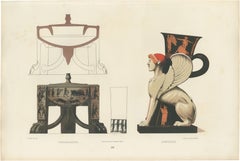
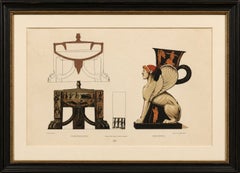
Antique Greek Sphinx & Ceremonial Vessels Color Lithograph, 1883

Antique Greek Sphinx & Ceremonial Vessels Color Lithograph, 1883

Located in Langweer, NL

Antique Greek Sphinx-Shaped Vessel & Pottery Lithograph, 1883 Original antique color lithograph depicting two remarkable examples of ancient Greek ceramic art, including an extraord...

Category

Antique Late 19th Century German Neoclassical Prints

Materials

Paper

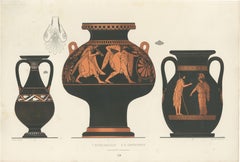
Antique Greek Vases, Cooling Vessel & Amphorae Lithograph, 1883

Antique Greek Vases, Cooling Vessel & Amphorae Lithograph, 1883

Located in Langweer, NL

Antique Greek Vases, Cooling Vessel & Amphorae Lithograph, 1883 Original antique color lithograph depicting three examples of ancient Greek ceramics—a large cooling vessel and two a...

Category

Antique Late 19th Century German Neoclassical Prints

Materials

Paper

Antique Greek Krater & Rhyton Drinking Horns Color Lithograph, 1883

Antique Greek Krater & Rhyton Drinking Horns Color Lithograph, 1883

Located in Langweer, NL

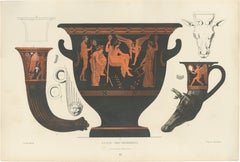
Antique Greek Krater & Rhyton Drinking Horns Color Lithograph, 1883 Original antique color lithograph depicting an ancient Greek krater together with two remarkable drinking horns o...

Category

Antique Late 19th Century German Neoclassical Prints

Materials

Paper

Antique Greek Kraters & Classical Figures Color Lithograph, 1883

Antique Greek Kraters & Classical Figures Color Lithograph, 1883

Located in Langweer, NL

Antique Greek Lidded Amphora with Classical Figures Lithograph, 1883 Original antique color lithograph depicting an elaborate ancient Greek lidded amphora with classical figures and...

Category

Antique Late 19th Century German Neoclassical Prints

Materials

Paper

Antique Greek Lidded Amphora with Classical Figures Lithograph, 1883

Antique Greek Lidded Amphora with Classical Figures Lithograph, 1883

Located in Langweer, NL

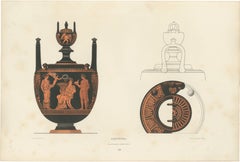
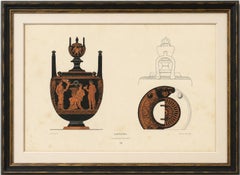
Antique Greek Lidded Amphora with Classical Figures Lithograph, 1883 Original antique color lithograph depicting an elaborate ancient Greek lidded amphora with classical figures and...

Category

Antique Late 19th Century German Neoclassical Prints

Materials

Paper

Antique Greek Amphorae with Classical Figures Double-Page Lithograph, 1883

Antique Greek Amphorae with Classical Figures Double-Page Lithograph, 1883

Located in Langweer, NL

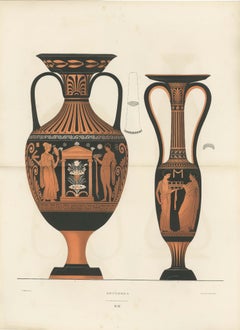
Antique Greek Amphorae with Classical Figures Double-Page Lithograph, 1883 Original antique color lithograph depicting two elaborately decorated ancient Greek amphorae, published in...

Category

Antique Late 19th Century German Neoclassical Prints

Materials

Paper

Large Antique Greek Amphora Chromolithograph, Genick, 1883

Large Antique Greek Amphora Chromolithograph, Genick, 1883

Located in Langweer, NL

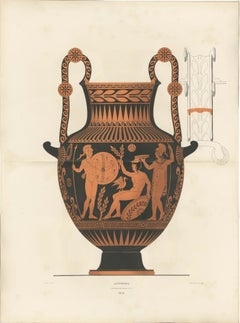
Large Antique Greek Amphora Chromolithograph, Genick, 1883 Original antique color lithograph depicting an elaborately decorated ancient Greek amphora with a classical warrior scene,...

Category

Antique Late 19th Century German Neoclassical Prints

Materials

Paper

Antique Greek Amphorae with Mythological Figures Color Lithograph, 1883

Antique Greek Amphorae with Mythological Figures Color Lithograph, 1883

Located in Langweer, NL

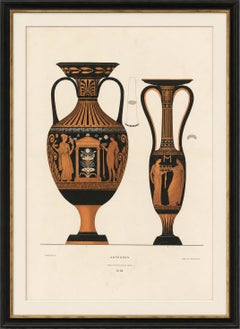
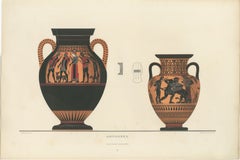
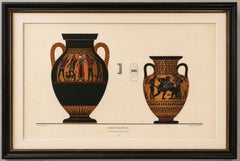
Antique Greek Amphorae with Mythological Figures Color Lithograph, 1883 Original antique color lithograph depicting two richly decorated ancient Greek amphorae, published in Berlin in 1883 as part of Albert Genick’s monumental work on Greek ceramics. This impressive landscape-format plate presents two contrasting examples of ancient Greek pottery, both extensively decorated with figural and ornamental scenes. The larger amphora on the left is distinguished by its patterned terracotta handles and broad narrative frieze. A group of standing figures in elaborate dress occupies the principal scene, accompanied by animals including dogs. The figures are rendered in black, terracotta and deep red, creating an unusually rich and decorative composition. Geometric and ornamental borders surround the scene, while radiating decoration emphasizes the lower section of the vessel. The smaller amphora on the right is equally striking. Its principal scene depicts a dramatic mythological encounter between several figures, including a central hybrid or animal-bodied figure. The scene is surrounded by scrolling vegetal ornament, palmettes, geometric bands and a Greek-key meander. A richly patterned palmette frieze decorates the neck. Between the two vessels are small archaeological drawings recording details of their construction and decoration. The strong black, terracotta and deep-red palette, combined with the abundance of classical figures and ornament, makes this one of the particularly decorative plates from Genick’s series. Its horizontal format also lends itself especially well to display above a console, desk or fireplace. The print originates from the second edition of Albert Genick’s important publication on Greek ceramics, published by Ernst Wasmuth in Berlin in 1883. The complete work comprised 36 large color lithographic plates, including four double-page plates, illustrating amphorae, vases, bowls and other examples of ancient Greek ceramic art. The lithographs were produced by the Berlin printing establishment Hein & Mosler. Albert Genick (1837–1906), a Berlin-trained architect, became particularly known for his precise graphic documentation of ancient ceramics. This publication is regarded as his principal work. Complete examples are rare, and individual plates from the series are increasingly difficult to find. Creator: Albert Genick (1837–1906) Publisher: Ernst Wasmuth, Berlin Printer: Hein & Mosler, Berlin Plate: V Date: 1883 Edition: Second edition Technique: Color lithograph Origin: Germany Sheet size: Approximately 46 x 68 cm (18.1 x 26.8 inches) Orientation: Landscape Period: Late 19th Century Style: Neoclassical / Archaeological Revival Condition: Very good antique condition. Strong black, terracotta and deep-red coloring with the details of the vessels remaining well preserved. Light age-related toning with scattered minor foxing and spotting, principally in the background and margins. Minor wear and slight irregularity along the sheet edges consistent with age. Please study the photographs carefully as they form part of the condition description. An original antique lithograph printed in 1883, not a modern reproduction. The print is offered unframed. Any framed or interior images, if shown, are for presentation and inspiration only. Additional companion plates from Albert Genick’s series are available separately. Keywords: Albert Genick, Greek amphorae, Greek amphora, ancient Greek pottery, Greek ceramics, Greek vases, mythological figures, Greek mythology, amphora print, classical pottery, archaeological print, ancient Greece, Greek art, classical figures, figural vase, classical antiquity, Greek key, Greek meander, palmette ornament, black figure pottery...

Category

Antique Late 19th Century German Neoclassical Prints

Materials

Paper

Antique Greek Amphorae Classical Pottery Color Lithograph, 1883

Antique Greek Amphorae Classical Pottery Color Lithograph, 1883

Located in Langweer, NL

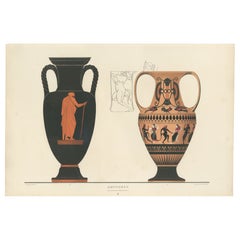
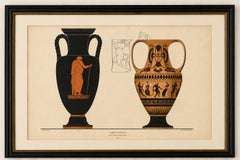
Antique Greek Amphorae Classical Pottery Color Lithograph, 1883 Original antique color lithograph depicting two ancient Greek amphorae, published in Berlin in 1883 as part of Albert Genick’s monumental work on Greek ceramics. This impressive landscape-format plate presents two contrasting examples of ancient Greek amphorae. The vessel on the left has a predominantly black body with twisted handles and a single standing draped male figure rendered in terracotta red. He holds a long staff and stands above a traditional Greek-key meander border. The more elaborate amphora on the right is richly decorated with black, terracotta and additional colored details. Its central frieze contains a lively procession or group of figures, surrounded by multiple ornamental bands. The neck carries a large symmetrical palmette motif, while birds and further decorative elements appear around the shoulder of the vessel. Two smaller archaeological line drawings between and above the amphorae record details associated with the pottery decoration. The juxtaposition of the restrained black amphora with the richly ornamented second vessel makes this a particularly attractive and visually varied plate from the series. Its horizontal format also makes it especially suitable for display above a console, desk or fireplace. The print originates from the second edition of Albert Genick’s important publication on Greek ceramics, published by Ernst Wasmuth in Berlin in 1883. The complete work comprised 36 large color lithographic plates, including four double-page plates, illustrating amphorae, vases, bowls and other examples of ancient Greek ceramic art. The lithographs were produced by the Berlin printing establishment Hein & Mosler. Albert Genick (1837–1906), a Berlin-trained architect, became particularly known for his precise graphic documentation of ancient ceramics. This publication is regarded as his principal work. Complete examples are rare, and individual plates from the series are increasingly difficult to find. Creator: Albert Genick (1837–1906) Publisher: Ernst Wasmuth, Berlin Printer: Hein & Mosler, Berlin Plate: IV Date: 1883 Edition: Second edition Technique: Color lithograph Origin: Germany Sheet size: Approximately 46 x 68 cm (18.1 x 26.8 inches) Orientation: Landscape Period: Late 19th Century Style: Neoclassical / Archaeological Revival Condition: Very good antique condition. Strong black and terracotta coloring with the additional colors of the decorated amphora remaining well preserved. Light age-related toning with scattered minor foxing and spotting, principally in the surrounding background and margins. Minor edge wear consistent with age. Please study the photographs carefully as they form part of the condition description. An original antique lithograph printed in 1883, not a modern reproduction. The print is offered unframed. Any framed or interior images, if shown, are for presentation and inspiration only. Additional companion plates from Albert Genick’s series are available separately. Keywords: Albert Genick, Greek amphorae, Greek amphora, ancient Greek pottery, Greek ceramics, Greek vases, amphora print, classical pottery, archaeological print, ancient Greece, Greek art, Greek figures, classical antiquity, Greek key, Greek meander, palmette ornament, black figure pottery...

Category

Antique Late 19th Century German Neoclassical Prints

Materials

Paper

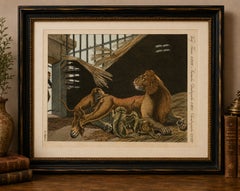
Original Antique Print of a Lioness and Her Cubs by Bertuch, 1810

Original Antique Print of a Lioness and Her Cubs by Bertuch, 1810

Located in Langweer, NL

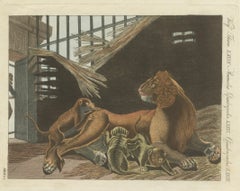
Original Antique Print of a Lioness and Her Cubs by Bertuch, 1810 The composition shows a large reclining lioness surrounded by several playful cubs inside a rustic animal enclosure...

Category

Antique Early 19th Century German Neoclassical Prints

Materials

Paper

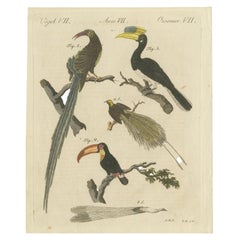
Original Antique Print of Toucan, Hornbill and Birds of Paradise, 1790

Original Antique Print of Toucan, Hornbill and Birds of Paradise, 1790

Located in Langweer, NL

Original Antique Print of Toucan, Hornbill and Birds of Paradise by Bertuch, c.1790 Original antique hand-colored copper engraving depicting four spectacular exotic birds, published in Friedrich Justin Bertuch’s celebrated “Bilderbuch für Kinder” around the end of the 18th century. The plate is titled “Vögel VII / Aves VII / Oiseaux VII” and bears the reference “I.B.42” at lower right. It presents a remarkable selection of tropical birds distinguished by their extravagant bills, brilliant plumage and exceptionally long tail feathers. Fig. 1 depicts a bird of paradise, shown with an extraordinary cascade of fine, elongated ornamental feathers. Birds of paradise were among the most celebrated exotic birds encountered by European naturalists and collectors, admired particularly for the elaborate plumage of the males. Fig. 2 shows a spectacular long-tailed tropical bird with dark plumage, green details around the head and an exceptionally long blue-green tail extending almost the entire height of the plate. Fig. 3 depicts a large hornbill, immediately recognizable by its enormous yellow bill and prominent casque above the upper mandible. The bird is represented with predominantly black plumage contrasting against the white underside and brightly colored bill. Fig. 4 shows a toucan perched on a branch. Its oversized orange-red bill, yellow throat and dark body create one of the strongest color contrasts in the composition. A separate study of elongated feathers appears at the bottom of the plate, further emphasizing the extraordinary plumage of the exotic birds represented. The engraving is enhanced with original hand coloring in black, green, blue, yellow, orange and red. The combination of a toucan, hornbill, bird of paradise and spectacular long-tailed bird makes this one of the more decorative ornithological plates from Bertuch’s natural-history series. Friedrich Justin Bertuch (1747–1822) was a German publisher, writer and patron of the arts. His monumental “Bilderbuch für Kinder” (Picture Book for Children), first published in Weimar in 1790, became one of the great illustrated educational encyclopedias of the late 18th and early 19th centuries. Its hundreds of engraved and hand-colored plates introduced readers to animals, plants, geography, science, technology, antiquity and cultures from around the world. Creator: Friedrich Justin Bertuch (1747–1822) Source: Bilderbuch für Kinder Plate: Vögel VII / Aves VII / Oiseaux VII Reference: I.B.42 Subjects: Bird of Paradise Long-Tailed Tropical Bird Hornbill Toucan Place of Publication: Weimar, Germany Date of Manufacture: Circa 1790 Period: Late 18th Century Style: Neoclassical – In the Period of Medium: Original hand-colored copper engraving on paper Condition: Good. Wear consistent with age and use. General age-related toning with scattered foxing, spotting and minor marks. Some marginal wear and small edge irregularities are visible, consistent with age. Original hand coloring remains attractive, particularly the blue, green, yellow and orange details. Please refer to the photographs for further details of condition. Please note: This is an original antique engraving from the late 18th century, not a modern reproduction. The print is sold unframed. Framed images or interior views, if shown, are for presentation and inspiration only. Other companion bird and natural-history plates from Bertuch’s “Bilderbuch für Kinder” are also available separately. Keywords: antique bird print, toucan print...

Category

Antique Late 18th Century German Neoclassical Prints

Materials

Paper

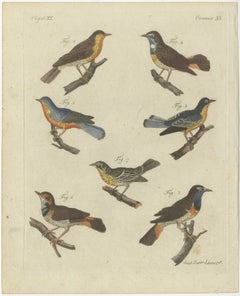
Original Antique Print of Seven Robins, Bluethroats and Yellowthroats, 1796

Original Antique Print of Seven Robins, Bluethroats and Yellowthroats, 1796

Located in Langweer, NL

Original Antique Print of Seven Robins, Bluethroats and Yellowthroats by Bertuch, 1796 Original antique hand-colored copper engraving depicting seven beautifully colored robins, blu...

Category

Antique Late 18th Century German Neoclassical Prints

Materials

Paper

Original Antique Print of Exotic Moths and Butterflies by Bertuch, c. 1820

Original Antique Print of Exotic Moths and Butterflies by Bertuch, c. 1820

Located in Langweer, NL

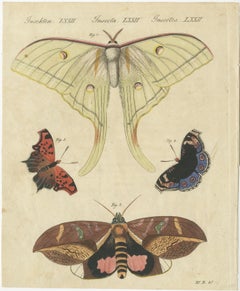
Original Antique Print of Exotic Moths and Butterflies by Bertuch, c.1820 Original antique hand-colored engraving depicting four spectacular moths and butterflies, published in Friedrich Justin Bertuch’s celebrated “Bilderbuch für Kinder” during the early 19th century. The plate is titled “Insecten LXXXI / Insecta LXXXI / Insectes LXXXI” and bears the reference “XV.B.45” at lower right. Dominating the composition is Fig. 1, an extraordinary large pale yellow-green silk moth with exceptionally long, elegant tails extending from the hindwings. Delicate linear markings, circular eyespots and subtle red accents give the insect an almost ethereal appearance. Fig. 2 depicts another impressive large moth with broad brown forewings and richly patterned hindwings in black, pink and cream. Its strongly striped abdomen and unusual green markings add to the exotic character of the specimen. Figs. 3 and 4 illustrate two smaller but vividly colored butterflies. Fig. 3 combines brilliant red-orange wings with dramatic black markings, while Fig. 4 is predominantly black with a striking border of blue, orange and cream eyespots. The considerable difference in scale between the enormous long-tailed moth and the smaller butterflies creates a particularly effective composition. The restrained pale coloring of the upper specimen contrasts beautifully with the intense red, blue, black and pink of the insects below. The engraving is enhanced with original hand coloring and is a fine example of the fascination with exotic Lepidoptera in European natural-history publications of the early 19th century. Friedrich Justin Bertuch (1747–1822) was a German publisher, writer and patron of the arts. His monumental “Bilderbuch für Kinder” (Picture Book for Children) was one of the most ambitious illustrated educational encyclopedias of its period. Published in Weimar from 1790 onward, it contained hundreds of engraved and hand-colored plates devoted to zoology, botany, geography, science, technology, antiquity and numerous other subjects. Creator: Friedrich Justin Bertuch (1747–1822) Source: Bilderbuch für Kinder Plate: Insecten LXXXI / Insecta LXXXI / Insectes LXXXI Reference: XV.B.45 Subject: Exotic Moths and Butterflies Place of Publication: Weimar, Germany Date of Manufacture: Circa 1820 Period: Early 19th Century Style: Neoclassical – In the Period of Medium: Original hand-colored engraving on paper Condition: Good. Wear consistent with age and use. General age-related toning with scattered foxing, spotting and minor marks. Some discoloration and handling wear are visible. Minor marginal wear and edge irregularities, particularly along the right edge. Original hand coloring remains strong and attractive. Please refer to the photographs for further details of condition. Please note: This is an original antique engraving from the early 19th century, not a modern reproduction. The print is sold unframed. Framed images or interior views, if shown, are for presentation and inspiration only. Other companion butterfly, moth and natural-history plates from Bertuch’s “Bilderbuch für Kinder” are also available separately. Keywords: antique moth...

Category

Antique Early 19th Century German Neoclassical Prints

Materials

Paper

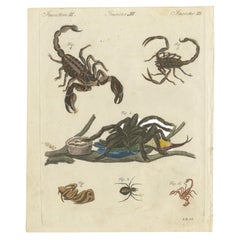
Original Antique Print of Tarantula, Spiders and Scorpions by Bertuch, c. 1790

Original Antique Print of Tarantula, Spiders and Scorpions by Bertuch, c. 1790

Located in Langweer, NL

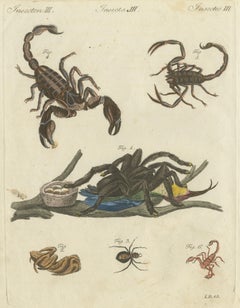
Original Antique Print of Tarantula, Spiders and Scorpions by Bertuch, c. 1790 Original antique hand-colored copper engraving depicting a remarkable group of spiders and scorpions, ...

Category

Antique Late 18th Century German Neoclassical Prints

Materials

Paper

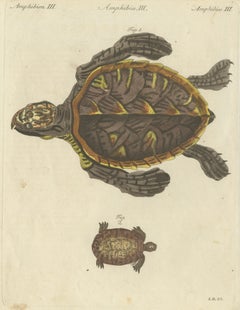
Original Antique Print of Sea Turtle and Freshwater Turtle by Bertuch, c. 1790

Original Antique Print of Sea Turtle and Freshwater Turtle by Bertuch, c. 1790

Located in Langweer, NL

Original Antique Print of Sea Turtle and Freshwater Turtle by Bertuch, c. 1790 Original antique hand-colored copper engraving depicting two turtles, published in Friedrich Justin Bertuch’s celebrated “Bilderbuch für Kinder” around the end of the 18th century. The plate is titled “Amphibien III / Amphibia III / Amphibiae III” and bears the reference “I.B.25” at lower right. It belongs to Bertuch’s early natural-history series devoted to animals historically classified as amphibians, a category that at the time also encompassed reptiles such as turtles. Fig. 1 is dominated by a large marine turtle shown from below, providing an unusually detailed view of the plastron, head and powerful paddle-like limbs. The animal is depicted at impressive scale and occupies most of the sheet. The dark brown and black body is enlivened by warm yellow and ochre details around the shell and underside. Fig. 2 shows a much smaller freshwater or terrestrial turtle viewed from above, allowing the patterned carapace and contrasting body structure to be compared directly with the much larger marine specimen. The juxtaposition of the two animals reflects Bertuch’s educational approach, presenting related species in comparative form and emphasizing differences in their anatomy and adaptation to different environments. The engraving is enhanced with original hand coloring in shades of brown, black, ochre and yellow. The exceptionally large sea turtle gives the composition considerable visual impact and makes this a particularly attractive example of early reptile and marine-life illustration. Friedrich Justin Bertuch (1747–1822) was a German publisher, writer and patron of the arts. His monumental “Bilderbuch für Kinder” (Picture Book for Children) was one of the great illustrated educational encyclopedias of the late 18th and early 19th centuries. Published in Weimar from 1790 onward, the work contained hundreds of finely engraved and hand-colored plates devoted to zoology, botany, geography, science, technology, antiquity and numerous other subjects. Creator: Friedrich Justin Bertuch (1747–1822) Source: Bilderbuch für Kinder Plate: Amphibien III / Amphibia III / Amphibiae III Reference: I.B.25 Subject: Sea Turtle and Freshwater Turtle Place of Publication: Weimar, Germany Date of Manufacture: Circa 1790 Period: Late 18th Century Style: Neoclassical – In the Period of Medium: Original hand-colored copper engraving on paper Condition: Good. Wear consistent with age and use. General age-related toning with scattered foxing, spotting and minor marks. Some marginal wear and small edge irregularities, including minor loss at the upper right edge. Original hand coloring remains strong and attractive. Please refer to the photographs for further details of condition. Please note: This is an original antique engraving from the late 18th century, not a modern reproduction. The print is sold unframed. Framed and interior images, if shown, are for presentation and inspiration only. Other companion zoological, marine-life and natural-history plates from Bertuch’s “Bilderbuch für Kinder” are available separately. Keywords: antique turtle print, sea turtle print, marine turtle, freshwater turtle, turtle engraving, antique reptile print...

Category

Antique Late 18th Century German Neoclassical Prints

Materials

Paper

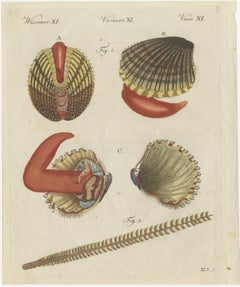
Original Antique Natural History Print of Shipworm and Sea Pen by Bertuch, 1800

Original Antique Natural History Print of Shipworm and Sea Pen by Bertuch, 1800

Located in Langweer, NL

Original Antique Natural History Print of Shipworm and Sea Pen by Bertuch, c. 1800 Original antique hand-colored copper engraving depicting two remarkable marine invertebrates, publ...

Category

Antique Early 19th Century German Neoclassical Prints

Materials

Paper

Original Antique Print of Four Corals by Bertuch, c. 1790

Original Antique Print of Four Corals by Bertuch, c. 1790

Located in Langweer, NL

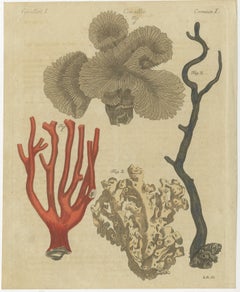
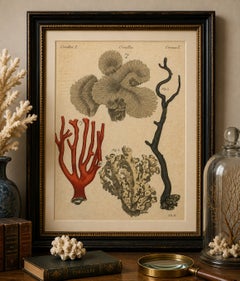
Original Antique Print of Four Corals by Bertuch, c. 1790 Original antique hand-colored copper engraving depicting four remarkable varieties of coral and marine growth, published in Friedrich Justin Bertuch’s celebrated “Bilderbuch für Kinder” around the end of the 18th century. The plate is titled “Corallen I / Corallia / Coraux I” and bears the reference “I.B.21” at lower right. It belongs to Bertuch’s early natural-history series illustrating the extraordinary diversity of marine organisms then collectively described as corals. Four dramatically different specimens are arranged across the sheet. Fig. 1 depicts a branching red coral with multiple upright stems. Its vivid original red coloring makes it the strongest color accent in the composition and recalls the precious red corals that had long been collected in the Mediterranean and used for jewelry and decorative objects. Fig. 2 shows a tall, dark branching form with an elegant tree-like structure, representative of the flexible horn-like corals historically grouped among the gorgonians. Fig. 3 illustrates a large irregular, porous coral formation, rendered in pale ochre and gray tones. Its complex surface and numerous cavities emphasize the extraordinary structural variety encountered in coral colonies. Fig. 4 dominates the upper part of the plate and is perhaps the most visually striking specimen. Its broad, deeply folded and radiating surfaces create an almost flower-like or sculptural appearance, demonstrating why corals occupied such a fascinating position between the botanical and zoological worlds in early natural-history classification. During the 18th century, the classification and biological nature of corals remained an important subject of scientific investigation. Earlier naturalists had frequently compared them with plants or mineral formations, while increasingly detailed observation established their animal nature. The terminology and organization of early coral collections therefore provide a fascinating insight into the development of marine zoology. The engraving combines finely engraved scientific detail with restrained original hand coloring in red, ochre, gray and black. Its large sculptural forms and spacious composition give the plate considerable decorative appeal in both traditional natural-history collections and contemporary coastal interiors. Friedrich Justin Bertuch (1747–1822) was a German publisher, writer and patron of the arts. His monumental “Bilderbuch für Kinder” was one of the great illustrated educational encyclopedias of the late 18th and early 19th centuries, covering zoology, botany, geography, science, technology, antiquity and numerous other subjects. Creator: Friedrich Justin Bertuch (1747–1822) Source: Bilderbuch für Kinder Plate: Corallen I / Corallia / Coraux I Reference: I.B.21 Subject: Four Corals and Marine Organisms Place of Publication: Weimar, Germany Date of Manufacture: Circa 1790 Period: Late 18th Century Style: Neoclassical – In the Period of Medium: Original hand-colored copper engraving on paper Condition: Good. Wear consistent with age and use. General age-related toning with scattered foxing, spotting and minor marks. Some discoloration and handling wear are visible, consistent with the age of the sheet. Original hand coloring remains attractive, particularly the strong red coloring of Fig. 1. Please refer to the photographs for further details of condition. Please note: This is an original antique engraving from the late 18th century, not a modern reproduction. The print is sold unframed. Framed images or interior views, if shown, are for presentation and inspiration only. Other companion marine-life and natural-history plates from Bertuch’s “Bilderbuch für Kinder” are also available separately. Keywords: antique coral print...

Category

Antique Late 18th Century German Neoclassical Prints

Materials

Paper

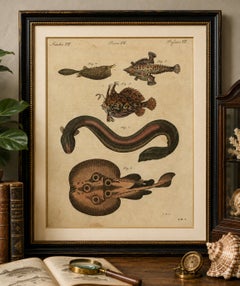
Original Antique Print of Electric Eel, Electric Ray and Exotic Fish, 1790

Original Antique Print of Electric Eel, Electric Ray and Exotic Fish, 1790

Located in Langweer, NL

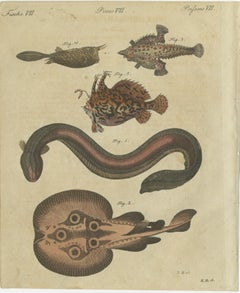
Original Antique Print of Electric Eel, Electric Ray and Exotic Fish by Bertuch, 1790 Original antique hand-colored copper engraving depicting five remarkable and unusual fish species, published in Friedrich Justin Bertuch’s celebrated “Bilderbuch für Kinder” in Weimar in 1790. The plate is titled “Fische VII / Pisces VII / Poissons VII” and was published under the heading “Wunderbare Fische,” or “Remarkable Fish.” It presents five extraordinary species selected for their unusual appearance or remarkable natural characteristics. Fig. 1 depicts the Electric Eel, historically identified as Gymnotus electricus and today classified as Electrophorus electricus. Bertuch called it the “Zitter-Aal oder Krampf-Fisch,” referring to its extraordinary ability to produce powerful electric discharges. Fig. 2 represents the Electric Ray or Torpedo, historically Raja torpedo and now Torpedo torpedo. Its rounded body is decorated with prominent eye-like markings. Like the electric eel, this species can generate electrical discharges used in defense and in subduing prey. Fig. 3 depicts the Sea Bat, historically Lophius vespertilio and now Ogcocephalus vespertilio, commonly known as the Brazilian Batfish or Seadevil. Bertuch described its bizarre horn-like snout and fin structures, which give the animal its highly unusual appearance. Fig. 4 shows the Sea Bull, historically Ostracion cornutus and today known as Lactoria cornuta, the Longhorn Cowfish. Its body is protected by a rigid, box-like covering of bony plates and bears prominent horn-like projections. Fig. 5 is the Sea Toad, historically Lophius histrio and now Histrio histrio, the Sargassumfish. This remarkable anglerfish uses a modified fin ray as a lure to attract small prey. Together the five species provide a fascinating glimpse into late 18th-century European knowledge of some of the world's strangest fishes. Particularly interesting are the two electric species, which fascinated contemporary naturalists because their ability to generate electricity was still a relatively new subject of scientific investigation. The engraving is enhanced with original hand coloring in restrained shades of brown, red, ochre, green and black. The dramatic electric eel and beautifully patterned electric ray dominate the composition, while the three smaller and unusually shaped fishes give the plate strong cabinet-of-curiosities appeal. Friedrich Justin Bertuch (1747–1822) was a German publisher, writer and patron of the arts. His monumental “Bilderbuch für Kinder” was one of the great illustrated educational encyclopedias of the late 18th and early 19th centuries, covering zoology, botany, geography, science, technology, antiquity and numerous other subjects. Creator: Friedrich Justin Bertuch (1747–1822) Source: Bilderbuch für Kinder Plate: Fische VII / Pisces VII / Poissons VII Historical Title: Wunderbare Fische / Remarkable Fish Subjects: Electric Eel – Electrophorus electricus (historically Gymnotus electricus) Electric Ray – Torpedo torpedo (historically Raja torpedo) Brazilian Batfish – Ogcocephalus vespertilio (historically Lophius vespertilio) Longhorn Cowfish – Lactoria cornuta (historically Ostracion cornutus) Sargassumfish – Histrio histrio (historically Lophius histrio) Place of Publication: Weimar, Germany Date of Manufacture: 1790 Period: Late 18th Century Style: Neoclassical – In the Period of Medium: Original hand-colored copper engraving on paper Condition: Good. Wear consistent with age and use. General age-related toning with scattered foxing, spotting and minor marks. Some discoloration is visible, particularly toward the upper portion of the sheet. Minor marginal wear and edge imperfections. Original hand coloring remains attractive. Please refer to the photographs for further details of condition. Please note: This is an original antique engraving from 1790, not a modern reproduction. The print is sold unframed. Framed images or interior views, if shown, are for presentation and inspiration only. Other companion fish and natural-history plates from Bertuch’s “Bilderbuch für Kinder” are also available separately. Keywords: electric eel print, electric ray print, Torpedo ray, Electrophorus electricus, Torpedo torpedo, Brazilian batfish, Ogcocephalus vespertilio, longhorn cowfish, Lactoria cornuta, Sargassumfish, Histrio histrio, exotic fish print, antique fish engraving...

Category

Antique Late 18th Century German Neoclassical Prints

Materials

Paper

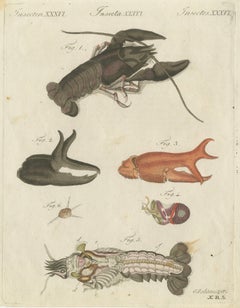
Original Antique Anatomical Print of a European Crayfish by Bertuch, c.1800

Original Antique Anatomical Print of a European Crayfish by Bertuch, c.1800

Located in Langweer, NL

Original Antique Anatomical Print of a European Crayfish by Bertuch, c. 1800 Original antique hand-colored copper engraving depicting the common European crayfish and its anatomy, p...

Category

Antique Early 19th Century German Neoclassical Prints

Materials

Paper

Original Antique Print of Eight Exotic Crabs by Bertuch, c.1820

Original Antique Print of Eight Exotic Crabs by Bertuch, c.1820

Located in Langweer, NL

Original Antique Print of Eight Exotic Crabs by Bertuch, c.1820 Original antique hand-colored engraving depicting eight remarkable species and forms of crabs, published as part of Friedrich Justin Bertuch’s celebrated “Bilderbuch für Kinder” in Weimar during the early 19th century. The plate is titled “Insecten LXXXIX / Insecta LXXXIX / Insectes LXXXIX” and bears the reference “XII.B.29” at lower right. Although classified under “Insects” according to the broader historical terminology of the period, the subjects are crustaceans. Eight individually numbered crabs are represented, displaying an extraordinary variety of body shapes, claws, legs and shell structures. Several specimens are shown from above, allowing the different forms of their carapaces and claws to be compared. Others, particularly Figs. 6, 7 and 8, are illustrated from below, revealing the complex structure of the underside, folded legs and abdominal plates. The central Fig. 1 is particularly decorative, with a strongly colored reddish-orange shell and substantial claws. Other specimens range from pale cream and ochre to yellow, pink and deep brown. The combination of dorsal and ventral views reflects the educational purpose of Bertuch’s publication and the increasing scientific interest in comparative zoology during the late 18th and early 19th centuries. The engraving is enhanced with original hand coloring in attractive shades of coral red, pink, ochre, yellow and brown. The symmetrical arrangement of the eight crustaceans gives the plate considerable decorative appeal, making it particularly suitable for coastal, maritime and natural-history inspired interiors. Friedrich Justin Bertuch (1747–1822) was a German publisher, writer and patron of the arts. His monumental “Bilderbuch für Kinder” was one of the most ambitious illustrated educational encyclopedias of its period, covering zoology, botany, geography, science, technology, antiquity and many other subjects. Creator: Friedrich Justin Bertuch (1747–1822) Source: Bilderbuch für Kinder Plate: Insecten LXXXIX / Insecta LXXXIX / Insectes LXXXIX Reference: XII.B.29 Subject: Eight Crabs / Crustaceans Place of Publication: Weimar, Germany Date of Manufacture: Circa 1820 Period: Early 19th Century Style: Neoclassical – In the Period of Medium: Original hand-colored engraving on paper Condition: Good. Wear consistent with age and use. General age-related toning and scattered foxing and spotting. Noticeable brown staining and discoloration along the right side. Minor marginal wear, handling marks and small edge imperfections. Original hand coloring remains attractive. Please refer to the photographs for further details of condition. Please note: This is an original antique engraving, not a modern reproduction. The print is sold unframed. Framed images or interior views, if shown, are for presentation and inspiration only. Other companion marine-life and natural-history plates from Bertuch’s “Bilderbuch für Kinder” are also available separately. Keywords: antique crab print...

Category

Antique Early 19th Century German Neoclassical Prints

Materials

Paper

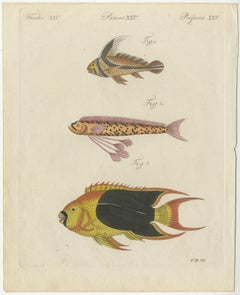
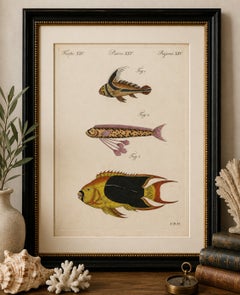
Original Antique Print of Three Exotic Tropical Fish by Bertuch, c.1800

Original Antique Print of Three Exotic Tropical Fish by Bertuch, c.1800

Located in Langweer, NL

Original Antique Print of Three Exotic Tropical Fish by Bertuch, c. 1800 Original antique hand-colored copper engraving depicting three spectacular exotic fish, published in Friedri...

Category

Antique Early 19th Century German Neoclassical Prints

Materials

Paper

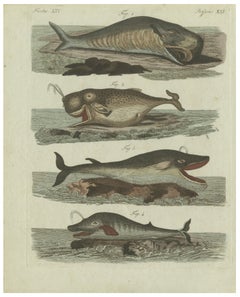
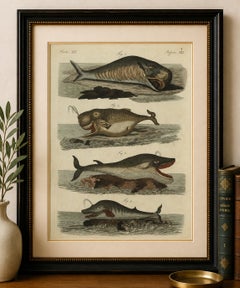
Original Antique Print of Sperm Whale and North Atlantic Whales, ca.1800

Original Antique Print of Sperm Whale and North Atlantic Whales, ca.1800

Located in Langweer, NL

Original Antique Print of Sperm Whale and North Atlantic Whales by Bertuch, c.1800 Original antique hand-colored copper engraving depicting four remarkable early representations of whales, published in Friedrich Justin Bertuch’s celebrated “Bilderbuch für Kinder” around the turn of the 19th century. The plate is titled “Fische XXI / Poissons XXI” and belongs to Bertuch’s series devoted to fishes and marine animals. The historical accompanying descriptions identify the subjects as the Pottfisch (Sperm Whale), Nordkaper (North Atlantic Right Whale) and Kleinauge, illustrating different whale forms as they were understood by European naturalists around 1800. The four whales are represented individually in profile, surrounded by waves and rocky coastal settings. Their exaggerated heads, mouths, blowholes and body proportions provide a fascinating insight into early European attempts to depict these enormous animals at a time when direct observation of living whales was extremely difficult. The Sperm Whale is represented with the massive head and comparatively narrow lower jaw characteristic of the species. The North Atlantic Right Whale was historically one of the most important animals of the European whaling industry and was hunted extensively for its oil and baleen. Particularly fascinating are the visible jets emerging from the blowholes of several animals. Early natural-history illustrations often represented whale breathing as fountains or jets of water, contributing to the distinctive appearance of historical cetacean imagery. Rather than being anatomically precise by modern standards, the animals reflect information assembled from stranded specimens, whalers, sailors, travelers and earlier natural-history publications. This gives the engraving particular interest as a document of the developing science of cetology. The restrained original hand coloring in shades of black, gray, brown and red complements the finely engraved waves and coastal settings. Friedrich Justin Bertuch (1747–1822) was a German publisher, writer and patron of the arts. His monumental “Bilderbuch für Kinder” (Picture Book for Children) was one of the great illustrated educational encyclopedias of its period. Published in Weimar from 1790 onward, the work eventually comprised more than a thousand plates covering zoology, botany, geography, science, technology, antiquity, costumes and many other subjects. This particular plate is documented as no. 53 of Volume II and as plate XXI within the section devoted to fishes. ([Iberlibro (ES)][1]) Creator: Friedrich Justin Bertuch (1747–1822) Source: Bilderbuch für Kinder Plate: Fische XXI / Poissons XXI Historical Subjects: Sperm Whale (Pottfisch) North Atlantic Right Whale (Nordkaper) Kleinauge / historical whale type Place of Publication: Weimar, Germany Date of Manufacture: Circa 1800 Period: Late 18th / Early 19th Century Style: Neoclassical – In the Period of Medium: Original hand-colored copper engraving on paper Condition: Good. Wear consistent with age and use. General age-related toning and scattered spotting and marks. Some marginal wear and small edge imperfections, including irregularity toward the upper right margin. Original hand coloring remains attractive. Please refer to the photographs for further details of condition. Please note: This is an original antique engraving from around 1800, not a modern reproduction. The print is sold unframed. Framed images or interior views, if shown, are for presentation and inspiration only. Other companion whale, fish and natural-history plates from Bertuch’s “Bilderbuch für Kinder” are also available separately. Keywords: antique whale print, sperm whale print, Pottfisch, North Atlantic Right Whale, Nordkaper, antique cetacean print, whale engraving...

Category

Antique Early 19th Century German Neoclassical Prints

Materials

Paper

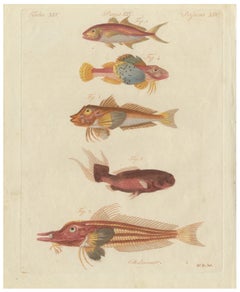
Original Antique Print of Five Exotic Red Fish by Bertuch, c. 1800

Original Antique Print of Five Exotic Red Fish by Bertuch, c. 1800

Located in Langweer, NL

Original Antique Print of Five Exotic Red Fish by Bertuch, c.1800 Original antique hand-colored copper engraving depicting five remarkable species of fish, published in Friedrich Ju...

Category

Antique Early 19th Century German Neoclassical Prints

Materials

Paper

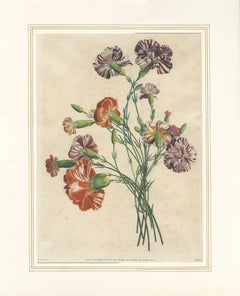
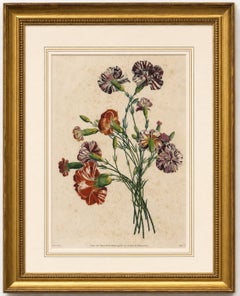
Antique Botanical Print of Carnations by Jean-Louis Prévost, 1805

Antique Botanical Print of Carnations by Jean-Louis Prévost, 1805

Located in Langweer, NL

Antique Botanical Print of Carnations by Jean-Louis Prévost, 1805 Original antique botanical print depicting an elegant bouquet of carnations in richly varied striped, red, purple a...

Category

Antique Early 1800s French Neoclassical Prints

Materials

Paper

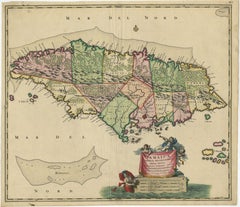
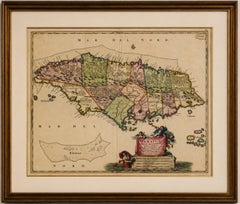
Antique Hand-Colored Map of Jamaica, circa 1680

Antique Hand-Colored Map of Jamaica, circa 1680

Located in Langweer, NL

Antique Hand-Colored Map of Jamaica and the Caribbean, circa 1680 A large and highly decorative 17th-century map of Jamaica by the Dutch cartographer and publisher Nicolaes Visscher...

Category

Antique 1720s Dutch Baroque Maps

Materials

Paper

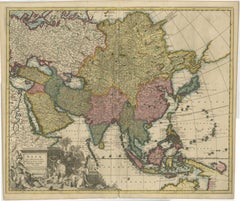
Decorative Antique Map of Asia and the East Indies, circa 1720

Decorative Antique Map of Asia and the East Indies, circa 1720

Located in Langweer, NL

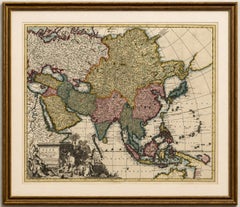
Decorative Antique Map of Asia and the East Indies, circa 1720 Highly decorative early 18th-century map of Asia by the celebrated Dutch cartographers and publishers Gerard and Leonard Valk, published in Amsterdam circa 1720. Titled “Asia qua nulla beatior Ora”, the map presents the Asian continent from the Mediterranean and Arabian Peninsula eastward across Persia, India, China and Japan to the Pacific Ocean. Southeast Asia and the Indonesian archipelago are depicted in considerable detail, including Sumatra, Java, Borneo, Celebes, the Moluccas and the Philippines. Of particular interest is the early representation of parts of Australia. The map shows portions of the coastline of “Nova Hollandia...

Category

Antique 1720s Dutch Baroque Maps

Materials

Paper

Set of Three Antique St. Vincent Engravings after Agostino Brunias, 1818

Set of Three Antique St. Vincent Engravings after Agostino Brunias, 1818

Located in Langweer, NL

Set of Three Antique St. Vincent Engravings after Agostino Brunias, 1818 Important matching set of three original antique engravings depicting the people and culture of St. Vincent ...

Category

Antique 1810s British Prints

Materials

Paper

Antique Jamaican Sugar Mill Engineering Engraving, Bryan Edwards, 1818

Antique Jamaican Sugar Mill Engineering Engraving, Bryan Edwards, 1818

Located in Langweer, NL

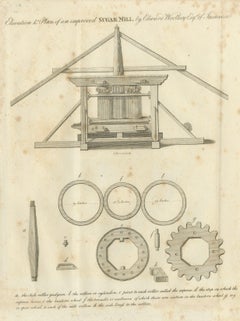
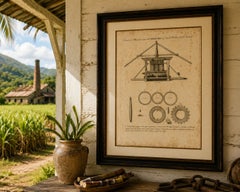
Antique Jamaican Sugar Mill Engineering Engraving, Bryan Edwards, 1818 Original antique technical engraving titled "Elevation & Plan of an improved Sugar Mill, by Edward Wooller...

Category

Antique 1810s British Prints

Materials

Paper

Jamaican Maroons, Antique Caribbean Engraving after Brunias, 1818

Jamaican Maroons, Antique Caribbean Engraving after Brunias, 1818

Located in Langweer, NL

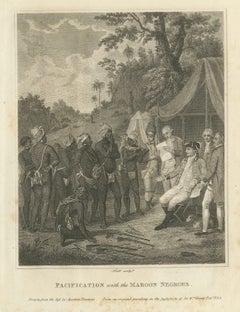
Jamaican Maroons, Antique Caribbean Engraving after Brunias, 1818 Original antique engraving titled "Pacification with the Maroon Negroes," an important historical image relating to...

Category

Antique 1810s British Prints

Materials

Paper

Antique Caribbean Maps of St. Kitts, Antigua, Virgin Islands & Tobago, 1818

Antique Caribbean Maps of St. Kitts, Antigua, Virgin Islands & Tobago, 1818

Located in Langweer, NL

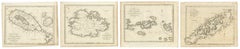
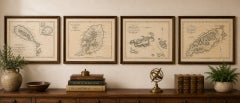
Antique Caribbean Maps of St. Kitts, Antigua, Virgin Islands & Tobago, 1818 Set of Four Antique Caribbean Maps by Bryan Edwards. Fine matching set of four original antique engr...

Category

Antique 1810s British Georgian Prints

Materials

Paper

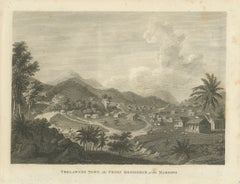
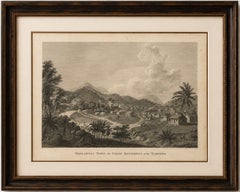
Antique View of Trelawney Town, Jamaica Maroons, Bryan Edwards, 1818

Antique View of Trelawney Town, Jamaica Maroons, Bryan Edwards, 1818

Located in Langweer, NL

Antique View of Trelawney Town, Jamaica Maroons, Bryan Edwards, 1818 Original antique engraved view titled "Trelawney Town, the Chief Residence of the Maroons," depicting the histor...

Category

Antique 1810s British Prints

Materials

Paper

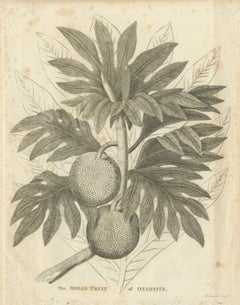
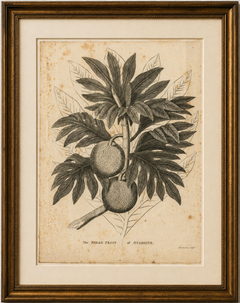
Antique Botanical Print of Breadfruit of Otaheite by Bryan Edwards, 1818

Antique Botanical Print of Breadfruit of Otaheite by Bryan Edwards, 1818

Located in Langweer, NL

Antique Botanical Print of Breadfruit of Otaheite by Bryan Edwards, 1818 Original antique botanical engraving titled "The Bread Fruit of Otaheite," depicting the breadfruit tree wit...

Category

Antique 1810s British Prints

Materials

Paper

Set of Four Antique Maps of Caribbean Islands by Bryan Edwards, 1818

Set of Four Antique Maps of Caribbean Islands by Bryan Edwards, 1818

Located in Langweer, NL

Set of Four Antique Maps of Caribbean Islands by Bryan Edwards, 1818 Fine set of four original antique engraved maps of Caribbean islands, depicting St. Vincent, Dominica, Barbados and Grenada. The maps were published for Bryan Edwards' important "History of the British West Indies," London, 1818. The set comprises: 1. Map of the Island of St. Vincent A detailed map showing the mountainous topography of St. Vincent, rivers, bays, settlements and administrative divisions. Among the places identified are Kingstown, Chateaubelair, Wallibou, Layou, Cumberland Bay and numerous coastal points and rivers. 2. Map of the Island of Dominica Detailed map of Dominica with its dramatic mountainous interior rendered in fine hachuring. The island is divided into parishes and includes Portsmouth, Prince Rupert's Bay, Roseau, St. David's Bay and numerous rivers, bays and coastal settlements. 3. Map of the Island of Barbadoes An especially detailed map of Barbados...

Category

Antique 1810s British Prints

Materials

Paper

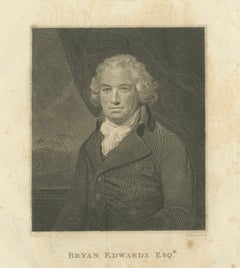
Antique Portrait of Bryan Edwards with Title Leaf, British West Indies, 1818

Antique Portrait of Bryan Edwards with Title Leaf, British West Indies, 1818

Located in Langweer, NL

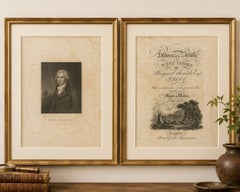
Antique Portrait of Bryan Edwards with Title Leaf, British West Indies, 1818 Original antique engraved portrait of Bryan Edwards (1743–1800), accompanied by the decorative engraved ...

Category

Antique 1810s British Prints

Materials

Paper

Antique Map of the Ottoman Empire by Matthäus Seutter, c. 1740

Antique Map of the Ottoman Empire by Matthäus Seutter, c. 1740

Located in Langweer, NL

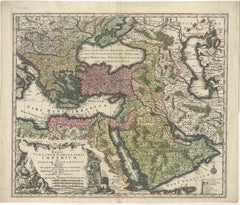
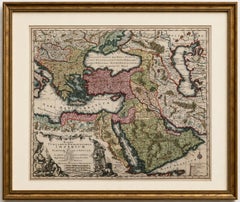
Antique Map of the Ottoman Empire by Matthäus Seutter, c. 1740 An impressive and highly decorative 18th-century map of the Ottoman Empire by the celebrated German cartographer and p...

Category

Antique 1740s German Baroque Maps

Materials

Paper

Antique Costume Print of Leksand in Sweden, c.1864

Antique Costume Print of Leksand in Sweden, c.1864

Located in Langweer, NL

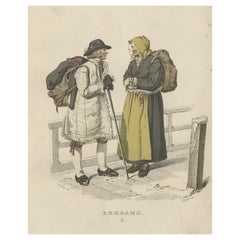
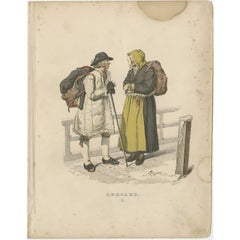
Antique print titled 'Leksand I'. Costume print of Leksand, Dalarna, Sweden. This print originates from 'Ett år i Sverige' by J.G. Sandberg. Artists and Engravers: Published by Sa...

Category

Antique 19th Century Prints

Materials

Paper

Original Antique Print of Two Exotic Butterflies by Bertuch, c. 1800

Original Antique Print of Two Exotic Butterflies by Bertuch, c. 1800

Located in Langweer, NL

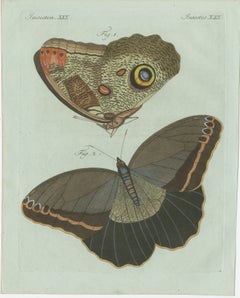
Original Antique Print of Two Exotic Butterflies by Bertuch, c. 1800 Original antique hand-colored copper engraving depicting two spectacular exotic butterflies, published in Friedr...

Category

Antique Early 19th Century German Neoclassical Prints

Materials

Paper

Original Antique Print of Three Moths and Metamorphosis by Bertuch, c. 1800

Original Antique Print of Three Moths and Metamorphosis by Bertuch, c. 1800

Located in Langweer, NL

Original Antique Print of Three Moths and Metamorphosis by Bertuch, c. 1800 Original antique hand-colored copper engraving depicting three species of moths together with their caterpillar and chrysalis stages, published in Friedrich Justin Bertuch’s celebrated “Bilderbuch für Kinder” around the beginning of the 19th century. The plate is titled “Insecten XXIV / Insectes XXIV” and provides an attractive early scientific representation of insect metamorphosis, showing each moth alongside its larval and pupal stages. Fig. 1 depicts a particularly colorful moth with boldly patterned black-and-white forewings and vivid red hindwings decorated with dark blue markings. Its striking hairy caterpillar is illustrated immediately below, together with the dark chrysalis from which the adult moth emerges. Fig. 2 shows a more restrained gray moth with beautifully engraved patterned wings. Below it is the elongated caterpillar, while its unusual partly exposed chrysalis is shown separately to the right. Fig. 3 depicts an eye-spotted moth with intricate green, cream, pink and black markings. The prominent circular markings on the wings resemble eyes, a natural form of visual defense found among numerous moth species. Its green caterpillar, decorated with orange spots and fine hairs, and its dark chrysalis are illustrated below. The inclusion of adult insects together with caterpillars and chrysalises reflects the growing scientific interest in metamorphosis and entomology during the late 18th and early 19th centuries. The engraving is beautifully enhanced with original hand coloring in shades of red, blue, green, yellow, gray and black. The combination of three distinctly different moths and their developmental stages makes this an especially appealing early natural-history plate. Friedrich Justin Bertuch (1747–1822) was a German publisher, writer and patron of the arts. His monumental “Bilderbuch für Kinder” (Picture Book for Children) was one of the great illustrated educational encyclopedias of the late 18th and early 19th centuries. Published in Weimar from 1790 onward, it contained hundreds of engraved and hand-colored plates covering natural history, geography, science, technology, antiquity and numerous other subjects. Creator: Friedrich Justin Bertuch (1747–1822) Source: Bilderbuch für Kinder Plate: Insecten XXIV / Insectes XXIV Place of Publication: Weimar, Germany Date of Manufacture: Circa 1800 Period: Early 19th Century Style: Neoclassical – In the Period of Medium: Original hand-colored copper engraving on paper Condition: Good. Wear consistent with age and use. Light age-related toning and scattered minor spotting and marks. Minor marginal wear and edge irregularities. Original hand coloring remains strong and attractive. Please refer to the photographs for further details of condition. Please note: This is an original antique print from around 1800, not a modern reproduction. The print is sold unframed. Framed images or interior views, if shown, are for presentation and inspiration only. Other companion butterfly, moth and natural-history plates from Bertuch’s “Bilderbuch für Kinder” are also available separately. Keywords: antique moth...

Category

Antique Early 19th Century German Neoclassical Prints

Materials

Paper

Set of Three Antique Butterfly and Moth Prints by Bertuch, c. 1800

Set of Three Antique Butterfly and Moth Prints by Bertuch, c. 1800

Located in Langweer, NL

Set of Three Antique Butterfly and Moth Prints by Bertuch, c. 1800 Set of three original antique hand-colored copper engravings depicting spectacular butterflies and moths together with their caterpillar and chrysalis stages, published in Friedrich Justin Bertuch’s celebrated “Bilderbuch für Kinder” around the beginning of the 19th century. The three plates are titled “Insecten XXIX / Insectes XXIX,” “Insecten XXIII / Insectes XXIII,” and “Insecten XXXI / Insectes XXXI.” Together they form a particularly decorative group illustrating the remarkable variety and metamorphosis of butterflies and moths. The first plate, Insecten XXIX, presents four large butterflies. Particularly striking is the brilliant blue specimen occupying the lower half of the composition, contrasted with three butterflies in more restrained shades of brown, cream and violet. The different views of the wings demonstrate the extraordinary variation in pattern and coloration among exotic butterflies. The second plate, Insecten XXIII, is devoted to two spectacular moths and their life cycles. The upper specimen is a Death’s-head Hawk-moth type, immediately recognizable by the remarkable skull-like marking on its thorax. It is accompanied by its large striped caterpillar and chrysalis. Below is another beautifully patterned moth shown together with its caterpillar and pupal stage. The third plate, Insecten XXXI, is dominated by a magnificent large eye-spotted moth. Its broad wings carry four prominent eye-like markings surrounded by intricate bands of black, cream, red and ochre. Beneath it are the extraordinary green caterpillar and dark chrysalis, illustrating three stages of the insect’s metamorphosis. The three engravings are beautifully enhanced with original hand coloring. Together they create an exceptionally attractive natural-history ensemble, combining strong decorative appeal with the scientific fascination with insect metamorphosis that characterized European natural history around 1800. The plates bear engraved signatures of Jacob Hauer Schmuzer, one of the engravers associated with Bertuch’s monumental publication. Friedrich Justin Bertuch (1747–1822) was a German publisher, writer and patron of the arts. His “Bilderbuch für Kinder” (Picture Book for Children), published in Weimar from 1790 onward, became one of the great illustrated educational encyclopedias of the late 18th and early 19th centuries. Its hundreds of engraved plates introduced readers to natural history, geography, science, technology, antiquity and cultures from around the world. The three plates work particularly well displayed together and would make an impressive grouping in a living room, library, study, bedroom or natural-history inspired interior. Creator: Friedrich Justin Bertuch (1747–1822) Engraver: Jacob Hauer Schmuzer Source: Bilderbuch für Kinder Plates: Insecten XXIII / Insectes XXIII Insecten XXIX / Insectes XXIX Insecten XXXI / Insectes XXXI Place of Publication: Weimar, Germany Date of Manufacture: Circa 1800 Period: Early 19th Century Style: Neoclassical – In the Period of Medium: Original hand-colored copper engravings on paper Number of Items: 3 Condition: Good. Wear consistent with age and use. General age-related toning, scattered minor spotting and occasional handling marks. Some minor marginal wear and edge irregularities. Original hand coloring remains strong and attractive. Please refer to the photographs for the individual condition of each sheet. Please note: These are three original antique engravings from around 1800, not modern reproductions. The prints are sold unframed. Framed images or interior views, if shown, are for presentation and inspiration only. Keywords: set of butterfly prints, antique butterfly prints, antique moth...

Category

Antique Early 19th Century German Neoclassical Prints

Materials

Paper

Original Antique Print of Exotic Insects, Spider and Butterfly by Bertuch, 1800

Original Antique Print of Exotic Insects, Spider and Butterfly by Bertuch, 1800

Located in Langweer, NL

Original Antique Print of Exotic Insects, Spider and Butterfly by Bertuch, c. 1800 Original antique hand-colored copper engraving depicting a spectacular collection of exotic insect...

Category

Antique Early 19th Century German Neoclassical Prints

Materials

Paper

Original Antique Print of Exotic Insects, Lanternfly and Mantis, c. 1790

Original Antique Print of Exotic Insects, Lanternfly and Mantis, c. 1790

Located in Langweer, NL

Original Antique Print of Exotic Insects, Lanternfly and Mantis, c. 1790 Original antique hand-colored engraving depicting a spectacular collection of exotic insects, including a la...

Category

Antique Late 18th Century German Neoclassical Prints

Materials

Paper

Original Antique Botanical Print of Two Remarkable Seaweeds by Bertuch, 1802

Original Antique Botanical Print of Two Remarkable Seaweeds by Bertuch, 1802

Located in Langweer, NL

Original Antique Botanical Print of Two Remarkable Seaweeds by Bertuch, 1802 Original antique hand-colored copper engraving depicting two remarkable species of seaweed, published in Friedrich Justin Bertuch’s celebrated “Bilderbuch für Kinder” in Weimar in 1802. The plate is titled “Pflanzen XC / Plantes XC” and illustrates two dramatically contrasting forms of marine vegetation. Fig. 1 depicts the extraordinary Faden-Tang, historically identified as Fucus filum. The plant consists of an intricate mass of extremely fine, curling, thread-like branches emerging from a common stem. Bertuch described these filaments as resembling tangled threads and recorded the species as occurring in the China Sea. Fig. 2 depicts the Finger-Tang or digitated seaweed, historically identified as Fucus digitatus. In striking contrast to the delicate filaments of Fig. 1, this species has a substantial stem terminating in broad, finger-like fronds and a root-like holdfast. Bertuch described the latter as one of the largest seaweeds of its type and recorded it from the coasts of the Netherlands, Great Britain, Norway and Iceland. He also noted its practical use as animal fodder. The contrast between the almost abstract tangle of fine lines on the left and the sculptural, antler-like form on the right gives this plate an unusually modern decorative quality despite its publication more than two centuries ago. The engraving is delicately enhanced with original hand coloring in restrained shades of green and brown. Friedrich Justin Bertuch (1747–1822) was a German publisher, writer and patron of the arts. His monumental “Bilderbuch für Kinder” (Picture Book for Children) was one of the great illustrated educational encyclopedias of the late 18th and early 19th centuries. Published in Weimar from 1790 onward, it contained hundreds of engraved and hand-colored plates devoted to natural history, geography, science, technology, antiquity and numerous other subjects. Creator: Friedrich Justin Bertuch (1747–1822) Source: Bilderbuch für Kinder Plate: Pflanzen XC / Plantes XC Subjects: Faden-Tang (Fucus filum) and Finger-Tang (Fucus digitatus) Place of Publication: Weimar, Germany Date of Manufacture: 1802 Period: Early 19th Century Style: Neoclassical – In the Period of Medium: Original hand-colored copper engraving on paper Condition: Good. Wear consistent with age and use. Light age-related toning and scattered minor spotting and marks. Minor marginal wear. Original hand coloring remains attractive. Please refer to the photographs for further details of condition. Please note: This is an original antique print from 1802, not a modern reproduction. The print is sold unframed. Framed images or interior views, if shown, are for presentation and inspiration only. Other companion botanical and natural-history plates from Bertuch’s “Bilderbuch für Kinder” are also available separately. Keywords: antique seaweed...

Category

Antique Early 19th Century German Neoclassical Prints

Materials

Paper

Original Antique Botanical Print of Carrion Flower and Mimosa by Bertuch, 1805

Original Antique Botanical Print of Carrion Flower and Mimosa by Bertuch, 1805

Located in Langweer, NL

Original Antique Botanical Print of Carrion Flower and Mimosa by Bertuch, 1805 Original antique hand-colored copper engraving depicting two remarkable exotic plants, the Carrion Flo...

Category

Antique Early 19th Century German Neoclassical Prints

Materials

Paper