Wood Sculptures

8,426 Results
to
1,258
6,442
1,671
317
1,032
1,155
4,255
1,988
758
1,639
1,152
79
41
102
127
97
253
351
460
189
102
1,470
670
366
306
242
202
151
112
86
81
79
45
42
19
11
11
11
6
18,545
10,963
10,280
8,609
8,430
4,285
3,163
3,862
1,991
1,087
1,059
1,042
Height
to
Width
to
8,430
7,235
7,505
483
219
68
56
38
Material: Wood
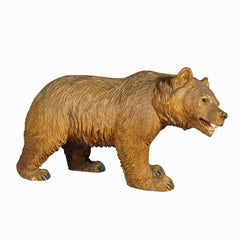
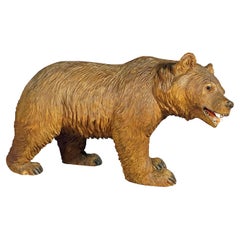
Wooden Statue of a Walking Bear Hand Carved in Switzerland, circa 1930s

Wooden Statue of a Walking Bear Hand Carved in Switzerland, circa 1930s

Located in Berghuelen, DE

Wooden Statue of a Walking Bear Handcarved in Switzerland circa 1930s. A vintage statue of a strolling bear. Made of lindenwood, finely handcarved and handpainted with naturalistic details in Brienz, Switzerland ca. 1930s. A nice example of the famous Black Forest Woodcarvings made in Switzerland. The tradition of wood carving in Brienz dates back to mid of the 19th century. People in the region were looking for new employment opportunities. They used their skills from traditional crafts, carving everyday objects and sculptures, and created a new business. Many woodcarvers where trained in the 'School of Wood Carving, Brienz' which was established in 1884. Around 1900 the woodcarving industry counted ca. 2000 woodcarvers. Brienz woodcarvings were presented on several worlds fairs with great success. With the Gran Tour Tourism wealthy people from all over the word visited the area and took their woodcarving souvenirs home. Today some companies, like 'Huggler Holzbildhauerei' still exist and build traditional sculptures. Measures: Length: 11.02" (28 cm) Width: 3.94" (10 cm) Height: 6.69" (17 cm) Literature Reference: Peter F. Blackman, Black Forest Woodcarvings, Atglen 2009. Jay Arenski, Simon and Michael Daniels, Swiss Carvings...

Category

Early 20th Century Swiss Black Forest Wood Sculptures

Materials

Wood

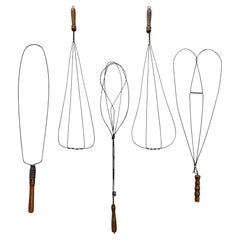
Antique Collection of Five Carpet Beaters, Wood and Wire, Circa 1900

Antique Collection of Five Carpet Beaters, Wood and Wire, Circa 1900

Located in Coral Gables, FL

An exceptional collection of five antique carpet and rug beaters dating to around 1900, each formed from hand-shaped metal wire and finished with a turned wooden handle. Created as p...

Category

Early 1900s Unknown Primitive Antique Wood Sculptures

Materials

Metal, Wire

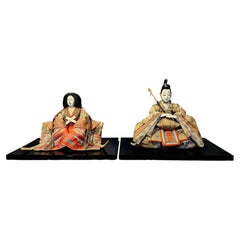
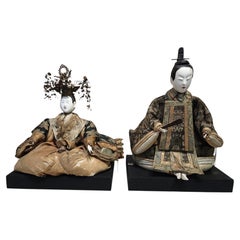
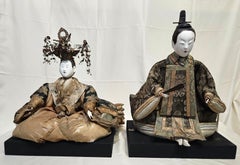
Antique Hina Japanese Emperor and Empress Dolls on Solid Wood Stands

Antique Hina Japanese Emperor and Empress Dolls on Solid Wood Stands

Located in Norton, MA

Antique Japanese imperial dolls Emperor and Empress Hinaningyo, hand made from straw, paper, silk and cotton, imperial pair, complete as in photos. Good conditions, some wear from t...

Category

19th Century Japanese Other Antique Wood Sculptures

Materials

Fabric, Wood, Silk, Straw

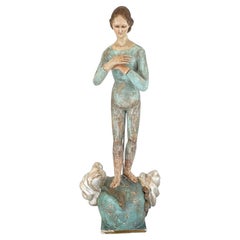
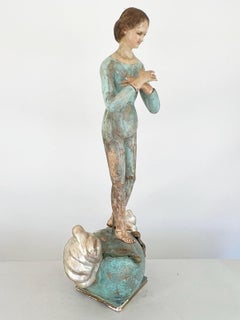
"La Immaculada, " Polychromed Mid-19th Century Figural Carving

"La Immaculada, " Polychromed Mid-19th Century Figural Carving

Located in West Palm Beach, FL

Figural wooden carving of the Blessed Virgin Mary (Immaculate Conception). Carved in folkloric style, this well-preserved statue retains its original coat of polychrome paint. Its flesh tones, light-blue, and silver-gilding vividly shine through a natural patina that has become glossy from a century’s worth of handling. The Virgin as the "Immaculata" (conceived in immaculate purity), is posed on the globe of the world, in triumph over sin, represented by the serpent that tempted Eve with a forbidden apple. The sculpture's facial features include glass eyes and eyelashes. This rare antique sculpture is perfect for a collection of sacred antique...

Category

1850s Italian Antique Wood Sculptures

Materials

Wood

Antique Pair of Kyoho-Bina Emperor and Empress Dolls , 1720s Edo

Antique Pair of Kyoho-Bina Emperor and Empress Dolls , 1720s Edo

Located in Norton, MA

18th Century Japanese Edo Period pair of Kyoho-Bina Ningyo (1716~1736), an exceedingly rare early 18th century. An exceptional example of this early style. The finest quality in all ...

Category

1720s Japanese Edo Antique Wood Sculptures

Materials

Brass

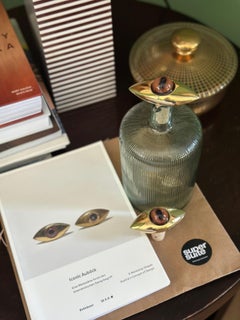
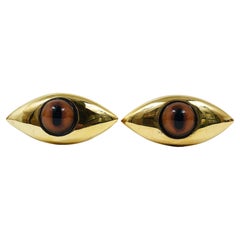
Iconic Carl Auböck Handcrafted Eye Bottle Stopper #4538, Cork & Brass, Austria

Iconic Carl Auböck Handcrafted Eye Bottle Stopper #4538, Cork & Brass, Austria

By Werkstätte Carl Auböck

Located in Vienna, AT

An attention-grabbing bottle stopper „Eye", model #4538, designed by Carl Aubock II back in the early 1950s. A charming object, handcrafted by Werkstätte Auböck in Vienna / Austria. ...

Category

21st Century and Contemporary Austrian Mid-Century Modern Wood Sculptures

Materials

Brass

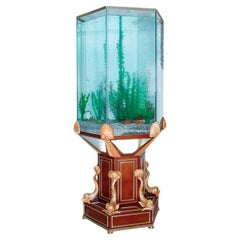
Fish Tank
Fish Tank

Fish Tank

$70,895 / item

Fish Tank

By CG capelletti

Located in Milan, IT

A stately addition to any baroque-style decor, this fish tank is rich and bold in every detail. Equipped with an illumination system for the six glass panels composing the base in sa...

Category

2010s Italian Wood Sculptures

Materials

Glass, Wood

Distressed Dayak Paddy Marker Guardian Figures, Borneo, 20th Century

Distressed Dayak Paddy Marker Guardian Figures, Borneo, 20th Century

Located in Point Richmond, CA

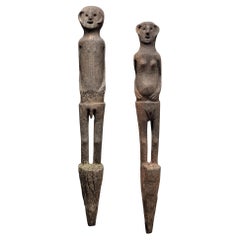
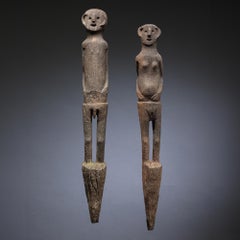
Pair Male and Female Dayak Paddy Marker Guardian Figures, Borneo, Indonesia. Carved wood set of male and female Dayak paddy marker guardian figures with expressive faces and large c...

Category

Mid-20th Century Indonesian Tribal Wood Sculptures

Materials

Wood

Polychrome carved wood Virgin and Child from the 15th Century

Polychrome carved wood Virgin and Child from the 15th Century

Located in Saint-Ouen, FR

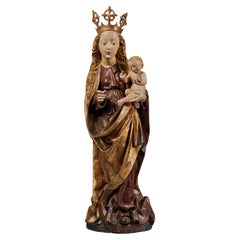
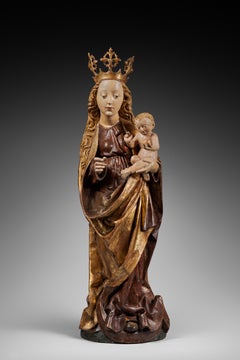
POLYCHROME CARVED WOOD VIRGIN AND CHILD FROM THE 15TH CENTURY   ORIGIN: SOUTH GERMANY, SWABIA, NUREMBERG REGION PERIOD: 15th CENTURY   Height: 94,6cm Width : 28 cm Depth : 18 cm   Lime wood Original Polychromy Good state of conservation     From 1430 onwards, sculpture underwent a profound stylistic renewal which continued until 1530, the so-called late Gothic period. In the Germanic countries, original sculptures flourished in an expressive and sensitive vein.
This renewal was inspired by the art of Nicholas of Leiden, who was active in Strasbourg in the 1460's. His style broke with the refined and delicate art of the international Gothic style in force throughout Europe around 1400. The figures became more authentic and realistic. The bodies became denser. Clothes are animated by deep, broken folds, the fabrics are heavy and have a great decorative value. In addition, the polychromy is intended to be illusionistic. The painting makes it possible to restore the texture of the materials, the richness of the textiles and the natural skin tone of the characters.   The dissemination of images through engraving and the great mobility of the artists led to the success of this style, which conquered the Upper Rhine, Swabian, Tyrolean and Franconian regions, contributing to the formation of a common stylistic identity in these regions. The economic boom in the flourishing German cities was conducive to the development of original production. Attracted by this prosperity, numerous workshops were set up in order to meet the orders of religious communities, the Church and the laity, including a clientele of middle-class rockers.      This precious Virgin and Child is depicted standing on a crescent moon, her head encircled by a crown of tall flowers. Her long wavy hair spreads over her shoulders, framing her beautiful oval face. Under fine eyebrows drawn with a brushstroke, her almond-shaped, slightly drooping eyes look at the Child with infinite softness. She is dressed in a long red dress with a rounded neckline, belted under the chest. The heavy fabric of her dress spreads out in broken folds at her feet. On her shoulders she wears a golden cloak. The drapery has deep folds. She holds out her right hand while she holds the Christ Child with her left.   Christ, with his well-defined hair, is naked. His cheeks are highlighted with red, he holds an apple in his left hand and with the other hand makes a sign of blessing towards the faithful.   Virgins with Child on a crescent moon were very popular in the second half of the 15th century, especially as the central subject of altarpieces in southern Germany and Austria. The crescent moon on which Mary is standing is reminiscent of the Woman of the Apocalypse. Often equated with the Virgin Mary.    This episode is taken from the Book of Revelation (12:1-6)   1 Then a great sign appeared in heaven: a woman clothed with the sun, with the moon under her feet and a crown of twelve stars on her head. ; 2 She was pregnant, and she cried out because she was in labor, in pain from giving birth. ; 3 Then another sign appeared in heaven: it was a great fiery red dragon, with seven heads and ten horns, and seven royal crowns on his heads. ; 4 His tail swept down a third of heaven's stars and threw them to the earth. The dragon stood in front of the woman who was about to give birth so that when she gave birth, he might devour her child. ; 5 She gave birth to a son, a male child who is to rule all the nations with an iron rod. Her child was snatched up to God and his throne. ; 6 Then the woman fled into the desert, where God has prepared a place for her. There she will be taken care of for one thousand two hundred sixty days.   Some theologians see in this woman a reference to the Virgin Mary and in the child, Jesus.    
This remarkable work is a very fine example of sculpture from Swabian workshops in the last decades of the 15th century. It presents all the characteristic stylistic elements: a highly girdled silhouette, an abundant drapery with angular folds, but also a great physical presence accentuated by the polychromy that restores the anatomical details. This group is made of a wooden log. The deep folds of the drapery highlight the movement of the Virgin holding the child.       Bibliography :   Sophie Guillot de Suduiraut, Dévotion et Séduction, Sculptures souabes des musées de France, vers 1460-1530, Paris musée du Louvre-Éditions somogy, 2015   “Revelation 12 -   Common English Bible...

Category

15th Century and Earlier German Gothic Antique Wood Sculptures

Materials

Wood

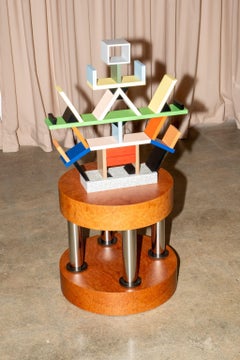
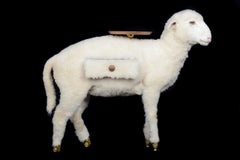
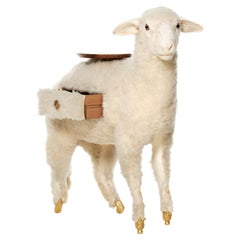
15/20th Limited Edition Of Xai Surrealistic Side Table by Salvador Dalí

15/20th Limited Edition Of Xai Surrealistic Side Table by Salvador Dalí

By (after) Salvador Dali

Located in Barcelona, ES

Design inspired on an artwork by Salvador Dali´: Interpretation project for a stable-library, 1942 Stuffed lamb, elaborated with a technique by a taxidermist. Drawer and table top i...

Category

21st Century and Contemporary Spanish Mid-Century Modern Wood Sculptures

Materials

Brass

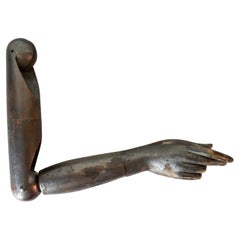
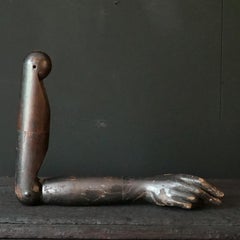
1900s French Articulated Life-Size Mannequin's Arm in Painted and Plastered Wood

1900s French Articulated Life-Size Mannequin's Arm in Painted and Plastered Wood

Located in Haarlem, NL

Very pretty and decorative early 20th century French articulated life-size mannequin's arm in dark brown painted and plastered heavy solid wood. To lay or hang and use for extraordi...

Category

Early 20th Century French Wood Sculptures

Materials

Plaster, Wood

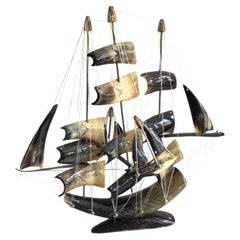
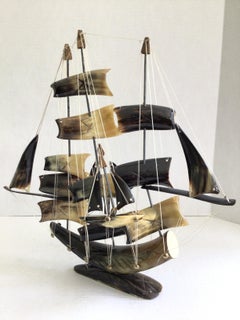
1970s Carved Horn Sailing Ship

1970s Carved Horn Sailing Ship

Located in Tarrytown, NY

1970s Carved Horn Sailing Ship on Horn Base String and metal rods. - cork for tops Colors: Brown, White, Cream Sailing ship Nautical Handmade with real Horn bone, it has great detail...

Category

1970s Vintage Wood Sculptures

Materials

Metal

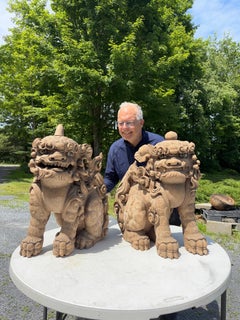
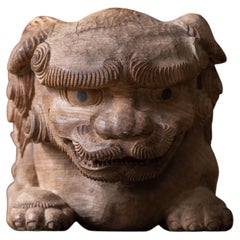
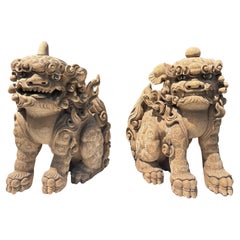
Japan Important Large Pair Early Shinto Temple Lions Hand-Carved, 18thc 29 Inch

Japan Important Large Pair Early Shinto Temple Lions Hand-Carved, 18thc 29 Inch

Located in South Burlington, VT

Just discovered and coming from a Shinto Shrine deaccession Call or message us for details or to reserve. Japan an early and superb pair (2) of mythical Shi Shi Temple Foo Dogs als...

Category

18th Century Japanese Edo Antique Wood Sculptures

Materials

Wood

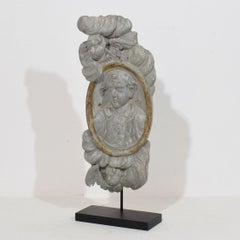
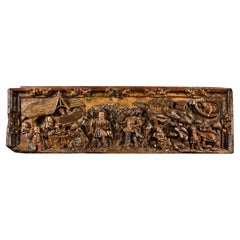
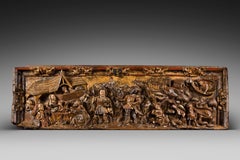
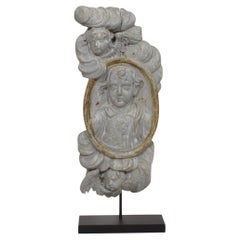
French 17/ 18th Century Carved Wooden Baroque Panel Depicting A Saint And Angels

French 17/ 18th Century Carved Wooden Baroque Panel Depicting A Saint And Angels

Located in Buisson, FR

Unique panel depicting a saint figure and Angels. Wonderful layers of its original color, France, circa 1650-1750 . Weathered, small losses. Treated against woodworm. Measurements in...

Category

17th Century French Baroque Antique Wood Sculptures

Materials

Wood

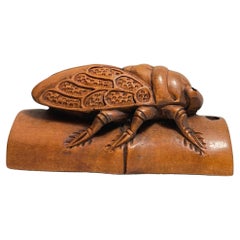
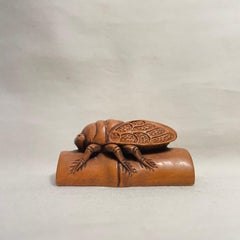
Japanese Wooden Netsuke Cicada 1900 Meiji Sekisen

Japanese Wooden Netsuke Cicada 1900 Meiji Sekisen

Located in Paris, FR

This is an antique wooden netsuke made in Japan around Meiji period 1900s. The signature is written on the back side 'Sekisen'. Netsuke is a miniature sculpture, originating in 17th...

Category

Early 1900s Japanese Meiji Antique Wood Sculptures

Materials

Wood

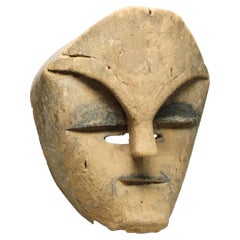
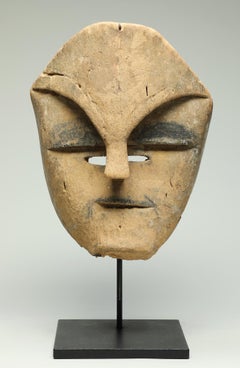
Rare Gabon Mask From Tsogho Peoples with Character, Central Africa

Rare Gabon Mask From Tsogho Peoples with Character, Central Africa

Located in Point Richmond, CA

Early and rare mask from Gabon, Central Africa, created by the Tsogho peoples. Powerful large mask with carved open eyes, and black painted eyes above, below heavy carved eyebrows. ...

Category

Early 20th Century Gabonese Tribal Wood Sculptures

Materials

Wood

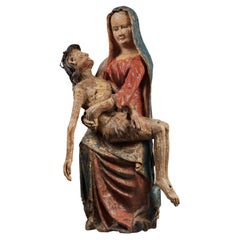
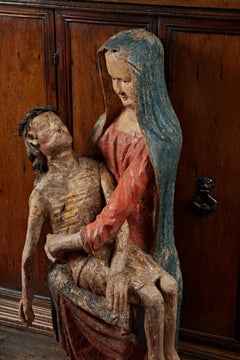
Important German Pietà from the, 14th Century

Important German Pietà from the, 14th Century

Located in Saint-Ouen, FR

IMPORTANT GERMAN PIETÀ FROM THE 14th CENTURY ORIGIN: GERMANY, REGION DE COLOGNE PERIOD: BEGINNING IF THE 14th CENTURY, ca. 1330 Height: 98 cm Length: 45 cm Depth: 33 cm Polychromed linden wood Good condition of conservation Provenance : particular Alsatian collection The theme of the Pietà or Vesperbild appears in Germany at the end of the 13th century, reflecting the mysticism of the late Middle Ages. Although the theme does not exist in the Gospels, it was often mentioned in contemporary devotional literature. Indeed, during the first half of the 14th century, mystical thought and devotional practices changed under the impulse of a number of religious, among them Heinrich Suso and St Bridget. In his writings, Suso placed important emphasis on contemplation and meditation in the footsteps of Christ's martyrdom. This will have great impact in the field of art, especially in Germany and later in France. The emphasis will from now on be on grief, death is shown in a straightforward way. The wounds of Christ are gaping and bloody. The suffering of Christ and the seven sorrows of the Virgin Mary are meditated upon. This piece demonstrates the interest of the faithful in these representations where pathos reigns. The virgin is represented seated in a frontal position. The bust is very elongated. She is wearing a red dress with a simple neckline and a blue mantel...

Category

15th Century and Earlier Antique Wood Sculptures

Materials

Wood

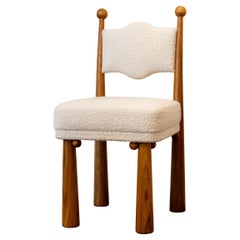
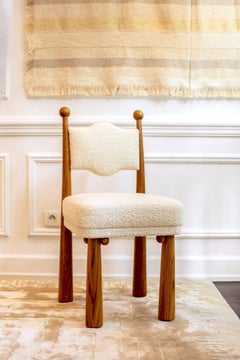
Mawu Chair in Snow by Laura Gonzalez

Mawu Chair in Snow by Laura Gonzalez

By laura gonzalez

Located in Paris, FR

Made in France with hand-turned, flared oak legs. Upholstered backrest and seat in a textured cream bouclette fabric (LG.FB-89).

Category

2010s French Modern Wood Sculptures

Materials

Oak, Fabric

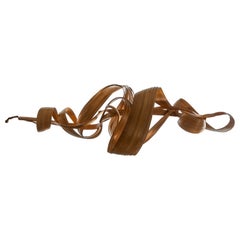
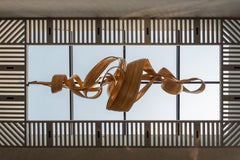
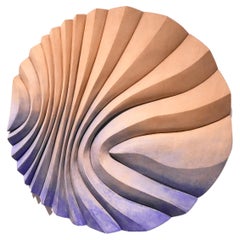
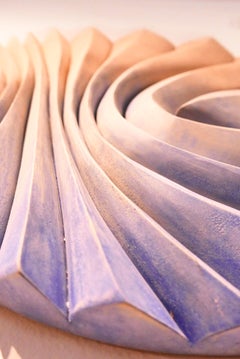
Form No. 4 - Fluentum Series - Bentwood Sculpture

Form No. 4 - Fluentum Series - Bentwood Sculpture

By Raka Studio

Located in Cape Girardeau, MO

This sculpture is part of the Vrksa Series and derives its inspiration from The Forms line of works. The piece demonstrates the flow of wood, the emerging and the reduction of wood; ...

Category

2010s Organic Modern Wood Sculptures

Materials

Bentwood

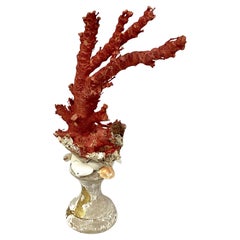
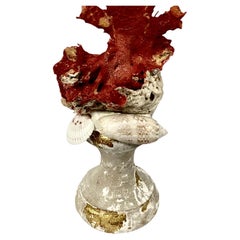
Natural Red Coral Mounted on 18th Century Giltwood Fragment

Natural Red Coral Mounted on 18th Century Giltwood Fragment

Located in Bradenton, FL

A hand-crafted sculpture specimen of natural red coral branches mounted on a 18th century giltwood urn fragment base with sea shell trim.

Category

20th Century Italian Organic Modern Wood Sculptures

Materials

Coral

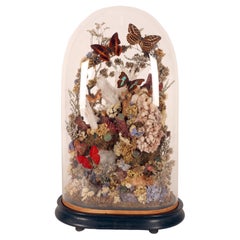
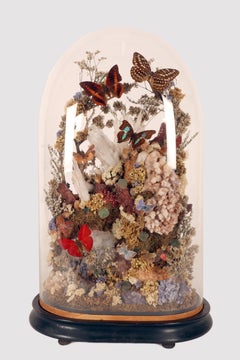
A big diorama with crystals, butterflies and flowers, Italy 1870.

A big diorama with crystals, butterflies and flowers, Italy 1870.

Located in Milan, IT

A large cabinet of curiosities diorama with natural crystal specimens and multicolored butterflies, mounted under an oval blown glass bell jar, with a black lacquered poplar base. An...

Category

Late 19th Century Italian Other Antique Wood Sculptures

Materials

Glass, Wood

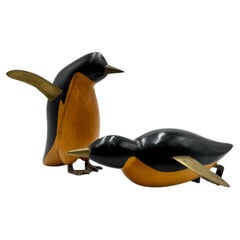
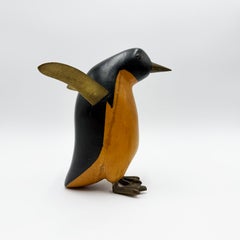
Pair of Vintage Penguin Sculptures in Wood and Bronze

Pair of Vintage Penguin Sculptures in Wood and Bronze

Located in Mexico City, CDMX

Exceptional pair of penguin sculptures, finely carved from wood with an elegant black lacquer finish that accentuates their sleek, streamlined forms. Their wings, beaks, and feet are...

Category

20th Century Wood Sculptures

Materials

Bronze

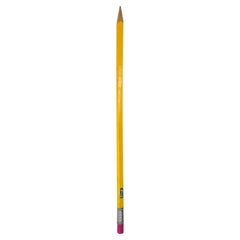
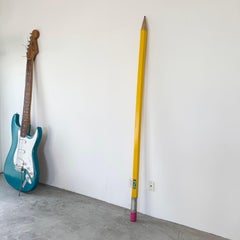
8 Foot Tall Pop Art Wood Pencil, 1970s USA

8 Foot Tall Pop Art Wood Pencil, 1970s USA

Located in Los Angeles, CA

Back to the drawing board! A remarkable piece for spurring conversation at home or for capturing attention in a store display. This massive vintage trompe l'oeil pencil is made of on...

Category

1970s American Vintage Wood Sculptures

Materials

Metal

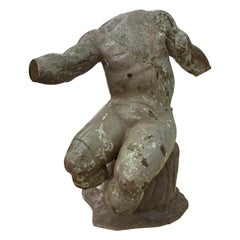
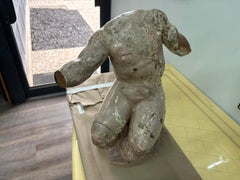
18th Century Italian Carved Torso On Plinth

18th Century Italian Carved Torso On Plinth

Located in Houston, TX

18th Century Italian Carved Torso On Plinth. Offered is a beautifully carved 18th century Italian torso or figure on a recent carved wood plinth. This is a lovely addition to a colle...

Category

Mid-18th Century Italian Baroque Antique Wood Sculptures

Materials

Wood

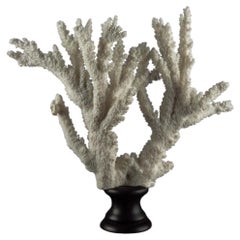
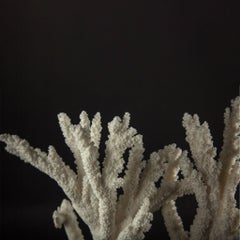
Large Mounted White Branch Coral Specimen

Large Mounted White Branch Coral Specimen

Located in New York, NY

Large Mounted White Branch Coral Specimen An impressive natural white branch coral specimen, mounted on a custom ebonized turned wood display stand. Distinguished by its elegant, tr...

Category

21st Century and Contemporary American Victorian Wood Sculptures

Materials

Coral

15th Century Burgundian Low-Relief Depicting Scenes of the Nativity

15th Century Burgundian Low-Relief Depicting Scenes of the Nativity

Located in Saint-Ouen, FR

Provenance : In the same private collection for several generations, Burgundy. The canonical Gospels describe briefly the episode of the Nativity. It comprises three parts : • The Preludes : the Journey to Bethlehem, the Census • The Nativity • The Announce to the Shepherds and the Adoration of the Magi Only the Gospel according to Matthew (2, 1-12) speaks about the Adoration of the Magi. Staying vague about their number it does say they brought the newborn gold, incense and myrrh. The apocryphals, the fathers of the Church and many other authors have filled in the gaps of the evangelic tale. The sobriety and symbolic of the story have been a huge inspiration to artists. Although one of the oldest depictions of the Adoration of the Magi dates from the 2nd century the theme became very popular in Christian art during the late 14th century. One of the reasons explaining this success is that it celebrates both the Virgin and Christ at the same time. This important walnut panel is carved in a strong relief and depicts the different steps of the story of Jesus’ birth. On the left, the donkey and ox that have accompanied Mary and Joseph from Bethlehem are depicted behind a trough. On the thatch roof appears the star that would guide the magi to the place of birth of Jesus. Mary is wearing a veil and is seating on a bed. She holds her baby at arm’s length to present him to the magi. Saint Joseph is by her side. The old man is holding a cane in his left hand while from the right hand he seems to uncover himself to greet the visitors. A woman assists to the scene. In front of the holy family the three magi stand behind one another to pay their homage to the newborn. The first magi has a pointed beard. He is already kneeling out of deference and has placed his crown to his feet. He gives the baby a hanap filled with gold coins. This is Melchior as the legend describes him with white hair and a long beard. Caspar, the second magi bears a cup of incense. He is looking at the third magi and with his right hand he points to the star that has guided them there. He has a short beard and wears crakow shoes, breeches and a wide sleeved doublet. Finally Balthazar, the elegant last magi proceeds proudly towards the holy family with his one hand on the saber’s hilt and the other holding a cup. He brings the divine child the myrrh. He probably just dismounted as the horse can be seen behind him. The scene is set in a very detailed and narrative decor. In the right part of the panel the shepherd receive the announce of Jesus’ birth. An angel comes down from heaven with a scroll bearing the good news in his hands. The herding dog sleeps peacefully while sheeps graze. At the top of the cliff we notice the gilded sheeps enclosure. The panel’s moulded frame is carved with a foliated decor. In it’s centre appears a coat-of-arms. It is the alliance of the three magi’s arms. Indeed as it was common for legendary figures the three of them received imaginaries coat-of-arms. Thus, on a field of azure stands a star for Melchior, a crescent for Caspar and a pennon for Balthazar. This high-relief panel is undeniably the work of a very skilled and imaginative artist. This key moment in the New Testament is transposed to a contemporary environment thanks to the figures’ clothing and the rural daily life scene. This way the universal dimension of the episode is highlighted allowing a better understanding for the contemporaries. The sculptor has represented the episodes of the Adoration of the Magi and the Announce to the Shepherd with great talent and numerous details giving life to a picturesque and narrative scene. The important traces of polychromy give those already very animated scenes a stronger pictorial power and a rich dynamism. Because of the picturesque and familiar realism so dear to the artists of the late Medieval era, of the didactic function of this type of panel as well as the quality of the sculpture this piece is an astounding example of Burgundian art of the 15th century. Literature Louis Réau, Iconographie de l’Art chrétien...

Category

15th Century and Earlier French Gothic Antique Wood Sculptures

Materials

Walnut

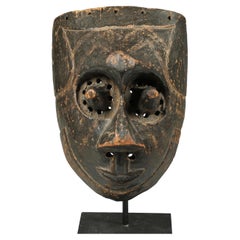
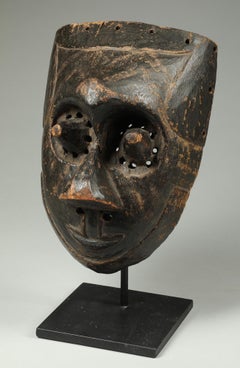
Ancient Cubist Danced Kuba Mask Black Patina Cone Eyes Congo Africa

Ancient Cubist Danced Kuba Mask Black Patina Cone Eyes Congo Africa

Located in Point Richmond, CA

Ancient Cubist Kuba Dance Mask Black Patina, Cone Shaped Eyes, from the Congo, Africa. It is in good condition with wear, polish and erosion from traditional use, appropriate for it...

Category

Mid-20th Century Congolese Tribal Wood Sculptures

Materials

Wood

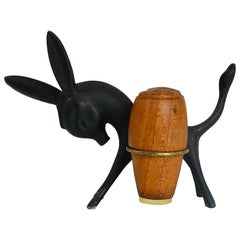
Walter Bosse Donkey Salt and Pepper Shaker Set, Herta Baller, Austria, 1950s

Walter Bosse Donkey Salt and Pepper Shaker Set, Herta Baller, Austria, 1950s

By Herta Baller, Walter Bosse

Located in Vienna, AT

A charming Austrian Mid-Century shaker set, displaying a donkey. A very humorous design by Walter Bosse, executed by Hertha Baller Austria in the 1950s. Made of metal and wood. In go...

Category

Mid-20th Century Austrian Mid-Century Modern Wood Sculptures

Materials

Metal

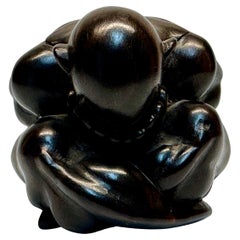
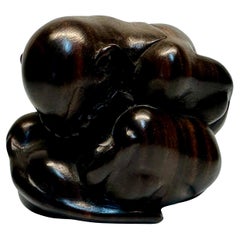
Asian MCM Hand Carved "Weeping Buddha" Sculpture in Solid Zebra Wood

Asian MCM Hand Carved "Weeping Buddha" Sculpture in Solid Zebra Wood

Located in San Diego, CA

Asian MCM hand carved "Weeping Buddha" sculpture in solid zebra wood, circa 1960s. A compelling and tactile hand-carved sculpture of the "Weeping Buddh...

Category

20th Century Balinese Mid-Century Modern Wood Sculptures

Materials

Hardwood, Zebra Wood

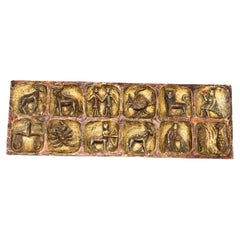
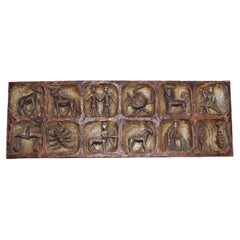
Stunning Wooden Zodiac Wall Plaque Relief Brutalist Midcentury, German, 1970s

Stunning Wooden Zodiac Wall Plaque Relief Brutalist Midcentury, German, 1970s

Located in Nuernberg, DE

A beautifully crafted wooden wall plaque relief depicting all zodiac signs, designed in a bold Brutalist style and produced in Germany in the 1970s. The expressive carved forms and s...

Category

1970s German Brutalist Vintage Wood Sculptures

Materials

Plywood

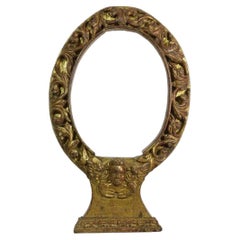
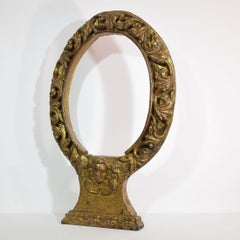
17th Century, Spanish Giltwood Baroque Altarpiece with Angel Head

17th Century, Spanish Giltwood Baroque Altarpiece with Angel Head

Located in Buisson, FR

Stunning and complete unique early Baroque altarpiece with beautiful and very rich carved and gilded decor, Spain, circa 1650 Weathered, small losses, old repairs and adjustments of ...

Category

17th Century Spanish Baroque Antique Wood Sculptures

Materials

Wood

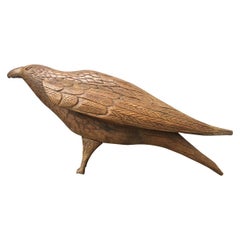
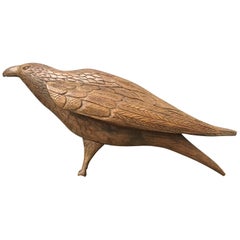
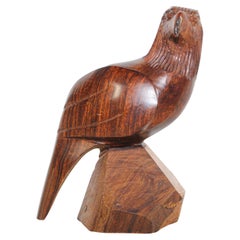
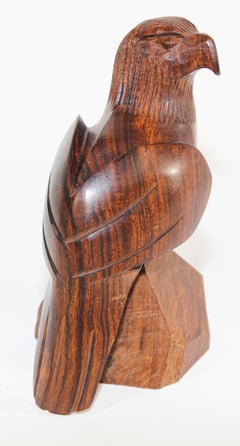
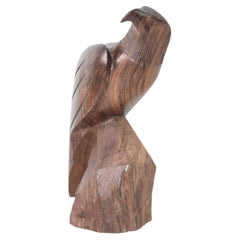
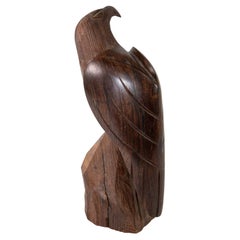
Vintage Sculpture of an American Eagle Carved in Seri Ironwood

Vintage Sculpture of an American Eagle Carved in Seri Ironwood

Located in Moreno Valley, CA

Vintage Sculpture of an American Eagle Carved in Seri Ironwood. Vintage hand carved Ironwood Southwestern seri sculpture of an Eagle. Dimensions: 5.5" x 3.5". circa 1970. Ironwood hand carved eagle or falcon...

Category

Mid-20th Century American Folk Art Wood Sculptures

Materials

Wood

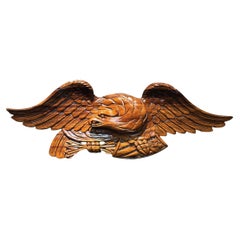
Vintage Hand-Carved Teak Bellamy Eagle with Shield

Vintage Hand-Carved Teak Bellamy Eagle with Shield

Located in Colorado Springs, CO

Presented is a beautiful hand-carved spreadwing eagle plaque. This early 20th century wood eagle is carved of teak and handsomely polished. With its feather spread out, the eagle clu...

Category

Early 20th Century American Wood Sculptures

Materials

Teak

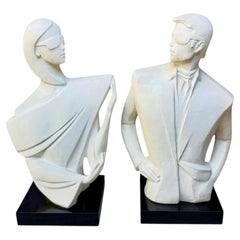
Pair of 1987 David Fisher “Mysterious I & II” Sculptures for Austin Productions

Pair of 1987 David Fisher “Mysterious I & II” Sculptures for Austin Productions

By Austin Productions, David Fisher

Located in Stafford, TX

Pair of 1987 David Fisher “Mysterious I & II” Sculptures for Austin Productions An iconic pair of Postmodern figurative bust sculptures titled “Mysterious I” and “Mysterious II,...

Category

1980s American Post-Modern Vintage Wood Sculptures

Materials

Acrylic, Plaster, Wood

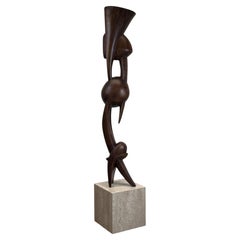
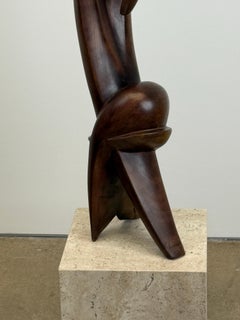
Large Floor Standing Sculpture, 1966

Large Floor Standing Sculpture, 1966

Located in Dallas, TX

A large and impressive abstract walnut floor standing sculpture mounted on a travertine base. Signed and dated 1966.

Category

1960s Vintage Wood Sculptures

Materials

Walnut

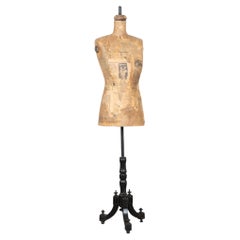
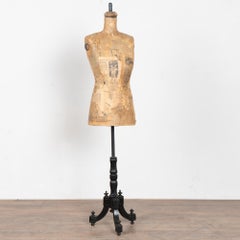
20th Century Vintage Dressmaker's Mannequin Covered in Old Newsprint

20th Century Vintage Dressmaker's Mannequin Covered in Old Newsprint

Located in Round Top, TX

This vintage dress/suit form is perfect for displaying dressed up or simply as a fun vintage accent. An additional feature of the mannequin is the black painted wood tripod base wit...

Category

Mid-20th Century Hungarian Folk Art Wood Sculptures

Materials

Wood, Paint, Paper

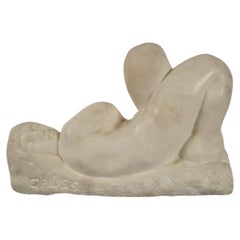
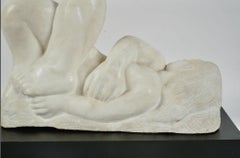
Eugene Gauss (1905 - 1988) Marble Sculpture of Reclining Nude, dated 1978

Eugene Gauss (1905 - 1988) Marble Sculpture of Reclining Nude, dated 1978

By Eugene Gauss

Located in Pasadena, CA

This is a beautifully sculpted marble nude, signed and dated 1978 by noted Sculptor Eugene Gauss. The reclining nude is reminiscent of Picasso and is executed in fine statuary marble...

Category

1970s American Mid-Century Modern Vintage Wood Sculptures

Materials

Statuary Marble

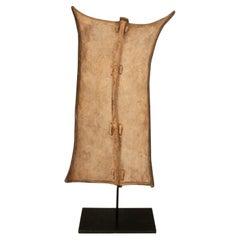
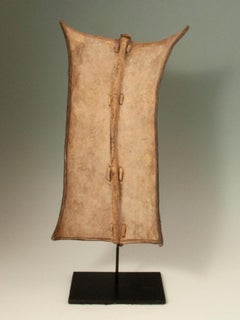
Early 20th Century Leather Shield, Taposa/Turkana, South Sudan

Early 20th Century Leather Shield, Taposa/Turkana, South Sudan

Located in Point Richmond, CA

Leather Shield, South Sudan A small leather shield typical of the region known as an upwal, concave hide is attached to a reed spine with plaiting to form a strong grip. Mounted on ...

Category

Early 20th Century Sudanese Tribal Wood Sculptures

Materials

Wood, Leather

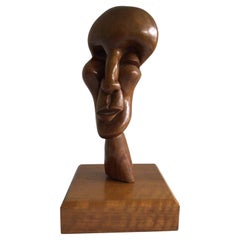
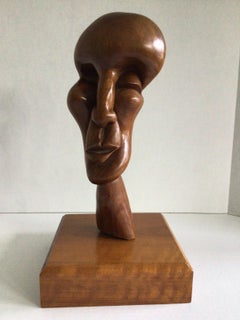
1990s Hand-Carved Wood Biomorphic Face Sculpture on Wood Base

1990s Hand-Carved Wood Biomorphic Face Sculpture on Wood Base

Located in Tarrytown, NY

1990s Hand-Carved Wood Biomorphic Face Sculpture on Wood Base Signed on the back of neck: Tiffany Ross 1992 (as shown in pictures)

Category

1990s Wood Sculptures

Materials

Wood

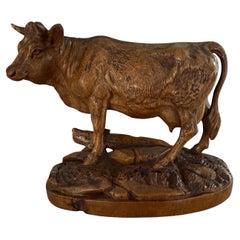
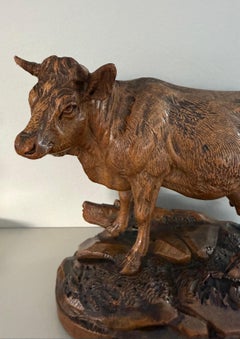
Finest Quality, Antique Hand Carved Nutwood Swiss Black Forest Cow Sculpture

Finest Quality, Antique Hand Carved Nutwood Swiss Black Forest Cow Sculpture

Located in Lisse, NL

Museum quality and condition Swiss black forest sculpture. For collectors of the rarest and finest Black Forest sculptures: this incredibly detailed, hand-carved cow could only orig...

Category

Late 19th Century Swiss Black Forest Antique Wood Sculptures

Materials

Nutwood

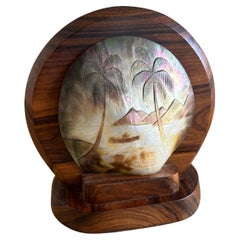
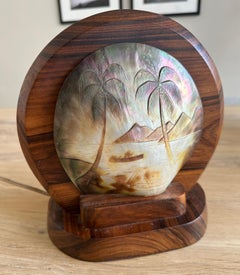
Midcentury Tropical Island Table Lamp with Carved Translucent Panel

Midcentury Tropical Island Table Lamp with Carved Translucent Panel

Located in Lisse, NL

Wonderful mid twentieth century table lamp with a carved tropical island scene. Over the decades we have sold a number of rare, great looking and meaningful tropical and exotic inspired light fixtures, but this sculptural table lamp is certainly one of the more unusual ones. The circular wooden body, the warm grain of the wood and the beautifully carved translucent decorative panel together create a striking and highly decorative midcentury design. The front panel shows a romantic tropical island scene with palm trees, a small boat and a sunset-like landscape. Even with the light switched off, the carved scene has a wonderful natural depth and character. However, when the lamp is switched on, the entire scene comes to life and the warm light shining through the translucent panel creates a beautiful and atmospheric effect. It makes this lamp both a practical light source and a decorative object with real presence. The combination of the rounded wooden frame, the stepped base and the illuminated tropical view gives this piece a charming midcentury holiday feel. It would look wonderful on a side table, console, desk, bedside table or in a relaxed interior where one unique and warm accent piece can make all the difference. This lamp is in very good condition with only minor wear consistent with age and use. The socket and wiring can of course be checked and professionally prepared for safe usage before shipping. If you like the uniqueness, the quality, the warm design and the wonderful atmosphere of this midcentury tropical table lamp...

Category

Mid-20th Century Arts and Crafts Wood Sculptures

Materials

Wood

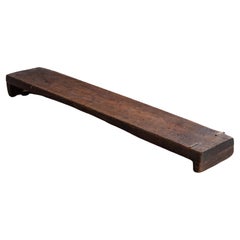
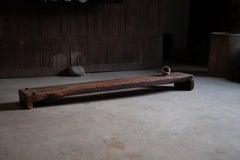
Japanese Antique Keyaki Low Display Stand, Sculptural Wabi-Sabi, c.1900–1920

Japanese Antique Keyaki Low Display Stand, Sculptural Wabi-Sabi, c.1900–1920

Located in 常陸大宮市, JP

Dating from the late Meiji to Taisho period, circa 1900–1920, this Japanese antique low stand is crafted entirely from solid keyaki (zelkova), featuring a thick single-board top and ...

Category

Early 20th Century Japanese Primitive Wood Sculptures

Materials

Wood

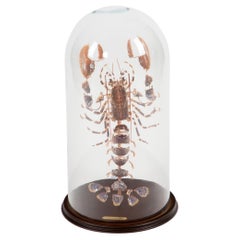
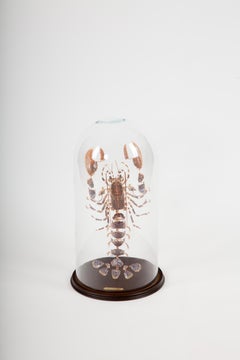
Deconstructed Lobster (Homarus Gammarus) Specimen Under Glass Dome, 28"H

Deconstructed Lobster (Homarus Gammarus) Specimen Under Glass Dome, 28"H

Located in New York, NY

Deconstructed Lobster (Homarus Gammarus) Specimen Under Glass Dome. The European lobster, scientifically referred to as Homarus gammarus or commonly known as the common lobster, is ...

Category

21st Century and Contemporary French Other Wood Sculptures

Materials

Shell, Glass, Wood

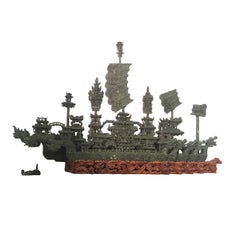
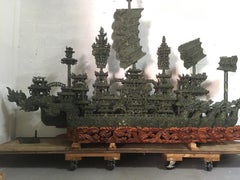
20th Jade Sculpture with Nine Dragon Boat **** 16 Foots Large***

20th Jade Sculpture with Nine Dragon Boat **** 16 Foots Large***

Located in Miami, FL

Chinese Scrib, but handcrafted in Thailand. Sixteen feet long. Rosewood base. The sculptors of this enormous boat made of jade. You will admire the details of this vessel. The dragon is the ultimate symbol of auspiciousness. It is the most important symbol in both Feng Shui and in Chinese folklore. It's most powerful when displayed in the east sector of your home, office or location of the piece. This dragon jade boat...

Category

Early 20th Century Thai Chinoiserie Wood Sculptures

Materials

Jade

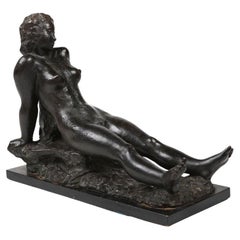
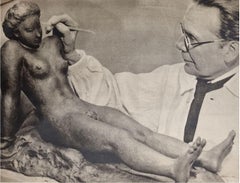
Bronze Sculpture by Gerhard Henning - "Seated Girl with Outstretched Legs"

Bronze Sculpture by Gerhard Henning - "Seated Girl with Outstretched Legs"

By Gerhard Henning

Located in Kastrup, DK

Gerhard Henning (Danish, 1880-1967) Dark patinated bronze sculpture, "Seated Girl with Outstretched Legs" ("Siddende pige med strakte ben"), 1938-1942 Signed: G. Henning No. I This sculpture is the first casting (No. I) of a work produced in only six editions by the Royal Court Bronze Founder, Lauritz...

Category

Mid-19th Century Danish Modern Antique Wood Sculptures

Materials

Bronze

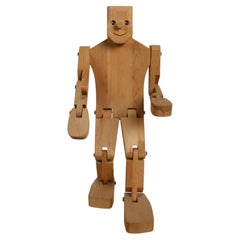
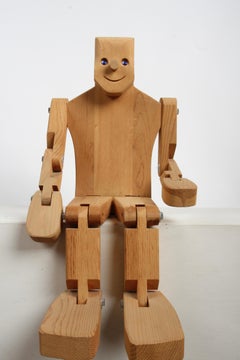
Don Ellefson 28" Tall POP ART Articulated Wood "Robot" Sculpture, Circa 1980

Don Ellefson 28" Tall POP ART Articulated Wood "Robot" Sculpture, Circa 1980

Located in St. Louis, MO

This captivating and delightfully expressive vintage folk art articulated wooden figure is a striking creation by American artist Don Ellefson. Evoking a playful mix of traditional A...

Category

1980s American Mid-Century Modern Vintage Wood Sculptures

Materials

Wood

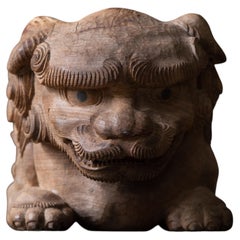
Japanese Antique Hand-Carved Keyaki Wood Komainu Sculpture Early 20th Century

Japanese Antique Hand-Carved Keyaki Wood Komainu Sculpture Early 20th Century

Located in 常陸大宮市, JP

Antique Japanese Wooden sculpture of Komainu (Lion Dog / Foo Dog), product of Taisho to early Showa period, Circa 1910s to 1930s. Main part are Hand-carved from a single solid slab o...

Category

Early 20th Century Japanese Meiji Wood Sculptures

Materials

Wood, Hardwood

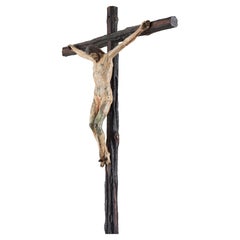
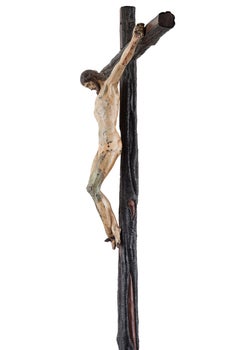
Rare and important painted bronze Crucifix after a model by Michelangelo

Rare and important painted bronze Crucifix after a model by Michelangelo

By Michelangelo Buonarroti

Located in Leesburg, VA

A rare and very fine bronze corpus of Christ after a model by Michelangelo, cast ca. 1597-1600 by Juan Bautista Franconio and painted in 1600 by Francisco Pacheco in Seville, Spain. The present corpus reproduces a model attributed to Michelangelo. The best known example, lesser in quality, is one on display at the Metropolitan Museum of Art (MET). The association of this corpus with Michelangelo was first brought to light by Manuel Gomez-Moreno (1930-33) who studied the wider circulated casts identified throughout Spain. The attribution to Michelangelo was subsequently followed by John Goldsmith-Phillips (1937) of the MET and again by Michelangelo expert, Charles de Tolnay (1960). While Michelangelo is best known for his monumental works, there are four documented crucifixes he made. The best known example is the large-scale wooden crucifix for the Church of Santa Maria del Santo Spirito in Florence, made in 1492 as a gift for the Prior, Giovanni di Lap Bicchiellini, for allowing him to study the anatomy of corpses at the hospital there. In 1562, Michelangelo wrote two letters to his nephew, Lionardo, indicating his intention to carve a wooden crucifix for him. In 1563 a letter between Lionardo and the Italian sculptor Tiberio Calcagni, mentions this same crucifix (a sketch of a corpus on the verso of a sheet depicting Michelangelo’s designs for St. Peter’s Basillica [Palais des Beaux-Arts in Lille] may reproduce this). That Michelangelo was working on small corpora in the last years of his life is further evidenced by the small (26.5 cm) unfinished wooden crucifix located at the Casa Buonarroti, considered his last known sculptural undertaking. Michelangelo’s contemporary biographer, Giorgio Vasari additionally cites that Michelangelo, in his later years, made a small crucifix for his friend, Menighella, as a gift. Surviving sketches also indicate Michelangelo’s study of this subject throughout his career, most notably during the end of his life but also during the 1530s-40s as he deepened his spiritual roots. The occasional cameo of crucified Christ’s throughout his sketched oeuvre have made it challenging for scholars to link such sketches to any documented commissions of importance. All the while, in consideration that such objects were made as gifts, it is unlikely they should be linked with commissions. Nonetheless, a number of theories concerning Michelangelo’s sketches of Christ crucified have been proposed and some may regard the origin of the present sculpture. It has been suggested that the corpus could have its impetus with Michelangelo’s work on the Medici Chapel, whose exclusive design was given to the master. It is sensible smaller details, like an altar cross, could have fallen under his responsibility (see for example British Museum, Inv. 1859,0625.552). Others have noted the possibility of an unrealized large marble Crucifixion group which never came to fruition but whose marble blocks had been measured according to a sheet at the Casa Buonarroti. A unique suggestion is that Michelangelo could have made the crucifix for Vittoria Colonna, of whom he was exceedingly fond and with whom he exchanged gifts along with mutual spiritual proclivities. In particular, Vittoria had an interest in the life of St. Bridget, whose vision of Christ closely resembles our sculpture, most notably with Christ’s proper-left leg and foot crossed over his right, an iconography that is incredibly scarce for crucifixes. The suggestion could add sense to Benedetto Varchi’s comment that Michelangelo made a sculpted “nude Christ…he gave to the most divine Marchesa of Pescara (Vittoria Colonna).” Of that same period, two sketches can be visually linked to our sculpture. Tolnay relates it to a sketch of a Crucified Christ at the Teylers Museum (Inv. A034) of which Paul Joannides comments on its quality as suggestive of preparations for a sculptural work. Joannides also calls attention to a related drawing attributed to Raffaello da Montelupo copying what is believed to be a lost sketch by Michelangelo. Its relationship with our sculpture is apparent. Montelupo, a pupil of Michelangelo’s, returned to Rome to serve him in 1541, assisting with the continued work on the tomb of Pope Julius II, suggesting again an origin for the corpus ca. 1540. The earliest firm date that can be given to the present corpus is 1574 where it appears as a rather crudely conceived Crucifixion panel, flanked by two mourners in low-relief and integrally cast for use as the bronze tabernacle door to a ciborium now located at the Church of San Lorenzo in Padula. Etched in wax residue on the back of the door is the date, 27 January 1574, indicating the corpus would have at least been available as a model by late 1573. The Padula tabernacle was completed by Michelangelo’s assistant, Jacopo del Duca and likely has its origins with Michelangelo’s uncompleted tabernacle for the Basilica of St. Mary of the Angels in Rome. The impetus for the Padula tabernacle’s Crucifixion panel begins with a series of late Crucifixion sketches by Michelangelo, depicting a scene of Christ crucified and flanked by two mourners (see British Museum Inv. 1895.0915.510; Ashmolean Museum Inv. 1846.89, KP II 343 recto; Windsor Castle RCIN 912761 recto; and Louvre Inv. 700). A faintly traced block possibly intended for sculpting the sketch of the crucified Christ on its recto was discovered by Tolnay on a version of the composition at Windsor Castle. The Windsor sketch and those related to it appear to have served as preparatory designs for what was probably intended to become the Basilica of St. Mary’s tabernacle door. Vasari documents that the project was to be designed by Michelangelo and cast by his assistant, Jacopo del Duca. Michelangelo died before the commission was complete, though on 15 March 1565, Jacopo writes to Michelangelo’s nephew stating, “I have started making the bronze tabernacle, depending on the model of his that was in Rome, already almost half complete.” Various circumstances interrupted the completion of the tabernacle, though its concept is later revitalized by Jacopo during preparations to sell a tabernacle, after Michelangelo’s designs, to Spain for Madrid’s El Escorial almost a decade later. The El Escorial tabernacle likewise encountered problems and was aborted but Jacopo successfully sold it shortly thereafter to the Carthusians of Padula. An etched date, 30 May 1572, along the base of the Padula tabernacle indicates its framework was already cast by then. A 1573 summary of the tabernacle also describes the original format for the door and relief panels, intended to be square in dimension. However, a last minute decision to heighten them was abruptly made during Jacopo’s negotiations to sell the tabernacle to King Phillip II of Spain. Shortly thereafter the commission was aborted. Philippe Malgouyres notes that the Padula tabernacle’s final state is a mixed product of the original design intended for Spain’s El Escorial, recycling various parts that had already been cast and adding new quickly finished elements for its sale to Padula, explaining its unusually discordant quality, particularly as concerns the crudeness of the door and relief panels which were clearly made later (by January 1574). Apart from his own admission in letters to Spain, it is apparent, however, that Jacopo relied upon his deceased master’s designs while hastily realizing the Padula panels. If Michelangelo had already earlier conceived a crucifix model, and Jacopo had access to that model, its logical he could have hastily employed it for incorporation on the door panel to the tabernacle. It is worth noting some modifications he made to the model, extending Christ’s arms further up in order to fit them into the scale of the panel and further lowering his chin to his chest in order to instill physiognomic congruence. A crude panel of the Deposition also follows after Michelangelo’s late sketches and is likewise known by examples thought to be modifications by Jacopo based upon Michelangelo’s initial sculptural conception (see Malgouyres: La Deposition du Christ de Jacopo del Duca, chef-d’oeuvre posthume de Michel-Ange). Jacopo’s appropriation of an original model by Michelangelo for more than one relief on the Padula tabernacle adds further indication that the crucifix was not an object unique to Jacopo’s hand, as few scholars have posited, but rather belongs to Michelangelo’s original...

Category

16th Century Renaissance Antique Wood Sculptures
Materials

Bronze

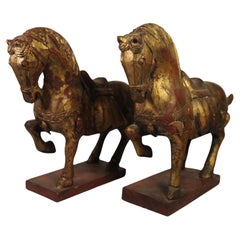
A Vibrant Pair of Tang Dynasty Style Hand Painted & Hand Carved Chinese Horses

A Vibrant Pair of Tang Dynasty Style Hand Painted & Hand Carved Chinese Horses

Located in Reading, Berkshire

A Vibrant Pair of Tang Dynasty Style Hand Painted & Hand Carved Chinese Horses - priced as a pair Decorative wooden horses that would suitably adorn a shelf, a large desk, or p...

Category

20th Century Chinese Tang Wood Sculptures

Materials

Wood, Paint

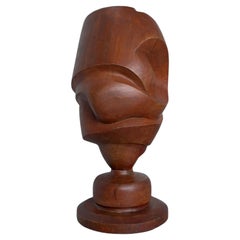
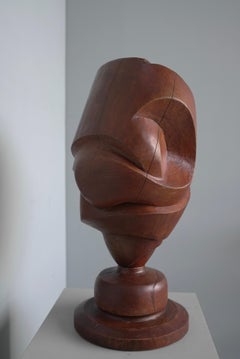
Wooden Mid-Century Modern Sculpture by Dutch Artist Jef Depassé 1970

Wooden Mid-Century Modern Sculpture by Dutch Artist Jef Depassé 1970

Located in Den Haag, NL

Wooden Mid-Century Modern Sculpture by Dutch Artist Jef Depassé 1970 Hand Carved wood and different and impressive from every angle. Wood that shines due to various light that reflec...

Category

1970s Dutch Mid-Century Modern Vintage Wood Sculptures

Materials

Wood

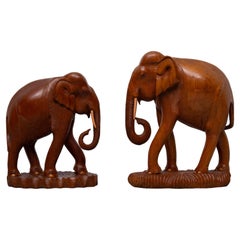
Large Carved Teak Elephant Statues Together with a Smaller Elephant  1950s

Large Carved Teak Elephant Statues Together with a Smaller Elephant 1950s

Located in Den Haag, NL

Lovely set of solid Teak wood Elephants .Remarkably large . all original even the Wooden tusks . Very nice carving . one slightly larger than the other . 1950s Hand carved .

Category

1950s Central Asian Mid-Century Modern Vintage Wood Sculptures

Materials

Teak

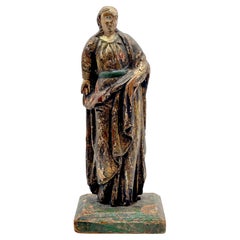
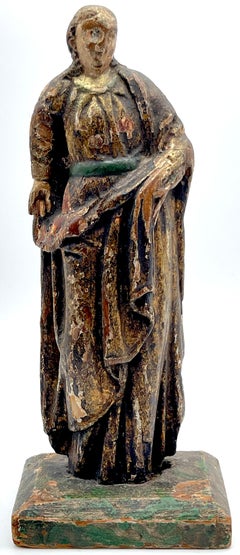
18th Century Italian Baroque Santos Figure

18th Century Italian Baroque Santos Figure

Located in West Palm Beach, FL

18th Century Italian Baroque Santos Figure  Italy, 18th century or older An exquisite 18th-century Italian Baroque Santos figure is a fine example of religious artistry, dating back...

Category

18th Century Italian Baroque Antique Wood Sculptures
Materials

Wood

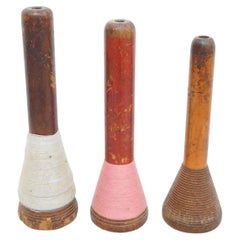
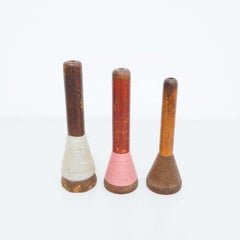
Set of Three Rustic Wooden Spools of Thread, circa 1930

Set of Three Rustic Wooden Spools of Thread, circa 1930

Located in Barcelona, ES

Rustic wooden spools of thread, by unknown manufacturer from Spain, circa 1930. In original condition, with minor wear consistent with age and use, preserving a beautiful patina. ...

Category

1930s Spanish Mid-Century Modern Vintage Wood Sculptures
Materials

Wood

Read More

He Wrote ‘Oedipus Rex,’ but Do You Know What He Looked Like?

The Greek tragedian is said to have been handsome in his day.

These Soft Sculptures Are Childhood Imaginary Friends Come to Life
Miami artist and designer Gabriela Noelle’s fantastical creations appeal to the Peter Pan in all of us.

Salvatori Commissioned Several Famous Architects to Create Miniature Homes in Stone

Gabriele Salvatori explains how the COVID lockdowns inspired his design company's latest collection, the Village.

Christopher Norman Is Turning the Cast-Off Urban Trees of Los Angeles into Art

With a World War II–era milling machine, the California artist crafts poetic, sculptural furniture pieces.

These Human-Size Ceramic Hares Evoke Serious Emotions

Swedish artist Margit Brundin's large anthropomorphic animal sculptures are on view for the first time in the United States at Dienst + Dotter Antikviteter, in New York.
Tour the Wabi-Sabi New York Apartment of Andrianna Shamaris

As her sun-filled home reveals, the furniture maker and dealer puts a contemporary spin on antiques from around the globe.

Vicente Wolf’s Tips for Finding — and Living with — Eastern Treasures
The A-list designer shares his expertise on choosing authentic objects and displaying them with style.
Rodrigo Rivero Lake’s Mexico City Showroom Is a Museum-Worthy Trove of Spanish Colonial and Asian Antiques
The dealer and curator has spent the past 50 years amassing a collection of exceptional art, furniture and architectural elements that trace the cultural influence of the Spanish empire from Europe to the Americas and beyond.