Located in BUNGAY, SUFFOLK
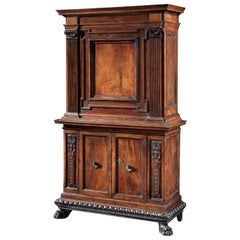
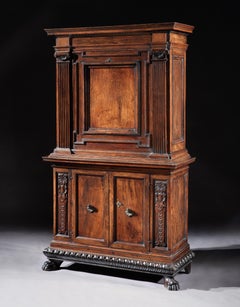
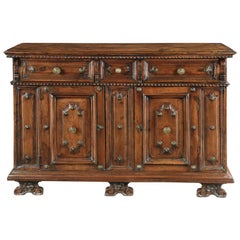
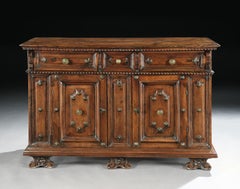
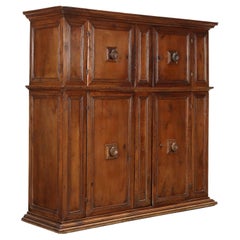
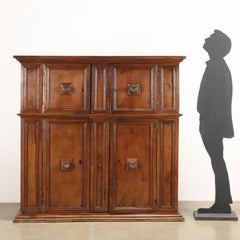
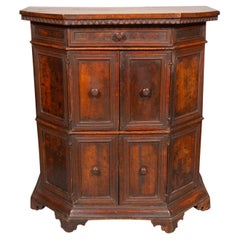
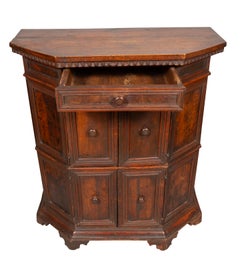
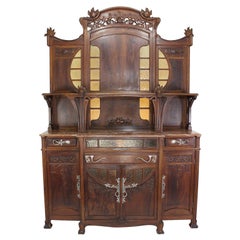
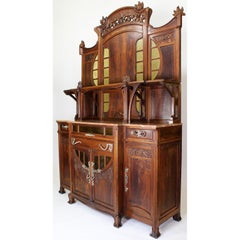
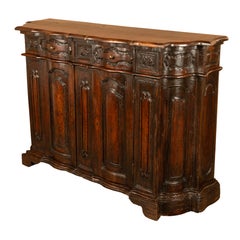
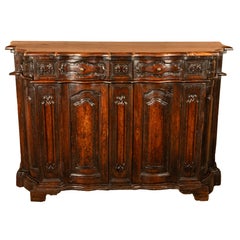
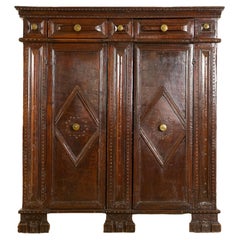
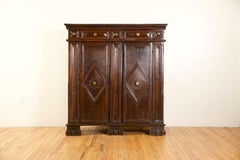
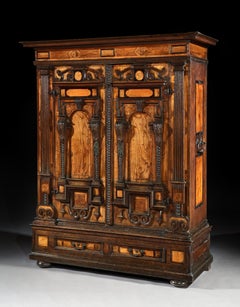
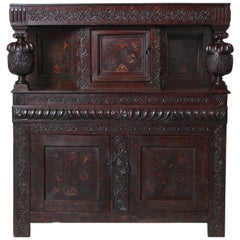
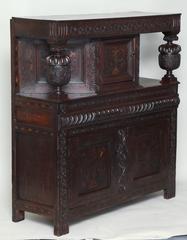
An Exceptional, Museum Quality, Mannerist, German, Façade Cabinet or Fassadenschrank in three sections
The ultimate status symbol and feat of mannerist cabinetmaking, this Fassadenschrank incorporates layers of inlay of different woods prized for their colour and beautifully figured grains to simulate different materials used within a mannerist architectural façade creating a striking, visual display, inviting conversation, curiosity and wonder. The success lies in the virtuoso of the cabinet maker in balancing proportions, combining carving with layers and different shapes of inlaid and banded, intricate ornament, selecting of woods of different colours with finely, figured graining to create a jewel-like, statement piece which, when new, would have been very bright and the contrast between the woods particularly the ebony and fruitwood would have been dramatic and dazzling. It is very unusual to find a piece from this period retaining the original metalware which is of characteristically high quality beautifully chased. This cabinet is too elaborate to be a church piece. It would have been in a substantial household, most likely used by the owner, its religious iconography suggesting that it was placed in a private family room possibly for storing devotional objects as well as clothing which the shelf holes and shelves indicate and was customary. It incorporates a large amount of versatile storage space and is sturdy and usable.
The deep, moulded, oak cornice has with a generous, walnut veneered frieze below incorporating striking, geometric inlay. The central and end panels with ash with ebonised and fruitwood banding within an ebonised oak frame with two large panels interposed each with a burr walnut hexagon with ebonised and fruitwood banding and long panels of finely, figured elm with ebonised and fruitwood banding either side. The sides veneered with walnut.
The cupboard section with deep, oak moulding above a pair of large, walnut veneered and crossbanded doors incorporating many intricate inlays and carved ornamentation simulating niches or windows with a mannerist facade. Each door is surmounted with a central pediment, above an ebony pillar containing a circular fruitwood panel, one inlaid with the cypher ‘HIS’ and the other ‘MRIA’ with large, oak, scrollwork oak aedicula either side. IHS’ a monogram of the first three letters of Jesus in Greek (ΙΗΣΟΥΣ) is inlaid on the left door roundel. ‘MRIA’ probably a monogram of Mara Regina Angelorum, meaning Mary Queen of Angels’, is inlaid in the left door roundel. The large oak pediment...
Category
German Renaissance Antique Early 1600s Case Pieces and Storage Cabinets