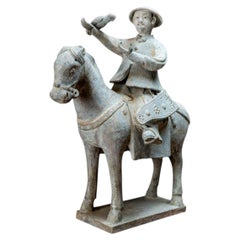
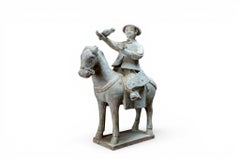
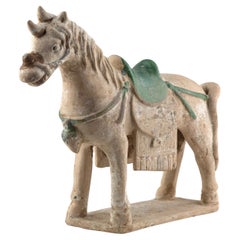
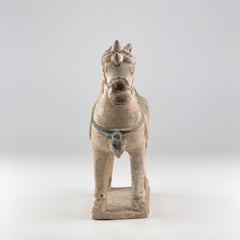
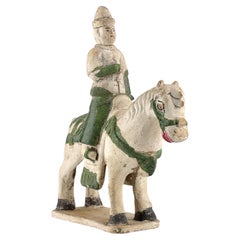
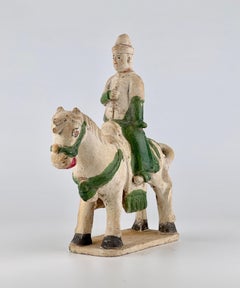
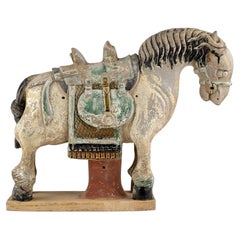
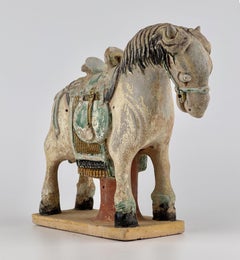
The figure stands on a rectangular base. The horse is depicted in a poised stance, with strong, muscular legs and a slightly bowed head. The mane is carefully sculpted with deep, flowing grooves, adding a dynamic texture to the piece. The head features expressive details, including a well-defined muzzle, flared nostrils. The bridle and harness are delicately painted in faded green, contrasting against the creamy beige body. The saddle is adorned with intricate details, including decorative tassels and a textured pattern, indicative of the elaborate tack used in the Ming period.
Traces of original polychrome pigments in green, black, and ochre remain on the surface, hinting at the sculpture’s once-vibrant appearance. The weathered patina and areas of flaking paint add to its historical authenticity, reflecting centuries of age. The overall craftsmanship and detailing exemplify the Ming Dynasty’s refined ceramic artistry, making this piece a remarkable representation of of asian culture during this period.
Period: Ming Dynasty
Medium: Green, black, and ochre glazed Pottery
Type: Figure
Condition : Good(chips on the upper saddle.)
Provenance : Acquired in late 1990s from Hongkong
Reference : Asian Civilisations Museum - Accession No. C-1384 / 1994-00441 - Ming Dynasty Figure of Horse
(Type : Closely Related)
* Ming Dynasty Glazed Pottery Figures
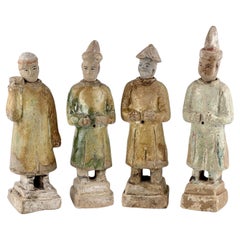
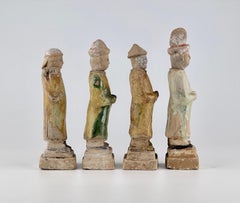
Ming Dynasty glazed pottery figures are renowned for their bold color palette, intricate detailing, and lifelike forms, distinguishing them from earlier traditions. These figures, which depict officials, warriors, animals, and mythical creatures, are characterized by high-gloss lead-based glazes in green, amber, ochre, and sancai (three-color) combinations. The thickly applied glaze pools in recesses, creating depth and enhancing sculptural details. With dynamic postures, expressive facial features, and meticulously rendered drapery, these figures reflect the period’s advancement in ceramic craftsmanship, offering a greater sense of movement and realism compared to the rigid and stylized forms of earlier dynasties.
A defining characteristic of Ming glazed pottery is its elaborate surface detailing, often achieved through raised relief elements and contrasting glazes. Equestrian figures, for example, feature carefully sculpted saddles, harnesses, and decorative embellishments, while human figures are adorned with intricate robes and headdresses. The large scale of these tomb figures, often more imposing than those from previous periods, underscores the increasing importance of funerary art during the Ming era. Unlike later Qing Dynasty figures...
Category
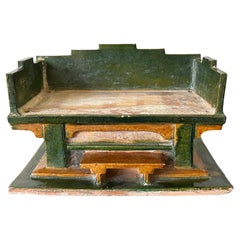
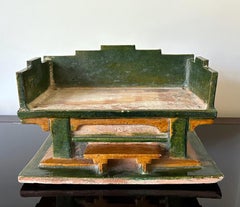
15th Century and Earlier Hong Kong Antique Ming Furniture