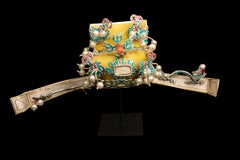
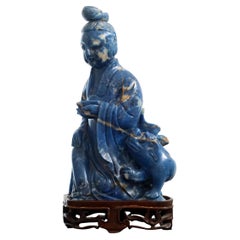
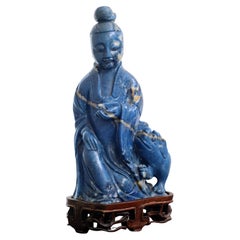
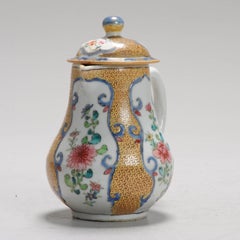
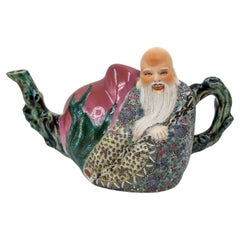
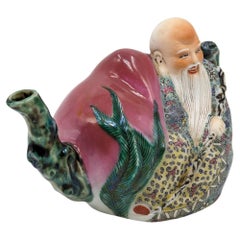
Step into a vivid chapter of Chinese history with this exquisite Chinese vintage porcelain polychrome ewer, a piece that embodies the rich cultural and artistic tapestry of the late Qing to early Republic period. The ewer presents itself as a large, vibrant peach, a symbol of longevity and immortality in Chinese culture, offering a visual treat with its intricate detailing and vibrant hues.
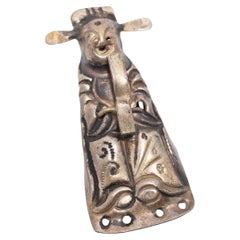
Beside the peach sits a bearded sage in robes, a figure that brings a touch of wisdom and reverence to the piece. The sage, depicted in a contemplative pose, adds a layer of narrative depth to the ewer, inviting viewers to delve into the stories and philosophies of ancient China. The ewer's handle and spout, crafted to resemble branches, blend seamlessly with the overall design, adding a touch of natural elegance to the piece.
A significant highlight of this ewer is the apocryphal "Fu Jian Hui Guan" seal mark found on its flat bottom, a mark that evokes a rich history. The original Fu Jian Hui Guan, also known as the Tianhou Xinggong, is a closed classical temple built in 1884 and completed in 1906, serving as a place of worship for the sea goddess Mazu, showcasing the typical Minnan style. This establishment, popular among overseas Chinese communities, particularly in Southeast Asia, became a hub for the creation of porcelain sculptures, often depicting deities, under the influence of renowned artists like You Zechang. These creations, distinct in style and highly revered, found a cherished place in the hearts of overseas Chinese communities, marking a significant chapter in the history of Chinese porcelain artistry.
This vintage ewer...
Category
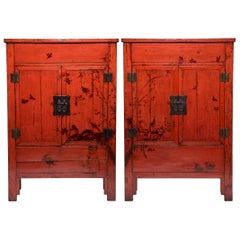
Mid-20th Century Chinese Qing Furniture