Antique Louvre Bas-Relief Print, Cour Carrée Allegorical Figures – Baltard 1803
Description:
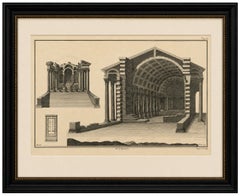
This elegant early 19th-century architectural engraving originates from the rare and influential publication *Paris et ses Monuments, mesurés, dessinés et gravés*, created by the French architect and engraver Louis-Pierre Baltard and published in Paris in 1803. Dedicated to Napoleon Bonaparte, Baltard’s monumental work was conceived as a comprehensive visual record of the most important architectural monuments of Paris. Through carefully measured drawings and highly refined copperplate engravings, Baltard documented sculptural and architectural details with remarkable clarity and precision.
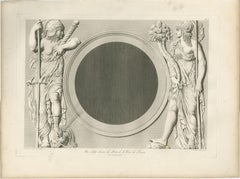
The present plate is titled *Bas-reliefs dessus de Porte de la Cour du Louvre* (Bas-relief above a door in the courtyard of the Louvre). The engraving illustrates a sculptural relief located in the celebrated Cour Carrée of the Louvre Palace, specifically on the Lescot Wing, one of the earliest Renaissance sections of the palace.
The sculptural composition frames a large circular oculus at the center of the relief. On either side stand two monumental allegorical female figures dressed in classical drapery and wearing antique helmets. These figures originate from the sculptural program of the Louvre designed during the French Renaissance and are attributed to the renowned sculptor Jean Goujon (c.1510–1567), one of the most influential artists of the School of Fontainebleau.
The left figure is generally interpreted as the allegory of History. She is shown in classical dress, leaning upon a staff and poised as if ready to record events. Such representations symbolized the preservation of royal deeds and historical memory, themes closely associated with Renaissance court culture.
Opposite her stands the allegorical figure of Fame (Renommée). She holds symbolic attributes associated with renown and glory, reinforcing the celebratory tone of the sculptural program that decorated the royal palace. Together these allegories were designed to glorify the monarchy and commemorate the achievements of the French crown.
Jean Goujon’s sculptural style is evident in the elongated proportions and graceful poses of the figures. The drapery falls in soft, fluid folds that cling delicately to the bodies, a technique often described as “wet drapery,” characteristic of Goujon’s work and the broader aesthetic of the Fontainebleau school. Surrounding the figures, the circular architectural opening is framed by smooth classical moldings that contrast with the finely modeled sculpture.
Baltard’s engraving captures these Renaissance sculptures with extraordinary technical precision. Using fine burin work and dense hatchings, he recreated the sculptural depth and subtle modeling of the stone relief. The careful rendering of textures—from the smooth architectural surfaces to the delicate folds of drapery—demonstrates the scientific and artistic rigor with which Baltard approached the documentation of Parisian monuments.
Architectural engravings such as this were produced both as scholarly records and as educational tools for artists and architects studying classical ornament and Renaissance architecture. Today prints from *Paris et ses Monuments* remain highly sought after by collectors of architectural prints, historians of French art, and interior designers seeking authentic classical imagery.
This is an original print from the year of publication, not a later reproduction. The print is offered unframed, allowing the buyer complete freedom to select framing appropriate to personal taste or interior design preferences. Any framed examples shown in photographs are for visual inspiration only.
Condition:
Good antique condition with general age-related toning and occasional light foxing. Wide margins preserved. Strong impression with visible plate mark. Minor handling wear consistent with age.
Framing tips:
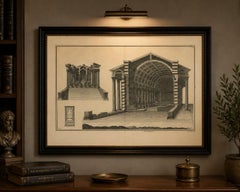
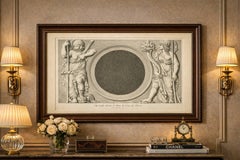
This engraving displays beautifully with a generous ivory or warm cream mat and a dark walnut, ebonized, or gilded frame. The wide horizontal composition makes it ideal above desks, console tables, or as part of a curated wall of architectural studies.
Technique: copperplate engraving
Maker: Louis-Pierre Baltard, Paris, 1803
Keyword block:
antique architectural print, louvre bas relief engraving, baltard paris monuments, cour carrée sculpture print, jean goujon relief, french renaissance architecture print, allegorical sculpture engraving, louvre palace decoration print, neoclassical architectural engraving, paris monument engraving 1803, classical allegory sculpture print, french architectural ornament print, antique paris architecture print...
Category
Early 19th Century French Antique Engraved Furniture