Art by Medium: Lithograph

to
6,812
15,777
6,184
9,503
3,606
1,823
Overall Width
to
Overall Height
to
68
5,850
28,602
2,399
365
399
992
1,230
1,480
3,508
4,929
6,433
3,552
1,459
45
10,189
4,540
3,471
2,481
1,501
912
854
613
523
122
104
90
58
44
24,631
11,622
575
15,757
8,485
5,483
5,292
4,654
3,665
3,428
2,426
2,212
2,127
1,934
1,351
1,300
1,297
1,178
1,029
1,027
880
867
754
36,921
182,509
97,378
79,319
77,917
807
760
341
330
275
3,830
12,228
19,569
13,745
Medium: Lithograph
original lithograph

original lithograph

By Joan Miró

Located in Henderson, NV

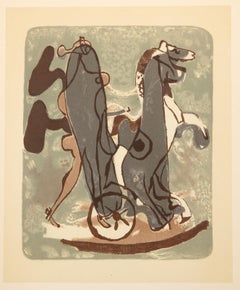
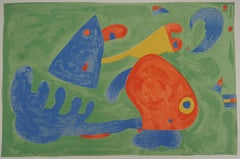
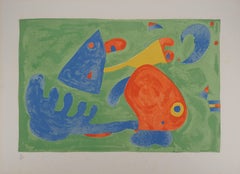
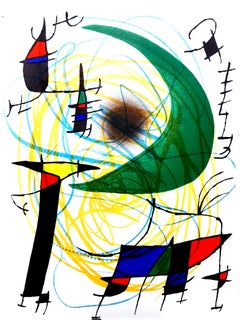
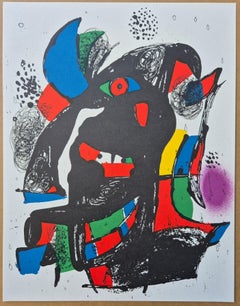
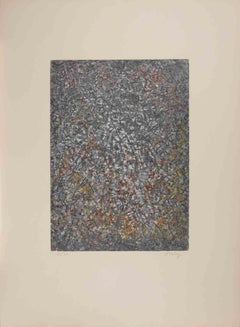
Medium: original lithograph. Catalogue reference: M 233. Printed in 1956 at the Mourlot atelier and published in Paris by Maeght for the Jacques Prévert catalogue. Sheet size: 9 x 14...

Category

1950s Art by Medium: Lithograph

Materials

Lithograph

Show and Tell
Show and Tell

Show and Tell

By Pati Bannister

Located in San Francisco, CA

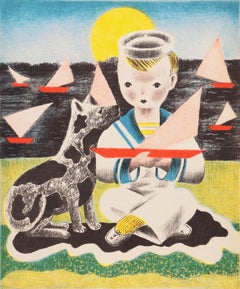
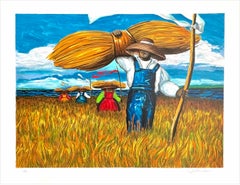
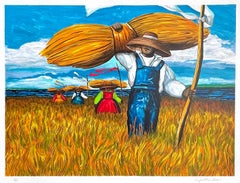
This artwork titled "Show and Tell" 1999, is a color off set lithograph by British/American artist Pati Bannister, 1929-2013. It is hand signed, titled and numbered 476/950 in pencil by the artist. Published by Masters Publishing INC, New York. The image size is 17.5 x 21 inches, sheet size is 23.25 x 26 inches. It is in excellent condition. About the artist: Pati Bannister was born in Highgate, England, overlooking London in 1929. Growing up, both of her parents were artists. Her mother painted watercolor landscapes, while her father painted portraits. To help further her natural talents, she took art lessons as a young girl and ultimately went to work for J. Arthur Rank, the movie maker, as an animator.​ At 22 years old, she came to the United States as a governess for a family in Connecticut. Later she became a flight attendant in Florida where she met her future husband, Glynn. Little did she know, he would become the strongest influence in her life as he inspired her to pursue and share her artistic abilities with the public. ​In 1958, Pati and Glynn moved to New Orleans and she started painting portraits in Jackson Square. Eventually, she opened two art galleries located in the French Quarter. In the late 1960's, they moved to the Mississippi Gulf Coast...

Category

Late 20th Century Romantic Art by Medium: Lithograph

Materials

Lithograph

Original Trio Raisner Grand Prix du Disque, Harmonica linen backed French poster

Original Trio Raisner Grand Prix du Disque, Harmonica linen backed French poster

Located in Spokane, WA

Original Trio Raisner vintage French music poster. Archival linen backed and in very fine condition, ready to frame. This copy had a horizontal fold mark in the center that was resto...

Category

1950s Art Deco Art by Medium: Lithograph

Materials

Lithograph

Max Ernst Dada Surrealist Hand Signed Lithograph Poster for a Jewish Museum

Max Ernst Dada Surrealist Hand Signed Lithograph Poster for a Jewish Museum

By Max Ernst

Located in Surfside, FL

Max Ernst (German, American, 1891-1976) Color lithograph Titled, "Poster For The Jewish Museum" 1966 Hand signed lower right Hand numbered HC I/XVII Dimensions: 34.75 x 28.5 sight 25 X 19.25 Max Ernst (German 1891 – 1976) was a German-born painter, sculptor, printmaker, graphic artist, and poet. A prolific artist, Ernst was a primary pioneer of the Dada movement and surrealism in Europe. He had no formal artistic training, but his experimental attitude toward the making of art resulted in his invention of frottage—a technique that uses pencil rubbings of textured objects and relief surfaces to create images—and grattage, an analogous technique in which paint is scraped across canvas to reveal the imprints of the objects placed beneath. Max Ernst showed for the first time in 1912 at the Galerie Feldman in Cologne. At the Sonderbund exhibition of that year in Cologne he saw the work of Paul Cezanne, Edvard Munch, Pablo Picasso, Paul Gauguin and Vincent van Gogh. In 1913 he met Guillaume Apollinaire and Robert Delaunay and traveled to Paris. Ernst participated that same year in the Erste deutsche Herbstsalon. In 1914 he met Jean Arp in Cologne who was to become a lifelong friend. In 1921 Ernst exhibited at the Galerie au Sans Pareil in Paris. He was involved in Surrealist activities in the early 1920s with Paul Eluard and André Breton. His work was exhibited that year together with that of the Das Junge Rheinland group, at Galerie Feldman in Cologne, and then in several group exhibitions in 1913. In his paintings of this period, Ernst adopted an ironic style that juxtaposed grotesque elements alongside Cubist and Expressionist motifs. Ernst fought in world war I. Several German Expressionist painters died in action during the war, among them August Macke and Franz Marc. In 1918, Ernst was demobilised and returned to Cologne. He soon married art history student Luise Straus, of Jewish ancestry, whom he had met in 1914. In 1919, he visited Paul Klee in Munich and studied paintings by Giorgio de Chirico. In the same year, inspired by de Chirico and mail-order catalogues, teaching-aide manuals and similar sources, he produced his first collage works (notably Fiat modes, a portfolio of lithographs), a technique which later dominated his artistic pursuits. Also in 1919, Ernst, social activist Johannes Theodor Baargeld and several colleagues founded the Cologne Dada group. In 1919–20, Ernst and Baargeld published various short-lived magazines such as Der Strom, die Schammade and organised Dada exhibitions. Ernst and Luise's son Ulrich Jimmy Ernst was born on 24 June 1920; he later would also become a painter. In 1921, he met Paul Éluard, who became a lifelong friend. Éluard bought two of Ernst's paintings (Celebes and Oedipus Rex) and selected six collages to illustrate his poetry collection Répétitions. A year later the two collaborated on Les malheurs des immortels and then with André Breton, whom Ernst met in 1921, on the magazine Littérature. Ernst developed a fascination with birds which was prevalent in his work. His alter ego in paintings, which he called Loplop, was a bird. He suggested that this alter-ego was an extension of himself stemming from an early confusion of birds and humans. In 1927, he married Marie-Berthe Aurenche and it is thought his relationship with her may have inspired the erotic subject matter of The Kiss and other works of that year. He collaborated with Joan Miro on designs for Sergei Diaghilev Ballet that same year. The following year the artist collaborated with Salvador Dali and the Surrealist Luis Bunuel on the film L'Age d'or. His first American show was held at the Julien Levy Gallery, New York, in 1932. In 1936 Ernst was represented in Fantastic Art, Dada, Surrealism at the Museum of Modern Art in New York. Ernst began to sculpt in 1934 and spent time with Alberto Giacometti. In 1938, the American heiress and artistic patron Peggy Guggenheim acquired a number of Max Ernst's works, which she displayed in her new gallery in London. Ernst and Guggenheim were married from 1942 to 1946. In September 1939, the outbreak of World War II caused Ernst, being German, to be interned as an "undesirable foreigner" in Camp des Milles, near Aix-en-Provence, along with fellow surrealist, Hans Bellmer, who had recently emigrated to Paris. He had been living with his lover and fellow surrealist painter, Leonora Carrington who, not knowing whether he would return, saw no option but to sell their house to repay their debts and leave for Spain. Thanks to the intercession of Paul Éluard and other friends, including the journalist Varian Fry, he was released a few weeks later. Soon after the German occupation of France, he was arrested again, this time by the Gestapo, but managed to escape to America with the help of Fry and Peggy Guggenheim, a member of a wealthy American art collecting family. Ernst and Peggy Guggenheim arrived in the United States in 1941 and were married at the end of the year. Along with other artists and friends (Marcel Duchamp and Marc Chagall) who had fled from the war and lived in New York City, Ernst helped inspire the development of abstract expressionism. His marriage to Guggenheim did not last. In October 1946 he married American surrealist painter Dorothea Tanning in a double ceremony with Man Ray and Juliet P. Browner in Beverly Hills, California. The couple made their home in Sedona, Arizona from 1946 to 1953. He and Tanning hosted intellectuals and European artists such as Henri Cartier-Bresson and Yves Tanguy. Sedona proved an inspiration for the artists and for Ernst, who compiled his book Beyond Painting and completed his sculptural masterpiece Capricorn while living in Sedona. As a result of the book and its publicity, Ernst began to achieve financial success. From the 1950s he lived mainly in France. In 1954 he was awarded the Grand Prize for painting at the Venice Biennale. In 2005, "Max Ernst: A Retrospective" opened at the Metropolitan Museum of Art. Contemporary artist tapestries have had their true believers. He produced a tapestry for Gloria Ross...

Category

1960s Surrealist Art by Medium: Lithograph

Materials

Lithograph

Jean Cocteau - Strength - Original Lithograph

Jean Cocteau - Strength - Original Lithograph

By Jean Cocteau

Located in Collonge Bellerive, Geneve, CH

Original Lithograph by Jean Cocteau Title: Taureaux Signed in the plate Dimensions: 40 x 30 cm Edition: 200 Luxury print edition from the portfolio of Trinckvel 1965 From the last po...

Category

1960s Modern Art by Medium: Lithograph

Materials

Lithograph

No title
No title

No title

By Bram Van Velde

Located in Paris, FR

Lithograph, 1975 Handsigned by the artist in pencil and numbered 2/100 Publisher : Bram Van Velde & Jacques Putman (Paris) Printer : Pierre Badey (Paris) Catalog : Mason Putman 205 L...

Category

1970s Abstract Art by Medium: Lithograph

Materials

Lithograph

pochoir

pochoir

By (After) Serge Poliakoff

Located in Henderson, NV

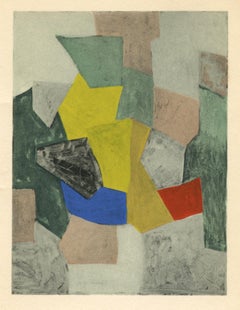
Medium: pochoir (after the gouache). Printed in Paris in 1957 by Jacomet and issued in an edition of 1000 by the Galerie Berggruen for a rare catalogue. Image size: 5 x 3 3/4 inches ...

Category

1950s Art by Medium: Lithograph

Materials

Lithograph, Stencil

Gagosian Gallery hardback monograph (hand signed by Christopher Wool)

Gagosian Gallery hardback monograph (hand signed by Christopher Wool)

By Christopher Wool

Located in New York, NY

Christopher Wool (hand signed by Christopher Wool), 2006 Cloth hardback monograph (hand signed by Christopher Wool) Hand signed and dated 2017 by Christopher Wool on the half title p...

Category

Early 2000s Minimalist Art by Medium: Lithograph

Materials

Paper, Ink, Mixed Media, Lithograph, Offset

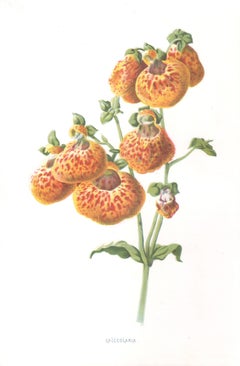
Passion Flower, English antique flower botanical chromolithograph, 1895

Passion Flower, English antique flower botanical chromolithograph, 1895

By Frederick William Hulme

Located in Melbourne, Victoria

'Passion Flower' Process print from Frederick William Hulme’s ‘Familiar Wild Flowers’, circa 1890. Hulme was known as a teacher and an amateur botanist. He was the Professor of Fre...

Category

Late 19th Century Naturalistic Art by Medium: Lithograph

Materials

Lithograph

David Hockney, Letter G, from Hockney's Alphabet, 1991

David Hockney, Letter G, from Hockney's Alphabet, 1991

By David Hockney

Located in Southampton, NY

This exquisite lithograph by David Hockney (born 1937), titled Letter G, from the folio Hockney's Alphabet, Drawings by David Hockney, originates from the 1991 edition published by A...

Category

1990s Contemporary Art by Medium: Lithograph

Materials

Lithograph

Poetes, Sculpteurs, Peintres

Poetes, Sculpteurs, Peintres

By Joan Miró

Located in San Francisco, CA

This artwork titled "Poetes, Sculpteurs, Peintres" 1960, is an original color lithograph on Rives paper by renown artist Joan Miro 1893-1983. It is hand signed (monogramed) and numbered II/XV in pencil by the artist. The artwork (sheet) size is 26 x 20 inches, framed size is 39.25 x 32.5 inches. Published by Maeght Editeur, Paris, printed by Fernand Mourlot., Paris. Referenced and pictured in the artist's catalogue raisonne by Mourlot plate #260. Custom framed in a wooden black frame, with black color bevel and fabric matting. It is in excellent condition. About the artist: Joan Miró Ferra was born April 20, 1893, in Barcelona Spain, the son of a goldsmith and watchmaker. At the age of 14, he went to business school in Barcelona and also attended La Lonja's Escuela Superior de Artes Industriales in the same city. Upon completing three years of art studies, and under pressure from his parents, he took a position as an accounting clerk. After suffering a nervous breakdown, he abandoned business and resumed his art studies, attending Galí's Escola d'Art in Barcelona from 1912 to 1915. Miró's work before 1920 showed the latest artistic influences, including the bright colors of the Fauves* and the geometric forms of Cubism*. It was in Paris through the 1920s-1930s where, under the influence of Surrealist* poets and writers, Miró evolved his mature style. His latest works drew on the Surrealist principles of memory, fantasy, and the irrational to create visual art. Miró's works were also shaped by the flat, two-dimensionality of his native Catalan folk art, Spanish Romanesque...

Category

Late 20th Century Abstract Art by Medium: Lithograph

Materials

Lithograph

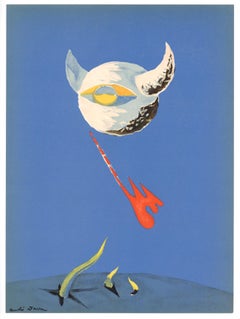
original lithograph

original lithograph

By Jean-Paul Riopelle

Located in Henderson, NV

Medium: original lithograph. Printed in 1966 for Derriere le Miroir (No. 160) and published in Paris by Maeght. Size: 14 3/4 x 10 3/4 inches (373 x 270 mm). There is text on verso, a...

Category

1960s Art by Medium: Lithograph

Materials

Lithograph

Bible : Dove and Menorah candlestick - Original Lithograph

Bible : Dove and Menorah candlestick - Original Lithograph

By Marc Chagall

Located in Paris, IDF

Marc CHAGALL (1887-1985) Bible : Dove and Menorah candlestick, 1962 Original lithograph (Mourlot workshop) Unsigned On Vellum 32.5 x 24 cm REFERENCE: Mourlot catalog raisonné #366 ...

Category

1960s Modern Art by Medium: Lithograph

Materials

Lithograph

Jean-Michel Basquiat Annina Nosei Gallery NY 1982-1988 (Basquiat Annina Nosei)

Jean-Michel Basquiat Annina Nosei Gallery NY 1982-1988 (Basquiat Annina Nosei)

By Jean-Michel Basquiat

Located in NEW YORK, NY

Jean-Michel Basquiat, Annina Nosei Gallery, New York, 1982-1988: A set of 3 rare vintage original Basquiat announcement cards from 1982, 1986, 1988, respectively - with 2 published d...

Category

1980s Pop Art Art by Medium: Lithograph

Materials

Lithograph, Offset

original lithograph

original lithograph

By Byron Browne

Located in Henderson, NV

Medium: original lithograph. This lithograph was printed in 1956 for the "Improvisations" portfolio, published by the Artists Equity Association of New York on the occasion of the 19...

Category

1950s Art by Medium: Lithograph

Materials

Lithograph

Untitled 3
Untitled 3

Untitled 3

By Roger Chapelain Midy

Located in San Francisco, CA

Artist: Roger Chapelain Midy (French, 1904-1992) Title: Untitled 3 Year : Circa 1975 Medium: Color lithograph Edition: Unknown Paper: Silk paper Image size: 18 x 25.25 inche...

Category

Late 20th Century Surrealist Art by Medium: Lithograph

Materials

Lithograph

Hombre con Brazos Abiertos, Mixograph by Rufino Tamayo

Hombre con Brazos Abiertos, Mixograph by Rufino Tamayo

By Rufino Tamayo

Located in Long Island City, NY

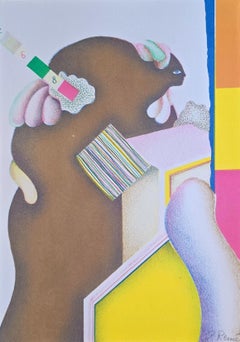
Rufino Tamayo, Mexican (1899 - 1991) - Hombre con Brazos Abiertos. Year: 1984, Medium: Mixograph, signed and numbered in pencil, Edition: 71/100, Size: 35.5 x 26.75 in. (90.17 x 67....

Category

1980s Surrealist Art by Medium: Lithograph

Materials

Lithograph

original lithograph

original lithograph

By Max Ernst

Located in Henderson, NV

Medium: original lithograph. Catalogue reference Spies/Leppien 202. Published in 1971 by XXe Siecle. Sheet size: 12 1/4 x 9 3/8 inches (310 x 238 mm). Not signed.

Category

1970s Surrealist Art by Medium: Lithograph

Materials

Lithograph

Joan Miro, Untitled, Marvels with Acrostic Variations in Miro’s Garden, 1975

Joan Miro, Untitled, Marvels with Acrostic Variations in Miro’s Garden, 1975

By Joan Miró

Located in Southampton, NY

This exquisite lithograph by Joan Miro (1893–1983), titled Sans titre (Untitled), from the folio Maravillas con variaciones acrosticas en el Jardin de Miro (Marvels with Acrostic Var...

Category

1970s Surrealist Art by Medium: Lithograph

Materials

Lithograph

Masters of the Poster 1896-1900 Book, Lithograph, Modern, 1977 Edition

Masters of the Poster 1896-1900 Book, Lithograph, Modern, 1977 Edition

Located in Brooklyn, NY

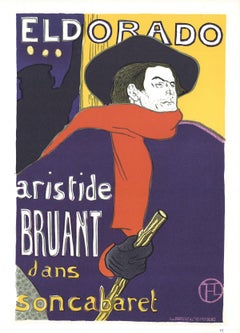
This is a hardcover book titled "Masters of the Poster 1896-1900", published in 1977 by Images Graphiques, New York. The book serves as a tribute to the iconic series Les Maîtres de ...

Category

1970s Modern Art by Medium: Lithograph

Materials

Lithograph

Untitled III (Jörg Remé, Jörg Krichbaum, ~34% OFF)

Untitled III (Jörg Remé, Jörg Krichbaum, ~34% OFF)

By Jörg Remé

Located in Kansas City, MO

Joerg Reme Untitled III from "von den Stunden" Folio Color Lithograph on handmade paper with deckled edges 1972 Size: 11.75 x 8.325 inches (29.8 × 21.1 cm) Edition: 31 of 250 Signed ...

Category

1970s Surrealist Art by Medium: Lithograph

Materials

Lithograph

'Mexican Fishermen in Lake Patzcuaro' Lithograph by Yves Brayer Modern Landscape

'Mexican Fishermen in Lake Patzcuaro' Lithograph by Yves Brayer Modern Landscape

By Yves Brayer

Located in London, GB

'Mexican Fishermen in Lake Patzcuaro', lithograph by Yves Brayer (1963). Unframed. The artist, Yves Brayer, spent time painting in Mexico in 1963, one of the many worldwide destinati...

Category

1960s Modern Art by Medium: Lithograph

Materials

Lithograph

Tawny or Brown Owl: A Framed Original 19th C. Hand-colored Lithograph by Gould

Tawny or Brown Owl: A Framed Original 19th C. Hand-colored Lithograph by Gould

This is a framed original 19th century hand-colored folio-sized lithograph entitled “Syrnium Aluco" (Tawny or Brown Owl) by John Gould, from his "Birds of G...

Category

Mid-19th Century Naturalistic Art by Medium: Lithograph

Materials

Lithograph

Willi's Wine Bar Lithograph Poster, Contemporary, Gold & Black, 1982

Willi's Wine Bar Lithograph Poster, Contemporary, Gold & Black, 1982

Located in Brooklyn, NY

This is an original design poster by Alberto Bali for Willi’s Wine Bar in Paris. Since 1982, every year around harvest time, Willi’s Wine Bar, founded by William Foster Simpson Brown...

Category

1980s Contemporary Art by Medium: Lithograph

Materials

Lithograph

The Flute Player, Lithograph by Marc Chagall

The Flute Player, Lithograph by Marc Chagall

By Marc Chagall

Located in Long Island City, NY

Marc Chagall, Russian (1887 - 1985) - The Flute Player, Portfolio: Jacques Lassaigne "Marc Chagall", Year: 1957, Medium: Lithograph, Edition: 6000, Size: 9 x 15.25 in. (22.86 x 38.7...

Category

1950s Modern Art by Medium: Lithograph

Materials

Lithograph

Object (with Flaw)
Object (with Flaw)

Object (with Flaw)

By John Baldessari

Located in New York, NY

Color lithograph in two parts, on two separate sheets of Arches 88 paper, these two sheets comprise two of the four parts of the original "Object (with Flaw)" publication, 1988. One...

Category

1980s Contemporary Art by Medium: Lithograph

Materials

Lithograph, Color

original lithograph

original lithograph

By Antoni Tàpies

Located in Henderson, NV

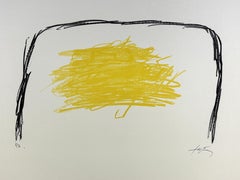
Medium: original lithograph. Printed in 1967 for the art revue Derriere le Miroir (issue number 168) and published in Paris by Maeght. Size: 15 x 33 inches (378 x 837 mm). This work ...

Category

1960s Art by Medium: Lithograph

Materials

Lithograph

Portrait of His Imperial Majesty Tsar Nicholas II

Portrait of His Imperial Majesty Tsar Nicholas II

Located in PARIS, FR

This dignified lithographic portrait of His Imperial Majesty Tsar Nicholas II stands as a visual tribute to the last Emperor of Russia, created during the final years of Europe’s gre...

Category

1890s Art by Medium: Lithograph

Materials

Linen, Paper, Lithograph

Jean Cocteau, Scene XXXV, Bacchus, from Theatre, 1957

Jean Cocteau, Scene XXXV, Bacchus, from Theatre, 1957

By Jean Cocteau

Located in Southampton, NY

This exquisite lithograph by Jean Cocteau (1889–1963), titled Scene XXXV, Bacchus (Scene XXXV, Bacchus), originates from the 1957 album Jean Cocteau de l'Academie francaise, Theatre,...

Category

1950s Modern Art by Medium: Lithograph

Materials

Lithograph

Original "Food Will Win The War" vintage World War 1 poster

Original "Food Will Win The War" vintage World War 1 poster

By Charles E. Chambers

Located in Spokane, WA

Original World War 1 vintage poster: Food Will Wn the War. Arhival linen backed. PRINTER: Rusling Wood Litho., New York Bright and in good condition. There is some marks down the left side of the poster, possible ink from when the poster was printed. This poster calls on immigrants to do their part in the war effort. It depicts recent immigrants standing near a sailing ship with the Statue of Liberty and a rainbow stretched across the New York City skyline in the background. The text reads: You came here seeking Freedom. You must now help preserve it. Wheat is needed by the allies. Waste nothing. The generosity and compassion of the American people and the great agricultural resources of the North American continent would be called upon... Twenty million Americans signed pledges of membership in the Food Administration...

Category

1910s American Realist Art by Medium: Lithograph
Materials

Lithograph

Winter's tale
Winter's tale

Winter's tale

By Pati Bannister

Located in San Francisco, CA

This artwork titled "Winter's Tales" 1995 is a color off set lithograph by British/American artist Pati Bannister, 1929-2013. It is hand signed, titled and numbered 409/950 in pencil...

Category

Late 20th Century Romantic Art by Medium: Lithograph

Materials

Lithograph

19th century color lithograph landscape figures horseback house scene trees sky

19th century color lithograph landscape figures horseback house scene trees sky

By Nathaniel Currier

Located in Milwaukee, WI

The present print is one of several examples produced for Nathaniel Currier by his longtime collaborator Frances F. "Fanny" Palmer. Harry T. Peters wrote of her: "There is no more interesting and appealing character among the group of artists who worked for Currier & Ives than Fanny Palmer. In an age when women, well-bred women in particular, did not generally work for a living Fanny Palmer for years did exacting, full-time work in order to support a large and dependent family ... Her work ... had great charm, homeliness, and a conscientious attention to detail." One of a series of four prints showing American country life in different seasons, the image presents the viewer with a picturesque view of a successful American farm. In the foreground, a gentleman rides a horse with a young boy before a respectable Italianate country house. Two women and a young girl pick flowers in the garden and several farm workers attend to their duties. Beyond are other homes and a city on the coast. 16.63 x 23.75 inches, artwork 28.13 x 33.38 inches, frame Entitled bottom center "American Country Life - May Morning" Signed in the stone, lower left "F.F. Palmer, Del." Signed in the stone, lower right "Lith. by N. Currier" Copyrighted lower center "Entered according to Act of Congress in the year 1855 by N. Currier in the Clerk's office of the Southern District of N.Y." Inscribed bottom center "New York, Published by N. Currier 152 Nassau Street" Framed to conservation standards using silk-lined 100 percent rag matting and Museum Glass with a gold gilded liner, all housed in a stained wood moulding. Nathaniel Currier was a tall introspective man with a melancholy nature. He could captivate people with his piercing stare or charm them with his sparkling blue eyes. Nathaniel was born in Roxbury, Massachusetts on March 27th, 1813, the second of four children. His parents, Nathaniel and Hannah Currier, were distant cousins who lived a humble yet spartan life. When Nathaniel was eight years old, tragedy struck. Nathaniel’s father unexpectedly passed away leaving Nathaniel and his eleven-year-old brother Lorenzo to provide for the family. In addition to their mother, Nathaniel and Lorenzo had to care for six-year-old sister Elizabeth and two-year-old brother Charles. Nathaniel worked a series of odd jobs to support the family, and at fifteen, he started what would become a life-long career when he apprenticed in the Boston lithography shop of William and John Pendleton. A Bavarian gentleman named Alois Senefelder invented lithography just 30 years prior to young Nat Currier’s apprenticeship. While under the employ of the brothers Pendleton, Nat was taught the art of lithography by the firm’s chief printer, a French national named Dubois, who brought the lithography trade to America. Lithography involves grinding a piece of limestone flat and smooth then drawing in mirror image on the stone with a special grease pencil. After the image is completed, the stone is etched with a solution of aqua fortis leaving the greased areas in slight relief. Water is then used to wet the stone and greased-ink is rolled onto the raised areas. Since grease and water do not mix, the greased-ink is repelled by the moisture on the stone and clings to the original grease pencil lines. The stone is then placed in a press and used as a printing block to impart black on white images to paper. In 1833, now twenty-years old and an accomplished lithographer, Nat Currier left Boston and moved to Philadelphia to do contract work for M.E.D. Brown, a noted engraver and printer. With the promise of good money, Currier hired on to help Brown prepare lithographic stones of scientific images for the American Journal of Sciences and Arts. When Nat completed the contract work in 1834, he traveled to New York City to work once again for his mentor John Pendleton, who was now operating his own shop located at 137 Broadway. Soon after the reunion, Pendleton expressed an interest in returning to Boston and offered to sell his print shop to Currier. Young Nat did not have the financial resources to buy the shop, but being the resourceful type he found another local printer by the name of Stodart. Together they bought Pendleton’s business. The firm ‘Currier & Stodart’ specialized in "job" printing. They produced many different types of printed items, most notably music manuscripts for local publishers. By 1835, Stodart was frustrated that the business was not making enough money and he ended the partnership, taking his investment with him. With little more than some lithographic stones, and a talent for his trade, twenty-two year old Nat Currier set up shop in a temporary office at 1 Wall Street in New York City. He named his new enterprise ‘N. Currier, Lithographer’ Nathaniel continued as a job printer and duplicated everything from music sheets to architectural plans. He experimented with portraits, disaster scenes and memorial prints, and any thing that he could sell to the public from tables in front of his shop. During 1835 he produced a disaster print Ruins of the Planter's Hotel, New Orleans, which fell at two O’clock on the Morning of the 15th of May 1835, burying 50 persons, 40 of whom Escaped with their Lives. The public had a thirst for newsworthy events, and newspapers of the day did not include pictures. By producing this print, Nat gave the public a new way to “see” the news. The print sold reasonably well, an important fact that was not lost on Currier. Nat met and married Eliza Farnsworth in 1840. He also produced a print that same year titled Awful Conflagration of the Steamboat Lexington in Long Island Sound on Monday Evening, January 18, 1840, by which melancholy occurrence over One Hundred Persons Perished. This print sold out very quickly, and Currier was approached by an enterprising publication who contracted him to print a single sheet addition of their paper, the New York Sun. This single page paper is presumed to be the first illustrated newspaper ever published. The success of the Lexington print launched his career nationally and put him in a position to finally lift his family up. In 1841, Nat and Eliza had their first child, a son they named Edward West Currier. That same year Nat hired his twenty-one year old brother Charles and taught him the lithography trade, he also hired his artistically inclined brother Lorenzo to travel out west and make sketches of the new frontier as material for future prints. Charles worked for the firm on and off over the years, and invented a new type of lithographic crayon which he patented and named the Crayola. Lorenzo continued selling sketches to Nat for the next few years. In 1843, Nat and Eliza had a daughter, Eliza West Currier, but tragedy struck in early 1847 when their young daughter died from a prolonged illness. Nat and Eliza were grief stricken, and Eliza, driven by despair, gave up on life and passed away just four months after her daughter’s death. The subject of Nat Currier’s artwork changed following the death of his wife and daughter, and he produced many memorial prints and sentimental prints during the late 1840s. The memorial prints generally depicted grief stricken families posed by gravestones (the stones were left blank so the purchasers could fill in the names of the dearly departed). The sentimental prints usually depicted idealized portraits of women and children, titled with popular Christian names of the day. Late in 1847, Nat Currier married Lura Ormsbee, a friend of the family. Lura was a self-sufficient woman, and she immediately set out to help Nat raise six-year-old Edward and get their house in order. In 1849, Lura delivered a son, Walter Black Currier, but fate dealt them a blow when young Walter died one year later. While Nat and Lura were grieving the loss of their new son, word came from San Francisco that Nat’s brother Lorenzo had also passed away from a brief illness. Nat sank deeper into his natural quiet melancholy. Friends stopped by to console the couple, and Lura began to set an extra place at their table for these unexpected guests. She continued this tradition throughout their lives. In 1852, Charles introduced a friend, James Merritt Ives, to Nat and suggested he hire him as a bookkeeper. Jim Ives was a native New Yorker born in 1824 and raised on the grounds of Bellevue Hospital where his father was employed as superintendent. Jim was a self-trained artist and professional bookkeeper. He was also a plump and jovial man, presenting the exact opposite image of his new boss. Jim Ives met Charles Currier through Caroline Clark, the object of Jim’s affection. Caroline’s sister Elizabeth was married to Charles, and Caroline was a close friend of the Currier family. Jim eventually proposed marriage to Caroline and solicited an introduction to Nat Currier, through Charles, in hopes of securing a more stable income to support his future wife. Ives quickly set out to improve and modernize his new employer’s bookkeeping methods. He reorganized the firm’s sizable inventory, and used his artistic skills to streamline the firm’s production methods. By 1857, Nathaniel had become so dependent on Jims’ skills and initiative that he offered him a full partnership in the firm and appointed him general manager. The two men chose the name ‘Currier & Ives’ for the new partnership, and became close friends. Currier & Ives produced their prints in a building at 33 Spruce Street where they occupied the third, fourth and fifth floors. The third floor was devoted to the hand operated printing presses that were built by Nat's cousin, Cyrus Currier, at his shop Cyrus Currier & Sons in Newark, NJ. The fourth floor found the artists, lithographers and the stone grinders at work. The fifth floor housed the coloring department, and was one of the earliest production lines in the country. The colorists were generally immigrant girls, mostly German, who came to America with some formal artistic training. Each colorist was responsible for adding a single color to a print. As a colorist finished applying their color, the print was passed down the line to the next colorist to add their color. The colorists worked from a master print displayed above their table, which showed where the proper colors were to be placed. At the end of the table was a touch up artist who checked the prints for quality, touching-in areas that may have been missed as it passed down the line. During the Civil War, demand for prints became so great that coloring stencils were developed to speed up production. Although most Currier & Ives prints were colored in house, some were sent out to contract artists. The rate Currier & Ives paid these artists for coloring work was one dollar per one hundred small folios (a penny a print) and one dollar per one dozen large folios. Currier & Ives also offered uncolored prints to dealers, with instructions (included on the price list) on how to 'prepare the prints for coloring.' In addition, schools could order uncolored prints from the firm’s catalogue to use in their painting classes. Nathaniel Currier and James Merritt Ives attracted a wide circle of friends during their years in business. Some of their more famous acquaintances included Horace Greeley, Phineas T. Barnum, and the outspoken abolitionists Rev. Henry Ward, and John Greenleaf Whittier (the latter being a cousin of Mr. Currier). Nat Currier and Jim Ives described their business as "Publishers of Cheap and Popular Pictures" and produced many categories of prints. These included Disaster Scenes, Sentimental Images, Sports, Humor, Hunting Scenes, Politics, Religion, City and Rural Scenes, Trains, Ships, Fire Fighters, Famous Race Horses, Historical Portraits, and just about any other topic that satisfied the general public's taste. In all, the firm produced in excess of 7500 different titles, totaling over one million prints produced from 1835 to 1907. Nat Currier retired in 1880, and signed over his share of the firm to his son Edward. Nat died eight years later at his summer home 'Lion’s Gate' in Amesbury, Massachusetts. Jim Ives remained active in the firm until his death in 1895, when his share of the firm passed to his eldest son, Chauncey. In 1902, faced will failing health from the ravages of Tuberculosis, Edward Currier sold his share of the firm to Chauncey Ives...

Category

Mid-19th Century Romantic Art by Medium: Lithograph

Materials

Watercolor, Lithograph

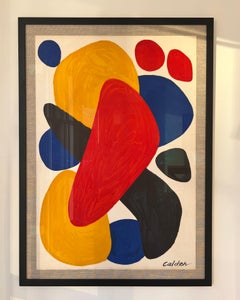
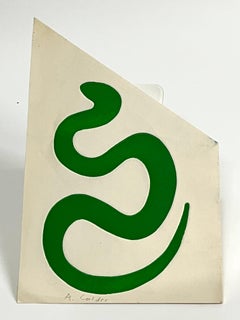
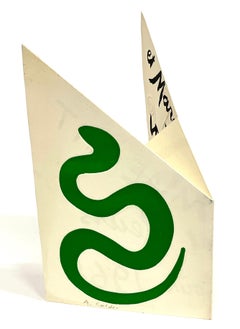
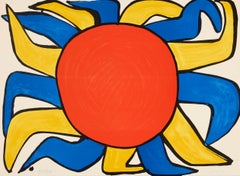
Alexander Calder - Our Unfinished Revolution (Sun), 1976, Limited Edition poster

Alexander Calder - Our Unfinished Revolution (Sun), 1976, Limited Edition poster

By Alexander Calder

Located in New York, NY

Offset lithograph poster Printed signature and date on offset paper This poster was published in a limited edition of 250, separate from the lithographic portfolio of the same title ...

Category

1970s Abstract Art by Medium: Lithograph

Materials

Lithograph, Offset

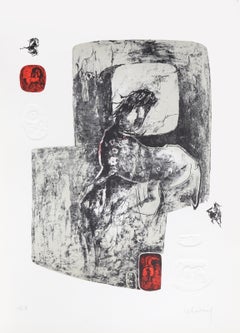
Forest Silhouette Sunset, Blue Nature Large Triptych, Cyanotype on Paper, 2025

Forest Silhouette Sunset, Blue Nature Large Triptych, Cyanotype on Paper, 2025

By Kind of Cyan

Located in Barcelona, ES

This series of cyanotype triptychs showcases the beauty of nature scenes, including stunning beaches and oceans, as well as the intricate textures of water, forests, and skies. These...

Category

2010s Realist Art by Medium: Lithograph
Materials

Paper, Lithograph, Monotype

Marc Chagall, Solomon, from Drawings for the Bible, 1960

Marc Chagall, Solomon, from Drawings for the Bible, 1960

By Marc Chagall

Located in Southampton, NY

This exquisite lithograph by Marc Chagall (1887–1985), titled Solomon (Solomon), from Marc Chagall, Dessins Pour La Bible (Drawings for the Bible), Verve: Revue Artistique et Littera...

Category

1960s Expressionist Art by Medium: Lithograph

Materials

Lithograph

original lithograph

original lithograph

By Andre Minaux

Located in Henderson, NV

Medium: original lithograph. Printed on Arjomari paper in 1969 at the Mourlot Freres atelier and published by Editions Richelieu in a limited edition of 2400 for the L'Odyssee portfo...

Category

1960s Art by Medium: Lithograph

Materials

Lithograph

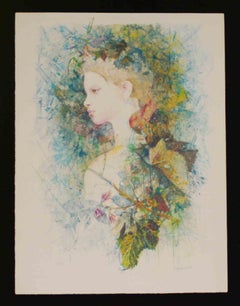
Soaking Up
Soaking Up

Soaking Up

Located in San Francisco, CA

This artwork titled "Soaking Up" c.1970 is an original lithograph on paper by noted western artist Tom (Thomas) Ryan, 1922-2011. It is hand signed, titled and numbered 68/100 in penc...

Category

Late 20th Century American Realist Art by Medium: Lithograph
Materials

Lithograph

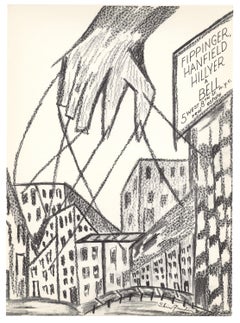
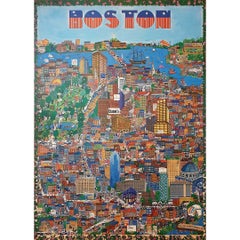
'Mural Study: Lower Manhattan' — WPA Era Precisionism

'Mural Study: Lower Manhattan' — WPA Era Precisionism

By Louis Lozowick

Located in Myrtle Beach, SC

Louis Lozowick, 'Mural Study: Lower Manhattan', lithograph, edition 10 or fewer, 1936. Flint 135. Signed and dated in pencil. Signed in the stone, lower right. A fine, richly-inked...

Category

1930s American Modern Art by Medium: Lithograph
Materials

Lithograph

1972 original poster "Cyrk - Mona Lisa" by Urbanieo - Polish circus posters

1972 original poster "Cyrk - Mona Lisa" by Urbanieo - Polish circus posters

Located in PARIS, FR

The 1972 original poster "Cyrk - Mona Lisa" by Urbanieo is a striking example of the vibrant and imaginative poster art produced during the golden age of Polish circus posters, known...

Category

1970s Art by Medium: Lithograph
Materials

Linen, Paper, Lithograph

original lithograph

original lithograph

By Chaim Gross

Located in Henderson, NV

Medium: original lithograph. This lithograph was printed in 1953 for the "Improvisations" portfolio, published by the Artists Equity Association of New York on the occasion of the 19...

Category

1950s Art by Medium: Lithograph
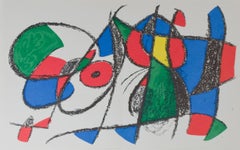
Materials

Lithograph

Elizabeth Catlett - Homage to the Panthers signed/n lithograph provenance Framed

Elizabeth Catlett - Homage to the Panthers signed/n lithograph provenance Framed

By Elizabeth Catlett

Located in New York, NY

This exact work was exhibited at the Art Students League in an important show. (details below) Elizabeth Catlett Homage to the Panthers, 1993 Color Lithograph on wove paper with deck...

Category

1990s Contemporary Art by Medium: Lithograph
Materials

Lithograph

Raoul Dufy, Still Life with Red Background, 1954 (after)

Raoul Dufy, Still Life with Red Background, 1954 (after)

By Raoul Dufy

Located in Southampton, NY

This exquisite lithograph after Raoul Dufy (1877–1953), titled Nature morte au fond rouge (Still Life with Red Background), from the folio Eaux-de-vie, Esprit de la fleur et du fruit...

Category

1950s Modern Art by Medium: Lithograph
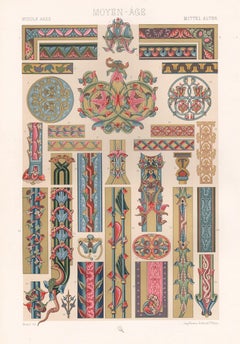
Materials

Lithograph, Stencil

Lithograph art for sale on 1stDibs.
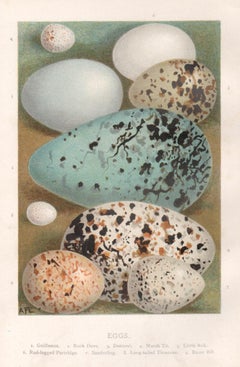
Find a wide variety of authentic Lithograph art available on 1stDibs. While artists have worked in this medium across a range of time periods, art made with this material during the 21st Century is especially popular. If you’re looking to add art created with this material to introduce a provocative pop of color and texture to an otherwise neutral space in your home, the works available on 1stDibs include elements of blue, orange, yellow, red and other colors. There are many well-known artists whose body of work includes ceramic sculptures. Popular artists on 1stDibs associated with pieces like this include Joan Miró, Marc Chagall, Peter Max, and Alexander Calder. Frequently made by artists working in the Modern, Contemporary, all of these pieces for sale are unique and many will draw the attention of guests in your home. Not every interior allows for large Lithograph art, so small editions measuring 0.01 inches across are also available