1910s Art

2,191 Results
to
200
1,164
358
408
191
186
Overall Width
to
Overall Height
to
7,853
22,107
168,249
239,148
2,170
2,356
4,761
6,478
5,992
16,078
21,585
27,021
19,489
14,233
5,621
478
307
140
125
44
33
19
12
5
1
1,470
711
618
432
385
364
223
147
139
135
131
123
116
105
97
95
82
81
62
60
1,206
1,118

Use search to find more

136
56
33
23
23

Use search to find more

Period: 1910s
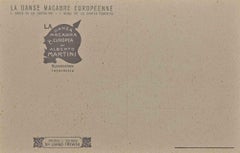
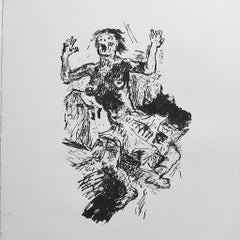
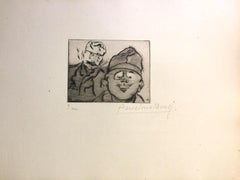
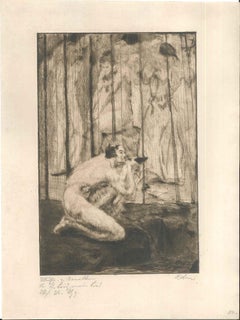
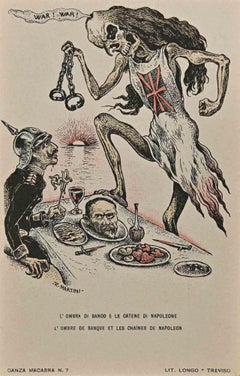
The European Macabre Dance N.7  - Lithograph by A. Martini - 1915

The European Macabre Dance N.7 - Lithograph by A. Martini - 1915

By Alberto Martini

Located in Roma, IT

The European Macabre Dance N.7 is a hand-colored lithograph, from the Series "La Danza Macabra Europea" illustrated by Alberto Martini (Oderzo, 1876 – Milan, 1954) in 1915. Signed on the plate, Original Edition. Published by Domenico Longo, Treviso. Handcolored lithographic postcards. Very good conditions. Alberto Martini (Oderzo, 1876 - Milan, 1954); was an Italian draftsman, painter, engraver and illustrator, forerunner of the surrealist movement...

Category

Symbolist 1910s Art

Materials

Lithograph

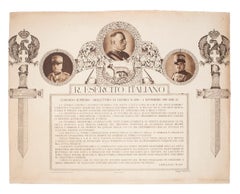
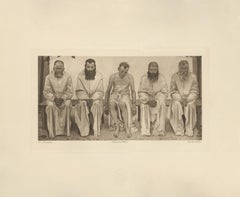
War Bulletin - Vintage Photlithograph on Cardboard - 1918

War Bulletin - Vintage Photlithograph on Cardboard - 1918

Located in Roma, IT

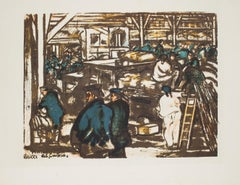
War Bulletin is an vintage photolithograph on cardboard realized by Anonymous Artist of the 20th Century as War Bulletin of the 1st World War. The state of preservation of the art...

Category

1910s Art

Materials

Photogravure

Le Front Italien - Etching on Paper - 1918

Le Front Italien - Etching on Paper - 1918

By Anselmo Bucci

Located in Roma, IT

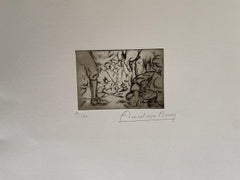
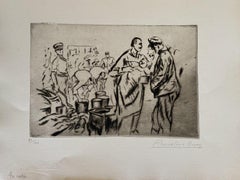
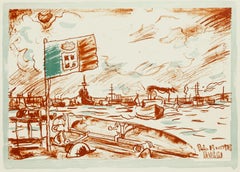
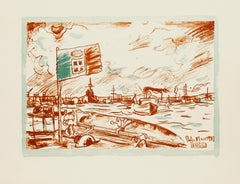
Front Italien is a beautiful print in etching on paper, realized by Anselmo Bucci (1887-1955). Good conditions. Sheet dimension: 27.5 x 35.5 From the collection: “Croquis du Front...

Category

Futurist 1910s Art

Materials

Etching

Invocation

Invocation

By Max Weber

Located in New York, NY

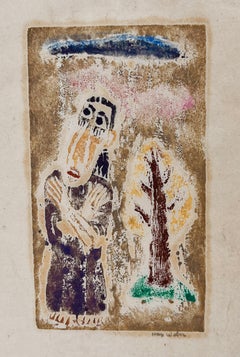
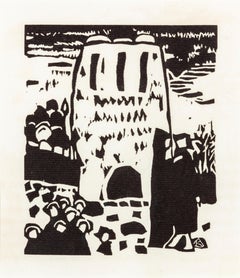
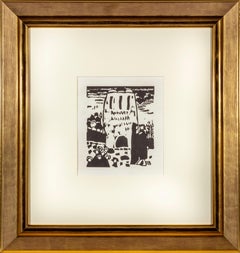
M a x W e b e r – – 1 8 8 1 – 1 9 6 1 Invocation- – 1919-20, Color Woodcut. Rubenstein 27. Proofs only. Signed in pencil. Image size 3 3/4 x 2 1/8 inches (124 x 54 mm); sheet size ...

Category

Cubist 1910s Art

Materials

Woodcut

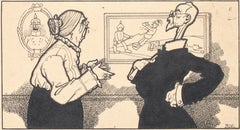
L'Oeuf est Cuit  - Original Drawing by Leka - 1910s

L'Oeuf est Cuit - Original Drawing by Leka - 1910s

By Leka

Located in Roma, IT

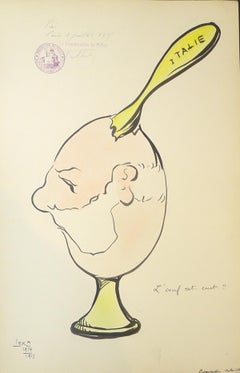
L'oeuf est cuit is an original satiric artwork realized by the illustrator Leka. Ink and watercolor. Hand-signed on the lower left by Leka. Titled on the lower right. Dated 1914-19...

Category

Modern 1910s Art

Materials

Watercolor, Ink

“Mt. San Jacinto“
“Mt. San Jacinto“

“Mt. San Jacinto“

Located in Warren, NJ

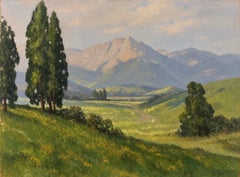
Condition craquelure on the surface; soiling on the surface, and two scuffs on the surface, one in the center, the other on upper the right side Measures 22x28

Category

1910s Art

Materials

Oil

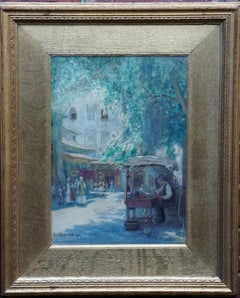
A Market Scene - French Impressionist art 1914 watercolour painting indis signed

A Market Scene - French Impressionist art 1914 watercolour painting indis signed

Located in Hagley, England

This charming French Impressionist watercolour painting was painted in 1914 and is indistinctly signed. The composition is a market scene with various stalls under trees. The colouring is lovely and it is housed in a superb, gilded oak frame...

Category

Impressionist 1910s Art

Materials

Watercolor

Posinsky - Rare Book by Rudolf Grossmann - 1917

Posinsky - Rare Book by Rudolf Grossmann - 1917

By Rudolf Grossmann

Located in Roma, IT

Posinsky is an original modern rare book illustrated written by Carl Sternheim (Lipsia, 1878 – Ixelles, 1942) and illustrated by Rudolf Grossmann (Freiburg, 1882 - Freiburg, 1941) in 1917. Original First Edition. Published by Heinrich Hochstim, Berlin. Format: small 8°. The book includes 65 pages with Seven full page Lithographs, cover included. Good conditions. Rudolf Grossmann (Freiburg, 1882 - Freiburg, 1941) was a German painter and graphic artist. He is particularly well known for his portrait drawings of famous contemporary figures. With his friend, Jules Pascin, he travelled to Belgium and Holland. Later study trips took him to Northern and Southern France, then to Vienna, Budapest and Stockholm. In 1910, he stayed briefly in Berlin, then continued his travels; this time to Engadin (near Munich), the Tegernsee and Italy, where he lived with his friend, Hans Purrmann...

Category

Modern 1910s Art

Materials

Paper, Lithograph

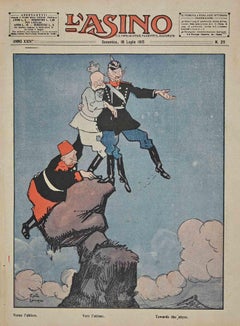
L'Asino, Art Magazine, Year 24, no. 29, 1915

L'Asino, Art Magazine, Year 24, no. 29, 1915

Located in Roma, IT

L'Asino, Art Magazine, Year 24, no. 29, 1915, is an original colorful illustrated Italian magazine with a satiric political scene. Published on Sunday 18 Luglio 1915, in 4 pages, do...

Category

Modern 1910s Art

Materials

Paper

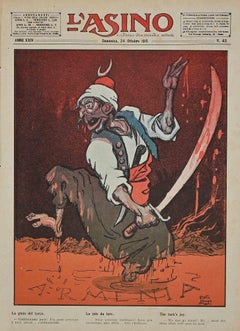
L'Asino, Art Magazine, Year 24, no. 43, 1915

L'Asino, Art Magazine, Year 24, no. 43, 1915

Located in Roma, IT

L'Asino, Art Magazine, Year 24, no. 43, 1915 is an original colorful illustrated Italian magazine with a satiric political scene. Published on Sunday 24 October 1915, in 4 pages, do...

Category

Modern 1910s Art

Materials

Paper

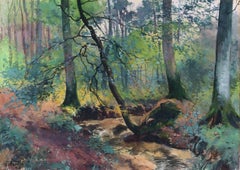
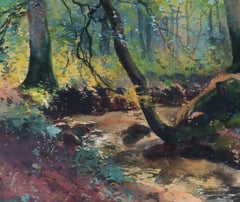
Summer Forest Landscape, 1915 / - The Forest Walk -

Summer Forest Landscape, 1915 / - The Forest Walk -

Located in Berlin, DE

Stanislas Warnie (1879-1958), Summer Forest Landscape, 1915. Watercolor, 31.5 cm x 45 cm (passepartout), 50.5 cm x 63.5 cm (frame), signed "S. Warnie" at lower left and dated "1915"....

Category

Art Nouveau 1910s Art

Materials

Watercolor

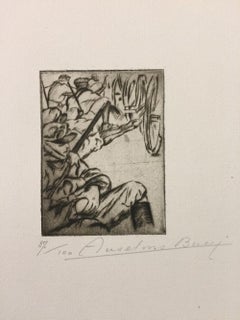
Les Mitrailleuses -  Etching by Anselmo Bucci - 1917

Les Mitrailleuses - Etching by Anselmo Bucci - 1917

By Anselmo Bucci

Located in Roma, IT

Image dimensions: 18 x 14.5 cm. Hand signed. Edition of 100 prints on Hollande paper. From the collection: “Croquis du Front Italien” , published in Paris by D'Alignan editions. Ans...

Category

Futurist 1910s Art

Materials

Etching, Drypoint

Le Front Italien - Etching on Paper - 1918

Le Front Italien - Etching on Paper - 1918

By Anselmo Bucci

Located in Roma, IT

Front Italien is a beautiful print in etching on paper, realized by Anselmo Bucci (1887-1955). Good conditions. Sheet dimension: 36 X 27.5 From the collection: “Croquis du Front ...

Category

1910s Art

Materials

Etching

Military - Etching by Anselmo Bucci - 1917s

Military - Etching by Anselmo Bucci - 1917s

By Anselmo Bucci

Located in Roma, IT

"Military" 1917s is a beautiful print in etching technique, realized by Anselmo Bucci (1887-1955). Hand signed. Numbered 61/100 of prints on the lower left. On the lower left corner...

Category

Modern 1910s Art

Materials

Etching

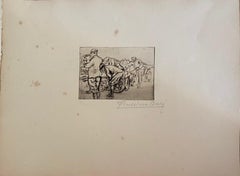
Militant -  Etching by Anselmo Bucci - 1917

Militant - Etching by Anselmo Bucci - 1917

By Anselmo Bucci

Located in Roma, IT

"Military" 1917s is a beautiful print in etching technique, realized by Anselmo Bucci (1887-1955). Hand signed. Numbered 61/100 of prints on the lower left. On the lower left corner...

Category

Modern 1910s Art

Materials

Etching, Drypoint

Otto et Fritz - Etching by Anselmo Bucci - 1917

Otto et Fritz - Etching by Anselmo Bucci - 1917

By Anselmo Bucci

Located in Roma, IT

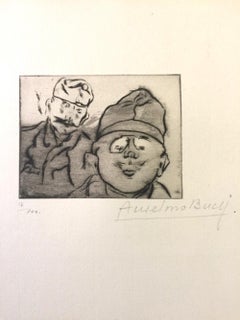
Image dimensions: 9 x 11.5 cm. Hand signed. Edition of 100 prints on Hollande paper. From the collection: “Croquis du Front Italien” , published in Paris by D'Alignan editions. Anse...

Category

Futurist 1910s Art

Materials

Drypoint, Etching

Militaries - Lithograph on Paper - 1918

Militaries - Lithograph on Paper - 1918

By Anselmo Bucci

Located in Roma, IT

Militaries is an original lithograph by the Italian artist, painter, and printmaker Anselmo Bucci. Signed on the plate on the lower left. In very good conditions. The artwork repr...

Category

1910s Art

Materials

Lithograph

Halte -  Etching by Anselmo Bucci - 1917

Halte - Etching by Anselmo Bucci - 1917

By Anselmo Bucci

Located in Roma, IT

Image dimensions: 15 x 9 cm. Hand signed. Edition of 100 prints on Hollande paper. From the collection: “Croquis du Front Italien” , published in Paris by D'Alignan editions. Anselm...

Category

Futurist 1910s Art

Materials

Drypoint, Etching

"The World Weary" Copper Plate Heliogravure

"The World Weary" Copper Plate Heliogravure

By Ferdinand Hodler & R. Piper & Co.

Located in Palm Beach, FL

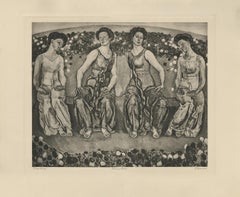
2018 marks the centenary anniversary of Ferdinand Hodler’s death. In that 100 years time, the art world’s esteem of this important artist has proved fickle. It has shifted from extolling his artistic merits during his lifetime to showing something of a feigned disdain- more reflective of the world political order than a true change of heart for Hodler’s work. After years of Hodler being all but a footnote in the annals of art history and generally ignored, finally, the pendulum has righted itself once again. Recent retrospective exhibitions in Europe and the United States have indicated not only a joyful rediscovery of Hodler’s art but a firm conviction that his work and world view hold particular relevance today. DAS WERK FERDINAND HODLERS is not only a collection of printed work reflecting the best of all of his painted work created up to 1914 just before the outbreak of World War I, the portfolio itself is an encapsulation of Hodler’s ethos, Parallelisme. Hodler developed his philosophy of Parallelisme as a unifying approach to art which strips away detail in search of harmony. By means of abstraction, symmetry and repetition, Hodler sought ways to depict Nature’s essence and her fundamental, universal order. He believed these universal laws governing the natural, observable world extend to the spiritual realm. Symbolist in nature with Romantic undertones, his works are equally portraits of these universal concepts and feelings governing all life as they are a visual portrait in the formal sense. Whether his subject is a solitary tree, a moment in battle, mortal fear, despair, the awe inspired by a vast mountain range, a tender moment or even the collective conviction in a belief, Hodler unveils this guiding principle of Parallelisme. Several aspects of Hodler’s portfolio reinforce his tenets of Parallelisme. The Table of Contents clearly preferences a harmonious design over detail. The two columns, consisting of twenty lines each, list the images by order of appearance using their German titles. The abbreviated titles are somewhat cryptic in that they obscure the identities of the sitters. Like the image Hodler presents, they are distillations of the sitter without any extraneous details. This shortening was also done in an effort to maintain a harmonious symmetry of the Table of Contents, themselves, and keep titles to a one-line limit. The twenty-fourth title: “Bildnis des Schweizerischen Gesandten C.” was so long, even with abbreviation, that it required two lines; so, for the sake of maintaining symmetry, the fortieth title: “Bauernmadchen” was omitted from the list. This explains why the images are not numbered. Hodler’s reasoning is not purely esoteric. Symmetry and pattern reach beyond mere formal design principles. Finding sameness and imposing it over disorder goes to the root of Hodler’s identity and his art. A Swiss native, Hodler was bi-lingual and spoke German and French. Each printed image, even number forty, have titles in both of Hodler’s languages. Certainly, there was a market for Hodler’s work among francophones and this inclusion may have been a polite gesture to that end; however, this is the only place in the portfolio which includes French. With German titles at the lower left of each image, Hodler’s name at bottom center and corresponding French titles at the lower right of each image, there is a harmony and symmetry woven into all aspects of the portfolio. This holds true for the page design, as it applies to each printed image and as it describes the Swiss artist himself. Seen in this light, Hodler’s portfolio of printed work is the epitome of Hodler’s Parallelisme. DAS WERK FERDINAND HODLERS is also one of the most significant documents to best tell the story of how Hodler, from Switzerland, became caught between political cross-hairs and how the changing tides of nations directly impacted the artist during his lifetime as well as the accessibility of his art for generations to come. The Munich-based publisher of the portfolio, R. Piper & Co., Verlag, plays a crucial role in this story. Publishing on a wide range of subjects from philosophy and world religion to music, literature and the visual arts; the publisher’s breadth of inquiry within any one genre was equal in scope. Their marketing strategy to publish multiple works on Hodler offers great insight as to what a hot commodity Hodler was at that time. R.Piper & Co.’s Almanach, which they published in 1914 in commemoration of their first ten years in business, clearly illustrates the rapid succession- strategically calculated for achieving the deepest and broadest impact - in which they released three works on Hodler to hit the market by the close of 1914. DAS WERK FERDINAND HODLERS was their premier publication. It preceded C.A. Loosli’s Die Zeichnungen Ferdinand Hodlers, a print portfolio after 50 drawings by Hodler which was released in Autumn of 1914 at the mid-level price-point of 75-150 Marks; and a third less expensive collection of prints after original works by Hodler, which had not been included in either of the first two portfolios, was released at the end of that year entitled Ferdinand Hodler by Dr. Ewald Bender. The title and timing of DAS WERK FERDINAND HODLERS' debut leaves little doubt as to the connection it has with another avant-garde portfolio of art prints, Das Werk Gustav Klimts, released in 5 installments from 1908 -1914 by Galerie Miethke in Vienna. Hodler, himself, was involved in Klimt’s ground-breaking project. As the owner of Klimt’s 1901 painting, “Judith with the Head of Holifernes” which appears as the ninth collotype print in the second installment of Das Werk Gustav Klimts, Hodler was obliged to grant access of the painting to the art printers in Vienna for them to create the collotype sometime before 1908. Hodler had been previously invited in 1904 to take part in what would be the last exhibition of the Vienna Secession before Klimt and others associated with Galerie Miethke broke away. In an interview that same year, Hodler indicated that he respected and was impressed by Klimt. Hodler’s esteem for Klimt went beyond the art itself; he emulated Klimt’s method aimed at increasing his market reach and appeal to a wider audience by creating a print portfolio of his painted work. By 1914, Hodler and his publisher had the benefit of hindsight to learn from Klimt’s Das Werk publication. Responding to the sluggish sales of Klimt’s expensive endeavor, Hodler’s publisher devised the same diversified 1-2-3 strategy for selling Hodler’s Das Werk portfolio as they did with regards to all three works on Hodler they published that year. For their premium tier of DAS WERKS FERDINAND HODLERS, R. Piper & Co. issued an exclusive Museum quality edition of 15 examples on which Hodler signed each page. At a cost of 600 Marks, this was generally on par with Klimt’s asking price of 600 Kronen for his Das Werk portfolio. A middle-tiered Preferred edition of 30, costing somewhat less and with Hodler’s signature only on the Title Page, was also available. The General edition, targeting the largest audience with its much more affordable price of 150 Marks, is distinguishable by its smaller size. Rather than use the subscription format Miethke had chosen for Klimt’s portfolios which proved to have had its challenges, R. Piper & Co. employed a different strategy. In addition to instantly gratifying the buyer with all 40 of the prints comprising DAS WERK FERDINAND HODLERS and the choice among three price points, they advertised in German journals a fourth possibility of ordering single prints from them directly. These printed images are easily discernible from the three complete folio editions. The paper size of the single purchased images is of the larger format like the Museum and Preferred editions, measuring 65 h x 50 w cm; however, the paper itself is the same copper print paper used in the General edition and then mounted on poster board. The publishing house positioned itself to be a direct retailer of Hodler’s art. They astutely recognized the potential for profitability and the importance, therefore, of having proprietary control over his graphic works. R. Piper & Co. owned the exclusive printing rights to Hodler’s best work found in their three publications dating from 1914. That same year, a competing publication out of Weimar entitled Ferdinand Hodler: Ein Deutungsversuch von Hans...

Category

Symbolist 1910s Art
Materials

Paper

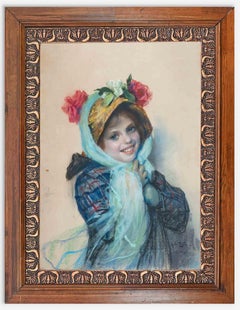
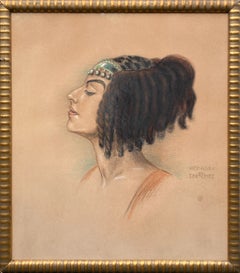
19th Century Antique Portrait Watercolor Drawing in Good Condition

19th Century Antique Portrait Watercolor Drawing in Good Condition

Located in London, GB

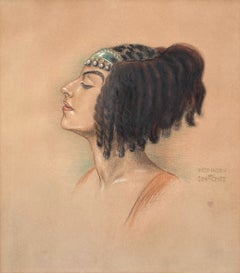
'The Queen of the Night' Ott’s beautiful and striking Queen of the Night, the lead villain in Mozart’s ‘The Magic Flute’ can be identified by her striking pose and exotic head dress...

Category

Symbolist 1910s Art

Materials

Pastel, Paper

The Feeding / - Natural grace -

The Feeding / - Natural grace -

Located in Berlin, DE

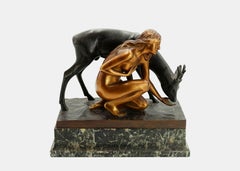
Erich Schmidt-Kestner (1877 Berlin - 1941 Nordhausen), The Feeding, around 1915. Gold and black patinated bronze with cast brown patinated plinth mounted on a lightly veined black-gr...

Category

Art Nouveau 1910s Art

Materials

Bronze

"L'enfant a l'arbalete" original lithograph

"L'enfant a l'arbalete" original lithograph

Located in Henderson, NV

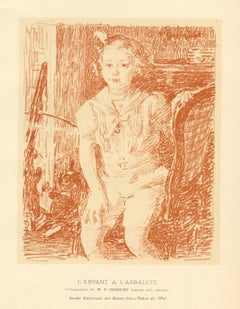
Medium: original lithograph. Printed in 1910 in sanguine ink and published in Paris for Gazette des Beaux-Arts. Image size: 5 3/4 x 4 3/4 inches (146 x 122 mm). Not signed.

Category

1910s Art

Materials

Lithograph

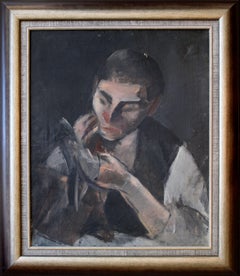
Mother's portrait. 1917, oil on canvas, 60x50 cm

Mother's portrait. 1917, oil on canvas, 60x50 cm

By Romans Suta

Located in Riga, LV

Mother's portrait. 1917, oil on canvas, 60x50 cm With certificate of authenticity Romans Suta Born on April 28, 1896 in the vicinity of Cesis (Latvia), died on July 14, 1944 in T...

Category

Expressionist 1910s Art

Materials

Canvas, Oil

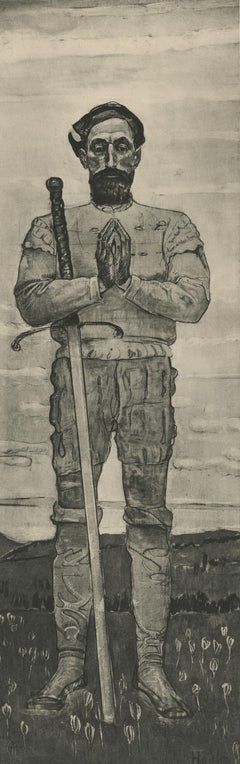
"Praying Warrior" Copper Plate Heliogravure

"Praying Warrior" Copper Plate Heliogravure

By Ferdinand Hodler & R. Piper & Co.

Located in Palm Beach, FL

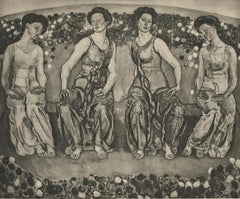
2018 marks the centenary anniversary of Ferdinand Hodler’s death. In that 100 years time, the art world’s esteem of this important artist has proved fickle. It has shifted from extolling his artistic merits during his lifetime to showing something of a feigned disdain- more reflective of the world political order than a true change of heart for Hodler’s work. After years of Hodler being all but a footnote in the annals of art history and generally ignored, finally, the pendulum has righted itself once again. Recent retrospective exhibitions in Europe and the United States have indicated not only a joyful rediscovery of Hodler’s art but a firm conviction that his work and world view hold particular relevance today. DAS WERK FERDINAND HODLERS is not only a collection of printed work reflecting the best of all of his painted work created up to 1914 just before the outbreak of World War I, the portfolio itself is an encapsulation of Hodler’s ethos, Parallelisme. Hodler developed his philosophy of Parallelisme as a unifying approach to art which strips away detail in search of harmony. By means of abstraction, symmetry and repetition, Hodler sought ways to depict Nature’s essence and her fundamental, universal order. He believed these universal laws governing the natural, observable world extend to the spiritual realm. Symbolist in nature with Romantic undertones, his works are equally portraits of these universal concepts and feelings governing all life as they are a visual portrait in the formal sense. Whether his subject is a solitary tree, a moment in battle, mortal fear, despair, the awe inspired by a vast mountain range, a tender moment or even the collective conviction in a belief, Hodler unveils this guiding principle of Parallelisme. Several aspects of Hodler’s portfolio reinforce his tenets of Parallelisme. The Table of Contents clearly preferences a harmonious design over detail. The two columns, consisting of twenty lines each, list the images by order of appearance using their German titles. The abbreviated titles are somewhat cryptic in that they obscure the identities of the sitters. Like the image Hodler presents, they are distillations of the sitter without any extraneous details. This shortening was also done in an effort to maintain a harmonious symmetry of the Table of Contents, themselves, and keep titles to a one-line limit. The twenty-fourth title: “Bildnis des Schweizerischen Gesandten C.” was so long, even with abbreviation, that it required two lines; so, for the sake of maintaining symmetry, the fortieth title: “Bauernmadchen” was omitted from the list. This explains why the images are not numbered. Hodler’s reasoning is not purely esoteric. Symmetry and pattern reach beyond mere formal design principles. Finding sameness and imposing it over disorder goes to the root of Hodler’s identity and his art. A Swiss native, Hodler was bi-lingual and spoke German and French. Each printed image, even number forty, have titles in both of Hodler’s languages. Certainly, there was a market for Hodler’s work among francophones and this inclusion may have been a polite gesture to that end; however, this is the only place in the portfolio which includes French. With German titles at the lower left of each image, Hodler’s name at bottom center and corresponding French titles at the lower right of each image, there is a harmony and symmetry woven into all aspects of the portfolio. This holds true for the page design, as it applies to each printed image and as it describes the Swiss artist himself. Seen in this light, Hodler’s portfolio of printed work is the epitome of Hodler’s Parallelisme. DAS WERK FERDINAND HODLERS is also one of the most significant documents to best tell the story of how Hodler, from Switzerland, became caught between political cross-hairs and how the changing tides of nations directly impacted the artist during his lifetime as well as the accessibility of his art for generations to come. The Munich-based publisher of the portfolio, R. Piper & Co., Verlag, plays a crucial role in this story. Publishing on a wide range of subjects from philosophy and world religion to music, literature and the visual arts; the publisher’s breadth of inquiry within any one genre was equal in scope. Their marketing strategy to publish multiple works on Hodler offers great insight as to what a hot commodity Hodler was at that time. R.Piper & Co.’s Almanach, which they published in 1914 in commemoration of their first ten years in business, clearly illustrates the rapid succession- strategically calculated for achieving the deepest and broadest impact - in which they released three works on Hodler to hit the market by the close of 1914. DAS WERK FERDINAND HODLERS was their premier publication. It preceded C.A. Loosli’s Die Zeichnungen Ferdinand Hodlers, a print portfolio after 50 drawings by Hodler which was released in Autumn of 1914 at the mid-level price-point of 75-150 Marks; and a third less expensive collection of prints after original works by Hodler, which had not been included in either of the first two portfolios, was released at the end of that year entitled Ferdinand Hodler by Dr. Ewald Bender. The title and timing of DAS WERK FERDINAND HODLERS' debut leaves little doubt as to the connection it has with another avant-garde portfolio of art...

Category

Symbolist 1910s Art

Materials

Paper

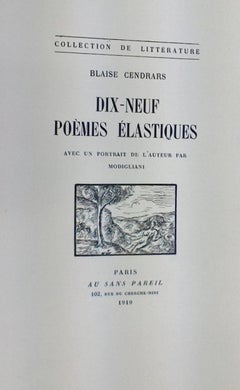
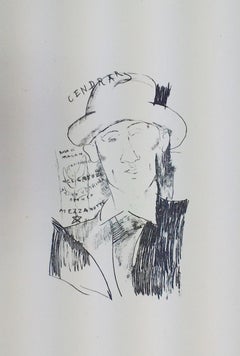
Dix Neuf Poèmes Élastiques

Dix Neuf Poèmes Élastiques

Located in Roma, IT

One of 40 copies on Hollande Van Gelder in 8° format including a second portrait of the author out of text. Rigid binding lightly wore on angles. Internal papers in perfect conditions. Edition: Paris, Au Sans Pareil Circulation: 50 copies of which 10 on Japon ancient and 40 on Hollande Van Gelder, plus 1050 on velin d' alfa Format: In-4° Pages: 52 Artist: Amedeo Modigliani, Blaise Cendrars

Category

Post-Impressionist 1910s Art
Materials

Paper

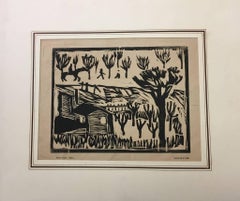
Tiber Woodcut Print, Modern Style, Circa 1910, Unframed, 30x21 cm

Tiber Woodcut Print, Modern Style, Circa 1910, Unframed, 30x21 cm

By Arturo Martini

Located in Roma, IT

Very rare xylograph of the artist, who was considered one of the 20th Century Masters in xylography. Title and signature printed on the lower margin. Very good condition. Passepartout included (cm 55 x 45). The artwork was made in Paris, where he used the name of his mother "Martini de la Valle...

Category

Modern 1910s Art

Materials

Woodcut

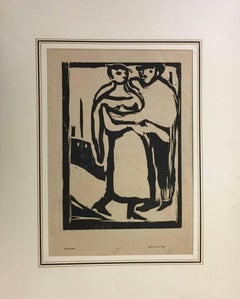
Piazza d'Armi, Rome - Original Woodcut Print - 1913

Piazza d'Armi, Rome - Original Woodcut Print - 1913

By Arturo Martini

Located in Roma, IT

Piazza d'Armi is a very rare xylograph realized by Arturo Martini, one of the 20th-century masters in this technique. Title and signature printed on the lower margin. Passepartout included : 45 x 55 cm Image Dimensions : 22.5 x 29 cm Arturo Martini (1889-1947) was an Italian sculptor. He studied ceramics in Faenza and sculpture in Treviso. His copious artistic production is characterized by immediate plasticity, halcyon inventiveness, and thorough mastery of all technical processes: stone, bronze, terracotta...

Category

Modern 1910s Art

Materials

Woodcut

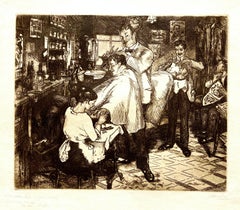
Barbershop

Barbershop

By John Sloan

Located in New York, NY

John Sloan (1871-1954), Barbershop, 1915, etching and aquatint, signed in pencil lower right, inscribed in pencil “For John Quinn, Esq. – John Sloan” lower left margin, (also signed ...

Category

Ashcan School 1910s Art

Materials

Etching, Aquatint

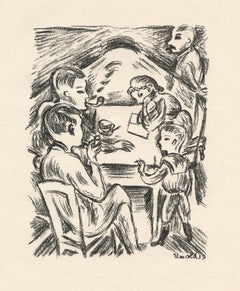
original lithograph

original lithograph

By Max Unold

Located in Henderson, NV

Medium: original lithograph. This impression on wove paper was printed in 1919 for Das Kestnerbuch, an important collection of original prints published during the height of the Germ...

Category

Expressionist 1910s Art
Materials

Lithograph

WWI American Scene Ashcan Modern 20th Century Historical Realism Industrial WPA

WWI American Scene Ashcan Modern 20th Century Historical Realism Industrial WPA

By Gerrit Beneker

Located in New York, NY

WWI American Scene Ashcan Modern 20th Century Historical Realism Industrial WPA Gerrit Beneker (1882-1934) "Constant Driving Will Win the War" 30 x 40 inches Oil on canvas Signed and dated 1918 lower right In 1905, Gerrit Beneker began his art career as an illustrator. He married Flora Judd, his high school sweetheart from Grand Rapids and they moved to Brooklyn, NY. Gerrit's early passion was to create an art that would inspire and provide honor to the workingman. As such, he had no interest in painting portraits of pretty women, which were so often seen on the magazine covers of the day. Rather he wanted to seek out workingmen on the bridges, tunnels and skyscrapers of NYC, and paint them in their environments. He completed over 150 magazine covers, numerous ads including many for Ivory Soap...

Category

1910s Art

Materials

Canvas, Oil

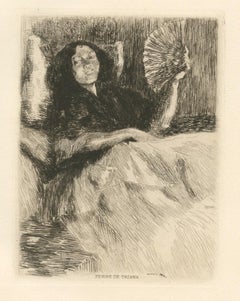
"Femme de Triana" etching

"Femme de Triana" etching

By Alexandre Lunois

Located in Henderson, NV

Medium: etching. A rich impression printed on laid paper in 1914 by Porcabeuf and published by Henri Floury for the catalogue raisonne "Alexandre Lunois, peintre, graveur et lithogra...

Category

1910s Art

Materials

Etching

"Johannes auf Patmos" original lithograph

"Johannes auf Patmos" original lithograph

Located in Henderson, NV

Medium: original lithograph. Published in 1919 for Genius. Image size: 9 1/2 x 8 1/2 inches (240 x 214mm). Printed on laid paper. Signed in the plate, not by hand.

Category

Expressionist 1910s Art
Materials

Lithograph