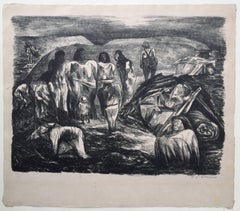
1930s Art

to
791
3,328
1,221
916
538
351
Overall Width
to
Overall Height
to
7,539
21,349
164,389
236,724
2,103
2,320
4,649
6,399
5,829
15,273
20,897
26,216
19,115
14,125
5,352
2,399
484
408
242
122
106
105
70
13
9
5
2
2
3,512
2,384
314
3,875
1,752
1,610
1,107
1,103
695
456
442
431
347
328
306
297
293
282
230
220
218
218
191
2,036
1,610
1,370
1,152
899
261
140
105
88
61
1,884
1,122
3,367
2,955
Period: 1930s
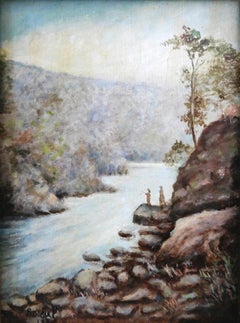
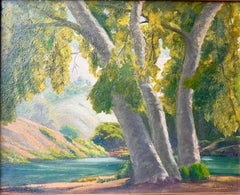
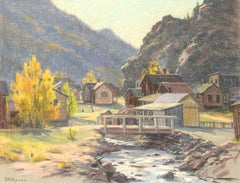
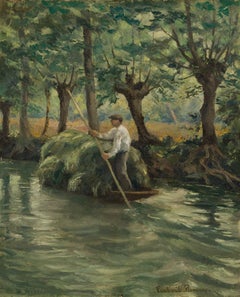
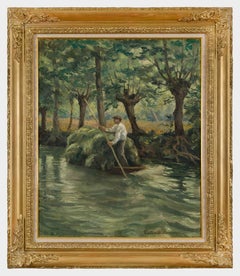
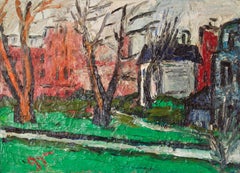
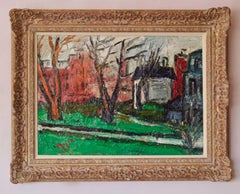
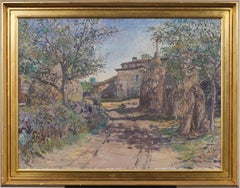
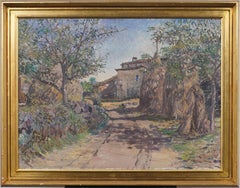
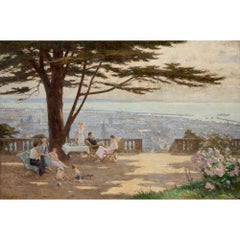
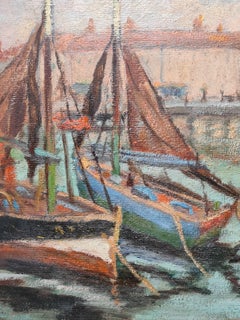
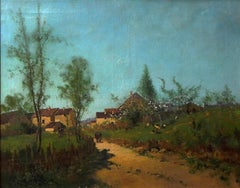
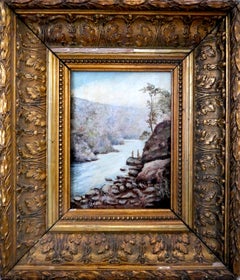
French school Landscape Gorge River Scene with Figures oil painting Signed 1936

French school Landscape Gorge River Scene with Figures oil painting Signed 1936

Located in Zofingen, AG

➡️ Landscape Gorge river scene oil painting⬅️ ⏩It is signed Boréal⏪ ⭐Medium:⭐ Oil on wood panel ⭐Technique: ⭐Impasto painting with expressive brushwork. ⭐Size:⭐16.5x22cm / 6.5x...

Category

Impressionist 1930s Art

Materials

Gesso, Oil, Wood Panel, Stretcher Bars

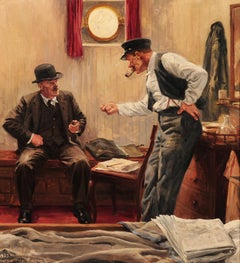
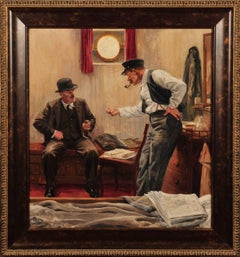
"The Pearl of Panama"

"The Pearl of Panama"

By Anton Otto Fischer

Located in Fort Washington, PA

Medium: Oil on Canvas Signature: Signed Lower Left Sight Window 24.00" x 22.00" Image of an inspector at a crime scene aboard ship. Saturday Evening Post Illustration. Long affiliated with The Saturday Evening Post (nearly 50 years), he did dozens of covers and much story art, most notably the long-running Tug-Boat Annie and with maritime painting, Fischer was more versatile than depicting the sail and dreadnaughts when given a chance. Still, he's best known for painting the sea, her beauty and her dangers (whether hurricanes or U-Boats). It's no surprise that his oils graced such titles as The Cruise of the Cachalot: Round the World After Sperm Whales, Treasure Island, The Mutineers, 20000 Leagues Under the Sea...

Category

Other Art Style 1930s Art

Materials

Canvas, Oil

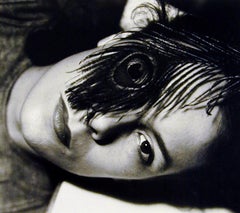
Juliet with One Peacock Feather Eye, Chicago

Juliet with One Peacock Feather Eye, Chicago

By György Kepes

Located in Denton, TX

Signed, dated and numbered. Portfolio Twelve Photographs, No. 13 György Kepes was a Hungarian artist born in 1906. He studied painting at the Budapest’s Academy of Fine Arts. In 193...

Category

Bauhaus 1930s Art

Materials

Silver Gelatin

Spring

Spring

Located in Los Angeles, CA

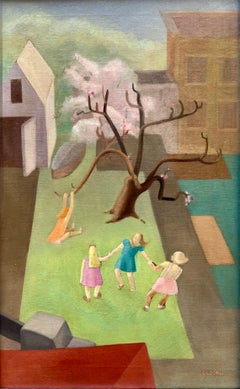
Spring, c. late 1940s, oil on canvas, signed lower right, 26 x 16 inches, label verso with title, original price, and artist's name Spring is an early work, likely from the late 19...

Category

American Modern 1930s Art

Materials

Canvas, Oil

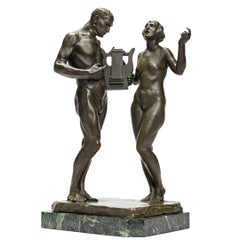
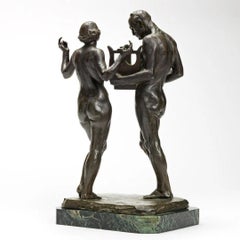
Harmony, 20th century bronze & green marble base, nude man and woman with lyre

Harmony, 20th century bronze & green marble base, nude man and woman with lyre

By Max Kalish

Located in Beachwood, OH

Max Kalish (American, 1891-1945) Harmony, c. 1930 Bronze with green marble base Incised signature on right upper side of base 14 x 9 x 5 inches, excluding base 17 x 10 x 8 inches, including base Born in Poland March 1, 1891, figurative sculptor Max Kalish came to the United States in 1894, his family settling in Ohio. A talented youth, Kalish enrolled at the Cleveland Institute of Art as a fifteen-year-old, receiving a first-place award for modeling the figure during studies with Herman Matzen. Kalish went to New York City following graduation, studying with Isidore Konti...

Category

American Modern 1930s Art

Materials

Marble, Bronze

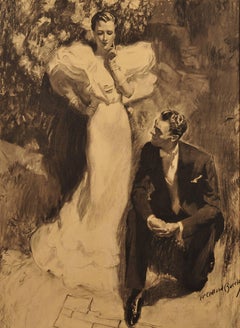
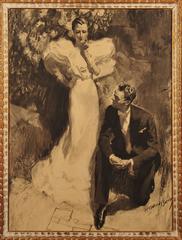
Elegant Couple, Good Housekeeping Illustration

Elegant Couple, Good Housekeeping Illustration

By McClelland Barclay

Located in Fort Washington, PA

Date: 1934 Medium: Charcoal on Paper Dimensions: 34.00" x 25.00" Signature: Signed Lower Right Story illustration: Elegant couple considers floor plan drawn in the sand. “Benda finished explaining the house plan she had drawn in the sand. ‘But, Benda,’ Don said, examining it, ‘the place is not complete. Haven't you forgotten something?’ ‘That's all... I'm sure... Don,’ she answered softly.” Story illustration: “Between the Owl's Nest and a Rift in the Clouds”, author: Clara Hood Rugel, Good Housekeeping...

Category

1930s Art

Materials

Paper, Charcoal

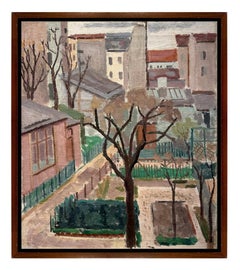
Winters Day in Kensington - Early 20th Century Impressionist Oil by Gwen Collins

Winters Day in Kensington - Early 20th Century Impressionist Oil by Gwen Collins

By Gwendolyn Collins

Located in Watford, Hertfordshire

Gwendolyn Collins was a wealthy painter who did most of work between 1922 - 1933. She lived in a Mount Street in Mayfair and did not join any art groups or societies. When her st...

Category

Impressionist 1930s Art

Materials

Canvas, Oil

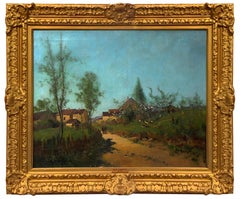
Antique Large American Impressionist Giltwood Framed Landscape Oil Painting

Antique Large American Impressionist Giltwood Framed Landscape Oil Painting

Located in Buffalo, NY

Antique European impressionist landscape oil painting. Oil on canvas. Framed. Signed. Measuring: 29 by 37 inches overall, and 24 by 32 painting alone. In excellent original conditi...

Category

Modern 1930s Art

Materials

Canvas, Oil

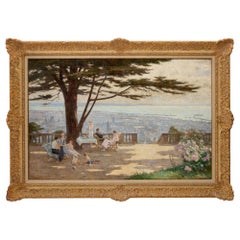
20th Century Impressionist Style Painting of Le Havre by Binet

20th Century Impressionist Style Painting of Le Havre by Binet

By Georges Jules Ernest Binet

Located in London, GB

20th century Impressionist style painting of Le Havre by Binet French, 1934 Canvas: Height 98cm, width 147cm Frame: Height 126cm, width 174cm, depth 8cm A luminous celebration of light, leisure, and local identity, this painting is a superb example of Georges Jules Ernest Binet...

Category

Impressionist 1930s Art

Materials

Canvas, Oil

"Alley Fiends"

"Alley Fiends"

By John R. Grabach

Located in Lambertville, NJ

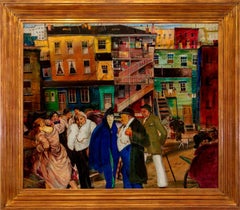
Jim’s of Lambertville is proud to offer this artwork by: John R. Grabach (1886 - 1981) John Grabach was a highly regarded New Jersey artist, teacher, and author of the classic text...

Category

American Impressionist 1930s Art

Materials

Canvas, Oil

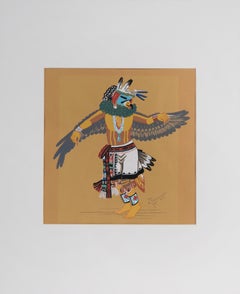
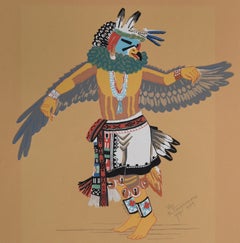
"Kachina Eagle Dancer" - 1939 Hopi Serigraph

"Kachina Eagle Dancer" - 1939 Hopi Serigraph

Located in Soquel, CA

"Kachina Eagle Dancer" - 1939 Serigraph Serigraph of a Kachina Eagle Dancer by Hopi Pueblo artist Kyrate Tuvahoema (Native American, 1914-1942). The Kachina Eagle Dancer wears a vib...

Category

Impressionist 1930s Art

Materials

Paper, Ink

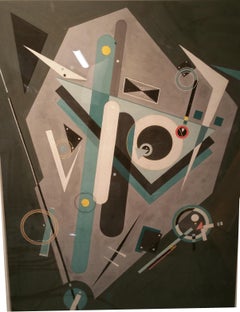
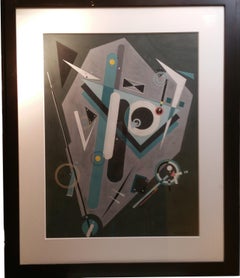
Geometric Composition

Geometric Composition

By Rolph Scarlett

Located in Saratoga Springs, NY

Rolph Scarlett (Canadian/American, 1889 - 1984) “Geometric Composition” Signed lower right, circa late 1930’s early 1940’s 19 ½ x 26 inches Mixed media, Price on request About Rolph Scarlett was a painter of geometric and linear forms, an industrial designer, and a pioneer in helping establish non-objective art as an aesthetic in America. He also worked in an abstract art style during the American avant-garde movement which extended into the 1940s. He was born in Guelph, Ontario, Canada and travelled to New York City as an 18-year-old. By 1924 he made New York City his home. In 1939, Scarlett was one of the founding members and forces which steered the development of the Museum of Non-Objective Painting in New York. (later, the Solomon R. Guggenheim Museum). Guggenheim was the sponsor behind the Avant Garde and pioneering, philosophy of Baroness Hilla Rebay who founded the early museum. She was both the founding curator and director of the museum, as well as an abstract artist. She encouraged and worked with Scarlett in the early museum years, together promoting the concepts of non-objective painting. In Scarlett’s aesthetic these where geometric elements intuitively placed in non-descript flat and three-dimensional space. Any discussion of the history of the Guggenheim Museum must include four key figures: Hilla Rebay (1890-1967), Wassily Kandinsky (1866-1944), Rudolf Bauer (1889-1953), and Rolf Scarlett...

Category

Abstract Geometric 1930s Art

Materials

Mixed Media, Board

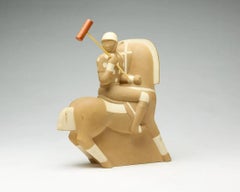
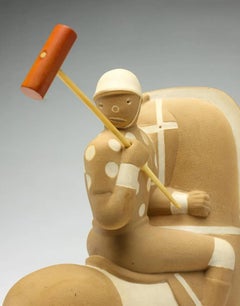
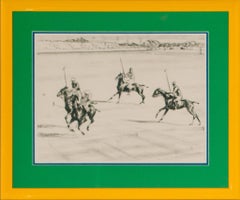
Early 20th Century Ceramic Sculpture of a Polo Player and Horse

Early 20th Century Ceramic Sculpture of a Polo Player and Horse

By Waylande Gregory

Located in Beachwood, OH

Waylande Gregory (American, 1905-1971) Polo Player, c. 1930s Ceramic Inscribed signature on bottom 11 x 8.5 inches Waylande Gregory was considered a major American sculptor during the 1930's, although he worked in ceramics, rather than in the more traditional bronze or marble. Exhibiting his ceramic works at such significant American venues for sculpture as the Whitney Museum of American Art in New York City and at the venerable Pennsylvania Academy of the Fine Arts in Philadelphia, he also showed his ceramic sculptures at leading New York City galleries. Gregory was the first modern ceramist to create large scale ceramic sculptures, some measuring more than 70 inches in height. Similar to the technique developed by the ancient Etruscans, he fired his monumental ceramic sculptures only once. Gregory was born in 1905 in Baxter Springs, Kansas and was something of a prodigy. Growing up on a ranch near a Cherokee reservation, Gregory first became interested in ceramics as a child during a native American burial that he had witnessed. He was also musically inclined. In fact, his mother had been a concert pianist and had given her son lessons. At eleven, he was enrolled as a student at the Kansas State Teacher's College, where he studied carpentry and crafts, including ceramics. Gregory's early development as a sculptor was shaped by the encouragement and instruction of Lorado Taft, who was considered both a major American sculptor as well as a leading American sculpture instructor. In fact, Taft's earlier students included such significant sculptors as Bessie Potter Vonnoh and Janet Scudder. But, Taft and his students had primarily worked in bronze or stone, not in clay; and, Gregory's earliest sculptural works were also not in ceramics. In 1924, Gregory moved to Chicago where he caught the attention of Taft. Gregory was invited by Taft to study with him privately for 18 months and to live and work with him at his famed "Midway Studios." The elegant studio was a complex of 13 rooms that overlooked a courtyard. Taft may have been responsible for getting the young man interested in creating large scale sculpture. However, by the 1920's, Taft's brand of academic sculpture was no longer considered progressive. Instead, Gregory was attracted to the latest trends appearing in the United States and Europe. In 1928 he visited Europe with Taft and other students. "Kid Gregory," as he was called, was soon hired by Guy Cowan, the founder of the Cowan Pottery in Cleveland, Ohio, to become the company's only full time employee. From 1928 to 1932, Gregory served as the chief designer and sculptor at the Cowan Pottery. Just as Gregory learned about the process of creating sculpture from Taft, he literally learned about ceramics from Cowan. Cowan was one of the first graduates of Alfred, the New York School of Clayworking and Ceramics. Alfred had one of the first programs in production pottery. Cowan may have known about pottery production, but he had limited sculptural skills, as he was lacking training in sculpture. The focus of the Cowan Pottery would be on limited edition, table top or mantle sculptures. Two of the most successful of these were Gregory's "Nautch Dancer," (fig. 1) and his "Burlesque Dancer," (fig. 2). He based both sculptures on the dancing of Gilda Gray, a Ziegfield Follies girl. Gilda Gray was of Polish origin and came to the United States as a child. By 1922, she would become one of the most popular stars in the Follies. After losing her assets in the stock market crash of 1929, she accepted other bookings outside of New York, including Cleveland, which was where Gregory first saw her onstage. She allowed Gregory to make sketches of her performances from the wings of the theatre. She explained to Gregory, "I'm too restless to pose." Gray became noted for her nautch dance, an East Indian folk dance. A nautch is a tight, fitted dress that would curl at the bottom and act like a hoop. This sculpture does not focus on Gray's face at all, but is more of a portrait of her nautch dance. It is very curvilinear, really made of a series of arches that connect in a most feminine way. Gregory created his "Burlesque Dancer" at about the same time as "Nautch Dancer." As with the "Nautch Dancer," he focused on the movements of the body rather than on a facial portrait of Gray. Although Gregory never revealed the identity of his model for "Burlesque Dancer," a clue to her identity is revealed in the sculpture's earlier title, "Shimmy Dance." The dancer who was credited for creating the shimmy dance was also Gilda Gray. According to dance legend, Gray introduced the shimmy when she sang the "Star Spangled Banner" and forgot some of the lyrics, so, in her embarrassment, started shaking her shoulders and hips but she did not move her legs. Such movement seems to relate to the "Burlesque Dancer" sculpture, where repeated triangular forms extend from the upper torso and hips. This rapid movement suggests the influence of Italian Futurism, as well as the planar motion of Alexander Archipenko, a sculptor whom Gregory much admired. The Cowan Pottery was a victim of the great depression, and in 1932, Gregory changed careers as a sculptor in the ceramics industry to that of an instructor at the Cranbrook Academy in Bloomfield Hills, Michigan. Cranbrook was perhaps the most prestigious place to study modern design in America. Its faculty included the architect Eliel Saarinen and sculptor Carl Milles. Although Gregory was only at Cranbrook for one and one half years, he created some of his finest works there, including his "Kansas Madonna" (fig. 3). But, after arriving at Cranbrook, the Gregory's had to face emerging financial pressures. Although Gregory and his wife were provided with complimentary lodgings, all other income had to stem from the sale of artworks and tuition from students that he, himself, had to solicit. Gregory had many people assisting him with production methods at the Cowan Pottery, but now worked largely by himself. And although he still used molds, especially in creating porcelain works, many of his major new sculptures would be unique and sculpted by hand, as is true of "Kansas Madonna." The scale of Gregory's works were getting notably larger at Cranbrook than at Cowan. Gregory left the surface of "Kansas Madonna" totally unglazed. Although some might object to using a religious title to depict a horse nursing its colt, it was considered one of Gregory's most successful works. In fact, it had a whole color page illustration in an article about ceramic sculpture titled, "The Art with the Inferiority Complex," Fortune Magazine, December, 1937. The article notes the sculpture was romantic and expressive and the sculpture was priced at $1,500.00; the most expensive sculpture in the article. Gregory was from Kansas, and "Kansas Madonna" should be considered a major sculptural document of Regionalism. Gregory and his wife Yolande moved to New Jersey in the summer of 1933. And the artist began construction on his new home in the Watchung Mountains of Bound Brook (Warren today) in 1938. His enormous, custom kiln was probably constructed at the start of 1938. Gregory's new sculptures were the largest ceramic sculptures in western art, in modern times. To create these works of ceramic virtuosity, the artist developed a "honeycomb" technique, in which an infrastructure of compartments was covered by a ceramic "skin." Science and atomic energy were a theme in Gregory's most significant work, the "Fountain of the Atom" (fig. 4), at the 1939 New York's World Fair. This major work included twelve monumental ceramic figures at the fairground entrance from the newly constructed railway entrance, giving the work great visibility and prominence. The framework of the fountain itself was of steel and glass bricks. It consisted of a bluish green pool which was sixty five feet in diameter. Above it were two concentric circular tiers, or terraces, as Gregory called them; the first wider than the second. On the first terrace were eight "Electrons," comprised of four male and four female terra cotta figures, each approximately 48 inches high. These relate to the valance shell of the atom. Above them on a narrower terrace, were the much larger and heavier terra cotta figures depicting the four elements, each averaging about 78 inches in height and weighing about a ton and a half. Of the four, "Water" and "Air" were male, while "Earth" and "Fire" were female. This terrace represents the nucleus of the atom. In the center of the fountain, above the "Elements," was a central shaft comprised of sixteen glass tubes from which water tumbled down from tier to tier. At the top, a colorful flame burned constantly. The glass block tiers were lit from within, the whole creating a glowing and gurgling effect. Since the fair was temporary, the figures could be removed after its closing. But the credit for the design of the structure of the fountain belongs to collaborator Nembhard Culin, who was responsible for several other structures on the fair grounds as well. Although Gregory created a figure of "Fire" for the "Fountain of the Atom," he also executed a second, slightly smaller but more defined version which he exhibited at various locations (including Cranbrook, Baltimore Museum, etc.) in 1940-1941, during the second year of the fair (fig.5). Measuring 61 inches in height, "Fire" may be a metaphor for sexual energy, as well as atomic energy. Gregory stated, "Fire is represented by an aquiline female figure being consumed in endless arabesques of flame." Portraiture was also a significant focus of Gregory's sculpture. Gregory produced many commissioned portraits of local people as well as celebrities. He created Albert Einstein's portrait from life (fig. 6, ca. 1940) after Einstein had seen Gregory's "Fountain of the Atom." He also sculpted some of the leading figures in entertainment, including 2 sculptures of Henry Fonda, who became a personal friend. Gregory also sculpted a series of idealized female heads, both in terra cotta and in porcelain. These include "Girl with Olive" (ca. 1932) and "Cretan Girl;"(ca. 1937) both are very reductive and almost abstract works that call to mind Constantine Brancusi's "Mademoiselle Pogany" (1912, Philadelphia Museum of Art). But perhaps one of his most original female heads is "Head of a Child" (fig. 7, ca. 1933), a sensitive white glazed terra cotta portrayal with elaborately crafted braded hair, was originally created as one of a pair. Gregory also produced sculptural works for the Works Progress Administration. The WPA was a work relief project that greatly helped artists during the great depression. Founded by the Federal Government in 1935, an estimated 2500 murals were produced. Among these public works were the iconic post office murals. But, among the painted murals were also sculptural relief murals including Gregory's "R.F.D.," 1938, for the Columbus, Kansas Post Office. But, Gregory's largest WPA relief...

Category

1930s Art
Materials

Ceramic

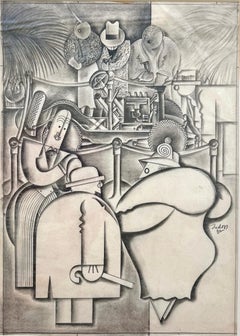
Art Deco Automobile Exhibition Drawing, Pencil on Paper, 1930s, Framed

Art Deco Automobile Exhibition Drawing, Pencil on Paper, 1930s, Framed

Located in Miami, FL

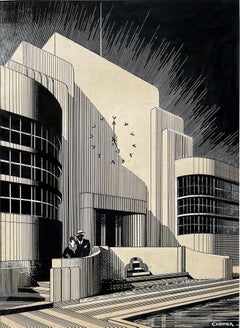
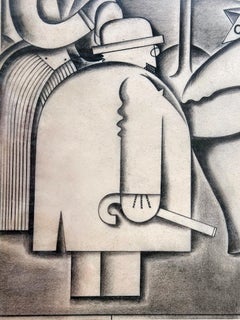
Legendary Life Magazine Art Director and Illustrator Charles Tudor depicts a vibrant 1930s Automobile Exhibition. In the background, four onlookers are shown studying a vehicle. At ...

Category

Art Deco 1930s Art

Materials

Pencil, Paper, Graphite

Portrait of a Man
Portrait of a Man

Portrait of a Man

By Marcel GIMOND

Located in PARIS, FR

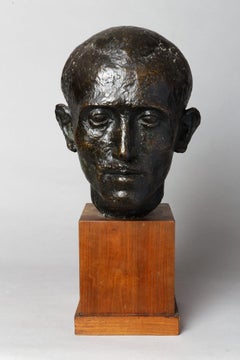
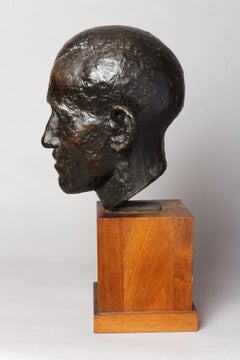
Portrait of a Man by Marcel GIMOND (1894-1961) Bronze with a very nuanced dark brown patina signed on the neck with the monogram "MG" period cast by "Meroni Radice, cire perdue, Par...

Category

French School 1930s Art

Materials

Bronze

"Chisholm Trail"
"Chisholm Trail"

"Chisholm Trail"

By Charles Hargens

Located in Lambertville, NJ

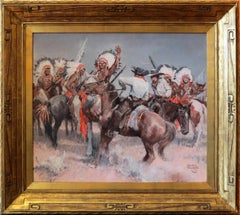
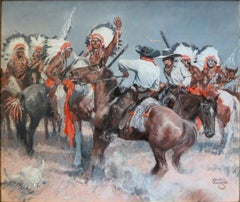
Jim’s of Lambertville is proud to offer this artwork by: Charles Hargens (1893 - 1997) Carversville, Bucks County, Pennsylvania artist and illustrator Charles was born in Hot Springs, South Dakota. As a young boy he loved to draw cowboys, Indians and ranch buildings. By age ten, he was “a commercial success” selling drawings of neighbors’ barns and houses for $25. When he grew older, his parents consented to enroll him at the Pennsylvania Academy (1913-20) where he studied with Daniel Garber, Hugh Breckenridge, Henry McCarter, and William Merritt Chase. At Garber’s invitation, Hargens occasionally came to visit his Lumberville studio to paint with him. A lifelong friendship resulted. In 1915, the Pennsylvania Academy awarded Hargens its Cresson Traveling Scholarship and he went to Paris to study at the Academie Julian and the Academie Colarossi. Hargens was a fellow of the Pennsylvania Academy and a member of the Society of Illustrators, the National Cowboy Hall of Fame and the Philadelphia Sketch Club. He exhibited at the Art Institute of Chicago (1923 awards) and at the Pennsylvania Academy of Fine Arts (1915 prize, 1917 prize, 1918 award). By the early 1920s, he began to produce illustrations for book jackets, books, magazines and advertisements. His career took off and soon his illustrations of cowboys, Indians, Western life, Revolutionary War action and boy scout themes appeared in, or adorned the covers of The Saturday Evening Post, Collier’s, Liberty, McCall’s, Boy’s Life and Gentlemen’s Quarterly. His work also appeared on billboards and advertisements for Stetson hats and Coca-cola. It was conditioned by Hargens that all of his original art was returned to him after being published. His entire body work remained in his studio until his death in 1997; this is largely the reason his paintings have not yet commanded the high prices of his contemporary Saturday Evening Post illustrators (i.e. Rockwell, Leyendecker and N.C. Wyeth). At first he and his wife worked from their studio in Philadelphia. In 1940, they purchased a property at the intersection of Aquetong and Sawmill roads in Carversville. They commuted to Philadelphia regularly and stayed in South Dakota every summer. Eventually, he set up a studio next to his Carversville home. After moving to Carversville, Hargens began a lifelong friendship with George Sotter. Hargens’ Carversville home was the subject of many of George Sotter’s paintings long before and during the time Hargens lived there. Hargens also studied with Henry Rand...

Category

American Impressionist 1930s Art

Materials

Canvas, Oil

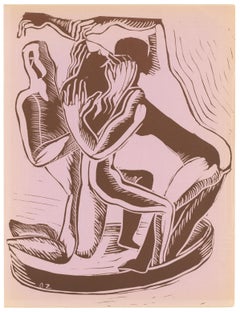
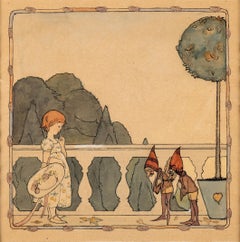
original linocut

original linocut

By Ossip Zadkine

Located in Henderson, NV

Medium: original linoleum cut. Printed in 1938 for the rare fourth issue of the art revue XXe Siecle . Size: 12 1/2 x 9 5/8 inches (317 x 244 mm). Signed in the block (not by hand). ...

Category

1930s Art
Materials

Linocut

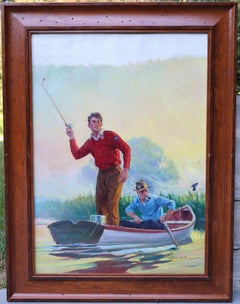
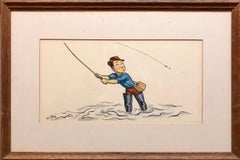
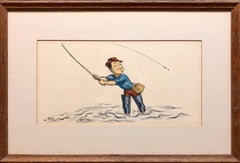
Whimsical Fishing Illustration Cartoon 1938 Mt Tremblant Ski Lodge William Steig

Whimsical Fishing Illustration Cartoon 1938 Mt Tremblant Ski Lodge William Steig

By William Steig (b.1907)

Located in Surfside, FL

Lighthearted Illustration of Outdoor Pursuits This one of a fisherman signed "W. Steig" Provenance: from Mrs. Joseph B. Ryan, Commissioned by Joe Ryan for the bar at his ski resort,...

Category

American Modern 1930s Art
Materials

India Ink, Watercolor, Illustration Board

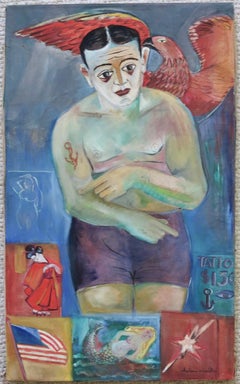
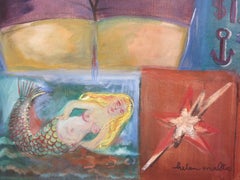
Tattoo Parlor Sailor (WPA era woman artist)

Tattoo Parlor Sailor (WPA era woman artist)

By Helen Malta

Located in Wilton Manors, FL

Helen Malta (b.1912). Tattoo Parlor, ca. 1935. Oil on canvas, 20 x 33 inches. Signed lower right. Metropolitan Museum of Art reproduction rights stamp on r...

Category

Abstract 1930s Art
Materials

Canvas, Oil

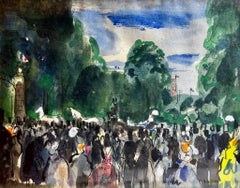
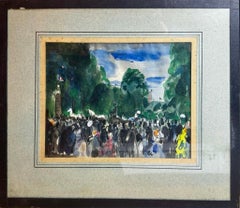
A Carriage in Paris
A Carriage in Paris

A Carriage in Paris

By Bernard Lamotte

Located in North Clarendon, VT

A beautiful mixed media painting by Bernard Lamotte. A crowded park in Paris is focused on a horse drawn carriage with French flags in the background. Watercolor, pen, mixed media o...

Category

Fauvist 1930s Art
Materials

Mixed Media, Watercolor, Pen

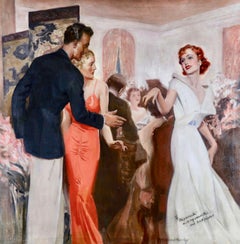
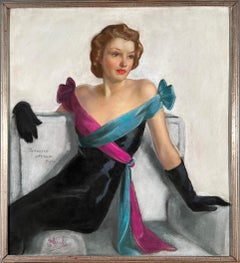
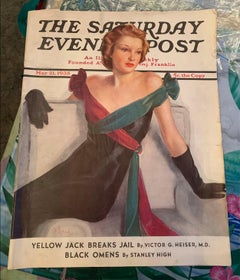
Saturday Evening Post Cover, Evening Gown  May 21st, 1938

Saturday Evening Post Cover, Evening Gown May 21st, 1938

By Neysa McMein

Located in Miami, FL

Pastel on board - Saturday Evening Post Cover, Evening Gown May 21st, 1938 - Reproduced version looks better because the Saturday Evening Post Art Director retouched the plates before printing and strengthened the colors to give it more newsstand appeal - Signed and inscribed lower left. Housed in an inexpensive period frame undlations to the board From Wiki : as an American illustrator and portrait painter who studied at The School of The Art Institute of Chicago and Art Students League of New York. She began her career as an illustrator and during World War I, she traveled across France entertaining military troops with Anita P...

Category

American Impressionist 1930s Art
Materials

Pastel

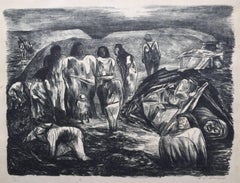
PROLETARIANS
PROLETARIANS

PROLETARIANS

By Jose Clemente Orozco

Located in Santa Monica, CA

JOSE CLEMENTE OROZCO (1893 - 1949) PROLETARIANS (aka Basurero, Scavengers ) 1935 (Orozco 27) lithograph, One of 88 signed and numbered of a total edition of 133, (+ 42 unnumbered a...

Category

Other Art Style 1930s Art
Materials

Lithograph