1930s Art

6,012 Results
to
799
3,424
1,269
930
532
363
Overall Width
to
Overall Height
to
7,647
21,531
166,456
236,539
2,154
2,344
4,735
6,562
6,066
15,986
21,259
26,580
19,305
14,077
5,456
2,452
499
406
249
150
112
109
73
11
9
5
2
2
3,660
2,393
316
4,022
1,831
1,673
1,172
1,153
731
469
458
451
338
338
308
303
298
285
243
225
225
213
186
2,087
1,690
1,405
1,159
902
261
155
139
88
59
1,905
1,169
3,473
3,012
Period: 1930s
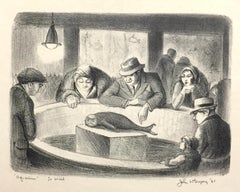
John W. Gregory, Aquarium

John W. Gregory, Aquarium

By John W. Gregory

Located in New York, NY

Gregory often worked in lithography, probably learned at the Art Students League in New York City. In all likelihood this is a New York scene but he also often drew New England subje...

Category

Ashcan School 1930s Art

Materials

Lithograph

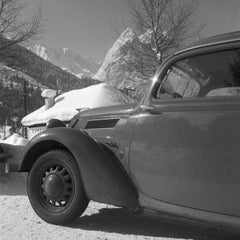
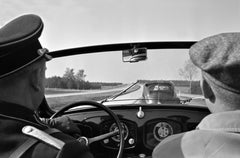
Ford Eifel in front of Zugspitzbahn 1930, Limited ΣYMO Edition, Copy 1 of 50

Ford Eifel in front of Zugspitzbahn 1930, Limited ΣYMO Edition, Copy 1 of 50

Located in Cologne, DE

The photographers note regarding this work is "Ford model Eifel in fornt of a station of the Zugspitzbahn mountain train, Germany 1930s." This work comes to you as a new Fine Art Pr...

Category

Modern 1930s Art

Materials

Color

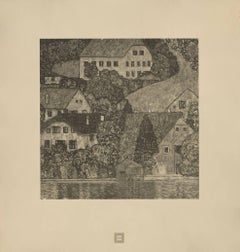
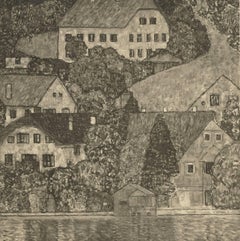
Max Eisler Eine Nachlese folio "Houses in Unterach on Lake Attersee" collotype

Max Eisler Eine Nachlese folio "Houses in Unterach on Lake Attersee" collotype

By (after) Gustav Klimt

Located in Palm Beach, FL

After Gustav Klimt, Max Eisler Plate #29, Am Attersee; brown-toned monochrome collotype after the 1915-16 painting in oil on canvas. GUSTAV KLIMT EINE NACHLESE (GUSTAV KLIMT AN AFTERMATH), a portfolio of 30 collotypes prints, 15 are multi-color and 15 are monochrome, on chine colle paper laid down on heavy cream-wove paper with deckled edges; Max Eisler, Editor-Publisher; Osterreichischer Staatsdruckerei (Austrian State Printing Office), Printer; in a limited edition of 500 numbered examples of which: 200 were printed in German, 150 were printed in French and 150 were printed in English; Vienna, 1931. 2018 marks the 100th anniversary of Gustav Klimt’s death. It is a fitting time to reflect upon the enduring legacy and deep impact of his art. Recognizing this need for posterity with uncanny foresight, the publication of Gustav Klimt: An Aftermath (Eine Nachlese) provides a rare collection of work after Klimt which has proven to be an indispensable tool for Klimt scholarship as well as a source for pure visual delight. Approximately 25 percent of the original works featured in the Aftermath portfolio have since been lost. Of those 30, six were destroyed by fire on 8 May 1945. On that fateful final day of WWII, the retreating Feldherrnhalle, a tank division of the German Army, set fire to the Schloss Immendorf which was a 16th century castle in Lower Austria used between 1942-1945 to store objects of art. All three of Klimt’s Faculty Paintings: Philosophy, Medicine and Jurisprudence (1900-1907), originally created for the University of Vienna, were on premises at that time. Also among the inventory of Klimt paintings in storage there was art which had been confiscated by the Nazis. One of the most significant confiscated collections was the Lederer collection which featured many works by Gustav Klimt such as Girlfriends II and Garden Path with Chickens. In many instances, Aftermath is our only link to these lost treasures. Max Eisler (1881-1937), the publisher of the 1931 Aftermath portfolio, was an art historian at Vienna University specializing in modern and contemporary arts and crafts whose 1920 book on Klimt was the first Klimt monograph. He saw An Aftermath as filling-in important gaps left by the earlier print portfolios which had only featured Klimt up to 1913 and which had glossed over major art projects such as the Tree of Life frieze for the Palais Stoclet. And whereas only 10 of the 50 prints from the earlier portfolios published by H.O. Miethke were made in intricate multi-color images, Eisler augmented the earlier format by featuring half of the 30 images in stunning multi-colored collotypes. Understanding the fragile nature of the collotype printing process also reinforces this project’s distinctive and exceptional characteristics. Fragile collotype plates can not be reused. As such, this necessitates the completion of a run on the first go and also dictates a limited production number. Printed by hand, the collotypes required deft handling by the printer, Osterreichische Staatsdruckerei. A complicated and lengthy process involving gelatin colloids mixed with dichromates, the creation of 16 color separation thin glass filters to achieve the light-sensitive internegative images which could faithfully capture all of the painting’s tonal gradations and colors, exposure to actinic light, and delicate chine collie papers which allowed for greater color saturation, the printer’s collaborative role in capturing and transmitting Klimt’s nuanced paint strokes is nothing short of remarkable. The Österreichische Staatsdruckerei (Austrian State Printing Office), was the successor to the KK Hof -und Staatsdruckerei which was founded by Emperor Franz I in 1804 and whose collotype printing innovations of Klimt’s art...

Category

Vienna Secession 1930s Art

Materials

Archival Paper

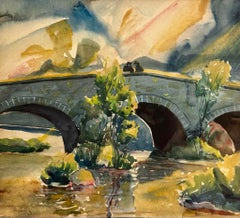
Swamp Creek Bridge, 1930

Swamp Creek Bridge, 1930

Located in North Clarendon, VT

Beautiful 1930 watercolor by Henry White Taylor of a stone bridge in Montgomery PA. Watercolor on paper, signed and dated lower left, 9.5" x 10.5 , 19" x 19" framed. Henry White Tay...

Category

American Impressionist 1930s Art

Materials

Watercolor

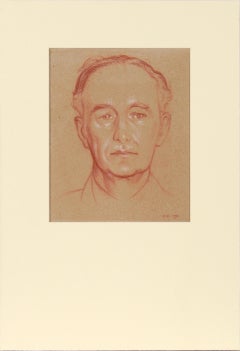
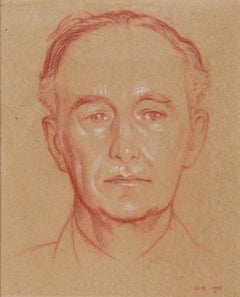
Portrait of Leopold Myers by Sir William Rothenstein

Portrait of Leopold Myers by Sir William Rothenstein

By Sir William Rothenstein

Located in Soquel, CA

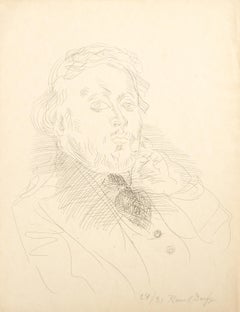
Stately sanguine portrait of Leopold Hamilton Myers (Novelist) by Sir William Rothenstein (English, 1872-1945). Captured in Rothenstein's characteristic style, Myers looks directly at the viewer with a neutral expression. Although this portrait uses only two colors and minimal shading, the likeness of Myers is incredibly well captured. Leo (Leopold) Hamilton Myers (1881 – 1944) was a British novelist. Numerous examples like this one of the writer are in the Tate Museum. Initialed and dated in the lower right corner ("W.R. 1936") Inscription on verso indicating materials, subject, and artist. Presented in a new cream colored mat with foamcore backing. Mat size: 18"H x 12"W Paper size: 15.25"H x 10.75"W William Rothenstein (English, 1872-1945) was born into a German-Jewish family in Bradford, West Yorkshire. His father, Moritz, emigrated from Germany in 1859 to work in Bradford's burgeoning textile industry. Soon afterwards he married Bertha Dux, and they had six children, of which William was the fifth. Rothenstein was knighted in 1931. Rothenstein left Bradford Grammar School at the age of sixteen to study at the Slade School of Art*, London (1888-1893), where he was taught by Alphonse Legros, and the Académie Julian* in Paris (1889-1893), where he met and was encouraged by James McNeill Whistler, Edgar Degas and Henri Toulouse-Lautrec. Whilst in Paris he also befriended the Anglo-Australian artist Charles Conder, with whom he shared a studio in Montmartre. In 1893 he returned to England to work on "Oxford Characters" a series of lithographic* portraits. In Oxford he met and became a close friend of the caricaturist* and parodist Max Beerbohm, who later immortalised him in the short story Enoch Soames (1919). During the 1890s Rothenstein exhibited with the New English Art Club* and, in 1900, won a silver medal for his painting The Doll's House at the Exposition Universelle. In 1898 he co-founded the Carfax Gallery in St. James' Piccadilly with John Fothergill. During its early years the gallery was closely associated with such artists as Charles Conder, Philip Wilson Steer, Charles Ricketts and Augustus John. It also exhibited the work of Auguste Rodin, whose growing reputation in England owed much to Rothenstein's friendship and missionary zeal. The gallery was later the home for all three exhibitions of The Camden Town Group*, led by Rothenstein's friend and close contemporary Walter Sickert. Rothenstein is best known for his portrait drawings of famous individuals and for being an official war artist in both World War I and World War II. He was also a member of the International Society of Sculptors, Painters & Gravers. The style and subject of his paintings varies, though certain themes reappear, in particular an interest in 'weighty' or 'essential' subjects tackled in a restrained manner. Good examples include Parting at Morning (1891), Mother and Child (1903) and Jews Mourning at a Synagogue (1907) - all of which are owned by the Tate Gallery. The National Portrait Gallery owns over two hundred of his portraits. In 2011 the BBC and the Public Catalogue Foundation began cataloguing all of his paintings in public ownership online. Between 1902 and 1912 Rothenstein lived in Hampstead, London, where his social circle included such names as H.G.Wells, Joseph Conrad and the artist Augustus John. Amongst the young artists to visit Rothenstein in Hampstead were Mark Gertler...

Category

Realist 1930s Art

Materials

Conté, Handmade Paper
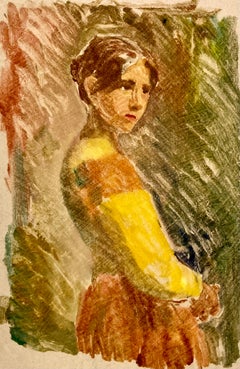
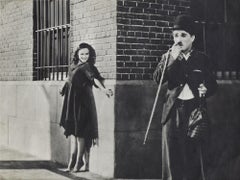
Charlie Chaplin Vintage Black and White Photograph, 1930s, Unframed

Charlie Chaplin Vintage Black and White Photograph, 1930s, Unframed

Located in Roma, IT

Charlie Chaplin is a vintage black and white photograph realized during the 1930s. Includes a wood frame. This pretty photograph represents the actor Charlie Chaplin with a woman, probably during one of his famous sketches...

Category

Modern 1930s Art

Materials

Photographic Paper
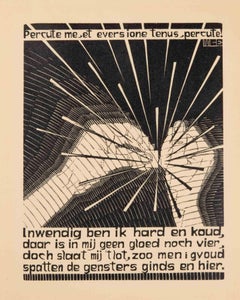
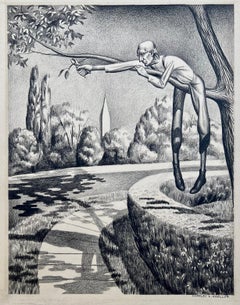
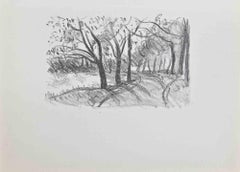
Man Trimming Tree

Man Trimming Tree

By Charles Louis Goeller

Located in Los Angeles, CA

This drawing is part of our exhibition Charles Goeller: A Wistful Loneliness. Crayon on paper, 11 5/8 x 9 inches (image), 14 x 11 inches (sheet), Signed lower right, Matted, but no...

Category

American Modern 1930s Art

Materials

Crayon, Paper
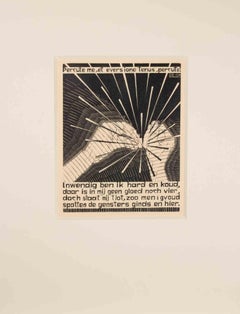
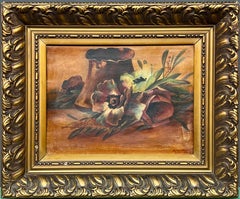
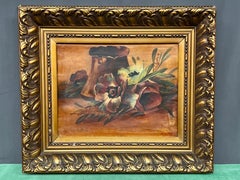
"Poppies"
"Poppies"

"Poppies"

Located in Edinburgh, GB

Broad floral forms and a substantial brown vessel are arranged across a warm terracotta field in this compact, strongly stylised composition. Deep burgundy, muted cream, pale green, ...

Category

1930s Art

Materials

Oil, Canvas

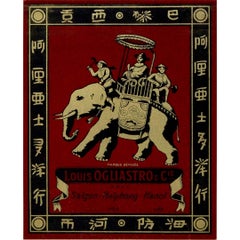
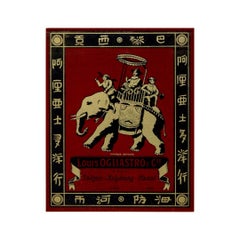
Circa 1930 - Louis Ogliastro & Cie - Colonial-era commerce in Southeast Asia

Circa 1930 - Louis Ogliastro & Cie - Colonial-era commerce in Southeast Asia

Located in PARIS, FR

The circa 1930 original poster for Louis Ogliastro & Cie is a striking representation of colonial-era commerce in Southeast Asia, particularly in regions such as Saigon (now Ho Chi M...

Category

1930s Art

Materials

Linen, Paper, Lithograph

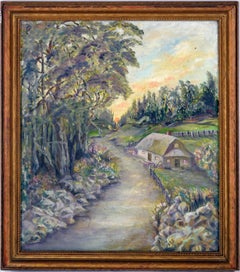
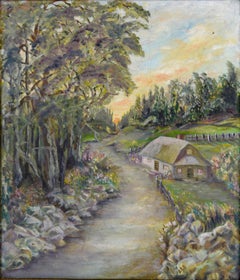
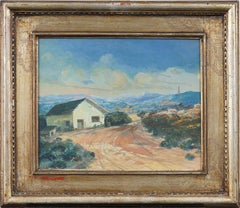
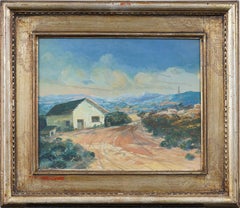
Country Cottage at Sunrise

Country Cottage at Sunrise, 1930s

$520Sale Price|20% Off

Country Cottage at Sunrise

Located in Soquel, CA

Country Cottage at Sunrise Cottage in the morning on a winding path by an unknown American artist. Circa 1930-40. Image 18"H x 15"W Frame, 21"H x 17...

Category

American Impressionist 1930s Art

Materials

Canvas, Oil

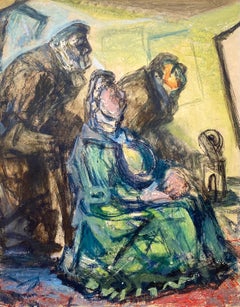
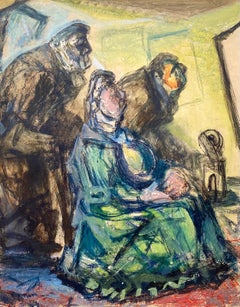
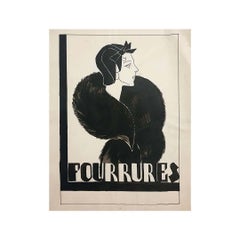
”Admiring the Picture”

”Admiring the Picture”

By Benjamin Kopman

Located in Southampton, NY

Very well executed original gouache on archival paper by the well known American artist Benjamin Kopman. The scene depicts three figures admiring a picture. Signed lower left. Circa ...
Category

Ashcan School 1930s Art

Materials

Gouache, Archival Paper
Antique American Framed Impressionist Landscape California Valley Oil Painting

Antique American Framed Impressionist Landscape California Valley Oil Painting

Located in Buffalo, NY

Antique American impressionist landscape oil painting. Oil on board. Framed. Measuring: 20 by 23 inches overall, and 13 by 17 painting alone. In excellent original condition. Hand...

Category

Impressionist 1930s Art

Materials

Oil, Board

“Untitled”
“Untitled”

“Untitled”

By Nahum Tschacbasov

Located in Southampton, NY

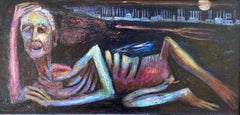
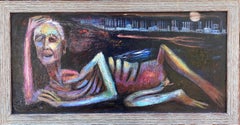
Early oil on canvas painting by the well known American artist, Nahum Tschacbasov done in the “Social Realism” period of the artist’s career. Signed lower left. Original artist inventory label on stretcher verso dates the painting to 1937. Condition of the painting is very good. The painting is housed in a contemporary version of a House of Heydenryk frame that measures overall 14.25 by 27.25 inches. Provenance: Estate of the artist Nahum Tschacbasov. Nahum Tschacbasov Biography : Russian-American artist Nahum Tschacbasov (1899-1984) is known for his cubo-surrealistic works which feature a strong psychological element. Some of his work bears a resemblance to work of another Russian-American artist--David Burliuk. He was somewhat of a late starter, moving to Paris in 1932 to study under Adolph Gottlieb, Marcel Gromaire and Fernand Leger. He had his first exhibition in Paris in 1934. He then returned to the US where he joined Rothko and Gottlieb at the Galery Seccession. He was one of the co-founders of The Ten, a group of social conscious abstract painters which included Rothko, Gottlieb, Joseph Solman and Ilya Bolotowsky, among others. In 1944, he began to work at Stanley Hayter's Atelier 17, a center for surrealistic ideas. Between 1936 and 1943, he had five one-man exhibitions at the ACA Galleries and participated in five group shows. He also exhibited at the Whitney, the Pennsylvania Academy of Fine Arts, the Knox Albright Museum, the Chicago Institute of Fine Art and Corcoran, among others. His work can be found in the permanent collections of the Met, the Whitney, the Brooklyn Museum and the Jewish Museum. Tschacbasov has been the subject of two recent retrospective at Fletcher Gallery, Woodstock, NY and Arthur...

Category

American Modern 1930s Art

Materials

Canvas, Oil

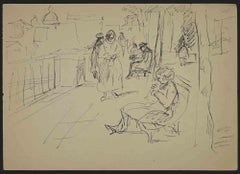
Au Cimetière Monsieur- Pencil and Watercolor on Paper by F. Picabia - 1931
Au Cimetière Monsieur- Pencil and Watercolor on Paper by F. Picabia - 1931
By Francis Picabia

Located in Roma, IT

Au Cimetière Monsieur... is a black pencil and watercolor drawing realized by Francis Picabia in 1931. Hand signed lower left, with title lower right. A certificate of inclusion in the Catalog Raisonné being prepared by the Picabia Committee, dated 30 October 2019, will be delivered in original along with the work. Drawing originally realized by Picabia to illustrate the important volume "Le Peseur d'Ames" by André Maurois, published by Editions Antoine Roche in 1931. Though specifically realized for the volume, the drawing was not selected for publication and remained in the artist's personal collection. Cm. 27,4x22. Good conditions. Francis Picabia (1879-1953) was born in Paris to a french mother and a Spanish father who was chancellor at the Cuban embassy in Paris. He had a comfortable childhood, even though he was emotionally troubled. He studied at the École nationale supérieure des beaux-arts. At the beginning of his career, from 1908 to 1913, he was strongly influenced first by the Barbizon School and by Alfred Sisley and Camille Pissarro, then by impressionism, cubism and finally abstractionism. Around 1911 he joined the Puteaux Group which he met in the studio of Jacques Villon in the village of Puteaux. He then became friends with the artist Marcel Duchamp. Some members of the group were Apollinaire, Albert Gleizes, Roger de La Fresnaye, Fernand Léger and Jean Metzinger. From 1913 to 1915 Picabia was often in New York. These years can be identified as the proto-Dada period, which consists mostly of the so-called mechanical portraits (portraits méchaniques): these works ironically proposed mechanistic themes of random tangles of metal parts, paintings and drawings of machines. All these mechanisms on the one hand mocked the cult of the machine, on the other they alluded to sexual intercourse...

Category

Modern 1930s Art

Materials

Watercolor, Paper, Pencil

Antique Caribbean Street Scene Palm Tree Working Man Modernist Tropical Painting

Antique Caribbean Street Scene Palm Tree Working Man Modernist Tropical Painting

Located in Buffalo, NY

Antique modernist tropical street scene oil painting. Oil on canvas, lain to board. Signed. Framed. Measuring 25 by 26 inches overall and 23.5 by 24 painting alone.

Category

Modern 1930s Art

Materials

Canvas, Oil

The Woodshed or Woodshed, Woodstock

The Woodshed or Woodshed, Woodstock

Located in Los Angeles, CA

The Woodshed or Woodshed, Woodstock, 1932, oil on canvas, signed lower left, 19 x 25 inches, exhibited Downtown Gallery, New York, NY, likely as part of the solo exhibition Dorothy ...

Category

American Modern 1930s Art

Materials

Canvas, Oil

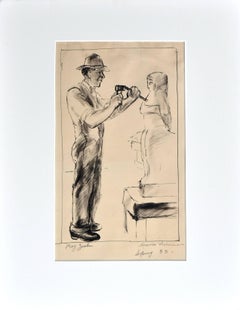
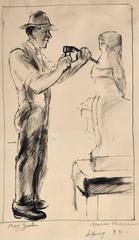
"Roy Zoelin the Sculpture" - Figurative Drawing of Artist at Work

"Roy Zoelin the Sculpture" - Figurative Drawing of Artist at Work

By Frances Beatrice Lieberman

Located in Soquel, CA

Charming genre painting titled, "Roy Zoelin the Sculpture" by Frances Liberman (American, 1911-2002). Signed "Frances Liberman" and dated "Spring 35" lower right. Titled "Roy Zoelin the Sculpture" on verso. Biography of Roy Zoelin and Frances Liberman on verso. Unframed. Image size, 14.25"H x 11"W. A lifelong resident of San Francisco, California, Frances Lieberman was a painter, sculptor and etcher whose subjects included many scenes of San Francisco, child firgures, and seascapes--all in a style that combined realism, impressionism, and abstraction. She was active with her career into the mid 1980s. Lieberman studied at the California School of Fine Art with Nelson Poole and Ralph Stackpole...

Category

Impressionist 1930s Art

Materials

Paper, Ink

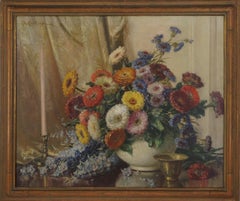
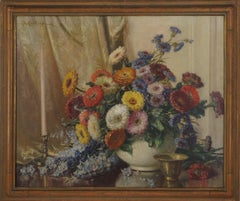
Early 20th Century Summer Floral Still Life - Zinnias, Delphiniums, Corn Flowers

Early 20th Century Summer Floral Still Life - Zinnias, Delphiniums, Corn Flowers

Located in Soquel, CA

Early 20th Century Summer Floral Still Life - Zinnias, Delphiniums, Corn Flowers Substantial and gorgeous early 20th Century still life of summer flowers in cream bowl with Zinnia, Delphiniums, and Corn Flowers with pink candle by Volney...

Category

Realist 1930s Art

Materials

Linen, Oil

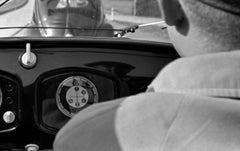
Cockpit of the Volkswagen beetle, Germany 1938 Printed Later

Cockpit of the Volkswagen beetle, Germany 1938 Printed Later

By Henning Nolte

Located in Cologne, DE

One of the photographers at Mauritius Publishing based in Berlin was Nolte. His work is an unparalleled and intriguing insight into the working and everyday life of the time. Impressive images of industry and products from this time. The print is new, a Premium-FineArt-Print ( Hahnemühle 308g ), it comes in a secure role without passpartout and frame to reduce shipping cost. This sizes are limited to 25 copies per size. Description:Blick auf die Vordersitze und das Armaturenbrett des Volkswagen Käfer, oder KdF Wagen, im Modell mit Faltdach, Deutschland 1930er Jahre. View to the front seats and the car dashboard of the Volkswagen beetle...
Category

Modern 1930s Art

Materials

Black and White