1930s Art

to
1,022
3,422
1,243
903
534
352
Overall Width
to
Overall Height
to
7,616
21,725
163,843
226,545
2,001
2,283
4,946
6,503
5,842
15,018
20,579
25,703
18,594
14,073
5,412
2,524
512
400
237
110
108
102
70
12
12
5
2
2
3,614
2,375
317
3,923
1,785
1,631
1,152
1,140
721
461
439
437
355
347
314
288
287
284
244
226
223
218
190
2,009
1,599
1,352
1,179
882
261
139
107
82
61
1,783
1,117
3,462
2,644
Period: 1930s
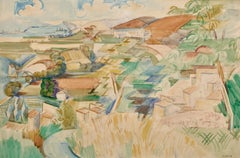
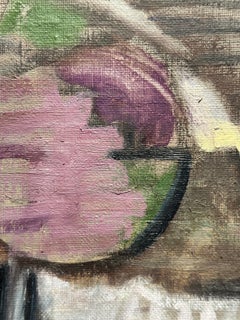
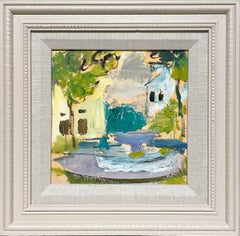
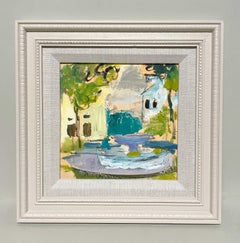
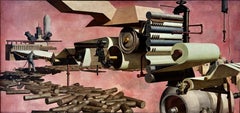
The Mill
The Mill

Louis LatapieThe Mill, circa 1930s

$1,234Sale Price|30% Off

The Mill

By Louis Latapie

Located in London, GB

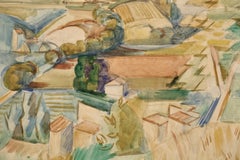
'The Mill', watercolour and graphite on paper, adhered on canvas, by Louis Latapie (circa 1930s). A colourful wintery scene, the bare trees are like wireless ...

Category

Expressionist 1930s Art

Materials

Canvas, Paper, Watercolor, Graphite

Original I regret I have only one Life, Nathan Hale, vintage psoter

Original I regret I have only one Life, Nathan Hale, vintage psoter

Located in Spokane, WA

Original poster, lithograph, linen-backed, Nathan Hale poster reading," I only regret that I have but one life to lose for my country." Step into history with this 1939 Kelly Read & Co. Rochester (NY) poster, a testament to the principles our patriots died for. This very rare original poster is the only documented copy remaining. Archival linen-backed and ready to frame. The poster features a stylized image of Nathan Hale, an American Revolutionary War soldier...

Category

American Impressionist 1930s Art

Materials

Lithograph

The Rabbit and The Cat

The Rabbit and The Cat

Located in Cotignac, FR

Pair of drawings on paper of a rabbit and a cat by Margaret Lisel. They are both signed bottom right and dated for 1934. The drawings are presented as a pair in plain gilt frames. A...

Category

Romantic 1930s Art

Materials

Crayon, Pencil

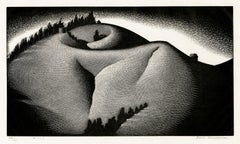
'Mountain Climber' — American Modernism

'Mountain Climber' — American Modernism

By Rockwell Kent

Located in Myrtle Beach, SC

Rockwell Kent, 'Mountain Climber', wood engraving, 1933, edition 250, Burne Jones 93. Signed in pencil. A brilliant, black impression, on cream, wove Japan paper; the full sheet with margins (2 9/16 to 3 5/8 inches); slight skinning at the top sheet edge verso, where previously hinged; otherwise, in excellent condition. Archivally matted to museum standards, unframed. Image size 7 7/8 x 5 7/8 inches (200 x 149 mm); sheet size 14 x 11 1/8 inches (356 x 283 mm). Printed by Pynson Printers, New York. Distributed by The Print Club of Cleveland, Publication No. 11, 1933. Literature: 'Rockwellkentiana,' Harcourt, Brace and Company, New York, 1933. '101 of The World’s Greatest Books', edited by Spencer Armstrong, 1950. Impressions of this work are held in the following museum collections: Akron Art Institute, Burne Jones Collection, IL; Cincinnati Art Museum; Cleveland Museum of Art; Columbus Gallery of Fine Arts; Crystal Bridges Museum of American Art; Davis Museum at Wellesley College; Fine Art Museums of San Francisco; H. M. de Young Museum; Hermitage Museum; Kent Collection, NY; Library of Congress; Memorial Art Gallery, University of Rochester; Metropolitan Museum of Art; New York Public Library; Philadelphia Museum of Art; Princeton University Library; Smithsonian American Art Museum, Spector Collection, NY; SUNY, Plattsburg. ABOUT THE ARTIST Rockwell Kent (1882-1971), though best known as a painter, graphic artist, and illustrator, pursued many careers throughout his life, including architect, carpenter, explorer, writer, dairy farmer, and political activist. Born in Tarrytown, New York, Kent was interested in art from a young age. These ambitions were encouraged by his aunt Jo Holgate, an accomplished ceramicist. Jo came to live with the family after Kent’s father passed away in 1887 and took him to Europe as a teenager, undoubtedly kindling his interest in exploring the world. Kent attended the Horace Mann School in New York City, where he excelled at mechanical drawing. His family’s financial circumstances prevented him from pursuing a career in the fine arts; however, after graduating from Horace Mann in 1900, Kent decided to study architecture at Columbia University. Before matriculating at Columbia, Kent spent the first of three consecutive summers studying painting at William Merritt Chase’s art school in Shinnecock Hills, Long Island. There he found a community of mentors and fellow students who encouraged him to pursue his interest in art. At the end of Kent’s third summer at Shinnecock, Chase offered him a full scholarship to the New York School of Art, where he was a teacher. Kent began taking night classes at the art school in addition to his architecture studies but soon left Columbia to study painting full-time. In addition to Chase, Kent took classes with Robert Henri and Kenneth Hayes Miller, where his classmates included the artists George Bellows and Edward Hopper. Kent spent the summer of 1903 assisting the eccentric painter Abbott Handerson Thayer at his studio in Dublin, New Hampshire—a position he secured through the recommendation of his Aunt Jo. Thayer’s naturalist lifestyle and almost mystical appreciation for natural phenomena greatly influenced Kent; he returned to Dublin for many years to visit Thayer and his family. Thayer gave the young artist time to pursue his work, and that summer Kent painted several views of the New Hampshire landscape, including Mount Monadnock. In 1905 Kent moved from New York to Monhegan Island in Maine, home to a summer art colony, where he continued to find inspiration in nature. Kent soon found success exhibiting and selling his paintings in New York, and in 1907, he was given his first solo show at Claussen Galleries. The following year he married his first wife, Kathleen Whiting (Thayer’s niece), with whom he had five children. The couple divorced in 1924, and Kent married Frances Lee the following year. They divorced after 15 years of marriage, and the artist married Sally Johnstone. For the next several decades, Kent lived a peripatetic lifestyle, settling in several locations in Connecticut, Maine, and New York. During this time he took several extended voyages to remote, often ice-filled, corners of the globe, including Newfoundland, Alaska, Tierra del Fuego, and Greenland, to which he made three separate trips. For Kent, exploration and artistic production were twinned endeavors, and his travels to these rugged, elemental locations inspired his visual art and his writings. He developed a stark, realist landscape style in his paintings and drawings that revealed both nature’s harshness and its sublimity. Kent’s human figures, which appear sparingly in his work, often allude to the mythic themes of isolation, individualism, heroism, and the quest for self-connection. Important exhibitions of works from these travels include the Knoedler Gallery’s shows in 1919 and 1920, featuring Kent’s Alaska drawings...

Category

American Modern 1930s Art

Materials

Woodcut

Edgar Degas, Spinning Dancer, from Dance Drawings, 1936 (after)

Edgar Degas, Spinning Dancer, from Dance Drawings, 1936 (after)

By Edgar Degas

Located in Southampton, NY

This exquisite engraving after Edgar Degas (1834–1917), titled Danseur tournant (Spinning Dancer), originates from the celebrated album Degas Danse dessin (Degas Dance Drawings), pub...

Category

Impressionist 1930s Art

Materials

Engraving

Refreshment and Intermission

Refreshment and Intermission

Located in Los Angeles, CA

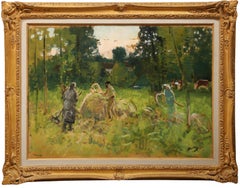
This painting is part of our exhibition America Coast to Coast: Artists of the 1930s Refreshment and Intermission, tempera on board, 11 x 19 inches, c. 1930/40s, signed lower middle, exhibited at Groom's one person show at Closson’s Gallery, Cincinnati, OH, March, 1943 (see The Cincinnati Enquirer, March 7, 1943, section 3, p. 4); provenance includes a private Ohio collection; presented in a period gold painted frame About the Painting Refreshment and Intermission is part of a series of paintings of Amish subjects Grooms started in 1938 based on his travels in Pennsylvania. These tempera works reflect the Regionalist impulse to paint local scenes far away from big cities. Focusing on both people and landscape, Grooms' compositions tell the stories of the uniquely American experience of the Amish. “Grooms paints the Amish people with as much understanding of type and appreciation of the plastic quality as any artist who has approached this challenging subject," noted the art critic for The Cincinnati Inquirer when reviewing Grooms' solo exhibition at Closson' Gallery, "In his current show, ‘Refreshment and Intermission,’ is a case in point. Here the absorbed concentration of people eating is described without an ounce of sentimentality. He has made the most of the interest between groups and of the conversations, both humorous and serious. The work has the quaint simplicity of a Lord’s Supper...

Category

American Modern 1930s Art

Materials

Tempera

The Man in the Top Hat, American, Art Deco

The Man in the Top Hat, American, Art Deco

Located in Wiscasset, ME

Eugene Savage was born in Covington, Indiana. He began his art education at the Art Institute of Chicago, where he won a Prix de Rome scholarship to study at the American Academy in ...

Category

American Modern 1930s Art

Materials

Oil, Board

Landscape
Landscape

Landscape

Located in Genève, GE

Work on canvas Illegible signature

Category

1930s Art

Materials

Oil

City at Night (Cityscape)

City at Night (Cityscape)

By Abram Tromka

Located in Wilton Manors, FL

Abram Tromka (1895-1964) City at Night, ca. 1940. Oil on canvas, 16 x 20 inches; 20 x 24 inches in antique oak frame. Signed lower right. Frame is of the period, but probably not ...

Category

American Modern 1930s Art

Materials

Canvas, Oil

Vintage American Impressionist Church Interior Architectural Framed Oil Painting

Vintage American Impressionist Church Interior Architectural Framed Oil Painting

Located in Buffalo, NY

Vintage American school impressionist oil painting. Oil on board. Framed. Provenance from a Sag Harbor, NY collection. Measuring: 13 by 16 inches overall. Handsomely framed in a gil...

Category

Impressionist 1930s Art

Materials

Oil, Board

English Impressionist mid 20th century view of Piccadilly Circus, trams London

English Impressionist mid 20th century view of Piccadilly Circus, trams London

Located in Woodbury, CT

Pietro Sansalvadore was active during the early to middle of the 20th century. He painted in an Impressionist manner and on a small scale. Acquiring a late 19th-century Impressionist painting of Hammersmith Bridge by the Italian painter Pietro Sansalvadore is an opportunity to own a captivating piece of art that transcends both time and cultural boundaries. Sansalvadore's unique perspective, influenced by the Impressionist movement, infuses this painting with a luminous quality that captures the atmospheric essence of Hammersmith Bridge in a way that only a skilled artist with an international perspective could achieve. This masterpiece not only showcases the artist's mastery in capturing light and movement but also represents a harmonious fusion of Italian artistic sensibilities with the iconic English landmark. The play of colors and the subtle brushstrokes transport the viewer to the late 19th century, offering a glimpse into the allure and dynamism of that period. Owning this painting is not just acquiring a visual delight; it's investing in a historical and cultural artifact...

Category

Impressionist 1930s Art

Materials

Oil, Wood Panel

A Dynamic 1930s Boxing Match Painting by Famed Chicago Artist, Francis Chapin

A Dynamic 1930s Boxing Match Painting by Famed Chicago Artist, Francis Chapin

By Francis Chapin

Located in Chicago, IL

A dynamic, colorful 1930s painting of a boxing match in Mexico by famed Chicago Modern artist Francis Chapin. Painted during one of the artist's early trips to Mexico, an exceptional painting showing Chapin's steadfast interest in sporting scenes, particularly boxing matches. Image size: 12 x 28 inches. Framed size: 15 1/2 x 31 1/2 inches. Estate stamped on reverse. Provenance: Estate of the artist. Francis Chapin, affectionately called the “Dean of Chicago Painters” by his colleagues, was one of the city’s most popular and celebrated painters in his day. Born at the dawn of the 20th Century in Bristolville, Ohio, Chapin graduated from Washington and Jefferson College near Pittsburgh, Pennsylvania before enrolling at the Art Institute of Chicago in 1922. He would set down deep roots at the Art Institute of Chicago, exhibiting there over 31 times between 1926 and 1951. In 1927 Chapin won the prestigious Bryan Lathrop Fellowship from the Art Institute – a prize that funded the artist’s yearlong study trip to Europe. Upon his return to the United States, Chapin decided to remain in Chicago, noting the freedom Chicago artists have in developing independently of the pressure to conform to pre-existing molds (as was experienced by artists in New York, for example). Chapin became a popular instructor at the Art Institute, teaching there from 1929 to 1947 and at the Art Institute’s summer art school in Saugatuck, Michigan (now called Oxbow) between 1934 – 1938 (he was the director of the school from 1941-1945). Chapin’s contemporaries among Chicago’s artists included such luminaries as Ivan Le Lorraine Albright...

Category

American Modern 1930s Art

Materials

Canvas, Oil

Dors mon amour
Dors mon amour

Dors mon amour

By Georges Rouault

Located in New York, NY

A superb impression of this color aquatint. From an unnumbered edition of 280. Printed by Lacouriere, Paris. Published by Vollard, Paris. From "Cirque de l'Étoile Filante." Catalogu...

Category

Fauvist 1930s Art

Materials

Color, Aquatint

'Poppy' — Art Deco Pochoir from the acclaimed portfolio 'RELAIS'

'Poppy' — Art Deco Pochoir from the acclaimed portfolio 'RELAIS'

By Edouard Benedictus

Located in Myrtle Beach, SC

Edouard Benedictus, 'Poppy' from the portfolio 'Relais', plate 14, color pochoir, 1930. Signed in the matrix, in the center bottom margin. A superb, richly-inked impression, with fresh, vibrant colors, including metallic gold and silver inks, on heavy, cream wove paper; the full sheet with margins (1 3/8 inches), in excellent condition. Published by Éditions Vincent, Fréal et Cie, Paris. The pochoir production is by Jean Saudé, the French printmaker known for his mastery of the technique and the author of the first how-to book on the pochoir process. Matted to museum standards, unframed. Image size 14 3/8 x 11 inches (365 x 279 mm); sheet size 17 1/4 x 13 7/8 inches (438 x 352 mm). Impressions of this work are held in the following museum collections: Cooper-Hewitt National Design Museum Library (Smithsonian), Metropolitan Museum of Art, Minneapolis Institute of Art, New York Public Library, Toledo Museum of Art, Victoria and Albert Museum (London), Virginia Museum of Fine Arts. ABOUT THIS WORK The Pochoir process is a refined stencil-based technique employed to create multiples or to add color to prints produced in other mediums. Characterized by its crisp lines and rich color, the print-making process was most popular from the late 19th century through the 1930s, with its center of activity in Paris. The pochoir process began with the analysis of an image’s composition, including color tones and densities. The numerous stencils (made of aluminum, copper, or zinc) necessary to create a complete image were then designed and hand-cut by the 'découpeur.' The 'coloristes' applied watercolor or gouache pigments through the stencils, skillfully employing a variety of different brushes and methods of paint application to achieve the desired depth of color and textural and tonal nuance. The pochoir process, by virtue of its handcrafted methodology, resulted in the finished work producing the effect of an original painting, and in fact, each print was unique. ABOUT THE ARTIST Edouard Benedictus (1878 -1930), artist, designer, composer, and chemist, was born and died in Paris. A highly-regarded designer and art critic of the Art Nouveau era, Benedictus gained renown as a colorist and creator of Art Deco-inspired geometric and floral motifs. His work had a significant influence on international fashions in clothing, home furnishings, graphic design, and decorative objects of the period, earning him commissions from leading European design firms. In 1925 he was invited to represent Art Deco textile design...

Category

Art Nouveau 1930s Art

Materials

Stencil

Antique American Modernist SunFlower Still Life Framed Landscape Oil Painting

Antique American Modernist SunFlower Still Life Framed Landscape Oil Painting

Located in Buffalo, NY

Antique American school modernist still life painting. Oil on board. Signed. Framed. In excellent original condition. Handsomely framed in a gold giltwood molding. Excellent c...

Category

Modern 1930s Art

Materials

Oil, Board

Landscape

Landscape

Located in Los Angeles, CA

Landscape, c. 1930-40s, oil on panel, signed lower right, 16 x 20 inches Jeanette Maxfield Lewis was a California-based landscape painter and etcher. Born in Oakland, she spent much...

Category

American Modern 1930s Art

Materials

Oil, Panel

"Mr Knife, Miss Fork"

"Mr Knife, Miss Fork"

By Max Ernst

Located in Henderson, NV

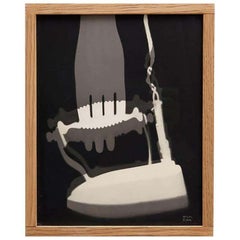
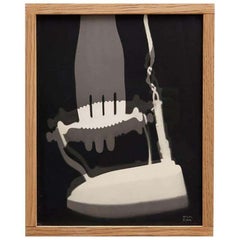
Medium: gelatin silver print (photogram). Printed in 1931 and published in Paris for the journal Arts et Metiers Graphiques. A photogram was an experimental technique conceived by Ma...

Category

Surrealist 1930s Art

Materials

Photogram

New York, Queensboro Bridge color etching Luigi Kasimir

New York, Queensboro Bridge color etching Luigi Kasimir

By Luigi Kasimir

Located in Paonia, CO

The famous Austrian artist, Luigi Kasimir ( 1881- 1962 ) studied at the Vienna Academy of Art. He went on to develop the technique of color etching using multiple plates to create a finished etching in color. Previously a colored etching had to have the color applied by hand. Kasimir was a very prolific artist famous for his scenes of Vienna...

Category

Other Art Style 1930s Art

Materials

Etching

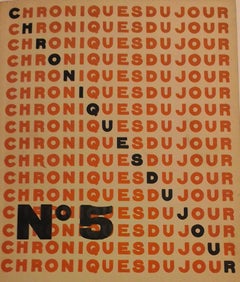
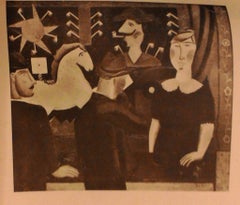
Pablo Picasso, The Three Musicians, from Chroniques du Jour, 1930 (after)

Pablo Picasso, The Three Musicians, from Chroniques du Jour, 1930 (after)

By Pablo Picasso

Located in Southampton, NY

This exquisite lithograph and pochoir after Pablo Picasso (1881–1973), titled Les Trois Musiciens (The Three Musicians), from the album, Pablo Picasso, 1930, originates from the 1930 edition published by Editions des Chroniques du Jour, Paris, and printed by L'Atelier Desjobert, Paris, 1930. Les Trois Musiciens (The Three Musicians) captures Picasso’s Cubist mastery at its height, translating one of his most celebrated compositions into the refined medium of lithograph and pochoir. The scene depicts three abstracted figures—a harlequin, a monk, and a pierrot—arranged in a complex geometric harmony that embodies both the structure and rhythm of modernity. Through vivid color and precise pochoir layering, Picasso’s interplay of form, shadow, and light transforms the musicians into a symphony of shape and sound, reflecting the artist’s enduring fascination with the relationship between visual art and music. Executed as a lithograph and pochoir on velin paper, this work measures 9.09 x 11.38 inches. Unsigned and unnumbered as issued. The edition exemplifies the refined craftsmanship of Editions des Chroniques du Jour and the technical excellence of L'Atelier Desjobert, one of the premier Parisian workshops specializing in pochoir and fine art lithography. Artwork Details: Artist: After Pablo Picasso (1881–1973) Title: Les Trois Musiciens (The Three Musicians), from the album, Pablo Picasso, 1930 Medium: Lithograph and pochoir on velin paper Dimensions: 9.09 x 11.38 inches (23.1 x 28.9 cm) Inscription: Unsigned and unnumbered as issued Date: 1930 Publisher: Editions des Chroniques du Jour, Paris Printer: L'Atelier Desjobert, Paris Catalogue raisonne references: Cramer, Patrick. Pablo Picasso, The Illustrated Books: Catalogue Raisonne. Patrick Cramer, 1983, illustration 18; Bloch, Georges. Pablo Picasso: Catalogue of the Printed Graphic Work 1904–1967. Kornfeld & Klipstein, 1968, illustration 98; Reusse, Gerhard. Pablo Picasso: The Illustrated Books, Catalogue Raisonne. Verlag Gerd Hatje, 1983, illustration 31 Condition: Well preserved, consistent with age and medium Provenance: From the album, Pablo Picasso, published by Editions des Chroniques du Jour, Paris, and printed by L'Atelier Desjobert, Paris, 1930 Notes: Excerpted from the album, This volume has been printed in MCC numbered examples, of which DL (LI to DC) constitute the edition in French and DCL (DCI to MCCL). The edition in English has been printed on behalf of E. Weyhe, 794 Lexington Avenue, New York (DCI to MC) and of A. Zwemmer, 78 Charing Cross Road, London, W. C.2. (MCI to MCCL). There have also been printed L examples on Arches paper with a lithograph by Picasso (I to L) distributed between the two editions, and some press examples. About the Publication: The album Pablo Picasso, published in 1930 by Editions des Chroniques du Jour, Paris, under the direction of Christian Zervos, stands among the earliest major printed tributes to the artist’s emerging international acclaim. Conceived as part of the publisher’s broader initiative to document and celebrate the modernist vanguard, the volume presented a series of lithographs and pochoirs interpreting Picasso’s drawings, watercolors, and gouaches from the preceding decade. Executed at the esteemed Atelier Desjobert, the edition combined the lithographic precision of line with the pochoir method’s hand-applied color, producing images of exceptional tonal depth and fidelity. Issued in both French and English, with distribution in Paris, New York, and London through E. Weyhe and A. Zwemmer, the album was limited to MCC copies, including a special suite of L examples on Arches paper containing an original lithograph by Picasso. The publication represented a vital collaboration between artist, publisher, and printer—uniting the intellectual rigor of Zervos’s art criticism with the material beauty of fine French printmaking. Today, Pablo Picasso, 1930 is recognized as a landmark in 20th-century art publishing, reflecting both the refinement of interwar Parisian craftsmanship and the international reach of Picasso’s genius. About the Artist: Pablo Picasso (1881–1973) was a Spanish painter, sculptor, printmaker, and ceramicist whose extraordinary vision revolutionized modern art and defined the visual language of the 20th century. A child prodigy from Malaga, Spain, Picasso's career spanned more than seven decades and encompassed an astonishing range of styles and innovations—from the melancholic Blue and romantic Rose periods to his pioneering invention of Cubism with Georges Braque, which shattered conventional notions of perspective and form. Influenced by the bold expressiveness of El Greco, the structure of Cezanne, and the vitality of African and Iberian sculpture, Picasso became a central figure of the Paris avant-garde, working in creative dialogue with contemporaries such as Henri Matisse, Alexander Calder, Alberto Giacometti, Salvador Dali, Joan Miro, Wassily Kandinsky, Marcel Duchamp, and Man Ray. His insatiable experimentation extended across painting, drawing, printmaking, ceramics, and sculpture, forever expanding the boundaries of artistic expression. A master of reinvention, Picasso profoundly shaped generations of artists who followed—from Andy Warhol, Roy Lichtenstein, David Hockney, and Jean-Michel Basquiat to Jeff Koons and Banksy—cementing his status as a timeless cultural icon whose works remain among the most sought after worldwide. His landmark painting Les Femmes d'Alger (Version O) achieved a record-breaking sale of 179,365,000 USD at Christie's, New York, on May 11, 2015, affirming Picasso's enduring legacy as one of the most influential and valuable artists in history. Pablo Picasso Les Trois Musiciens (The Three Musicians), Picasso 1930, Picasso Desjobert, Picasso pochoir...

Category

Cubist 1930s Art

Materials

Lithograph, Stencil

Werner Drewes, Winter, 1933, modernist woodcut

Werner Drewes, Winter, 1933, modernist woodcut

By Werner Drewes

Located in New York, NY

A modernist fantasy winter scene created by Werner Drewes, this print brings key aspects of the period together. His cubist-inspired woodcut technique is utilized here to bring the s...

Category

American Modern 1930s Art

Materials

Woodcut

"Salomé" pochoir

"Salomé" pochoir

By (after) André Derain

Located in Henderson, NV

Medium: pochoir (after the gouache). This pochoir illustrates a scene from Oscar Wilde's "Salomé". It was printed in 1938 at the atelier Saudé of Paris and published by The Limited E...

Category

Fauvist 1930s Art

Materials

Lithograph, Stencil

La Femme Visible
La Femme Visible

La Femme Visible

By Salvador Dalí­

Located in Hollywood, FL

ARTIST: Salvador Dali TITLE: La Femme Visible MEDIUM: original Heliogravure - Etching in the book titled "La Femme Visible" SIGNED: Hand Signed by Salvador Dali on the frontispie...

Category

Surrealist 1930s Art

Materials

Etching

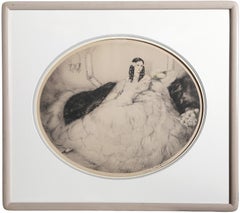
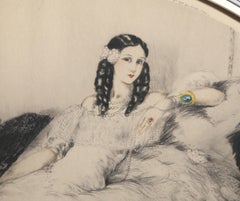
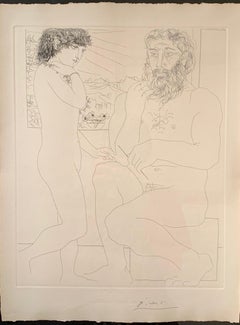
Icart, Composition, Le Sopha (after)

Icart, Composition, Le Sopha (after)

By Louis Icart

Located in Southampton, NY

La pointe sèche etching on vélin de Rives filigrané à notre nom paper. Paper size: 9.5 x 7.5 inches; image size: 6.5 x 4.5 inches. Inscription: unsigned and unnumbered, as issued. No...
Category

Modern 1930s Art

Materials

Drypoint, Etching

“Trinity Church, Wall Street”

“Trinity Church, Wall Street”

By Leon Dolice

Located in Southampton, NY

Original oil pastel on archival paper by the well known American artist, Leon Dolice. The painting depicts Trinity Church with several of the more contemporary buildings of Wall Stre...

Category

Modern 1930s Art

Materials

Archival Paper, Oil Pastel

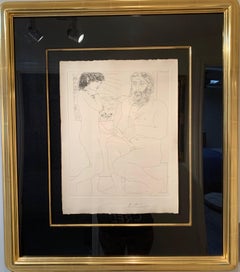
Icart, Composition, Le Sopha (after)

Icart, Composition, Le Sopha (after)

By Louis Icart

Located in Southampton, NY

La pointe sèche etching on vélin de Rives filigrané à notre nom paper. Paper size: 9.5 x 7.5 inches; image size: 6.5 x 4.5 inches. Inscription: unsigned and unnumbered, as issued. No...
Category

Modern 1930s Art

Materials

Drypoint, Etching

Ibram Lassaw, (Abstraction)

Ibram Lassaw, (Abstraction)

By Ibram Lassaw

Located in New York, NY

This print was made for the American Abstract Artists Portfolio, 1937. All the images were lithographs made on zinc plates. Usually they were signed in the image -- on the plate, as this one is. As a group they explored abstraction in the 1930s, while maintaining their individual styles. The plan was to make an edition of 500 portfolios although it seems highly unlikely that this was accomplished. Ibram Lassaw (1913-2003) was primarily known for his sculpture. Born in Egypt to a Russian family...

Category

Abstract 1930s Art

Materials

Lithograph

'To Market, to Market' — Surrealist Fantasy

'To Market, to Market' — Surrealist Fantasy

Located in Myrtle Beach, SC

Zena Kavin, 'To Market, to Market', lithograph, c. 1935, edition 20. Signed, titled, and numbered '6/20' in pencil. A fine, richly-inked impression, on cream wove paper, with full ma...

Category

American Modern 1930s Art

Materials

Lithograph

Tigre à l'affût, Art Deco Bronze Sculpture by Georges Lavroff

Tigre à l'affût, Art Deco Bronze Sculpture by Georges Lavroff

By Georges Lavroff

Located in Long Island City, NY

Georges Lavroff, Russian (1895 - 1991) - Tigre à l'affût, Year: circa 1925, Medium: Bronze sculpture on marble base, signature inscribed at base, Size: 4.5 x 21 x 4 in. (11.43 x 5...

Category

Art Deco 1930s Art

Materials

Marble, Bronze

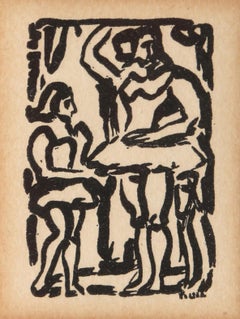
The Bather
The Bather
Charles KvapilThe Bather, 1934

$2,657Sale Price|50% Off

The Bather

By Charles Kvapil

Located in London, GB

'The Bather', oil on board, by Charles Kvapil (1934). The world of art has for centuries depicted bathers in one form or another. Kvapil's wonderfully allur...
Category

Expressionist 1930s Art

Materials

Oil, Board

Cecily Byrne as Mary Stewart - British art 30's actress portrait oil painting

Cecily Byrne as Mary Stewart - British art 30's actress portrait oil painting

By George Carr Drinkwater

Located in Hagley, England

Painted by George Carr Drinkwater, this vibrant oil on canvas depicts the actress of stage and screen Cecily Byrne as Mary Stuart. Painted circa 1930 it is a stunning evocative portrait of an actress who was famous throughout the 1930’s. A fine portrait of a long forgotten film star. Cecily Byrne (1889-1975) was an actress, known for Loyalties, Henry IV and Brown Sugar...

Category

Realist 1930s Art

Materials

Oil