1960s Art

to
3,411
8,221
4,788
3,510
2,316
1,728
Overall Width
to
Overall Height
to
7,458
21,381
163,685
232,329
2,021
2,272
4,927
6,500
5,805
15,007
20,725
25,768
18,674
14,123
5,308
7,427
2,160
1,712
1,543
825
649
400
316
113
90
54
26
3
1
11,363
7,034
1,759
10,120
5,364
4,118
2,748
1,876
1,867
1,741
1,578
1,481
1,438
1,194
1,172
892
643
639
607
603
572
517
495
4,915
3,819
3,396
2,251
2,170
3,412
603
569
341
293
2,995
7,683
12,398
7,396
Period: 1960s
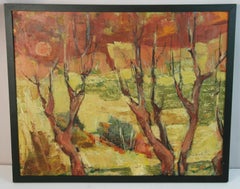
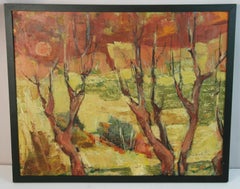
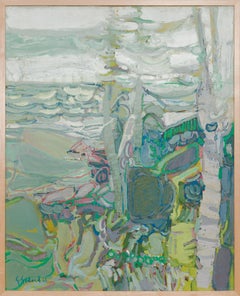
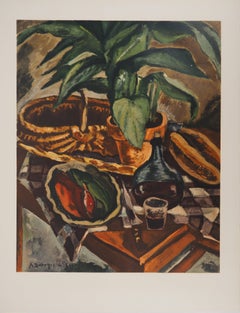
Impressionist Still Life of Flowers in Blue Vase, Signed Rovini

Impressionist Still Life of Flowers in Blue Vase, Signed Rovini

Located in Douglas Manor, NY

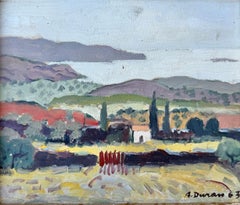
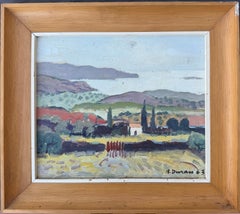
4080 Impressionist style still life on artist board Displayed in a thin black wood frame Image size 12x14" Signed Rovini

Category

1960s Art

Materials

Oil

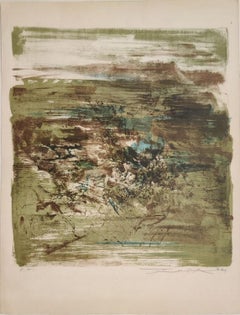
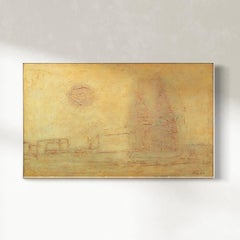
Joan Miro, Bird Before the Sun, from Derriere le Miroir, 1961

Joan Miro, Bird Before the Sun, from Derriere le Miroir, 1961

By Joan Miró

Located in Southampton, NY

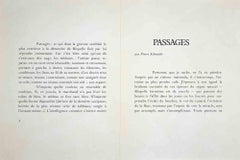
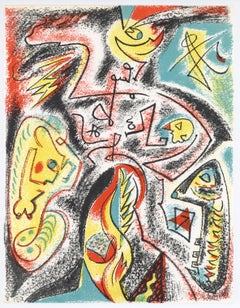
This exquisite lithograph by Joan Miro (1893–1983), titled Oiseau devant le solei (Bird Before the Sun), originates from the April 1961 folio Derriere le Miroir, No. 125-126, published by Maeght Editeur, Paris, under the direction of Aime Maeght, and printed by Imprimerie Arte, Paris, 1961. The composition exemplifies Miro’s poetic use of symbolic imagery, where the bird and sun function as elemental forces within his visual language. Through gestural line, saturated color, and spatial freedom, the work reflects Miro’s fusion of cosmic imagery, instinctive mark making, and lyrical abstraction. Executed on velin paper, this lithograph measures 33 x 15 inches (83.82 x 38.1 cm), with bifold, as issued. Unsigned and unnumbered as issued. The edition reflects the refined technical standards and craftsmanship of Imprimerie Arte, Paris. Artwork Details: Artist: Joan Miro (1893–1983) Title: Oiseau devant le solei (Bird Before the Sun), from Derriere le Miroir, No. 125-126, April 1961 Medium: Lithograph on velin paper Dimensions: 33 x 15 inches (83.82 x 38.1 cm), with bifold, as issued Inscription: Unsigned and unnumbered as issued Date: 1961 Publisher: Maeght Editeur, Paris Printer: Imprimerie Arte, Paris Catalogue raisonne reference: Miro, Joan, et al. Joan Miro Lithographe. Maeght, 1972–1992, illustration 1722 Condition: Well preserved, consistent with age and medium Provenance: From the April 1961 folio Derriere le Miroir, No. 125-126, published by Maeght Editeur, Paris About the Publication: Derriere le Miroir (translated as "Behind the Mirror") was an iconic French art periodical published from 1946 to 1982 by Maeght Editeur, one of the most influential art publishers of the twentieth century. Founded by Aime Maeght in Paris, the publication was conceived as a visual and literary collaboration between leading modern artists, poets, and critics. Each issue functioned as both an exhibition catalogue and an autonomous work of art, featuring original lithographs printed directly from the artists stones or plates alongside essays, poems, and critical texts. Over more than three decades, Derriere le Miroir produced over 250 issues and presented an extraordinary range of artists including Henri Matisse, Marc Chagall, Georges Braque, Alexander Calder, Fernand Leger, Pierre Bonnard, Alberto Giacometti, Eduardo Chillida, Ellsworth Kelly, Francis Bacon, Antoni Tapies, Pierre Alechinsky, Pol Bury, Bram van Velde, and many others. Printed by master ateliers such as Mourlot and Arte, the series established new standards of excellence in modern lithography and graphic design. Closely linked to exhibitions at Galerie Maeght, each issue served as a lasting document of postwar modernism, uniting image, text, and philosophy into a uniquely influential publication that remains among the most important and collectible achievements in twentieth century art publishing. About the Artist: Joan Miro (1893–1983) was a Catalan painter, sculptor, printmaker, and ceramicist whose visionary imagination and lyrical abstraction made him one of the most influential and beloved artists of the twentieth century. Born in Barcelona, Miro drew inspiration from Catalan folk art, Romanesque frescoes, and the luminous landscapes of Mont-roig del Camp, developing a deep connection to nature that infused his work with vitality and symbolism. After formal training at the Escola d'Art in Barcelona, he absorbed the lessons of Post-Impressionism and Cubism before moving to Paris in the early 1920s, where he became a leading figure in the Surrealist movement. There, Miro forged a personal visual language of biomorphic shapes, floating symbols, and radiant color harmonies that reflected both spontaneity and spiritual depth. In creative dialogue with peers such as Alexander Calder, Alberto Giacometti, Salvador Dali, Wassily Kandinsky, Marcel Duchamp, and Man Ray, he helped revolutionize modern art by dissolving the boundaries between abstraction and dream imagery. Miro's inventive approach extended far beyond painting, embracing sculpture, ceramics, and monumental public commissions that redefined how art could interact with space and emotion. His expressive freedom and gestural abstraction profoundly influenced later artists including Jackson Pollock, Mark Rothko, Alexander Calder, Jean Dubuffet, Antoni Tapies, and Joan Mitchell, inspiring generations who sought to merge instinct, color, and imagination. Today, Miro's work remains a cornerstone of modernism, prized by collectors and celebrated in major museums worldwide. His highest auction record was achieved by Peinture (Etoile Bleue) (1927), which sold for approximately 37 million USD at Sothebys, London, on June 19, 2012. Joan Miro Oiseau...

Category

Surrealist 1960s Art
Materials

Lithograph

Alexander Calder, Composition with Spirals, from Derriere le miroir, 1968

Alexander Calder, Composition with Spirals, from Derriere le miroir, 1968

By Alexander Calder

Located in Southampton, NY

This exquisite lithograph by Alexander Calder (1898–1976), titled Composition aux Spirales (Composition with Spirals), from the folio Derriere le miroir, No. 173, originates from the 1968 edition published by Maeght Editeur, Paris, and printed by Mourlot Freres, Paris, 1968. Composition aux Spirales exemplifies Calder’s mastery of rhythm and form, translating his sculptural language of balance and motion into vivid, dynamic compositions on paper that capture his signature sense of energy and harmony. Executed as a lithograph on velin paper, this work measures 15 x 22 inches, with centerfold, as issued. Unsigned and unnumbered as issued. The edition exemplifies the superb craftsmanship of Mourlot Freres, Paris. Artwork Details: Artist: Alexander Calder (1898–1976) Title: Composition aux Spirales (Composition with Spirals), from the folio Derriere le miroir, No. 173 Medium: Lithograph on velin paper Dimensions: 15 x 22 inches (38.1 x 55.88 cm), with centerfold, as issued Inscription: Unsigned and unnumbered as issued Date: 1968 Publisher: Maeght Editeur, Paris Printer: Mourlot Freres, Paris Condition: Well preserved, consistent with age and medium Provenance: From the folio Derriere le miroir, No. 173, published by Maeght Editeur, Paris; printed by Mourlot Freres, Paris, 1968 Notes: Excerpted from the folio (translated from French), The illustrations in this issue are original lithographs by Alexander Calder drawn in the workshops of the Arte printing shop. This issue of "Behind the Mirror" has a luxury edition drawn on velin de Lana and limited to CL examples numbered and signed by the artist on the colophon. The text of G. Carandente was translated from Italian by Alain Veinstein. About the Publication: Derriere le miroir (Behind the Mirror) was one of the most important art publications of the 20th century, created and published by Maeght Editeur in Paris from 1946 to 1982. Founded by the visionary art dealer and publisher Aime Maeght, the series served as both an exhibition catalogue and a work of art in its own right, uniting original lithographs by leading modern and contemporary artists with critical essays, poetry, and design of the highest quality. Printed by master lithographers such as Mourlot Freres and Arte, Derriere le miroir became synonymous with the artistic vanguard of postwar Europe. Each issue was devoted to a single artist or theme and published to accompany exhibitions at the Galerie Maeght in Paris, featuring works by Pablo Picasso, Henri Matisse, Georges Braque, Joan Miro, Marc Chagall, Alexander Calder, Fernand Leger, and Alberto Giacometti, among others. The publication reflected Maeght’s belief that art should be both accessible and elevated—an ideal realized through its luxurious production values, meticulous printing, and collaboration with the greatest creative minds of its time. About the Artist: Alexander Calder (1898–1976) was an American sculptor, painter, and printmaker whose pioneering innovations in kinetic art revolutionized 20th-century sculpture and transformed modern visual language. Born in Lawnton, Pennsylvania, into a family of artists, Calder initially trained as a mechanical engineer at the Stevens Institute of Technology before turning to art at the Art Students League in New York—a combination of technical precision and creative imagination that defined his career. Moving to Paris in 1926, he immersed himself in the avant-garde and formed friendships with Pablo Picasso, Alberto Giacometti, Joan Miro, Wassily Kandinsky, Salvador Dali, Marcel Duchamp, and Man Ray, whose ideas profoundly shaped his artistic philosophy. From Picasso, he absorbed structural invention; from Miro, lyrical abstraction; from Kandinsky, spiritual geometry; and from Duchamp and Man Ray, the courage to merge intellect and play. In Paris, Calder created his famous Cirque Calder, a miniature mechanical circus that introduced motion and performance as central components of sculpture, and by the early 1930s, he invented the mobile—a term coined by Duchamp—to describe his delicately balanced, moving sculptures that responded to air currents. Later, Jean Arp would name his stationary counterparts stabiles. These two inventions—sculptures that could either float and spin gracefully or stand monumentally still—transformed art into a dynamic dialogue between movement, balance, and space. Calder’s signature forms, painted in vivid reds, blacks, blues, and yellows, embodied both joy and precision, creating an art that was at once abstract, organic, and deeply human. Like Kandinsky and Miro, he viewed art as a form of rhythm and emotion; like Duchamp, he embraced innovation and humor; and like Giacometti and Dali, he was fascinated by perception, structure, and the unseen forces of motion. His monumental public sculptures—such as La Grande Vitesse (1969) in Grand Rapids and Flamingo (1973) in Chicago—redefined public art as a symbol of civic optimism and modern progress. A key bridge between European modernism and American abstraction, Calder’s influence extended to artists including Jean Tinguely, George Rickey, Donald Judd, Ellsworth Kelly, Richard Serra, and Olafur Eliasson, whose works in kinetic and spatial art continue to echo his vision. His gouaches, prints, and jewelry carried the same balance and movement as his sculptures, revealing a unified language of rhythm across media. Represented in every major modern museum—including MoMA, the Guggenheim, the Tate, and the Centre Pompidou—Calder remains celebrated for merging engineering, color, and poetry into an art of pure equilibrium. Standing alongside Pablo Picasso, Alexander Calder, Alberto Giacometti, Salvador Dali, Joan Miro, Wassily Kandinsky, Marcel Duchamp, and Man Ray, he remains one of the cornerstones of modern art—a visionary whose works breathe with motion, grace, and joy. His highest auction record was achieved by Poisson Volant (Flying Fish) (1957), which sold for $25.9 million at Christie’s, New York, on May 15, 2014, reaffirming Alexander Calder’s enduring legacy as one of the most inventive, dynamic, and collectible artists in the history of modern art. Alexander Calder Composition...

Category

Surrealist 1960s Art
Materials

Lithograph

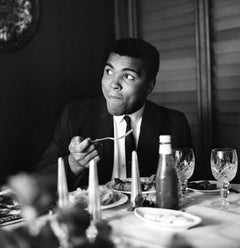
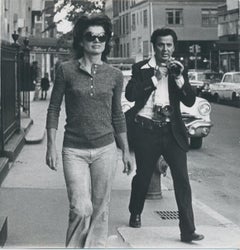
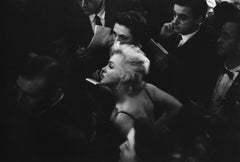
VIP American in 1960s - Vintage b/w Photo - 1960s

VIP American in 1960s - Vintage b/w Photo - 1960s

Located in Roma, IT

VIP American in 1960s is a vintage black and white photograph realized in the 1960s. Good conditions. With the stamp of copyright on the rear.

Category

Modern 1960s Art

Materials

Photographic Paper

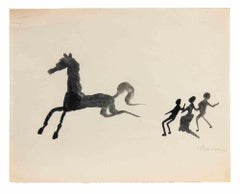
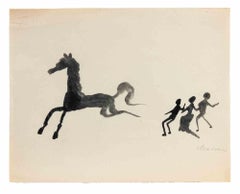
Figures - Drawing by Mino Maccari - 1960 ca.

Figures - Drawing by Mino Maccari - 1960 ca.

By Mino Maccari

Located in Roma, IT

Mixed media (pencil, tempera, charcoal and watercolor) on paper realized by Mino Maccari in 1960 ca. Hand signed lower left. Very good condition.

Category

Modern 1960s Art

Materials

Watercolor, Mixed Media, Tempera, Color Pencil

Spanish Flamenco Dancer Guitarist Scene Pastel Drawing Mid Century Barcelona

Spanish Flamenco Dancer Guitarist Scene Pastel Drawing Mid Century Barcelona

By Alfredo Opisso

Located in Sitges, Barcelona

Spanish Flamenco Dancer Guitarist Scene Pastel Drawing Mid Century Barcelona Artist: Alfredo Opisso Cardona (1907–1980) Title: Jota Medium: Pastel on paper Date: circa 1965 Signature: Signed lower right Condition: Very good condition Frame: Framed Dimensions (artwork): 46 × 36 cm (18.12 × 14.18 in) Dimensions (frame): 65 × 55 cm (25.6 × 21.65 in) DESCRIPTION Elegant mid-century pastel composition depicting a traditional Spanish dance scene with guitarist and dancer in stylized folkloric costume, executed circa 1965 by Barcelona artist Alfredo Opisso Cardona. The work combines refined draftsmanship with soft chromatic transitions characteristic of the Opisso family’s contribution to twentieth-century Catalan figurative drawing. The balanced interaction between gesture and costume detail creates a lyrical interpretation of Spanish musical culture aligned with the decorative figurative tradition developed in Barcelona during the mid-century period. Its intimate scale and original frame make the piece especially suitable for collectors of Mediterranean figurative drawing and refined European interior compositions. ARTIST BIO Alfredo Opisso Cardona (Barcelona, 1907–1980) belonged to the well-known Opisso family of Catalan artists and developed a career centered on figurative drawing, illustration and pastel compositions inspired by everyday life and Spanish cultural themes. His work continues the Barcelona draftsmanship tradition associated with early twentieth-century modern Catalan illustration and refined social scene painting. ARTISTIC CONTEXT / INSPIRATION This composition reflects the Barcelona figurative drawing tradition developed around the legacy of Ricard Opisso and the broader Catalan illustration movement connected to early twentieth-century modernisme and noucentisme culture. The theatrical gesture and costume treatment resonate with Spanish dance imagery explored by artists such as Ignacio Zuloaga and Hermenegildo Anglada Camarasa, while the refined pastel handling connects with European salon drawing traditions associated with artists working between illustration, costume studies and decorative figurative composition across the School of Paris environment. Spanish dancer painting...

Category

Modern 1960s Art

Materials

Pastel

(after) Jean Dubuffet - "L'haleine du sol" pochoir

(after) Jean Dubuffet - "L'haleine du sol" pochoir

By Jean Dubuffet

Located in Henderson, NV

Medium: pochoir (after the lithograph). Printed in 1960 at the Jacomet atelier and published by Berggruen in an edition of 1500. Size: 8 1/2 x 9 inches (218 x 227 mm). There is anoth...

Category

1960s Art

Materials

Lithograph, Stencil

Joan Miro, Untitled, from Trace on the Water, 1963 (after)

Joan Miro, Untitled, from Trace on the Water, 1963 (after)

By Joan Miró

Located in Southampton, NY

This exquisite lithograph after Joan Miro (1893–1983), titled Sans titre (Untitled), from the album Trace sur l'eau (Trace on the Water), originates from the 1963 edition published b...

Category

Surrealist 1960s Art
Materials

Lithograph

Paddock at Deauville Lithograph, Modern Style, 1960, Unframed

Paddock at Deauville Lithograph, Modern Style, 1960, Unframed

By Raoul Dufy

Located in Brooklyn, NY

This original lithograph titled Paddock at Deauville by renowned French artist Raoul Dufy captures the lively atmosphere of the famous horse racing scene at Deauville. Dufy, who init...

Category

Modern 1960s Art

Materials

Lithograph

"Still Life with Apples" Fruit Modern Mid Century Oil Painting on Board Painting

"Still Life with Apples" Fruit Modern Mid Century Oil Painting on Board Painting

By Michael Baxte

Located in New York, NY

A strong modernist oil painting depicted in the mid Century by Russian painter Michael Baxte. Mostly known for his abstracted figures on canvas or street scenes, this piece is a wonderful representation of his bold still life paintings, with expressive use of color, shape, and form. Later in his career, Baxte explores Expressionism, infusing both European and North American stylistic trends. This piece is from later in his career, but we can feel this underlying style throughout. Art measures 15 x 11 inches Frame measures 22 x 19 inches Michael Posner Baxte was born in 1890 in the small town of Staroselje Belarus, Russia. For the first half of the 19th century, it was a center of the Chabad movement of Hasidic Jews, but this group was gone by the middle of the 19th century. By the time the Baxte family immigrated to the United States at the beginning of the 20th century, the Jewish population numbered only on the hundreds. The native language of the Baxte family was Yiddish. It is likely that the death of Michael Baxte’s father triggered the family’s immigration. Three older brothers arrived in New York between 1903 and 1905. Michael and his mother, Rebecca, arrived in 1907. By 1910 Michael, his mother, and brother, Joseph, were living in New Orleans and may have spent some time on a Louisiana plantation. Around 1912, Michael Baxte returned to Europe to study the violin. In 1914 he, his mother, and Joseph moved to New York City. Meanwhile, in Algeria, a talented young woman painter, Violette Mege...

Category

Expressionist 1960s Art

Materials

Oil, Board

Paul Klee, Winter Journey, from 12 Watercolors, 1964 (after)

Paul Klee, Winter Journey, from 12 Watercolors, 1964 (after)

By Paul Klee

Located in Southampton, NY

This exquisite lithograph and pochoir after Paul Klee (1879–1940), titled Winterreise (Winter Journey), from the folio Paul Klee, 12 aquarelles (Paul Klee, Twelve Watercolors), origi...

Category

Modern 1960s Art

Materials

Lithograph, Stencil

Strutture d'insieme
Strutture d'insieme

Strutture d'insieme

By Luigi Boille

Located in Austin, TX

Waterline Fine Art, Austin, TX is pleased to present the following work: Oil on sackcloth. Signed and dated lower center; signed, dated, and titled verso. 57.75 x 45 in. 59.5 x 47 ...

Category

Abstract 1960s Art

Materials

Canvas, Oil

Scottish Abstract - Exhibited 1965 Abstract Expressionist art oil painting

Scottish Abstract - Exhibited 1965 Abstract Expressionist art oil painting

Located in Hagley, England

This very striking exhibited Scottish Abstract oil painting is by influential Scottish artist Jack Knox. Painted in 1964, it is a vivid mix of autumnal colours, textures and brushwork that work perfectly. A brilliant example of his work from the early sixties and which was exhibited at the Royal Scottish Academy in 1965. Unsigned. Dated 21.2.64 lower right. Provenance. Exhibited Royal Scottish Academy, Exhibition 1965, Edinburgh, label verso. Condition. Oil on canvas, 51 inches by 36 inches unframed and in good condition. Frame. Housed in a gilt sixties surround frame, 53 inches by 38 inches framed and in good condition. Jack Knox RSA (1936-2015) was one of the most influential artists to work in Scotland in the second half of the twentieth century. Born John Knox to a family of tailors in Kirkintilloch, Knox studied at the Glasgow School of Art (1953-57) where his drawings were noted for their mature draughtsmanship. After graduating, Knox went to Paris to attend the atelier of Cubist artist, André L’Hȏte. During his time in Europe Knox digested the various art movements of the moment, including Surrealism, Tachisme, Colour Field and Pop Art. Visiting the great museums, he was particularly interested in Analytic Cubism and Georges Braque’s intimation, rather than description, of object. He also went to Brussels to visit the first major show of American Abstract Expressionism in Europe. He returned to Scotland eager to establish his own style, drawing on everything he had seen in Europe. In 1960 the Glasgow Herald presented an exhibition during the Edinburgh Festival of young artists from the west of Scotland. Knox was selected to show alongside George Devlin, Carole Gibbons, Anda Patterson, Douglas Abercrombie and Duncan...

Category

Abstract 1960s Art

Materials

Oil

"Au jardin" original lithograph

"Au jardin" original lithograph

By André Lhote

Located in Henderson, NV

Medium: original lithograph. This richly inked impression was printed in 1960 at the atelier Mourlot in an edition of 200 on Marais paper for the rare "Eloge de Andre Lhote" and publ...

Category

1960s Art

Materials

Lithograph

Constellation
Constellation

Constellation

By Roy Ahlgren

Located in Fairlawn, OH

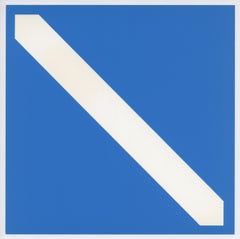
Constellation Silkscreen in colors, 1969 Signed, dated, titled and numbered in pencil Edition: 100 (56/100) Condition: Excellent Image Size: 17 x 17 inches Sheet size: 20 x 20 inch...

Category

Abstract Geometric 1960s Art

Materials

Screen

1965 After Christian Berard 'Galerie Lucie Weill'

1965 After Christian Berard 'Galerie Lucie Weill'

By Christian Bérard

Located in Brooklyn, NY

Sku: EF9863 Artist: Christian Berard Title: Galerie Lucie Weill Year: 1965 Signed: No Medium: Lithograph Paper Size: 25 x 19 inches ( 63.5 x 48.26 cm ) Imag...

Category

Modern 1960s Art

Materials

Lithograph

Le Chevalier (Knight)

Le Chevalier (Knight)

By Alexander Calder

Located in Miami, FL

Le Chevalier (Knight), 1968 Lithograph on Chiffon de Mandeure paper Maeght Editeur, Paris 31.25 x 23.62 inches Signed and numbered in pencil, edition of 90 copies Framed (not ...

Category

1960s Art

Materials

Lithograph

Plate VI, Le Cocu Magnifique

Plate VI, Le Cocu Magnifique

By Pablo Picasso

Located in Fairlawn, OH

Plate VI, Le Cocu Magnifique etching & aquatint, 1968 Unsigned as usual From the unsigned edition of 200 impressions printed on Rives BFK paper There is also a signed edition of 30 i...

Category

Surrealist 1960s Art
Materials

Etching, Aquatint

1968 original Soviet poster - Stubbornly and boldly toward the stars - Cold War

1968 original Soviet poster - Stubbornly and boldly toward the stars - Cold War

Located in PARIS, FR

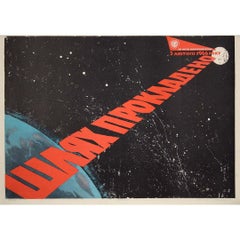
This dramatic 1968 original Soviet poster powerfully proclaims: “Obstinément et audacieusement vers les étoiles. L’héroïsme ne connaît pas de frontière” (“Stubbornly and boldly towar...

Category

1960s Art

Materials

Paper, Lithograph

Jean-Edouard Vuillard, The Wave, 1966 (after)

Jean-Edouard Vuillard, The Wave, 1966 (after)

By Edouard Vuillard

Located in Southampton, NY

This exquisite lithograph and pochoir after Jean-Edouard Vuillard (1868-1940), titled La Vague (The Wave), from the folio Vuillard, Douze Pastels (Vuillard, Twelve Pastels), originat...

Category

Post-Impressionist 1960s Art

Materials

Lithograph, Stencil

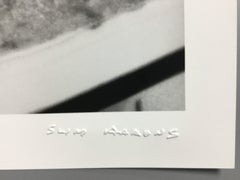
Apres Ski, Squaw Valley, Estate Edition, Snowscape Photograph

Apres Ski, Squaw Valley, Estate Edition, Snowscape Photograph

By Slim Aarons

Located in Los Angeles, CA

A party of skiers adjourn for drinks at Palisades Tahoe (formerly Squaw Valley), CA 1961. The festive mood is reflected in the colorful vintage skiwear, in red, yellow, blue, white and orange. In the background, snowy white and tree-topped mountains rise against a brilliant blue sky. This iconic image of casual glamour sets a tone for winter adventure. This site was the host for the 1960...

Category

Realist 1960s Art

Materials

Lambda

Vintage French Still Life Painting

Vintage French Still Life Painting

By Madeleine Scali

Located in Houston, TX

Still life painting by French artist Madeleine Scali (1911-2000), circa 1960. Original one-of-a-kind vintage work of art on paper displayed on a white mat with a gold border and fi...

Category

Other Art Style 1960s Art

Materials

Paper, Acrylic

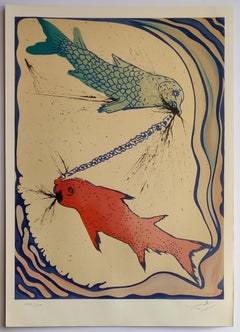
Aphrodite
Aphrodite

Aphrodite

By Salvador Dalí­

Located in OPOLE, PL

Salvador Dali (1904-1989) - Aphrodite Etching from 1963. Handsigned in two places. The edition 114/150. Dimensions of work: 76 x 56 cm Reference: Michler/Löpsinger 117 Side not...

Category

Surrealist 1960s Art
Materials

Etching