1960s Art

to
3,419
8,222
4,778
3,492
2,316
1,721
Overall Width
to
Overall Height
to
7,429
21,399
163,441
232,142
2,023
2,277
4,918
6,476
5,798
14,992
20,691
25,703
18,625
14,049
5,288
7,417
2,155
1,710
1,535
826
649
399
312
113
90
53
26
3
1
11,339
7,028
1,756
10,106
5,357
4,107
2,744
1,873
1,858
1,735
1,570
1,478
1,438
1,192
1,172
889
642
640
606
601
572
515
494
4,909
3,816
3,386
2,251
2,168
3,398
607
567
342
291
2,999
7,663
12,395
7,366
Period: 1960s
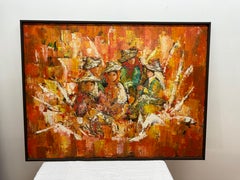
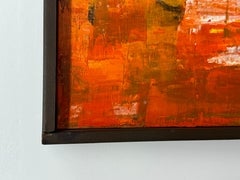
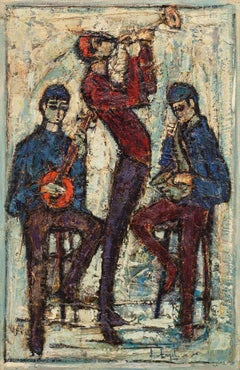
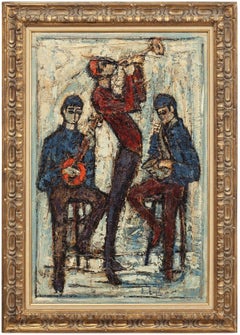
Judaica Polish Israeli Folk Art Biblical Modernist Oil Painting

Judaica Polish Israeli Folk Art Biblical Modernist Oil Painting

By Pinchas Shaar

Located in Surfside, FL

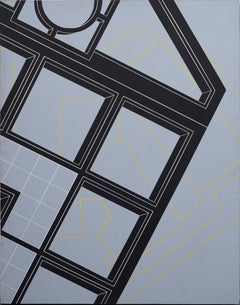
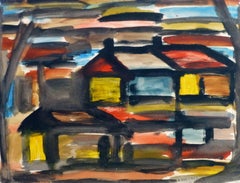
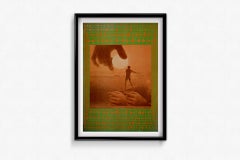
This painting is iconic of Pichas Shaar's aesthetic, and stylistic influences. A ceramic mosaicist and sculptor as well as a painter, Shaars strong decorative sense was evident in his colorful canvas, with their frequent rectilinear geometry, depicting stylized figures, often mythological or biblical subjects. Pinchas Shaar (born Szwarc, later Shaar) was born in Lodz, Poland in 1923. already at a young age he drew small graffiti and characters of fairy tales. at sixteeen he met the Polish painter Wladyslaw Strzeminski, a disciple of the Russian painter Kazimir Malevich, who encouraged Pinchas’ artistic education. Strzeminski encouraged Pinchas' artistic education and introduced him to the works of such painters as Picasso, Leger, Matisse, and Mondrian. Pinchas had his first exhibition in 1938 and also completed photomontages for a poetry book by Moshe Broderson that was published in 1939. Then, in September 1939, Nazi Germany invaded Poland. On February 1940 the Jews of Lodz had to move to a ghetto and perform forced labor. The artist experienced the horrors of war and the Nazi holocaust concentration camps. Pinchas worked in a prefabricated furniture factory. However, after his artistic abilities were discovered, he became a draftsman. He also designed decorations for the ghetto's theater. In 1944 the Germans liquidated the Lodz ghetto...

Category

Folk Art 1960s Art
Materials

Canvas, Oil

Portrait of Peggy Guggenheim - Vintage Photograph - 1960s

Portrait of Peggy Guggenheim - Vintage Photograph - 1960s

Located in Roma, IT

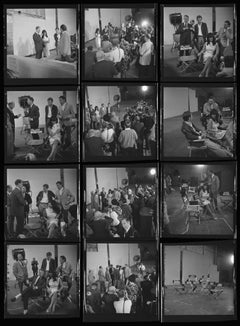
Portrait of Peggy Guggenheim is a black-and-white photograph that was realized in the 1960s. Good conditions.

Category

Contemporary 1960s Art

Materials

Photographic Paper

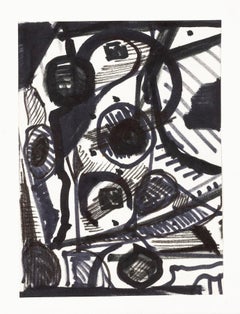
Study #26, 1960s Gouache painting Signed Framed Pace & Hudson Gallery provenance

Study #26, 1960s Gouache painting Signed Framed Pace & Hudson Gallery provenance

By Jack Youngerman

Located in New York, NY

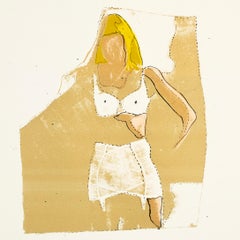
Jack Youngerman Untitled Study #26, 1967 Gouache painting on paper (with original JL Hudson and PACE Gallery labels) Hand signed and dated '67 on the front; J.L. Hudson Gallery Label on Verso. Unique Abstract Expressionist work on paper Frame included Framed Measurements: Framed: 15 inches by 15 inches by 1.5 inch Artwork: 7.75 inches by 7.5 inches Provenance From the estate of Anne Markley Spivak J. L. Hudson Gallery Label affixed to verso (back). The J.L. Hudson Gallery, Detroit, Michigan This 1967 unique, signed gouache painting by renowned abstract expressionist painter Jack Youngerman was acquired from the estate of Anne Markley Spivak. It is held in the original vintage metal frame with the original J.L. Hudson Gallery label, as well as the PACE gallery label on the verso The artwork has been newly loated and framed in a museum quality white wood frame; the original labels from the original back board have been affixed to the back to preserve provenance. Jack Youngerman Biography Jack Youngerman was born in St. Louis, Missouri on March 25, 1926. He moved to Louisville, Kentucky in 1929 and studied at the University of Missouri, Columbia from 1944 to 1946 under a wartime navy training program. He graduated from the University of North Carolina Chapel Hill in 1947 and, that same year, he returned to Missouri to finish his Bachelor’s degree in Journalism before moving to Paris on a G.I. scholarship. In Paris, Youngerman enrolled at the Ecole des Beaux-Arts, studying drawing with Jean Souverbie. He explored Paris, taking in the cathedrals, museums, and history in order to grasp a greater sense of art history. He also traveled to the Netherlands, Spain, Belgium, Italy, and Greece on fine art excursions. In 1948, Youngerman became friends with Ellsworth Kelly, Eduardo Paolozzi, and Cesar – fellow students at Ecole des Beaux-Arts. He married Delphine Seyrig in 1950, and later that year he had his first group exhibition at Galerie Maeght in Paris. He visited the studios of Constantín Brancusi and Jean Arp and became heavily influenced by the organic forms present in their work. He also met artist Alexander Calder through his father-in-law, Henri Seyrig, and experimental filmmaker and artist, Robert Breer...

Category

Abstract Expressionist 1960s Art
Materials

Gouache

"Burton And Taylor" by Express

"Burton And Taylor" by Express

Located in London, GB

"Burton And Taylor" by Express 15th March 1964: Actress Elizabeth Taylor marries her fifth husband Richard Burton (1925-1984) in Montreal. Unframed Paper Size: 12" x 16'' (inches) ...

Category

Modern 1960s Art
Materials

Black and White

Still Life, from To and From Rrose Selavy, for Marcel Duchamp, Lt Ed silkscreen

Still Life, from To and From Rrose Selavy, for Marcel Duchamp, Lt Ed silkscreen

By Shusaku Arakawa

Located in New York, NY

Shusaku Arakawa Still Life, from To and From Rrose Selavy, for Marcel Duchamp, 1967 Limited Edition Silkscreen on velincarton (thin board) paper 10 1/2 × 13 1/4 inches Limited Edition of 60 Hand signed, titled and dated on the front Unframed The entire portfolio, including the present work, is referenced in the Marcel Duchamp catalogue raisonne: Arturo Schwarz The Complete Works of Marcel Duchamp, Abrams, P.532, 344c Eager to share Marcel Duchamp with Japanese audiences, Shuzo Takiguchi - a Japanese-born poet, critic, and artist with ties to Surrealist circles, assembled an international portfolio of graphic works by various artists with strong ties to Duchamp, to accompany the deluxe version of his monograph, "To and From Rrose Sélavy". The present work was created for this portfolio by one of Marcel Duchamp's friends, Shusaku Arakawa. It is signed, dated and titled on the front - and can be exhibited both vertically and horizontally - (see photos). The present work, along with others in the portfolio, was published in Japan and is rarely found stateside. Shusaku Arakawa (荒川 修作 Arakawa Shūsaku, July 6, 1936 – May 18, 2010) who spoke of himself as an “eternal outsider” and “abstractionist of the distant future,” first studied mathematics and medicine at the University of Tokyo, and art at the Musashino Art University. He was a member of Tokyo’s Neo-Dadaism Organizers, a precursor to The Neo-Dada movement. Arakawa’s early works were first displayed in the infamous Yomiuri Independent Exhibition, a watershed event for postwar Japanese avant-garde art. Arakawa arrived in New York in 1961 with fourteen dollars in his pocket and a telephone number for Marcel Duchamp, whom he phoned from the airport and over time formed a close friendship. He started using diagrams within his paintings as philosophical propositions. Jean-Francois Lyotard has said of Arakawa’s work that it “makes us think through the eyes,” and Hans-Georg Gadamer has described it as transforming “the usual constancies of orientation into a strange, enticing game—a game of continually thinking out.” Quoting Paul Celan...

Category

Dada 1960s Art
Materials

Screen, Mixed Media, Cardboard

Martyrs - Relief Sculpture - 1965

Martyrs - Relief Sculpture - 1965

Located in Roma, IT

Martyrs is a modern artwork realized by Artist of 20th century. Relief on metal decoration artwork depicting a martyrdom scene. Includes frame.

Category

Modern 1960s Art
Materials

Metal

Eduardo Chillida, Homage to Georges Braque, from Derriere le Miroir, 1964

Eduardo Chillida, Homage to Georges Braque, from Derriere le Miroir, 1964

By Eduardo Chillida

Located in Southampton, NY

This exquisite lithograph by Eduardo Chillida (1924–2002), titled Sans titre (Untitled), originates from the 1964 folio Derriere le Miroir, Nos. 144–145–146, L’Hommage a Georges Braque (Tribute to Georges Braque). Published by Maeght Editeur, Paris, under the direction of Aime Maeght, and printed by Mourlot Freres, Paris, this composition exemplifies Chillida’s mastery of spatial balance and sculptural abstraction. In Sans titre, Chillida translates his distinctive exploration of mass and void into two dimensions, creating an interplay of dense form and open space that mirrors the structural poetry of his sculpture and a heartfelt tribute to Braque, “Learning to fly down here — to Braque, master, friend, inventor of birds.” The composition conveys a sense of weight and stillness, embodying the meditative precision for which Chillida is renowned. Executed on velin paper, this lithograph measures 15 x 22 inches (38.1 x 55.9 cm), with centerfold, as issued. Signed in the plate and unnumbered, as issued. The edition captures Chillida’s unique sensitivity to form and rhythm within a printed medium, reflecting the same architectural strength that defines his sculptural practice. Artwork Details: Artist: Eduardo Chillida (1924–2002) Title: Sans titre (Untitled), from Derriere le Miroir, Nos. 144–145–146, L’Hommage a Georges Braque (Tribute to Georges Braque), 1964 Medium: Lithograph on velin paper Dimensions: 15 x 22 inches (38.1 x 55.9 cm), with centerfold, as issued Inscription: Signed in the plate and unnumbered, as issued Date: 1964 Publisher: Maeght Editeur, Paris Printer: Mourlot Freres, Paris Condition: Well preserved, consistent with age and medium Provenance: From the 1964 folio Derriere le Miroir, Nos. 144–145–146, published by Maeght Editeur, Paris Notes: Excerpted from the folio (translated from French): Taken from this special issue of “Behind the Mirror,” CCCL examples on velin de Rives were numbered, constituting the original edition of L’Hommage a Georges Braque. These deluxe examples also included an etching based on Trois oiseaux sur fond violet. The lithographs for this issue were printed in the ateliers of Maeght Editeur, Levallois. The text was printed by Fequet et Baudier, typographers. Finished printing May 13, 1964. About the Publication: Derriere le Miroir (translated as "Behind the Mirror") was an iconic French art periodical published from 1946 to 1982 by Maeght Editeur, one of the most influential art publishers of the 20th century. Founded by Aime Maeght in Paris, the publication was conceived as a visual and literary collaboration between leading modern artists, poets, and critics. Each issue functioned as both an exhibition catalogue and a work of art in itself—featuring original lithographs printed directly from the artists' stones or plates, alongside essays, poems, and critical commentary. Over the course of 36 years, Derriere le Miroir produced more than 250 issues and showcased an extraordinary roster of artists including Henri Matisse, Marc Chagall, Joan Miro, Georges Braque, Alexander Calder, Fernand Leger, Pierre Bonnard, Alberto Giacometti, Eduardo Chillida, Ellsworth Kelly, Francis Bacon, Paul Rebeyrolle, Claude Garache, Antoni Tapies, Bram van Velde, Pierre Alechinsky, Pol Bury, Shusaku Arakawa, and Gerard Titus-Carmel. Printed in the ateliers of Mourlot, Arte, and Imprimerie Moderne du Lion, the periodical set new standards for quality in color lithography, combining fine art printing with elegant typography and poetic text. Beyond its visual brilliance, Derriere le Miroir also became a cultural chronicle of postwar European modernism. Each issue coincided with exhibitions held at Galerie Maeght, providing a collectible and widely accessible record of groundbreaking shows. Its integration of image, text, and philosophy created a dialogue between art and literature that elevated the modern art book to new aesthetic heights. Today, Derriere le Miroir remains one of the most sought-after and historically significant art publications, prized by collectors and scholars alike for its craftsmanship, influence, and its role in defining the visual language of 20th-century modernism. The Maeght Foundation in Saint-Paul-de-Vence continues to honor this legacy through exhibitions and archival preservation of the series, affirming Derriere le Miroir's enduring place in the history of modern art and fine art publishing. About the Artist: Eduardo Chillida (1924–2002) was a Spanish Basque sculptor and printmaker internationally celebrated for his monumental abstract works that explore the interplay between form, space, and material. Renowned for his mastery of iron, steel, stone, and concrete, Chillida created sculptural compositions that evoke both architectural strength and poetic balance, reflecting his lifelong dialogue between the physical and the spiritual. Emerging in postwar Europe, his art stands alongside that of the great modern masters—Pablo Picasso, Henri Matisse, Alexander Calder, Marc Chagall, Salvador Dali, Joan Miro, Georges Braque, Wassily Kandinsky, Marcel Duchamp, and Man Ray—whose revolutionary approaches to form and perception shaped 20th-century art. Chillida’s work embodies a profound sense of harmony, rooted in the landscapes and philosophies of his native Basque Country, while maintaining a universal resonance. Exhibited internationally and collected by major institutions including MoMA, the Guggenheim, the Tate, and the Centre Pompidou, his sculptures and works on paper continue to command global acclaim. The highest price ever paid for an Eduardo Chillida artwork is approximately $4.1 million USD, achieved in 2022 at Christie’s Paris for Buscando la Luz IV (2001). Eduardo Chillida Sans titre, Chillida Derriere le Miroir, Chillida Maeght...

Category

Modern 1960s Art
Materials

Lithograph

God and Eve - Lithograph by Marc Chagall - 1960

God and Eve - Lithograph by Marc Chagall - 1960

By Marc Chagall

Located in Roma, IT

Color lithograph realized by Marc Chagall in 1960 to illustrate "The Bible".  Edition of 6500, published by Tériade in no. 33 and 34 of the Art Magazine Verve. Printed by Mourlot a...

Category

Surrealist 1960s Art
Materials

Lithograph

Vanité, Vingt fables de La fontaine, Bernard Buffet

Vanité, Vingt fables de La fontaine, Bernard Buffet

By Bernard Buffet

Located in Southampton, NY

Woodcut on vélin d'Arches paper. Inscription: signed in the plate and unnumbered, as issued. Good condition. Notes: from the folio, Vingt fables de La fontaine, 1961. Published by Éd...

Category

Modern 1960s Art
Materials

Woodcut

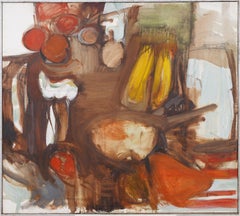
Mid Century Modern Abstract Expressionist Painting from Dallas Museum of Art XL
Mid Century Modern Abstract Expressionist Painting from Dallas Museum of Art XL
Located in Dallas, TX

A Monumental Abstract Masterpiece with a Storied Past This striking large-scale abstract expressionist painting carries with it a remarkable history. In the 1960s, a dedicated Texas ...
Category

1960s Art

Materials

Oil, Canvas

Connelly And Guest (1955) Limited Estate Stamped - Giant

Connelly And Guest (1955) Limited Estate Stamped - Giant

By Slim Aarons

Located in London, GB

Connelly And Guest (1955) Limited Estate Stamped (Photo by Slim Aarons) American socialite Cee Zee Guest (1920 – 2003, left) with Joanne Connelly in Palm Beach, Florida, circa 19...

Category

Modern 1960s Art

Materials

Archival Pigment, Color

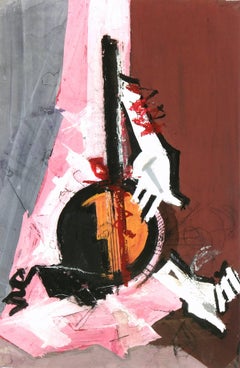
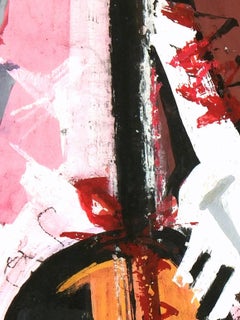
Spanish Flamenco Dancer Guitarist Scene Pastel Drawing Mid Century Barcelona

Spanish Flamenco Dancer Guitarist Scene Pastel Drawing Mid Century Barcelona

By Alfredo Opisso

Located in Sitges, Barcelona

Spanish Flamenco Dancer Guitarist Scene Pastel Drawing Mid Century Barcelona Artist: Alfredo Opisso Cardona (1907–1980) Title: Jota Medium: Pastel on paper Date: circa 1965 Signature: Signed lower right Condition: Very good condition Frame: Framed Dimensions (artwork): 46 × 36 cm (18.12 × 14.18 in) Dimensions (frame): 65 × 55 cm (25.6 × 21.65 in) DESCRIPTION Elegant mid-century pastel composition depicting a traditional Spanish dance scene with guitarist and dancer in stylized folkloric costume, executed circa 1965 by Barcelona artist Alfredo Opisso Cardona. The work combines refined draftsmanship with soft chromatic transitions characteristic of the Opisso family’s contribution to twentieth-century Catalan figurative drawing. The balanced interaction between gesture and costume detail creates a lyrical interpretation of Spanish musical culture aligned with the decorative figurative tradition developed in Barcelona during the mid-century period. Its intimate scale and original frame make the piece especially suitable for collectors of Mediterranean figurative drawing and refined European interior compositions. ARTIST BIO Alfredo Opisso Cardona (Barcelona, 1907–1980) belonged to the well-known Opisso family of Catalan artists and developed a career centered on figurative drawing, illustration and pastel compositions inspired by everyday life and Spanish cultural themes. His work continues the Barcelona draftsmanship tradition associated with early twentieth-century modern Catalan illustration and refined social scene painting. ARTISTIC CONTEXT / INSPIRATION This composition reflects the Barcelona figurative drawing tradition developed around the legacy of Ricard Opisso and the broader Catalan illustration movement connected to early twentieth-century modernisme and noucentisme culture. The theatrical gesture and costume treatment resonate with Spanish dance imagery explored by artists such as Ignacio Zuloaga and Hermenegildo Anglada Camarasa, while the refined pastel handling connects with European salon drawing traditions associated with artists working between illustration, costume studies and decorative figurative composition across the School of Paris environment. Spanish dancer painting...

Category

Modern 1960s Art

Materials

Pastel

French Abstract
French Abstract

French Abstract

Located in Houston, TX

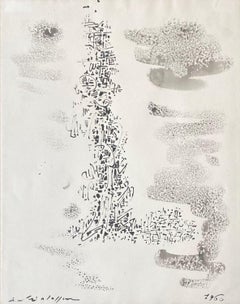
Marbled French abstract aquatint of flowing motion, 1963. Signed lower right. Original artwork on paper displayed on a white mat with a gold border. Archival plastic sleeve and Cert...

Category

1960s Art

Materials

Ink

Landscape Watercolor - Green Pasture with Country Homes

Landscape Watercolor - Green Pasture with Country Homes

Located in Houston, TX

Tranquil pasture watercolor scene with bright green fields and country homes by French artist R. Boutin, 1961. Signed lower right. Original artwork on paper displayed on a white m...

Category

1960s Art

Materials

Watercolor

Panama Garden, Mid-century abstract expressionist modern work

Panama Garden, Mid-century abstract expressionist modern work

By Richard Andres

Located in Beachwood, OH

Richard Andres (American, 1927-2013) Panama Garden, c. 1964 acrylic on canvas signed lower right, signed and titled verso 46 x 38 inches Richard Andres was born in Buffalo, New York in 1927. A graduate of the Cleveland Institute of Art in 1950, he was immediately drafted and served for two years in the army as a mural painter. He received his Master of Arts from Kent State in 1961. A frequent exhibitor at galleries and museums and winner of multiple May Show prizes, Andres taught art in the Cleveland Public Schools for 28 years, as well as teaching the University of Buffalo, the Cleveland Institute of Art and the Western Reserve University. Very little in Richard Andres’ childhood would have predicted his love of classical music, mid-century-modern architecture and certainly not his lifelong passion for art and in particular abstract art. Richard’s father, Raymond, had no more than a third-grade education, and his mother, Clara, was one of thirteen children – only three of whom lived into adulthood and none of whom attended high school. They lived, when Richard was a boy, in a dingy area of Buffalo, NY in a walk-up apartment situated above a tavern. Raymond and Clara supplemented the income from their factory jobs in the bar downstairs with Raymond playing ragtime on the piano and Clara serving drinks. This often left Richard and his two older brothers at home alone to fend for themselves. The two older boys, Raymond and Russell, were - unlike Richard- rather rough and tumble and entertained themselves with stickball, boxing and the like. Richard, on the other hand, from a very young age liked to draw, or better yet even, to paint with the small set of watercolors he received for Christmas one year. Paper, however, at the height of the depression, was hard to come by. Luckily, Clara used paper doilies as decoration for the apartment and Richard would contentedly paint and then cut up doilies, gluing the pieces together to create collages. At eight-years-old, he discovered the Albright-Knox Museum (then known as the Albright Art Gallery) and spent several hours a week there studying the paintings. He was particularly fond of Charles Burchfield‘s landscapes, enamored with their ‘messiness’ and thinking that they somehow captured more ‘feeling’ than works he was previously familiar with. For his tenth Christmas, he asked for and received a ‘how-to’ paint book by Elliot O’Hare. Through this self-teaching, he assembled the portfolio needed for acceptance to Buffalo Technical High School where he studied Advertising Arts. In his Junior year, he was encouraged to enter a watercolor painting, “Two Barns,” in the national 1944-45 Ingersoll Art Award Contest and was one of twelve grand prize winners – each one winning one hundred dollars. More importantly the painting was exhibited at the Carnegie Institute Galleries, which resulted in his winning a national scholarship to the Cleveland School of Art (The Cleveland Art Institute). He flourished at the art school under the tutelage of faculty members such as Carl Gaertner, as well as that of visiting artists such as William Sommer and Henry George Keller. He would say in later years that Gaertner, in particular, influenced his attitude toward life as well as art. “Gaertner,” Andres said, “believed that there was no need to be a ‘tortured artist’, that an artist should rather enjoy beauty, family, and life in general.” Free to spend his days as he chose, he wandered the Cleveland Art Museum for most of the hours he was not attending classes or painting; the remaining time was spent drinking coffee at a local hangout with art school friends – which is where he met fellow Henry Keller scholarship winner, Avis Johnson. Richard was immediately smitten with Avis, but being rather shy, it took him the entire summer of 1948 to build up his courage to ask her out. Over that summer he ‘thought about Avis’ and worked in a diner to save money. He also used the hundred-dollar prize money won in High School to visit the first Max Beckmann retrospective in the United States at the City Art Museum in St. Louis. Over a half century later he spoke of that exhibit with a reverence usually reserved for spiritual matters, “I walked in and it was like nothing I had ever seen before... the color...It just glowed.” Returning to campus in the Fall, the first thing he did was go to the coffee shop in hopes of finding Avis. He did, and she, upon seeing him, realized that she was also smitten with him. They quickly became known as ‘the couple’ on campus, and a year later, with Richard being drafted for the Korean war, they were quickly married by a Justice of the Peace, celebrating after with family at Avis’s Cleveland home. As a gift, faculty member John Paul Miller...

Category

Abstract Expressionist 1960s Art
Materials

Acrylic

Bob Dylan in NYC

Bob Dylan in NYC

By Don Hunstein

Located in New York, NY

Don Hunstein image is the photo used for the actual color cover of “The Freewheelin’ Bob Dylan” album. This iconic image shows Bob & his girlfriend Suze Rotolo walking down a cold an...

Category

American Realist 1960s Art
Materials

Lambda

Net, Abstract Expressionist Etching and Aquatint by Mary Anne Watson

Net, Abstract Expressionist Etching and Aquatint by Mary Anne Watson

Located in Long Island City, NY

Mary Anne Watson, American - Net, Year: 1967, Medium: Etching and Aquatint, signed, titled, numbered and dated, Edition: 3/25, Image Size: 12 x 12 inches, Size: 18.5 x 18 in. (46.9...

Category

Abstract Expressionist 1960s Art

Materials

Etching, Aquatint

'Abstract in Lilac and Lapis', Denver Metropolitan Museum, Germany, Galerie Lutz

'Abstract in Lilac and Lapis', Denver Metropolitan Museum, Germany, Galerie Lutz

By Kenneth Martin Snodgrass

Located in Santa Cruz, CA

A substantial, American school oil abstract comprising adjacent and superimposed, organic shapes in Prussian blue, vermilion, and olive contrasted against a slate and lavender ground...

Category

Abstract 1960s Art
Materials

Canvas, Oil

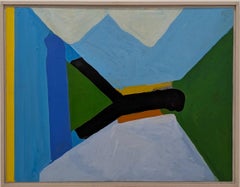
South Cascade
South Cascade

South Cascade

Located in San Francisco, CA

This bold abstract painting has the strong gestures one associates with the best of Abstract Expressionist painting. It is a mid century work, done by Tom Ide ...

Category

Abstract Expressionist 1960s Art
Materials

Oil

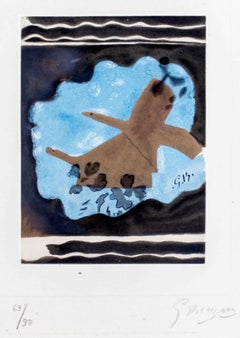
XXe Siecle-Hommage a Marc Chagall

XXe Siecle-Hommage a Marc Chagall

By Marc Chagall

Located in Fairlawn, OH

XXe Siecle-Hommage a Marc Chagall Color lithograph, 1969 Unsigned as issued by XXe Siecle From: XXe Siecle, Volume, Special Issue Marc Chagall Published by G. di San Lazzaro for A. M...

Category

French School 1960s Art
Materials

Lithograph

Torero - Óleo sobre tela - Año 1961 - 130 cm. x 73 cm.

Torero - Óleo sobre tela - Año 1961 - 130 cm. x 73 cm.

Located in Sant Celoni, ES

Como pueden apreciar, la obra va firmada en la parte inferior y fechada del año 1961 En la parte trasera, va con una etiqueta con los detalles de la obra Se presenta enmarcada la p...

Category

Fauvist 1960s Art
Materials

Oil

The Island Bird and the Flowers

The Island Bird and the Flowers

By Paul Mathey

Located in Genève, GE

Work on canvas Golden wooden frame 46 x 54 x 8 cm This artwork features a vibrant, textured composition that immediately catches the eye with its bold use of colors and shapes. We d...

Category

1960s Art
Materials

Oil

"Park Stones" by Roger Jackson

"Park Stones" by Roger Jackson

Located in London, GB

"Park Stones" by Roger Jackson 11th January 1967: Top British pop group the Rolling Stones taking a stroll through London's Green Park, they are, from left to right, Mick Jagger, Bi...

Category

Modern 1960s Art
Materials

Black and White

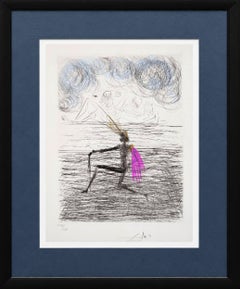
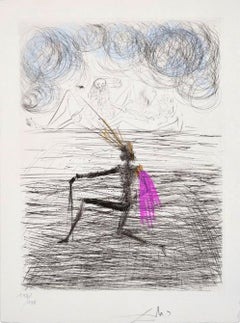
The Mythology Narcissus

The Mythology Narcissus

By Salvador Dalí­

Located in Hollywood, FL

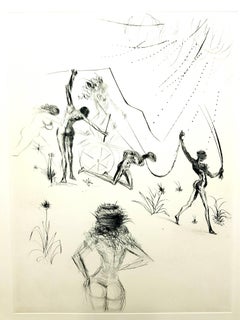
ARTIST: Salvador Dali TITLE: The Mythology Narcissus MEDIUM: Etching SIGNED: Hand Signed PUBLISHER: Pierre Argillet, Paris EDITION NUMBER: XXXI/C MEASUREMENTS: 18" x 30" YEAR...

Category

Surrealist 1960s Art
Materials

Etching

San Francisco in 1960s - Vintage Photograph - 1960s

San Francisco in 1960s - Vintage Photograph - 1960s

Located in Roma, IT

San Francisco is a vintage photograph realized in the 1960s. Good conditions. The artwork is realized in a well-balanced composition.

Category

Modern 1960s Art
Materials

Photographic Paper

New York Harbor and Skyline, 1960s

New York Harbor and Skyline, 1960s

By Erich Andres

Located in Cologne, DE

This black-and-white photograph offers a captivating view of New York Harbor, with the towering skyline of Lower Manhattan in the background. The United States Coast Guard building i...

Category

Modern 1960s Art

Materials

Black and White

Pietro Consagra Italian Mod Abstract Expressionist Forma Art Informel Lithograph

Pietro Consagra Italian Mod Abstract Expressionist Forma Art Informel Lithograph

By Pietro Consagra

Located in Surfside, FL

Pietro Consagra (Italian, 1920-2005). Hand signed in pencil and numbered limited edition color lithograph on Magnani paper. Embossed stamp with limited edition numbers in pencil to lower left, and having artist pencil signature to lower right. (from a limited edition of 80 with 15 artist's proofs) Published by Stamperia 2RC, Rome Italy and Marlborough Gallery, Rome, Italy. Abstract Modernist work in colors, produced in the style of the Forma art movement of Postwar Italy, of which the artist was a prominent member. Pietro Consagra (1920 – 2005) was an Italian Post war artist working in painting, printmaking and sculpture. In 1947 he was among the founding members of the Forma 1 group of artists, proponents of structured abstraction. (similar to the Art Informel and Art Brut in France and the Brutalist artists) Consagra was born on 6 October 1920 in Mazara del Vallo, in the province of Trapani in south-western Sicily, to Luigi Consagra and Maria Lentini. From 1931 he enrolled in a trade school for sailors, studying first to become a mechanic, and later to become a captain. In 1938 he moved to Palermo, where he enrolled in the liceo artistico; despite an attack of tuberculosis, he graduated in 1941, and in the same year signed up at the Accademia di Belle Arti, where he studied sculpture under Archimede Campini. After the Invasion of Sicily and the Allied occupation of Palermo in 1943, Consagra found work as a caricaturist for the American Red Cross club of the city; he also joined the Italian Communist Party. Early in 1944, armed with a letter of introduction from an American officer, he travelled to Rome. There he came into contact with the Sicilian artist Concetto Maugeri, and through him with Renato Guttuso, who was also Sicilian and who introduced him to the intellectual life of the city and to other postwar artists such as Leoncillo Leonardi, Mario Mafai and Giulio Turcato. Consagra signed up at the Accademia di Belle Arti di Roma in September 1944 and studied sculpture there under Michele Guerrisi, but left before completing his diploma. In 1947, with Carla Accardi, Ugo Attardi, Piero Dorazio, Mino Guerrini, Achille Perilli, Antonio Sanfilippo and Giulio Turcato, Consagra started the artist's group Forma 1, which advocated both Marxism and structured abstraction. Steadily Consagra's work began to find an audience. Working primarily in metal, and later in marble and wood, his thin, roughly carved reliefs, began to be collected by Peggy Guggenheim and other important patrons of the arts. He showed at the Venice Biennale eleven times between 1950 and 1993, and in 1960 won the sculpture prize at the exhibition. During the 1960s he was associated with the Continuità group, an offshoot of Forma I, and in 1967 taught at the School of Arts in Minneapolis. Large commissions allowed him to begin working on a more monumental scale, and works of his were installed in the courtyard of the Foreign Ministry in Rome and in the European Parliament, Strasbourg. His work is found in the collections of The Tate Gallery, London, in Museo Cantonale d'Arte of Lugano and the Museum of Modern Art, Paris, and the National Gallery of Art in Washington, D.C.. Consagra returned to Sicily where he sculpted a number of significant works during the 1980s. With Senator Ludovico Corrao, he helped created an open-air museum in the new town of Gibellina, after the older town had been destroyed in the earthquake of 1968. Consagra designed the gates to the town's entrance, the building named "Meeting" and the gates to the cemetery, where he was later buried. In 1952 Consagra published La necessità della scultura ("the need for sculpture"), a response to the essay La scultura lingua morta ("sculpture, a dead language"), published in 1945 by Arturo Martini. Other works include L'agguato c'è ("the snare exists", 1960), and La città frontale ("the frontal city", 1969). His autobiography, Vita Mia, was published by Feltrinelli in 1980. In 1989 a substantial retrospective exhibition of work by Consagra was shown at the Galleria Nazionale d'Arte Moderna in Rome; in 1993 a permanent exhibition of his work was installed there. In 1991 his work was shown in the Hermitage Museum in St. Petersburg. In 2002 the Galerie der Stadt Stuttgart opened a permanent exhibition of his work. He was one of ten artists invited by Giovanni Carandente, along with David Smith, Alexander Calder, Arnaldo Pomodoro, Lynn Chadwick, and Beverly Pepper, to fabricate works in Italsider factories in Italy for an outdoor exhibition, "Sculture nella città", held in Spoleto during the summer of 1962. He was included in the The 1962 International Prize for Sculpture the jury included Argan, Romero Brest and James Johnson Sweeney the former director of the Solomon R. Guggenheim Museum in New York. The participants included Louise Nevelson and John Chamberlain for the United States; Lygia Clark for Brazil; Pietro Consagra, Lucio Fontana, Nino Franchina, and Gió Pomodoro for Italy; Pablo Serrano for Spain; and Eduardo Paolozzi, William Turnbull, and Kenneth Armitage for England. Gyula Kosice, Noemí Gerstein...

Category

Abstract Expressionist 1960s Art

Materials

Lithograph

Times Square, NYC, 1960

Times Square, NYC, 1960

By William Claxton

Located in Santa Monica, CA

William Claxton 1927-2008 Times Square, NYC, 1960, printed 1999 Signed, titled, and dated in pencil on verso Gelatin Silver Print Image: 9-1/8" x 13-1/4", Paper 11" x 14", Matted: 16...

Category

1960s Art

Materials

Silver Gelatin

'Pink Champagne Ceiling' Metropolitan Opera House - Archival Pigment Print

'Pink Champagne Ceiling' Metropolitan Opera House - Archival Pigment Print

By Phillip Harrington

Located in London, GB

'Pink Champagne Ceiling' (1966) Photo By Phillip Harrington / Alamy New York City, 1966. Interior of the Metropolitan Opera House at Lincoln Center. Additional Information: Unframed Paper Size: 16x20'' Note image size may differ from paper size - please contact us for exact image dimensions Printed to order 2021 About the Image: The Metropolitan Opera House is an opera house located on Broadway at Lincoln Square on the Upper West Side of Manhattan in New York City. Part of Lincoln Center for the Performing Arts, the theater was designed by Wallace K. Harrison. OTHER SIZES OF THIS IMAGE AVAILABLE 10 x 12'' 12 x 16'' 16 x 20'' 20 x 24'' 20 x 30'' 30 x 40'' FRAMING AVAILABLE ON REQUEST About the Artist: Phillip A. Harrington was born in 1920 and grew up in Holland, Michigan. He developed an interest in photography at an early age, joining the high school camera club at 16. At the age of 19, Harrington moved to New York City to study at the Clarence. H. White school of photography, a prestigious institution with graduates such as Margaret Bourke-White, Dorothea Lange, Laura Gilpin...

Category

Modern 1960s Art

Materials

Color, Archival Pigment

Friday Morning
Friday Morning

Friday Morning

By Jack Bush

Located in Toronto, Ontario

Jack Bush (1909-1977) is Canada's most successful abstract artist of the 20th century. Bush was a graduate of OCAD (Ontario College of Art & Design) and a key member of Painters Ele...

Category

Color-Field 1960s Art

Materials

Screen