Early 1900s Art

to
305
930
463
302
193
164
Overall Width
to
Overall Height
to
7,579
21,325
164,981
236,547
2,318
4,986
6,480
5,866
15,316
21,049
26,220
18,959
14,179
5,372
330
243
119
99
10
8
7
5
4
4
1
1,040
840
49
1,143
649
402
353
332
188
115
105
99
96
86
85
79
78
78
77
77
76
69
63
937
664
490
391
375
58
45
27
24
17
885
233
1,079
964
Period: Early 1900s
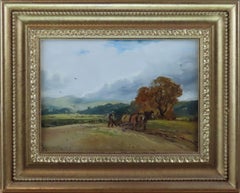
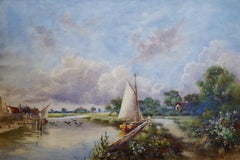
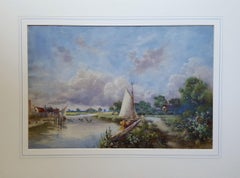
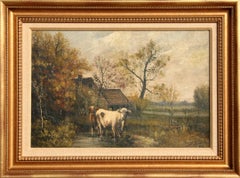
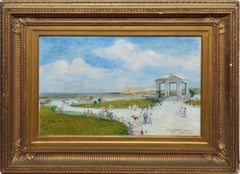
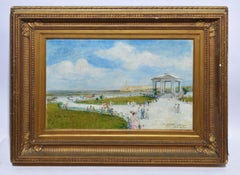
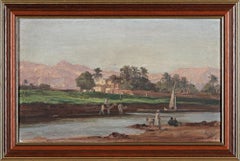
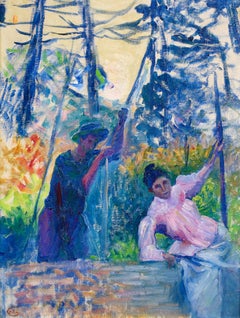
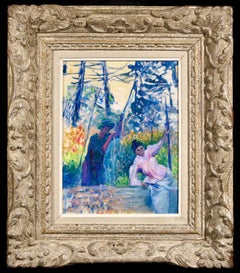
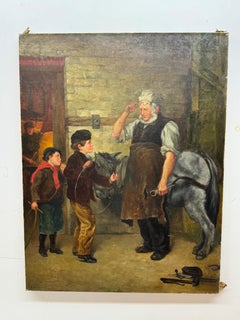
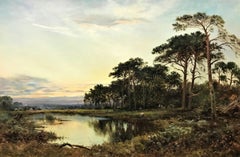
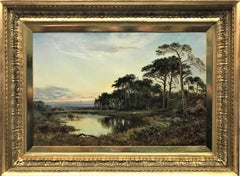
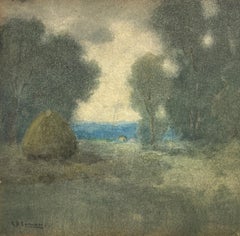
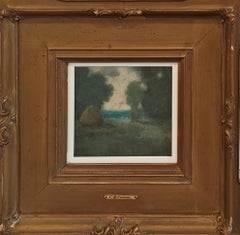
Pointillist Oil Painting Fall Landscape 19th Century, Unique Frame 1900

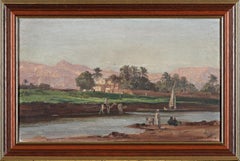
Pointillist Oil Painting Fall Landscape 19th Century, Unique Frame 1900

Located in Buffalo, NY

A beautiful pointillist oil painting dated 1900 and signed Ford. Housed in a very unique and oddly complementary frame this work stands out in a crowd.

Category

Pointillist Early 1900s Art

Materials

Oil, Board

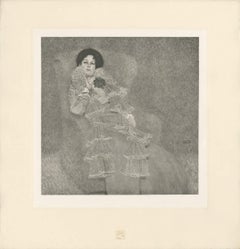
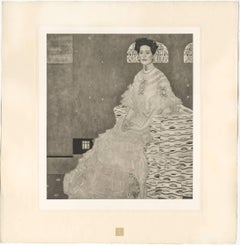
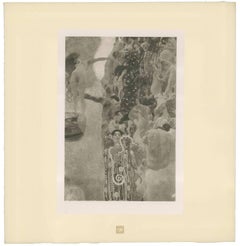
H.O. Miethke Das Werk folio "Portrait of Adele Bloch-Bauer II" collotype print

H.O. Miethke Das Werk folio "Portrait of Adele Bloch-Bauer II" collotype print

DAS WERK GUSTAV KLIMTS, a portfolio of 50 prints, ten of which are multicolor collotypes on chine colle paper laid down on hand-made heavy cream wove paper with deckled edges; under ...

Category

Vienna Secession Early 1900s Art
Materials

Paper

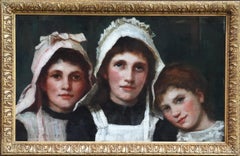
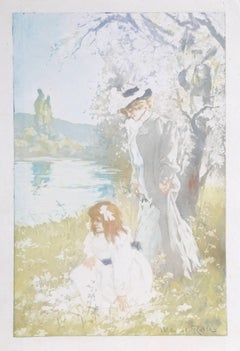
Mother and Child

Mother and Child

By Hendrik Maarten Krabbe

Located in Wiscasset, ME

Born in Amsterdam in 1868, Hendrick Maarten Krabbe attended the Academie des Beauz-Arts d’Amsterdam where he studied with August Allebe. Krabbe was known for his genre paintings, por...

Category

Realist Early 1900s Art

Materials

Watercolor

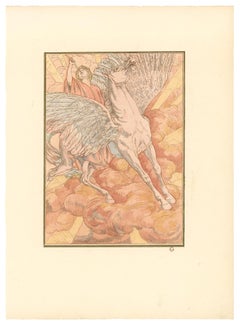
Harper's Monthly Magazine Cover

Harper's Monthly Magazine Cover

By Maxfield Parrish

Located in Fort Washington, PA

Medium: Oil and Ink on Paper Signature: Unsigned Sight Size 13.75" x 9.50"; Framed: 17.25" x 13.25" Harper's Monthly Magazine Cover, September 1900 Notes on Verso: "Nelson: Art Dept. Harper's Magazine: Pay Maxfield Parrish $50 for design. Also use Christmas Magazine...

Category

Early 1900s Art

Materials

Paper, Ink, Oil

Wadham College, Oxford lithograph by William Nicholson

Wadham College, Oxford lithograph by William Nicholson

By William Nicholson

Located in London, GB

To see our other views of Oxford and Cambridge, scroll down to "More from this Seller" and below it click on "See all from this Seller" - or send us a message if you cannot find the view you want. William Nicholson (1872 - 1949) Front Quad, Wadham College...

Category

Realist Early 1900s Art

Materials

Lithograph

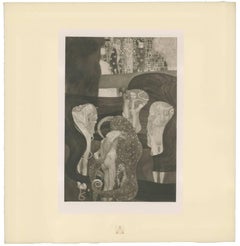
H.O. Miethke Das Werk folio "The Hope II" collotype print

H.O. Miethke Das Werk folio "The Hope II" collotype print

DAS WERK GUSTAV KLIMTS, a portfolio of 50 prints, ten of which are multicolor collotypes on chine colle paper laid down on hand-made heavy cream wove paper with deckled edges; under ...

Category

Vienna Secession Early 1900s Art
Materials

Paper

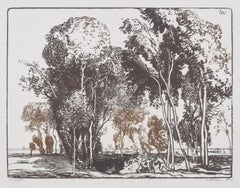
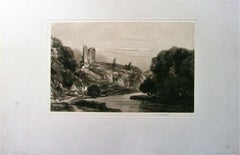
Knaresborough
Knaresborough

Knaresborough

By Sir Frank Short

Located in Plano, TX

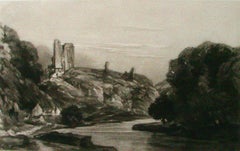
Knaresborough (after a watercolor by Peter De Wint, 1784-1849). c. 1904. Mezzotint. Hardie catalog 80 state ii. 7 7/16 x 11 3/8 (sheet 13 3/8 x 18). A very rich impression, printed o...

Category

Impressionist Early 1900s Art

Materials

Mezzotint

Two well-behaved clumber spaniels, seated on a Witney blanket

Two well-behaved clumber spaniels, seated on a Witney blanket

Located in London, GB

Painted with warmth and precision, this 1907 portrait by Oscar Brown depicts a pair of Clumber Spaniels posed atop a boldly striped Witney blanket. With their dense, feathered coats ...

Category

Realist Early 1900s Art

Materials

Canvas, Oil

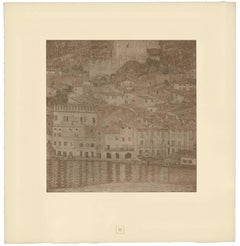
H.O. Miethke Das Werk folio "Schloss Kammer on Lake Attarsee II" collotype print

H.O. Miethke Das Werk folio "Schloss Kammer on Lake Attarsee II" collotype print

DAS WERK GUSTAV KLIMTS, a portfolio of 50 prints, ten of which are multicolor collotypes on chine colle paper laid down on hand-made heavy cream wove paper with deckled edges; under each of the 50 prints is a gold signet intaglio printed on the cream paper each of which Klimt designed for the publication as unique and relating to its corresponding image; H.O. Miethke, Editor-Publisher; k.k. Hof-und Staatsdruckerei, Printer; printed in a limited edition of 300 numbered plus several presentation copies; Vienna, 1908-1914. The idea of collaboration in the arts is anything but new; however it has so often been viewed and assessed as somehow devaluing the intrinsic worth of art. It’s as if it was a dirty secret to be hidden away. More so even than the eroticism explored by Klimt, which divided public opinion, the artistic avant-garde began to boldly flaunt artistic collaboration beginning in the 19th century- which gained steam in the first part of the 20th century- to become a driving vehicle of contemporary artistic creation. Viewed in this context, the folios of collotype prints published by H.O. Miethke in Vienna between 1908-1914 known as Das Werk Gustav Klimts, are important art documents worthy of as much consideration for their bold stand they take on established ways of thinking about artistic collaboration as they are for their breathtakingly striking images. 1908 is indeed a watershed moment in the history of art. To coincide with the 60th anniversary of the reign of Emperor Franz Joseph I, Kunstschau opened in Vienna in May of that year. It was there that Klimt delivered the inaugural speech. Speaking about the avant-garde group’s unifying philosophy of Gesamtkunstwerk, or the synthesis of the arts, Klimt shared his belief that the ideal means to bring artists and an audience together was via “work on major art projects.” It was at Kunstschau 1908 that Klimt first exhibited his most iconic painting, The Kiss, as well as The Sunflower, Water Snakes I and II and Danae. It was at Kunstschau 1908 that Das Werk Gustav Klimts was first available for purchase. Thanks to Galerie Miethke’s organization, Kunstschau 1908 was possible. Miethke’s pioneering art house had become Klimt’s exclusive art dealer and main promoter of his modernist vision. Paul Bacher and Carl Moll, a founding member with Klimt of the Vienna Secession, who all broke away during the rift in 1905, took stewardship of the gallery following the fallout with the Secession. Das Werk Gustav Klimts is a prime example of Miethke’s masterful and revolutionary approach to marketing art. Miethke’s innovative marketing strategy played to a penchant for exclusivity. The art gallery and publishing house utilized the press and art critics- such as Austria’s preeminent Art Historian, Hugo Haberfield, who became Director of the gallery in 1912- as a means of gaining publicity as well as maintaining effective public relations. Miethke used the grand exposition format to extend the art gallery’s market reach, cultivating their product’s prestige by stroking the egos of current art patrons while simultaneously creating accessibility for newcomers and others avid collectors to share a relative proximity to other wealthy and respected members of the art collecting community. Essentially, their approach paved the way for what is still the predominant means of marketing. Between 1908 and 1914, H.O. Miethke published a total of 5 installments of print folios of Klimt’s painted work, each comprising 10 prints. The series was limited in availability to 300 and purchase was arranged through subscription. Each issue was presented unbound in a gold embossed black paper folder. Included in the folio was a Title Page, a Justification page and a Table of Contents page itemizing each of the 10 printed works with details about their corresponding painted works as well as information about each work’s current owner. These folios were not comprehensive of Klimt’s work; but rather, they feature what he believed were his most important paintings from 1898-1913. Only 2 collotypes in each folio were multicolored. To punctuate the fact that Klimt, himself, was very much an active player in creating these printed works, he created square-shaped signets, unique to each collotype which were intaglio printed in gold ink at the bottom of the cream wove papers to which the chine collie papers were affixed.These signets relate thematically to their corresponding printed images and designate each of those images by their placement in the folio’s Table...

Category

Vienna Secession Early 1900s Art
Materials

Paper

Felician Myrbach (1853-1940) Poèmes magyars original drawing

Felician Myrbach (1853-1940) Poèmes magyars original drawing

By Felician Myrbach

Located in Paris, FR

Felician Myrbach (1853-1940) Poèmes magyars, Magyar poems bears the monogram "M" on the lower left, titled in the upper right Ink on paper 29,8 x 19,8 cm in good condition, the sheet is slightly yellowed In a modern frame : 33 x 23 cm This is an illustration project by Felician Myrbach for François Coppée's work, "Poèmes magyars". He leaves the space to be occupied by the text blank on the sheet and arranges his composition accordingly. It is interesting to see the artist imagine his drawing with this constraint. Felician Myrbach (also Felicien de Myrbach, Felician von Myrbach, from 1919 Freiherr von Rheinfeld) was born on 9 February 1853 in Zalishchyky, he died 14 January 1940 in Klagenfurt He was an Austrian painter, graphic designer and illustrator. He was a founding member of the Vienna Secession and the director of the Applied Arts School in Vienna (now the University of Applied Arts Vienna), and was instrumental in the creation of the Wiener Werkstätte. Myrbach's father was Franz Myrbach (1818–1882), the Administrator of Bukovina in 1865–70. His older brother Franz Xaver (1850–1919) was an economist and professor at the University of Innsbruck. He attended the Theresian Military Academy in 1868–71, graduating as a Leutnant, then at the Academy of Fine Arts, Vienna under August Eisenmenger. In 1875, he joined the 19th Feldjäger Battalion, and in 1877 became an Oberleutnant in the Military Geographic Institute, then, after campaigning in Bosnia in 1878, he taught drawing at the Infantry Cadet School in Vienna. He continued his artistic studies under C R Huber. In 1881, he went on military leave and moved to Paris, retiring totally from the military in 1884 as a Hauptmann, 2nd Class. He stayed in Paris until 1897, working as an illustrator, including illustrating the works of Alphonse Daudet, Victor Hugo and Jules Verne. Myrbach was a founding member of the Vienna Secession in 1897. In the same year, he became the a professor of the Applied Arts School at the Museum of Art and Industry; Arthur von Scala, another reformer Modernist, was made head of the Museum. In 1889, Myrbach became the director of the school. He brought an enthusiastic Modernist attitude and encouraged an integration between art, design and production. He added Koloman Moser and Josef Hoffmann to the staff, amongst other Secession artists. This would lead to the foundation of the Wiener Werkstätte in 1903. Myrbach leant more towards an aesthetic approach than von Scala, but both worked together to bring about their combined vision of successful, popular Austrian applied art. Myrbach was a voice for reform towards Modernist ideals in the School, which was started 1899 with the support of Alfred Roller, and completed by 1901.The reform of the school has been described as his "lasting merit". Ludwig Hevesi called Myrbach "probably the best [illustrator] in Vienna", partially for his work (with Moser) in the Secession magazine Ver Sacrum. Myrbach visited America on a state-funded study trip in 1904, part of which was to represent the Applied Arts School at the 1904 World...

Category

Art Nouveau Early 1900s Art

Materials

Ink

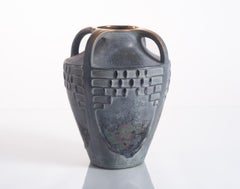
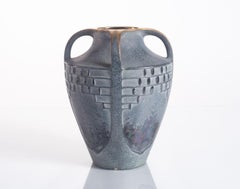
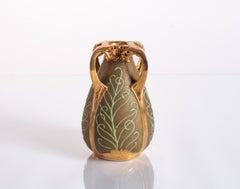
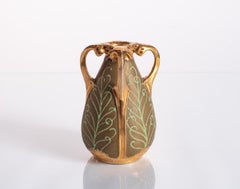
Secessionist Geometric Urn by Paul Dachsel c. 1900

Secessionist Geometric Urn by Paul Dachsel c. 1900

By Paul Dachsel

Located in Chicago, IL

Whereas earlier Art Nouveau pottery focused on asymmetrical design to represent the wild and unpredictable aspects of nature, forward-thinking artists such as Paul Dachsel and those of the Vienna Secession also explored the geometric elements of nature. Four-handled blue and gray urn...

Category

Art Nouveau Early 1900s Art

Materials

Ceramic

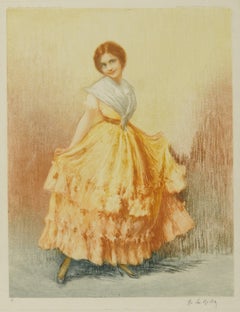
Heureux age! (Happy Age!)

Heureux age! (Happy Age!)

By Victor Mignot

Located in Fairlawn, OH

Heureux age! (Happy Age!) Etching and aquatint. c, 1900 Signed lower right in pencil Edition; 50 (14/50) Published by Edmund Sagot, Paris Sagot blindstamp, Lugt 2254, lower right Con...

Category

Art Nouveau Early 1900s Art

Materials

Aquatint

PS 250 The Night Bride Portrait -Chut les Barbizons! Ready to Hang French School

PS 250 The Night Bride Portrait -Chut les Barbizons! Ready to Hang French School

By bazevian 1

Located in Zofingen, AG

Portrait PS 250 The Night Bride Ophélia - Arthur Rimbaud I On the calm black water where the stars are sleeping White Ophelia floats like a great lily; Floats very slowly, lying in...

Category

Tonalist Early 1900s Art

Materials

Gesso, Canvas, Oil, Stretcher Bars

Frem Program Anno 1900 by Louis Moe, Danish Art Nouveau mermaid poster

Frem Program Anno 1900 by Louis Moe, Danish Art Nouveau mermaid poster

By Louis Moe

Located in Chicago, IL

Each country that approached the ideology of Art Nouveau clearly had their own unique contribution to the movement. The popularity of French Art Nouveau became globally recognized and produced in large numbers. While we recognize the rarity and extraordinary work of Italian Art Nouveau, or Stile Liberty, as it was known in that country, very little of this art survived and in very small quantities. What’s impossibly rare Scandinavian Art Nouveau...

Category

Art Nouveau Early 1900s Art

Materials

Lithograph

St John's College, Oxford watercolour by T B Miller

St John's College, Oxford watercolour by T B Miller

Located in London, GB

To see our other views of Oxford and Cambridge, scroll down to "More from this Seller" and below it click on "See all from this Seller" - or send us a message if you cannot find the ...

Category

Early 1900s Art

Materials

Watercolor

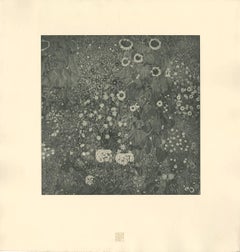
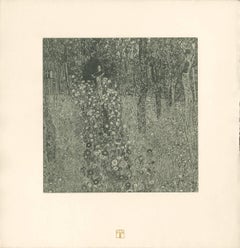
H.O. Miethke Das Werk folio "Cottage Garden with Crucifix" collotype print

H.O. Miethke Das Werk folio "Cottage Garden with Crucifix" collotype print

DAS WERK GUSTAV KLIMTS, a portfolio of 50 prints, ten of which are multicolor collotypes on chine colle paper laid down on hand-made heavy cream wove paper with deckled edges; under ...

Category

Vienna Secession Early 1900s Art
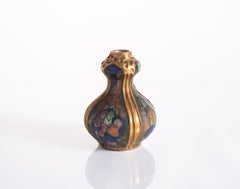
Materials

Paper

Original Cachou Lajaunie Vintage Art Nouveau Poster 1905 by Francisco Tamagno

Original Cachou Lajaunie Vintage Art Nouveau Poster 1905 by Francisco Tamagno

Located in Boca Raton, FL

Cachou Lajaunie is French advertisement from 1905 by the artist, Francisco Tamangno. Cachou Lajaunie is a licorice candy whose strong flavor was designed to disguise the smoker's breath. Tamangno's composition places the Victorian woman in the center. She holds the small tin...

Category

Early 1900s Art
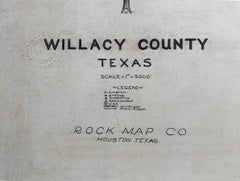
Materials

Lithograph

Portrait Drowned in Monet French School  241 READY TO HANG Chut les Barbizons!

Portrait Drowned in Monet French School 241 READY TO HANG Chut les Barbizons!

By bazevian 1

Located in Zofingen, AG

PS 241 Drowned in Monet Portrait of a woman with red dress. The background is the famous from Claude Monet Water lilies. ⭐Structural analysis:⭐ Such as Impressionist painting, the...

Category

Tonalist Early 1900s Art
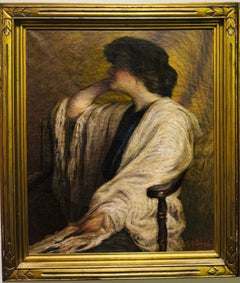
Materials

Oil, Acrylic, Gesso, Canvas, Stretcher Bars

Portrait Le temps des jonquilles French School READY TO HANG Chut les Barbizons!

Portrait Le temps des jonquilles French School READY TO HANG Chut les Barbizons!

By bazevian 1

Located in Zofingen, AG

Portrait PS 238 Le temps des Jonquilles Portrait of a woman with back naked. ⭐Structural analysis:⭐ Such as Impressionist painting, the subject is firstly a study of light on human...

Category

Tonalist Early 1900s Art
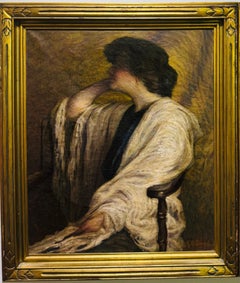
Materials

Oil, Acrylic, Gesso, Canvas, Stretcher Bars

Portrait La Dormante French School Impressionist Pop 231 READY TO HANG

Portrait La Dormante French School Impressionist Pop 231 READY TO HANG

By bazevian 1

Located in Zofingen, AG

Portrait PS 231 La Dormante Scene: a poetic closeup portrait with abstract background field. The background is created with series of drippings. Technique: oil, acrylic, and ink on...

Category

Tonalist Early 1900s Art
Materials

Oil, Acrylic, Mixed Media, Stretcher Bars

Portrait Elle(s) French School Impressionist Pop 248 READY TO HANG

Portrait Elle(s) French School Impressionist Pop 248 READY TO HANG

By bazevian 1

Located in Zofingen, AG

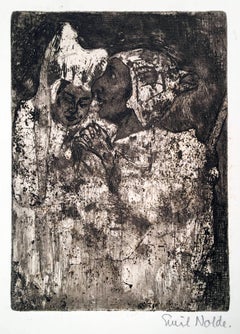
French School - PS 248 Elle(s) Portrait of two women, from La Belle époque. Technique: oil, acrylic, and ink on old book pages on wooden frame 55x55cm ■■ 21,6x21,6 inch ⭐Sustainab...

Category

Tonalist Early 1900s Art
Materials

Oil, Acrylic, Gesso, Mixed Media, Stretcher Bars

Portrait Les Quatres coins Artist French School READY TO HANG Chut les Barbizons

Portrait Les Quatres coins Artist French School READY TO HANG Chut les Barbizons

By bazevian 1

Located in Zofingen, AG

Portrait PS 168 Les Quatres coins du coeur. Closeup - portrait of a woman head ⭐Structural analysis:⭐ Such as Impressionist painting, the subject is firstly a study of light on hu...

Category

Tonalist Early 1900s Art
Materials

Oil, Acrylic, Gesso, Canvas, Stretcher Bars

Maurice Bouval Art Nouveau Gilt Bronze Sculpture

Maurice Bouval Art Nouveau Gilt Bronze Sculpture

Located in Dallas, TX

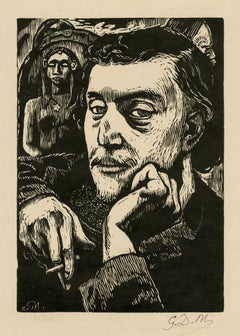
Maurice Bouval (Fr. 1863-1916) Art Nouveau sculpture. French Art Nouveau Gilt-Bronze Figure of a Woman Cast by E. Colin & Cie., Paris, circa 1900 Possibly Pandora, modeled rising ou...

Category

Art Nouveau Early 1900s Art
Materials

Bronze