By Stefanie Schneider
Located in Morongo Valley, CA
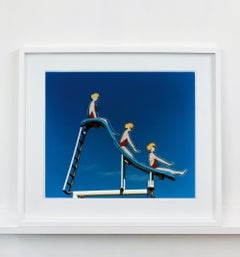
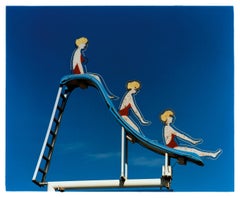
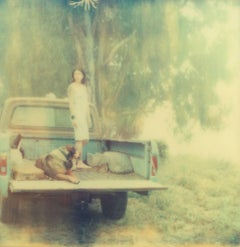
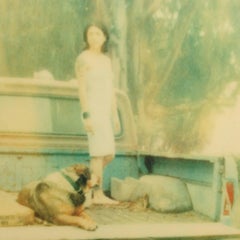
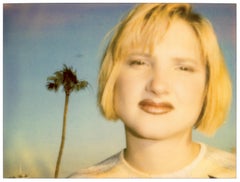
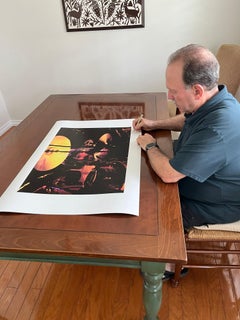
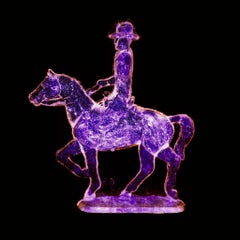
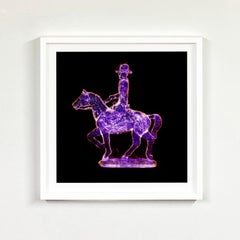
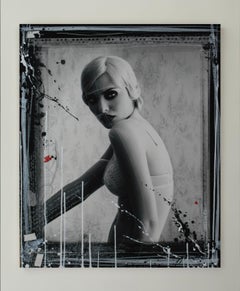
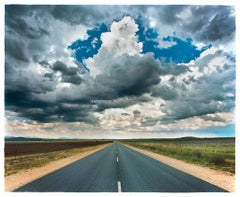
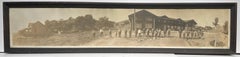
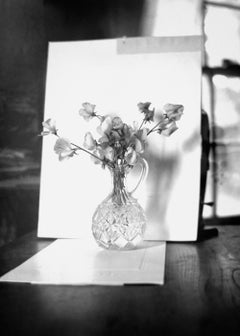
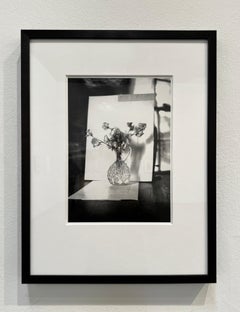
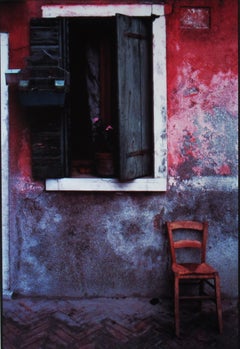
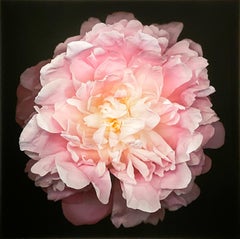
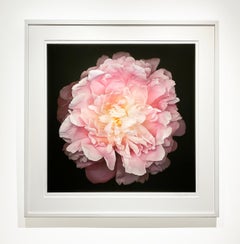
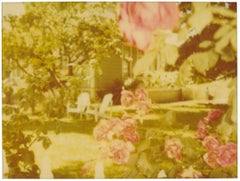
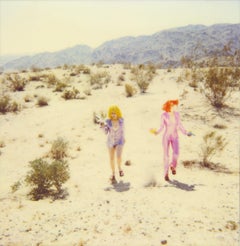
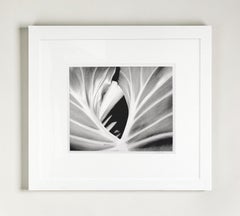
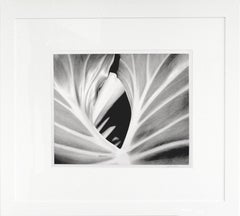
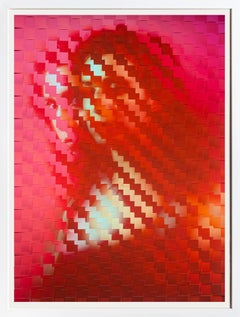
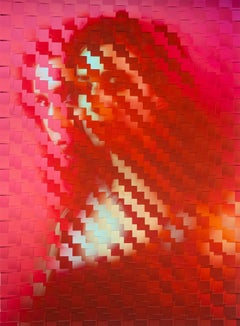
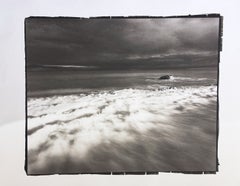
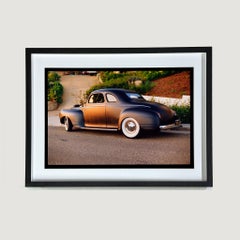
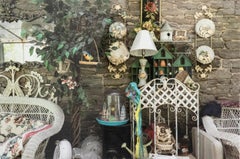
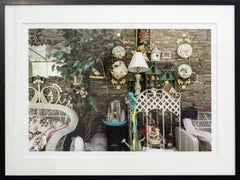
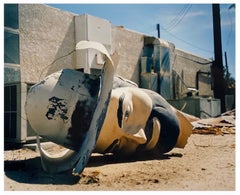
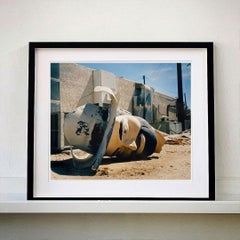
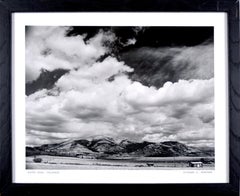
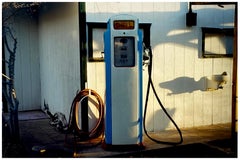
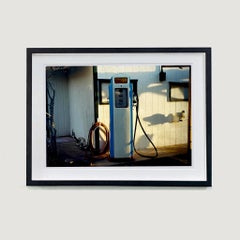
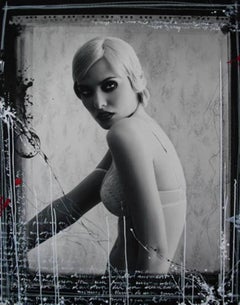
Outtake (Wastelands) - 2003
Edition of 5,
128x125cm,
analog C-Print, hand-printed by the artist on Fuji Crystal Archive Paper,
based on the Polaroid,
Artist inventory Number 819.01,
complete with certificate and signature label
Not mounted
For sale is a piece from the Wastelands series. purchase the 2nd edition and have it unmounted.
Exhibited:
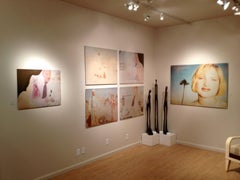
Wastelands, Städtische Galerie, Waldkraiburg, Germany (S) (2006) / Wastelands, Zephyr, Mannheim, Germany (S) (catalog) (2006) Wastelands, Kunstverein Recklinghausen, Germany (S) (2007)
Published in: WASTELANDS published by edition braus, Wachter Verlag, Heidelberg, 2006 (monograph)
Reality with the Tequila:
Stefanie Schneider’s Fertile Wasteland
by James Scarborough
“How much more than enough
for you for I for both of us darling?”
(E. E. Cummings)
Until he met her, his destiny was his own. Petty and inconsequential but still his own. He was cocksure and free, young and unaccountable, with dark hair and aquiline features. His expression was always pensive, a little troubled, but not of a maniacal sort. He was more bored than anything else. With a heart capable of violence.
Until she met him, she was pretty but unappreciated. Her soul had regis- tered no seismic activity. Dust bowl weary, she’d yet to see better days. A languorous body, a sweet face with eyes that could be kind if so inclined.
Until she met him, she had not been inclined.
It began when he met her. She was struck in an instant by his ennui. The sum of their meeting was greater than the imbroglios and chicaneries of their respective existences. He was struck by the blank slate look in her eyes. They walked, detached and focused on the immediate, obscenely unaware of pending change across a terrain of mountainous desert, their eyes downcast and world-weary, unable to account for the buoyant feeling in her heart. His hard-guy shtick went from potentiality to ruse. The gun was not a weapon but a prop, a way to pass time. Neither saw the dark clouds massing on the horizon.
They found themselves alone in the expanses of time, unaware of the calamity that percolated even as they posed like school kids for the pic- tures. Happiness brimmed in that wild terrain. Maybe things were begin- ning to look up.
That’s when the shooting started…
Stefanie Schneider assumes that our experience of lived reality (buying groceries, having a relationship with someone, driving a car) does not correspond to the actual nature of lived reality itself, that what we think of as reality is more like a margarita without the tequila.
Stefanie Schneider’s reality is reality with the tequila. She does not abol- ish concepts that orient us, cause and effect, time, plot, and story line, she just plays with them. She invites us to play with them, too. She offers us a hybrid reality, more amorphous than that with a conventional subject, verb, and predicate. Open-ended, this hybrid reality does not resolve itself. It frustrates anyone with pedestrian expectations but once we inebriate those expectations away, her work exhilarates us and even the hangover is good. An exploration of how she undermines our expectation of what we assume to be our lived reality, the reasons why she under- mines our expectations, and the end-result, as posited in this book, will show how she bursts open our apparatus of perception and acknowl- edges life’s fluidity, its density, its complexity. Its beauty.
She undermines expectations of our experience of reality with odd, other- worldly images and with startling and unexpected compressions and expansions of time and narrative sequence. The landscape seems familiar enough, scenes from the Old West: broad panoramic vistas with rolling hills dotted with trees and chaparral, dusty prairies with trees and shrubs and craggy rocks, close-up shots of trees. But they’re not familiar. These mis-en-scenes radiate an unsettling Picasso Blue Period...
Category
Early 2000s Contemporary Black and White Photography
MaterialsArchival Paper, Photographic Paper, C Print, Color, Polaroid