Ceramic Sculptures

3,333 Results
to
370
2,321
442
238
114
218
Overall Width
to
Overall Height
to
27
52
761
2,498
3
3
11
19
13
83
144
42
81
46
14
1,424
416
359
142
41
38
22
21
19
6
6
2
640
616
366
330
280
272
238
233
146
135
120
115
114
109
108
80
74
73
71
70
1,845
1,058

Use search to find more

113
67
56
50
43

Use search to find more

Medium: Ceramic
"Beaded Flower 12" Oversized stoneware Beads, Ceramic, Flora Hanging Sculpture

"Beaded Flower 12" Oversized stoneware Beads, Ceramic, Flora Hanging Sculpture

By Jeff Rubio

Located in Philadelphia, PA

"Beaded Flower 12" is an original piece by Jeff Rubio made from stoneware beads, glaze, rope, metal hardware, steel paperclip. This pieces measures 30"h x 7.5"w x 2.5"d and comes wit...

Category

21st Century and Contemporary Contemporary Ceramic Sculptures

Materials

Metal, Steel

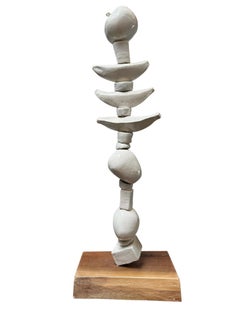
Organic Rhythm III - Tall white ceramic sculpture

Organic Rhythm III - Tall white ceramic sculpture

By Jessamyn Go

Located in East Quogue, NY

Elegant tall hand-coiled and pinched white ceramic vessel sculpture by Jessamyn Go. Jessamyn Go's work is deeply rooted in the visceral, meditative experience of working with clay. ...

Category

2010s Abstract Ceramic Sculptures

Materials

Ceramic, Stoneware, Glaze

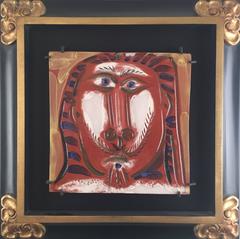
Pablo Picasso, "Man's Head with Long Hair", ceramic

Pablo Picasso, "Man's Head with Long Hair", ceramic

By Pablo Picasso

Located in Chatsworth, CA

This piece is an O.P. square plaque by Pablo Picasso, done from December 1968 to January 1969. It is made with red earthenware clay, engobe ground and engraving enhanced with oxides...

Category

1960s Modern Ceramic Sculptures

Materials

Ceramic

Louise Bourgeois, Je t'aime - Limited Edition Porcelain Plate, Abstract Art

Louise Bourgeois, Je t'aime - Limited Edition Porcelain Plate, Abstract Art

By Louise Bourgeois

Located in Hamburg, DE

Louise Bourgeois (French-American, 1911-2010) Je t'aime, 2005/2023 Medium: Fine bone china plate Dimensions: 26.7 diameter (10.5 in) Edition of 250: Not signed, not numbered (Printed...

Category

21st Century and Contemporary Abstract Ceramic Sculptures

Materials

Porcelain

Daydreamer-panda-original realism wildlife sculpture painting - contemporary Art

Daydreamer-panda-original realism wildlife sculpture painting - contemporary Art

By Henk Jan Sanderman

Located in London, Chelsea

We offer complimentary worldwide shipping and cover all tariffs and import taxes for this artwork. This exceptional artwork is currently on display and available for sale at Signet C...

Category

21st Century and Contemporary Modern Ceramic Sculptures

Materials

Metal

This is Me (~35% OFF LIST PRICE - LIMITED TIME ONLY)

This is Me (~35% OFF LIST PRICE - LIMITED TIME ONLY)

By Hannah Schelb

Located in Kansas City, MO

Hannah Schelb This is Me 2025 Ceramic, Glaze, Cone 5 Oxidation, Aluminum Wire, Kanthal Wire 26 x 24 x 38 inches (66 x 63.5 x 96.5 cm) Signed COA provided *Assembly required. Instruc...

Category

2010s Contemporary Ceramic Sculptures

Materials

Wire

White Ceramic Sculpture with Texture, 2025 - 'Milk Jug'

White Ceramic Sculpture with Texture, 2025 - 'Milk Jug'

By Laura Pasquino

Located in Bruxelles, BE

Created especially for Timeless Remnants — the collaborative exhibition between Grège Gallery and CWART — Milk Jug embodies Laura Pasquino’s deeply personal approach to contemporary ...

Category

2010s Contemporary Ceramic Sculptures

Materials

Ceramic

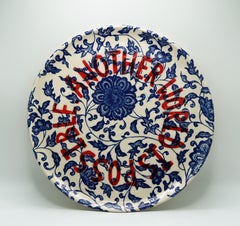
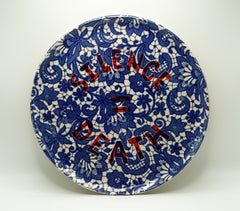
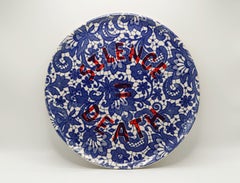
Eat What’s on Your Plate #5 (Another World is Possible)

Eat What’s on Your Plate #5 (Another World is Possible)

By Alex Hodge 1

Located in Miami Beach, FL

(Another World is Possible) This piece leaves the series on a high and hopeful note by asserting that there is another way; reminding us to dream and more importantly to put action t...

Category

2010s Other Art Style Ceramic Sculptures

Materials

Porcelain

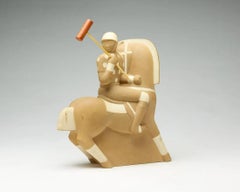
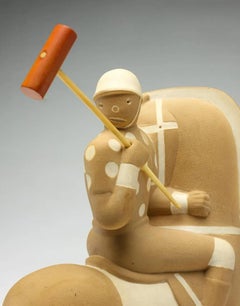
Early 20th Century Ceramic Sculpture of a Polo Player and Horse

Early 20th Century Ceramic Sculpture of a Polo Player and Horse

By Waylande Gregory

Located in Beachwood, OH

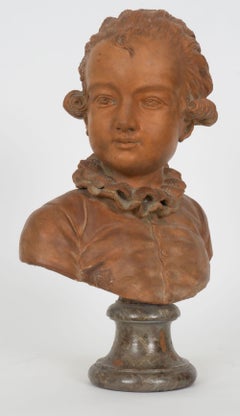
Waylande Gregory (American, 1905-1971) Polo Player, c. 1930s Ceramic Inscribed signature on bottom 11 x 8.5 inches Waylande Gregory was considered a major American sculptor during the 1930's, although he worked in ceramics, rather than in the more traditional bronze or marble. Exhibiting his ceramic works at such significant American venues for sculpture as the Whitney Museum of American Art in New York City and at the venerable Pennsylvania Academy of the Fine Arts in Philadelphia, he also showed his ceramic sculptures at leading New York City galleries. Gregory was the first modern ceramist to create large scale ceramic sculptures, some measuring more than 70 inches in height. Similar to the technique developed by the ancient Etruscans, he fired his monumental ceramic sculptures only once. Gregory was born in 1905 in Baxter Springs, Kansas and was something of a prodigy. Growing up on a ranch near a Cherokee reservation, Gregory first became interested in ceramics as a child during a native American burial that he had witnessed. He was also musically inclined. In fact, his mother had been a concert pianist and had given her son lessons. At eleven, he was enrolled as a student at the Kansas State Teacher's College, where he studied carpentry and crafts, including ceramics. Gregory's early development as a sculptor was shaped by the encouragement and instruction of Lorado Taft, who was considered both a major American sculptor as well as a leading American sculpture instructor. In fact, Taft's earlier students included such significant sculptors as Bessie Potter Vonnoh and Janet Scudder. But, Taft and his students had primarily worked in bronze or stone, not in clay; and, Gregory's earliest sculptural works were also not in ceramics. In 1924, Gregory moved to Chicago where he caught the attention of Taft. Gregory was invited by Taft to study with him privately for 18 months and to live and work with him at his famed "Midway Studios." The elegant studio was a complex of 13 rooms that overlooked a courtyard. Taft may have been responsible for getting the young man interested in creating large scale sculpture. However, by the 1920's, Taft's brand of academic sculpture was no longer considered progressive. Instead, Gregory was attracted to the latest trends appearing in the United States and Europe. In 1928 he visited Europe with Taft and other students. "Kid Gregory," as he was called, was soon hired by Guy Cowan, the founder of the Cowan Pottery in Cleveland, Ohio, to become the company's only full time employee. From 1928 to 1932, Gregory served as the chief designer and sculptor at the Cowan Pottery. Just as Gregory learned about the process of creating sculpture from Taft, he literally learned about ceramics from Cowan. Cowan was one of the first graduates of Alfred, the New York School of Clayworking and Ceramics. Alfred had one of the first programs in production pottery. Cowan may have known about pottery production, but he had limited sculptural skills, as he was lacking training in sculpture. The focus of the Cowan Pottery would be on limited edition, table top or mantle sculptures. Two of the most successful of these were Gregory's "Nautch Dancer," (fig. 1) and his "Burlesque Dancer," (fig. 2). He based both sculptures on the dancing of Gilda Gray, a Ziegfield Follies girl. Gilda Gray was of Polish origin and came to the United States as a child. By 1922, she would become one of the most popular stars in the Follies. After losing her assets in the stock market crash of 1929, she accepted other bookings outside of New York, including Cleveland, which was where Gregory first saw her onstage. She allowed Gregory to make sketches of her performances from the wings of the theatre. She explained to Gregory, "I'm too restless to pose." Gray became noted for her nautch dance, an East Indian folk dance. A nautch is a tight, fitted dress that would curl at the bottom and act like a hoop. This sculpture does not focus on Gray's face at all, but is more of a portrait of her nautch dance. It is very curvilinear, really made of a series of arches that connect in a most feminine way. Gregory created his "Burlesque Dancer" at about the same time as "Nautch Dancer." As with the "Nautch Dancer," he focused on the movements of the body rather than on a facial portrait of Gray. Although Gregory never revealed the identity of his model for "Burlesque Dancer," a clue to her identity is revealed in the sculpture's earlier title, "Shimmy Dance." The dancer who was credited for creating the shimmy dance was also Gilda Gray. According to dance legend, Gray introduced the shimmy when she sang the "Star Spangled Banner" and forgot some of the lyrics, so, in her embarrassment, started shaking her shoulders and hips but she did not move her legs. Such movement seems to relate to the "Burlesque Dancer" sculpture, where repeated triangular forms extend from the upper torso and hips. This rapid movement suggests the influence of Italian Futurism, as well as the planar motion of Alexander Archipenko, a sculptor whom Gregory much admired. The Cowan Pottery was a victim of the great depression, and in 1932, Gregory changed careers as a sculptor in the ceramics industry to that of an instructor at the Cranbrook Academy in Bloomfield Hills, Michigan. Cranbrook was perhaps the most prestigious place to study modern design in America. Its faculty included the architect Eliel Saarinen and sculptor Carl Milles. Although Gregory was only at Cranbrook for one and one half years, he created some of his finest works there, including his "Kansas Madonna" (fig. 3). But, after arriving at Cranbrook, the Gregory's had to face emerging financial pressures. Although Gregory and his wife were provided with complimentary lodgings, all other income had to stem from the sale of artworks and tuition from students that he, himself, had to solicit. Gregory had many people assisting him with production methods at the Cowan Pottery, but now worked largely by himself. And although he still used molds, especially in creating porcelain works, many of his major new sculptures would be unique and sculpted by hand, as is true of "Kansas Madonna." The scale of Gregory's works were getting notably larger at Cranbrook than at Cowan. Gregory left the surface of "Kansas Madonna" totally unglazed. Although some might object to using a religious title to depict a horse nursing its colt, it was considered one of Gregory's most successful works. In fact, it had a whole color page illustration in an article about ceramic sculpture titled, "The Art with the Inferiority Complex," Fortune Magazine, December, 1937. The article notes the sculpture was romantic and expressive and the sculpture was priced at $1,500.00; the most expensive sculpture in the article. Gregory was from Kansas, and "Kansas Madonna" should be considered a major sculptural document of Regionalism. Gregory and his wife Yolande moved to New Jersey in the summer of 1933. And the artist began construction on his new home in the Watchung Mountains of Bound Brook (Warren today) in 1938. His enormous, custom kiln was probably constructed at the start of 1938. Gregory's new sculptures were the largest ceramic sculptures in western art, in modern times. To create these works of ceramic virtuosity, the artist developed a "honeycomb" technique, in which an infrastructure of compartments was covered by a ceramic "skin." Science and atomic energy were a theme in Gregory's most significant work, the "Fountain of the Atom" (fig. 4), at the 1939 New York's World Fair. This major work included twelve monumental ceramic figures at the fairground entrance from the newly constructed railway entrance, giving the work great visibility and prominence. The framework of the fountain itself was of steel and glass bricks. It consisted of a bluish green pool which was sixty five feet in diameter. Above it were two concentric circular tiers, or terraces, as Gregory called them; the first wider than the second. On the first terrace were eight "Electrons," comprised of four male and four female terra cotta figures, each approximately 48 inches high. These relate to the valance shell of the atom. Above them on a narrower terrace, were the much larger and heavier terra cotta figures depicting the four elements, each averaging about 78 inches in height and weighing about a ton and a half. Of the four, "Water" and "Air" were male, while "Earth" and "Fire" were female. This terrace represents the nucleus of the atom. In the center of the fountain, above the "Elements," was a central shaft comprised of sixteen glass tubes from which water tumbled down from tier to tier. At the top, a colorful flame burned constantly. The glass block tiers were lit from within, the whole creating a glowing and gurgling effect. Since the fair was temporary, the figures could be removed after its closing. But the credit for the design of the structure of the fountain belongs to collaborator Nembhard Culin, who was responsible for several other structures on the fair grounds as well. Although Gregory created a figure of "Fire" for the "Fountain of the Atom," he also executed a second, slightly smaller but more defined version which he exhibited at various locations (including Cranbrook, Baltimore Museum, etc.) in 1940-1941, during the second year of the fair (fig.5). Measuring 61 inches in height, "Fire" may be a metaphor for sexual energy, as well as atomic energy. Gregory stated, "Fire is represented by an aquiline female figure being consumed in endless arabesques of flame." Portraiture was also a significant focus of Gregory's sculpture. Gregory produced many commissioned portraits of local people as well as celebrities. He created Albert Einstein's portrait from life (fig. 6, ca. 1940) after Einstein had seen Gregory's "Fountain of the Atom." He also sculpted some of the leading figures in entertainment, including 2 sculptures of Henry Fonda, who became a personal friend. Gregory also sculpted a series of idealized female heads, both in terra cotta and in porcelain. These include "Girl with Olive" (ca. 1932) and "Cretan Girl;"(ca. 1937) both are very reductive and almost abstract works that call to mind Constantine Brancusi's "Mademoiselle Pogany" (1912, Philadelphia Museum of Art). But perhaps one of his most original female heads is "Head of a Child" (fig. 7, ca. 1933), a sensitive white glazed terra cotta portrayal with elaborately crafted braded hair, was originally created as one of a pair. Gregory also produced sculptural works for the Works Progress Administration. The WPA was a work relief project that greatly helped artists during the great depression. Founded by the Federal Government in 1935, an estimated 2500 murals were produced. Among these public works were the iconic post office murals. But, among the painted murals were also sculptural relief murals including Gregory's "R.F.D.," 1938, for the Columbus, Kansas Post Office. But, Gregory's largest WPA relief...

Category

1930s Ceramic Sculptures

Materials

Ceramic

Space and Time I : small interior sculpture out of clay

Space and Time I : small interior sculpture out of clay

By Katie Yang

Located in New York, NY

Katie Yang's abstract ceramic sculptures delve into the unknowable nature of our world, exploring the interplay between control and chance. Influenced by artistic traditions from bot...

Category

2010s Abstract Ceramic Sculptures

Materials

Porcelain

Frammento

Frammento

By Jacopo SCASSELLATI

Located in Atlanta, GA

Jacopo Scassellati was born in Sassari (Sardinia) in 1989 where he still resides today. His family is originally from Umbria. Very early on, he displayed a strong predisposition for ...

Category

21st Century and Contemporary Modern Ceramic Sculptures

Materials

Ceramic

Wild Horses, Huichol Sculpture, Ceramic and Glass, by CHROMA aka Rick Wolfryd

Wild Horses, Huichol Sculpture, Ceramic and Glass, by CHROMA aka Rick Wolfryd

Located in Cuauhtemoc, Ciudad de México

ALTERATION ART . . . is a collaboration process between Rick Wolfryd, fine artist and art dealer with over 40 years experience, and various Mexican Huichol artists and Mexican Huicho...

Category

2010s Contemporary Ceramic Sculptures

Materials

Ceramic, Glass

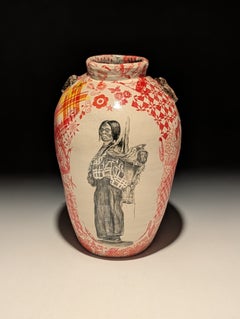
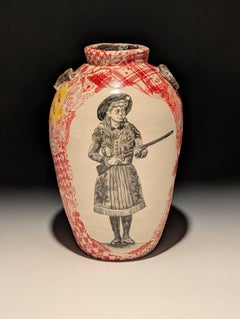
Sacajawea and Annie Oakley Large Ceramic Vase

Sacajawea and Annie Oakley Large Ceramic Vase

By Jesse Albrecht

Located in Bozeman, MT

Albrecht was half way through his MFA program (ceramics) at the University of Iowa when he was deployed to Iraq (03-04 medic/security work). His work explores the collision of war m...

Category

2010s Contemporary Ceramic Sculptures

Materials

Clay, Stoneware, Glaze

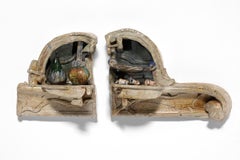
"THE MANTEL SERIES" John Glick Stoneware Objets d'Art Intimate Indoor/Outdoor

"THE MANTEL SERIES" John Glick Stoneware Objets d'Art Intimate Indoor/Outdoor

By John Glick 1

Located in Detroit, MI

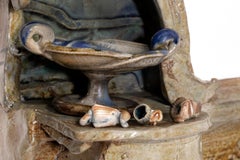
SALE ONE WEEK ONLY John Glick is well-known for his beautifully rendered functional pieces of art. His decorative pieces, especially his large pots, are breathtakingly powerful objects. Glick's creative genius, however, is most exquisitely shown in this unique grouping of objets d'art. The Wall Hanging has a lovely classical scroll shelf. The objets on the shelf include an apple and pear - both fruits frequently rendered by artists from the Dutch Masters to Cezanne because of their perfectly balanced shape and rich colors. In addition is a small Greek or Roman styled dish used as an oil lamp. The other three objets are mysterious twisted tube-like organic shapes. John Glick, at one of his richest, creative bests. The objets are of various sizes, movable and can be displayed as desired. The size given is the overall size of both pieces and the objets d'art. "The works in John Glick’s “Mantel Series” are still life tableaux comprised of ordinary, yet intriguing objects that imply a history of people interacting with objects and each other over time. Imagine a lettr or poem from a loved one, once read, tucked among other fabourite things for safekeeping. Or a salty treasure carried in a dampened pocket and later deposited on a cottage shelf to dry, crackle and change. In essence, the mantels hold suggestive collections in which most people can find a part of themselves a link to a personal memory and a connection to a lost moment in time. His body of work, The Mantel Series, was partially inspired by a memory of a salt box that hung near his grandmother’s kitchen wood stove. For Glick, the unassuming little box, with its pleasing enigmatic shape and wooden lid, conjured pleasant boyhood memories, nostalgia for home and hearth, and vivid awareness of history. Upon his wall-based mantels, the artist placed a well-honed repertoire of distinct objects, all deftly crafted of clay, that become characters in his unspoken drama, each form playing off the others in the ensemble.” Plum Tree Pottery...

Category

1990s American Modern Ceramic Sculptures

Materials

Ceramic, Glaze

Ceramic Cloud Box - White Porcelain Box with Black and Orange Detail

Ceramic Cloud Box - White Porcelain Box with Black and Orange Detail

By Sam Chung

Located in East Quogue, NY

This hand-built lidded vessel by ceramic artist Sam Chung exemplifies his signature fusion of functional form and stylized abstraction. The “Cloud Box” features Chung’s iconic floati...

Category

2010s Contemporary Ceramic Sculptures

Materials

Porcelain, Glaze

Passage VII - intricate, hand-shaped, porcelain clay wall relief

Passage VII - intricate, hand-shaped, porcelain clay wall relief

By Paula Murray

Located in Bloomfield, ON

In her Quebec studio, ceramic artist Paula Murray uses her own recipe for porcelain clay that she hand-shapes into beautiful and intricate pieces. Inspired by forms and patterns found in nature, Murray’s work often reflects the deeply spiritual connection between humans and the natural world. The “Passage” series of vessels are boat-like in form. Murray does own a collection of canoes. “Transition and pods are other titles I used with this series- the idea of leaving one place - for another; the shell that held a life that is no longer of use...” Paula Murray She has received many honours and international awards and was elected into the RCA in 2006. Murray’s work has been gifted by the Canadian government to dignitaries such as US President George W. Bush and UN Secretary Kofi Annan. Murray’s pieces can be found in private and public collections including the Canadian Museum of Civilization, the Banff Centre, the Gardiner Museum, Musée national des beaux-arts du Québec, the Official Residence of the Prime Minister in Canada and Canada House...

Category

2010s Contemporary Ceramic Sculptures

Materials

Porcelain

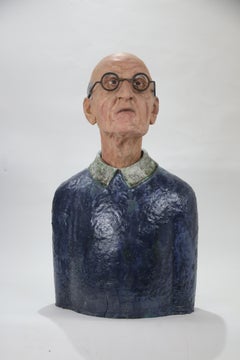
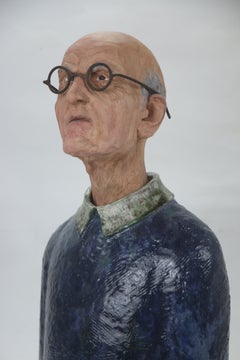
Large Terracotta Head”

Large Terracotta Head”

By Alexander Ney

Located in Southampton, NY

Original signed terracotta sculpture by Alexander Ney (Russian-American, 1939-2023) featuring his signature perforated surface texture and abstract stylized head form. The piece show...

Category

1980s Post-Modern Ceramic Sculptures
Materials

Terracotta

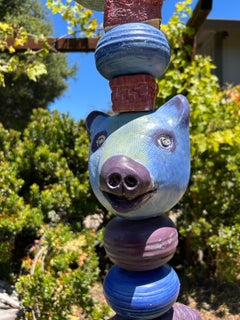
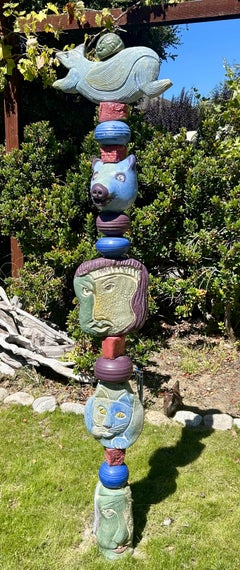
Totem in Blues
Totem in Blues

Totem in Blues

By Marc Zimmerman

Located in Carmel, CA

Cool colors and fun inventive faces and animals are the essence of this 64” totem.

Category

2010s Modern Ceramic Sculptures
Materials

Ceramic

Loops of Eternity II. Stonewear, 42х17x15 cm

Loops of Eternity II. Stonewear, 42х17x15 cm

By Elina Titane

Located in Riga, LV

Elina Titane (1978) Latvia, Riga Elina Titane represents the younger generation of modern ceramic art in Latvia. Emotional and sensually high-strung ceramic artworks by Elina Titan...

Category

Early 2000s Abstract Ceramic Sculptures

Materials

Stoneware

Green Celadon Ribbed Porcelain Textured Ceramic Vessel with Fold

Green Celadon Ribbed Porcelain Textured Ceramic Vessel with Fold

By Mary Jaffe

Located in East Quogue, NY

Ribbed texture porcelain vessel with fold, green celadon glaze Size: 4.5” H x 3-1/2”x 3” Mary Jaffe creates functional and sculptural ceramics inspired by vast landscapes and the s...

Category

2010s Abstract Ceramic Sculptures

Materials

Porcelain, Glaze

Pharrell Monumental Jar by Roberto Lugo (INV #NP4034)

Pharrell Monumental Jar by Roberto Lugo (INV #NP4034)

By Roberto Lugo

Located in Morton Grove, IL

Amazing and rare vase from Roberto Lugo featuring the iconic artist Pharrell Williams! 14 x 9 x 9" clay and glaze Comes with Certificate of Authenticity. Rare. Bio- Roberto Lugo (b...

Category

2010s Contemporary Ceramic Sculptures

Materials

Clay

"Il Mio Gatto", Contemporary, Ceramic, Figurative, Mixed Media, Sculpture, Paint

"Il Mio Gatto", Contemporary, Ceramic, Figurative, Mixed Media, Sculpture, Paint

By Alessandro Gallo

Located in St. Louis, MO

“Animals carry strong associations that make them ideal in portraying, sometimes humorously, our basic disposition or nature. Some animals have a long cultural history while others d...

Category

2010s Contemporary Ceramic Sculptures

Materials

Ceramic, Stoneware, Paint, Mixed Media

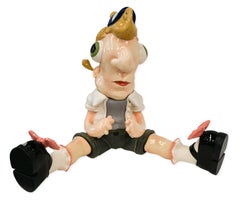
"Ember Unbound", Contemporary Wood-Fired Stoneware Vessel, Ceramic, Sculpture

"Ember Unbound", Contemporary Wood-Fired Stoneware Vessel, Ceramic, Sculpture

By Heather A. F. Binder

Located in Franklin, MA

Heather Binder's, "Ember Unbound" is a contemporary wood-fired stoneware vessel that explores the dynamic interplay of fire, movement, and organic form. Measuring 5 x 10 x 9 inches i...

Category

2010s Contemporary Ceramic Sculptures
Materials

Ceramic, Clay, Stoneware

Ceramic sculptures for sale on 1stDibs.

Find a wide variety of authentic Ceramic sculptures available on 1stDibs. While artists have worked in this medium across a range of time periods, art made with this material during the 21st Century is especially popular. If you’re looking to add sculptures created with this material to introduce a provocative pop of color and texture to an otherwise neutral space in your home, the works available on 1stDibs include elements of blue, purple, orange, red and other colors. There are many well-known artists whose body of work includes ceramic sculptures. Popular artists on 1stDibs associated with pieces like this include Pablo Picasso, Jeff Koons, Tony Moore, and Melanie Sherman. Frequently made by artists working in the Contemporary, Abstract, all of these pieces for sale are unique and many will draw the attention of guests in your home. Not every interior allows for large Ceramic sculptures, so small editions measuring 0.12 inches across are also available
Read More

At Hosfelt Gallery, Bertoia Masterworks Complement Dynamic Contemporary Art

For nearly three decades, San Francisco–based Todd Hosfelt has curated against the grain — with a show on the legendary modernist Harry Bertoia the latest case in point.

This Weathered-Steel Sculpture Distills a Form of Protest into a Minimalist Monument

Part of Alejandro Vega Beuvrin’s “Barricada” series, the work is a subversive tribute to the street smarts of citizen activists.

How the Chunky, Funky Ceramics of 5 Mid-Century American Artists Balanced Out Slick Modernism

Get to know the innovators behind the pottery countercultural revolution.

Art Brings the Drama in These Intriguing 1stDibs 50 Spaces

The world’s top designers explain how they display art to elicit the natural (and supernatural) energy of home interiors.

Chryssa’s 1962 Neon Sculpture Was Way ahead of the Art-World Curve

By working with lettering, neon and Pop imagery, Chryssa pioneered several postmodern themes at a time when most male artists detested commercial mediums.

How to Spot a Fake KAWS Figure

KAWS art toys have developed an avid audience in recent decades, and as in any robust collectible market, counterfeiters have followed the mania. Of course, you don’t have to worry about that on 1stDibs, where all our sellers are highly vetted.

A Giant Wedding Cake Has Us Looking at Portuguese Tiles in a New Light

At Waddesdon Manor, artist Joana Vasconcelos has installed a three-tiered patisserie inspired by the narrative tile work of her homeland. We take a look at the cake sculpture and how Portuguese tiles have been used in architecture from the 17th century to today.

These Soft Sculptures Are Childhood Imaginary Friends Come to Life
Miami artist and designer Gabriela Noelle’s fantastical creations appeal to the Peter Pan in all of us.