Academic Art

ACADEMIC STYLE

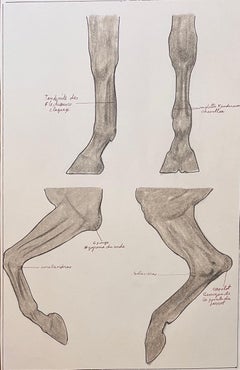
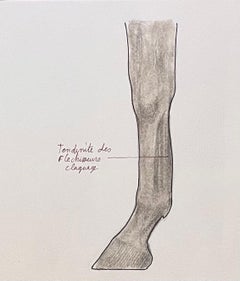
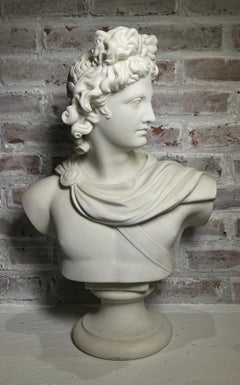
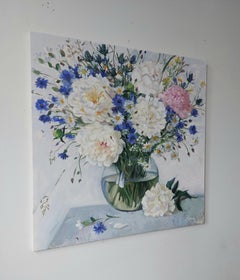
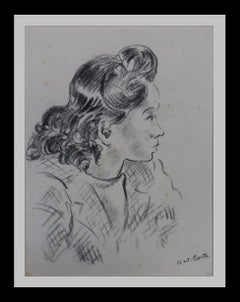
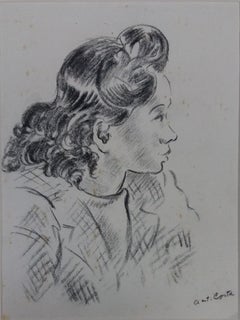
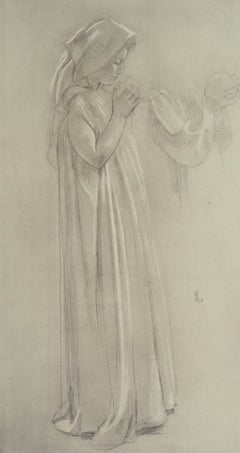
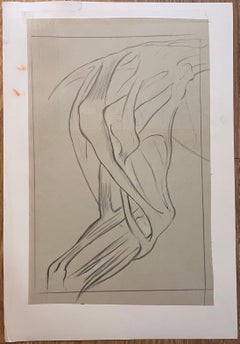
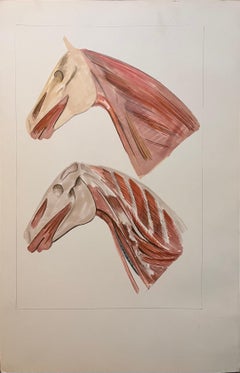
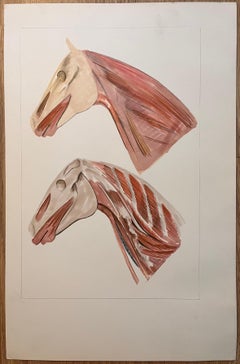
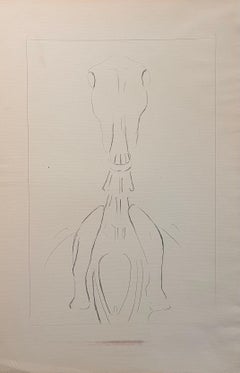
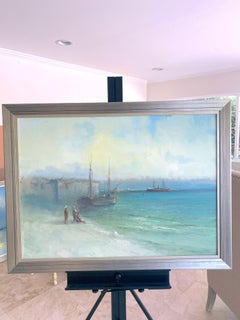
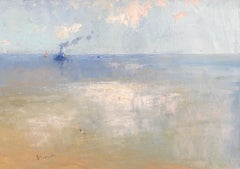
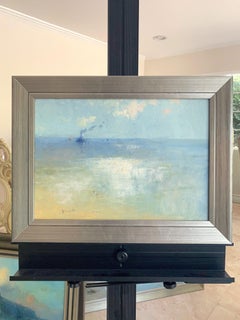
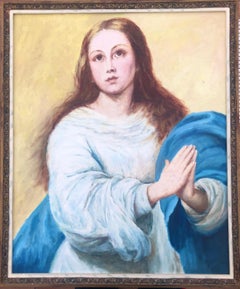
During the Renaissance, the first European fine art academies were established in Italy and would guide the style and standards of visual culture in the following centuries. Academic art became dominant across the continent in the 17th century, with artists coming together to offer instruction in this style of painting and sculpture

The academic art period represented a significant change from the previous era when painters, sculptors and other artists were part of guilds and seen more as artisans than purveyors of culture. While patronage from the elite and the church remained pivotal, young artists were able to support themselves for the first time through academic exhibitions and an independent marketplace. The leading academies included the French Académie Royale de Peinture et de Sculpture founded in Paris in 1648 (which became the Académie des Beaux-Arts after the French Revolution) and the London Royal Academy of Arts formed in 1768 under the inaugural leadership of painter Joshua Reynolds

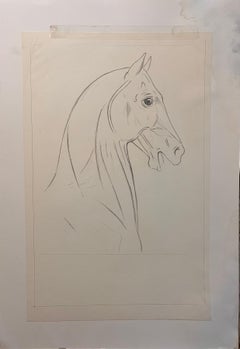
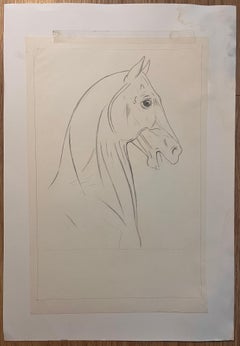
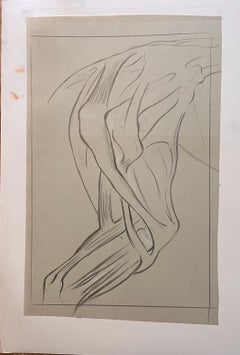
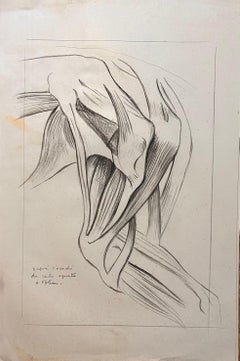
Academy students sketched drawings based on prints, sculptures and, finally, live models. Movements including neoclassicism and romanticism were particularly popular in these art schools and institutions where the influence of Raphael and Nicolas Poussin was prominent. Beaux Arts architecture and furniture design drew on these movements, too, and, as they also originated at the Académie des Beaux-Arts, the disciplines share common ground with academic painting and sculpture.

Although academic art was a major shift for artistic status when it began, by the middle of the 19th century it was viewed as stodgy and resistant to new ideas, with the subject matter of artists such as William-Adolphe Bouguereau and Jean-Léon Gérôme generally limited to allegorical or mythological themes. Impressionism, realism and the other movements that engaged with contemporary issues that followed were direct reactions to the academic tradition, although it continued to inform the avant-garde as artists like Gustav Klimt and Pablo Picasso started their practices as academic realists.  

Find a collection of academic paintings, sculptures, prints and more art on 1stDibs. 

to
302
461
319
229
143
201
Overall Width
to
Overall Height
to
50
469
531
301
38
49
50
46
26
22
18
28
15
28
30
114,026
62,445
57,445
26,975
14,683
9,405
6,525
5,610
4,281
3,084
2,420
2,332
2,201
602
612
596
38
845
407
277
261
181
157
140
136
125
107
95
84
74
58
55
52
49
47
45
44
828
648
373
369
200
62
36
16
15
10
657
131
740
599
Style: Academic
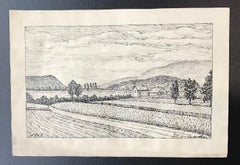
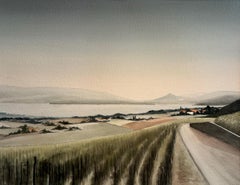
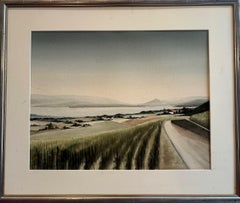
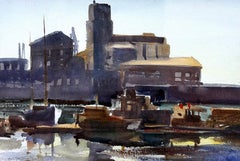
Watercolor by A. Chaudet - The village church

Watercolor by A. Chaudet - The village church

Located in Geneva, CH

Watercolor on paper sold with frame. The total size with frame is 53x45,5 cm Signed A. Chaudet

Category

Late 19th Century Academic Art

Materials

Watercolor

Ernest Howard Shepard,  illustration of Punch magazine, signed, inkpen

Ernest Howard Shepard, illustration of Punch magazine, signed, inkpen

Located in Petworth, West Sussex

Ernest Howard Shepard (British, 1879–1976) Laying Breaks on a London Street, an Illustration for Punch Magazine Inkpen and body colour Signed ‘Ernest H. Shepard’ (lower left) 8 1/8 x...

Category

20th Century Academic Art

Materials

Paper, Ink

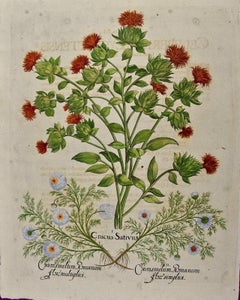
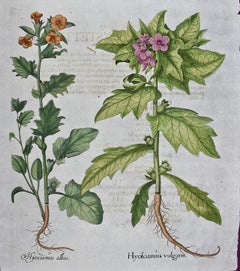
Amaranthus tricolor: A 17th-18th C. Besler Hand-colored Botanical Engraving

Amaranthus tricolor: A 17th-18th C. Besler Hand-colored Botanical Engraving

Located in Alamo, CA

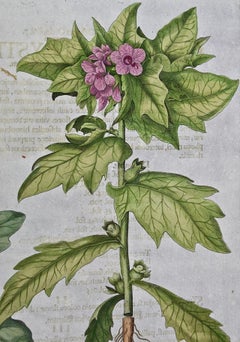
This is a hand-colored copper plate engraving entitled "Amaranthus Tricolor", depicting a flowering Amaranthus Tricolor plant from Basilius Besler's landmark work, Hortus Eystettensis (Garden at Eichstatt), first published in 1613 in Eichstatt, Germany near Nuremberg and later in 1640 and 1713. Amaranthus tricolor, known as edible amaranth, is a species of flowering plant in the genus Amaranthus. The plant is often cultivated for ornamental and culinary purposes. Cultivars have a striking yellow, red, and green foliage. It is known as Joseph's coat in some areas, after the biblical figure Joseph, who is said to have worn a coat of many colors. Amaranthus tricolor is one of several species of amaranth cultivated in warm regions across the world. This beautiful colorful engraving is printed on thin laid chain-linked paper with very wide margins. There is a short crease in the upper right corner, mild irregularity of the left, right and lower edges and some bleed-through of text from the verso. The print is otherwise in excellent condition with striking hand-coloring. The sheet measures 22.13" high and 17.13" wide. Basilius Besler (1561–1629) was an apothecary and botanist. He was curator of the Willibaldsburg Castle garden of Johann Konrad von Gemmingen, prince bishop...

Category

Early 18th Century Academic Art

Materials

Engraving

Jean Cocteau by Mario Napoli - Bronze 60x50x28 cm

Jean Cocteau by Mario Napoli - Bronze 60x50x28 cm

Located in Geneva, CH

Bronze sculpture by Mario Napoli, Swiss artist from XXth century. His works was sold 12 times in auctions since 2022. Work signed in the bronze. Edition ...

Category

21st Century and Contemporary Academic Art

Materials

Bronze

Orson Wells by Mario Napoli - Bronze 60x50x28 cm

Orson Wells by Mario Napoli - Bronze 60x50x28 cm

Located in Geneva, CH

Bronze sculpture by Mario Napoli, Swiss artist from XXth century. His works was sold 12 times in auctions since 2022. Work signed in the bronze. Edition ...

Category

21st Century and Contemporary Academic Art

Materials

Bronze

Escalade Festival in Geneva

Escalade Festival in Geneva

Located in Genève, GE

Work on canvas This striking painting accurately and lavishly depicts the commemorative parade of the Fête de l'Escalade in Geneva, a historical celebration commemorating the victory...

Category

Mid-19th Century Academic Art

Materials

Oil
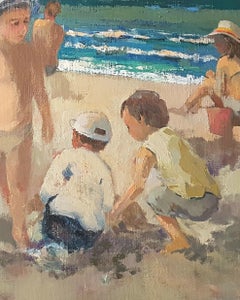
19th Century Academic Study of Female Nude, Original Framed Charcoal Drawing

19th Century Academic Study of Female Nude, Original Framed Charcoal Drawing

By Pierre Puvis de Chavannes

Located in Cotignac, FR

Late 19th century charcoal sketch on paper of a female nude by noted artist Pierre Puvis de Chavannes. The drawing is signed bottom left has various exhibition and collection labels ...

Category

Late 19th Century Academic Art

Materials

Paper, Chalk, Charcoal

MARINA DI NAPOLI - Gouache anonymous artist, Italy 2000s

MARINA DI NAPOLI - Gouache anonymous artist, Italy 2000s

Located in Napoli, IT

Gouache, also known in the French form gouache, is a type of tempera color made heavier and more opaque by the addition of a white pigment mixed with gum arabic. The result is precis...

Category

1990s Academic Art

Materials

Gouache

“On the Seine, Paris”

“On the Seine, Paris”

Located in Southampton, NY

Original aquatint engraving of working river barges on the Seine in Paris, France. A horse drawn cart is seen loading or unloading product. Circa 1900. ...

Category

Early 1900s Academic Art

Materials

Paper, Mezzotint

Gentle Evening - Pencil drawing - circa 1914

Gentle Evening - Pencil drawing - circa 1914

By Georges Conrad

Located in Paris, IDF

Georges CONRAD (1874-1936) Gentle evening Original pencil and color pencil drawing Signed with the stamp of atelier On paper 26.5 x 20 cm (c. 10,4 x 7.8 in) Very good condition, pa...

Category

1910s Academic Art

Materials

Carbon Pencil, Color Pencil

Untitled: Seated Rear Nude 2

Untitled: Seated Rear Nude 2

Located in New York, NY

Unknown/Unidentified Artist, "Untitled: Seated Rear Nude 2", Unsigned Figurative/ Nude Watercolor, Charcoal (Mixed Media) Painting on Paper, 18 x 14, Late 20th Century Colors: Brown...

Category

Late 20th Century Academic Art

Materials

Paper, Watercolor, Charcoal, Mixed Media

"Wooden River Bridge"

"Wooden River Bridge"

By Shigesaburo Ishida

Located in Southampton, NY

Circa 1940 Signed lower left Sight size 19 x 26 in Overall 27.5 x 34.5 in original period frame

Category

1940s Academic Art

Materials

Watercolor, Paper

Academic Drawing. Figure Study of Young Sitting Nude Man. 19th Century.

Academic Drawing. Figure Study of Young Sitting Nude Man. 19th Century.

Located in Firenze, IT

Charcoal drawing on light gray-blue colored paper. The drawing depicts a young man sitting with the hand on forehead. the position is probably meant to express the feeling of regret,...

Category

19th Century Academic Art

Materials

Steel

“Cordes”
“Cordes”

“Cordes”

Located in Southampton, NY

Original oil on board painting of the historic village of Cordes-sur-Ciel in France by the well known American artist, David Buckley Good. Signed lower left by the artist. Titled ...

Category

2010s Academic Art

Materials

Oil, Board

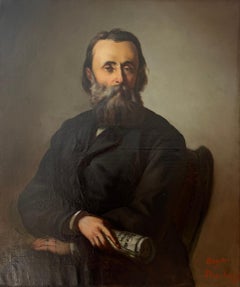
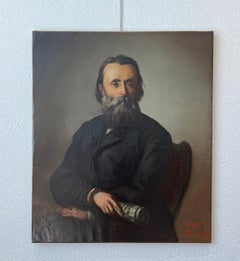
Portrait of man seated

Portrait of man seated

Located in Genève, GE

This painting depicts a portrait of a man of great dignity, typical of the academic tradition of the 19th century. The artist has captured his model in a sober and solemn pose: seate...

Category

Late 19th Century Academic Art

Materials

Oil, Canvas

English Mansion by the Cemetery - Late 1800s Watercolor on Paper

English Mansion by the Cemetery - Late 1800s Watercolor on Paper

Located in Soquel, CA

English Mansion by the Cemetery - Late 1800s Watercolor on Paper Dramatic and detailed landscape by Lucy Cooper (British, 1853-1929). A large home is shown on the left, with a red r...

Category

1890s Academic Art

Materials

Paper, Watercolor

Woman smoking pencil drawing

Woman smoking pencil drawing

Located in Sitges, Barcelona

Frame size 74x61 cm.

Category

1950s Academic Art

Materials

Pencil

The Swiss by Otto Vautier - Drawing 31x24 cm

The Swiss by Otto Vautier - Drawing 31x24 cm

Located in Geneva, CH

Work on canvas Otto Vautier is a renowned Swiss painter, born in 1863 in Düsseldorf. He was influenced by a family of artists and developed his style dur...

Category

1910s Academic Art

Materials

Crayon, Watercolor

“Montalcino”
“Montalcino”

“Montalcino”

Located in Southampton, NY

Original oil on board painting of the historic town of Montalcino in Italy by the well known American artist, David Buckley Good. Signed by the artist lower left. Titled verso. Gr...

Category

2010s Academic Art

Materials

Oil, Board

Cowgirl
Cowgirl

Henri Fehr Cowgirl

$288Sale Price|47% Off

Cowgirl

By Henri Fehr

Located in Geneva, CH

Work on paper

Category

20th Century Academic Art

Materials

Crayon, Charcoal

British 19th Century drawing of a nude by Edward Stott

British 19th Century drawing of a nude by Edward Stott

By Edward Stott

Located in Petworth, West Sussex

Edward Stott, ARA (British, 1859 - 1918) Reclining nude Pastel and black crayon 8.1/2 x 12.1/4 in. (21.7 x 31.2 cm.) Provenance: Abbott and Holder, London A few years after its foundation in 1886, a critic referred to the New English Art Club as that Steery, Starry, Stotty. Stotty referred to William Stott of Oldham and Edward William Stott. The four men had in common the love French plein air painting...

Category

19th Century Academic Art

Materials

Crayon, Pastel

"Habenero, " Oil painting
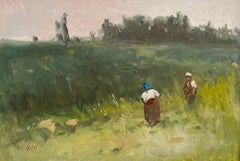
"Habenero, " Oil painting
Located in Denver, CO

Thane Gorek's (US based) "Habenero" is an original, handmade oil painting that depicts an orange Habanero pepper halved, so that it's seeds and core are ex...
Category

2010s Academic Art

Materials

Oil, Canvas

Wartime postcard painting - WWI painted postcard - Ham, Somme (France) 1917

Wartime postcard painting - WWI painted postcard - Ham, Somme (France) 1917

Located in Colfax, CA

WWI painted postcard of Ham, Somme (Northern France), dated 1917. Watercolor on a paper postcard. Measures 3.5 x 5.5 x .1 inches overall.   Good condition overall with some dark mat ...

Category

1910s Academic Art

Materials

Paper, Watercolor

"Winter Wildfowling" Frank Weston Benson, Hunting Scene, Outdoors, Marshes

"Winter Wildfowling" Frank Weston Benson, Hunting Scene, Outdoors, Marshes

By Frank Weston Benson

Located in New York, NY

Frank Weston Benson Winter Wildfowling, 1927 Signed lower left Etching on paper Image 8 1/2 x 7 inches Born in Salem, Massachusetts, a descendant of a long line of sea captains, Benson first studied art at Boston’s Museum School where he became editor of the student magazine. In 1883, Benson enrolled at the Académie Julian in Paris where artists such as Bouguereau, Lefebvre, Constant, Doucet and Boulanger taught students from all over Europe and America. It was Boulanger who gave Benson his highest commendation. “Young man,” he said, “Your career is in your hands . . . you will do very well.” Benson’s parents gave him a present of one thousand dollars a twenty-first birthday and told him to return home when it ran out. The money lasted long enough to provide Benson with two years of schooling in Paris, a summer at the seaside village of Concarneau in Brittany and travel in England. Upon returning to America, Benson opened a studio on Salem’s Chestnut Street and began painting portraits of family and friends. An oil of his wife, Ellen Perry Peirson, dressed in her wedding gown is representative of this period. It demonstrates not only the academic techniques he learned at the Academie Julian but also his own growing emphasis on the effects of light. And yet, despite all the technical mastery displayed in the work, the painting exudes the warmth that existed between model and artist. More than a likeness, it is a study in serenity. Perhaps it was of a work such as this that Benson was thinking when he said, “The more a painter knows about his subject, the more he studies and understands it, the more the true nature of it is perceived by whoever looks at it, even though it is extremely subtle and not easy to see or understand. A painter must search deeply into the aspects of a subject, must know and understand it thoroughly before he can represent it well.” Following a brief stint as an instructor at the Portland, Maine, Society of Art, Benson was appointed as instructor of antique drawing at the Museum School in Boston in the spring of l889. Benson’s long association with the school was particularly fruitful. Under the leadership of Edmund Tarbell and Benson the Museum School became a national and internationally recognized institution. The students won numerous prizes, enrollment tripled, a new school building was erected and visiting delegations from other schools sought the secret of their success. Benson cherished his role as teacher and was held in high esteem by his students, many of whom called him “Cher Maitre.” Reminiscing about his long career with the school Benson once said, “I may have taught many students, but it was I who learned the most.” In 1890, Benson won the Hallgarten Prize at the National Academy in New York. It was the first of a long series of awards, that earning for him the sobriquet “America’s Most Medalled Painter.” In the early years of his career, Benson’s studio works were mostly portraits or paintings of figures set in richly appointed interiors. Young women in white stretch their hands out towards the glow of an unseen fire; girls converse on an antique settee in a room full of objets d’arts; his first daughter, Eleanor, poses with her cat. Works of this sort, together with a steady influx of portrait commissions, earned Benson both renown and financial rewards, yet it was in his outdoor works that gave Benson his greatest pleasure. In the latter half of the 1890s, Benson summered in Newcastle, on New Hampshire’s short stretch of seacoast. It was here, in 1899, that Benson made his first foray into impressionism with Children in the Woods and The Sisters, the latter a sun-dappled study of his two youngest daughters, Sylvia and Elisabeth. This painting was one of the first works that Benson hung at an exhibition with nine friends. The resignation of these ten illustrious artists rocked the American art establishment but, the catalogue for their first exhibition was titled, simply, “Ten American Painters.” When, in 1898, the three Bostonians and seven New Yorkers began to exhibit their best work in exquisitely arranged small shows, the group (dubbed by newspapers, “The Ten” ) quickly became known as the American Impressionists, a bow to the style of their French predecessors. The Ten’s annual shows soon became an eagerly awaited part of the annual exhibition calendar and were always well reviewed. Held annually in New York City, the group’s yearly exhibitions usually traveled to Boston and were occasionally seen in other cities. Benson’s association with other members of the group such as Childe Hassam, Thomas Dewing, William Merrit Chase and J. Alden Weir, only reinforced his growing emphasis on the tenets of Impressionism. As he later said to his daughter Eleanor, “I follow the light, where it comes from, where it goes.” The principles of Impressionism began to dominate Benson’s work by 1901, the year that the Bensons first summered on the island of North Haven in Maine’s Penobscot Bay. His summer home “Wooster Farm,” which they rented and finally bought in 1906, became the setting for some of Benson’s best known work and there, it seemed, he found endless inspiration. Benson’s sparkling plein-air paintings of his children–Eleanor, George, Elisabeth and Sylvia–capture the very essence of summer and have been widely reproduced: In The Hilltop, George and Eleanor watch the sailboat races from the headland near their house. As a boy, Benson dreamed of being an ornithological illustrator. In mid-life, he returned to the wildfowl and sporting subjects that had remained his lifelong passion. Using etching and lithography, watercolor, oil and wash, Benson portrayed the birds observed since childhood and captured scenes of his hunting and fishing expeditions. Together with his two brothers-in-law, Benson bought a small hunting retreat on a hill overlooking Cape Cod’s Nauset Marsh. Here, in the late 1890s, he began experimenting with black and white wash drawings. These paintings became so popular that Benson was not able to keep up with the demand. He turned to an art publishing company to have several made into it intaglio prints; twelve wash drawings are known to have been reproduced in this manner. At least two of them were given as gifts to associate members of the Boston Guild of artists, of which Benson was a founding member. Benson was also an avid fisherman and his salmon fishing expeditions to Canada’s Gaspé Peninsula where one of the high points of his summer. There, in 1921, he began the first in a series of watercolors that would eventually over 500 works. Benson’s watercolors conveyed the joy and beauty of a sportsman’s life whether in a painting of a hunter setting out decoys, a flock of ducks coming in for a landing or a grouse flushed from cover. The critics favorably compared Benson’s watercolors to those of Homer. “The love of the almost primitive wilderness which appears in many of Homer’s landscapes and the swift, sure touch with which he suggests rather than describes–these also characterize Benson’s work,” one critic wrote. “The solitude of the northern woods is very much like Homer’s.” Like the wash drawings before them, Benson’s watercolors proved...

Category

1920s Academic Art

Materials

Paper, Etching

“Figures on Camelback along the Nile”

“Figures on Camelback along the Nile”

By Paul B. Pascal

Located in Southampton, NY

Wonderful original orientalist gouache by the well known French artist, Paul B. Pascal. Signed lower right. Circa 1885. Condition is excellent. The scene depicts figures on camelback along the Nile with pyramids in the background. Newly professionally matted and framed in antique style frame. Under glass. Overall framed measurements are 11 by 13 inches. Provenance: A Sarasota, Florida estate. Paul B. Pascal (1839–1905) was a French landscape painter. He did landscape paintings of the Middle East and the Mediterranean coast with gouache. After he emigrated to the United States in 1893, he did paintings of the American wilderness...

Category

1880s Academic Art

Materials

Gouache, Archival Paper

Vintage Large Albumen Photo Jerusalem Photograph American Colony Old City Market

Vintage Large Albumen Photo Jerusalem Photograph American Colony Old City Market

By American Colony Jerusalem

Located in Surfside, FL

The mat measures 21 X 16 the images are around 12 X 9 inches. They bear the blindstamp of the American Colony Jerusalem. I am not sure if these are hand colored but they are from th...

Category

Early 20th Century Academic Art

Materials

Photographic Paper

Academic art for sale on 1stDibs.

Find a wide variety of authentic Academic art available for sale on 1stDibs. Works in this style were very popular during the 21st Century and Contemporary, but contemporary artists have continued to produce works inspired by this movement. If you’re looking to add art created in this style to introduce contrast in an otherwise neutral space in your home, the works available on 1stDibs include elements of purple, blue, orange, pink and other colors. Many Pop art paintings were created by popular artists on 1stDibs, including Karen Darbinyan, Owen Jones, Paul Jones b.1921, and Mark Beard. Frequently made by artists working with Paint, and Oil Paint and other materials, all of these pieces for sale are unique and have attracted attention over the years. Not every interior allows for large Academic art, so small editions measuring 1.5 inches across are also available. Prices for art made by famous or emerging artists can differ depending on medium, time period and other attributes. On 1stDibs, the price for these items starts at $11 and tops out at $700,000, while the average work sells for $1,444.