Academic Art

ACADEMIC STYLE

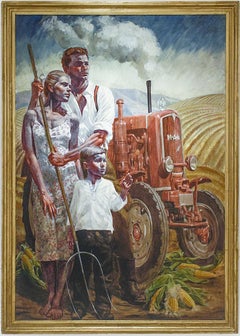
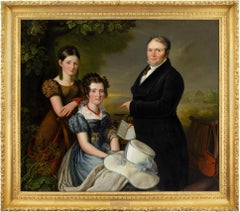
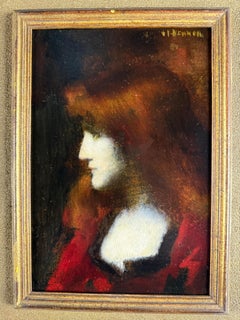
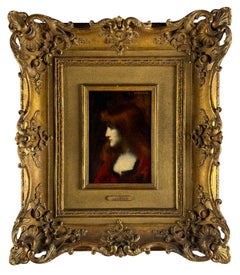
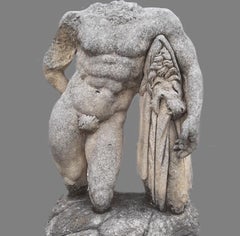
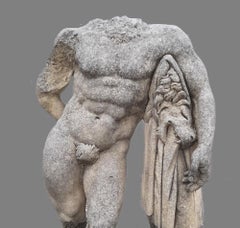
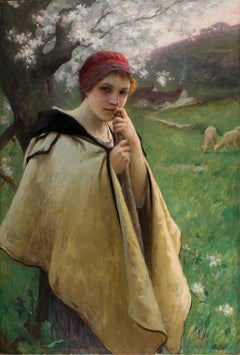
During the Renaissance, the first European fine art academies were established in Italy and would guide the style and standards of visual culture in the following centuries. Academic art became dominant across the continent in the 17th century, with artists coming together to offer instruction in this style of painting and sculpture

The academic art period represented a significant change from the previous era when painters, sculptors and other artists were part of guilds and seen more as artisans than purveyors of culture. While patronage from the elite and the church remained pivotal, young artists were able to support themselves for the first time through academic exhibitions and an independent marketplace. The leading academies included the French Académie Royale de Peinture et de Sculpture founded in Paris in 1648 (which became the Académie des Beaux-Arts after the French Revolution) and the London Royal Academy of Arts formed in 1768 under the inaugural leadership of painter Joshua Reynolds

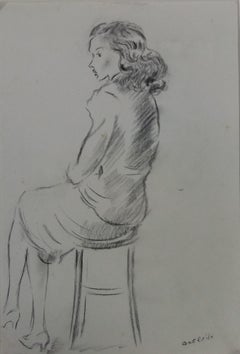
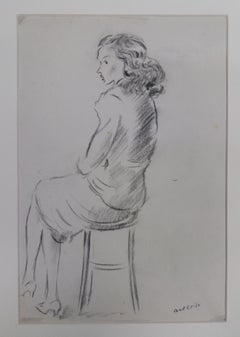
Academy students sketched drawings based on prints, sculptures and, finally, live models. Movements including neoclassicism and romanticism were particularly popular in these art schools and institutions where the influence of Raphael and Nicolas Poussin was prominent. Beaux Arts architecture and furniture design drew on these movements, too, and, as they also originated at the Académie des Beaux-Arts, the disciplines share common ground with academic painting and sculpture.

Although academic art was a major shift for artistic status when it began, by the middle of the 19th century it was viewed as stodgy and resistant to new ideas, with the subject matter of artists such as William-Adolphe Bouguereau and Jean-Léon Gérôme generally limited to allegorical or mythological themes. Impressionism, realism and the other movements that engaged with contemporary issues that followed were direct reactions to the academic tradition, although it continued to inform the avant-garde as artists like Gustav Klimt and Pablo Picasso started their practices as academic realists.  

Find a collection of academic paintings, sculptures, prints and more art on 1stDibs. 

to
349
468
321
230
142
206
Overall Width
to
Overall Height
to
48
484
531
302
40
48
51
49
24
21
17
26
14
28
29
117,282
64,420
56,468
28,337
14,634
9,592
6,734
6,001
4,185
3,168
2,539
2,332
2,145
589
618
600
37
859
414
275
259
180
157
137
137
127
104
95
79
71
62
54
52
49
45
45
44
846
663
390
385
193
62
36
16
15
10
661
131
733
621
Style: Academic
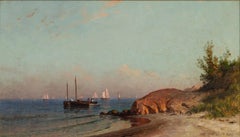
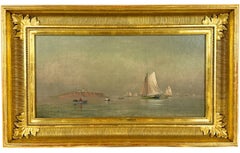
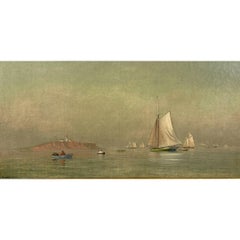
Alfred Copestick, Fort Hamilton from the Narrows, New York, 1857

Alfred Copestick, Fort Hamilton from the Narrows, New York, 1857

Located in Queens, NY

Alfred Copestick (1837–1859) Fort Hamilton from the Narrows, New York, 1857 Oil on canvas, in the original giltwood frame 14 ¼ x 20 ⅛ in. (canvas) Signed lower left: A. Copestick NY 1857 Painted when Copestick was only twenty years old, Fort Hamilton from the Narrows, New York captures both the military fortifications and maritime vitality of New York Harbor at mid-century. In the foreground, the fortress bastion commands the shoreline, while sail and steam vessels traverse the Narrows — the strategic waterway linking Upper New York Bay to the Atlantic. Copestick conveys not only the architectural solidity of Fort Hamilton but also the shifting atmosphere above, where cloud formations build and dissolve across a wind-driven sky. The painting is a remarkable marriage of documentary precision and romantic sensibility. The young artist’s brush imbues the fortress with weight and presence, yet the broader scene is alive with the transience of weather and the ceaseless motion of the sea. In its original giltwood frame, richly carved and preserving the period character, the canvas is a rare survival of a gifted hand cut short in its prime. This canvas reveals Copestick’s deep engagement with the maritime traditions of American art. The careful delineation of sailing vessels recalls the precision of James E. Buttersworth, while the atmospheric breadth echoes the influence of Fitz Henry Lane and John F. Kensett. The choice of subject — the strategic Narrows and its fortress — also reflects the national mood of the 1850s, when American identity was bound up with its coasts, harbors, and defenses. The romantic skies and dramatic contrasts suggest the impact of the Hudson River School, particularly the legacy of Thomas Cole and Asher B...

Category

19th Century Academic Art

Materials

Canvas, Oil

“Indian Prince with Rose”

“Indian Prince with Rose”

Located in Southampton, NY

Original gouache and watercolor on archival paper of an Indian prince holding a pink rose. The pink rose signifies love and appreciation. No visible signature. Artist unknown. The ...

Category

Late 20th Century Academic Art

Materials

Watercolor, Gouache, Archival Paper

British, early 20th Century oriental scene by female artist Katie Blackmore

British, early 20th Century oriental scene by female artist Katie Blackmore

Located in Petworth, West Sussex

Katie Blackmore (British, 1890 – 1957) Oriental fantasy Ink and gouache on paper Signed ‘K Blackmore’ (lower right) 9 x 8.3/8in. (22.8 x 21.2 cm.) A Scottish figurative and decorative artist, Katie Blackmore was closely associated with both Jessie Marion King...

Category

20th Century Academic Art

Materials

Paper, Ink, Gouache

Memento Mori - Oil Still-Life Painting Colours Black Brown Beige Grey White Pink

Memento Mori - Oil Still-Life Painting Colours Black Brown Beige Grey White Pink

By Lyubena Fox

Located in Sofia, BG

"Memento Mori " Oil on canvas Unframed 25 x 16,5 cm Framed 50,5 x 42,5 cm The frame Handmade from wood and plaster, water gilded with genuine gold leaf over rouge burnishing bole and patinated. Exhibited in the “Memento Mori” art show in Manhattan, New York with Sugar Lift in the beginning of 2021 The symbolism: Memento Mori (Latin for 'remember that you have to die) is an artistic or symbolic reminder of the inevitability of death. The concept has its roots in the philosophers of classical antiquity, and it was reflected in the artistic genre of Vanitas, where symbolic objects such as hourglasses and wilting flowers signified the impermanence of human life. Memento Mori The Painting’s Qualities Lyubena Fox...

Category

2010s Academic Art

Materials

Canvas, Oil

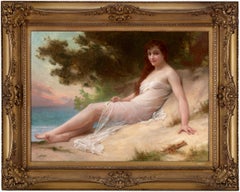
Solitude
Solitude

Solitude

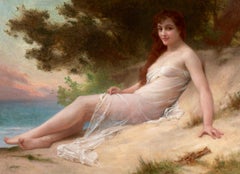
By Guillaume Seignac

Located in New Orleans, LA

French Academic painter Guillaume Seignac was renowned for his masterful treatment of the idealized nude. His languishing female subjects based on Greco-Roman prototypes were and rem...

Category

19th Century Academic Art

Materials

Canvas, Oil

Painting 19th Century - Horses and Carriage - Charles de Luna (1812-1866)

Painting 19th Century - Horses and Carriage - Charles de Luna (1812-1866)

By Charles De Luna

Located in Saint-Ouen, FR

LUNA, Charles de (1812-1866) Horses and carriage hunting Oil on canvas signed low left and dated 1841 Old original frame gilded with leaves Dim canvas : 39 X 75 cm Dim frame : 89 X 52 cm Certificate of authenticity LUNA, Charles de (1812-1866) French Painter 19th century Born in 1812 in Châlon sur Saone Genre scenes, military subjects, Orientalism Pupil of Léon Cogniet...

Category

1840s Academic Art

Materials

Oil

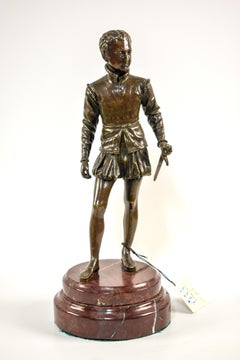
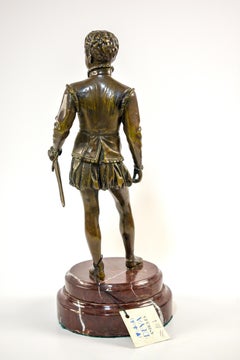
Pathos
Pathos

Pathos

Located in New York, NY

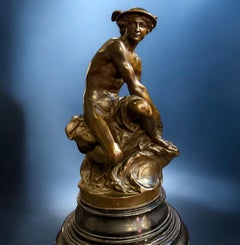
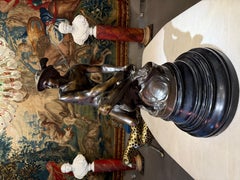
A sensuous and fabulous piece to enjoy in the round as every vantage point is attractive or on a shelf or table. In the 19th century, the Italians and French were in a golden era f...

Category

1890s Academic Art

Materials

Bronze

Óleo sobre tela - Retrato de caballero con sombrero

Óleo sobre tela - Retrato de caballero con sombrero

Located in Sant Celoni, ES

Firmado en la parte inferior (desconozco el artista) Se presenta sin enmarcar la pintura El estado de la pintura es aceptable Medidas obra: 58 x 48 cm.

Category

Early 1900s Academic Art

Materials

Oil

Jean Coulon - Aegina and Zeus Bronze Statue

Jean Coulon - Aegina and Zeus Bronze Statue

Located in New York, NY

Aegina was one of the daughters of the river god Asopus and his wife, the river nymph Metope. The couple had many daughters, and most of them became the object of desire of either Ze...

Category

19th Century Academic Art

Materials

Bronze

The Potter
The Potter

The Potter

Located in New Orleans, LA

Léon Olivié-Bon 1863-1901 French The Potter Oil on canvas Signed and dated "Olivie-Bon 1888" (lower right) This monumental masterpiece by French artist Léon Olivié-Bon is one of ...

Category

19th Century Academic Art

Materials

Canvas, Oil

Life-size Plaster Statue of The Callipygian Venus or Aphrodite  1920'

Life-size Plaster Statue of The Callipygian Venus or Aphrodite 1920'

Located in Rome, IT

Italian life-size plaster sculpture , figure of the Callipygian Venus, after the antique Roman marble statue. Aphrodite Kallipygos, or Callipygian Venus literally means “Venus of ...

Category

1920s Academic Art

Materials

Plaster

Chinese Monastery, Impressionism, Original Painting, One of a Kind

Chinese Monastery, Impressionism, Original Painting, One of a Kind

Located in Granada Hills, CA

Artist: Ara H. Hakobyan Work: Original Oil Painting, Handmade Artwork, One of a Kind Medium: Acrylic on Canvas Year: 2019 Style: Impressionism Title: Chinese Monastery Size: 16" x 20...

Category

2010s Academic Art

Materials

Canvas, Acrylic

“French Country View”

“French Country View”

Located in Southampton, NY

Very well executed oil on canvas painting of a French countryside view by J.S. Dorange. Signed lower right. Condition is very good. Circa 1920. The style is academic with more of an...

Category

1920s Academic Art

Materials

Canvas, Oil

Arab Horsemen 19th Century Antique Landscape orientalist Oil Painting on Canvas

Arab Horsemen 19th Century Antique Landscape orientalist Oil Painting on Canvas

By Adolf Schreyer

Located in Jacksonville, FL

Notes: This painting was reviewed via digital photographs by Max and Dr. Christoph Andreas who confirmed it authenticity. They commented that the painting would benefit from removal of the discolored varnish. Provenance: Provenance: Christie's New York, 19th Century European Paintings, Drawings, Watercolors, and Sculpture, February 23, 1989, Lot 125. Private Collection, Boston MA, Skinner Auction, Nov 2021 Arab Horsemen" by Adolf Schreyer captures the grace and power of Arab horsemen in a vibrant Middle Eastern setting. Schreyer, a renowned artist of the 19th century, adeptly portrays equestrian scenes with exceptional skill and detail. The painting showcases a group of horsemen galloping through a desert landscape, evoking a sense of freedom and adventure. Schreyer's meticulous attention to detail brings the scene to life, with sunlight reflecting off the horses' coats and dust rising beneath their hooves. Beyond its visual appeal, the artwork holds cultural significance, bridging the gap between cultures and inviting appreciation of Arabian heritage. Schreyer's experiences in North Africa, Turkey, and Syria inform his captivating depictions. "Arab Horsemen" is highly regarded in both America and France, where Schreyer's works found admiration among collectors and his association with the Barbizon School solidified his reputation. Owning this artwork not only adds beauty but also connects to a pivotal period in art history, showcasing Schreyer's artistic brilliance and cross-cultural appreciation. Experience the timeless allure of "Arab Horsemen" and embrace the spirit of the Middle East. Frame Size: Width: 36″ x Hight: 24.75″ Frame Thickness: 6.50″ Picture Size: Width: 24″ x 12.75″ Description: Introducing “Arab Horsemen” by Adolf Schreyer: A Captivating Blend of Artistry and Cultural Significance Capture the essence of the vibrant Middle Eastern culture with “Arab Horsemen,” a masterpiece by the renowned artist Adolf Schreyer. This captivating painting takes you on a journey through time, allowing you to witness the grace, power, and elegance of Arab horsemen in their natural element. Adolf Schreyer, a celebrated artist of the 19th century, gained immense popularity and admiration for his exceptional ability to depict equestrian scenes with unparalleled skill and detail. Born in Frankfurt, Germany in 1828, Schreyer developed a profound fascination for the Orientalist movement, which celebrated the exoticism and allure of the Middle East. “Arab Horsemen” exemplifies Schreyer’s signature style, highlighting his mastery of capturing the energy and spirit of his subjects. The painting portrays a group of Arab horsemen galloping across a vast desert landscape, their silhouettes evoking a sense of freedom and adventure. Schreyer’s meticulous attention to detail is evident in every brushstroke, as he adeptly captures the shimmering sunlight bouncing off the horses’ coats and the billowing dust beneath their hooves. What sets Schreyer apart is his ability to transcend mere representation and infuse his artworks with a profound cultural significance. His depictions of Arab horsemen are not only visually stunning but also serve as a bridge between cultures, inviting viewers to explore and appreciate the richness of Arabian heritage. The artist’s fascination with the Middle East stems from his experiences traveling through North Africa, Turkey, and Syria, immersing himself in the sights, sounds, and traditions of these enchanting lands. “Arab Horsemen” holds a special place in the hearts of art enthusiasts in both America and France. Schreyer’s works found great admiration and recognition in these countries during his lifetime and continue to captivate audiences to this day. In America, his paintings were sought after by collectors who were drawn to the romanticism and exoticism of the Orient. In France, Schreyer’s association with the Barbizon School, a group of artists who favored realistic depictions of rural life, further solidified his reputation as a respected painter. Owning a piece by Adolf Schreyer, especially “Arab Horsemen,” is not merely acquiring a beautiful artwork but also an opportunity to possess a tangible link to a pivotal period in art history. Schreyer’s ability to seamlessly blend artistic brilliance with cross-cultural appreciation makes this painting an invaluable addition to any collection. Experience the timeless allure of “Arab Horsemen” and let the spirit of the Middle East gallop into your life. Collections holding paintings by Adolf Schreyer include the Collections: Schwerin Gallery Count Mensdorff-Pouilly Collection Raven Gallery, Berlin Rockefeller Family Collection Vanderbilt Family Collection John Jacob Astor Collection William Backhouse Astor, Sr. Collection August Belmont Collection William Walters Collection...

Category

19th Century Academic Art

Materials

Canvas, Oil

The Little Ballerina

The Little Ballerina

Located in Saint-Ouen, FR

Alphonse PELLET (1853-1926) The Little Ballerina Oil on wood panel signed low right Old frame regilded with leaves Size panel : 30 X 43 cm - Size frame : 40 X 55 cm Alphonse PELLET...

Category

1880s Academic Art

Materials

Oil

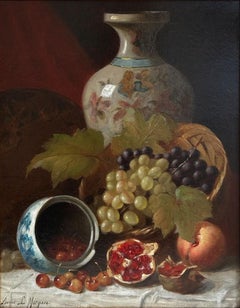
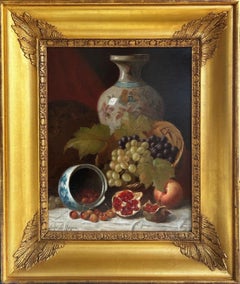
Still Life, Flowers and Fruit

Still Life, Flowers and Fruit

Located in New York, NY

A stunning and dramatic still life by noted Belgian 19th century artist, David De Noter. Framed in a complimentary Empire style 22 karat hand carved frame....

Category

1860s Academic Art

Materials

Canvas, Oil

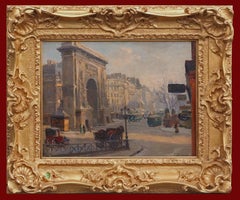
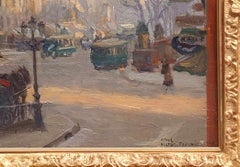
Paris, Boulevard Porte Saint Denis

Paris, Boulevard Porte Saint Denis

Located in Saint-Ouen, FR

FOURNIER Victor Alfred (1872-1924) "Paris, Porte Saint Denis" Oil on canvas signed lower right and dated 1924 Old frame gilded with leaf (fine gold) Canvas size: 40 X 30 cm Frame size: 58 X 48 cm FOURNIER Victor Alfred (1872-1924) French 20th century Born in Paris in 1872. Died in Paris in 1924 Painter of landscapes, seascapes, beach scenes, urban landscapes. Victor Fournier...

Category

1920s Academic Art

Materials

Oil

Venice Panoramic View

Venice Panoramic View

Located in Saint-Ouen, FR

Angelo PISANI (1885-1950) Panoramic View from Venice Oil on canvas signed low right Frame gilded with leaves Dim canvas : 51 X 100 cm Dim frame : 70 X 120 cm

Category

1920s Academic Art

Materials

Oil

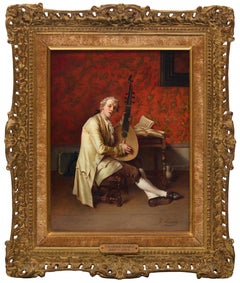
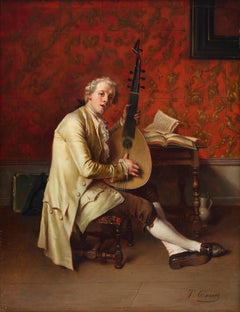
"A Surprising Visit"  19th Century Antique European  Oil Painting on Canvas

"A Surprising Visit" 19th Century Antique European Oil Painting on Canvas

By Eduardo Leon Garrido

Located in Jacksonville, FL

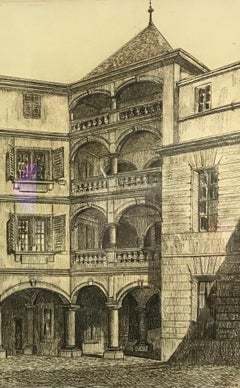
A Surprising Visit" by Eduardo León Garrido (Spanish, 1856-1949) invites viewers into a sumptuous journey through 19th-century European luxury. Eduardo León Garrido, a distinguished Spanish artist born in 1856 and leaving an artistic legacy until 1949, displayed a remarkable ability to capture the essence of his time through his brushstrokes. This antique masterpiece, rendered in oil on panel and measuring 22 1/2 x 29 3/4 inches, unveils a world of opulence within a Royal European...
Category

19th Century Academic Art

Materials

Canvas, Oil

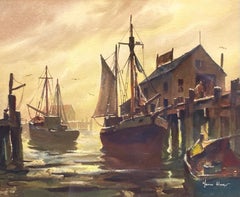
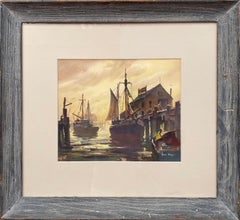
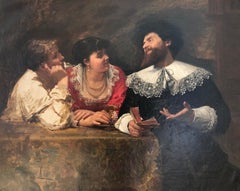
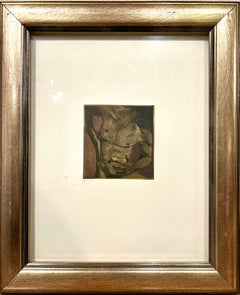
Three Fishermen in a Boat Watercolor, 20th Century American Sporting Art
Three Fishermen in a Boat Watercolor, 20th Century American Sporting Art
By John Whorf

Located in Marco Island, FL

A masterful example of John Whorf at the height of his powers, this large and luminous watercolor depicts three fishermen on a calm, silver-blue lake or bay, their figures rendered w...

Category

20th Century Academic Art

Materials

Watercolor, Archival Paper

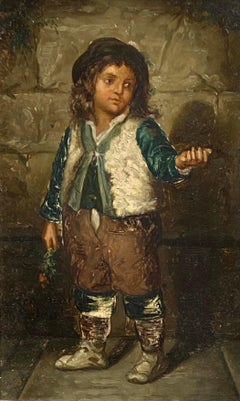
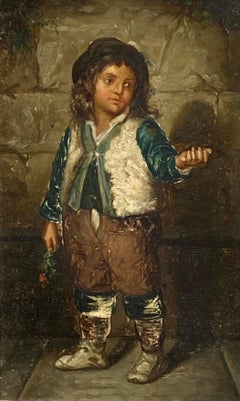
Provocative 19th Century Folk Art painting of a young boy holding thorny flowers
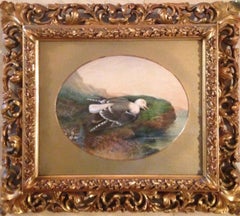

Provocative 19th Century Folk Art painting of a young boy holding thorny flowers

Located in Colfax, CA

A great 19th century folk art painting of a young boy posed, carefully holding thorny flowers between two fingers. His belt buckle has initials monogrammed, the last being an 'A' pos...

Category

19th Century Academic Art

Materials

Oil

18th century diptych portraits man and woman American formal dress flower

18th century diptych portraits man and woman American formal dress flower

By William Jennys

Located in Milwaukee, WI

The present pair of portraits would make an exceptional addition to any collection of early American art not only because they were painted by the notable William Jennys, but also because the sitters are members of notable and influential New England families. In addition, these pendants have impeccable provenance: they have never left ownership of the decedents of the Kimball family and this is the first time they have been available for purchase. David Kimball (1766-1848) and Nancy Stacy Kimball (1774-1844) were members of historic Massachusetts families. David Kimball is a sixth-generation decedent of Richard Kimball (d. 1675) and Ursula Scott (d. 1659), who emigrated from Rattlasden, Suffolk County, England to Watertown MA around 1634. The family then relocated in 1637 to Ipswich, the city with which the family is now most strongly identified, when Richard was appointed to be a wheelwright.[1] Nancy likewise had early New England ancestry, descended from Simon Stacy and Elizabeth Clark, who were married in London in 1620.[2] Nancy Stacy was the second wife of David Kimball, and the two were married in 1799. Given this, the present pendant portraits were likely completed shortly after the marriage. David had two children by his first wife Mary Morse, who died in September of 1798. David and Nancy would have nine additional children between 1801 and 1815.[3] Most notably, the couple were parents of the Boston politician and showman Moses Kimball (1809-1895).[2][3] Moses would found the Boston Museum, an early for-profit museum and theater opened in 1841 that resembled European curiosity cabinets: the museum displayed paintings of Thomas Scully and Charles Peale alongside Chinese artwork, stuffed animals, dwarves and mermaids. Alongside these exhibits, visitors could attend the theater which held performances by gymnasts and contortionists, followed by performances of Shakespeare and Dickens.[4] This museum set the model for the Museum of Fine Arts, Boston, which when founded in 1870 held a similarly diverse collection and appealed to the interests of a diverse set of visitors.[5] Moreover, some Greek antiquities from Moses Kimball's museum were eventually given to the MFA and Moses donated approximately $5,000 to the MFA's endowment upon his death.[6][7] William Jennys (1774–1859), also known as J. William Jennys, is an important American primitive portrait...

Category

1790s Academic Art

Materials

Oil, Canvas

British mid century watercolour and pen drawing of black and tan terrier dogs

British mid century watercolour and pen drawing of black and tan terrier dogs

By Mona Alizon Edmonds

Located in Petworth, West Sussex

Mona Alizon Edmonds (British, circa 1944) The black and tans day Inscribed with title, signed and dated ‘May 1944 M. Alizon Edmonds.’ (lower edge) Pencil, watercolour and body colour...

Category

20th Century Academic Art

Materials

Watercolor, Pencil

A Fine and Charming 19th Century Oil Canvas "Children Walking the Baby Goat"

A Fine and Charming 19th Century Oil Canvas "Children Walking the Baby Goat"

Located in LA, CA

Henry Joseph Campotosto (Belgium, 1833-1910) A Very Fine Oil on Canvas "Walking the Baby Goat", depicting two young dutch girls by the grassy shore of a river bank, one standing holding a wicker basket and a leash to a resting baby goat, the youngest sitting next to her on a pile of branches tucking her pants, a pair of ducks and ducklings swimming by the tree lined river; within a later giltwood carved frame. Signed (l/r): Campotosto Henry. Circa: Brussels, 1870. Note: The artist is also known as Henri Campotosto Henry or Henri Campotosto was born in Brussels in 1833. He studied in Brussels at the Royal Academy des Beaux-Arts and painted some artworks with Eugène Verboeckhoven (Belgium, 1798-1881). He received a 1st Class Medal at the Academy of Brussels and an honorable mention at the Paris Exhibition of 1860. In 1871 he moved to London with his family and remained there for life. He exhibited his work at the Royal Academy Exhibition until 1874 and at the Suffolk Street Gallery from 1878. In 1880 he took part in the Berlin Academy Exhibition. His daughter Octavia also became a painter, visited Italy, and showed her paintings at the Royal Academy from 1871 to 1874. Henri Campotosto died in London in 1910. High Sales: Christie's New York - Property from an American Collection, "The Bird's Nest" - Lot 247 on October 22, 2008, Sold for $37,500 Bonhams London - 19th Century European, Victorian and British Impressionist Art on 28 September 2016 - Lot 33 "Gathering flowers" Sold for £25,000 ($33,750 USD) Museums: The British Museum - Print of two girls and a lamb and print of two girls by a river bank Literature • E. Benezit Dictionnaire des Peintres, Sculpteurs, Dessinateurs, et Graveurs by Librairie Gründ - 1976 Edition - Volume 2, Page 488. • Maurice W...

Category

19th Century Academic Art

Materials

Oil

Academic art for sale on 1stDibs.

Find a wide variety of authentic Academic art available for sale on 1stDibs. Works in this style were very popular during the 21st Century and Contemporary, but contemporary artists have continued to produce works inspired by this movement. If you’re looking to add art created in this style to introduce contrast in an otherwise neutral space in your home, the works available on 1stDibs include elements of purple, blue, orange, pink and other colors. Many Pop art paintings were created by popular artists on 1stDibs, including Karen Darbinyan, Owen Jones, Paul Jones b.1921, and Mark Beard. Frequently made by artists working with Paint, and Oil Paint and other materials, all of these pieces for sale are unique and have attracted attention over the years. Not every interior allows for large Academic art, so small editions measuring 1.5 inches across are also available. Prices for art made by famous or emerging artists can differ depending on medium, time period and other attributes. On 1stDibs, the price for these items starts at $11 and tops out at $700,000, while the average work sells for $1,444.