Academic Art

ACADEMIC STYLE

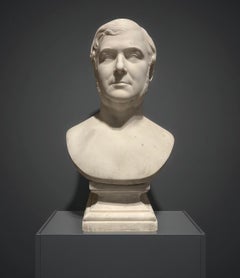
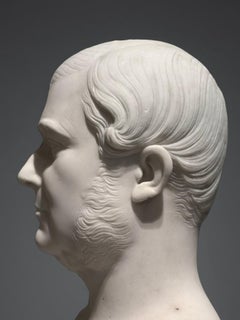
During the Renaissance, the first European fine art academies were established in Italy and would guide the style and standards of visual culture in the following centuries. Academic art became dominant across the continent in the 17th century, with artists coming together to offer instruction in this style of painting and sculpture

The academic art period represented a significant change from the previous era when painters, sculptors and other artists were part of guilds and seen more as artisans than purveyors of culture. While patronage from the elite and the church remained pivotal, young artists were able to support themselves for the first time through academic exhibitions and an independent marketplace. The leading academies included the French Académie Royale de Peinture et de Sculpture founded in Paris in 1648 (which became the Académie des Beaux-Arts after the French Revolution) and the London Royal Academy of Arts formed in 1768 under the inaugural leadership of painter Joshua Reynolds

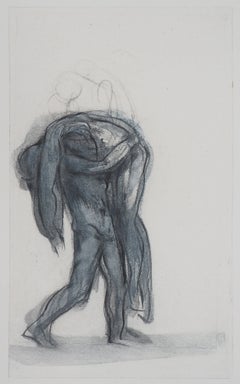
Academy students sketched drawings based on prints, sculptures and, finally, live models. Movements including neoclassicism and romanticism were particularly popular in these art schools and institutions where the influence of Raphael and Nicolas Poussin was prominent. Beaux Arts architecture and furniture design drew on these movements, too, and, as they also originated at the Académie des Beaux-Arts, the disciplines share common ground with academic painting and sculpture.

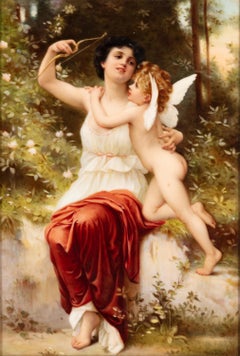
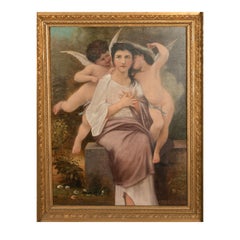
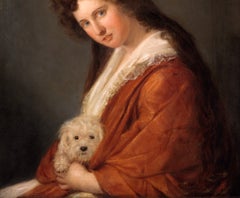
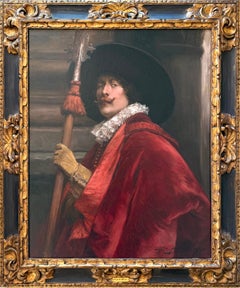
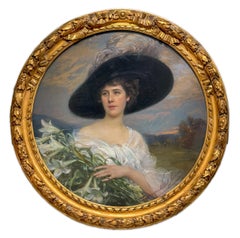
Although academic art was a major shift for artistic status when it began, by the middle of the 19th century it was viewed as stodgy and resistant to new ideas, with the subject matter of artists such as William-Adolphe Bouguereau and Jean-Léon Gérôme generally limited to allegorical or mythological themes. Impressionism, realism and the other movements that engaged with contemporary issues that followed were direct reactions to the academic tradition, although it continued to inform the avant-garde as artists like Gustav Klimt and Pablo Picasso started their practices as academic realists.  

Find a collection of academic paintings, sculptures, prints and more art on 1stDibs. 

to
328
459
321
234
148
205
Overall Width
to
Overall Height
to
50
470
529
316
38
52
48
46
27
21
19
27
14
28
30
113,741
62,390
57,392
26,789
14,650
9,366
6,501
5,546
4,309
3,052
2,409
2,360
2,232
611
622
600
38
861
415
281
259
181
160
142
137
129
104
96
85
75
59
58
54
53
48
47
45
843
662
385
380
199
62
36
16
15
10
659
129
750
606
Style: Academic
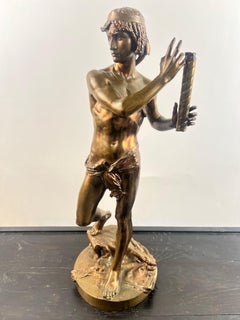
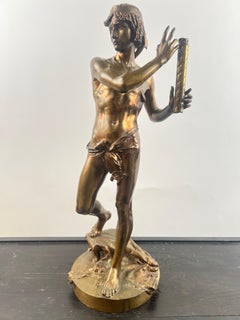
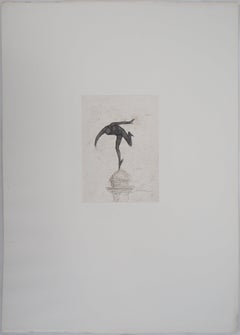
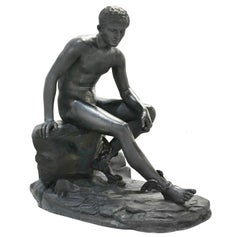
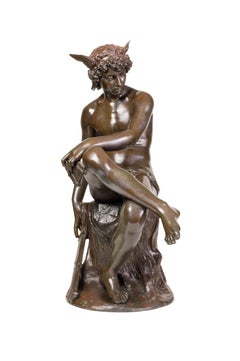
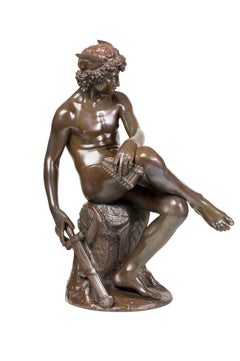
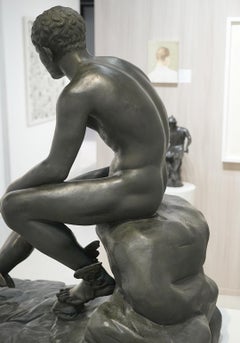
Seated Mercury, or Hermes - God of Speed

Seated Mercury, or Hermes - God of Speed

Located in New York, NY

This Mercury by Montagne has lovely patina and surface and is a pleasingly different depiction of Winged speed as he is seated! It is an arresting pose and elegant and covers all fa...

Category

1860s Academic Art

Materials

Bronze

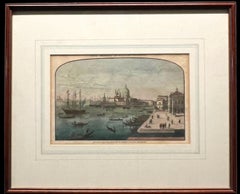
Venetian Scene by Martin Rico y Ortega

Venetian Scene by Martin Rico y Ortega

By Martin Rico y Ortega

Located in New Orleans, LA

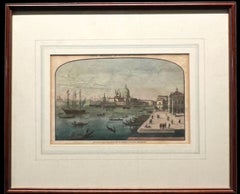
Martin Rico y Ortega 1833-1908 Spanish Venetian Scene Signed "Rico" (lower left) Oil on canvas Spanish artist Martin Rico y Ortega captures a charming view of a canal in Venice ...

Category

19th Century Academic Art

Materials

Canvas, Oil

"Portrait of Rebecca" Harriet Peale, Early American Female Portrait

"Portrait of Rebecca" Harriet Peale, Early American Female Portrait

By Harriet Cany Peale

Located in New York, NY

Harriet Peale Portrait of Rebecca, 1840 Inscribed verso, “Portrait of Rebecca Greenwood (?)/ Aged 25 years/ Painted by Harriet C. Cany/ May 1840” Oil on canvas 28 3/4 x 23 3/4 inches...

Category

1840s Academic Art

Materials

Canvas, Oil

Louis Charles Auguste Couder (1789-1873)  Portrait of a young man, signed pastel

Louis Charles Auguste Couder (1789-1873) Portrait of a young man, signed pastel

By Louis Charles Auguste Couder

Located in Paris, FR

Louis Charles Auguste Couder (1789-1873) Portrait of a young man signed on the right border Pastel on paper 28.5 x 21 cm In good condition In a modern frame : 48 x 40.5 cm Augu...

Category

1860s Academic Art

Materials

Pastel

Elegant Portrait of a Lady in Fur Stole, Early 20th Century”no signed

Elegant Portrait of a Lady in Fur Stole, Early 20th Century”no signed

Located in Genève, GE

Elegant Portrait of a Lady — Early 20th Century Oil on Canvas no signed A captivating and refined portrait of an elegant lady seated gracefully, dressed in a sumptuous dark gown ador...

Category

Early 20th Century Academic Art
Materials

Oil, Canvas

Anatomy Drawing of a Horse - Original French Artwork Equestrian Anatomy Study

Anatomy Drawing of a Horse - Original French Artwork Equestrian Anatomy Study

By Robert Ladou

Located in Cirencester, Gloucestershire

The Anatomy of a Horse by Robert Ladou (French 1929-2014) original drawing stuck on card in blue folder/ thick paper, unframed drawing: 12 x 19 inch...

Category

20th Century Academic Art

Materials

Charcoal, Crayon, Watercolor, Pencil, Color Pencil

Magnificent Marble Sculpture of Roman Mythological Subject Minerva 1780'

Magnificent Marble Sculpture of Roman Mythological Subject Minerva 1780'

Located in Rome, IT

Finely carved mythological roman subject of Minerva in Marble Travertino . Excellent condition from an estate of Veneto. Measurements: Statue cm 180 . Minerva (Pallas Athena in Greek...

Category

Late 18th Century Academic Art

Materials

Marble

Framed 1860s French Academic Style Oil Painting Romantic & Mythological Themes

Framed 1860s French Academic Style Oil Painting Romantic & Mythological Themes

By André Charles Voillemot

Located in Sutton Poyntz, Dorset

André Charles Voillemot. French ( b.1822 - d.1893 ). Allegory Of Summer. Oil On Canvas. Signed Lower Left. Dedication Lower Left To Victorien Sardou (1831 – 1908). Image size 18.1 in...

Category

Mid-19th Century Academic Art

Materials

Canvas, Oil

“Nasturtiums in Blue Vase”

“Nasturtiums in Blue Vase”

Located in Southampton, NY

Original oil on canvas painting of nasturtiums in a blue vase. Signed lower left. Appears to be L.I.S. Wallace. Unknown artist. American school; circa 1890. Original pierced gold p...

Category

1890s Academic Art

Materials

Canvas, Oil

"Untitled 12, " Charcoal Drawing

"Untitled 12, " Charcoal Drawing

By Mark Bradley Schwartz

Located in Denver, CO

Mark Bradley Schwartz's (US based) "Untitled 12" is an original, handmade charcoal drawing that depicts a woman in profile with her long dark hair draped over her right shoulder with...

Category

2010s Academic Art

Materials

Paper, Charcoal

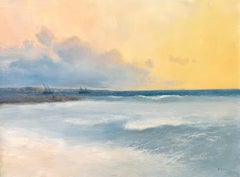
Ocean Serene, Impressionism, Original oil Painting, One of a Kind

Ocean Serene, Impressionism, Original oil Painting, One of a Kind

Located in Granada Hills, CA

Artist: Ara H. Hakobyan Work: Original Oil Painting, Handmade Artwork, One of a Kind. Medium: Oil on Canvas Year: 2024 Style: Impressionism Title: Ocean Serene Size: 31.5" x 39.5" x ...

Category

2010s Academic Art

Materials

Canvas, Oil

Still life by Baldo Guberti - Oil on cardboard 32x45 cm

Still life by Baldo Guberti - Oil on cardboard 32x45 cm

Located in Geneva, CH

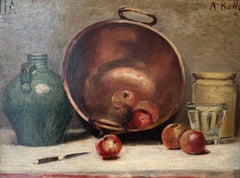
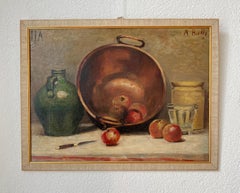
Oil on cardboard sold with frame Wooden frame with glass Total size with frame 47x60 cm Baldo GUBERTI is an artist born in Italy in 1907 and died in 1974. His works have been sold ...

Category

1960s Academic Art

Materials

Oil

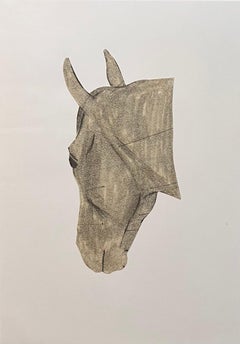
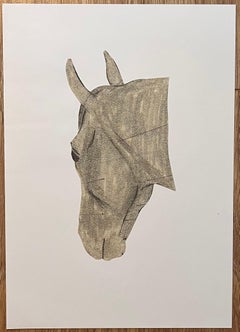
Study of the Movement of a Horses Head by Robert Ladou

Study of the Movement of a Horses Head by Robert Ladou

By Robert Ladou

Located in Cirencester, Gloucestershire

Title: Study of the Movement of a Horses Head by Robert Ladou Artist: Robert Ladou (French, 1929-2014) Medium: Charcoal on blue paper Size: 20 (Height) x 13.75 (Width) Signed: No Co...

Category

20th Century Academic Art

Materials

Charcoal

Woman portrait by Ilse Voigt - Oil on canvas 96x76 cm

Woman portrait by Ilse Voigt - Oil on canvas 96x76 cm

By Ilse Voigt

Located in Geneva, CH

Oil on canvas with wooden frame. Total size with frame is 88x109 cm Ilse VOIGT is an artist born in 1905 and died in 1997. His works have been sold at public auction 24 times, mostl...

Category

1940s Academic Art

Materials

Oil

Imponente Scultura Neoclassica Italiana in Marmo Venere Genitrice XIX secolo

Imponente Scultura Neoclassica Italiana in Marmo Venere Genitrice XIX secolo

Located in Pistoia, IT

Imponente scultura neoclassica in marmo, modello conosciuto come Afrodite Louvre-Napoli o Venus Genitrix, bottega italiana, 19 secolo. La dea è raffigurata in piedi, al momento de...

Category

19th Century Academic Art

Materials

Marble

An 18th-19th Century Oil on Canvas "The Triumph of Venice" After Paolo Veronese

An 18th-19th Century Oil on Canvas "The Triumph of Venice" After Paolo Veronese

By Paolo Veronese

Located in LA, CA

A very fine and Large Italian 18th-19th century oval-shaped oil on canvas titled "The Triumph of Venice" After the original work by Paolo Veronese (Venice, 1528-1588). The original of this painting hangs in the Palazzo Ducale, Venice. The 'Ricci' coloration suggests a late 17th-early 18th century date. In 1715 Charles de la Fosse advised Ricci to paint only "Veroneses and no more Riccis", Venice, circa 1800. Measures: Height: 45 1/4 inches (115 cm). Width: 29 inches (73.7 cm). Frame height: 58 1/4 inches (147.9 cm). Frame width: 43 1/4 inches (109.9 cm). Frame depth: 5 1/4 (13.3 cm). Provenance: Royal Academy of Scotland. Paolo Veronese (Born 1528, Verona, Republic of Venice - died April 9, 1588, Venice) was an Italian painter of the Renaissance in Venice, famous for paintings such as The Wedding at...

Category

19th Century Academic Art

Materials

Oil

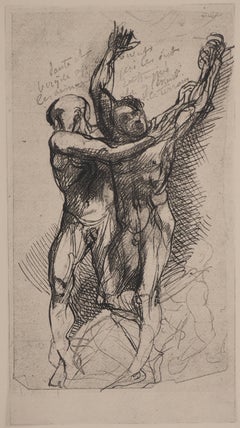
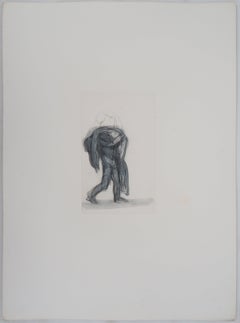
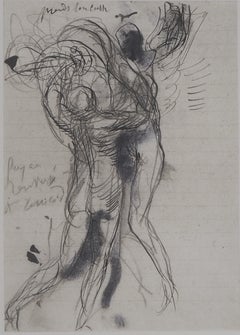
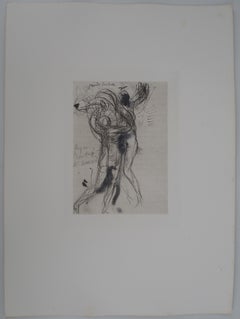
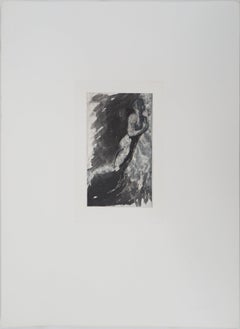
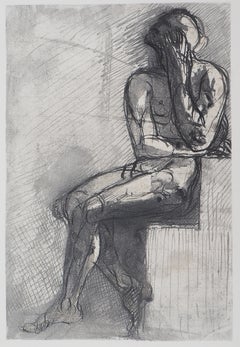
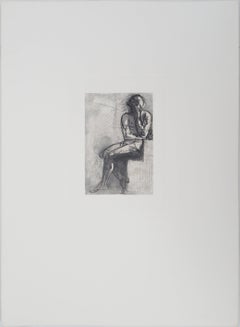
ACADEMIC MALE NUDE FIGURE STUDIES

ACADEMIC MALE NUDE FIGURE STUDIES

Located in Portland, ME

Michallet (attributed). ACADEMIC MALE NUDE FIGURE STUDIES. Four Charcoal drawings, each on heavy wove paper, 19th Century. 24 1/2 x 19 1/8 inches (s...

Category

Mid-19th Century Academic Art

Materials

Charcoal

Pietro Bazzanti, Italian 19th Carved Marble Figure Semi-Nude Young Bather Girl

Pietro Bazzanti, Italian 19th Carved Marble Figure Semi-Nude Young Bather Girl

By Pietro Bazzanti

Located in LA, CA

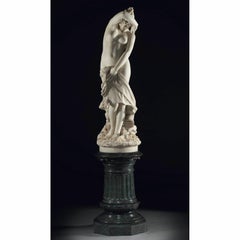
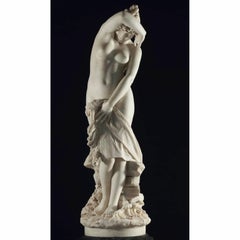
Pietro Bazzanti - Barzanti (Italian, 1825-1895) "After the Bath" - A very Fine and large carved white Carrara marble figure of a semi-nude young maiden standing by the sea-shore. The smiling and posing young beauty, with bare breasts and back, her right arm juxtaposed over her head, while holding a blanket over her waist with her left hand and standing barefoot by a rocky seawall and wavy shoreline. Signed 'P. Barzanti/Florence' (on reverse) and raised on a cylindrical swiveling carved verde antico solid marble pedestal. circa: Florence, 1880-1890. Pietro Bazzanti or Barzanti (Italian, 1825-1895) was a 19th Century Italian sculptor born in Florence. Together with his brother, Niccolò Bazzanti (Firenze, 1802-1869) who was also a sculptor, they both worked the sprawling Florentine studio 'Pietro Bazzanti e Figlio' a hugely successful sculpture studio, operated within the family at their gallery on Lungarno Corsini until the mid-twentieth century. The studio was a place where many talented professors and apprentice sculptors specialized in sculpting marble genre scenes and allegorical figures as well as copies of antique and Renaissance sculpture catered to a prominent international clientele which included European and Russian aristocracy, and the Industrial fortunes being made in England and Americas drove considerable export demand. In 1861 the studio was awarded the medal for 'Ercole con cinghiale sulla spalla' (Hercules with boar on shoulder), 'Due Cani' (Two dogs) and 'Cinghiale' (Boar) sculptures at the National Exposition in Florence. In 1874 he exhibits his works in London and in 1876 in Philadelphia. Bazzanti frequently returned to the subject of 'After the Bath' or 'The Bather' in his works, having carved examples of the bathing Venus after the Antique and in dynamic and dramatic compositions such as the present sculpture. The finely-detailed work relates closely to popular figures produced by Bazzanti’s contemporary, Cesar Lapini, whose La Sopresa depicts a young woman stepping back from approaching waves. The sculptor’s penchant for realism is on full display with the contrasting matte and highly-polished finishes of the gently lapping waves at the figure’s feet, to the jutting rocks and soft skin. Elegant handling of textures is further exemplified in the draped fringe of the cloth. This monumental and Fine work is illustrated in situ at Bazzanti’s studio circa 1900 among other fashionable works of the period. Notes: Pietro Bazzanti was also known as Pietro Barzanti. There are conflicting dates of Pietro Bazzanti/Barzanti's birth/death year. Some auction houses and art galleries have described 'Pietro Barzanti' as Italian, 1842–1881 and Pietro Bazzanti as Italian, 1825-1895. However, according to Alfonso Panzetta – Nuovo Dizionario degli Scultori Italiani dell’ottocento e del Primo Novecento – 2003 Edition –Page 78, 'Pietro Barzanti' was in fact 'Pietro Bazzanti' one and the same, and it questions his year of his birth/death as "Firenze (?), ?, ?." thus we believe that the Italian, 1825-1895 description is the most plausible. Literature: Alfonso Panzetta – Nuovo Dizionario degli Scultori Italiani dell’ottocento e del Primo Novecento – 2003 Edition –Page 78. Auctions: Another example of this sculpture, probably also Pietro Bazzanti but almost a foot shorter (Height 44¾ in. (113.5 cm), unsigned and without its pedestal, was sold at Christie's New York, 19th Century Furniture, Sculpture, Works of Art and Ceramics Sale...

Category

19th Century Academic Art

Materials

Marble

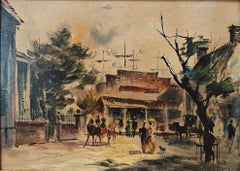
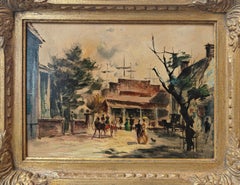
“Paris, Place du Tertre”

“Paris, Place du Tertre”

Located in Southampton, NY

Original hand colored lithograph by the French artist, Maurice Jacque of the Place du Tertre in Montmartre Paris, France. Signed in lower right margin. Titled in lower left margin. ...

Category

Early 1900s Academic Art

Materials

Archival Paper, Lithograph

A Very Fine Oil on Canvas Interior Palatial Scene Titled "Game for the Cardinal"

A Very Fine Oil on Canvas Interior Palatial Scene Titled "Game for the Cardinal"

By Charles Edouard Edmond Delort

Located in LA, CA

Charles Edouard Edmond Delort (French, 1841-1895) oil on canvas "Game for the Cardinal", depicting a seated cardinal behind an ornate French Louis XV roll-top Bureau du Roi, after th...

Category

19th Century Academic Art

Materials

Oil

San Luís de Francia - Óleo sobre tela - Siglo XIX-XX

San Luís de Francia - Óleo sobre tela - Siglo XIX-XX

Located in Sant Celoni, ES

Firmado en la parte inferior con iniciales (pero desconozco el artista) Se presenta enmarcada la obra Medidas obra: 139 cm. de altura x 104 cm. de ancho Medidas obra: 154 cm. de a...

Category

Late 19th Century Academic Art

Materials

Oil

Drölling Student Academic Life Study Of A Male Nude Framed 1840s French Drawing

Drölling Student Academic Life Study Of A Male Nude Framed 1840s French Drawing

Located in Sutton Poyntz, Dorset

Henry Arthur Roberts. French ( b.1819 - d.1900 ). Academic Life Study Of A Male Nude Carrying A Staff. Pencil & Charcoal On Paper. Paper size 23.4 inches x 13.6 inches ( 59.5cm x 34.5cm ). Frame size 28.3 inches x 18.7 inches ( 72cm x 47.5cm ). Available for sale; this academic life drawing of a male nude is by the French artist Henry Arthur Roberts and dates from the early 1840s. The drawing is presented and supplied in a modest hand painted glazed wooden frame dating from the mid-20th century (which is shown in these photographs). This antique drawing is in good condition, commensurate with its age. It is in an untouched condition having never been restored. The paper has handling marks, some light surface dirt, the odd foxing mark and general age toning. The overall patina adds to the aesthetic and is supplied ready to hang and display. The drawing is not signed but came from a portfolio of drawings by Henry Arthur Roberts. Henry Arthur Roberts was a recognised French artist, notable for his portraits and paintings of religious subjects. Born in Paris in 1819, he was the son of British watercolour artist James Roberts, himself active in Paris from 1819 -1846. Henry became a student of his father. Henry Roberts’s talent as a young man was such that he was accepted as a student of Michel Martin Drölling and worked extensively with him. Drölling, the highly acclaimed neoclassic artist (1786-1851) was noted for his theatrical paintings of history and grand portraits. He produced many notable works, including a ceiling work for the Louvre, and works in the Palace of Versailles. Roberts would have studied with Drölling at an early stage in his career, as Drölling died when Roberts was 32. Learning with such a master would have had a huge impact on Roberts in terms of his academic skills and his own emerging style. Roberts exhibited at the Salon de Paris from 1839, when he was only 20 years old, right through to 1867. His work in the Universal Exhibition of 1855 won him a Third Class Medal. He became Vice-President of the Association of Artists in Paris and in July 1898 he was elevated to the rank of Knight of the Legion of Honour with a foreign title. This was the highest state honour available to him, in recognition of his status as an artist. Henry Roberts died in 1900, but his legacy lives on, with works in many famous public collections, including the Musée Carnavalet, the Musée du Louvre, the Musée d’Orsay, Musée des Beaux-Arts, Orsay, and in Boston, USA. © Big Sky Fine Art This striking academic nude study...

Category

1840s Academic Art

Materials

Paper, Charcoal, Pencil

"Portrait of the Black Ball Clipper Montezuma"

"Portrait of the Black Ball Clipper Montezuma"

By William Minshall Birchall

Located in Southampton, NY

Watercolor on paper by William Minshall Birchall of the black ball clipper ship, the Montezuma. Titled and signed W. M. Birchall lower left in pencil. Findlay Gallery label verso. 0riginal frame and mat with normal wear due to age. The American packet ship...

Category

Early 1900s Academic Art

Materials

Paper, Watercolor

'Study for a Stained Glass Window', Devotional, Ecclesiastical, Pre-Raphaelite

'Study for a Stained Glass Window', Devotional, Ecclesiastical, Pre-Raphaelite

Located in Santa Cruz, CA

A sensitively drawn and highly-detailed study for a three-panel set of stained glass windows showing the ascension of Jesus by angels and mortals. Initialed, lower right, 'EB-J', an...

Category

1920s Academic Art

Materials

Ink, Watercolor, Gouache

Outdoor Italian Stone Sculpture of Classical Torso with Base

Outdoor Italian Stone Sculpture of Classical Torso with Base

Located in Rome, IT

This reproduction of a classical Hellenistic sculpture, a timeless piece for interior and a garden decoration. Measurement: Torso cm 100 base cm 70.

Category

1980s Academic Art

Materials

Limestone

Jeanne d'Arc by Emmanuel Frémiet

Jeanne d'Arc by Emmanuel Frémiet

Located in New Orleans, LA

Emmanuel Frémiet 1824–1910 French Jeanne d’Arc Signed “E FREMIET” This commanding bronze of Jeanne d’Arc by Emmanuel Frémiet captures one of the most enduring symbols of French n...

Category

Late 19th Century Academic Art

Materials

Bronze

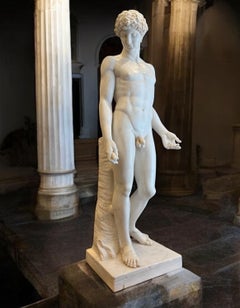
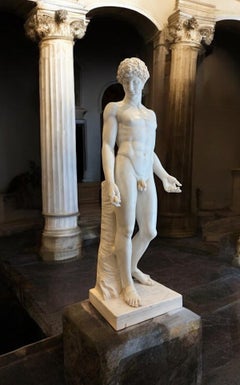
ANTINOUS Magnificent Italian Neoclassical Carrara Marble Sculpture

ANTINOUS Magnificent Italian Neoclassical Carrara Marble Sculpture

Located in Rome, IT

Outstanding 19th century Italian finely carved Carrara "Statuario" marble sculpture of Antinoo , after the Antique The Capitoline 'Antinous'. Antinous, a young Bithinius favorite...

Category

19th Century Academic Art

Materials

Marble

“Enlevement des Sabines”

“Enlevement des Sabines”

By Marius Jean Antonin Mercié

Located in Southampton, NY

Here for your consideration is a beautiful highly detailed bronze done in the forth quarter of the nineteen century after the work of Jean Boulogne, known as Giambologna. Boulogne’s sculpture was done in marble and was completed between 1579 and 1583. The sculptor of this bronze is Antonin Mercie, a well known French sculptor born in 1845. The bronze represents the Rape of the Sabine Women (Latin: Sabinae raptae), also known as the Abduction of the Sabine Women or the Kidnapping of the Sabine Women, was an incident in Roman mythology in which the men of Rome committed a mass abduction of young women from the other cities in the region. It has been a frequent subject of artists and sculptors, particularly during the Renaissance and post-Renaissance eras. Signed on base “Mercie” for Antonin Mercie.. In very good condition wirh original brown patina. The base which depicts rocks is bronze and has been painted a matt black. Provenance:: A Sarasota estate. Mercié, (Marius Jean Antonin Mercie...

Category

1880s Academic Art

Materials

Bronze

“India, 1912”
“India, 1912”

“India, 1912”

Located in Southampton, NY

Original watercolor and gouache on paper of a busy street scene in India done in 1912 by the American artist, William Henry Drake. Copyrighted signed and dated 1912 lower left. Condition is good. Recently professionally matted. Unframed. Overall matte size is 12 by 16 inches. Provenance: A Long Island, New York estate. William Henry Drake Born: 1856 New York Died: 1926 Los Angeles Nationality: American Education: Académie Julian, Art Students League of New York Known for: Painting, illustration Awards: National Academy Biography: Drake studied at the Académie Julian in Paris, with Jean-Joseph Benjamin-Constant and Henri Lucien Doucet. Back from Europe, he studied at the Cincinnati School of Design, and would often go to the zoo, where he could draw the animals. He was then employed by the Museum of Natural History. He continued to study at the Art Students League of New York. In 1878 he worked as a freelance pen-and-ink artist for such periodicals as Century or Harper’s with animal studies...

Category

1910s Academic Art

Materials

Paper, Watercolor, Gouache

Set of Extraordinary Italian Stone Statues Representing the Four Seasons

Set of Extraordinary Italian Stone Statues Representing the Four Seasons

Located in Rome, IT

Four season ,monumental classically draped female figures and their distinguishing symbols on a square base. Autumn, winter, spring and summer. Timeless classical decoration for you...

Category

20th Century Academic Art

Materials

Limestone

Pre World War II Austrian Judaica Oil Painting Hasidic Rabbi Portrait

Pre World War II Austrian Judaica Oil Painting Hasidic Rabbi Portrait

By Rudolf Klinsbogl Klingsberg

Located in Surfside, FL

Rudolf KLINGSBÖGL Austrian Viennese painter and teacher. Chassidic rebbe with Shtreimel. Klingsbogl was active in Vienna and is known for his typical portraits and paintings of interiors - workshops, pubs and cellars. His style is very distinctive. rare to find good jewish work that survived the holocaust as so much of it was destroyed. Other works by Rudolf Klingsbogl (sometimes known as Klingsberg}: Rabbis Studying Around a Table, The Huntsman, The Pet Bird, Blacksmith Interior Scene, Three Men with Chat and Drink, The Sailors, The Old Drinker, Debating the News, Sunday Afternoon, Man Looking at Pocket Watch. Game of Cards in a Tavern, Wolfgang Amadeus Mozart as a Child, Franz Schubert at the Piano, Johann Strauss (The Younger). Realistic portrait of an older rabbi visiting and blessing a child in a European marketplace...

Category

Early 20th Century Academic Art
Materials

Oil

MB 017 (Figurative Life Drawing of Female Nude by Mark Beard)

MB 017 (Figurative Life Drawing of Female Nude by Mark Beard)

By Mark Beard

Located in Hudson, NY

Academic style life drawing of female nude with charcoal and graphite by Mark Beard, "MB 017" graphite, Conte crayon and charcoal on Arches paper 30 x 22 inches unframed Signed, lowe...

Category

2010s Academic Art

Materials

Conté, Charcoal, Archival Paper, Graphite

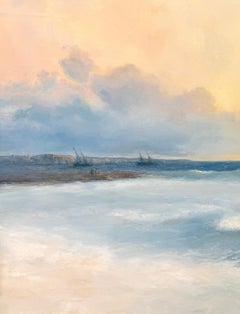
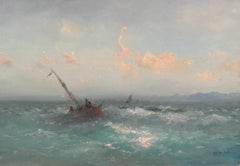
Alfred Copestick, Coastal Scene: New York, Oil on Canvas, 1857

Alfred Copestick, Coastal Scene: New York, Oil on Canvas, 1857

Located in Queens, NY

Alfred Copestick (1837–1859) Coastal Scene: New York, 1857 Oil on canvas, in the original giltwood frame 14 ¼ x 20 ⅛ in. (canvas) Signed lower right: A. Copestick NY 1857 Painted at just twenty years of age, Coastal Scene: New York demonstrates Alfred Copestick’s remarkable promise as a marine painter in antebellum America. The scene brims with energy: a single sailboat heels sharply into the wind, its rigging taut against the storm, while foamy waves break against a rugged shoreline. Above, clouds mass and dissolve, illuminated by shafts of storm-lit light. Copestick’s treatment is both romantic and naturalistic, conveying the sublime tension between man, sea, and sky. His confident brushwork captures atmosphere with an immediacy and sensitivity rarely found in so young an artist. The work survives in its original giltwood frame, richly carved in a mid-nineteenth-century American style, which not only underscores its historical authenticity but also heightens the tonal drama of the painting. Alfred Copestick came of age during a fertile moment in American painting, when marine art and landscape were central to cultural identity. Though little is known of his formal training, his works suggest familiarity with and admiration for leading marine painters such as James E. Buttersworth, famed for his racing yachts; Francis Augustus Silva, who later developed a luminist style of coastal painting; and earlier masters like Thomas Birch, whose shipwrecks and storm scenes set a precedent for drama at sea. Copestick also absorbed broader currents in American landscape painting. The Hudson River School, led by Thomas Cole, Asher B...

Category

19th Century Academic Art

Materials

Canvas, Oil

Portrait of a Lady with Red Fan oil on canvas painting

Portrait of a Lady with Red Fan oil on canvas painting

Located in Sitges, Barcelona

Artist: Francesc Domingo i Segura (Barcelona, 1893 – São Paulo, 1974) Title: Portrait of a Lady with Red Fan Technique: Oil on canvas Dimensions: 76 × 56 cm (29.9 × 22 in), unframed Signature: Signed lower left “F. Domingo” Estimated Date: ca. 1945–1955 Provenance: Private collection Condition Report: Homogeneous superficial craquelure across the surface, especially in the background; varnish possibly not original, with slight yellowing. No paint losses or visible dirt. Canvas stable and well-stretched. DESCRIPTION This female portrait depicts a distinguished woman dressed in a floral-patterned gown in green and pink tones, holding a red fan that provides contrast and character to the composition. The sitter, with a serene expression and a slightly melancholic gaze, is softly illuminated, highlighting the texture of her hair and the delicacy of her skin. The work exemplifies Francesc Domingo’s mature style, where his academic beginnings merge with a livelier palette and touches of modernity, particularly visible in the treatment of patterns. The pink background, with loose brushwork and an almost abstract texture, enhances the sitter’s presence. ARTIST BIOGRAPHY Francesc Domingo i Segura (Barcelona, 1893 – São Paulo, 1974) was one of the most versatile Catalan painters of the 20th century. Trained at the Escola Superior de Belles Oficis of the Mancomunitat, he began in the Noucentisme movement and later traveled to Paris, where he absorbed the influence of Cézanne, Cubism, and modern currents. In the 1930s, he cultivated social realism with scenes of Barcelona’s Paral·lel district and the working-class world. After the Spanish Civil War, he went into exile in Latin America, residing first in Buenos Aires and later in São Paulo, where he taught printmaking and co-founded the Grupo Bisonte. His work, with both European influences and local echoes, is represented in museums such as the MNAC and in international collections. SIMILAR ARTISTS For his focus on portraiture and the fusion of academicism and modernity, Francesc Domingo can be compared with: Ricardo Macarrón...

Category

1940s Academic Art

Materials

Canvas, Oil

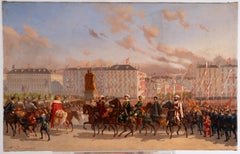
Napoleon III Review Painting, Tempera on carton, Signed, 19th Century

Napoleon III Review Painting, Tempera on carton, Signed, 19th Century

By Jean Baptiste Édouard Detaille

Located in PARIS, FR

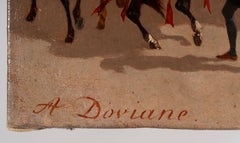
Conditions: Very good condition. In its original frame and glass. A similar composition, but less accomplished, is currently part of the collections of the Musée des Invalides. Signed at the bottom and dated. Complementary shipping worlwide by DHL, FEDEX. Description: This work of art, framed by a majestic golden frame, accurately depicts a group of soldiers in 19th-century uniforms. Every detail, from the golden buttons to the epaulettes, finely illustrates the military equipment of the time. Behind them stands a sober architectural structure, evoking a barracks or a guard post. The color palette, dominated by earthy tones and dark shades of blue, gives a solemn and dignified atmosphere to the scene. The disposition of the soldiers, turned towards the artist, with an attitude both alert and relaxed, captures a moment of daily military life. This painting, with its attention to detail and harmonious composition, transports the viewer into a bygone era, inviting reflection on history and military traditions. EDOUARD DETAILLE The emperor is accompanied by his aide-de-camp, Colonel Castelnau, and Marshal Canrobert. In a gilded wooden frame, under a Marie Louise blue background. Life and time Born in 1848 into a close-knit bourgeois family, Édouard Detaille, the eldest of eight children, displayed early talent in drawing. “He was a prodigy,” notes François Robichon. By the age of thirteen, he exhibited an astonishing surety of hand and a phenomenal sense of composition. His father, connected to Horace Vernet, encouraged him. At seventeen, after passing his baccalaureate, he entered Meissonier’s studio. This relationship, which developed into mutual affection, spared Detaille the academic detour through the École des Beaux-Arts. Rather than dictating an official art style, Meissonier, at the peak of his fame, traveled with his students, introducing them to the nuances of Titian, Rembrandt, and Rubens in Brussels and Lille. In 1867, the Paris of “free trade” dominated the world through the technological revolutions of the Universal Exhibition, and the amiable young man, striking in appearance, discovered the salon of Princess Mathilde and the theater of Dumas fils. He even approached the Empress, noting in his journals, “Not bad, the Empress.” This observation encapsulated Detaille: he had no doubts about his talent, cultivated panache, enjoyed the company of beautiful women, and aimed to conquer the circles of power without sacrificing his freedom. From childhood, he listened to his calling: “Before I could read, I could guess the subjects of battles, the names of famous generals, the weapons of officers and soldiers from the images I admired in the books of Norvins and Laurent de l'Ardèche.” He mingled with collectors and regularly attended military reviews on the Champs-Élysées. His first painting exhibited at the Salon in 1868, “La Halte de tambours,” was praised by critics who immediately recognized “a remarkable truth of observation and simplicity of effect.” The purchase of this work by Princess Mathilde, cousin of Emperor Louis-Napoleon, made Detaille, at twenty, an envied celebrity known to Sainte-Beuve, Théophile Gautier, the Goncourt brothers, and Flaubert. The young artist’s humanistic vision contrasted with the compositions of his predecessors, depicting soldiers in maneuvers, contemplative and resigned as war loomed. **The Combatant’s Vision** The Siege of Paris, where he nearly lost his life in 1870, and the deaths of two brothers in that defeat darkened his outlook. From 1871 onward, Detaille no longer concealed the cruelties of war: German riflemen mowed down by machine gun fire, cavalrymen and panicked horses caught in ambushes, fields plowed by shells strewn with dead animals. The unvarnished tragedy: “It is an absolute fact that no painter has ever rendered a battlefield covered with corpses as it is,” commented Jules Claretie. The fallen bodies still bear the appearance of life in their frozen rigidity. Detaille’s testimony of the devastating defeat and the catastrophic effects of the first total war in history was not a celebration of heroism but a lament, a “lesson in darkness.” “From war, once considered the supreme effort of human genius, we now see only melancholy and horrors,” judged one writer in response to his canvases. “Detaille experienced the reality of combat at a young age during a war that foreshadowed the two world conflicts of the 20th century,” explains François Robichon. With great realism, Detaille painted war from the perspective of the combatant. He introduced a humanity and a critical lucidity regarding the evolution of warfare. His works intensely captured the violence and firepower of new weapons like machine guns. Before he turned thirty, Detaille had become a chronicler of these painful years. He exhibited, as a critic noted, a “striking portrait of modern war” that both French civilians and soldiers had experienced firsthand. He embodied a youth humiliated and eager for revenge. Yet this scrupulous artist also remembered, in his expansive landscapes—from the chalky plateaus of Île-de-France to the Russian plains—the lessons of Corot and Courbet. Manet was not far off. “I wouldn’t want my art to be reduced to mere patriotic art,” he asserted. “A system I often employ and love is to first execute the landscape, very effective, very tight, based on nature…” Echoing Meissonier’s advice: “Always nature, always nature!” Detaille remained close to this father figure, constructing a grand townhouse next to his mentor’s studio at 129 boulevard Malesherbes at the age of 26, having purchased 425 m² of land from the Pereire brothers. He even chose the same architect as Meissonier: Paul Boesvilwald. A bachelor and incorrigible seducer, the painter welcomed his conquests, including Valtesse de la Bigne, amidst his collections, having built his studio in the courtyard. Diplomatic Actor As Detaille’s fame grew, his Malesherbes townhouse quickly became a gathering place for foreign princes, politicians, and heads of state, where Juliette Adam, Léon Gambetta’s muse, offered him valuable advice. The Prince of Wales, the future Edward VII, developed a genuine friendship with the painter. “This fervent patriot, friend of Déroulède, was extraordinarily open to the world,” recounts François Robichon. In just a few years, he gained considerable social, cultural, and international stature. Received at Windsor, at the English court, he was close to Tsar Alexander III and a great friend of Félix Faure. In this capacity, Detaille played a decisive role in the Entente Cordiale, signed in 1904 between England and France, and in the Franco-Russian alliance of 1894, thereby contributing to the Triple Entente among the three powers. An engaged witness of his time—associated with the birth of the “Ligue des Patriotes” alongside Alphonse de Neuville...

Category

Late 19th Century Academic Art
Materials

Gouache, Oil

Academic art for sale on 1stDibs.
Find a wide variety of authentic Academic art available for sale on 1stDibs. Works in this style were very popular during the 21st Century and Contemporary, but contemporary artists have continued to produce works inspired by this movement. If you’re looking to add art created in this style to introduce contrast in an otherwise neutral space in your home, the works available on 1stDibs include elements of purple, blue, orange, pink and other colors. Many Pop art paintings were created by popular artists on 1stDibs, including Karen Darbinyan, Owen Jones, Paul Jones b.1921, and Mark Beard. Frequently made by artists working with Paint, and Oil Paint and other materials, all of these pieces for sale are unique and have attracted attention over the years. Not every interior allows for large Academic art, so small editions measuring 1.5 inches across are also available. Prices for art made by famous or emerging artists can differ depending on medium, time period and other attributes. On 1stDibs, the price for these items starts at $11 and tops out at $700,000, while the average work sells for $1,444.