Modern Art

MODERN STYLE

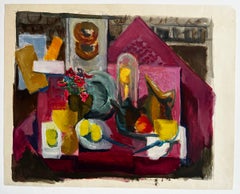
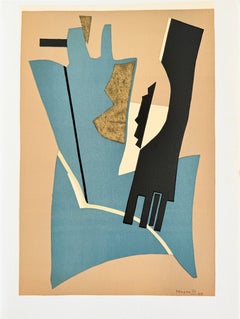
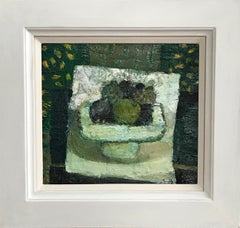
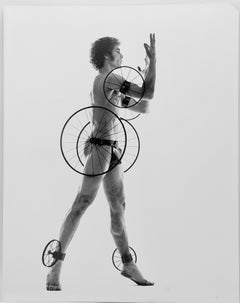
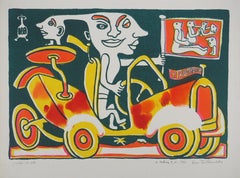
The first decades of the 20th century were a period of artistic upheaval, with modern art movements including Cubism, Surrealism, Futurism and Dadaism questioning centuries of traditional views of what art should be. Using abstraction, experimental forms and interdisciplinary techniques, painters, sculptors, photographers, printmakers and performance artists all pushed the boundaries of creative expression.

Major exhibitions, like the 1913 Armory Show in New York City — also known as the “International Exhibition of Modern Art,” in which works like the radically angular Nude Descending a Staircase by Marcel Duchamp caused a sensation — challenged the perspective of viewers and critics and heralded the arrival of modern art in the United States. But the movement’s revolutionary spirit took shape in the 19th century.

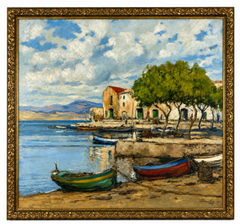
The Industrial Revolution, which ushered in new technology and cultural conditions across the world, transformed art from something mostly commissioned by the wealthy or the church to work that responded to personal experiences. The Impressionist style emerged in 1860s France with artists like Claude Monet, Paul Cézanne and Edgar Degas quickly painting works that captured moments of light and urban life. Around the same time in England, the Pre-Raphaelites, like Edward Burne-Jones and Dante Gabriel Rossetti, borrowed from late medieval and early Renaissance art to imbue their art with symbolism and modern ideas of beauty.

Emerging from this disruption of the artistic status quo, modern art went further in rejecting conventions and embracing innovation. The bold legacy of leading modern artists Georges Braque, Pablo Picasso, Frida Kahlo, Salvador Dalí, Henri Matisse, Joan Miró, Marc Chagall, Piet Mondrian and many others continues to inform visual culture today.

Find a collection of modern paintings, sculptures, prints and other fine art on 1stDibs.

to
6,477
28,617
11,215
7,349
5,517
4,794
Overall Width
to
Overall Height
to
1,304
6,732
43,088
6,392
240
463
1,156
2,496
2,191
6,756
7,427
5,801
3,073
1,135
1,174
116,432
63,592
57,520
27,873
14,619
9,437
6,666
5,796
4,335
3,118
2,508
2,375
2,124
613
30,451
20,952
4,293
32,698
16,580
12,134
9,139
8,508
6,454
4,860
4,057
3,742
3,682
3,452
3,355
2,608
2,397
2,147
1,994
1,863
1,715
1,686
1,643
10,935
10,146
9,865
5,916
5,836
6,751
2,500
1,282
433
286
6,017
27,292
29,402
20,520
Style: Modern
L'Ogre Enjoue, 1969
L'Ogre Enjoue, 1969

L'Ogre Enjoue, 1969

By Joan Miró

Located in Palo Alto, CA

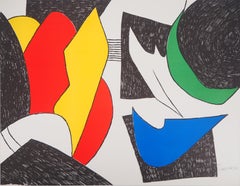
Vibrant hues of red, green, yellow and blue intersect against bold black curves in Joan Miró The Playful Ogre (L’Ogre Enjoue), 1969. This lively and commanding artwork is appropriate...

Category

1960s Modern Art

Materials

Etching, Aquatint

Garrapata Beach
Garrapata Beach

Garrapata Beach

By Brett Weston

Located in Pacific Grove, CA

This silver gelatin print is signed and dated in pencil on the front of the mount. Accompanied by a sheet that's titled and dated in pencil by Robert K. Byers, a long time friend and...

Category

1950s Modern Art

Materials

Silver Gelatin

Summer : Harvest Time - Original Lithograph

Summer : Harvest Time - Original Lithograph

By Raoul Dufy

Located in Paris, IDF

Raoul DUFY Summer : Harvest Time, 1953 Original Lithograph with stencil watercolor With printed signature in the plate On Arches vellum 28 x 38 cm (c. 11 x 15 inch) Very good condi...

Category

1950s Modern Art

Materials

Lithograph

Speckled Black Face, 1948

Speckled Black Face, 1948

By Pablo Picasso

Located in Palo Alto, CA

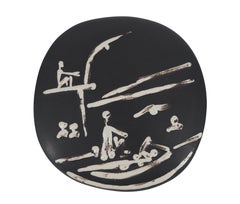
Pablo Picasso, Speckled Black Face, 1948 A.R. 49, is a beautiful and early example from Picasso’s groundbreaking ceramic collaboration with the renowned Madoura Pottery in Vallauris,...

Category

1940s Modern Art

Materials

Clay, Ceramic

Cubist Landscape And Architectural Scene With Figures And Arches

Cubist Landscape And Architectural Scene With Figures And Arches

Located in Cirencester, Gloucestershire

Title: Cubist Landscape And Architectural Scene With Figures And Arches Guy Nicod (French 1923 - 2021) Gouache on artist paper, unframed Size: 14.5 x 21.5 inches (height x width) Pr...

Category

Mid-20th Century Modern Art

Materials

Gouache

Vintage American Modernist New Hampshire Landscape Signed Framed Oil Painting

Vintage American Modernist New Hampshire Landscape Signed Framed Oil Painting

Located in Buffalo, NY

Vintage American modernist landscape oil painting. Oil on canvasboard. Framed. Measuring: 13 by 16 inches overall, and 10 by 13.5 painting alone. In excellent original condition. Ha...

Category

1950s Modern Art

Materials

Oil, Board

Untitled Diptych by Suzanne Law. Paintings Framed

Untitled Diptych by Suzanne Law. Paintings Framed

Located in Miami Beach, FL

Untitled Diptych, painting by Suzanne Law. Framed Overall size: Image size: 12.6 in. H x 34.2 in W Frame size: 18.1 in. H x 44.8 in W x 1 in D Individual size: Image size: 12.6 in. ...

Category

1990s Modern Art

Materials

Canvas, Wood, Acrylic

Monumental Abstract Modernist Oil Panel Oregon Centennial Exposition Mural 1959

Monumental Abstract Modernist Oil Panel Oregon Centennial Exposition Mural 1959

By Louis Bunce

Located in Portland, OR

Monumental modernist oil on panel painting by Louis Demott Bunce (1907-1983), from an installation for the Oregon Centennial Exposition, 1959. A rare & important and monumental abstract painting by the celebrated Oregon artist Louis Bunce, the artist was commissioned to paint a mural for the 1959 Oregon Centennial & Trade Fair in Portland, the installation was titled " Gay Garden Way ", it was painted for the exterior of the Horticultural building. The mural having abstract plant abstractions, according to Bunce in his own words it was "the rounded shapes of flowers and the sun", the mural created a major furor from the conservative art public. The painting signed and dated by the artist lower left, the work was sold in the late 1980s through the celebrated Laura Russo Gallery, this painting is featured in Roger Hull's book; "Louis Bunce, Dialogue with Modernism". The painting is in good condition and ready to grace your wall. Louis Bunce attended high school and the Museum Art School before leaving for the Art Students League in New York. He established a New York connection that began when he first attended classes there in 1927 and continued over the years with frequent visits. He became friends with many promising artists, including Jackson Pollock and David Smith. In 1939 he worked for the WPA Easel Project in New York and by the time he returned to Portland he was an established artist on the East Coast. He worked at the WPA art center in Salem as an Instructor and Assistant Director. His work included murals, two of which are in the Post Offices in Grants Pass and St. Johns. Their subjects, mining and orchard farming, are activities of each region. "I have always been visually drawn to the landscape, at first the desert and mountain regions of Wyoming; then the lush and gentle color of the Pacific Northwest and the urban landscape of New York." From 1942-1945 he worked as an illustrator, a tool designer, and in assembly for the Oregon Shipbuilding Corporation. After WWII, Bunce joined the faculty of the Museum Art School in Portland, where he had been a student in 1925-1926. He taught there until his retirement in 1972. He excelled at producing screen-prints and introduced this technique to Oregon. While maintaining a national reputation throughout the 1950s and 1960s, some of New York's most prestigious galleries represented him. Theater buffs will remember his murals and portraits for Portland Civic Theater's 1938 production of Pride and Prejudice. In a career that made him one of the most recognized names in Oregon's art history, Bunce had many styles: cubism, expressionism, surrealism and abstractionism. His 1958 mural in the Portland International Airport presents this abstract style: "whirling propellers and shadows of the concourse as seen from above." It was controversial at the time as being too abstract for a public art project. Louis and wife Eda opened a full-time art gallery in Portland in 1949, called the Kharouba. Located first at 1016 SE Morrison, then at SW 11th and Alder, the gallery represented many of the leading artists of the day: Josephine Cameron, William Givler, Clifford Gleason, Jack Hammack, Charles Heaney, Frederick Heidel, George Johanson, Jack McLarty, Rick Norwood, C.S. Price, Arthur Runquist, Jolan Torok, Charles Voorhies...

Category

1950s Modern Art

Materials

Oil

In the Poppy Field - Original Lithograph Signed

In the Poppy Field - Original Lithograph Signed

By Yves Ganne

Located in Paris, IDF

Yves GANNE (1931-2019) In the Poppy Field Original Lithograph Signed on pencil Justified EA (artist's proof) Numbered out of 35 copies On vellum Arches 76 x 54 cm (c. 29.92 x 21.25 ...

Category

Late 20th Century Modern Art

Materials

Lithograph

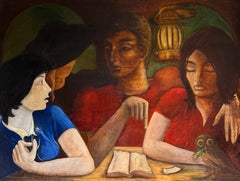
Solace of My Native Land - 21st Century, Contemporary, Figurative, Women, Africa

Solace of My Native Land - 21st Century, Contemporary, Figurative, Women, Africa

Located in Ibadan, Oyo

Shipping Procedure Ships in a well-protected tube from Nigeria This work is unique, not a print or other type of copy. Accompanied by a Certificate of Authenticity (issued by The Gal...

Category

21st Century and Contemporary Modern Art

Materials

Fabric, Canvas, Charcoal, Mixed Media, Acrylic, Pencil

Care
Care

Care

Located in Zofingen, AG

Care Series Becoming This work reflects the state of a woman who nourishes the world around her simply through her presence. She does not act — she radiates. Her calm becomes a sourc...

Category

2010s Modern Art

Materials

Canvas, Acrylic

Alberto Giacometti, Annette, from L'Atelier Mourlot, 1965

Alberto Giacometti, Annette, from L'Atelier Mourlot, 1965

By Alberto Giacometti

Located in Southampton, NY

This exquisite lithograph by Alberto Giacometti (1901–1966), titled Annette (Annette), from the album Les Lithographies de L'Atelier Mourlot, Paris (The Lithographs of the Mourlot Workshop, Paris), originates from the 1965 edition published by Redfern Gallery, London; printed by Mourlot Freres, November, 1965. This artwork reflects Giacometti’s masterful exploration of portraiture, where searching line and expressive repetition capture the psychological presence of the sitter with both immediacy and existential depth. Executed as a lithograph on velin d’Arches paper. 10 x 7.5 inches. Unsigned and unnumbered as issued. The impression reflects the exceptional quality associated with the Mourlot atelier, renowned for its collaborations with the most important artists of the twentieth century. Artwork Details: Artist: Alberto Giacometti (1901–1966) Title: Annette (Annette), from Les Lithographies de L'Atelier Mourlot, Paris (The Lithographs of the Mourlot Workshop, Paris), 1965 Medium: Lithograph on velin d’Arches paper Dimensions: 10 x 7.5 inches Inscription: Unsigned and unnumbered as issued Date: 1965 Publisher: Redfern Gallery, London Printer: Mourlot Freres, Paris Condition: Well preserved, consistent with age and medium Provenance: From Les Lithographies de L'Atelier Mourlot, Paris, published by Redfern Gallery, London, 1965 Notes: Excerpted from the album (translated from French), This album was published on the occasion of the exhibition, "The Mourlot Workshop" at The Redfern Gallery, 20, Cork Street London WI, December 7, 1965 to January 31, 1966. There were printed of this work M examples on velin d’Arches, and C examples on velin de Rives BFK, reserved for the artists, collaborators, and friends of the Imprimerie Mourlot and the Redfern Gallery. About the Publication: Les Lithographies de L'Atelier Mourlot, Paris (The Lithographs of the Mourlot Workshop, Paris), published in 1965 by the Redfern Gallery in London, stands as a landmark publication dedicated to one of the most important print ateliers of the twentieth century. Produced in conjunction with a major exhibition highlighting the achievements of the Mourlot workshop, the album celebrates the collaborative relationship between artists and master printers that defined modern lithography. Mourlot Freres, based in Paris, worked closely with leading figures of modern art, including Picasso, Miro, Chagall, Braque, and many others, providing the technical expertise necessary to translate their visions into lithographic form. The publication presents a curated selection of original lithographs that exemplify the range, innovation, and artistic excellence of the atelier, reflecting both the technical mastery of Mourlot and the creative diversity of the artists it supported. Printed with exceptional care and distributed through an international gallery context, the album represents a significant moment in the history of twentieth century printmaking, bridging the worlds of exhibition, publication, and artistic production. Today, it remains highly regarded by collectors and scholars as a definitive document of the Mourlot workshop’s central role in shaping modern graphic art. About the Artist: Alberto Giacometti (1901–1966) was a Swiss sculptor, painter, and draughtsman whose hauntingly elongated figures and existential vision redefined modern art and made him one of the most influential artists of the 20th century. Born in Borgonovo, Switzerland, into an artistic family his father, Giovanni Giacometti, was a noted Post Impressionist he was immersed in art from an early age before studying in Geneva and moving to Paris in 1922, where he became part of the city’s avant garde alongside Pablo Picasso, Alexander Calder, Salvador Dali, Joan Miro, Wassily Kandinsky, Marcel Duchamp, and Man Ray. In the 1920s and 1930s, Giacometti explored Cubism and Surrealism, creating symbolic and dreamlike sculptures such as Suspended Ball (1930–31) and The Palace at 4 A.M. (1932), which reflected the influence of Dali, Duchamp, and Man Ray. By the 1940s, he abandoned Surrealism to pursue a deeply personal exploration of the human condition, developing his iconic attenuated figures that embodied both fragility and resilience. His signature sculptures L’Homme qui marche I (Walking Man I), Femme debout, and Le Chariot expressed the isolation, endurance, and vulnerability of modern existence, echoing the existential philosophy of Jean Paul Sartre and Simone de Beauvoir. Giacometti’s figures stripped of mass yet monumental in spirit symbolized humanity’s search for meaning in a postwar world, while his paintings and drawings portraits of his brother Diego, his wife Annette, and his friends captured the psychological depth of perception with trembling, repetitive lines that blurred the boundary between body and soul. His friendships with Picasso, Calder, Miro, and Kandinsky shaped his understanding of form, motion, and space, while his philosophical engagement with Duchamp and Man Ray deepened his inquiry into the nature of reality and perception. Working obsessively in his modest Montparnasse studio, Giacometti pursued art as an existential act destroying and rebuilding his figures in an endless search for truth. His influence on postwar art was immense, shaping the work of Henry Moore, Francis Bacon, Louise Bourgeois, Lucian Freud, and later contemporary sculptors such as Antony Gormley and Anselm Kiefer. His aesthetic also resonated beyond sculpture, influencing fashion, photography, and architecture through his vision of form, isolation, and proportion. Giacometti’s work is represented in major museum collections including MoMA, the Tate Modern, and the Centre Pompidou, and continues to inspire artists, collectors, and thinkers worldwide. Standing alongside Pablo Picasso, Alexander Calder, Salvador Dali, Joan Miro, Wassily Kandinsky, Marcel Duchamp, and Man Ray, Giacometti remains a towering figure in modern art a sculptor philosopher who transformed the human form into a universal symbol of resilience and reflection. His highest auction record was achieved by L’Homme qui marche I (Walking Man I), which sold for 141.3 million USD at Sotheby’s, London, on February 3, 2010, reaffirming Alberto Giacometti’s enduring legacy as one of the most visionary, profound, and collectible artists in the history of modern art. Alberto Giacometti Annette...

Category

1960s Modern Art

Materials

Lithograph

Farmer with Sheep & Dog in Valley Fields Contemporary British Painting

Farmer with Sheep & Dog in Valley Fields Contemporary British Painting

Located in Cirencester, Gloucestershire

The Sheep Farmer by Ben George Powell, British contemporary artist signed acrylic on board, framed framed: 19 x 22.5 inches board: 16 x 20 inches provenance: private collection of th...

Category

21st Century and Contemporary Modern Art

Materials

Acrylic

Classical Still Life Oil Painting Ornate Flowers on Stone Plinth Large Canvas

Classical Still Life Oil Painting Ornate Flowers on Stone Plinth Large Canvas

Located in Cirencester, Gloucestershire

Still Life of Flowers on a Stone Plinth European artist, late 20th century oil on canvas, unframed canvas : 24 x 36 inches provenance: private collection, south west of England condi...

Category

20th Century Modern Art

Materials

Oil

A Fine 1946 Modern Figure Study of a Handsome Young Male Model Wearing a Suit

A Fine 1946 Modern Figure Study of a Handsome Young Male Model Wearing a Suit

By Harold Haydon

Located in Chicago, IL

A Fine 1940s, Mid-Century Modern Academic Figure Study Portrait of a Handsome, Seated Male Model Wearing a Suit by Notable Chicago Artist, Harold Haydon (Am. 1909-1994). An exceptionally well executed early 1940s charcoal...

Category

Mid-20th Century Modern Art

Materials

Paper, Charcoal

1930's Modernist Oil Painting Paris Rooftops Hazel Guggenheim Mckinley Fauvist

1930's Modernist Oil Painting Paris Rooftops Hazel Guggenheim Mckinley Fauvist

By Hazel Guggenheim McKinley

Located in Surfside, FL

Hazel Guggenheim King-Farlow McKinley (American, London, New Orleans, 1903-1995), "Paris Rooftops" c. 1930 Oil paint on wood panel Attributed, dated and titled verso (I am not sure in whose hand not signed by the artist herself). Dimensions H.- 18 in., W.- 15 in., Framed- H.- 26 1/2 in., W.- 23 in. Provenance: From an estate New Orleans, Louisiana. Hazel Guggenheim King-Farlow McKinley (born Barbara Hazel Guggenheim; April 30, 1903 – June 10, 1995) was an American painter, art collector, and art benefactor. Hazel Guggenheim was born in New York City to Benjamin Guggenheim and Fleurette (Seligman) Guggenheim. The marriage united two wealthy German-Jewish families. Born into the well-known Guggenheim family, a niece of Solomon Guggenheim who founded the Guggenheim Museum, she grew up in New York, alongside her sisters Benita Guggenheim and Marguerite Peggy Guggenheim who would become the influential gallery proprietor, art collector, museum founder, and midwife to the Abstract Expressionism art movement. Her father Benjamin gave up much of his financial interest in the family's mining business to start his own business in Paris. With his business failing, in 1912 he set out to return to the United States in time for McKinley's ninth birthday on the Titanic. Following the shipwreck, he drowned aged 46; his body was not recovered. McKinley inherited $450,000. She later inherited money on the deaths of her mother, and of her older sister, Benita, who died in childbirth. The loss of her father haunted McKinley for the rest of her life, and in 1969 she recorded "In Memoriam, Titanic Lifeboat Blues." McKinley began painting as a teenager and was a prolific artist throughout her life. When she fled New York for Paris at age 19 she studied at the Sorbonne and became part of 1920's bohemian Paris, France, where she was taught by key modernism artists of the time. Her primary mediums were ink, water color, tempera, and crayon. Some of her work is hand signed and some is not. In 1928 her sister Peggy moved to London and mar­ried the British writer John Holmes. In 1931, McKinley married the Englishman Denys King-Farlow. They settled in Sussex, UK, and had two children, John King-Farlow, who became a philosopher and poet, and Barbara Benita King-Farlow, who became an artist in her own right. In 1938 Peggy opened Guggenheim Jeune, a London gallery of mod­ern art, starring Wassily Kandinsky, Henry Moore, Salvador dali, Constantin Brancusi, Max Ernst, Pablo Pic­asso and Jean Miro with whom they socialized. Whilst living in the south of England with Denys King-Farlow in the 1930s, McKinley was influenced by a group of avant-garde artists, and had her first solo exhibition in London in April 1937 at the Coolings Gallery. She received instruction from British artists Rowland Suddaby, Raymond Coxon, and Edna Ginesi, becoming associated with the London Group and the Euston Road School. She painted primarily in watercolor. Her work included still-life, portraits, townscapes and landscapes. Although her first work was done in a "slightly plain palette," her later work in the 1930s brightened, sometimes falling within the realm of fauvism. "Under the influence of the Surrealist artists, Hazel's paintings after the 1930's became freer, though her work was far more whimsical and humorous than many artists more closely associated with the surrealism movement." In 1939 McKinley fled Europe due to the impending war and returned to the US, living mostly in California. She took brief art lessons from her sister Peggy's one-time husband Max Ernst and much later attended several summer schools taught by muralist and renowned teacher Xavier Gonzalez. In her life in the United States and abroad, McKinley met many prominent artists of the Paris, London, and New York art scenes including Jackson Pollock. McKinley continued to paint, and ran a small gallery of her own in the late 1950s and early 1960s in West Cornwall, Connecticut. One show at her gallery featured the works of British and Irish painters including Rowland Suddaby, Frank Beteson, Tom Nisbett, and Patrick Swift. McKinley showed two of her own works in the same exhibit, a watercolor painted at Positano, Italy and one painted at the Tuileries, Paris. Another featured work was a surrealistic water color portrait of McKinley by London artist Mervyn Peake. McKinley exhibited her work both in Europe and the United States throughout her long career, mostly at smaller venues. An incomplete listing of her exhibits and museum acquisitions of her work include: Berkshire Museum, the Galerie Raymond Duncan in Paris, Stendahl Galleries, the Jake Zeitlin Gallery, the Montgomery Museum of Fine Art, the Artists' Own Gallery in London, the Manchester City Art Gallery, and Santa Fe Art Museum. McKinley's work was only once included in a show by her sister Peggy. In 1943 McKinley was selected to exhibit a painting in Peggy's infamous show Exhibition by 31 Women in her New York gallery Art of This Century. The exhibition was radical at the time for being one of the first all-woman exhibitions, as well as showing only abstract or Surrealist works. The Exhibition by 31 Women was conceived by Peggy Guggenheim in collaboration with Marcel Duchamp, who is usually credited with suggesting the idea. The participating artists were selected by a jury that included André Breton, Max Ernst Duchamp, and Guggenheim. Advice was sought from Alfred H. Barr Jr., first director of the Museum of Modern Art in New York, who provided Guggenheim with five names, of which three were included in the exhibition, Suzy Frelinghuysen, Irene Rice Pereira, and Esphyr Slobodkina. Those already known to Guggenheim through their partners included Xenia Cage, wife of the composer John Cage, Frida Kahlo, wife of Diego Rivera, who was noted for his frescoes, Sophie Taeuber-Arp, wife of the sculptor, Hans Jean Arp, and Jacqueline Lamba, ex-wife of the surrealist André Breton. Guggenheim’s sister, Hazel Guggenheim McKinley and her daughter, Pegeen Vail Guggenheim exhibited. Also in the exhibition was the burlesque dancer, Gypsy Rose Lee, another friend of Guggenheim, who was possibly included more to help publicise the event than for her artistic skills. Other artists were friends of Guggenheim or of Max Ernst. One, Dorothea Tanning, was Ernst's lover, leading Guggenheim to say: "I realized that I should have only had thirty women in the show". Only one artist is known to have refused the invitation to submit works, Georgia O'Keeffe, who reportedly responded that she wished to be identified as a painter, and not singled out because of her gender. In the late 1950s, McKinley moved back to Europe for a while, before returning to the United States in 1969. She lived in New Orleans until her death in 1995. On her death, her only living son, John King-Farlow, wrote a poem in his mother's honor, entitled "Eulogy For My Mother (Hazel Guggenheim McKinley, Artist)." A short obituary distributed by the Associated Press noted she was a member of the illustrious New York Guggenheim family, that she was determined to make a name for herself as an artist, that her art works were shown in museums in the United States and Europe, and were in the collections of such celebrities as Greer Garson, Benny Goodman, and Jason Robards. In 1998 after her death, one of her paintings was exhibited in Peggy Guggenheim's Venice home museum the Palazzo Venier dei Leoni. Guggenheim’s work in various media and her connections to influential artists and collectors provide glimpses into the complex tapestry of the art world in the first half of the 20th century. In her later life she settled in New Orleans, where she continued painting, exhibiting, and studying art into her eighties at Newcomb College, New Orleans. She was part of a regional art scene that included Ida Kohlmeyer, George Rodrigue, Noel Rockmore and Hunt Slonem. Towards the end of her life while confined to bed, her last works were colored pen drawings and sketches. McKinley collected major contemporary artworks and she donated many of these works to public institutions. She donated over 15 works to Wakefield Art Gallery, UK, in the 1930s, and in 1938 presented the painting Cossacks...

Category

1930s Modern Art

Materials

Oil, Panel

1965 Vintage Mid Century Modern Swedish Landscape Oil Painting - Coastal Fields

1965 Vintage Mid Century Modern Swedish Landscape Oil Painting - Coastal Fields

Located in Bristol, GB

COASTAL FIELDS Size: 30 x 57 cm (including frame) Oil on canvas A soothing mid-century modernist landscape that distils the essence of a coastal countryside into a harmonious arrang...

Category

Mid-20th Century Modern Art

Materials

Canvas, Oil

New York Skyline, NY; East River

New York Skyline, NY; East River

By Leon Dolice

Located in Middletown, NY

Etching on medium stock, cream wove paper, 5 15/16 x 10 3/16 inches (151 x 259 mm), full margins. Signed and titled in pencil, lower margin. A fine and detailed impression in dark bl...

Category

1930s Modern Art

Materials

Archival Paper, Etching

Baden Baden, Casino
Baden Baden, Casino

Baden Baden, Casino

By LeRoy Neiman

Located in San Francisco, CA

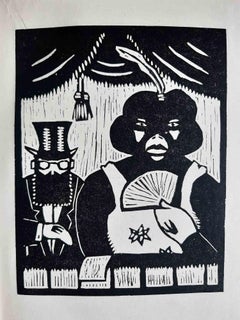
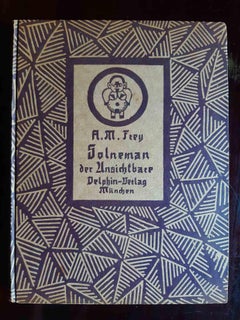
This artwork titled "Baden Baden, Casino" 1988 is an original color serigraph by noted American artist LeRoy Neiman, 1921-2012. It is hand signed and numbered 261/375 in pencil by the artist. The image size is 36 x 42 inches, sheet size is 42 x 48 inches. With the blind stamp of the printer Styria Studio at the lower left corner margin. It is in excellent condition, three small pieces of hanging tape remain on the back. About the artist: Mr. Neiman's kinetic, quickly executed paintings and drawings, many of them published in Playboy, offered his fans gaudily colored visual reports on heavyweight boxing matches, Super Bowl games and Olympic contests, as well as social panoramas like the horse races at Deauville, France, and the Cannes Film Festival. Quite consciously, he cast himself in the mold of French Impressionists like Toulouse-Lautrec, Renoir and Degas, chroniclers of public life who found rich social material at racetracks, dance halls and cafes. Mr. Neiman often painted or sketched on live television. With the camera recording his progress at the sketchpad or easel, he interpreted the drama of Olympic Games and Super Bowls for an audience of millions. When Bobby Fischer and Boris Spassky faced off in Reykjavik, Iceland, to decide the world chess championship, Mr. Neiman was there, sketching. He was on hand to capture Federico Fellini directing "8 ½" and the Kirov Ballet performing in the Soviet Union. In popularity, Mr. Neiman rivaled American favorites like Norman Rockwell, Grandma Moses and Andrew Wyeth. A prolific one-man industry, he generated hundreds of paintings, drawings, watercolors, limited-edition serigraph prints and coffee-table books yearly, earning gross annual revenue in the tens of millions of dollars. Although he exhibited constantly and his work was included in the collections of dozens of museums around the world, critical respect eluded him. Mainstream art critics either ignored him completely or, if forced to consider his work, dismissed it with contempt as garish and superficial — magazine illustration with pretensions. Mr. Neiman professed not to care. Maybe the critics are right," he told American Artist magazine in 1995. "But what am I supposed to do about it — stop painting, change my work completely? I go back into the studio, and there I am at the easel again. I enjoy what I'm doing and feel good working. Other thoughts are just crowded out." His image suggested an artist well beyond the reach of criticism. A dandy and bon vivant, he cut an arresting figure with his luxuriant ear-to-ear mustache, white suits, flashy hats and Cuban cigars. "He quite intentionally invented himself as a flamboyant artist not unlike Salvador Dalí, in much the same way that I became Mr. Playboy in the late '50s," Hugh Hefner told Cigar Aficionado magazine in 1995. LeRoy Runquist was born on June 8, 1921, in St. Paul. His father, a railroad worker, deserted the family when LeRoy was quite young, and the boy took the surname of his stepfather. He showed a flair for art at an early age. While attending a local Roman Catholic school, he impressed schoolmates by drawing ink tattoos on their arms during recess. As a teenager, he earned money doing illustrations for local grocery stores. "I'd sketch a turkey, a cow, a fish, with the prices," he told Cigar Aficionado. "And then I had the good sense to draw the guy who owned the store. This gave me tremendous power as a kid." After being drafted into the Army in 1942, he served as a cook in the European theater but in his spare time painted risqué murals on the walls of kitchens and mess halls. The Army's Special Services Division, recognizing his talent, put him to work painting stage sets for Red Cross shows when he was stationed in Germany after the war. On leaving the military, he studied briefly at the St. Paul School of Art (now the Minnesota Museum of American Art) before enrolling in the School of the Art Institute of Chicago, where, after four years of study, he taught figure drawing and fashion illustration throughout the 1950s. When the janitor of the apartment building next door to his threw out half-empty cans of enamel house paint, Mr. Neiman found his métier. Experimenting with the new medium, he embraced a rapid style of applying paint to canvas imposed by the free-flowing quality of the house paint. While doing freelance fashion illustration for the Carson Pirie Scott department store in Chicago in the early 1950s, he became friendly with Mr. Hefner, a copywriter there who was on the verge of publishing the first issue of a men's magazine. In 1954, after five issues of Playboy had appeared, Mr. Neiman ran into Mr. Hefner and invited him to his apartment to see his paintings of boxers, strip clubs and restaurants. Mr. Hefner, impressed, showed the work to Playboy's art director, Art Paul, who commissioned an illustration for "Black Country," a story by Charles Beaumont about a jazz musician. Thus began a relationship that endured for more than half a century and established Mr. Neiman's reputation. In 1955, when Mr. Hefner decided that the party-jokes page needed visual interest, Mr. Neiman came up with the Femlin, a curvaceous brunette who cavorted across the page in thigh-high stockings, high-heeled shoes, opera gloves and nothing else. She appeared in every issue of the magazine thereafter. Three years later, Mr. Neiman devised a running feature, "Man at His Leisure." For the next 15 years, he went on assignment to glamour spots around the world, sending back visual reports on subjects as varied as the races at Royal Ascot, the dining room of the Tour d'Argent in Paris, the nude beaches of the Dalmatian coast, the running of the bulls at Pamplona and Carnaby Street in swinging London. He later produced more than 100 paintings and 2 murals for 18 of the Playboy clubs that opened around the world. "Playboy made the good life a reality for me and made it the subject matter of my paintings — not affluence and luxury as such, but joie de vivre itself," Mr. Neiman told V.I.P. magazine in 1962. Working in the same copywriting department at Carson Pirie Scott as Mr. Hefner was Janet Byrne, a student at the Art Institute. She and Mr. Neiman married in 1957. She survives him. A prolific artist, he generated dozens of paintings each year that routinely commanded five-figure prices. When Christie's auctioned off the Playboy archives in 2003, his 1969 painting Man at His Leisure: Le Mans sold for $107,550. Sales of the signed, limited-edition print versions of his paintings, published in editions of 250 to 500, became a lucrative business in itself after Knoedler Publishing, a wholesale operation, was created in 1975 to publish and distribute his serigraphs, etchings, books and posters. Mr. Neiman's most famous images came from the world of sports. His long association with the Olympics began with the Winter Games in Squaw Valley in 1960, and he went on to cover the games, on live television, in Munich in 1972, Montreal in 1976, Lake Placid in 1980, and Sarajevo and Los Angeles in 1984, using watercolor, ink or felt-tip marker to produce images with the dispatch of a courtroom sketch artist. At the 1978 and 1979 Super Bowls, he used a computerized electronic pen to portray the action for CBS. Although he was best known for scenes filled with people and incident, he also painted many portraits. Athletes predominated, with Muhammad Ali and Joe Namath among his more famous subjects, but he also painted Leonard Bernstein, the ballet dancer Suzanne Farrell...
Category

21st Century and Contemporary Modern Art

Materials

Screen

Vintage Mid-Century Modern Abstract Landscape Oil Painting - Autumn Streetwalk

Vintage Mid-Century Modern Abstract Landscape Oil Painting - Autumn Streetwalk

Located in Bristol, GB

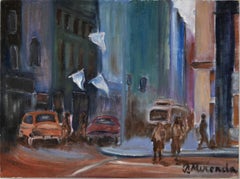
AUTUMN STREETWALK Oil on board Size: 55 x 49 cm (including frame) A vibrant mid-century modernist street scene composition, executed in oil onto board. The artwork portrays a pathw...

Category

Mid-20th Century Modern Art

Materials

Oil, Board

Still Life with Irises

Still Life with Irises

Located in Bryn Mawr, PA

Still Life with Irises Oil on canvas 46 3/4 x 38 inches (118.7 x 96.5 cm) Framed dimensions 55 1/2 x 46 1/2 inches Signed lower right: CARLES Provenance Alexander Liberman, Philadel...

Category

Early 20th Century Modern Art

Materials

Canvas, Oil

Factory #2/Yellow Shed

Factory #2/Yellow Shed

By Marina Stern

Located in Los Angeles, CA

This work is part of our exhibition Marina Stern Luminary, the first retrospective of the artist since 2007. Marina Stern was a multifaceted New York-based artist whose works ranged from Expressionism and Pop Art to the Neo Immaculate paintings and pastels for which she is best known. A native of Venice, Stern and her family fled in 1939 to escape Italy’s repressive racial laws. After living in England for several years, the family arrived in the United States in 1941. A bright and capable student, Stern graduated from New York’s Julia Richman High School at age 15 and soon enrolled in the Pratt Institute to pursue an interdisciplinary education in the arts. Despite majoring in advertising design, Stern favored her fine art courses. She graduated from Pratt in 1946 at age 18 and began working for advertising agencies. After a brief marriage which ended in divorce, Stern married her second husband, who encouraged the artist to study at the Art Students League of New York, under the renowned Japanese American modernist, Yasuo Kuniyoshi. In Fall 1953, Stern gave birth to her first child, Michael, as she continued to study at the Arts Students League. Later in the Spring of 1957, Stern gave birth to her daughter Nina, as she continued to balance motherhood with her fine art practice and commercial art and design work. Stern’s first significant exhibitions were in 1962 at the Waverly Gallery and the Osgood Gallery, both in New York, followed by inclusion of her work in the Bertha Schaefer Traveling Collage Show from 1963 to 1964. Stern made a splash in the avant-garde art world in 1964 when Time magazine reviewed a show at Amel Gallery which featured three of her audio-visual paintings. Time’s critic noted that Stern created the “cleverest noisemakers” in the exhibition. Time dubbed this work “Talkie Pop,” a label which Stern rejected. Following this recognition, Stern was selected for inclusion in The New American Realism at the Worcester Art Museum—a major showcase of leading artists, including Andy Warhol, Robert Indiana, Roy Lichtenstein, and Jasper Johns. After the Worcester exhibition, Stern began to shift away from her “talking” Pop paintings to mysterious, interior scenes with orange, blue or black walls with windows or doors rising above black and white floors, often depopulated, but sometimes with figures. One of these works, Seven Minus Twenty-One Equals Seven, entered the permanent collection of New York’s Museum of Modern Art in 1966. By 1969, Stern began to incorporate industrial images into these scenes, and in the early 1970s, Stern created her first Neo-Immaculate works of rural, and urban landscapes, which she described as her most satisfying work. Stern often depicted locations that she held close -- New York, New Jersey, Iowa (where her son attended college), Sharon, Connecticut (where her family spent weekends and vacations) and her native Venice, Italy. Stern’s success as a Neo Immaculate painter led to consistent New York gallery representation for over two decades, first with Lee Ault & Co and James Yu Gallery, and then Forum Gallery, where she had six solo shows. Stern completed a Neo-Immaculate mural commission for the Port Authority of New York, George Washington Bridge #1 and #2, followed by another commission from the NY Cityarts Public Art Program in 1976 for a mural on Mulberry Street. Stern also enjoyed solo exhibitions in Boston (Eleanor Rigelhaupt Gallery), Connecticut (Silo Gallery, the Hotchkiss School, J. Rosenthal Fine Arts Gallery, Tremaine Gallery, and Staib Gallery), Chicago (Michael Rosenfeld Gallery), and Santa Fe (Santa Fe East Gallery). Her work was included in group shows at over a dozen public institutions, including The National Academy of Design, The Staten Island Museum, Worcester Art Museum, the Oklahoma Art Center, and the Arkansas Art Center. The Southern Alleghenies Museum of Art hosted a retrospective of four decades of Stern’s work from January 19 to April 22, 2007, entitled Perception and the Cultural Environment: The Paintings of Marina...

Category

1990s Modern Art

Materials

Canvas, Oil

Metallica Homage - handpainted Cup w/ interior & Metallica record playing

Metallica Homage - handpainted Cup w/ interior & Metallica record playing

By Melanie Sherman

Located in Kansas City, MO

Melanie Sherman Metallica Homage - hand-painted Cup with mid-century interior and Metallica record playing 2026 Porcelain, Glaze, Underglaze, Overglaze, Vintage Transfers, 23k German...

Category

2010s Modern Art

Materials

Luster, Porcelain, Paint, Glaze, Underglaze

Original National Florida's Westcoast vintage airline poster, linen-backed

Original National Florida's Westcoast vintage airline poster, linen-backed

Located in Spokane, WA

National Florida's West Coast Original Vintage Poster, linen-backed and ready to frame. Grade A condition. No restoration, no damage, no tears. Generally, posters for National Airlin...

Category

1960s Modern Art

Materials

Offset

Jean Cocteau, Untitled, from Recipes for a Friend, 1964

Jean Cocteau, Untitled, from Recipes for a Friend, 1964

By Jean Cocteau

Located in Southampton, NY

This exquisite lithograph by Jean Cocteau (1889–1963), titled Sans titre (Untitled), originates from the 1964 album Recettes pour un ami, illustrations de Jean Cocteau (Recipes for a...

Category

1960s Modern Art

Materials

Lithograph

Modern art for sale on 1stDibs.

Find a wide variety of authentic Modern art available for sale on 1stDibs. Works in this style were very popular during the 21st Century and Contemporary, but contemporary artists have continued to produce works inspired by this movement. If you’re looking to add art created in this style to introduce contrast in an otherwise neutral space in your home, the works available on 1stDibs include elements of blue, red, orange, purple and other colors. Many Pop art paintings were created by popular artists on 1stDibs, including Kevin Westenberg, Stuart Möller, Destro, and Christel Haag. Frequently made by artists working with Paint, and Paper and other materials, all of these pieces for sale are unique and have attracted attention over the years. Not every interior allows for large Modern art, so small editions measuring 0.4 inches across are also available. Prices for art made by famous or emerging artists can differ depending on medium, time period and other attributes. On 1stDibs, the price for these items starts at $33 and tops out at $390,000, while the average work sells for $1,912.