Modern Art

MODERN STYLE

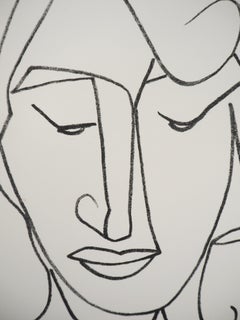
The first decades of the 20th century were a period of artistic upheaval, with modern art movements including Cubism, Surrealism, Futurism and Dadaism questioning centuries of traditional views of what art should be. Using abstraction, experimental forms and interdisciplinary techniques, painters, sculptors, photographers, printmakers and performance artists all pushed the boundaries of creative expression.

Major exhibitions, like the 1913 Armory Show in New York City — also known as the “International Exhibition of Modern Art,” in which works like the radically angular Nude Descending a Staircase by Marcel Duchamp caused a sensation — challenged the perspective of viewers and critics and heralded the arrival of modern art in the United States. But the movement’s revolutionary spirit took shape in the 19th century.

The Industrial Revolution, which ushered in new technology and cultural conditions across the world, transformed art from something mostly commissioned by the wealthy or the church to work that responded to personal experiences. The Impressionist style emerged in 1860s France with artists like Claude Monet, Paul Cézanne and Edgar Degas quickly painting works that captured moments of light and urban life. Around the same time in England, the Pre-Raphaelites, like Edward Burne-Jones and Dante Gabriel Rossetti, borrowed from late medieval and early Renaissance art to imbue their art with symbolism and modern ideas of beauty.

Emerging from this disruption of the artistic status quo, modern art went further in rejecting conventions and embracing innovation. The bold legacy of leading modern artists Georges Braque, Pablo Picasso, Frida Kahlo, Salvador Dalí, Henri Matisse, Joan Miró, Marc Chagall, Piet Mondrian and many others continues to inform visual culture today.

Find a collection of modern paintings, sculptures, prints and other fine art on 1stDibs.

to
8,267
28,631
11,240
7,298
5,438
4,768
Overall Width
to
Overall Height
to
1,304
6,709
43,063
6,324
239
432
1,166
2,525
2,192
6,788
7,413
5,739
3,051
1,153
1,173
113,735
62,506
57,404
26,794
14,690
9,388
6,498
5,552
4,274
3,051
2,410
2,355
2,231
613
30,498
20,918
4,265
32,640
16,551
12,100
9,153
8,503
6,440
4,851
4,030
3,732
3,695
3,467
3,363
2,595
2,378
2,135
1,994
1,858
1,705
1,682
1,643
10,857
10,274
9,975
5,829
5,792
6,723
2,500
1,288
428
285
5,980
26,946
28,917
20,775
Style: Modern
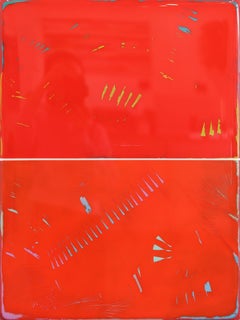
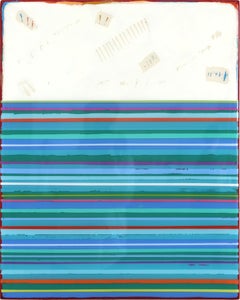
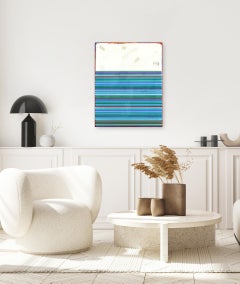
The Window 335 - Abstract Contemporary Shiny Green Tone Resin Minimalist  Art

The Window 335 - Abstract Contemporary Shiny Green Tone Resin Minimalist Art

By Ricky Hunt

Located in Los Angeles, CA

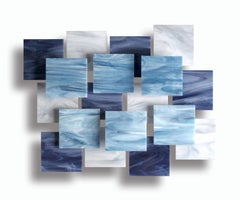
Ricky Hunt’s mixed media minimalist wall art is influenced by his tumultuous past that led to a paradigm shift in creativity and life. He covers the wood panel with layers of acrylic...

Category

21st Century and Contemporary Modern Art
Materials

Resin, Mixed Media, Acrylic, Wood Panel

Family Snapper (1959) Limited Estate Stamped - Grande XL

Family Snapper (1959) Limited Estate Stamped - Grande XL

By Slim Aarons

Located in London, GB

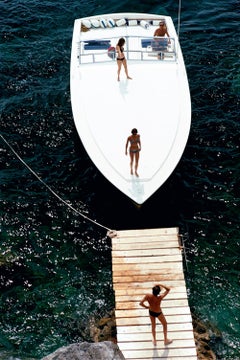
Family Snapper (1959) Limited Estate Stamped (Photo By Slim Aarons) Babe Paley (Mrs William Paley) by the pool. Her husband, William Paley is snapping the photographer at their ...

Category

1950s Modern Art

Materials

Color, Archival Pigment

Christopher Street (abstract Greenwich Village cityscape)

Christopher Street (abstract Greenwich Village cityscape)

By De Hirsch Margules

Located in Wilton Manors, FL

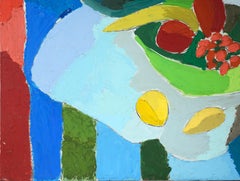
De Hirsh Margules (1899-1965). Christopher Street, 1939. Watercolor on Arches wove paper. Signed and dated in pencil by artist lower margin. Sheet measures 15.5 x 20 inches. Window in matting measures 15 x 19 inches. Framed measurement: 23 x 30 inched. Bears fragment of original label affixed on verso. Incredibly vibrant and saturated color with no fading or toning of sheet. Provenance: Babcock Galleries, NYC Exhibited: The American Federation of Arts Traveling Exhibition. From the facade of The Waverly at Christopher is depicted One Christopher Street, the 16-story Art Deco residential building erected in 1931. It is not a casual coincidence that the structure appears in this cityscape: 1 Christopher Street is the subject. The original intention of this project was to transform the neighborhood, bring a bit of affluence and make a bid to rival the Upper West Side. Margules, a sensitive aesthete, understood how a massive piece of architecture such as One changes a neighborhood. Sound, scale and focal points are forever altered. A pedestrian's sense of depth and distance becomes pronounced. All of these factors contribute to the intent behind this image. Tall buildings disrupt the human scale, change the skyline and carve up space. In this piece, negative space conforms to the man-made geometries. Clouds become gems fixed in settings. De Hirsh Margules (1899–1965) was a Romanian-American "abstract realist" painter who crossed paths with many major American artistic and intellectual figures of the first half of the 20th century. Elaine de Kooning said that he was "[w]idely recognized as one of the most gifted and erudite watercolorists in the country". The New York Times critic Howard Devree stated in 1938 that "Margules uses color in a breath-taking manner. A keen observer, he eliminates scrupulously without distortion of his material." Devree later called Margules "one of our most daring experimentalists in the medium" Margules was also a well-known participant in the bohemian culture of New York City's Greenwich Village, where he was widely known as the "Baron" of Greenwich Village.[1] The New York Times described him as "one of Greenwich Village's best-known personalities" and "one of the best known and most buoyant characters about Greenwich Village. Early Life De Hirsh Margules was born in 1899 in the Romanian city of Iași (also known as Iasse, Jassy, or Jasse). When Margules was 10 weeks old, his family immigrated to New York City. Both of his parents were active in the Yiddish theater, His father was Yekutiel "Edward" Margules, a "renowned Jewish actor-impresario and founder of the Yiddish stage." Margules' mother, Rosa, thirty-nine years younger than his father, was an actress in the Yiddish theater and later in vaudeville. Although Margules appeared as a child actor with the Adler Family[11] and Bertha Kalich, his sister, Annette Margules, somewhat dubiously continued in family theater and vaudeville tradition, creating the blackface role of the lightly-clad Tondelayo (a part later played on film Hedy Lamarr) in Earl Carroll's 1924 Broadway exoticist hit, White Cargo. Annette herself faced stereotyping as an exotic flower: writing about her publicist Charles Bouchert stated that "Romania produces a stormy, temperamental type of woman---a type admirably fitted to portray emotion." His brother Samuel became a noted magician who appeared under the name "Rami-Sami." Samuel later became a lawyer, representing magician Horace Goldin, among others. A family portrait including a young De Hirsh, a portrait of Rosa and Annette together, and individual photos of Rosa and Edward can be found on the Museum of the City of New York website. At around age 9 or 10, Margules took art classes with the Boys Club on East Tenth Street, and his first taste of exhibition was at a student art show presented by the club. By age 11, he had won a city-wide prize (a box camera) at a children's art show presented by the department store Wanamakers. As a young teenager, Margules was already displaying a characteristic kindness and loyalty. Upon hearing that two friends (one of them was author Alexander King), were in trouble for breaking a school microscope, the nearly broke Margules gave them five dollars to repair the microscope . Margules had to approach a wealthy man that Margules had once saved on the subway from a heart attack. Margules didn't reveal the source of the five dollars to King until twenty-five years later. In his late teens, Margules studied for a couple of months in Pittsburgh with Edwin Randby, a follower of Western painter Frederic Remington. Thereafter he pursued a two-year course of studies in architecture, design and decoration at the New York Evening School of Art and Design, while working as a clerk during the day at Stern's Department Store. He was encouraged in these artistic pursuits by his neighbor, the painter Benno Greenstein (who later went by the name of Benjamin Benno). Artistic career In 1922, Margules began work as a police reporter for the City News Association of New York .Margules then considered himself something of an expert on art, and the painter Myron Lechay is said to have responded to some unsolicited analysis of his work with the remark "Since you seem to know so much about it, why don't you paint yourself?" This led to study with Lechay and a flurry of painting. Margules' first show was in 1922 at Jane Heap's Little Review Gallery. Thereafter Margules began to participate in shows with a group including Stuart Davis, Jan Matulka, Buckminster Fuller (exhibiting depictions of his "Dymaxion house") in a gallery run by art-lover and restaurateur Romany Marie on the floor above her cafe. Jane Heap, left, with Mina Loy and Ezra Pound During the 1920s, Margules traveled outside of the country a number of times. In 1922, with the intent of reaching Bali, he took a job as a "'wiper on a tramp steamer where [he] played nursemaid to the engine." He reached Rotterdam before he turned back. He would return to Rotterdam shortly thereafter. In 1927, Margules took a lengthy leave of absence from his day job as a police reporter in order to travel to Paris, where he "set up a studio in Montmartre's Place du Tertre, on the top floor of an almost deserted hotel, a shabby establishment, lacking both heat and running water." He studied at the Louvre and traveled to paint landscapes in provincial France and North Africa. Margules also joined the "Noctambulist" movement and experimented with painting and showing his artwork in low light.Jonathan Cott wrote that: the painter De Hirsch Margulies sat on the quays of the Seine and painted pictures in the dark. In fact, the first exhibition of these paintings, which could be seen only in a darkened room, took place in [ Walter Lowenfels'] Paris apartment. Elaine de Kooning remarked that studying the works of the Noctambulists confirmed Margules' "direction toward the use of primary colors for perverse effects of heavy shadow." It was also in Paris that Margules initially conceived his idea of "Time Painting", where a painting is divided into sectors, each representing a different time of day, with color choices meant to evoke that time of day. In Paris, his social circle included Lowenfels, photographer Berenice Abbott, publisher Jane Heap, composer George Anthiel, sculptor Thelma Wood, painter André Favory, writer Norman Douglas, writer and editor George Davis, composer and writer Max Ewing, and writer Michael Fraenkel. Upon his return to New York in 1929, Margules attended an exhibition of John Marin's paintings. While at the exhibition, he "launched into an eloquent explanation of Marin to two nearby women", and was overheard by an impressed Alfred Stieglitz. The famous photographer and art promoter invited Margules to dine with his wife, the artist Georgia O'Keeffe, and his assistant, painter Emil Zoler. Stieglitz thereafter became a friend and mentor to Margules, becoming for him "what Socrates was to his friends." Alfred Stieglitz Stieglitz introduced Margules to John Marin, who quickly became the most important painterly influence upon Margules. Elaine de Kooning later noted that Margules was "indebted to Marin and through Marin to Cézanne for his initial conceptual approach - for his constructions of scenes with no negative elements, for skies that loom with the impact of mountains." Margules himself said that Marin was his "father and ... academy." The admiration was by no means unreciprocated: Marin said that Margules was "an art lover with abounding faith and sincerity, with much intelligence and quick seeing." Stieglitz also introduced Margules to many other artistic and intellectual figures in New York. With the encouragement of Alfred Stieglitz, Margules in 1936 opened a two-room gallery at 43 West 8th Street called "Another Place." Over the following two years there were fourteen solo exhibitions by Margules and others, and the gallery was well-respected by the press. It was in this gallery that the painter James Lechay, Myron's brother, exhibited his first painting. In 1936, Margules first saw recognition by major art museums when both the Museum of Modern Art and the Museum of Fine Arts, Boston purchased his works. In 1942, Margules gave up working as a police reporter, and apparently dedicated himself thereafter solely to an artistic vocation. "The Baron of Greenwich Village"[edit] Margules made his mark not only as an artist, but also as an outsized personality known throughout Greenwich Village and beyond. To local residents, Margules was known as the "Baron", after Baron Maurice de Hirsch, a prominent German Jewish philanthropist. Margules was easily recognizable by the beret he routinely wore over his long hair. Writer Charles Norman said that he "dressed with a flair for sloppiness." He was said to "know everybody" in Greenwich Village, to the extent that when the novelist and poet Maxwell Bodenheim was murdered, Margules was the first one the police sought to identify the body. Margules' letters show him interacting with art world figures such as Sacha Kolin, John Marin and Alfred Stieglitz, as well as with prominent figures outside the art world such as polymath Buckminster Fuller and writer Henry Miller. Most of his friends and acquaintances found Margules a generous and voluble man, given to broadly emotionally expressive gestures and acts of kindness and loyalty. In 1929, he exhibited an example of this loyalty and fellow-feeling when he appeared in court to fight what the wrongful commitment of his friend, writer and sculptor Alfred Dreyfuss, who appeared to have been a victim of an illicit attempt to block an inheritance. The Greenwich Village chronicler Charles Norman described the bone-crushing hugs that Margules would routinely bestow on his friends and acquaintances, and speaks of the "persuasive theatricality" that Margules seemed to have inherited from his actor parents. Norman also wrote about Margules' routine acts of kindness, taking in homeless artists, constantly feeding his friends and providing the salvatory loan where needed. Norman also notes that Margules was blessed with a loud and good voice, and was apt to sing an operatic air without provocation. The writer and television personality Alexander King said I think the outstanding characteristics of my friend's personality are affirmation, emphasis, and overemphasis. He chooses to express himself predominantly in superlatives and the gestures which accompany his utterances are sometimes dangerous to life and limb. Of the bystanders, I mean. King also spoke with affectionate amusement about Margules' pride in his cooking, speaking of how "if he should ever invite you to dinner, he may serve you a hamburger with onions, in his kitchen-living room, with such an air of gastronomic protocol, such mysterious hints and ogliing innuendoes, as if César Ritz and Brillat-Savarin had sneaked out, only a moment before, with his secret recipe in their pockets." Margules was such a memorable New York personality that comic book writer Alvin Schwartz imagined him at the Sixth Avenue Cafeteria in a risible yet poignant debate with Clark Kent about whether Superman had the ability to stop Hitler. Margules' entrenchment in the Greenwich Village milieu can be seen in a photograph from Fred McDarrah's "Beat Generation Album" of a January 13, 1961 writers' and poets' meeting to discuss "The Funeral of the Beat Generation", in Robert Cordier [fr]'s railroad flat at 85 Christopher Street. Among the people in the same photograph are Shel Silverstein...

Category

1930s Modern Art

Materials

Watercolor, Rag Paper

Portrait of a Female Nude

Portrait of a Female Nude

Located in Astoria, NY

Leo Feldman (American, XX), Portrait of a Female Nude Figure, Oil on Canvas, signed on top edge and verso, unframed. 30" H x 24" W. Provenance: From the Allen Tucker Memorial Colle...

Category

20th Century Modern Art

Materials

Oil, Canvas

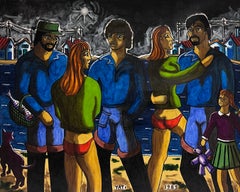
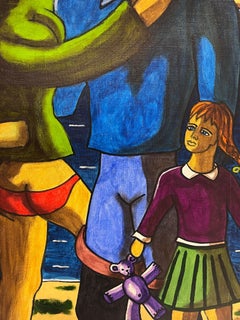
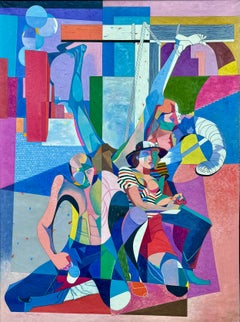
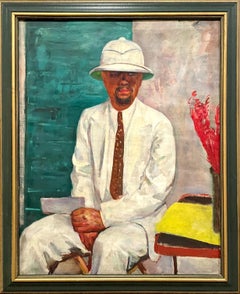
Mid-Century Painting of Party by African-American from Detroit.

Mid-Century Painting of Party by African-American from Detroit.

Located in Marco Island, FL

The scale of this dynamic party painting by Leroy Foster (1925-1993) makes you feel like you are in the room with a cocktail in hand. He was an accomplished muralist, so it is no s...

Category

1950s Modern Art

Materials

Canvas, Oil

The Gargoyle and His Quarry

The Gargoyle and His Quarry

By John Taylor Arms

Located in Plano, TX

The Gargoyle and His Quarry, Notre Dame. 1920. Etching.Fletcher 90. 7 1/8 x 5 1/4 (sheet 10 1/2 x 9 1/16). Gargoyle series #1. Edition 75. A rich impression printed on 'FJHead&Co' c...

Category

1920s Modern Art

Materials

Drypoint, Etching

1960's French Oil Painting Fashionable Lady in Paris on Bridge River Seine

1960's French Oil Painting Fashionable Lady in Paris on Bridge River Seine

Located in Cirencester, Gloucestershire

Pausing for Thought Paris School, mid 20th century signed oil on canvas, unframed painting: 25 x 20 inches provenance: private collection, Paris condition: very good and sound condition

Category

Mid-20th Century Modern Art

Materials

Oil, Canvas

the promise
the promise

the promise

Located in Zofingen, AG

This painting depicts two women covered by a colorful blanket. One of them looks directly at the viewer, while the other is lost in her thoughts. It’s about the desire to protect som...

Category

2010s Modern Art

Materials

Canvas, Oil, Acrylic

The Old Days - Historical Photo - Early 20th Century

The Old Days - Historical Photo - Early 20th Century

Located in Roma, IT

The Old Days - Historical Photo is a black and white vintage photo, realized in the early 20th century.  It belongs to historical album including historical moment, royal families, ...

Category

Early 20th Century Modern Art

Materials

Photographic Paper

'Diptych' —  Modernist Abstraction, Atelier 17

'Diptych' — Modernist Abstraction, Atelier 17

By Stanley William Hayter

Located in Myrtle Beach, SC

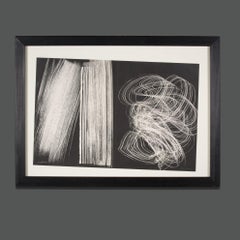
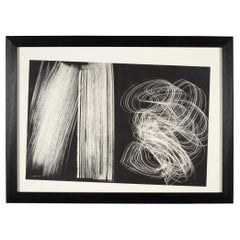
Stanley William Hayter, 'Diptych', color engraving and scorper, 1967, edition 50, Black & Moorhead 314. Signed, titled, dated, and numbered '10/50' in pencil. A superb, richly-inked impression, with fresh, vibrant colors on antique-white wove BFK Rives paper; the full sheet with margins (2 1/2 to 3 1/4 inches). Minor skinning and tape residue on the top and bottom sheet edges, verso, otherwise in excellent condition. Matted to museum standards, unframed. Image size 13 7/8 x 19 1/2 inches (146 x 108 mm); sheet size 19 7/8 x 25 3/8 inches (394 x 292 mm). Hayter created this work using engraving and scorper on 2 plates, printed side by side. He used alkali blue, printed intaglio, and a phthalo green with a hard roller on the surface. The proofing was in three states, the first with engraving (a single proof); the second adding further engraving and scorper (a single proof); the third added further engraving and editioned: color trial proofs, 5 artist's proofs, edition of 50. The edition was completed in three printings: 8 in 1967; then Hector Saunier printed numbers 9 through 18 in 1968, and numbers 19 through 50 in 1969. This impression is from the Saunier 1968 printing. Note: the online image cannot accurately convey the vibrancy of the printed alkali blue/phthalo green. An impression of this work is held in the collection of the National Gallery of Art. ABOUT THE ARTIST Stanley William Hayter (1901-1988) was a British painter and printmaker associated in the 1930s with Surrealism and from 1940 onward with Abstract Expressionism. Regarded as one of the most significant printmakers of the 20th century, Hayter founded the legendary Atelier 17 studio in Paris, now known as Atelier Contrepoint. Among the artists he is credited with influencing are Pablo Picasso, Alberto Giacometti, Joan Miró, Alexander Calder, and Marc Chagall. The hallmark of the workshop was its egalitarian structure, breaking sharply with the traditional French engraving studios by insisting on a cooperative approach to labor and technical discoveries. In 1929 Hayter was introduced to Surrealism by Yves Tanguy and André Masson, who, with other Surrealists, worked with Hayter at Atelier 17. The often violent imagery of Hayter’s Surrealist period was stimulated in part by his passionate response to the Spanish Civil War and the rise of Fascism. He organized portfolios of graphic works to raise funds for the Spanish cause, including Solidarité (Paris, 1938), a portfolio of seven prints, one of them by Picasso. Hayter frequently exhibited with the Surrealists during the 1930s but left the movement when Paul Eluard was expelled. Eluard’s poem Facile Proie (1939) was written in response to a set of Hayter’s engravings. Other writers with whom Hayter collaborated in this way included Samuel Beckett and Georges Hugnet. Hayter joined the exile of the Parisian avant-garde in 1939, moving with his second wife, the American sculptor Helen...

Category

1960s Modern Art

Materials

Engraving

Serge Poliakoff, Untitled, from XXe Siecle, 1956

Serge Poliakoff, Untitled, from XXe Siecle, 1956

By Serge Poliakoff

Located in Southampton, NY

This exquisite lithograph by Serge Poliakoff (1900–1969), titled Sans titre (Untitled), from the album XXe Siecle, Nouvelle serie, No. 7 (double), Juin 1956, originates from the 1956...

Category

1950s Modern Art

Materials

Lithograph

Henri Matisse, The Swimming Pool II, from Verve, Revue Artistique, 1958 (after)

Henri Matisse, The Swimming Pool II, from Verve, Revue Artistique, 1958 (after)

By Henri Matisse

Located in Southampton, NY

This exquisite lithograph after Henri Matisse (1869–1954), titled La Piscine II (The Swimming Pool II), from Verve, Revue Artistique et Litteraire, Vol. IX, No. 35–36, originates from the 1958 issue published by Editions de la revue Verve, Paris, under the direction of Teriade, Editeur, Paris, and printed by Mourlot Freres, Paris, 1958. La Piscine II is one of the most expansive and lyrical compositions from Matisse’s late cut-out period, inspired by his deep fascination with the movement of water, light, and the human form. The work’s sweeping arrangement of floating blue shapes and rhythmic negative space evokes swimmers and sea life in motion, transforming a simple visual theme into a poetic meditation on fluidity, serenity, and the joy of life. Through its monumental simplicity and chromatic brilliance, La Piscine II exemplifies Matisse’s mastery of “painting with scissors” and his ability to translate motion into pure visual harmony. Executed as a lithograph on velin du Marais paper, this work measures 14 x 40.5 inches, with trifold as issued. Unsigned and unnumbered as issued. The edition exemplifies the superb craftsmanship of the Mourlot Freres atelier, faithfully capturing the luminosity, rhythm, and tactile beauty of Matisse’s original gouache cut-outs. Artwork Details: Artist: After Henri Matisse (1869–1954) Title: La Piscine II (The Swimming Pool II), from Verve, Revue Artistique et Litteraire, Vol. IX, No. 35–36, 1958 Medium: Lithograph on velin du Marais paper Dimensions: 14 x 40.5 inches, with trifold as issued Inscription: Unsigned and unnumbered as issued Date: 1958 Publisher: Editions de la revue Verve, Paris, under the direction of Teriade, Editeur, Paris Printer: Mourlot Freres, Paris Catalogue raisonne reference: Duthuit, Claude. Henri Matisse: Catalogue raisonne des ouvrages illustres. Editions Claude Duthuit, Paris, 1988, illustration 139 Condition: Well preserved, consistent with age and medium Provenance: From Verve, Revue Artistique et Litteraire, Vol. IX, No. 35–36, published by Editions de la revue Verve, Paris, 1958 Notes: Excerpted from the publication, Verve, Revue Artistique et Litteraire, Vol. IX, No. 35–36, published under the direction of Teriade, Editeur, Paris, and printed by Mourlot Freres, Paris, 1958. This double issue of Verve was entirely devoted to the final works of Henri Matisse, composed of his celebrated gouache cut-outs, which the artist called “painting with scissors.” Completed shortly before his death, this issue represents the culmination of Matisse’s lifelong exploration of color, rhythm, and spiritual joy through the simplest means of expression. About the Publication: Verve, Revue Artistique et Litteraire was one of the most influential art periodicals of the 20th century, founded in Paris in 1937 by the visionary Greek-born publisher Teriade (Stratis Eleftheriades). Conceived as a synthesis of art and literature, Verve brought together the greatest modern artists and writers of its time—Henri Matisse, Pablo Picasso, Marc Chagall, Georges Braque, Joan Miro, Fernand Leger, and others—alongside poets and philosophers such as Paul Eluard, Albert Camus, and Jean-Paul Sartre. Each issue was a work of art in itself, luxuriously printed by master lithographers such as Mourlot Freres and produced in collaboration with leading typographers and designers. Verve became a platform for avant-garde creativity, publishing original lithographs and essays that reflected the evolving spirit of modernism. Matisse collaborated closely with Teriade from the magazine’s inception, producing some of its most iconic issues, including those devoted to his paper cut-outs. The final Verve issue of 1958, which featured La Tristesse du Roi, the Nu Bleu series, Poisson Chinois, and Vigne, stands as a testament to Matisse’s enduring genius and to the publication’s legacy as the definitive meeting of art, poetry, and printing craftsmanship in 20th-century France. About the Artist: Henri Matisse (1869–1954) was a French painter, sculptor, draughtsman, and printmaker whose revolutionary vision redefined modern art through his daring use of color, line, and form. Celebrated as one of the greatest artists of the 20th century, Matisse led the Fauvist movement and devoted his life to the pursuit of balance, beauty, and emotional expression in visual art. His early works burst with vibrant hues and liberated brushwork, while his later “cut-out” compositions achieved a poetic simplicity that transformed the relationship between color and space. Deeply influenced by the work of Paul Cezanne, Vincent van Gogh, and Georges Seurat, as well as by the rhythmic patterns of Islamic art, Byzantine mosaics, and Japanese prints, Matisse forged a new visual language that celebrated joy, movement, and serenity. He was part of an extraordinary generation of artists who shaped the evolution of modernism, maintaining lifelong dialogue and friendly rivalry with contemporaries such as Pablo Picasso, Georges Braque, Marc Chagall, Andre Derain, Albert Marquet, and Raoul Dufy—peers who, like him, sought to expand the expressive potential of color and composition. Matisse’s influence extended across generations, inspiring modern and contemporary masters including Alexander Calder, Alberto Giacometti, Salvador Dali, Joan Miro, Wassily Kandinsky, Marcel Duchamp, and Man Ray, each of whom drew upon his fearless experimentation and refined visual harmony. His paintings, sculptures, and works on paper are held in the most prestigious museums in the world, including the Museum of Modern Art, the Centre Pompidou, the Tate, and the Hermitage Museum, where his art continues to symbolize the essence of creativity and human emotion. The highest price ever paid for a Henri Matisse artwork is approximately $80.8 million USD, achieved in 2018 at Christie’s New York for Odalisque couchee aux magnolias (1923). Henri Matisse La Piscine...

Category

1950s Modern Art

Materials

Lithograph

Marc Chagall ”L’Oranger”

Marc Chagall ”L’Oranger”

By Marc Chagall

Located in Los Angeles, CA

Marc Chagall (Russia/France 1887‑1985). ”L’Oranger”. Year 1975 Signed and numbered Marc Chagall 8/50. Colour lithograph printed on Arches. Framed 35.5H x 28W x 2D Inches Illustr...

Category

1970s Modern Art

Materials

Lithograph

Peach Basket  - Original Lithograph Signed

Peach Basket - Original Lithograph Signed

By Yves Ganne

Located in Paris, IDF

Yves GANNE (1931-2019) Peach Basket Original Lithograph Signed on pencil Numbered on 140 copies On vellum Arches 53.5 x 76 cm (c. 21.06 x 29.92 in) Very good condition, slight foxi...

Category

Late 20th Century Modern Art

Materials

Lithograph

An English landscape with a country house

An English landscape with a country house

Located in Stoke, Hampshire

Tom Coates (1941-2023) An English countryside landscape Oil on canvas Signed with initials lower left Canvas Size - 12 x 16 in Framed Size - 18 x 22 in Tom Coates (1941–2023) was a ...

Category

20th Century Modern Art

Materials

Oil

La Bella Venezia

La Bella Venezia

By John Taylor Arms

Located in Middletown, NY

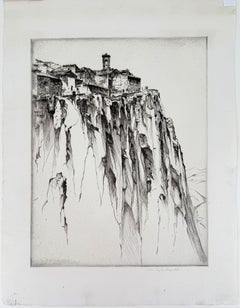
(New York: John Taylor Arms, 1930) Etching on antique cream laid paper with a fancy "G" watermark, 7 1/8 x 16 1/2 inches (182 x 442 mm), full margins. Signed, dated and inscribed "Ed. 70" in pencil, lower margin. From a total edirion of 81 plus 5 trial proofs. Printed by Henry E. Carling. Number 18 from the Italian Series. A superb impression of this scarce print, with all of the subtleties and details of the reflections in the water printing clearly. [Fletcher 232] [Illustrated: Page 192, Arms, Dorothy Noyes, "Hilltowns and Cities of Northern Italy"]. Along with his constant companion and wife, Dorothy Noyes, Arms spent decades exploring and documenting gothic structures throughout Europe. Noyes, an accomplished travel writer, had gifted Arms an etching set...

Category

1930s Modern Art

Materials

Etching

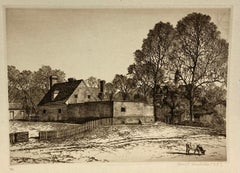
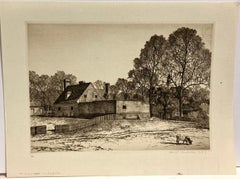
Signed George Elbert Burr Winter Landscape Lithograph, Snow-Covered Trees

Signed George Elbert Burr Winter Landscape Lithograph, Snow-Covered Trees

By George Elbert Burr

Located in Denver, CO

This original signed lithograph by acclaimed American artist George Elbert Burr (1859–1939) beautifully depicts a serene winter landscape with snow-covered trees. Burr’s masterful lithograph technique captures the delicate interplay of light, shadow, and snow, evoking the quiet stillness and crisp beauty of nature in winter. The image measures 7 ¼ by 10 ¼ inches and is presented in a custom archival frame with overall dimensions of 15 x 17 ¾ inches. The artist’s signature authenticates this fine example of early 20th-century American printmaking, making it an ideal addition to collections of Western art, winter landscapes, or vintage lithographs. Born in Ohio, Burr was largely self-taught, gaining recognition for his detailed etchings and lithographs that captured the American West’s rugged beauty. After years of travel across Europe and the U.S. Southwest, he created iconic series like Mountain Moods and the Desert Set...

Category

20th Century Modern Art

Materials

Lithograph

Marc Chagall, The Blue Beast, from Color of Love, 1958 (after)

Marc Chagall, The Blue Beast, from Color of Love, 1958 (after)

By Marc Chagall

Located in Southampton, NY

This exquisite lithograph and pochoir after Marc Chagall (1887–1985), titled La Bete Bleu (The Blue Beast), from the folio Couleur amour, 13 Aquarelles, Gouaches, Lavis (Color of Lov...

Category

1950s Modern Art

Materials

Lithograph, Stencil

Acto Uno, From the series Acto Uno. Male Nude Limited Edition Photograph

Acto Uno, From the series Acto Uno. Male Nude Limited Edition Photograph

By Ricky Cohete

Located in Miami Beach, FL

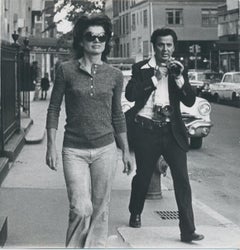
Cohete's ritual with movement and the male dancer formations, inhabits his black and white theater-like habitat. Like light; always in motion. The harsh lights and shadows in the wa...

Category

21st Century and Contemporary Modern Art
Materials

Black and White, Pigment, Archival Pigment

Snow in the Valley - Winter Landscape in Oil on Canvas

Snow in the Valley - Winter Landscape in Oil on Canvas

Located in Soquel, CA

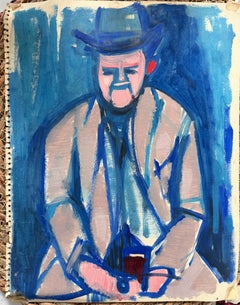
Snow in the Valley - Winter Landscape in Oil on Canvas Serene winter landscape by A. V. Gagliardi (20th Century). A valley is covered with snow, with a small house and river in thew...

Category

1970s Modern Art
Materials

Canvas, Oil, Stretcher Bars

Original 1942 Pour L'An II COMPAGNONS  Rooster vintage French poster

Original 1942 Pour L'An II COMPAGNONS Rooster vintage French poster

Located in Spokane, WA

Professionally archival linen-backed vintage French poster: pour L'An II COMPAGONS Tous Unis Celebrons, Notre Pain, Notre Sang, Notre Terre. This full lithograph antique poster fe...

Category

1940s Modern Art
Materials

Lithograph

Venus, Modern Abstract Figurative Sculpture #37

Venus, Modern Abstract Figurative Sculpture #37

By Doris Warner

Located in Soquel, CA

Wonderful small scale abstract figurative stone Venus sculpture by Doris Ann Warner (American, 1925-2010), 1975. A highly abstracted female form is expressed through the organic, fl...

Category

1970s Modern Art
Materials

Sandstone

Edgar Yeager Figurative Interior Scene

Edgar Yeager Figurative Interior Scene

By Edgar Yaeger

Located in Detroit, MI

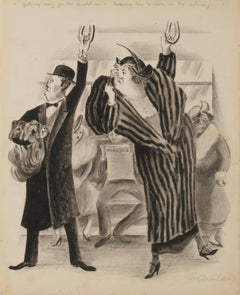
SALE ONE WEEK ONLY Yaeger was an American Modernist painter from Detroit, Michigan, who is credited with being one of the first painters in this style. The portrait “Untitled” easil...

Category

1980s Modern Art
Materials

Canvas, Oil

Modern art for sale on 1stDibs.
Find a wide variety of authentic Modern art available for sale on 1stDibs. Works in this style were very popular during the 21st Century and Contemporary, but contemporary artists have continued to produce works inspired by this movement. If you’re looking to add art created in this style to introduce contrast in an otherwise neutral space in your home, the works available on 1stDibs include elements of blue, red, orange, purple and other colors. Many Pop art paintings were created by popular artists on 1stDibs, including Kevin Westenberg, Stuart Möller, Destro, and Christel Haag. Frequently made by artists working with Paint, and Paper and other materials, all of these pieces for sale are unique and have attracted attention over the years. Not every interior allows for large Modern art, so small editions measuring 0.4 inches across are also available. Prices for art made by famous or emerging artists can differ depending on medium, time period and other attributes. On 1stDibs, the price for these items starts at $33 and tops out at $390,000, while the average work sells for $1,912.