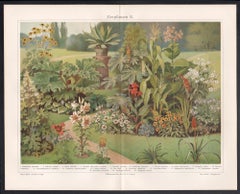
Naturalistic Art

to
222
1,164
356
239
200
286
Overall Width
to
Overall Height
to
232
813
412
790
37
20
13
28
19
25
14
21
30
12
220
116,607
63,723
56,527
28,117
14,661
9,479
6,639
5,837
4,134
3,127
2,524
2,365
2,132
607
1,096
862
138
523
405
369
285
251
220
219
195
152
134
121
101
99
86
79
73
68
68
61
59
589
426
392
375
354
135
83
68
40
36
525
378
980
623
Style: Naturalistic
Scottish Iona Island, Seas, shore, sails and coastline, 19th Century

Scottish Iona Island, Seas, shore, sails and coastline, 19th Century

By Duncan Cameron

Located in Hillsborough, NC

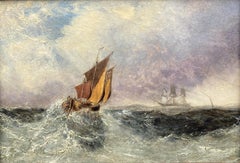
Fine painting of iconic Iona Island coast by celebrated Scottish artist Duncan Cameron (1837-1916). Renowned for his landscape paintings, this work captures the natural light on the sea, sand and rocks with splashes of rich color under a big sky. Iona off the west coast of Scotland, has attracted artists for for its dramatic scenery and northern light, including the Scottish Colourists who favored the fresh pure light. The cliffs and coastal rocks are reminiscent of works by Samuel Peploe, John MacLauchlan Milne, Francis Cadell, and Duncan Fergusson of this fabled island. In 1876 Cameron won a Gold Medal for landscape painting, at the Crystal Palace exhibition. The year after this painting (circa 1870s) Cameron began exhibiting in the Royal Academy, Society of British Artists, and Royal Scottish Academy, showing his work consistently from 1880. Other venues for exhibiting his work include the Glasgow Institute, Walker Art Gallery in Liverpool, Manchester City Art Gallery, and the Royal Hibernian Academy. His work is sold today in Fine Art Galleries in the UK and in Saltire Gallerie, USA. His landscape paintings are widely acclaimed, and this landscape painting of considerable size and detail is a fine example. Born in Perthshire, Cameron studied in Dundee and in South Kensington, London. He later died in Edinburgh. The highest auction sale of his work reached nearly 20,000 GBP. He was widely acclaimed as a landscape artist, painting Scottish farmlands and haystacks, coastal scenes and lochs. In this work the colors of the sea change from blue to green with white crests of waves. The rocks have splashes of red, rust and orange, and the beach has red and green in the sand. Water laps at the edge of beach and rock. A sailboat is a focal point, with distant sailboats on the water, and a rowboat by the central sailboat. A hill rises behind the beach painted...

Category

1870s Naturalistic Art

Materials

Oil, Canvas

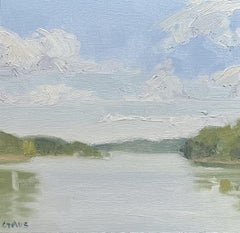
Looking Down the Stream

Looking Down the Stream

Located in Columbia, MO

Looking Down the Stream Plein air sketch in oil paint 2023

Category

21st Century and Contemporary Naturalistic Art

Materials

Oil

Fish, engraving with original hand-colouring, circa 1815

Fish, engraving with original hand-colouring, circa 1815

Located in Melbourne, Victoria

Fish and seahorse, engraving with original hand-colouring, circa 1815. From Bilderbuch Zum Nutzen und Vergnugen Der Jugend by Friedrich Justin Bertuch (1747-1822), an encyclopaedic ...

Category

Early 19th Century Naturalistic Art

Materials

Engraving

The Rough Collie

The Rough Collie

Located in Columbia, MO

The Rough Collie 1887 Etching

Category

Late 19th Century Naturalistic Art

Materials

Etching

New England Landscape with Barn

New England Landscape with Barn

By Eric Sloane

Located in Sheffield, MA

Eric Sloane American, 1905-1985 New England Landscape with Barn Oil on panel 22 by 30 in, w/ frame 30 ½ by 39 in Signed lower right Eric Sloane was born, Everard Jean Hinrichs, on ...

Category

Mid-20th Century Naturalistic Art

Materials

Oil

4 plates from The Wondrous Transformation of Caterpillars & their Strange Diet..

4 plates from The Wondrous Transformation of Caterpillars & their Strange Diet..

By Maria Sibylla Merian

Located in Middletown, NY

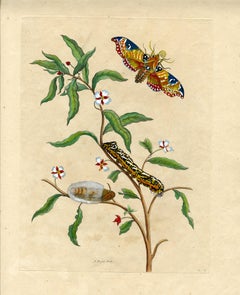
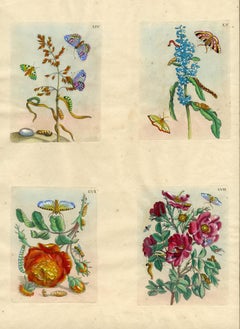
Four plates from The Wondrous Transformation of Caterpillars and their Strange Diet of Flowers. “Wolfsmelk Rupsen;" “Wolfsmilch, Raupe und Schmetterling" Amsterdam: J F Bernard, 1730. Each an engraving with hand coloring in watercolor and gouache printed on one sheet of watermarked Honig cream laid paper, each measures 6 1/4 x 5 inches (157 x 121 mm), sheet measures 20 5/8 x 14 inches (522 x 355 mm), full margins. With handling creases in the lower right sheet quadrant, as well as minor, loose cockling, otherwise in very good condition. The colors are superb with exceptionally fresh and bright saturation. Engraved between 1679 and 1683, printed 1730. Plates included: No.1:I; No. 2:1; II & III. MARIA SIBYLLA MERIAN was one of the most highly respected entomologists of the 17th century, and remains today one of the field's most significant figures. A German-born naturalist and scientific illustrator, she reared herself on the study of caterpillars, and made tremendous contributions to the knowledge of the life cycles of numerous species. Until her detailed and careful study of the process of metamorphosis it was thought that insects were "born of mud," through spontaneous generation. Trained as a miniature painter by her stepfather, she published her first book of illustrations in 1675, at the age of 28. In 1679, Merian published the first volume of the two-volume series on caterpillars, The Wondrous Transformation of Caterpillars and their Strange Diet of Flowers; the second volume followed in 1683. Each volume contained 50 plates that she engraved and etched. In 1699, Merian traveled to Dutch Guiana...

Category

Early 18th Century Naturalistic Art

Materials

Watercolor, Engraving

Parasitic Plants, German antique botanical chromolithograph print.

Parasitic Plants, German antique botanical chromolithograph print.

Located in Melbourne, Victoria

'Schmarotzerpflanzen I' (Parasitic plants) German chromolithograph, circa 1910. Central vertical fold as issued. 245mm by 305mm (sheet)

Category

Early 20th Century Naturalistic Art

Materials

Lithograph

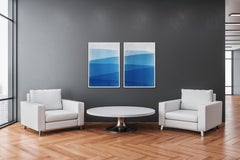
Blue Marine Flora Acrylic Painting on Watercolor Paper, 40x28 Inches

Blue Marine Flora Acrylic Painting on Watercolor Paper, 40x28 Inches

Located in Barcelona, ES

Blue Marine Flora is a dynamic, nature-inspired painting that evokes the lush complexity of coral ecosystems. With bold strokes in vivid blue, red and charcoal, the composition mimic...

Category

2010s Naturalistic Art

Materials

Paper, Acrylic, Gouache

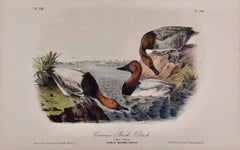
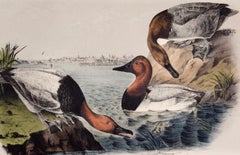
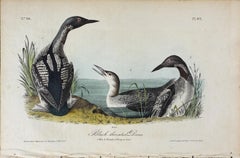
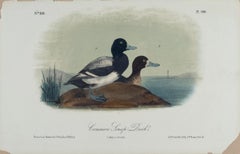
Common Scaup Duck: An Original 19th C. Audubon Hand-colored Bird Lithograph

Common Scaup Duck: An Original 19th C. Audubon Hand-colored Bird Lithograph

By John James Audubon

Located in Alamo, CA

This is an original 19th century John James Audubon hand-colored lithograph entitled "Common Scaup Duck, 1. Male, 2. Female", No. 100, Plate 498 from Audubon's "Birds of America, lithographed, printed and colored by J. T. Bowen and published in Philadelphia in 1856. It depicts male and female Scaup ducks sitting on a mound, looking to the right at water. A lighthouse is seen on a point of land in the background on the right. This original hand-colored Common Scaup Duck lithograph...

Category

Mid-19th Century Naturalistic Art
Materials

Lithograph

Forest Insects - Beetles, German antique chromolithograph print

Forest Insects - Beetles, German antique chromolithograph print

Located in Melbourne, Victoria

'Forstinsekten II Kafer' (Forest Insects - Beetles) German chromolithograph, circa 1895. 245mm by 155mm (sheet)

Category

Late 19th Century Naturalistic Art

Materials

Lithograph

Naturalistic British painter - 19th century landscape painting - Highland cattle

Naturalistic British painter - 19th century landscape painting - Highland cattle

Located in Varmo, IT

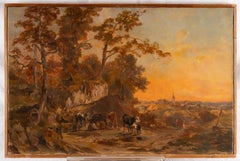
English painter (late 19th century) - Landscape with Highland herd at the lake. 102 x 77 cm without frame, 108 x 82 cm with frame. Antique oil painting on canvas, in a gilded woode...

Category

Late 19th Century Naturalistic Art

Materials

Canvas, Oil

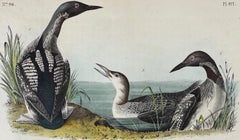
Crustaceans - cyclops etc, antique English natural history engraving print, 1837

Crustaceans - cyclops etc, antique English natural history engraving print, 1837

Located in Melbourne, Victoria

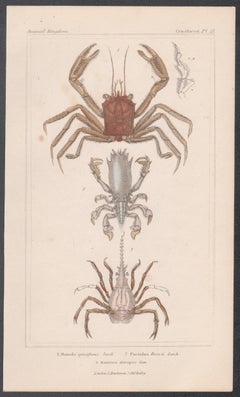
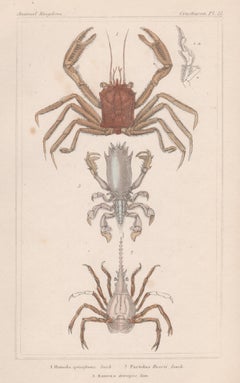
'Crustacea' Copper-line engraving with original hand-colouring. From Baron Georges Cuvier's (1769-1832) 'Animal Kingdom', published in London in 1837. 210mm by 130mm (sheet)

Category

Mid-19th Century Naturalistic Art
Materials

Engraving

Curlew Bird and Charleston, SC: Original 1st Ed. Audubon Hand-colored Lithograph

Curlew Bird and Charleston, SC: Original 1st Ed. Audubon Hand-colored Lithograph

By John James Audubon

Located in Alamo, CA

This is an original rare and extremely collectible first edition John James Audubon hand colored lithograph entitled "Long-billed Curlew", No. 71, Plate 355, from Audubon's "Birds of America. It was lithographed, printed and colored by J. T. Bowen and published in Philadelphia between 1840-1844. It depicts a male and a female Long-billed Curlew standing on a grassy mound with water and the skyline of the city of Charleston...

Category

Mid-18th Century Naturalistic Art

Materials

Lithograph

Norwegian Pine Grove - The inner glow of the trees -

Norwegian Pine Grove - The inner glow of the trees -

Located in Berlin, DE

Themistokles von Eckenbrecher (1842 Athens - 1921 Goslar), Norwegian pine grove, 1901. Watercolor on blue-green paper, 30 x 22 cm. Signed, dated and inscribed in his own hand "TvE. Fagermes [i.e. Fagermes]. 26.6.[19]01." - Slight crease throughout at left margin, otherwise in good condition. About the artwork Themistokles von Eckenbrecher often traveled to Norway to study the nature that fascinated him there. On June 26, 1901, near the southern Norwegian town of Fagernes, in the summer evening sun, he saw a small pine grove, which he immediately captured in a watercolor. He exposed the trees growing on a small hill in front of the background, so that the pines completely define the picture and combine to form a tense motif. The tension comes from the contrast of form and color. The trunks, growing upward, form a vertical structure that is horizontally penetrated by the spreading branches and the pine needles, which are rendered as a plane. This structural tension is further intensified by the color contrast between the brown-reddish iridescent trunks and branches and the green-toned needlework. Themistokles von Eckenbrecher, however, does not use the observed natural scene as an inspiring model for a dance of color and form that detaches itself from the motif and thus treads the path of abstracting modernism. Its inner vitality is to be brought to light and made aesthetically accessible through the work of art. It is precisely in order to depict the inner vitality of nature that von Eckenbrecher chooses the technique of watercolor, in which the individual details, such as the needles, are not meticulously worked out, but rather a flowing movement is created that unites the contrasts. The trees seem to have formed the twisted trunks out of their own inner strength as they grew, creatingthose tense lineations that the artist has put into the picture. The inner strength continues in the branches and twigs, culminating in the upward growth of the needles. At the same time, the trunks, illuminated by the setting sun, seem to glow from within, adding an almost dramatic dimension to the growing movement. Through the artwork, nature itself is revealed as art. In order to make nature visible as art in the work, von Eckenbrecher exposes the group of trees so that they are bounded from the outside by an all-encompassing contour line and merge into an areal unity that enters into a figure-ground relationship with the blue-greenish watercolor paper. The figure-ground relationship emphasizes the ornamental quality of the natural work of art, which further enforces the artwork character of the group of trees. With the presentation of Themistokles von Eckenbrecher's artistic idea and its realization, it has become clear that the present watercolor is not a study of nature in the sense of a visual note by the artist, which might then be integrated into a larger work context, but a completely independent work of art. This is why von Eckenbrecher signed the watercolor. In addition, it is marked with a place and a date, which confirms that this work of nature presented itself to him in exactly this way at this place at this time. At the same time, the date and place make it clear that the natural work of art has been transferred into the sphere of art and thus removed from the time of the place of nature. About the artist Themistocles' parents instilled a life of travel in their son, who is said to have spoken eleven languages. His father, who was interested in ancient and oriental culture, was a doctor and had married Francesca Magdalena Danelon, an Italian, daughter of the British consul in Trieste. During a stay in Athens - Gustav von Eckenbrecher was a friend of Heinrich von Schliemann and is said to have given him crucial clues as to the location of Troy - Themistokles saw the light of day in 1842. After an interlude in Berlin, where Themistokles was educated at the English-American School, the journey began again. From 1850 to 1857 the family lived in Constantinople, after which the father opened a practice in Potsdam, where Themistokles, who wanted to become a painter, was taught by the court painter Carl Gustav Wegener. In 1861 the von Eckenbrechers left Potsdam and settled in Düsseldorf. There Themistokles received two years of private tuition from Oswald Aschenbach, who greatly admired the talented young artist. After his artistic training, he undertook extensive travels, often accompanied by Prince Peter zu Sayn-Wittgenstein, which took him to northern and eastern Europe, but above all to the Middle East and even to South America. The paintings that resulted from these journeys established his artistic reputation and led to his participation in large panoramas such as the 118 x 15 metre Entry of the Mecca Caravan into Cairo, painted for the City of Hamburg in 1882. 1882 was also the start of a total of 21 study trips to Scandinavia, most of them to Norway, and the unique Norwegian landscape with its rugged fjords became a central motif in his work. Along with Anders Askevold and Adelsteen Normann...

Category

Early 1900s Naturalistic Art

Materials

Watercolor

Barn Owl Family: A Framed Original 19th C. Hand-colored Lithograph by Gould

Barn Owl Family: A Framed Original 19th C. Hand-colored Lithograph by Gould

This is a framed original 19th century hand-colored folio-sized lithograph entitled “Strix Flammea” (Barn Owl) by John Gould, from his "Birds of Great Britain", published in London between 1862 and 1873. The print depicts an adult Barn Owl perched on a log its three baby owls to the left. Another adult owl in the background on the right, presumably a male, watches over his family. There are leaves on the right contributing to this pleasant landscape composition. This striking framed Gould...

Category

Mid-19th Century Naturalistic Art

Materials

Lithograph

4 plates from The Wondrous Transformation of Caterpillars & their Strange Diet..

4 plates from The Wondrous Transformation of Caterpillars & their Strange Diet..

By Maria Sibylla Merian

Located in Middletown, NY

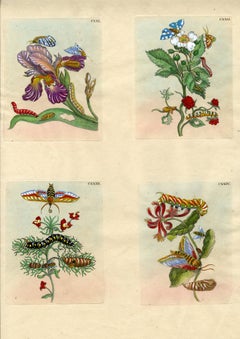
Four plates from The Wondrous Transformation of Caterpillars and their Strange Diet of Flowers. “Wolfsmelk Rupsen;" “Wolfsmilch, Raupe und Schmetterling" Amsterdam: JF Bernard, 1730. Each an engraving with hand coloring in watercolor and gouache printed on one sheet of watermarked Honig cream laid paper, each measures 6 1/4 x 5 inches (157 x 121 mm), sheet measures 20 5/8 x 14 inches (522 x 355 mm), full margins. With handling creases in the lower right sheet quadrant, as well as minor, loose cockling, otherwise in very good condition. The colors are superb with exceptionally fresh and bright saturation. Engraved between 1679 and 1683, printed 1730. Plates included: CXLI, CXLII, CXIII & CXLIV. MARIA SIBYLLA MERIAN was one of the most highly respected entomologists of the 17th century, and remains today one of the field's most significant figures. A German-born naturalist and scientific illustrator, she reared herself on the study of caterpillars, and made tremendous contributions to the knowledge of the life cycles of numerous species. Until her detailed and careful study of the process of metamorphosis it was thought that insects were "born of mud," through spontaneous generation. Trained as a miniature painter by her stepfather, she published her first book of illustrations in 1675, at the age of 28. In 1679, Merian published the first volume of the two-volume series on caterpillars, The Wondrous Transformation of Caterpillars and their Strange Diet of Flowers; the second volume followed in 1683. Each volume contained 50 plates that she engraved and etched. In 1699, Merian traveled to Dutch Guiana...

Category

Early 18th Century Naturalistic Art

Materials

Watercolor, Engraving

18th-century celestial - Andromeda Perseus Triangulum

18th-century celestial - Andromeda Perseus Triangulum

Located in London, London

18th-century celestial FLAMSTEED, John. Andromeda Perseus Triangulum London, C. Nourse, 1753. A fine star chart from the Atlas Coelestis, the largest and most accurate star atlas ...

Category

1750s Naturalistic Art

Materials

Watercolor, Engraving

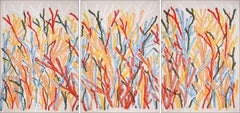
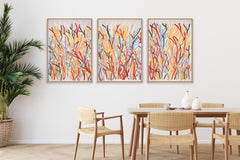
Three of Us (floral, still life, watercolor, bright colors, flowers, pastel)

Three of Us (floral, still life, watercolor, bright colors, flowers, pastel)

Located in New York, NY

Watercolor on paper BIOGRAPHY: Eunju Kang was born in 1962 and raised in Daegu, Korea. She moved to California at 14 years old with her mother and two sisters in the 1970s. Kang was always an avid doodler, often in her textbooks, which became a helpful communication tool as she adjusted to her new life. Since the early 1990s, Kang has lived and worked in NYC, painting, printmaking and turning her doodles into a successful business with her sisters. Kang earned fine art degrees at UC Santa Barbara and Pasadena Art Center College of Design where she graduated with distinction. She has been awarded residencies at The Fine Arts Work Center in Provincetown (FAWC), the Virginia Center for the Creative Arts and the Vermont Studio Center. She has taught at the L.A. County High School for the Arts, the ArtCenter College of Design and the School of Visual Art in NYC. Her fine art is in private collections around the world. Her illustration work has been used in packaging and ad campaigns by Godiva Chocolate...

Category

2010s Naturalistic Art

Materials

Watercolor

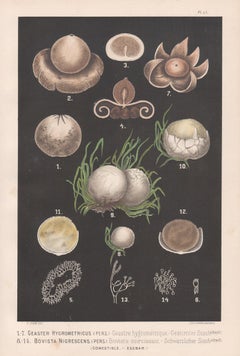
Swedish Portrait of a Young Woman in Orientalist Attire

Swedish Portrait of a Young Woman in Orientalist Attire

Located in New York, NY

This evocative 19th-century oil portrait by renowned Swedish artist Julia Beck features a young woman in meditative repose. Captured during Beck’s influential years in France, the pi...

Category

Late 19th Century Naturalistic Art
Materials

Canvas, Oil

Hollyhocks and Roses with Butterfly - 19th Century Still life Watercolor

Hollyhocks and Roses with Butterfly - 19th Century Still life Watercolor

Located in Stockholm, SE

This is a beautiful and highly decorative watercolor painting, featuring a charming garden scene filled with pink and white hollyhocks alongside blooming roses. Nestled among the del...

Category

Late 19th Century Naturalistic Art
Materials

Paper, Watercolor

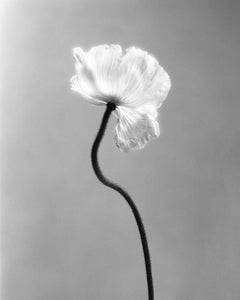
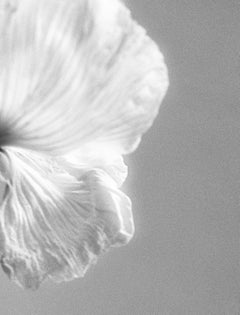
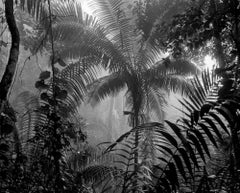
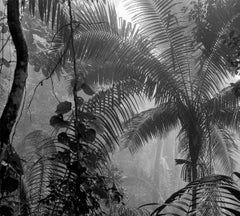
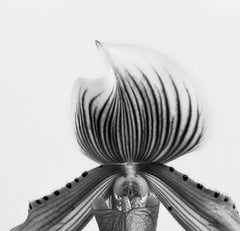
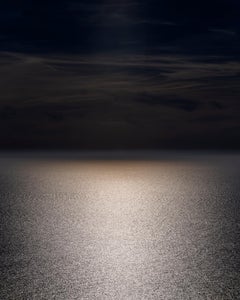
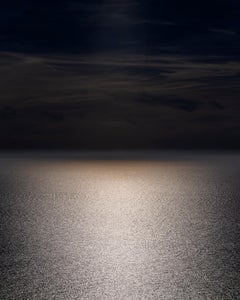
Bosque Húmedo Tropical II Nuquí, Silver Gelatin Print

Bosque Húmedo Tropical II Nuquí, Silver Gelatin Print

By Miguel Winograd

Located in Miami Beach, FL

The artist looks for a path between tangled branches. Reconfiguring a personal archive of diverse Colombian landscapes, experimenting with a variety of printing materials to reconstr...

Category

21st Century and Contemporary Naturalistic Art

Materials

Black and White, Silver Gelatin

Naturalistic British painter - 19th century landscape painting - Bulls at river

Naturalistic British painter - 19th century landscape painting - Bulls at river

Located in Varmo, IT

Highland Painter (late 19th century) - Highland Cattle by the Lake. 35 x 54 cm unframed, 44.5 x 62.5 cm framed. Oil on panel, in a giltwood frame (not signed). Condition report: T...

Category

Late 19th Century Naturalistic Art
Materials

Oil, Panel

The Monitory Lizard, Australia, engraving with original hand-colouring, 1790

The Monitory Lizard, Australia, engraving with original hand-colouring, 1790

By Frederick Polydore Nodder

Located in Melbourne, Victoria

'The Monitory Lizard' Copper-line engraving with original hand-colouring. 1790, by Frederick Polydore Nodder (fl.1770 – 1800). 120mm by 195mm (platemnark). Early engraving of an ...

Category

Late 18th Century Naturalistic Art
Materials

Engraving

Chrysanthemum: An 18th Century Hand-colored Botanical Engraving by J. Weinmann

Chrysanthemum: An 18th Century Hand-colored Botanical Engraving by J. Weinmann

By Johann Wilhelm Weinmann

Located in Alamo, CA

This is an original antique hand-colored botanical mezzotint and line engraving of flowering Chrysanthemum matricaria plants. It is entitled "A. Chrysanthemum Matricarice Folus Flore...

Category

Mid-18th Century Naturalistic Art
Materials

Engraving, Mezzotint

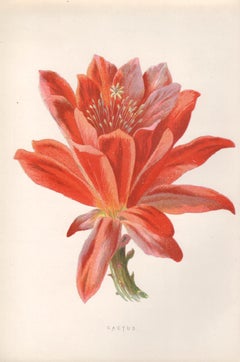
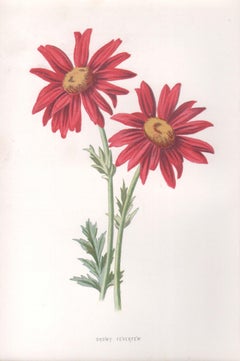
Cactus, English antique red flower botanical chromolithograph, 1895

Cactus, English antique red flower botanical chromolithograph, 1895

By Frederick William Hulme

Located in Melbourne, Victoria

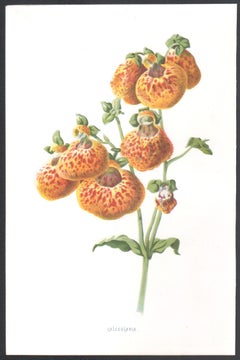
'Cactus' Process print from Frederick William Hulme’s ‘Familiar Wild Flowers’, circa 1890. Hulme was known as a teacher and an amateur botanist. He was the Professor of Freehand an...

Category

Late 19th Century Naturalistic Art
Materials

Lithograph

Naturalistic art for sale on 1stDibs.
Find a wide variety of authentic Naturalistic art available for sale on 1stDibs. Works in this style were very popular during the 21st Century and Contemporary, but contemporary artists have continued to produce works inspired by this movement. If you’re looking to add art created in this style to introduce contrast in an otherwise neutral space in your home, the works available on 1stDibs include elements of blue, orange, green, red and other colors. Many Pop art paintings were created by popular artists on 1stDibs, including Miguel Winograd , John James Audubon, McKenney & Hall, and William Curtis. Frequently made by artists working with Paint, and Engraving and other materials, all of these pieces for sale are unique and have attracted attention over the years. Not every interior allows for large Naturalistic art, so small editions measuring 0.5 inches across are also available. Prices for art made by famous or emerging artists can differ depending on medium, time period and other attributes. On 1stDibs, the price for these items starts at $38 and tops out at $191,816, while the average work sells for $863.