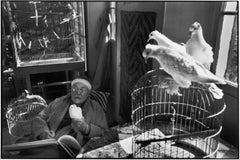
Henri Matisse at His Home, 'le Reve', Vence, France
By Henri Cartier-Bresson
Located in London, GB
Stamped with photographer's copyright ink stamp on reverse
Category
1940s Black and White Photography
Materials
Silver Gelatin
Henri Matisse at His Home, 'le Reve', Vence, France
By Henri Cartier-Bresson
Located in London, GB
Stamped with photographer's copyright ink stamp on reverse
Silver Gelatin
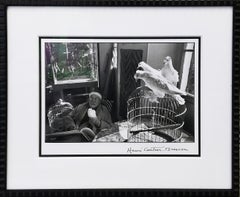
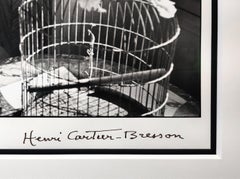
HENRI MATISSE, VENCE, FRANCE
By Henri Cartier-Bresson
Located in Aventura, FL
Gelatin silver print. Printed circa 1970s. Signed in ink and copyright credit blindstamp in the margin. Sheet size 11.75 x 17.625 inches. Image size approx 9.5 x 14 inches. Frame siz...
Paper, Silver Gelatin
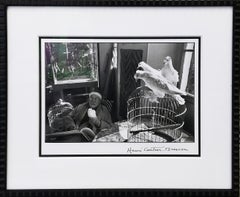
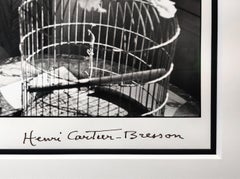
HENRI MATISSE, VENCE, FRANCE
By Henri Cartier-Bresson
Located in Aventura, FL
Gelatin silver print. Printed circa 1970s. Signed in ink and copyright credit blindstamp in the margin. Sheet size 11.75 x 17.625 inches. Image size approx 9.5 x 14 inches. Frame siz...
Paper, Silver Gelatin
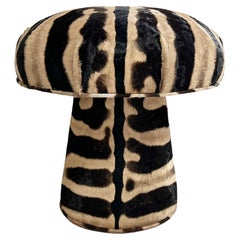
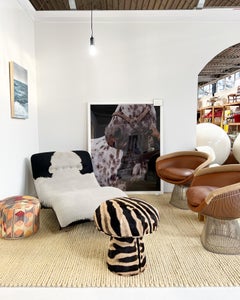
Forsyth Mushroom Pouf Ottoman in Zebra
Located in SAINT LOUIS, MO
This Forsyth mushroom pouf ottoman was created and designed by the Forsyth design team. Each ottoman is handcrafted in Saint Louis. A cute decorative piece for any room adding textur...
Zebra Hide
$2,750
H 42 in W 30 in D 0.1 in
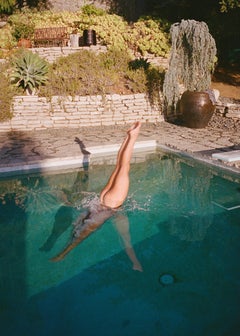
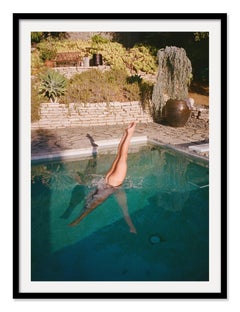
"Sunlit Dive" Nude Photography 42" x 30" in Edition 1/7 by Larsen Sotelo
By Larsen Sotelo
Located in Culver City, CA
"Sunlit Dive" Nude Photography 42" x 30" in Edition 1/7 by Larsen Sotelo Not framed. Ships in a tube Giclee (Archival Ink) print on 310G Platine Fibre Cotton Rag w/satin finish Sig...
Archival Ink, Rag Paper, Giclée

$800
H 19.69 in W 19.69 in D 0.04 in
On the Rhodes again - Contemporary, Nude, Women, Polaroid, 21st Century, Color
By Kirsten Thys van den Audenaerde
Located in Morongo Valley, CA
'On the Rhodes again' part of the series 'Hands down' - 2019 50x50cm, Edition of 7 plus 2 Artist Proofs. Archival C-Print based on the Polaroid, not mounted. Signed on the back...
Archival Paper, Photographic Paper, C Print, Color, Polaroid
$3,786
H 14.57 in W 11.03 in D 0.79 in
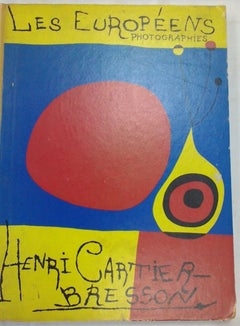
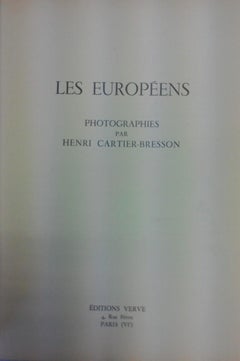
Les Européens Photographies - Photographs by Henri Cartier-Bresson - 1955
By Henri Cartier-Bresson
Located in Roma, IT
Volume including a selection of 114 black and white photographs by Henri Cartier-Bresson from 1950 to 1955. Original boards illustrated after a design by Joan Mirò. First Edition. Ve...
Paper
The late photographer Henri Cartier-Bresson spent his long and varied career traveling the world and capturing images of everyone from children to cultural icons.
Beautiful but unsentimental street photography of children was one of the surprises offered by the sweeping survey “The World of Henri Cartier-Bresson,” at Peter Fetterman Gallery, in Santa Monica, California, in 2021. Some of the images are iconic, like Cartier-Bresson’s historic 1950s photographs for Life magazine of a newly Communist China and his portraits of cultural lions like Henri Matisse, Alberto Giacometti and Samuel Beckett. But nearly half the images, Fetterman said, were printed specifically at the gallery’s request and had not been widely exhibited or published.
One of the most striking discoveries was a 1954 image of five Russian girls standing in second position at a wrought-iron-and-wood ballet barre. The coolly elegant blond girl closest to the camera looks no more than 10 or 12 years old, but her calf muscles are as defined as those of an adult track star. “Rue Mouffetard, Paris,” from 1954, captures a boy grinning from ear to ear as he walks along a city street toward the lens — and presumably toward home — carrying with chin jutted out and visible pride a wine bottle under each arm. This picture, in which all elements conspire to highlight the boy’s swagger (notice the girls noticing the boy), is an illustration of capturing “the decisive moment,” which Cartier-Bresson famously defined and which modernists took as the ultimate goal of photography, although others later were more skeptical.
Born in 1908 in Chanteloup-en-Brie, France, the oldest of five children, Cartier-Bresson studied art and literature in school, refusing to join his father’s prosperous textile business. In 1931, he traveled to Africa to hunt wild game and found that he preferred a different kind of shoot: taking pictures with a small box camera.
On his return to France, Cartier-Bresson bought a Leica with a 50mm lens — the camera he called the “extension of my eye” and used for decades. He soon began working as a photojournalist, traveling the globe to capture everyday moments as well as some of the defining political events of the 20th century, from Gandhi’s funeral in 1948 and the fall of the Kuomintang in China in 1949 to the student uprising in Paris in 1968.
Cartier-Bresson was himself caught up in conflict. A French army officer during World War II, he was detained as a prisoner of war by the Nazis, prompting rumors he’d been killed. His photography was taken seriously enough at this time that the Museum of Modern Art in New York began preparing what it believed would be a posthumous retrospective of his work. The show took place in 1947, when the photographer was abundantly alive and well, and busy cofounding the great photo agency Magnum. MoMA has been a guardian and champion of his work ever since.
Find original Henri Cartier-Bresson black-and-white photography on 1stDibs.
There’s a lot to love about black and white photography.
The unique and timeless quality of a black and white photograph accentuates any room. Some might argue that we’re naturally drawn to color photography because it’s the world we know best. This is a shared belief, particularly in the era of camera-phone photography, editing apps and the frenetic immediacy of sharing photos on social media. But when we look at black and white photography, we experience deep, rich shadows and tonal properties in a way that transfixes us. Composition and textures are crisp and engaging. We’re immediately drawn to the subjects of vintage street photography and continue to feel the emotional impact of decades-old photojournalism. The silhouettes of mountains in black and white landscape photography are particularly pronounced, while portrait photography and the skylines of urban cityscapes come to life in monochrome prints.
When decorating with fine photography, keep in mind that some color photographs may not be suitable for every space. However, you can be more daring with black and white photos. The gray tones are classic, sophisticated and generally introduce elegance to any corner of your home, which renders black and white prints amazingly versatile.
Black and white photography adapts to its surroundings like a chameleon might. A single large-scale black and white photograph above the sofa in your living room is going to work with any furniture style, and as some homeowners and designers today are working to introduce more muted tones and neutral palettes to dining rooms and bedrooms, the integration of black and white photography — a hallmark of minimalist decor — is a particularly natural choice for such a setting.
Another advantage to bringing black and white photography into your home is that you can style walls and add depth and character without worrying about disrupting an existing color scheme. Black and white photographs actually harmonize well with accent colors such as yellow, red and green. Your provocative Memphis Group lighting and bold Pierre Paulin seating will pair nicely with the black and white fine nude photography you’ve curated over the years.
Black and white photography also complements a variety of other art. Black and white photos pair well with drawings and etchings in monochromatic hues. They can also form part of specific color schemes. For example, you can place black and white prints in colored picture frames for a pop of color. And while there are no hard and fast rules, it’s best to keep black and white prints separate from color photographs. Color prints stand out in a room more than black and white prints do. Pairing them may detract attention from your black and white photography. Instead, dedicate separate walls or spaces to each.
Once you’ve selected the photography that best fits your space, you’ll need to decide how to hang the images. If you want to hang multiple photos, it’s essential to know how to arrange wall art. A proper arrangement can significantly enhance a living space.
On 1stDibs, explore a vast collection of compelling black and white photography by artists such as Mark Shaw, Jack Mitchell (a photographer you should know), Berenice Abbott and David Yarrow.