Edo Screen Gold

to
5
40
22
48
34
18
16
16
8
6
4
3
3
2
2
2
1
1
1
1
1
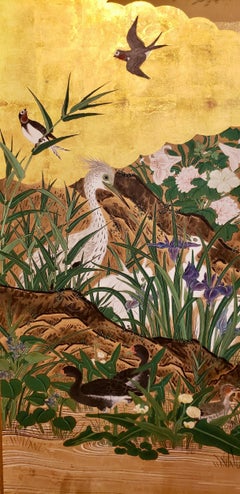
Japanese Chinese Asian Large Six-Panel Folding Byobu Screen Mythical Landscape

Japanese Chinese Asian Large Six-Panel Folding Byobu Screen Mythical Landscape

Located in Studio City, CA

A gorgeous, strangely beautiful, unusually engaging, and alluring hand-painted large six-panel Japanese/Asian Byobu folding screen depicting an almost magical/ mythical nature scene ...

Category

Antique 18th Century Japanese Edo Paintings and Screens

Materials

Gold Leaf

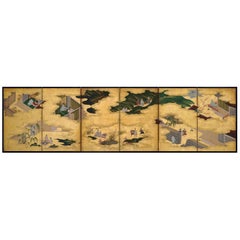
Japanese Six Panel Screen Battle of Uji Bridge

Japanese Six Panel Screen Battle of Uji Bridge

Located in Hudson, NY

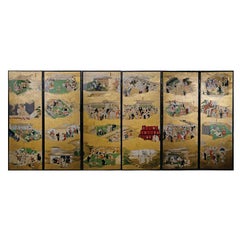
The first battle at Uji was in 1180 and was the beginning of the Heike Wars. This screen depicts a famous scene from the Heike Wars. Two Heike generals, Sasaki Takatsuna and Kajiwa...

Category

Antique Early 19th Century Japanese Edo Paintings and Screens

Materials

Gold Leaf

17th Century Japanese Screen. Flowers & Birds of Winter and Early Spring.

17th Century Japanese Screen. Flowers & Birds of Winter and Early Spring.

Located in Kyoto, JP

Signed Unkoku Toyu (1660-1716) Flowers & Birds of Winter and Early Spring A Six-panel Japanese Screen. Ink, color and gold leaf on paper. This later 17th century Japanese screen i...

Category

Antique Late 17th Century Japanese Edo Paintings and Screens

Materials

Gold Leaf

Antique Japanese Six-Panel Screen by Kano Chikanobu "Shushin"

Antique Japanese Six-Panel Screen by Kano Chikanobu "Shushin"

Located in Prahran, Victoria

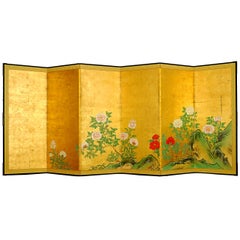
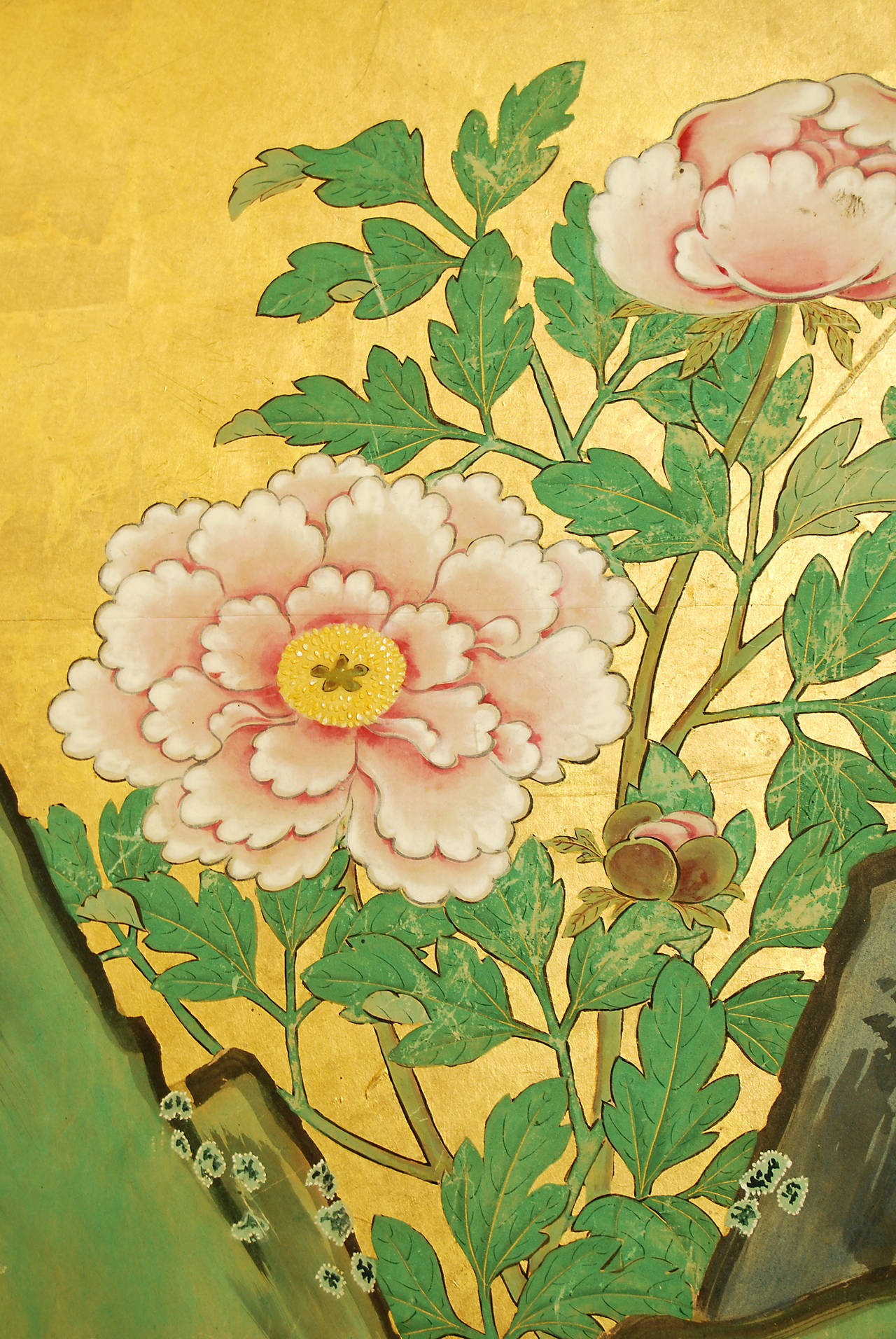
Late 17th century Kano school peony landscape screens. Both screens signed: Hogan Josen Fujiwara Chikanobu Hitsu - Kano Chikanobu (Shushin) (1660 - 1728).

Category

Antique Early 18th Century Japanese Edo Paintings and Screens

Materials

Gold Leaf

18th Century Japanese Screen Pair. Plum & Young Pines. Kano School.

18th Century Japanese Screen Pair. Plum & Young Pines. Kano School.

Located in Kyoto, JP

Dimensions (Each screen): H. 176 cm x W. 378 cm (69’’ x 149’’) This pair of Japanese folding screens depict blossoming plum trees amongst young pines. They are designed to capture t...

Category

Antique Late 18th Century Japanese Edo Paintings and Screens

Materials

Gold Leaf

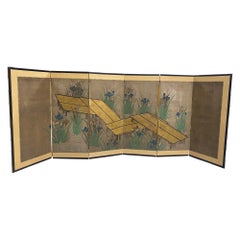
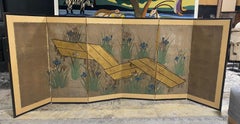
Japanese Asian Six-Panel Folding Byobu Screen Landcape Bridge with Iris Flowers

Japanese Asian Six-Panel Folding Byobu Screen Landcape Bridge with Iris Flowers

Located in Studio City, CA

A gorgeous six-panel Japanese Byobu folding screen depicting a nature lake/landscape scene with a water walkway/angular bridge and blossoming iris flowers - perhaps an homage to the ...

Category

Antique 19th Century Japanese Edo Paintings and Screens

Materials

Gold Leaf

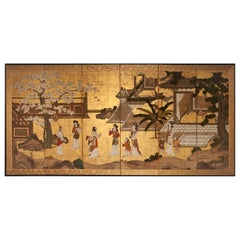
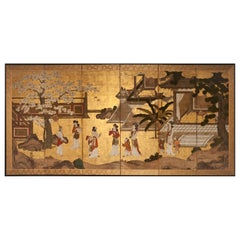
Japanese Six-Panel Screen Women of the Court in the Garden

Japanese Six-Panel Screen Women of the Court in the Garden

Located in Hudson, NY

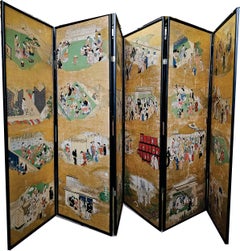
Japanese six-panel screen: Women of the Court in the Garden. Edo period (circa 1700) painting of an early Kano school subject matter: nobility socializing in a coutryard garden.

Category

Antique Early 1700s Japanese Edo Paintings and Screens

Materials

Gold Leaf

Mid 18th Century Japanese Screen Pair. Crows & Pines by Unkoku Toshuku.

Mid 18th Century Japanese Screen Pair. Crows & Pines by Unkoku Toshuku.

Located in Kyoto, JP

Unkoku Toshuku (1722-1779) Crows and Pines A pair of six-panel Japanese Screens. Ink and gold leaf on paper. Dimensions: Each Screen: H. 170.5 cm x W. 375 cm Haha-cho or mynah b...

Category

Antique Mid-18th Century Japanese Edo Paintings and Screens

Materials

Gold Leaf

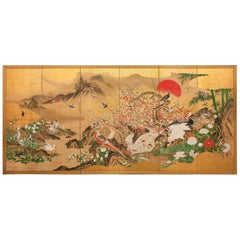
Japanese Screen: Animals and Flowers in a Landscape with Rising Sun

Japanese Screen: Animals and Flowers in a Landscape with Rising Sun

Located in Hudson, NY

Edo period (c. 1800) screen, beautifully painted with excellent details.

Category

Antique Early 19th Century Japanese Edo Paintings and Screens

Materials

Gold Leaf

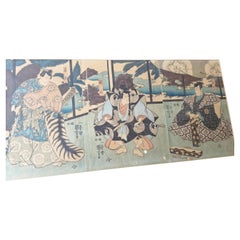
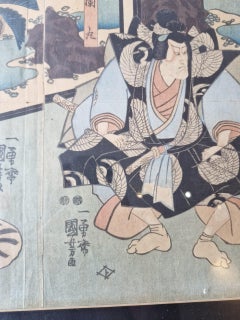
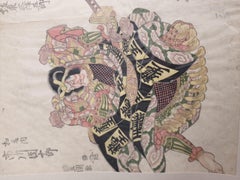
Antique Woodblock Print Kabuki Actors - Edo Period - Utagawa Kuniyoshi

Antique Woodblock Print Kabuki Actors - Edo Period - Utagawa Kuniyoshi

Located in Amsterdam, Noord Holland

Utagawa Kuniyoshi (1798 - 1861) - Kabuki actors Condition Size Frame: 92x53cm Period 19th century

Category

Antique 19th Century Chinese Meiji Paintings and Screens

Materials

Bronze

Japanese Screen Pair, circa 1730, Peacocks and Phoenix, Kano School

Japanese Screen Pair, circa 1730, Peacocks and Phoenix, Kano School

Located in Kyoto, JP

Dating to the first half of the 18th century, from the Kobikicho Kano school in Edo, this pair of folding screens spring from the height of the Japanese Tokugawa reign.

Category

Antique Early 18th Century Asian Edo Paintings and Screens

Materials

Gold Leaf

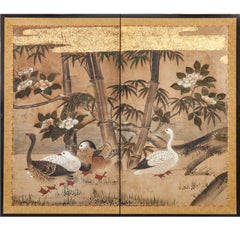
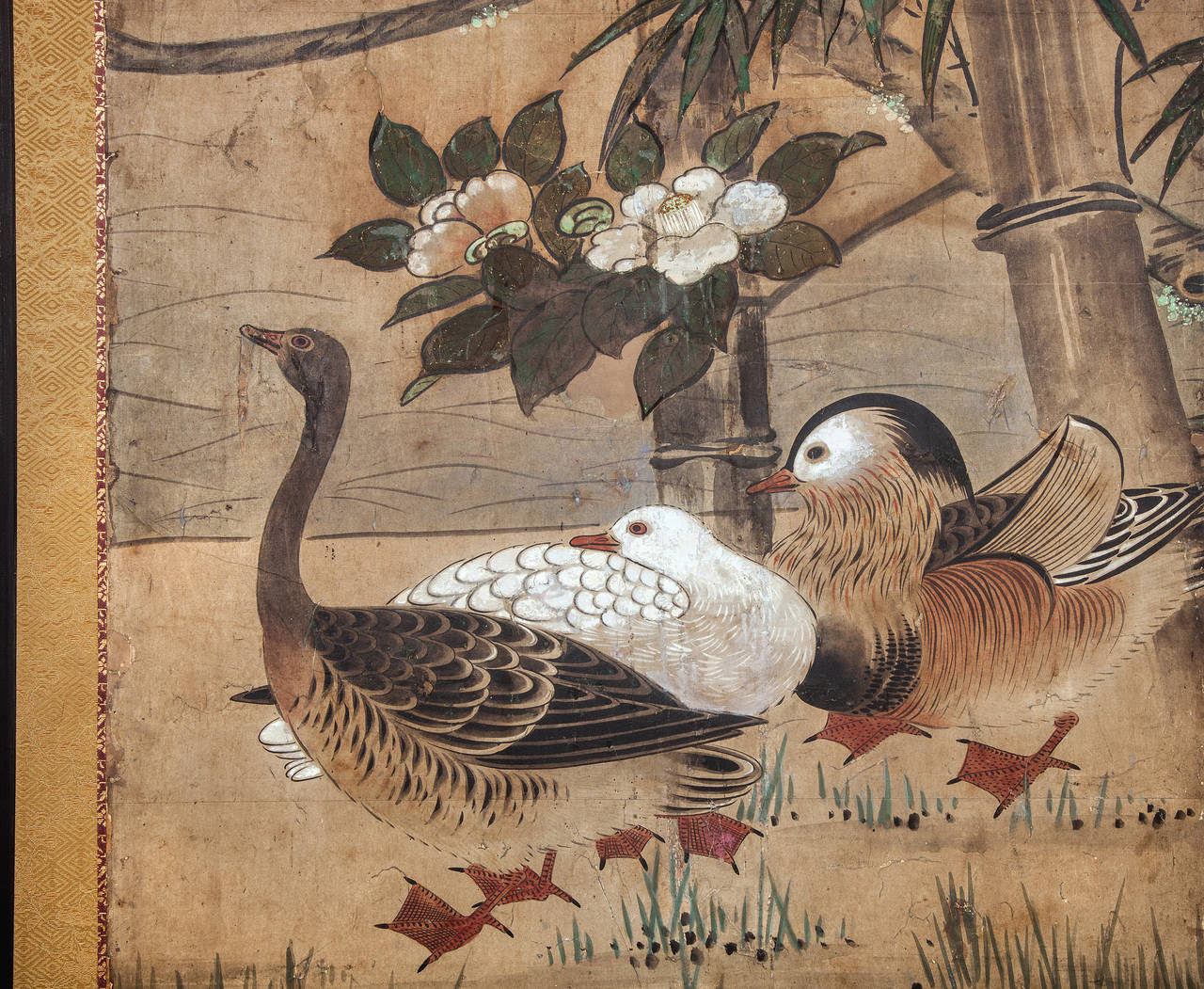
Japanese Two Panel Screen:  Mandarin Ducks and Geese Among Bamboo and Flowers

Japanese Two Panel Screen: Mandarin Ducks and Geese Among Bamboo and Flowers

Located in Hudson, NY

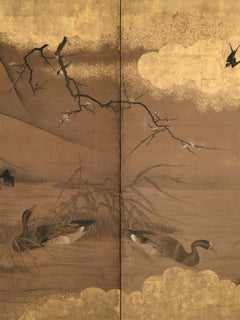
Japanese Two Panel Screen: Mandarin Ducks and Geese Among Bamboo and Flowers, Edo period painting (c. 1850) of mandarin ducks and geese on a grassy shoreline with bamboo and white c...

Category

Antique Mid-19th Century Japanese Edo Paintings and Screens

Materials

Gold

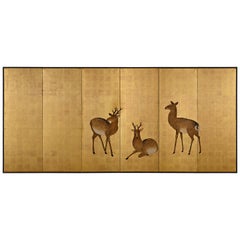
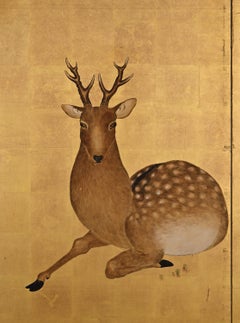
19th Century Japanese Screen, Deer in Spring, Maruyama Shijo School

19th Century Japanese Screen, Deer in Spring, Maruyama Shijo School

Located in Kyoto, JP

A six-panel Japanese folding screen from the leading Maruyama-Shijo artist Okamoto Toyohiko (1773-1845). Simply featuring three deer and a few sprigs of foliage on a sumptuous gold-l...

Category

Antique Early 19th Century Japanese Edo Paintings and Screens

Materials

Gold Leaf

Late 17th Century Japanese Screen Pair. Battle of Ichi-no-tani and Yashima.

Late 17th Century Japanese Screen Pair. Battle of Ichi-no-tani and Yashima.

Located in Kyoto, JP

Each screen portrays a single battle through a series of small episodes, framed by gold clouds, landscape elements, and architectural features.

Category

Antique Late 17th Century Japanese Edo Paintings and Screens

Materials

Gold Leaf

Japanese Screen Painting, Circa 1700 'Tales of Ise' by Tosa Mitsusuke

Japanese Screen Painting, Circa 1700 'Tales of Ise' by Tosa Mitsusuke

By Tosa Mitsusuke 1

Located in Kyoto, JP

A six-fold Japanese screen by Tosa Mitsusuke (1675-1710), Japan 17th-18th century, Edo period.

Category

Antique Late 17th Century Japanese Edo Paintings and Screens

Materials

Gold Leaf

Antique Japanese Woodblock - Utagawa Toyokuni l - 1816 (Honjo, Edo Period 1780

Antique Japanese Woodblock - Utagawa Toyokuni l - 1816 (Honjo, Edo Period 1780

Located in Amsterdam, Noord Holland

Antique Japanese Woodblock - Utagawa Toyokuni l - 1816 (Honjo, Edo Period 1786-1865 Edo), Diptych, Actors Bandô Mitsugorô R) and Ichikawa Danjûrô (L) 日付: Japanese, Edo period Pro...

Category

Antique 19th Century Chinese Meiji Paintings and Screens

Materials

Bronze

Japanese Six-Panel Screen Byobu With Chrysanthemums And Autumn Grass and Flower

Japanese Six-Panel Screen Byobu With Chrysanthemums And Autumn Grass and Flower

Located in Torino, IT

The 19th Century Six-Panel Japanese folding screen "Byōbu" usually used in the most important Japanese house to stop wind and also to separate different space of the same big room de...

Category

Antique Mid-19th Century Japanese Edo Paintings and Screens

Materials

Gold Leaf

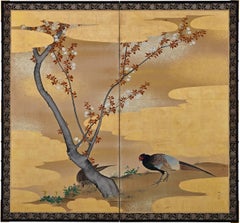
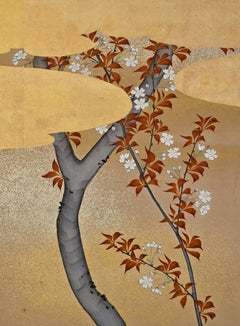
Early 19th Century Japanese Screen. Cherry Blossom & Pheasants by Mori Tetsuzan

Early 19th Century Japanese Screen. Cherry Blossom & Pheasants by Mori Tetsuzan

Located in Kyoto, JP

Mori Tetsuzan (1775-1841) Pheasants and Cherry Blossoms Two-fold Japanese screen. Ink, color, gofun, gold and silver on paper. A two-fold Japanese bird and flower screen by the 19...

Category

Antique Early 19th Century Japanese Edo Paintings and Screens

Materials

Gold Leaf

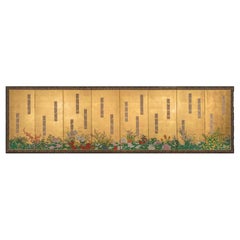
Paravent - An eight-fold screen with flowers of the four seasons and poem slips

Paravent - An eight-fold screen with flowers of the four seasons and poem slips

Located in Brussels, BE

An eight-fold Japanese paper screen painted in ink and colour on a gold leaf ground depicting various flowers of the four seasons with tanzaku (poem slips) by Kagawa Kageki (1768-184...

Category

Antique Early 19th Century Japanese Edo Paintings and Screens

Materials

Gold Leaf

Lovely Japanese 18th-19th Century Edo or Meiji Scroll Painting Japan

Lovely Japanese 18th-19th Century Edo or Meiji Scroll Painting Japan

Located in Amsterdam, Noord Holland

Maruyama–Shijo style painting C0ndition; Good but some stains. Overall dimensions: width of about 28.2 cm and Length of about 173.8 cm Painting width of about 25.5 cm × leng...

Category

Antique 19th Century Japanese Meiji Paintings and Screens

Materials

Bronze

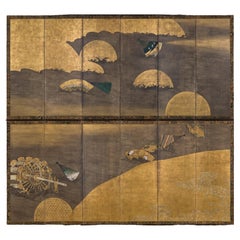
Paravents - A pair of six-fold screens with fans in flowing water, Rimpa School

Paravents - A pair of six-fold screens with fans in flowing water, Rimpa School

Located in Brussels, BE

This pair of screens are boldly and finely decorated in opulent gold and silver: the details of the river rendered in silver (now darkened due to oxidisation), the golden riverbank o...

Category

Antique 17th Century Japanese Edo Paintings and Screens

Materials

Gold Leaf, Silver Leaf

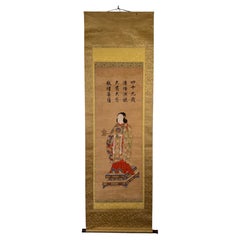
Lovely Japanese 18th-19th Century Edo or Meiji Scroll Painting Seven Lucky God

Lovely Japanese 18th-19th Century Edo or Meiji Scroll Painting Seven Lucky God

Located in Amsterdam, Noord Holland

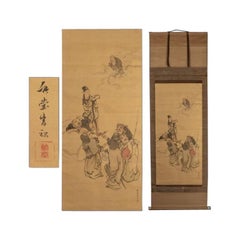
Interesting and finely painted Japanese painting. Provenance: From an old family from Kyoto. width of about 62.0 cm axial destination width of about 67.8 cm × length of about 1...

Category

20th Century Japanese Meiji Paintings and Screens

Materials

Bronze

Circa 1700 Japanese Sliding Door (Fusuma) Set. Pine Trees on the Seashore.

Circa 1700 Japanese Sliding Door (Fusuma) Set. Pine Trees on the Seashore.

Located in Kyoto, JP

"Pine Trees on the Seashore" A set of four sliding doors (Japanese fusuma). Ink, color, gold-leaf and gold-fleck on paper. Dimensions (total display size - 4 doors): H. 173 cm x 385 ...

Category

Antique Late 17th Century Japanese Edo Paintings and Screens

Materials

Gold Leaf

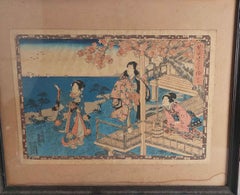
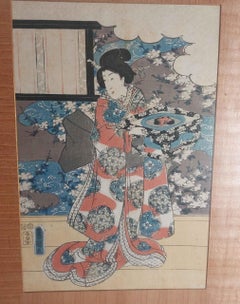
ntique Woodblock Print Ukiyo-e Kunisada UTAGAWA (1786-1865) - "Utagawa Kunisada

ntique Woodblock Print Ukiyo-e Kunisada UTAGAWA (1786-1865) - "Utagawa Kunisada

Located in Amsterdam, Noord Holland

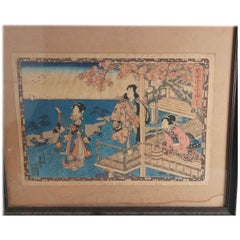
A lovely figural print Kunisada UTAGAWA (Toyokuni III) (1786-1865) - "The Tale of Genji" Utagawa Kunisada The Tale of Genji - Chapter 12 Condition Woodblock in good condition, ...

Category

Antique 19th Century Chinese Edo Paintings and Screens

Materials

Bronze

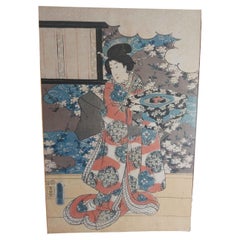
Antique Woodblock Print Ukiyo-e Kunisada UTAGAWA (1786-1865) - Geisha with Pa..

Antique Woodblock Print Ukiyo-e Kunisada UTAGAWA (1786-1865) - Geisha with Pa..

Located in Amsterdam, Noord Holland

A lovely figural print Kunisada UTAGAWA (Toyokuni III) (1786-1865) - Condition Woodblock in good condition, but the frame is old and broken. Missing underside. The passe partout h...

Category

Antique 19th Century Chinese Edo Paintings and Screens

Materials

Bronze

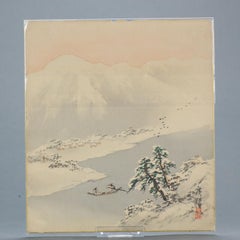
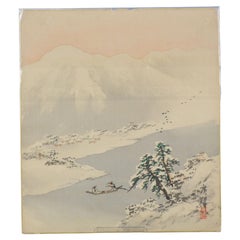
Antique Japanese Silk painting Japan Meiji Period Winter Landscape

Antique Japanese Silk painting Japan Meiji Period Winter Landscape

Located in Amsterdam, Noord Holland

A very nice blockprint 30-5-18-pm-3341 Condition / Overall Condition Perfect. Size frame: 242x 274mm. Period 19th century Meiji Periode (1867-1912)

Category

Antique 19th Century Chinese Edo Paintings and Screens

Materials

Bronze

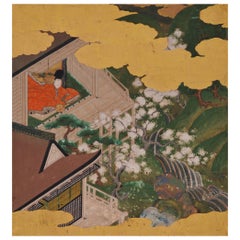
Japanese Painting, 17th Century, Tale of Genji, Tosa School

Japanese Painting, 17th Century, Tale of Genji, Tosa School

Located in Kyoto, JP

Illustration to an unidentified chapter of the Tale of Genji (Genji Monogatari) Tosa School (second half of the 17th Century) Ink, pigment, gofun and gold on paper. Unframed. ...

Category

Antique Late 17th Century Japanese Edo Paintings and Screens

Materials

Gold Leaf

Japanese 18th Century Tsukinami-e 6 Panel Floor Screen, Edo Period

Japanese 18th Century Tsukinami-e 6 Panel Floor Screen, Edo Period

Located in Norton, MA

A Japanese 18th Century Tsukinami-e 6 Panel Floor Screen depicts the Activities of the Twelve Months of the Year, mineral pigments on gold leaf, mounted on wood panels with 6 frames...

Category

Antique 18th Century Japanese Edo Decorative Boxes

Materials

Gold Leaf

  • 1
Get Updated with New Arrivals
Save "Edo Screen Gold", and we’ll notify you when there are new listings in this category.

Edo Screen Gold For Sale on 1stDibs

With a vast inventory of beautiful furniture at 1stDibs, we’ve got just the piece of edo screen gold you’re looking for. Frequently made of metal, gold and gold leaf, every item from our selection of edo screen gold was constructed with great care. You’ve searched high and low for the perfect choice in our collection of edo screen gold — we have versions that date back to the 18th Century alongside those produced as recently as the 20th Century are available. Each object in our assortment of edo screen gold bearing hallmarks is very popular. Many designers have produced at least one well-made option in this array of edo screen gold over the years, but those crafted by Japanese School, Kishi Ganryo and Kiyono Yozan are often thought to be among the most beautiful.

How Much is a Edo Screen Gold?

A piece of edo screen gold can differ in price owing to various characteristics — the average selling price 1stDibs is $16,500, while the lowest priced sells for $636 and the highest can go for as much as $175,000.

A Close Look at Edo Furniture

Edo furniture was created during a flourishing time for the decorative arts owing to the stability of the Tokugawa shogunate rule in Japan. Spanning from 1603 to 1867, this era of peace and economic growth supported artistic advancements in lacquer, woodblock printing, porcelain and other artisanal trades. Because the country was largely isolated, there was little outside influence, leading to centuries of exceptional attention to the design of its furnishings and the quality of its traditional arts.

Unlike during the Meiji period that followed, with an increase in domestic and international markets, furniture during the Edo period was predominately commissioned by the ruling class, although people from across social groups benefited from the burgeoning metropolitan hubs for artisanal trades. For instance, Kyoto became a major center for lacquer art. Most furniture pieces were made from wood such as cedar or ash, including the era’s sashimono cabinets, which involved fine joinery and were rooted in the Heian period.

Sashimono cabinets, which were built by master craftsmen in a range of different wood types owing to the various trees that populate Japan, occasionally featured a stack of slender drawers as well as sliding doors. They were popular with everyone from samurai to kabuki actors. Tansu storage chests crafted from wood with metal fittings were also common in Edo-period homes. Some were designed to be easily portable while others were made to double as staircases.

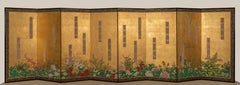
Painted folding screens, called byōbu, were also fashionable, with Japanese artists inspired by nature, literature and scenes of history and daily life to create vivid works. In Buddhist temples and the palatial homes of the aristocratic class, fusuma, or large sliding panels, would sometimes be adorned with gold or silver leaf. These dividers allowed interiors to change throughout the day, closing in small spaces for personal use or reflecting candlelight to illuminate communal spaces after dark.

Find a collection of Edo tables, lighting, decorative objects, wall decorations and more furniture on 1stDibs.
Finding the Right Paintings-screens for You

Traditional Asian paintings were often created on scrolls and folding screens. Artisans made screens that could be folded up or spread out by connecting several panels using hinges. Today, antique Asian folding screens and paintings are sophisticated decorative accents that can serve as makeshift partitions to ensure privacy.
The original folding screens were created by Chinese artists. The earliest record of screens comes from the 2nd century B.C., and surviving examples date back to the Ming dynasty. Chinese painting utilizes many of the same tools as calligraphy — these screens were crafted from wood with painted panels featuring striking art or calligraphy that told cultural stories or represented nature and life in the area.

The practice was introduced to Japan, where paintings for screens were made on paper and silk, in the 8th century. These paintings frequently feature subjects such as landscapes, animals, flowers and Buddhist religious themes. Along with screens for tea ceremonies and dance backgrounds, there were screens for use in Shinto and Buddhist temples.

In the 17th century, screens began to be imported to Europe where their popularity grew. Coco Chanel famously collected Coromandel folding screens.

Traditional Asian paintings can make a tasteful addition to any wall, and screens can be used as decoration or, in the case of larger iterations, as an aesthetic way to divide a large room. Browse the selection of antique Asian paintings and screens from a variety of styles and eras on 1stDibs.