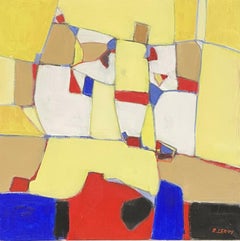
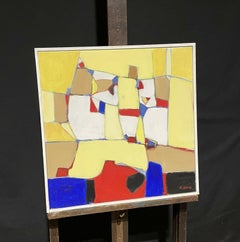
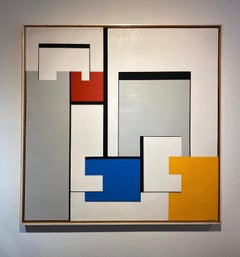
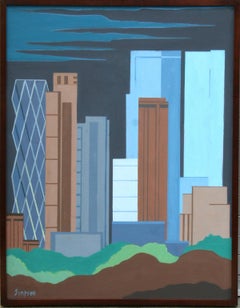
Geometric Oil Paintings
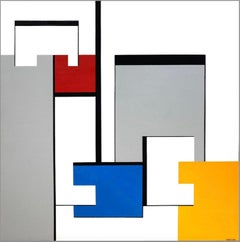
1960s Abstract Abstract Paintings
Canvas, Oil
2010s Contemporary Abstract Paintings
Canvas, Oil, Panel
2010s Abstract Abstract Paintings
Metal
2010s Abstract Abstract Paintings
Metal
2010s Abstract Geometric Abstract Paintings
Oil
2010s Abstract Geometric Abstract Paintings
Oil
1970s Abstract Geometric Abstract Paintings
Canvas, Oil
20th Century Abstract Geometric Abstract Paintings
Canvas, Oil
2010s Contemporary Abstract Paintings
Oil
Mid-20th Century Abstract Geometric Abstract Paintings
Oil
1960s Abstract Geometric Abstract Paintings
Canvas, Oil
21st Century and Contemporary Abstract Geometric Abstract Paintings
Oil
20th Century Abstract Geometric Abstract Paintings
Canvas, Oil
Mid-20th Century Abstract Geometric Abstract Paintings
Oil
Mid-20th Century Abstract Geometric Abstract Paintings
Oil
1990s Contemporary Landscape Paintings
Oil
1960s Abstract Geometric Abstract Paintings
Paper, Oil
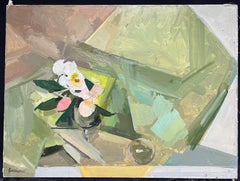
Mid-20th Century Modern Still-life Paintings
Oil, Canvas
2010s Abstract Abstract Paintings
Vinyl, Mixed Media
2010s Abstract Abstract Paintings
Canvas, Oil
2010s Abstract Abstract Paintings
Canvas, Oil
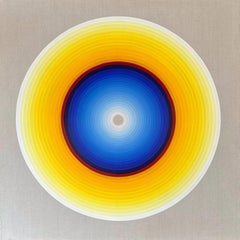
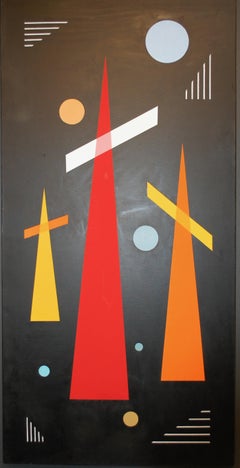
2010s Op Art Abstract Paintings
Canvas, Oil
2010s Abstract Abstract Paintings
Canvas, Oil
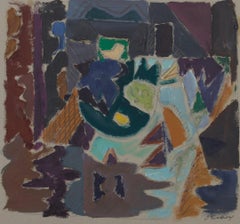
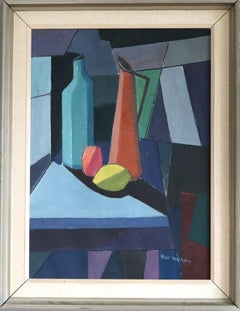
Mid-20th Century Cubist Interior Paintings
Oil
1950s Post-Impressionist Abstract Paintings
Oil
2010s Contemporary Paintings
Canvas, Oil, Acrylic
1960s Minimalist Abstract Paintings
Acrylic, Canvas
2010s Abstract Abstract Paintings
Canvas, Oil
2010s Op Art Abstract Paintings
Canvas, Oil
2010s Op Art Abstract Paintings
Canvas, Oil
2010s Op Art Abstract Paintings
Canvas, Oil
1960s Color-Field Abstract Paintings
Canvas, Oil
Mid-20th Century Modern Still-life Paintings
Oil, Board
2010s Op Art Abstract Paintings
Canvas, Oil
2010s Abstract Abstract Paintings
Canvas, Oil
1960s Abstract Abstract Paintings
Canvas, Oil
21st Century and Contemporary Abstract Abstract Paintings
Canvas, Oil
21st Century and Contemporary Abstract Abstract Paintings
Canvas, Oil
21st Century and Contemporary Abstract Abstract Paintings
Canvas, Oil
21st Century and Contemporary Abstract Abstract Paintings
Canvas, Oil
21st Century and Contemporary Abstract Abstract Paintings
Canvas, Oil
21st Century and Contemporary Abstract Abstract Paintings
Canvas, Oil
21st Century and Contemporary Abstract Abstract Paintings
Canvas, Oil
1960s Abstract Geometric Abstract Paintings
Oil
2010s Abstract Geometric Abstract Paintings
Cotton Canvas, Oil
21st Century and Contemporary Abstract Geometric Abstract Paintings
Canvas, Oil
2010s Abstract Geometric Abstract Paintings
Cotton Canvas, Oil
2010s Abstract Geometric Abstract Paintings
Cotton Canvas, Oil
2010s Abstract Geometric Figurative Paintings
Oil, Board
21st Century and Contemporary Abstract Geometric Abstract Paintings
Canvas, Oil
20th Century Abstract Geometric Abstract Paintings
Canvas, Oil
20th Century Abstract Geometric Abstract Paintings
Canvas, Oil
20th Century Abstract Geometric Abstract Paintings
Oil
2010s Abstract Geometric Abstract Paintings
Oil
21st Century and Contemporary Abstract Geometric Abstract Paintings
Canvas, Oil
21st Century and Contemporary Abstract Geometric Abstract Paintings
Canvas, Oil
1960s Abstract Geometric Abstract Paintings
Canvas, Oil
- 1
- ...
Geometric Oil Paintings For Sale on 1stDibs
How Much are Geometric Oil Paintings?
A Close Look at Abstract Art
Beginning in the early 20th century, abstract art became a leading style of modernism. Rather than portray the world in a way that represented reality, as had been the dominating style of Western art in the previous centuries, abstract paintings, prints and sculptures are marked by a shift to geometric forms, gestural shapes and experimentation with color to express ideas, subject matter and scenes.
Although abstract art flourished in the early 1900s, propelled by movements like Fauvism and Cubism, it was rooted in the 19th century. In the 1840s, J.M.W. Turner emphasized light and motion for atmospheric paintings in which concrete details were blurred, and Paul Cézanne challenged traditional expectations of perspective in the 1890s.
Some of the earliest abstract artists — Wassily Kandinsky and Hilma af Klint — expanded on these breakthroughs while using vivid colors and forms to channel spiritual concepts. Painter Piet Mondrian, a Dutch pioneer of the art movement, explored geometric abstraction partly owing to his belief in Theosophy, which is grounded in a search for higher spiritual truths and embraces philosophers of the Renaissance period and medieval mystics. Black Square, a daringly simple 1913 work by Russian artist Kazimir Malevich, was a watershed statement on creating art that was free “from the dead weight of the real world,” as he later wrote.
Surrealism in the 1920s, led by artists such as Salvador Dalí, Meret Oppenheim and others, saw painters creating abstract pieces in order to connect to the subconscious. When Abstract Expressionism emerged in New York during the mid-20th century, it similarly centered on the process of creation, in which Helen Frankenthaler’s expressive “soak-stain” technique, Jackson Pollock’s drips of paint, and Mark Rothko’s planes of color were a radical new type of abstraction.
Conceptual art, Pop art, Hard-Edge painting and many other movements offered fresh approaches to abstraction that continued into the 21st century, with major contemporary artists now exploring it, including Anish Kapoor, Mark Bradford, El Anatsui and Julie Mehretu.
Find original abstract paintings, sculptures, prints and other art on 1stDibs.
Finding the Right Abstract-paintings for You
Bring audacious experiments with color and textures to your living room, dining room or home office. Abstract paintings, large or small, will stand out in your space, encouraging conversation and introducing a museum-like atmosphere that’s welcoming and conducive to creating memorable gatherings.
Abstract art has origins in 19th-century Europe, but it came into its own as a significant movement during the 20th century. Early practitioners of abstraction included Wassily Kandinsky, although painters were exploring nonfigurative art prior to the influential Russian artist’s efforts, which were inspired by music and religion. Abstract painters endeavored to create works that didn’t focus on the outside world’s conventional subjects, and even when artists depicted realistic subjects, they worked in an abstract mode to do so.
In 1940s-era New York City, a group of painters working in the abstract mode created radical work that looked to European avant-garde artists as well as to the art of ancient cultures, prioritizing improvisation, immediacy and direct personal expression. While they were never formally affiliated with one another, we know them today as Abstract Expressionists.
The male contingent of the Abstract Expressionists, which includes Jackson Pollock, Willem de Kooning and Robert Motherwell, is frequently cited in discussing leading figures of this internationally influential postwar art movement. However, the women of Abstract Expressionism, such as Helen Frankenthaler, Lee Krasner, Joan Mitchell and others, were equally involved in the art world of the time. Sexism, family obligations and societal pressures contributed to a long history of their being overlooked, but the female Abstract Expressionists experimented vigorously, developed their own style and produced significant bodies of work.
Draw your guests into abstract oil paintings across different eras and countries of origin. On 1stDibs, you’ll find an expansive range of abstract paintings along with a guide on how to arrange your wonderful new wall art.
If you’re working with a small living space, a colorful, oversize work can create depth in a given room, but there isn’t any need to overwhelm your interior with a sprawling pièce de résistance. Colorful abstractions of any size can pop against a white wall in your living room, but if you’re working with a colored backdrop, you may wish to stick to colors that complement the decor that is already in the space. Alternatively, let your painting make a statement on its own, regardless of its surroundings, or group it, gallery-style, with other works.
- 1stDibs ExpertFebruary 13, 2024To identify an oil painting, look closely at its surface. Compared to other paintings, pieces produced in oils usually show off a variety of textures across the canvas, and the paint will appear layered on. If you're looking to determine the name, age or creator of a work, try snapping a photo with your smartphone’s camera and conducting a reverse image search online. Shop a diverse assortment of oil paintings on 1stDibs.
- 1stDibs ExpertMay 3, 2024Jan van Eyck is widely considered by art historians to be the father of oil painting. While the usage of oil paints dates back to 7th-century China, the Flemish painter popularized the material, using oils to produce highly detailed works such as The Arnolfini Portrait. The Northern Renaissance master also influenced many other artists, such as Hugo van der Goes and Gerard David. Shop an assortment of fine art on 1stDibs.
- When was oil paint invented?1 Answer1stDibs ExpertFebruary 27, 2024Oil paint was invented during the 7th century A.D. The earliest examples of oil paintings have been traced to Afghanistan and depict scenes related to the Buddhist religion. Records dating back to the 12th century indicate that early Christian monks in Europe used oil paints to decorate furniture, and a century later, some artists began finishing tempera paintings with touches of oil paint. It wasn't until the 15th century that oil paints became a common medium for European painters, when Flemish artists like Jan van Eyck began favoring them over tempera. Explore a variety of oil paintings on 1stDibs.
- What is abstract oil painting?1 AnswerLilac Gallery Ltd.March 17, 2021An abstract oil painting and an artwork that is made with oil paint on a medium like canvas, wood board, or other panels like canvas board. And the 'abstract' term refers to the Movement & Style of the piece. As abstraction indicates a departure from reality in the depiction of imagery in art, the artist creates a painting where the subject, shape, form, color, and line, is created with no particular references of the world but as a composition that may exist with a degree of independence from its vision.
- 1stDibs ExpertMarch 22, 2024To maintain oil paintings that you purchased for your home, experts suggest that you keep them out of direct sunlight. Prolonged exposure to the sunlight coming in from a window can fade the colors in your painting. Do not hang your oil painting near a heat source or where it can get wet (bathrooms and kitchens are not safe for your oil painting).
You may wish to dust your oil painting so that layers of dust don’t begin to gather on its surface. This should only be considered to remove loose dust. Never spray any chemical substance on your oil painting. Do not use a damp cloth to dust your oil painting. (Again, your painting should not be exposed to moisture.)
To remove loose dust, use a soft brush that measures approximately one to two inches wide with natural-hair bristles. Do not use a dust cloth or a feather duster, as those items may catch or leave threads or feathers behind. Do not apply pressure or dust your painting for an extended period of time.
If you think that your oil painting is considerably dirty or believe that other issues may be at work, experts strongly suggest that you consult with a professional conservator.
Read about how to arrange your wall art and find oil paintings for sale on 1stDibs. - Can you use oil paint on wood?1 Answer1stDibs ExpertFebruary 22, 2021You can use oil paint on wood as long as you prep the wood first. The first thing you should do is seal the wood with a primer. Ideally, paint two coats of sealer onto the wood so that the paint doesn't cause the wood to rot over time.
- 1stDibs ExpertAugust 15, 2024To tell how old an oil painting is, research the artist who produced it. You can use the mobile app Smartify to snap a photo of the signature on your painting and identify the artist. Read biographical information about the artist online and look at images of their work to estimate the age of your piece. Alternatively, you can get the opinion of a knowledgeable art dealer or certified appraiser. Explore a wide variety of oil paintings on 1stDibs.
- Did Dali use oil paint?1 Answer1stDibs ExpertApril 5, 2022Yes, Dali did indeed use oil paint. Although he used oil paints in the traditional method, he would at times add natural resin or linseed oil to play with fluidity and texture. You can shop a selection of Salvador Dali’s pieces from some of the world’s top art dealers on 1stDibs.
- 1stDibs ExpertApril 5, 2022The largest oil painting in the world is in the main hall of the Doge's Palace located in Venice, Italy. Its name is Il Paradiso. Tintoretto painted it around 1592, and it measures 22 meters by 7 meters. Shop a large collection of oil paintings on 1stDibs.
- 1stDibs ExpertSeptember 25, 2019
Varnishing an oil is not necessary, but it is recommended because it protects the painting and corrects surface irregularities.
- 1stDibs ExpertMay 3, 2024A few things make an oil painting valuable. Age has a major impact on price, with pieces made over a century ago tending to fetch the highest prices. Who created the painting also matters. The more famous the artist, the higher the selling price for a painting is likely to be. Finally, the condition of the work and whether it is in its original frame will also impact how much it is worth. Find a diverse assortment of oil paintings on 1stDibs.
- 1stDibs ExpertAugust 20, 2024The difference between a lithograph and an oil painting comes down to uniqueness and technique. To produce an oil painting, an artist applies oil-based paints to a canvas or another surface using a brush. The process results in a single work of art. Lithography is a form of printmaking that begins by drawing on or painting on a stone surface with an oil-based substance, such as a greasy crayon or tusche, an oily wash. The stone is then covered with water, which is repelled by the oily areas. Oil-based ink is then applied to the wet stone, adhering only to the oily image. Through lithography, an artist can produce dozens, or even thousands, of copies of a single image. On 1stDibs, shop a large selection of lithographs and oil paintings.
- 1stDibs ExpertMarch 22, 2024Yes, oil paintings darken over time. As oil paint is made of pigment particles, the range of substances that are used as pigment in oil paint can render certain colors susceptible to aging. Slowing the aging process for an oil painting involves storing your painting properly and keeping the work out of exposed sunlight. Temperature control and humidity are also important in preserving the life of an oil painting and slowing the aging process.
To maintain oil paintings that you purchased for your home, experts suggest that you keep them out of direct sunlight. Prolonged exposure to the sunlight coming in from a window can fade the colors in your painting. Do not hang your oil painting near a heat source or where it can get wet (bathrooms and kitchens are not safe for your oil painting).
You may wish to dust your oil painting so that layers of dust don’t begin to gather on its surface. This should only be considered to remove loose dust. Never spray any chemical substance on your oil painting. Do not use a damp cloth to dust your oil painting. (Again, your painting should not be exposed to moisture.)
To remove loose dust, use a soft brush that measures approximately one to two inches wide with natural-hair bristles. Do not use a dust cloth or a feather duster, as those items may catch or leave threads or feathers behind. Do not apply pressure or dust your painting for an extended period of time.
If you think that your oil painting is considerably dirty or believe that other issues may be at work, experts strongly suggest that you consult with a professional conservator.
Read about how to arrange your wall art and find oil paintings for sale on 1stDibs. - 1stDibs ExpertApril 5, 2022To tell if your oil painting is authentic, first check the signature of the artist to start your research. Use a magnifying glass to check the texture of the painting, and finally check the back for the painting’s original stretchers. Shop a selection of expertly vetted artwork from some of the world’s top art dealers on 1stDibs.
- 1stDibs ExpertFebruary 13, 2023Because the value of an oil painting can vary greatly based on the artist, the subject and the condition of the piece, it's generally best to work with a certified appraiser. A knowledgeable professional can evaluate the piece and estimate its value. Shop a variety of authentic oil paintings from some of the world’s top galleries on 1stDibs.
- La ChrysomeleFebruary 24, 2021Any artwork is worth and only worth the price someone is willing to pay for it (unfortunately, whether one can afford it or not is another story). Different people may have different reasons to attribute value to an artwork, from the purest (falling in love with it) to what is often considered as the most vile (speculation), going through remembrance, pride of ownership, or brag, among other reasons. For most living artists, the price of the artworks is usually set by the artist and/or the gallery which represent him or her, by type and size of artwork, and corresponds to an equilibrium price between the rate at which artworks are sold and the rate at which new artworks are produced by the artist. For artworks from dead artists sold by professional dealers, the price is often based on auctions results for similar pieces of the same artists. Oil paintings are usually pricier than other techniques because it is considered more difficult to master, but also because oil paintings are known for their ability to last centuries.
- How much do oil paintings cost?1 Answer1stDibs ExpertSeptember 25, 2019
On 1stdibs, oil paintings cost between $60 and $6,200,000.
- 1stDibs ExpertApril 5, 2022The best place to find oil paintings and discover new artists is at local art galleries. There are also many online art dealers who provide information about artists and sell their works. On 1stDibs, you’ll discover a variety of art styles from master oil painters.
- 1stDibs ExpertApril 5, 2022To find the artist of an oil painting, look on the back of the canvas. Sometimes, you will find the artist’s name and the year of production on the back. If the canvas is in a frame, gently peel away the paper covering the back to access the canvas. In the event you cannot find any identifying information, seek the help of a licensed art appraiser. Shop a selection of oil paintings on 1stDibs.
- 1stDibs ExpertMarch 22, 2024Yes, sunlight affects oil paintings. Keep your oil paintings away from direct sunlight.
To maintain oil paintings that you purchased for your home, experts suggest that you keep them out of sunlight. Prolonged exposure to the sunlight coming in from a window can fade the colors in your painting. Do not hang your oil painting near a heat source or where it can get wet (bathrooms and kitchens are not safe for your oil painting).
You may wish to dust your oil painting so that layers of dust don’t begin to gather on its surface. This should only be considered to remove loose dust. Never spray any chemical substance on your oil painting. Do not use a damp cloth to dust your oil painting. (Again, your painting should not be exposed to moisture.)
To remove loose dust, use a soft brush that measures approximately one to two inches wide with natural-hair bristles. Do not use a dust cloth or a feather duster, as those items may catch or leave threads or feathers behind. Do not apply pressure or dust your painting for an extended period of time.
If you think that your oil painting is considerably dirty or believe that other issues may be at work, experts strongly suggest that you consult with a professional conservator.
Read about how to arrange your wall art and find oil paintings for sale on 1stDibs.
Read More
At 89, Artist Lucio Pozzi Is Reaching New Career Heights
The Italian-American’s 2020 abstract painting “The Hoe” personifies his “art of not knowing.”
Brooklyn Artist Angel Otero’s Abstract Works Tell a Unique Story about Art and Heritage
In his current show at New York's Lehmann Maupin gallery, the Puerto Rican–born talent reveals new paintings with a semiautobiographical aspect.