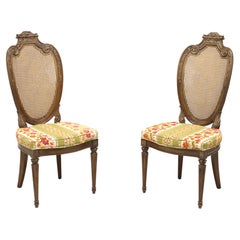
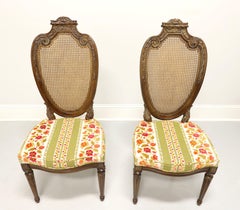
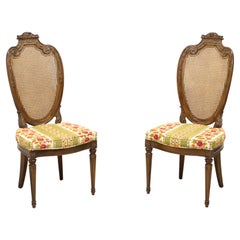
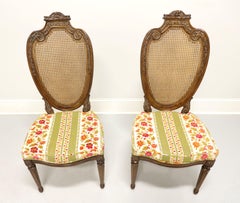
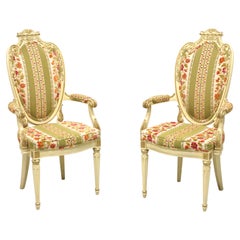
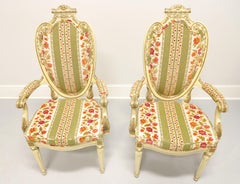
Reflecting the final era of royal opulence before the upheaval of the French Revolution, antique Louis XVI furniture features more angular shapes than the Rococo curves of the Louis XV style, harkening back to the imposing grandeur of Louis XIV.
Dating between 1750 and 1800, an era that overlapped with the last king of France whose reign was cut short by the guillotine, Louis XVI furniture, known as the goût grec, is emblematic of the neoclassical revision that French furniture underwent during the second half of the 18th century.
Authentic Louis XVI furniture characteristics include clean lines and carved details such as scrolls and acanthus flourishes that were inspired by ancient Greece and Rome. This was informed by a burgeoning interest in antiquity in the 18th century, owing to new archaeological excavations at sites including Pompeii and Herculaneum. It largely eclipsed the more East Asian–influenced ornamentation of Louis XV for something more geometric and symmetrical.
The Louis XVI style was defined by what was being created for the palatial rooms at Versailles and Fontainebleau, particularly for the queen, with cabinetmaker Jean-Henri Riesener being a favorite of Marie-Antoinette’s for his luxurious pieces accented with gilded bronze and marquetry. Furniture maker Jean-Baptiste-Claude Sené was also a major designer of the period, with his pieces for the royal residences adorned with giltwood and neoclassical touches like tapered columns for chair legs and laurel leaf carvings. Cabinetmaker Adam Weisweiler occasionally incorporated into his furniture porcelain panels produced by Sèvres, a popular manufacturer of European ceramics that served the crown with serveware, vases and other decorative objects.
Find a collection of antique Louis XVI seating, tables, cabinets and other furniture on 1stDibs.
If the interiors people have been saving on Instagram lately are any indication, we’ll be seeing a lot more antique, new and vintage cane furniture in the years ahead.
Cane — the material of the moment that is inspiring a new generation of designers — has been cropping up everywhere, from sleek armchairs to lounge chairs, side tables and desks.
In case you’re wondering, cane refers to the peeled-off bark of rattan, an Old World species of climbing palm, while wicker may be used to describe natural or synthetic materials that were woven into a pattern. Raffia, another term thrown around when discussing woven furniture, refers to a palm tree native to tropical regions in Africa.
Of course, designers’ obsession with traditional artisanal techniques is nothing new. Marcel Breuer’s tubular Cesca chair, a design originally conceived in the 1920s, has drawn renewed attention in the past few years. And the popularity of materials like raffia and wicker reflects our desire for all things handmade.
Find a wide range of antique, new and vintage cane furniture on 1stDibs.
No matter what your dream dining experience looks like, there is a wide-ranging variety of vintage, new and antique dining room chairs on 1stDibs. Find upholstered dining room chairs, wood dining room chairs and more to outfit any space designated for a good meal, be it in your home or in the great outdoors.
In the early 18th century, most dining room tables and other furniture was designed to look masculine. In America, dining rooms weren’t even much of a concept until the late 1700s, when a space set aside specifically for dining became a part of the construction of homes for the wealthy. Dining room chairs of the era were likely made of walnut or oak. In Europe, neoclassical dining chairs emerged during the 1750s owing to nostalgia for classical antiquity, while the curving chair crests of Queen Anne furniture in the United States preceded the artistically bold seat backs that characterized the Chippendale chairs that followed. If there weren't enough dining chairs at suppertime in the American colonies, men were prioritized and women stood.
In the dining rooms of today, however, there is enough space for everyone to have a seat at the table. Modern styles introduce innovative design choices that play with shape and style. Icons of mid-century modern dining room chairs are plentiful: With its distinctive bentwood back, there is the DCW dining chair by Charles and Ray Eames, while Hans Wegner's timeless classic, the Wishbone chair, remains relevant and elegant decades after its debut. Stefano Giovannoni's White Rabbit dining chairs, in their lovable polyethylene biomorphism, reinvent what dining can look like.
Today's wide range of dining room chairs also means that they can now be styled in different ways, bringing functionality and fun to any sumptuous dining space. No longer do tables have to be accompanied by a matching set of seats. Skillfully mixing and matching colors and designs allows you to showcase your personality without sacrificing the cohesion of a given space.
By furnishing your dining room with cozy chairs — vintage, antique or otherwise — family time can extend far beyond mealtime. The plush upholstery of Victorian-style dining room chairs is perfect for game nights that stretch from dinner to midnight snack. Outdoor tables and dining chairs can also present an excellent opportunity for bonding and eating — what goes better with a delicious meal than fresh air, anyway?
Whether you prefer your chairs streamlined and stackable or ornate and one of a kind, the offerings on 1stDibs will elevate your mealtime and beyond.