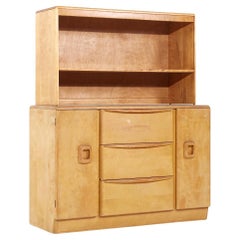
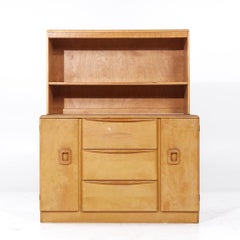
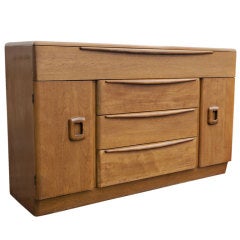
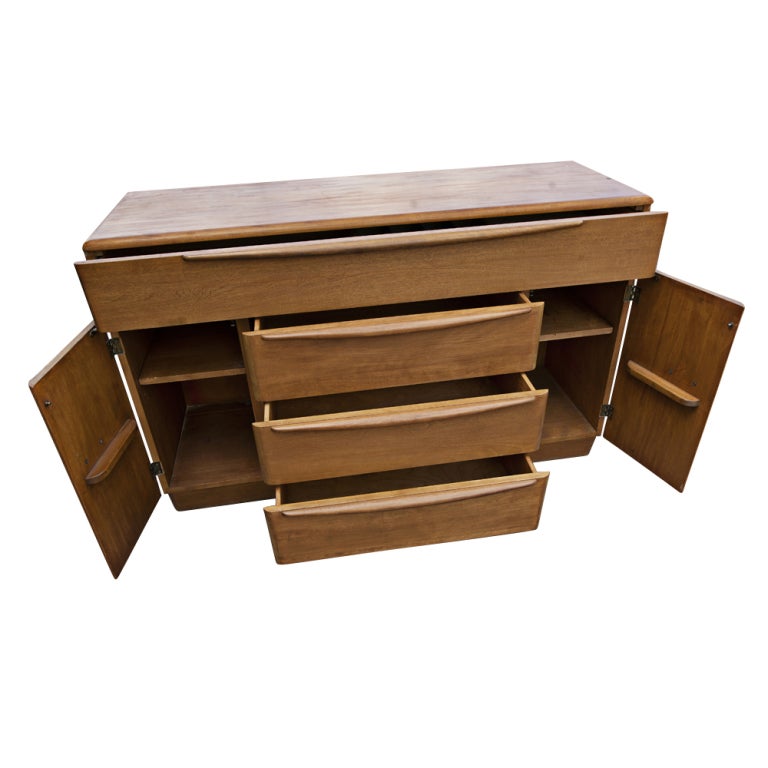
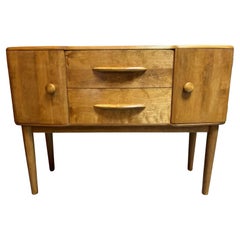
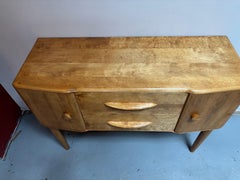
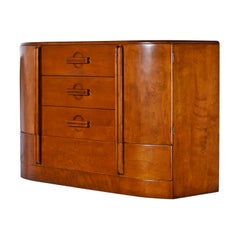
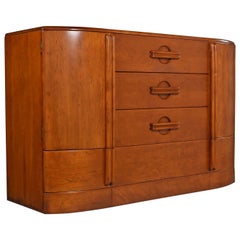
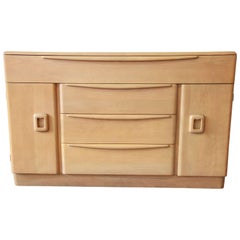
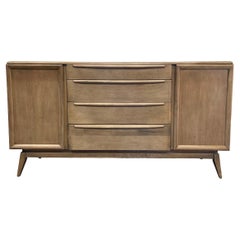
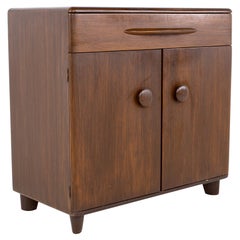
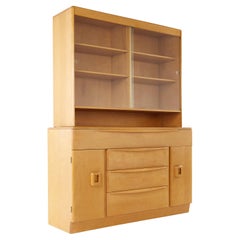
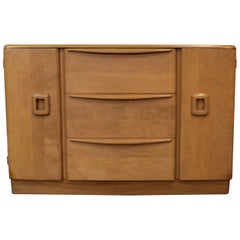
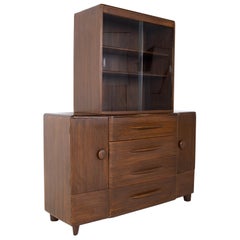
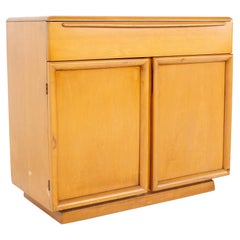
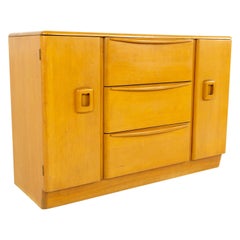
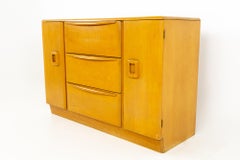
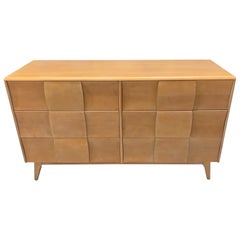
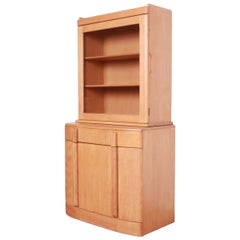
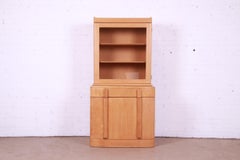
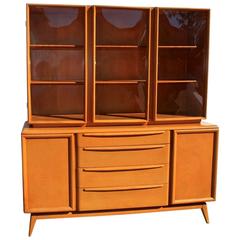
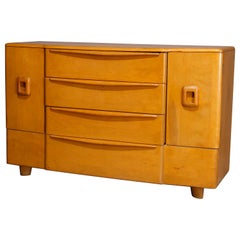
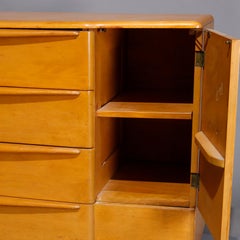
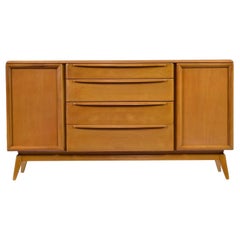
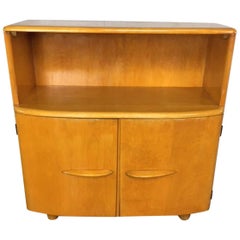
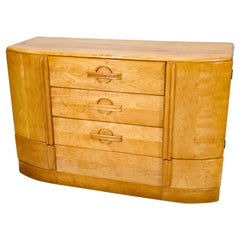
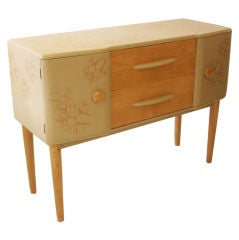
Created by the 19th-century merger of two venerable Massachusetts furniture makers, Heywood-Wakefield was one of the largest and most successful companies of its kind in the United States. In its early decades, the firm thrived by crafting affordable and hugely popular wicker pieces in traditional and historical styles. In the midst of the Great Depression, however, Heywood-Wakefield reinvented itself, creating instead the first modernist furniture — chairs, tables, dressers and more — to be widely embraced in American households.
The Heywoods were five brothers from Gardner, Massachusetts, who in 1826 started a business making wooden chairs and tables in their family shed. As their company grew, they moved into the manufacture of furniture with steam-bent wood frames and cane or wicker seats, backs and sides.
In 1897, the Heywoods joined forces with a local rival, the Wakefield Rattan Company, whose founder, Cyrus Wakefield, got his start on the Boston docks buying up lots of discarded rattan, which was used as cushioning material in the holds of cargo ships, and transforming it into furnishings. The conglomerate initially did well with both early American style and woven pieces, but taste began to change at the turn of the 20th century and wicker furniture fell out of fashion.
In 1930, Heywood-Wakefield brought in designer Gilbert Rohde, a champion of the Art Deco style. Before departing in 1932 to lead Herman Miller — the prolific Michigan manufacturer that helped transform the American home and office — Rohde created well-received sleek, bentwood chairs for Heywood-Wakefield and gave its colonial pieces a touch of Art Deco flair.
Committed to the new style, Heywood-Wakefield commissioned work from an assortment of like-minded designers, including Alfons Bach, W. Joseph Carr, Leo Jiranek and Count Alexis de Sakhnoffsky, a Russian nobleman who had made his name in Europe creating elegant automotive body designs.
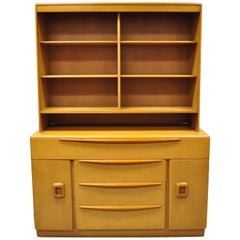
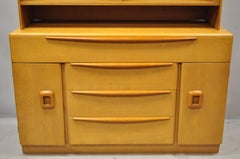
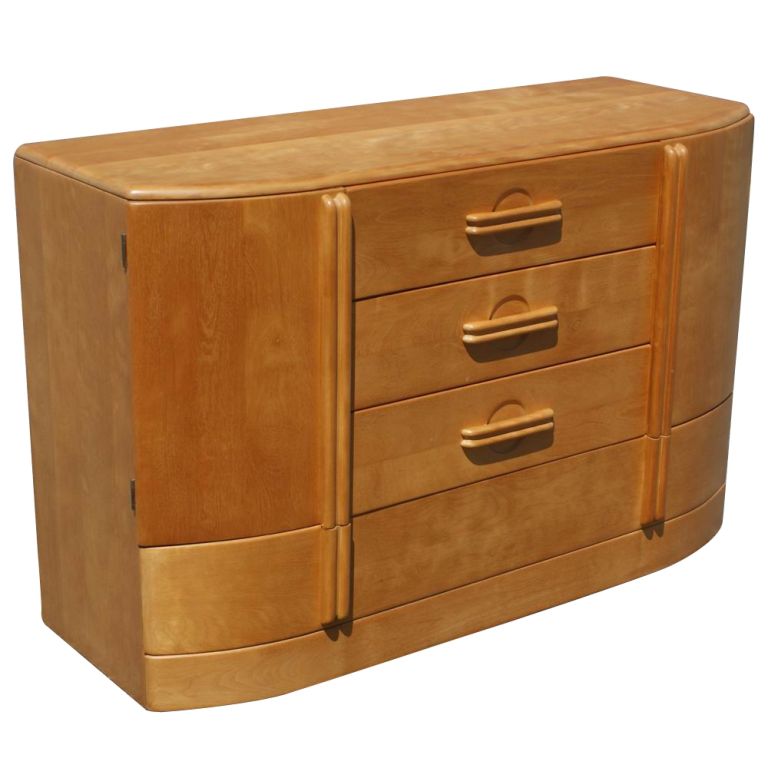
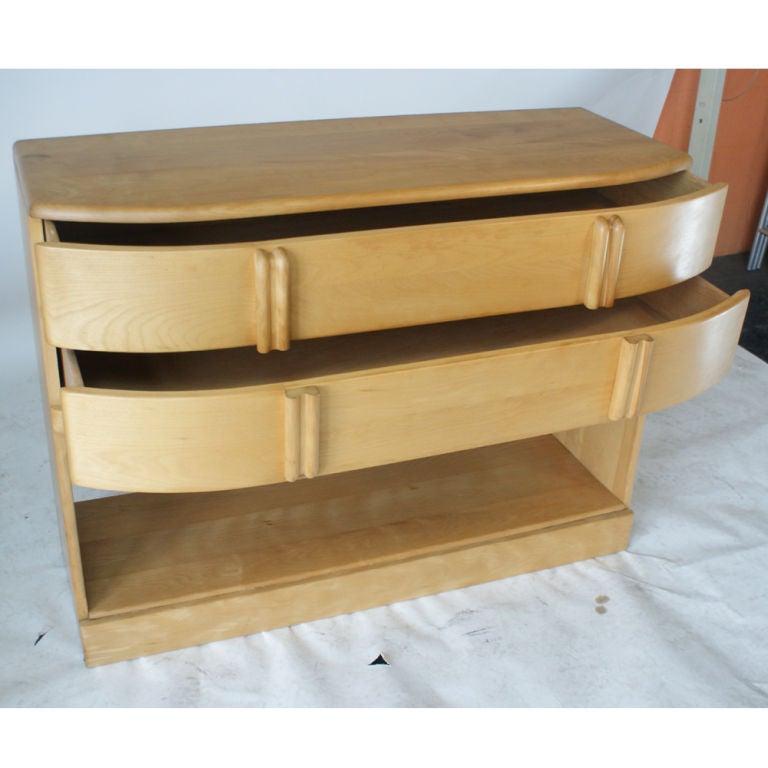
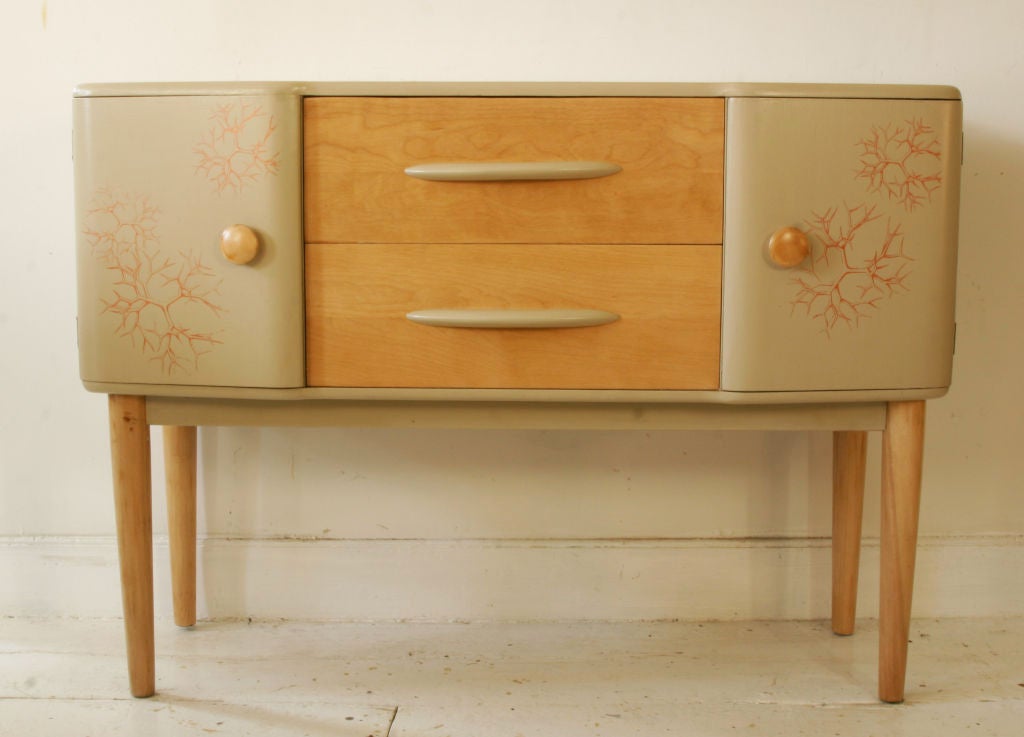
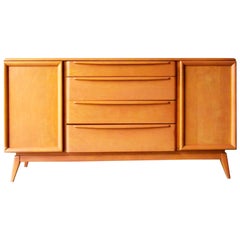
In 1936, the company introduced its “Streamline Modern” group of furnishings, presenting a look that would define the company’s wares for another 30 years. The buoyantly bright, blond wood — maple initially, later birch — came in finishes such as amber “wheat” and pink-tinted “champagne.” The forms of the pieces, at once light and substantial, with softly contoured edges and little adornment beyond artful drawer pulls and knobs, were featured in lines with names such as “Sculptura,” “Crescendo” and “Coronet.” It was forward-looking, optimistic and built to last — a draw for middle-class buyers in the Baby Boom years.
By the 1960s, Heywood-Wakefield began to be seen as “your parents’ furniture.” The last of the Modern line came out in 1966; the company went bankrupt in 1981. The truly sturdy pieces have weathered the intervening years well, having found a new audience for their blithe and happy sophistication.
Find vintage Heywood-Wakefield desks, vanities, tables and other furniture for sale on 1stDibs.
For get-togethers or large celebratory meals in your already sumptuous dining area, a charming and durable vintage, new or antique buffet, with its decorative and practical features, can truly elevate the experience.
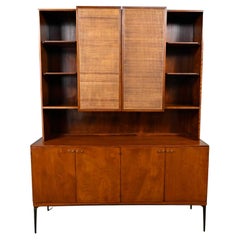
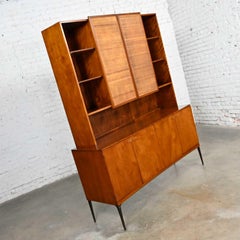
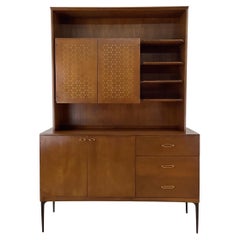
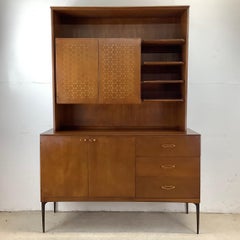
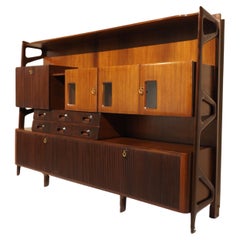
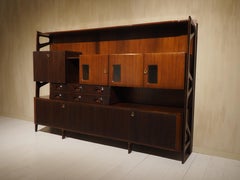
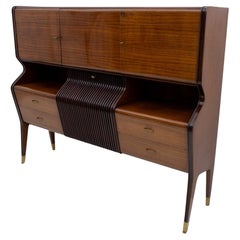
Although often used as a synonym for “sideboard,” a buffet technically possesses a tiered or shelved superstructure for displaying decorative kitchenware. The term derives from buffet à deux corps, a piece that is seen mostly in French Provincial furniture. And while the terms “case pieces” and “case goods” may cause even the most decor-obsessed to stumble, these furnishings — which include buffets, credenzas, cupboards and other must-have items — have been a vital part of the home for centuries.
Buffets are the ideal place to keep serveware and larger serving pieces that you’d rather have tucked away when not in use. They’re typically long and low and can be the perfect option for serving food as well as storing your porcelain and making your space tidy and organized. Feel free to dress up your buffet between meals with decorative objects or stacks of art books.
A buffet can be positioned in your living room, entryway or hall if space allows. But if you intend to permanently pair your case piece with your dining room table, when shopping for your vintage buffet you’ll definitely want to think about your dining room’s space restrictions. Allow for at least two feet of space between your buffet and your table so that guests can easily move to and fro as needed, and a buffet that is convenient for serving food should be as high as a kitchen counter if possible.
If you’re looking for inspiration for your home bar or dining area, find Art Deco buffets, mid-century modern buffets, Hollywood Regency buffets and other varieties on 1stDibs today.