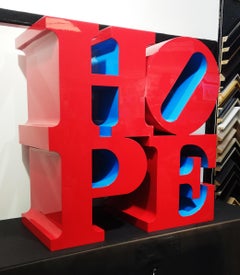
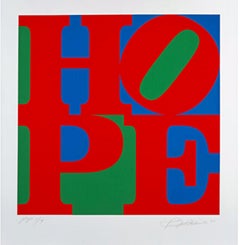
Surely you’ll find the exact piece of indiana hope sculpture you’re seeking on 1stDibs — we’ve got a vast assortment for sale. In our selection of items, you can find
Pop Art examples as well as a
contemporary version. Finding the perfect item from our selection of indiana hope sculpture may mean sifting through those created during different time periods — you can find an early version that dates to the 20th Century and a newer variation that were made as recently as the 21st Century. When looking for the right choice in our collection of indiana hope sculpture for your space, you can search on 1stDibs by color — popular works were created in bold and neutral palettes with elements of
gray,
beige,
brown and
silver. Creating an object in our assortment of indiana hope sculpture has been a part of the legacy of many artists, but those crafted by
Robert Indiana,
Chris Barnard,
Peter Max,
Dan Ostermiller and
Darius Steward are consistently popular. Frequently made by artists working in
screen print,
paint and
paper, these artworks are unique and have attracted attention over the years.
A piece of indiana hope sculpture can differ in price owing to various characteristics — the average selling price for items in our inventory is $4,650, while the lowest priced sells for $600 and the highest can go for as much as $399,950.
Robert Indiana's work evolved into hard-edged graphic images of words, logos and typographic forms, earning him a reputation as one of the country's leading contemporary artists.
Indiana is known for using public signs and symbols with altered lettering to make stark and challenging visual statements. In his prints, paintings and constructions, he gave new meaning to basic words like Eat, Die and Love. Using them in bold block letters in vivid colors, he enticed his viewers to look at the commonplace from a new perspective. One indication of his success was the appearance of his immensely popular multi-colored Love on a United States postage stamp in 1973.
Find a collection of original Robert Indiana art today on 1stDibs.
Figurative sculptures mix reality and imagination, with the most common muse being the human body. Animals are also inspirations for these sculptures, along with forms found in nature.
While figurative sculpture dates back over 35,000 years, the term came into popularity in the 20th century to distinguish it from abstract art. It was aligned with the Expressionist movement in that many of its artists portrayed reality but in a nonnaturalistic and emotional way. In the 1940s, Alberto Giacometti — a Swiss-born artist who was interested in African art, Cubism and Surrealism — created now-iconic representational sculptures of the human figure, and after World War II, figurative sculpture as a movement continued to flourish in Europe.
Lucian Freud and Francis Bacon were some of the leading figurative artists during this period. Artists like Jeff Koons and Maurizio Cattelan propelled the evolution of figurative sculpture into the 21st century.
Figurative sculptures can be whimsical, uncanny and beautiful. Their materials range from stone and wood to metal and delicate ceramics. Even in smaller sizes, the sculptures make bold statements. A bronze sculpture by Salvador Dalí enhances a room; a statuesque bull by Jacques Owczarek depicts strength with its broad chest while its thin legs speak of fragility. Figurative sculptures allow viewers to see what is possible when life is reimagined.
Browse 1stDibs for an extensive collection of figurative sculptures and find the next addition to your collection.