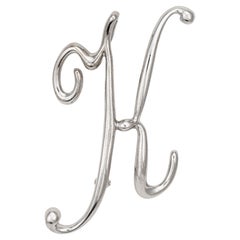
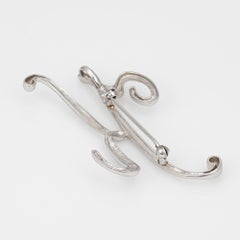
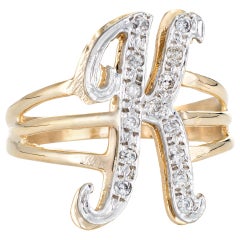
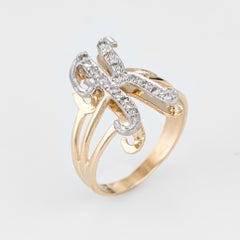
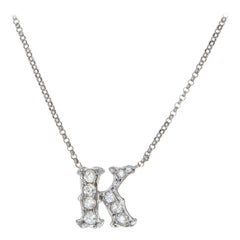
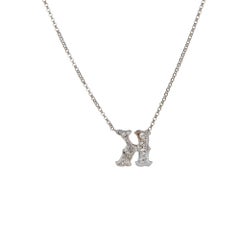
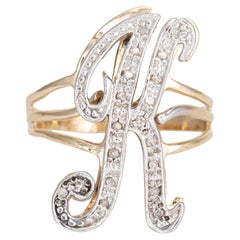
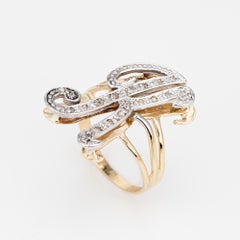
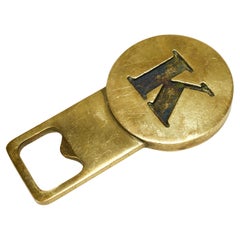
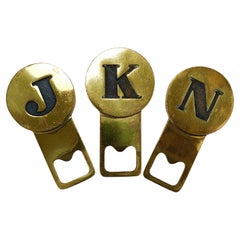
You are likely to find exactly the vintage letter k initial you’re looking for on 1stDibs, as there is a broad range for sale. Frequently made of
Gold,
14k Gold and
Yellow Gold, this item was constructed with great care. If you’re looking for a vintage letter k initial from a specific time period, our collection is diverse and broad-ranging, and you’ll find at least one that dates back to the 19th Century while another version may have been produced as recently as the 20th Century. Take a look at a vintage letter k initial featuring
Diamond from our inventory today to add the perfect touch to your look. Today, if you’re looking for a
round cut version of this piece and are unable to find the perfect match, our selection also includes
uncut alternatives. If you’re browsing our inventory for a vintage letter k initial, you’ll find that many are available today for
women, but there are still pieces to choose from for unisex and
men.
Prices for a vintage letter k initial can differ depending upon size, time period and other attributes — at 1stDibs, these accessories begin at $349 and can go as high as $1,275, while this accessory, on average, fetches $560.
Rooted in centuries of history of adornment dating back to the ancient world, modern jewelry reimagines traditional techniques, forms and materials for expressive new pieces. As opposed to contemporary jewelry, which responds to the moment in which it was created, modern jewelry often describes designs from the 20th to 21st centuries that reflect movements and trends in visual culture.
Modern jewelry emerged from the 19th-century shift away from jewelry indicating rank or social status. The Industrial Revolution allowed machine-made jewelry using electric gold plating, metal alloys and imitation stones, making beautiful jewelry widely accessible. Although mass production deemphasized the materials of the jewelry, the vision of the designer remained important, something that would be furthered in the 1960s with what’s known as the “critique of preciousness.”
A design fair called the “Exposition Internationale des Arts Décoratifs et Industriels Modernes” brought global attention to the Art Deco style in 1925 and gathered a mix of jewelry artists alongside master jewelers like Van Cleef & Arpels, Mauboussin and Boucheron. Art Deco designs from Cartier and Van Cleef & Arpels unconventionally mixed gemstones like placing rock crystals next to diamonds while borrowing motifs from eclectic sources including Asian lacquer and Persian carpets. Among Cartier’s foremost design preoccupations at the time were high-contrast color combinations and crisp, geometric forms and patterns. In the early 20th century, modernist jewelers like Margaret De Patta and artists such as Alexander Calder — who is better known for his kinetic sculptures than his provocative jewelry — explored sculptural metalwork in which geometric shapes and lines were preferred over elaborate ornamentation.
Many of the innovations in modern jewelry were propelled by women designers such as Wendy Ramshaw, who used paper to craft her accessories in the 1960s. During the 1970s, Elsa Peretti created day-to-night pieces for Tiffany & Co. while designers like Lea Stein experimented with layering plastic, a material that had been employed in jewelry since the mid-19th century and had expanded into Bakelite, acrylics and other unique materials.
Find a collection of modern watches, bracelets, engagement rings, necklaces, earrings and other jewelry on 1stDibs.