Charles Swanson

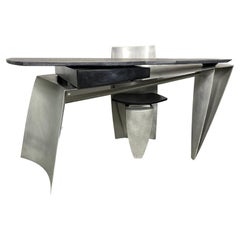
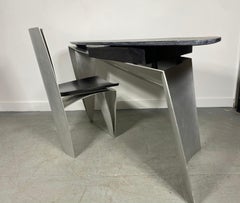
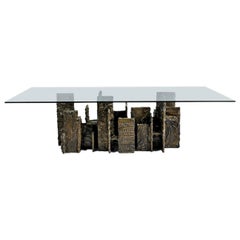
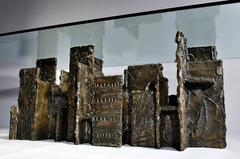
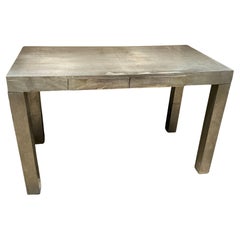
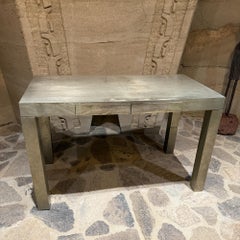
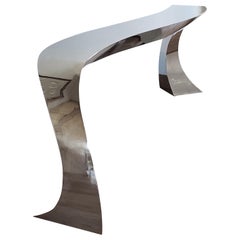
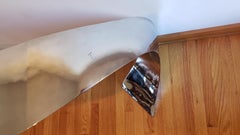
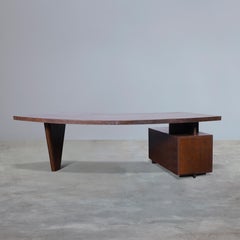
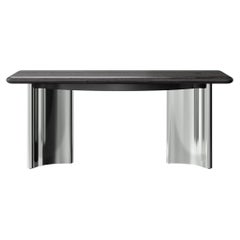
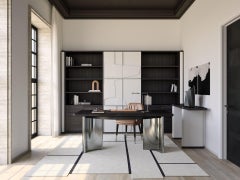
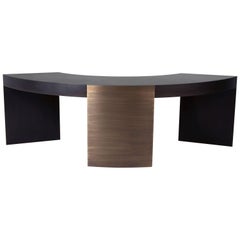
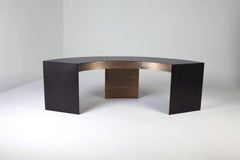
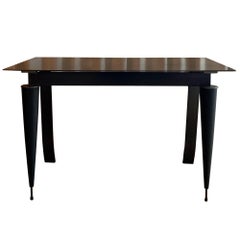
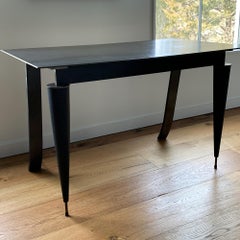
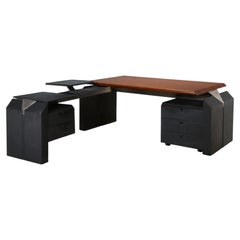
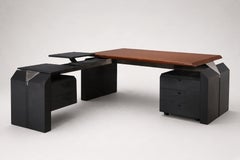
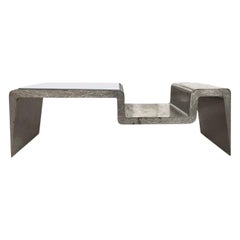
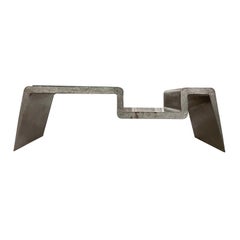
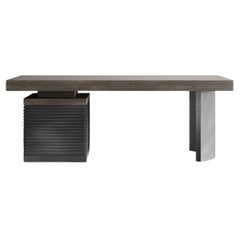
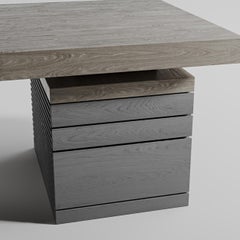
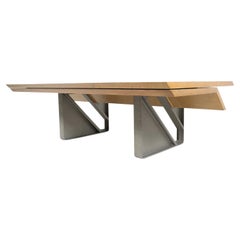
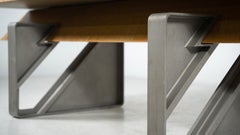
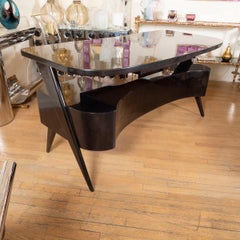
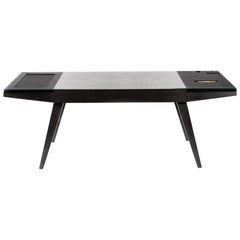
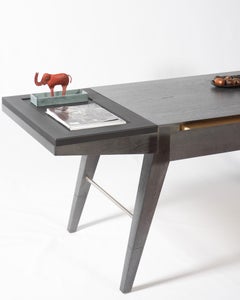
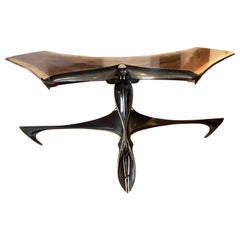
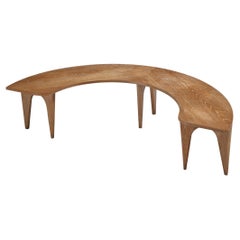
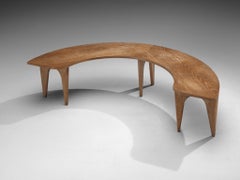
Charles Swanson Writing Desk, Post Modernist, Sculpture, cerused oak / stainless

Charles Swanson Writing Desk, Post Modernist, Sculpture, cerused oak / stainless

By Ray Swanson

Located in Buffalo, NY

Charlie Swanson didn’t start making art until his early 30s. After acquiring a Degree in Business and Economics, he owned a construction company for a while, and that fuelled his lov...

Category

1990s American Post-Modern Desks and Writing Tables

Materials

Stainless Steel

People Also Browsed

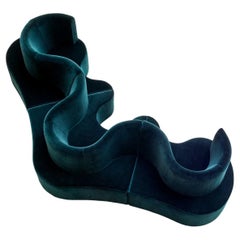
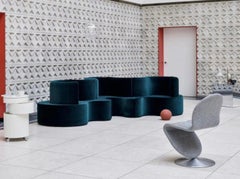
Ubald Klug DS-1025 "Terrazza" Sofa for De Sede, Brown Leather, 1974, Set of 4

Ubald Klug DS-1025 "Terrazza" Sofa for De Sede, Brown Leather, 1974, Set of 4

By De Sede, Ubald Klug

Located in Lonigo, Veneto

Ubald Klug DS-1025 "Terrazza" sofas for De Sede, brown leather, Switzerland, 1974, set of four. Ubald Klug designed this rare modular DS-1025 "Terrazza" sofa as a real living landsc...

Category

Vintage 1970s Swiss Mid-Century Modern Sofas

Materials

Leather

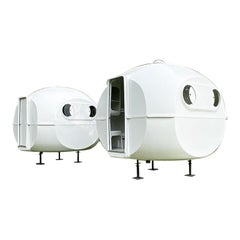
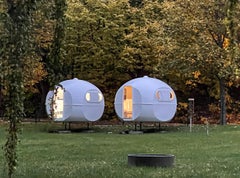
1 BANGA space age micro architecture prefab house bungalow by Carlo Zappa, 1971

1 BANGA space age micro architecture prefab house bungalow by Carlo Zappa, 1971

By Carlo Zappa

Located in Frankfurt am Main, DE

here we offer one of 2 bangas, with light grey interior. the second one with black interior is offered in another listing. a banga shows ways in which we could live more sustainably...

Category

Vintage 1970s Italian Space Age Architectural Elements

Materials

Fiberglass

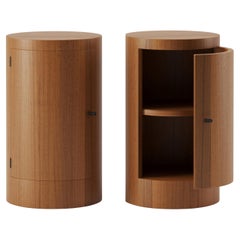
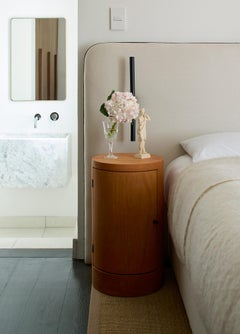
Pair of Constant Night Stands in Iroko Wood by Master Studio for Lemon

Pair of Constant Night Stands in Iroko Wood by Master Studio for Lemon

By Lemon

Located in Amsterdam, NL

Neatly proportioned with exceptional detailing, the constant nightstand is your perfect bedside partner. In our furniture making, the IDEA is to create special pieces that you can bu...

Category

2010s South African Minimalist Pedestals

Materials

Hardwood

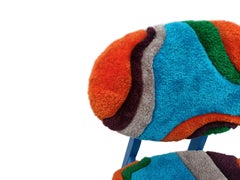
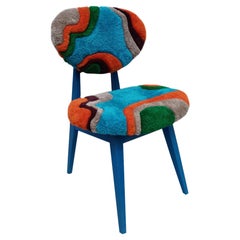
Mid Century Mushroom Chair, Hand Tufting Blue Green Orange Wool, Europe, 1960s

Mid Century Mushroom Chair, Hand Tufting Blue Green Orange Wool, Europe, 1960s

Located in 05-080 Hornowek, PL

Beautiful chairs type 200/128, designed by Juliusz Kedziorek and manufactured by Goscieninska Furniture Factory in Poland. We called them "mushroom" chairs cause of light and nice s...

Category

Mid-20th Century Polish Mid-Century Modern Dining Room Chairs

Materials

Velvet, Beech, Wool

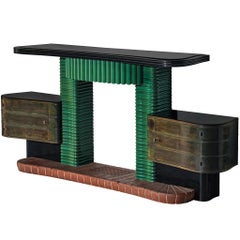
Ernesto Valabrega for Studio Vittorio Valabrega Decorative Fireplace Mantel

Ernesto Valabrega for Studio Vittorio Valabrega Decorative Fireplace Mantel

By Vittorio Valabrega

Located in Waalwijk, NL

Ernesto Valabrega for Studio Vittorio Valabrega, decorative fireplace mantel, lacquered wood, plaster, glass, iron, Italy, 1930s This striking decorative fireplace mantel, presumabl...

Category

Vintage 1930s Italian Art Deco Fireplaces and Mantels

Materials

Iron

Mustard Velvet Daybed with V-Shaped Beechwood Base, Model V

Mustard Velvet Daybed with V-Shaped Beechwood Base, Model V

$3,990 / item

H 15.75 in W 74.81 in D 29.14 in

Mustard Velvet Daybed with V-Shaped Beechwood Base, Model V

By Dusty Deco

Located in Los Angeles, CA

DD V daybed is an exclusive daybed made by hand in Bosnia and Herzegovina by skilled craftsmen with long experience in wood and upholstery. Both frame and the characteristic V-shaped...

Category

2010s Bosnian Mid-Century Modern Daybeds

Materials

Fabric, Beech, Velvet

Postmodern Dalmatian Pongo Desk by Pierre Colleu for Starform and Disney, 1980s.

Postmodern Dalmatian Pongo Desk by Pierre Colleu for Starform and Disney, 1980s.

By Starform, Pierre Colleu 1, Disney Studios

Located in Lille, FR

Table height: 50 cm. Total height with the head: 80 cm Good condition. Some chips on the top.

Category

Vintage 1980s French Post-Modern Desks and Writing Tables

Materials

Resin, Plastic

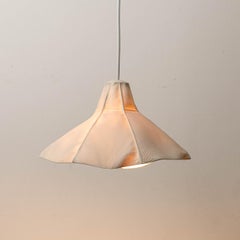
RESTOCK - 50cm Prismatic Glass Holophane Globe Parisian Street Lamp, C.1960

RESTOCK - 50cm Prismatic Glass Holophane Globe Parisian Street Lamp, C.1960

By Holophane

Located in London, GB

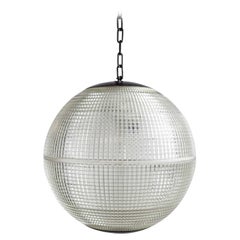
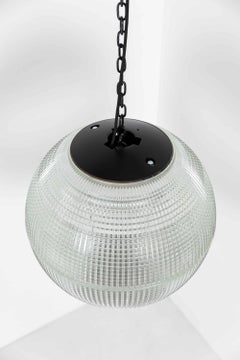
Worldwide shipping available, get in touch for a quote. Beautifully formed spherical Holophane Parisian glass street lights, made in France. c.1960. This version has the 50cm diame...
Category

Vintage 1960s French Mid-Century Modern Chandeliers and Pendants

Materials

Glass, Fiberglass

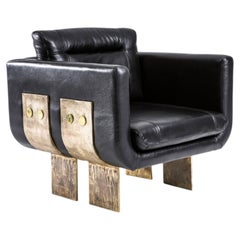
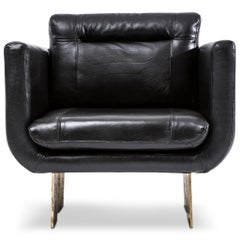
Brutalist Black Leather Lounge Chair with Cast Brass Legs, Egg Designs

Brutalist Black Leather Lounge Chair with Cast Brass Legs, Egg Designs

By Egg Designs

Located in Bothas Hill, KZN

A commanding interpretation of Brutalist design, this sculptural lounge chair explores weight, proportion, and material contrast through a distinctly contemporary lens. Its bold, arc...

Category

2010s Portuguese Modern Lounge Chairs

Materials

Brass

Pair of Steel and Leather Mid-century Modern Italian Bar Stools by Marzio Cecchi

Pair of Steel and Leather Mid-century Modern Italian Bar Stools by Marzio Cecchi

By Marzio Cecchi

Located in Barcelona, ES

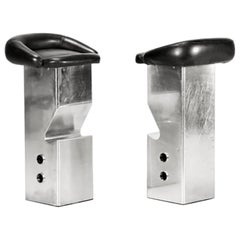
Marzio cecchi (1940-1990) Pair of bar stools Manufactured by Most Studio Produced for Ringo bar in Firenze Italy, 1970s Steel, leather Measurements 51 cm x 48 cm x 94 H cm 20 in x ...

Category

Vintage 1970s Italian Stools

Materials

Steel

Art Deco / Machine Age eXEcutive Desk, Chrysler Presentation attr, Kem Weber

Art Deco / Machine Age eXEcutive Desk, Chrysler Presentation attr, Kem Weber

By Kem Weber

Located in Buffalo, NY

Very unusual Art Deco / Machine AGE dESK, Retains original metal badge/plaque which reads "Presented to A .P. Bergeron for outstanding Chrysler Sales". dated c.1940, but I believe th...

Category

Vintage 1930s American Art Deco Desks and Writing Tables

Materials

Metal, Steel, Chrome

Jacques Adnet Leather and Oak Desk, 1950s France

Jacques Adnet Leather and Oak Desk, 1950s France

$95,000

H 29 in W 59.63 in D 36 in

Jacques Adnet Leather and Oak Desk, 1950s France

By Jacques Adnet

Located in Los Angeles, CA

Monumental Art Deco era desk by French Art Deco Modernist designer Jacques Adnet. Iron frame with 4 posts, inverted u-shaped bases and brass support bar/foot rest connecting the two....

Category

Vintage 1950s French Art Deco Desks and Writing Tables

Materials

Brass, Iron

Rare 1970's Jorge Zalszupin L'atelier Space-Age Plastic Desk

Rare 1970's Jorge Zalszupin L'atelier Space-Age Plastic Desk

By Jorge Zalszupin, L'Atelier San Paulo

Located in Norwalk, CT

Rarely seen and even more rarely available Space-Age molded plastic desk manufactured by L'atelier, São Paulo, Brazil. Design attributed to Jorge Zalszupin a Polish naturalized Brazi...

Category

Vintage 1970s Brazilian Space Age Desks and Writing Tables

Materials

Metal

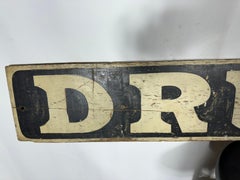
1920's -30's Hand Painted "DRUGS" wood sign

1920's -30's Hand Painted "DRUGS" wood sign

$1,680

H 8 in W 60 in D 1.5 in

1920's -30's Hand Painted "DRUGS" wood sign

Located in Buffalo, NY

1920's -30's Hand Painted "DRUGS" wood sign ... Great old sign,, Tons of character,, Retains original finish / patina..

Category

Vintage 1920s American Folk Art Signs

Materials

Wood, Paint

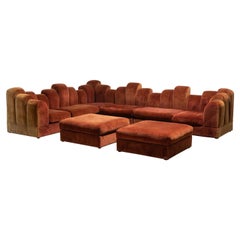
1960s "Skyscraper" Design Velvet Sectional Sofa

1960s "Skyscraper" Design Velvet Sectional Sofa

$65,000

H 35 in W 144 in D 108 in

1960s "Skyscraper" Design Velvet Sectional Sofa

Located in New York, NY

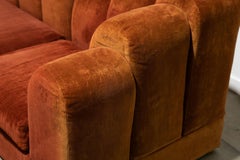
1960s "Skyscraper" design velvet sectional sofa. There are eight sections to the sofa (including the two ottomans). Original upholstery. 2 Ottomans: 36 squared x 16H 3 Corners: 34H ...

Category

Vintage 1960s Mid-Century Modern Sofas

Materials

Velvet

Gae Aulenti bed mod. ‘Tennis’ for Gavina, Italy 1972

Gae Aulenti bed mod. ‘Tennis’ for Gavina, Italy 1972

$24,371

H 18.71 in W 95.28 in D 103.55 in

Gae Aulenti bed mod. ‘Tennis’ for Gavina, Italy 1972

By Gavina, Gae Aulenti

Located in Rotterdam, ZH

Large king size bed by Gae Aulenti mod. ‘Tennis’ for Gavina, Italy 1972. Unique and iconic bed from the ‘Tennis‘ series referring to the round shapes and the typical stitching patter...

Category

Vintage 1970s Italian Mid-Century Modern Beds and Bed Frames

Materials

Leather, Wood

Get Updated with New Arrivals
Save "Charles Swanson", and we’ll notify you when there are new listings in this category.

Ray Swanson for sale on 1stDibs

Biography Ray Swanson (1937-2004) A member of the Cowboy Artists of America and the American Watercolor Society, Ray Swanson was known for his Southwest Native American subject--the Navajo, Hopi, Zuni and Apache Indians. He was especially known for depicting children and smaller animals belonging to these tribes and for the beauty of their traditional costumes. Swanson was raised in rural South Dakota and settled in Carefree, Arizona. He first visited a Navajo Reservation in Arizona in the early 1960s, and from that time, incorporated Indian figures and genre into his subject matter. He attended a one-room schoolhouse in South Dakota and was early recognized for his art talent. His father was killed when Ray was young, and the family moved to California where he enrolled at the Northrop Institute of Technology in Los Angeles. He worked full time as a draftsman and studied aero-nautical engineering. For six years, he was a civil engineer in Redlands, California, and during that time married Beverly, his high school sweetheart. He also began to paint, encouraged by his wife and friends, and he displayed his work at the curio shop he and Beverly opened in Oak Glen near Los Angeles. Gallery owners in New Mexico and California began carrying his work, and he became a full-time painter. In 1973, he and Beverly sold the shop and moved to Arizona where he continued to paint the Native Americans. He also painted some landscapes and seascapes in both watercolor and oil and traveled widely in search of subject matter beyond Arizona. In 1979, he was named Arizona Artist of the Year and in 1986 was voted into membership of the Cowboy Artists of America, which he served as president at the time of his death in 2004. He was also a signature member of the American Watercolor Society. Following are excerpts from the obituary of the artist by Dolores Tropiano, The Arizona Republic, December 24, 2004. "Ray Swanson, president of the Cowboy Artists of America and one of the most poignant painters of Arizona Indians, was remembered this week by artists, fans and the people whose images covered his canvasses. The Carefree resident died Dec. 17 of pneumonia after contracting multiple myeloma, a cancer of the blood plasma cells. He was 67. 'Ray touched many lives, including people who couldn't afford his original paintings, but who would stand in line for an hour to get his autograph at the cowboy (artists) show,' said Steve Todd, a Tempe art collector. In October, Swanson's painting Women of the "Dineh formed a huge banner that hung outside the Phoenix Art Museum, promoting the Cowboy Artists of America's 39th-annual exhibition. But Swanson never saw the banner or the show. By then, he already was very sick. "It was one of the last paintings he ever created, and it hung outside the museum. He never got to see it, but it was a fitting tribute," said Todd, chairman of this year's

A Close Look at Post-modern Furniture

Postmodern design was a short-lived movement that manifested itself chiefly in Italy and the United States in the early 1980s. The characteristics of vintage postmodern furniture and other postmodern objects and decor for the home included loud-patterned, usually plastic surfaces; strange proportions, vibrant colors and weird angles; and a vague-at-best relationship between form and function.

ORIGINS OF POSTMODERN FURNITURE DESIGN

  • Emerges during the 1960s; popularity explodes during the ’80s
  • A reaction to prevailing conventions of modernism by mainly American architects
  • Architect Robert Venturi critiques modern architecture in his Complexity and Contradiction in Architecture (1966)
  • Theorist Charles Jencks, who championed architecture filled with allusions and cultural references, writes The Language of Post-Modern Architecture (1977)
  • Italian design collective the Memphis Group, also known as Memphis Milano, meets for the first time (1980) 
  • Memphis collective debuts more than 50 objects and furnishings at Salone del Milano (1981)
  • Interest in style declines, minimalism gains steam

CHARACTERISTICS OF POSTMODERN FURNITURE DESIGN

  • Dizzying graphic patterns and an emphasis on loud, off-the-wall colors
  • Use of plastic and laminates, glass, metal and marble; lacquered and painted wood 
  • Unconventional proportions and abundant ornamentation
  • Playful nods to Art Deco and Pop art

POSTMODERN FURNITURE DESIGNERS TO KNOW

VINTAGE POSTMODERN FURNITURE ON 1STDIBS

Critics derided postmodern design as a grandstanding bid for attention and nothing of consequence. Decades later, the fact that postmodernism still has the power to provoke thoughts, along with other reactions, proves they were not entirely correct.

Postmodern design began as an architectural critique. Starting in the 1960s, a small cadre of mainly American architects began to argue that modernism, once high-minded and even noble in its goals, had become stale, stagnant and blandly corporate. Later, in Milan, a cohort of creators led by Ettore Sottsass and Alessandro Mendinia onetime mentor to Sottsass and a key figure in the Italian Radical movement — brought the discussion to bear on design.

Sottsass, an industrial designer, philosopher and provocateur, gathered a core group of young designers into a collective in 1980 they called Memphis. Members of the Memphis Group,  which would come to include Martine Bedin, Michael Graves, Marco Zanini, Shiro Kuramata, Michele de Lucchi and Matteo Thun, saw design as a means of communication, and they wanted it to shout. That it did: The first Memphis collection appeared in 1981 in Milan and broke all the modernist taboos, embracing irony, kitsch, wild ornamentation and bad taste.

Memphis works remain icons of postmodernism: the Sottsass Casablanca bookcase, with its leopard-print plastic veneer; de Lucchi’s First chair, which has been described as having the look of an electronics component; Martine Bedin’s Super lamp: a pull-toy puppy on a power-cord leash. Even though it preceded the Memphis Group’s formal launch, Sottsass’s iconic Ultrafragola mirror — in its conspicuously curved plastic shell with radical pops of pink neon — proves striking in any space and embodies many of the collective’s postmodern ideals. 

After the initial Memphis show caused an uproar, the postmodern movement within furniture and interior design quickly took off in America. (Memphis fell out of fashion when the Reagan era gave way to cool 1990’s minimalism.) The architect Robert Venturi had by then already begun a series of plywood chairs for Knoll Inc., with beefy, exaggerated silhouettes of traditional styles such as Queen Anne and Chippendale. In 1982, the new firm Swid Powell enlisted a group of top American architects, including Frank Gehry, Richard Meier, Stanley Tigerman and Venturi to create postmodern tableware in silver, ceramic and glass.

On 1stDibs, the vintage postmodern furniture collection includes chairs, coffee tables, sofas, decorative objects, table lamps and more.

Finding the Right Desks-writing-tables for You

Vintage desks and writing tables span centuries of design. The writing table came first, a simple surface built for correspondence, while the drawered desk followed as record-keeping at home and in the office grew more demanding.

Styles to Know

Any desk at least 20 years old falls under this broader vintage category. If you want a tapered-leg, mid-century look specifically, browse mid-century modern desks; Louis XVI and Art Deco secretary desks bridge the writing-table and desk forms. A vintage table lamp adds task lighting to either.

How to Choose the Right Vintage Piece

Writing tables often carry little to no storage of their own, so a separate file cabinet or desk organizer may be worth planning for, alongside a close look at the surface dimensions against the space available. Each piece comes from a vetted 1stDibs seller, with era, designer and condition detailed, and every purchase is covered by the 1stDibs Promise.